



IDEFIRIX 11 mg Injectable Perfusion

Prescription review online
A doctor will review your case and decide whether a prescription is medically appropriate.

Talk to a doctor about this medicine
Discuss your symptoms and possible next steps in a quick online consultation.



How to use IDEFIRIX 11 mg POWDER FOR CONCENTRATE FOR PERFUSION SOLUTION
Contents of the leaflet
- Introduction
- What is Idefirix and what is it used for
- What you need to know before you use Idefirix
- How to use Idefirix
- Possible side effects
- Storage of Idefirix
- Contents of the pack and other information
Introduction
Package Leaflet: Information for the User
Idefirix 11 mg powder for concentrate for solution for infusion
imlifidasa
This medicine is subject to additional monitoring, which will allow for quick identification of new safety information. You can help by reporting any side effects you may get. The last section of this leaflet includes information on how to report side effects.
Read all of this leaflet carefully before you start using this medicine, because it contains important information for you.
- Keep this leaflet, you may need to read it again.
- If you have any further questions, ask your doctor.
- If you get any side effects, talk to your doctor, even if they are not listed in this leaflet. See section 4.
Contents of the pack
- What is Idefirix and what is it used for
- What you need to know before you use Idefirix
- How to use Idefirix
- Possible side effects
- Storage of Idefirix
- Contents of the pack and other information
1. What is Idefirix and what is it used for
Idefirix contains the active substance imlifidasa, which belongs to a group of medicines called immunosuppressants. It is given before kidney transplantation to prevent the immune system (the body's defenses) from rejecting the donated kidney.
Idefirix breaks down a type of antibody in the body, immunoglobulin G (IgG), which is involved in the destruction of "foreign" or harmful substances.
Imlifidasa is a protein from a bacterium called Streptococcus pyogenes.

Not sure if this medicine is right for you?
Discuss your symptoms and treatment with a doctor online.
2. What you need to know before you use Idefirix
Do not use Idefirix
- If you are allergic to imlifidasa or any of the other ingredients of this medicine (listed in section 6).
- If you have a severe infection.
- If you have a blood disorder called "thrombotic thrombocytopenic purpura" (TTP), which causes blood clots to form in small blood vessels throughout the body.
Warnings and precautions
Infusion reactions
Idefirix contains a protein and may cause allergic reactions in some people. You will be given medicines to reduce the risk of an allergic reaction. If you experience any symptoms of an allergic reaction, such as a sudden skin rash, difficulty breathing, flushing, or redness, during the infusion, it may be necessary to slow down or stop the infusion. When these symptoms disappear or improve, the infusion can be continued.
Infections
IgG is important for protecting you against infections, and since Idefirix breaks down IgG, you will be given antibiotics to reduce the risk of infections.
Antibody-mediated rejection (AMR)
Your body will produce new IgG antibodies that may attack the transplanted kidney. Your doctor will closely monitor you and you will be given medicines to reduce the risk of rejection.
Children and adolescents
Do not give this medicine to children and adolescents under 18 years of age, as the use of this medicine has not been studied in this age group.
Other medicines and Idefirix
Tell your doctor if you are using, have recently used, or might use any other medicines. Idefirix may affect the way some medicines work, and it may be necessary to adjust the dose of these medicines.
Idefirix breaks down IgG, so medicines based on IgG may not work if given at the same time as Idefirix. These include the following medicines:
- basiliximab (used to prevent kidney transplant rejection);
- rituximab (used to treat cancers such as non-Hodgkin's lymphoma and chronic lymphocytic leukemia, and inflammatory diseases such as rheumatoid arthritis);
- alemtuzumab (used to treat a form of multiple sclerosis);
- adalimumab (used to treat inflammatory diseases such as rheumatoid arthritis, ankylosing spondylitis, psoriasis, Crohn's disease, and ulcerative colitis);
- denosumab (used to treat osteoporosis);
- belatacept (used to prevent kidney transplant rejection);
- etanercept (used to treat inflammatory diseases such as rheumatoid arthritis, psoriatic arthritis, ankylosing spondylitis, and psoriasis);
- rabbit anti-thymocyte globulin (rATG) (used to prevent kidney transplant rejection);
- intravenous immunoglobulin (IgIV) (used to increase abnormally low immunoglobulin levels in the blood or to treat inflammatory diseases such as Guillain-Barré syndrome, Kawasaki disease, and chronic inflammatory demyelinating polyneuropathy).
Pregnancy and breastfeeding
Idefirix should not be used during pregnancy. If you are pregnant or think you may be pregnant, tell your doctor.
It is not known whether Idefirix is excreted in breast milk. You should not breastfeed if you are receiving Idefirix.
Idefirix contains sodium and polysorbate 80
This medicine contains less than 23 mg of sodium (1 mmol) per dose; this is essentially "sodium-free".
This medicine contains 0.5 mg of polysorbate 80 per ml. Polysorbates may cause allergic reactions. Tell your doctor if you have any known allergies.
3. How to use Idefirix
Idefirix will be prescribed by a doctor with experience in kidney transplantation and is intended for use in a hospital. The medicine will be given by infusion into a vein over about 15 minutes.
A healthcare professional will calculate the correct dose for you based on your weight. Idefirix is usually given as a single dose, but your doctor may decide to give you a second dose before transplantation.
Information for healthcare professionals on the calculation of the dose, preparation, and infusion of Idefirix is provided at the end of this leaflet.
If you use more Idefirix than you should
You will be closely monitored during and after the infusion. Healthcare professionals will check for any adverse reactions.

Started taking the medicine and have questions?
Discuss your symptoms and treatment with a doctor online.
4. Possible side effects
Like all medicines, this medicine can cause side effects, although not everybody gets them.
Tell your doctor immediately if you experience any of the following side effects:
- Signs of infection, such as fever, chills, cough, weakness, or general feeling of being unwell (very common: may affect more than 1 in 10 people).
- Signs of infusion reaction, such as sudden skin rash, difficulty breathing, flushing, or redness (common: may affect up to 1 in 10 people).
- Muscle pain or fatigue (symptoms of myalgia) (common: may affect up to 1 in 10 people).
Other side effects are:
Common(may affect up to 1 in 10 people):
- Infections: lung infection (pneumonia), blood infections (septicemia), abdominal infection, upper respiratory tract infection, adenovirus infection, parvovirus infection, urinary tract infection, flu, wound infection, postoperative wound infection, catheter site infection.
- Transplant rejection (the IgG antibodies will try to reject the donated kidney and you may feel unwell).
- Low or high blood pressure (symptoms of low blood pressure may be dizziness and symptoms of high blood pressure may be headache).
- Low red blood cell count (anemia).
- Dizziness when changing body position, for example, when standing up.
- Headache.
- Burst blood vessel in the eye.
- Decreased vision.
- Increased heart rate.
- Pain at the infusion site.
- Increased liver enzymes (seen in blood tests).
Reporting of side effects
If you experience any side effects, talk to your doctor, even if they are not listed in this leaflet. You can also report side effects directly through the national reporting system listed in Appendix V. By reporting side effects, you can help provide more information on the safety of this medicine.
5. Storage of Idefirix
Keep this medicine out of the sight and reach of children. Idefirix is stored in the hospital pharmacy.
Do not use this medicine after the expiry date which is stated on the vial label and carton after EXP. The expiry date is the last day of the month stated.
Store in a refrigerator (between 2°C and 8°C). Do not freeze. Store in the original package to protect from light.
The chemical and physical stability after reconstitution and dilution has been demonstrated for 24 hours at 2-8°C, including 4 hours at 25°C during this 24-hour period.
Do not use this medicine if you notice the presence of particles or discoloration after reconstitution.
Medicines should not be disposed of via wastewater or household waste. Ask your pharmacist how to dispose of medicines no longer required. This will help protect the environment.
6. Contents of the pack and other information
What Idefirix contains
- The active substance is imlifidasa. Each vial contains 11 mg of imlifidasa. After reconstitution, each ml of concentrate contains 10 mg of imlifidasa.
- The other ingredients are mannitol, polysorbate 80, trometamol, disodium edetate dihydrate, and hydrochloric acid (for pH adjustment). See section 2 "Idefirix contains sodium and polysorbate 80".
Appearance and pack size
- Idefirix is provided in a glass vial containing powder for concentrate for solution for infusion (powder for concentrate). The powder is presented as a white lyophilized disc.
- The pack contains 1 or 2 vials. Not all pack sizes may be marketed.
Marketing authorisation holder
Hansa Biopharma AB
Box 785
220 07 Lund
Sweden
Manufacturer
Biotechnologines farmacijos centras Biotechpharma UAB
Mokslininku g. 4
LT-08412 Vilnius
Lithuania
Propharma Group The Netherlands B.V.
Schipholweg 59
2316 ZL, Leiden
Netherlands
Date of last revision of this leaflet:
This medicine has been authorized with a "conditional approval". This type of approval means that more information on this medicine is expected.
The European Medicines Agency will review any new information on this medicine at least once a year and this leaflet will be updated as necessary.
Other sources of information
Detailed information on this medicine is available on the European Medicines Agency website: https://www.ema.europa.
This information is intended only for healthcare professionals:
Reconstitution of the powder
Introduce 1.2 ml of sterile water for injection into the Idefirix vial, taking care to direct the water towards the glass wall and not towards the powder.
Move the vial gently in circles for at least 30 seconds to dissolve the powder completely. Do not shake, to minimize the risk of foam formation. The vial now contains imlifidasa 10 mg/ml and up to 1.1 ml of solution can be withdrawn.
The reconstituted solution should be clear to slightly opalescent and colorless or slightly yellow. It must not be used if particles or discoloration are observed. It is recommended to transfer the reconstituted solution from the vial to the infusion bag immediately.
Preparation of the infusion solution
Slowly add the correct amount of reconstituted imlifidasa solution to an infusion bag containing 50 ml of sodium chloride 9 mg/ml (0.9%) solution for infusion. Turn the infusion bag over several times to mix well. The infusion bag must be protected from light at all times.
Before use, the infusion solution must be inspected visually for particulate matter or discoloration. Discard the solution if particles or discoloration are observed.
Administration
The fully diluted infusion should be administered over 15 minutes using an infusion set and a low protein-binding, non-pyrogenic, in-line filter (pore size 0.2 μm). At the end of the infusion, flush the intravenous line with sodium chloride 9 mg/ml (0.9%) solution for infusion to ensure that the patient receives the full dose. Do not store the unused infusion solution for later use.
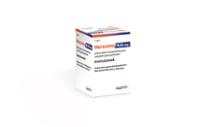
- Country of registration
- Dosage formINJECTABLE PERFUSION, 11 mg
- ATC codeL04AA41
- Active substance
- Prescription requiredYes
- Manufacturer
- CompositionMANITOL (E-421) (11 mg mg), POLISORBATO 80 (0,6 mg mg), EDETATO DISODICO DIHIDRATADO (0,03 mg mg)
- This information is for reference only and does not constitute medical advice. Always consult a doctor before taking any medication. Oladoctor is not responsible for medical decisions based on this content.
- Alternatives to IDEFIRIX 11 mg POWDER FOR CONCENTRATE FOR PERFUSION SOLUTIONDosage form: TABLET, 180 mgActive substance: mycophenolic acidManufacturer: Laboratorio Stada S.L.Prescription requiredDosage form: TABLET, 360 mgActive substance: mycophenolic acidManufacturer: Laboratorio Stada S.L.Prescription requiredDosage form: TABLET, 10 mg + 20 mg + 30 mgActive substance: apremilastManufacturer: Accord Healthcare S.L.U.Prescription required
Online doctors for IDEFIRIX 11 mg POWDER FOR CONCENTRATE FOR PERFUSION SOLUTION
Discuss questions about IDEFIRIX 11 mg POWDER FOR CONCENTRATE FOR PERFUSION SOLUTION, including use, safety considerations and prescription review, subject to medical assessment and local regulations.
Get IDEFIRIX 11 mg POWDER FOR CONCENTRATE FOR PERFUSION SOLUTION Prescription Online
Fill in a 2-min form
Tell us your symptoms, history, and what medicine you're requesting.
Pick a doctor or let us assign
Choose a specialist or we'll match you with the next available doctor.
Doctor reviews your case
Usually within 30 minutes. They may ask follow-up questions via chat.
Collect from any pharmacy
Electronic prescription sent to your email — valid across Spain.
Frequently Asked Questions
IDEFIRIX 11 mg POWDER FOR CONCENTRATE FOR PERFUSION SOLUTION requires a prescription in Spain. You can check with a doctor online whether this medicine may be appropriate for your situation.
The active ingredient in IDEFIRIX 11 mg POWDER FOR CONCENTRATE FOR PERFUSION SOLUTION is imlifidase. This information helps identify medicines with the same composition but different brand names.
IDEFIRIX 11 mg POWDER FOR CONCENTRATE FOR PERFUSION SOLUTION is manufactured by Hansa Biopharma Ab. Pharmacy brands and packaging may differ depending on the distributor.
Doctors such as Family doctors, Psychiatrists, Dermatologists, Cardiologists, Endocrinologists, Gastroenterologists, Pulmonologists, Nephrologists, Rheumatologists, Hematologists, Infectious disease physicians, Allergists, Geriatricians, Paediatricians, Oncologists may assess whether IDEFIRIX 11 mg POWDER FOR CONCENTRATE FOR PERFUSION SOLUTION is appropriate, depending on your situation and local regulations. You can book an online consultation to discuss your symptoms and possible next steps.
Spain has a well-developed healthcare infrastructure across major cities such as Madrid, Barcelona, Valencia, and Seville. Pharmacies are widely available and operate under strict regulations, ensuring access to prescribed medications.
You can buy IDEFIRIX 11 mg POWDER FOR CONCENTRATE FOR PERFUSION SOLUTION in Madrid, Barcelona, Seville, or Valencia at any local pharmacy with a valid prescription.
To obtain a prescription, you can use Oladoctor:
Other medicines with the same active substance (imlifidase) include MICOPHENOLIC ACID STADA 180 mg GASTRO-RESISTANT TABLETS, MICOPHENOLIC ACID STADA 360 mg GASTRO-RESISTANT TABLETS, APREMILAST ACCORD 10 mg + 20 mg + 30 mg FILM-COATED TABLETS. These may have different brand names or formulations but contain the same therapeutic ingredient. Always consult a doctor before switching or starting a new medicine.
