


Ibuprofeno Vir 600 mg solución oral granulado

Prescription request online
A doctor will review your case and decide whether a prescription is medically appropriate.

Talk to a doctor about this medicine
Discuss your symptoms and possible next steps in a quick online consultation.



How to use IBUPROFEN (ARGININE) VIR PHARMA 600 mg ORAL SOLUTION GRANULES
Contents of the leaflet
- Introduction
- What is Ibuprofen (Arginine) Vir Pharma and what is it used for
- What you need to know before taking Ibuprofen (Arginine) Vir Pharma
- How to take Ibuprofen (Arginine) Vir Pharma
- Possible adverse effects
- Conservation of Ibuprofen (Arginine) Vir Pharma
- Packaging content and additional information
Introduction
PATIENT INFORMATION LEAFLET
Ibuprofen (Arginine) Vir Pharma 600 mg granules for oral solution EFG
Read the entire leaflet carefully before starting to take the medicine, as it contains important information for you.
- Keep this leaflet, as you may need to read it again.
- If you have any questions, consult your doctor or pharmacist.
- This medicine has been prescribed to you only, and you should not give it to others, even if they have the same symptoms, as it may harm them.
- If you experience side effects, consult your doctor or pharmacist, even if they are not listed in this leaflet. See section 4.
Contents of the leaflet:
- What is Ibuprofen (Arginine) Vir Pharma and what is it used for
- what you need to know before taking Ibuprofen (Arginine) Vir Pharma
- How to take Ibuprofen (Arginine) Vir Pharma
- Possible side effects
- Storage of Ibuprofen (Arginine) Vir Pharma
- Package contents and additional information
1. What is Ibuprofen (Arginine) Vir Pharma and what is it used for
Ibuprofen (Arginine) Vir Pharma belongs to the group of medicines called non-steroidal anti-inflammatory drugs (NSAIDs).
This medicine is indicated for the treatment of fever, treatment of mild or moderate pain, including migraine, treatment of arthritis (inflammation of the joints, including hands and feet, leading to swelling and pain), juvenile rheumatoid arthritis, osteoarthritis (a chronic disorder that causes cartilage damage), ankylosing spondylitis (inflammation affecting the joints of the spine), non-rheumatic inflammation, and primary dysmenorrhea (painful menstruation).

Not sure if this medicine is right for you?
Discuss your symptoms and treatment with a doctor online.
2. What you need to know before taking Ibuprofen (Arginine) Vir Pharma
Do not take Ibuprofen (Arginine) Vir Pharma:
- If you are allergic to the active substance, other medicines of the non-steroidal anti-inflammatory drug group (NSAIDs), aspirin, or any of the other components of this medicine (listed in section 6). The reactions that may indicate this are: skin rash with itching, swelling of the face, lips, or tongue, nasal discharge, difficulty breathing, or asthma.
- If you have a severe liver or kidney disease.
- If you have had a stomach or duodenal ulcer or have suffered a perforation of the digestive tract.
- If you vomit blood.
- If you have black stools or bloody diarrhea.
- If you have bleeding disorders or blood coagulation disorders, or are taking anticoagulants (medicines used to "thin" the blood). If it is necessary to use anticoagulant medicines at the same time, your doctor will perform blood coagulation tests.
- If you have severe heart failure.
- If you are in the third trimester of pregnancy.
Warnings and precautions:
Ibuprofen has been reported to cause signs of allergic reaction to this medicine, such as respiratory problems, swelling of the face and neck (angioedema), and chest pain. Stop using ibuprofen immediately and contact your doctor or emergency medical services if you notice any of these signs.
Tell your doctor
- If you have edema (fluid retention).
- If you have or have had heart disorders or high blood pressure.
- If you have asthma or any other respiratory disorder.
- If you are receiving treatment with Ibuprofen (Arginine) Vir Pharma, as it may mask fever, which is an important sign of infection, making diagnosis difficult.
- If you have kidney or liver disease, are over 60 years old, or need to take the medicine for a prolonged period (more than 1 to 2 weeks), your doctor may need to perform regular checks. Your doctor will indicate the frequency of these checks.
- If you experience symptoms of dehydration, e.g., severe diarrhea or vomiting, drink plenty of fluids and contact your doctor immediately, as ibuprofen may cause kidney failure due to dehydration.
- If you have had or developed an ulcer, bleeding, or perforation in the stomach or duodenum, which may be manifested by severe abdominal pain or persistent pain and/or black stools, or even without previous warning symptoms. This risk is higher when using high doses and prolonged treatments, in patients with a history of peptic ulcer and in elderly patients. In these cases, your doctor will consider the possibility of associating a stomach-protecting medicine.
- If you are taking medicines that alter blood coagulation, such as oral anticoagulants, antiplatelet agents of the aspirin type. You should also discuss the use of other medicines that may increase the risk of such bleeding, such as corticosteroids and selective serotonin reuptake inhibitor antidepressants.
- If you have Crohn's disease (a chronic disease in which the immune system attacks the intestine, causing inflammation that usually produces bloody diarrhea) or ulcerative colitis, as ibuprofen-like medicines can worsen these conditions.
- If you are being treated with diuretics (medicines to urinate), as your doctor should monitor your kidney function.
- If you have systemic lupus erythematosus (a chronic disease that affects the immune system and can affect various vital organs, the nervous system, blood vessels, skin, and joints), as it may cause aseptic meningitis (inflammation of the meninges that protect the brain and spinal cord, not caused by bacteria).
- If you have acute intermittent porphyria (a metabolic disease that affects your blood and can cause symptoms such as reddish urine color, blood in urine, or liver disease), so that your doctor can assess the convenience or not of treatment with ibuprofen.
- If you experience headaches after prolonged treatment, do not take higher doses of the medicine.
- It is possible that allergic reactions may occur with this medicine.
- Your doctor will perform stricter monitoring if you receive ibuprofen after undergoing major surgery.
- It is advisable not to take this medicine if you have chickenpox.
It is important to use the smallest dose that relieves-controls the pain and not to take this medicine for longer than necessary to control your symptoms.
Precautions in elderly patients
Elderly patients have a higher frequency of adverse reactions to NSAIDs (non-steroidal anti-inflammatory drugs), especially gastrointestinal bleeding and perforation, which can be fatal.
Cardiovascular precautions
Anti-inflammatory/analgesic medicines like ibuprofen may be associated with a small increased risk of heart attack or stroke, especially when used in high doses. Do not exceed the recommended dose or treatment duration.
You should discuss your treatment with your doctor or pharmacist before taking Ibuprofen (Arginine) Vir Pharma if:
- you have heart problems, including heart failure, angina (chest pain), or if you have had a heart attack, bypass surgery, peripheral arteriopathy (circulation problems in the legs or feet due to narrowing or blockage of the arteries), or any type of stroke (including a "mini-stroke" or transient ischemic attack "TIA").
- you have high blood pressure, diabetes, high cholesterol, a family history of heart disease or stroke, or if you are a smoker.
Similarly, these types of medicines can cause fluid retention, especially in patients with heart failure and/or high blood pressure (hypertension).
Skin reactions
Severe skin reactions, such as exfoliative dermatitis, erythema multiforme, Stevens-Johnson syndrome, toxic epidermal necrolysis, drug reaction with eosinophilia and systemic symptoms (DRESS), and acute generalized exanthematous pustulosis (AGEP), have been reported in association with ibuprofen treatment. Discontinue treatment with this medicine and seek medical attention immediately if you notice any of the symptoms related to these severe skin reactions described in section 4.
Respiratory disorders
Ibuprofen should be used with caution when administered to patients who have or have had bronchial asthma, chronic rhinitis, or allergic diseases, as ibuprofen has been reported to cause bronchospasm, urticaria, or angioedema in these patients.
Children and adolescents
There is a risk of kidney failure in dehydrated children and adolescents.
The use of this medicine is not recommended in children or adolescents under 14 years of age, as the dose of ibuprofen it contains is not suitable for the recommended dosage in these patients.
Precautions during pregnancy and in women of childbearing age
It may cause kidney and heart problems in your fetus. It may affect your and your baby's tendency to bleed and delay or prolong labor more than expected. You should not take ibuprofen during the first 6 months of pregnancy unless it is clearly necessary and as indicated by your doctor. If you need treatment during this period or while trying to become pregnant, you should take the minimum dose for the shortest possible time. From the 20th week of pregnancy, ibuprofen may cause kidney problems in your fetus if taken for more than a few days, which can lead to low levels of amniotic fluid surrounding the baby (oligohydramnios) or narrowing of a blood vessel (ductus arteriosus) in the baby's heart. If you need treatment for more than a few days, your doctor may recommend additional monitoring.
For women of childbearing age, it should be noted that ibuprofen-like medicines have been associated with a decrease in fertility.
Interference with laboratory tests
If you are going to undergo any diagnostic tests (including blood tests, urine tests, skin tests using allergens, etc.), inform your doctor that you are taking this medicine, as it may alter the results.
Taking ibuprofen with other medicines:
Tell your doctor or pharmacist if you are using or have recently used any other medicine, including those purchased without a prescription.
Ibuprofen (Arginine) Vir Pharma may affect or be affected by other medicines. For example:
- Other anti-inflammatory/analgesic agents: increase the risk of gastrointestinal ulcers and bleeding.
- Medicines that lower high blood pressure (ACE inhibitors such as captopril, beta-blockers such as atenolol, and angiotensin-II receptor antagonists such as losartan).
- Diuretics: NSAIDs may reduce the effect of diuretics and other antihypertensive substances. Concomitant administration of ibuprofen and potassium-sparing diuretics may cause hyperkalemia and increase the risk of renal toxicity.
- Antiplatelet agents (prevent the formation of blood clots or thrombi in blood vessels) such as ticlopidine.
- Anticoagulant medicines (e.g., to treat coagulation problems/prevent coagulation, e.g., acetylsalicylic acid, warfarin, ticlopidine).
- Lithium (a medicine used to treat depression). Your doctor may adjust the dose of this medicine.
- Methotrexate. Your doctor may adjust the dose of this antimetabolite medicine (slows down the growth of certain cells produced by the body).
- Mifepristone (abortion inducer).
- Digoxin and cardiac glycosides (used in the treatment of heart disorders).
- Hydantoins such as phenytoin (used in the treatment of epilepsy).
- Sulfonamides such as sulfamethoxazole and cotrimoxazole (used in the treatment of certain bacterial infections).
- Corticosteroids such as cortisone and prednisolone.
- Pentoxifylline (for intermittent claudication).
- Probenecid (used in patients with gout or with penicillin in infections).
- Quinolone antibiotics such as norfloxacin.
- Sulfinpyrazone (for gout).
- Sulfonylureas such as tolbutamide (for diabetes).
- Tacrolimus (used in organ transplants to prevent rejection).
- Zidovudine (a medicine against the AIDS virus).
- Thrombolytics (medicines that dissolve blood clots).
- Aminoglycoside antibiotics such as neomycin.
- Ginkgo biloba tree extracts.
- CYP2C9 inhibitors (responsible for the metabolism of numerous medicines in the liver), such as voriconazole and fluconazole (used to treat fungal infections).
Other medicines may also affect or be affected by treatment with Ibuprofen (Arginine) Vir Pharma. Therefore, you should always consult your doctor or pharmacist before using Ibuprofen (Arginine) Vir Pharma with other medicines.
Taking Ibuprofen (Arginine) Vir Pharma with food, drinks, and alcohol
You can take it alone or with food. In general, it is recommended to take it during meals or immediately after eating to reduce the possibility of stomach upset. Consuming alcohol during treatment may increase the risk of gastrointestinal adverse reactions.
Pregnancy, breastfeeding, and fertility
Consult your doctor or pharmacist before using any medicine.
You should not take ibuprofen during pregnancy, especially during the third trimester (see section precautions during pregnancy and in women of childbearing age).
Minimal amounts of ibuprofen and its degradation products are excreted in breast milk. As no adverse effects are known in the infant, it is not usually necessary to interrupt breastfeeding during short-term use at recommended doses.
Therefore, if you become pregnant or are breastfeeding, consult your doctor.
Driving and using machines:
If you experience dizziness, vertigo, vision changes, or other symptoms while taking this medicine, you should not drive or use hazardous machinery. If you only take one dose or take it for a short period, it is not necessary to take special precautions.
Ibuprofen (Arginine) Vir Pharma contains aspartame and sucrose:
People with phenylketonuria should note that each sachet contains 16.8 mg of phenylalanine.
If your doctor has told you that you have an intolerance to certain sugars, consult with them before taking this medicine.
3. How to take Ibuprofen (Arginine) Vir Pharma
Follow the administration instructions for this medication exactly as indicated by your doctor. Consult your doctor or pharmacist if you have any doubts.
Your doctor will indicate the duration of treatment with Ibuprofen. Do not suspend treatment beforehand, as this will not achieve the expected results. Similarly, do not use this medication for longer than indicated by your doctor.
It is essential that you use the smallest dose that relieves/controls the pain and should not take ibuprofen (arginine) Vir Pharma for longer than necessary to control your symptoms.
Adults :
The recommended average dose is 1 sachet (600 mg of ibuprofen) every 12 hours. In rheumatoid arthritis, higher doses may be required, but in any case, it is recommended not to exceed the daily dose of 2,400 mg of ibuprofen (4 sachets), taking into account that the smallest effective dose should be administered.
Elderly patients:
In these patients, the dosage should be established by the doctor, as there is a possibility that a reduction in the usual dose may be necessary.
Patients with kidney and/or liver disease:
If you have a kidney and/or liver disease, your doctor may prescribe a lower dose than usual. If so, take the exact dose that they have prescribed.
Use in children and adolescents:
The use of this medication is not recommended in children and adolescents under 14 years of age, as the dose of ibuprofen it contains is not suitable for the recommended dosage in these patients.
Adolescents over 14 years of age will follow adult dosage recommendations, but the maximum recommended daily dose in these patients is 1600 mg.
This medication is administered orally. Dissolve the contents of one sachet in half a glass of water and stir.
If gastric discomfort is detected after taking the medication, it should be administered together with milk or during meals.
If you take more Ibuprofen (Arginine) Vir Pharma than you should
If you have taken more ibuprofen than you should or if a child has accidentally ingested the medication, consult a doctor or go to the nearest hospital immediately to find out about the risk and ask for advice on the measures to be taken or call the Toxicology Information Service, phone: 91 562 04 20, indicating the medication and the amount ingested. It is recommended to bring the packaging and the prospectus of the medication to the healthcare professional.
The symptoms of overdose may include nausea, stomach pain, vomiting (which may contain blood), gastrointestinal bleeding (see also section 4), diarrhea, headache, ringing in the ears, confusion, and involuntary eye movement. Agitation, drowsiness, disorientation, or coma may also occur. Occasionally, patients develop seizures. At high doses, symptoms of drowsiness, chest pain, palpitations, loss of consciousness, seizures (mainly in children), weakness, and dizziness, blood in the urine, low potassium levels in the blood, chills, and breathing difficulties have been reported. Additionally, the prothrombin time/INR may be prolonged, probably due to interference with the actions of circulating coagulation factors. Acute renal failure and liver damage may occur. Exacerbation of asthma in asthmatics is possible. Additionally, hypotension and respiratory alterations may occur.
If a severe poisoning has occurred, the doctor will take the necessary measures.
In case of ingestion of significant amounts, activated charcoal should be administered. Gastric lavage will be considered if significant amounts have been ingested and within 60 minutes after ingestion.
If you forget to take Ibuprofen (Arginine) Vir Pharma
Do not take a double dose to make up for forgotten doses.
If you forget to take your corresponding dose, take it as soon as you remember. However, if the time for the next dose is near, skip the forgotten dose and take the next dose at the usual time.
If you have any other doubts about the use of this medication, ask your doctor or pharmacist.

Started taking the medicine and have questions?
Discuss your symptoms and treatment with a doctor online.
4. Possible adverse effects
Like all medications, Ibuprofen (Arginine) Vir Pharma can cause adverse effects, although not all people suffer from them.
The observed adverse effects are described below according to their frequency of presentation:
Very frequent (may affect more than 1 in 10 patients); Frequent (may affect up to 1 in 10 patients); Uncommon (may affect up to 1 in 100 patients); Rare (may affect up to 1 in 1,000 patients); Very rare (may affect up to 1 in 10,000 patients); frequency not known (cannot be estimated from the available data).
The following adverse effects have been observed:
Infections and infestations
Very rare: Exacerbation of inflammation-related infections (e.g., the development of necrotizing fasciitis), coinciding with the use of non-steroidal anti-inflammatory drugs*.
Note: If signs of infection or worsening occur during treatment with ibuprofen, it is recommended to go to the doctor immediately, in case antibiotic therapy needs to be initiated.
Gastrointestinal disorders
The most frequent adverse effects that occur with medications like ibuprofen are gastrointestinal: peptic ulcers, gastrointestinal bleeding, perforations (in some cases fatal), especially in elderly patients. Gastrointestinal discomfort such as heartburn, abdominal pain, nausea, vomiting, flatulence, diarrhea, constipation, and mild gastrointestinal bleeding that can cause anemia in exceptional cases have also been observed. Uncommon gastrointestinal ulcers, potentially with bleeding and perforation, ulcerative stomatitis, exacerbation of colitis and Crohn's disease, gastritis.
Other adverse effects are: Uncommon: inflammation of the oral mucosa with ulcer formation. Rare: esophageal inflammation, esophageal stricture (esophageal stenosis), exacerbation of diverticular disease, hemorrhagic colitis. Very rare: esophagitis, pancreatitis, intestinal stenosis.
Cardiac and vascular disorders
Medications like ibuprofen may be associated with a moderate increase in the risk of suffering a heart attack ("myocardial infarction") or stroke.
Edema (fluid retention), arterial hypertension, and heart failure have also been observed in association with treatments with medications of the ibuprofen type.
Chest pain, which can be a sign of a potentially serious allergic reaction called Kounis syndrome.
Disorders of the skin and subcutaneous tissue
Stop treatment with ibuprofen and seek immediate medical attention if you notice any of the following symptoms:
- Reddish, non-elevated spots, target-like or circular on the trunk, often with blisters in the center, skin peeling, mouth ulcers, throat, nose, genitals, and eyes. These severe skin rashes can be preceded by fever and flu-like symptoms [exfoliative dermatitis, erythema multiforme, Stevens-Johnson syndrome, toxic epidermal necrolysis].
- Widespread rash, elevated body temperature, and swollen lymph nodes (DRESS syndrome).
- Widespread, red, and scaly rash, with bumps under the skin and blisters, accompanied by fever. Symptoms usually appear at the start of treatment (acute generalized exanthematous pustulosis).
Other adverse effects are:
Frequent: skin rash. Uncommon: skin redness, itching or swelling of the skin, purpura (purple spots on the skin).
Very rare: hair loss, erythema multiforme (skin lesion), skin reactions due to light influence, inflammation of the skin blood vessels. Exceptionally, severe skin infections and soft tissue complications can occur during chickenpox.
Frequency not known: Widespread red scaly rash, with bumps under the skin and blisters, mainly in skin folds, trunk, and upper limbs, accompanied by fever at the start of treatment (acute generalized exanthematous pustulosis). Stop taking Ibuprofen (arginine) Vir Pharma if you experience these symptoms and seek immediate medical attention. See also section 2.
Disorders of the immune system
Uncommon: hypersensitivity reactions with skin rash and itching, as well as asthma attacks (possibly along with a drop in blood pressure). Very rare: severe hypersensitivity reactions (these can be characterized by swelling of the face, tongue, and larynx with bronchospasm, dyspnea, tachycardia, and hypotension that can include potentially fatal shock).
Note: In the event of these symptoms, which can occur with the first use, immediate medical attention is required.
Nervous system disorders:
Frequent: fatigue or drowsiness, headache, and dizziness or feeling of instability. Uncommon: headache, dizziness. Rare: paresthesia (sensation of numbness, tingling, prickling, etc., more frequent in hands, feet, arms, or legs). Very rare: aseptic meningitis. In most cases where aseptic meningitis has been reported with ibuprofen, the patient suffered from some form of autoimmune disease (such as systemic lupus erythematosus or other collagen diseases), which was a risk factor. The symptoms of aseptic meningitis observed were neck stiffness, headache, nausea, vomiting, fever, or disorientation.
Psychiatric disorders :
Uncommon: insomnia, anxiety, restlessness. Rare: disorientation or confusion, nervousness, irritability. Very rare: psychotic reactions, depression.
Ear and labyrinth disorders
Frequent: vertigo. Uncommon: ringing or buzzing in the ears. Rare: hearing difficulty.
Eye disorders:
Uncommon: vision changes. Rare: abnormal or blurred vision.
Blood and lymphatic system disorders:
Rare: decreased platelet count, decreased white blood cell count (may manifest as frequent infections with fever, chills, or sore throat), decreased red blood cell count (may manifest as difficulty breathing and pale skin), decreased granulocyte count (a type of white blood cell that can predispose to infections), pancytopenia (deficiency of red, white, and platelet cells in the blood), agranulocytosis (significant decrease in granulocytes), aplastic anemia (bone marrow failure to produce different types of cells), or hemolytic anemia (premature destruction of red blood cells). The first symptoms are: fever, sore throat, superficial ulcers in the mouth, flu-like symptoms, extreme fatigue, nosebleeds, and skin bleeding. Very rare: prolonged bleeding time.
Renal and urinary disorders
Very rare: edema (signs that may indicate kidney disease, which can sometimes include kidney failure); kidney tissue damage (papillary necrosis), increased serum uric acid concentration.
Hepatobiliary disorders
Medications like ibuprofen may be associated, in rare cases, with liver damage. Other rare adverse effects are: hepatitis (liver inflammation), liver function abnormalities, and jaundice (yellowing of the skin and eyes). Very rare: liver dysfunction, liver damage (particularly with long-term treatment), liver failure, acute hepatitis. Unknown frequency: liver failure (severe liver deterioration).
General
Worsening of inflammation during infectious processes.
To date, no serious allergic reactions have been reported with ibuprofen, although they cannot be ruled out. The manifestations of this type of reaction could be fever, skin rash, abdominal pain, severe and persistent headache, nausea, vomiting, swelling of the face, tongue, and throat, difficulty breathing, asthma, palpitations, hypotension (lower than usual blood pressure), or shock.
A severe skin reaction known as DRESS syndrome may occur. The symptoms of DRESS syndrome include: skin rash, lymph node inflammation, and elevated eosinophils (a type of white blood cell).
If any of the following adverse effects occur, stop treatment and go to your doctor immediately:
- Allergic reactions such as skin rashes, swelling of the face, wheezing in the chest, or difficulty breathing.
- Vomiting blood or coffee grounds-like vomit.
- Blood in the stool or bloody diarrhea.
- Severe stomach pain.
- Blistering or significant skin peeling.
- Severe or persistent headache.
- Yellowing of the skin (jaundice).
- Signs of severe hypersensitivity (allergy) (see above in this section).
- Swelling of the limbs or fluid accumulation in the arms or legs.
Reporting of adverse effects
If you experience any type of adverse effect, consult your doctor or pharmacist, even if it is a possible adverse effect that does not appear in this prospectus. You can also report them directly through the Spanish Medicines and Healthcare Products Agency's pharmacovigilance system: https://www.notificaram.es. By reporting adverse effects, you can contribute to providing more information on the safety of this medication.
5. Conservation of Ibuprofen (Arginine) Vir Pharma
Keep out of sight and reach of children.
No special storage conditions are required. Keep in the original packaging to protect from light and moisture.
Do not use this medication after the expiration date that appears on the packaging after Cad. The expiration date is the last day of the month indicated.
Medications should not be thrown away through the sewers or in the trash. Deposit the packaging and medications that are no longer needed at the SIGRE point in the pharmacy. In case of doubt, ask your pharmacist how to dispose of the packaging and medications that are no longer needed. This will help protect the environment.
6. Packaging content and additional information
Composition of Ibuprofen (Arginine) Vir Pharma
The active ingredient is Ibuprofen. Each sachet contains 600 mg of Ibuprofen.
The other components are: Arginine, Aspartame (E-951), sucrose, sodium bicarbonate, sodium saccharin, sodium lauryl sulfate, menthol flavor (10.86.4580), peppermint flavor (506041 TP0504) contains cornstarch, purified water.
Appearance of the product and packaging content
Sachets with granules for oral solution. It is presented in the form of white granules with a characteristic mint flavor.
It is presented in packaging with 20 or 40 sachets.
Marketing authorization holder and manufacturer
Holder
INDUSTRIA QUÍMICA Y FARMACÉUTICA VIR, S.A.
C/Laguna 66-70. Polígono Industrial URTINSA II.
28923 – Alcorcón (Madrid)
Spain
Manufacturer
Toll Manufacturing Services, S.L.
C/ Aragoneses, 2
28108 – Alcobendas
Madrid
Spain
or
LAMP S.PROSPERO S.P.A
Vía de la Pace, 25
41030 San Prospero (MO)
Italy
Date of the last revision of this prospectus: November 2024
Detailed and updated information on this medication is available on the website of the Spanish Agency for Medicines and Healthcare Products (AEMPS) http://www.aemps.gob.es/
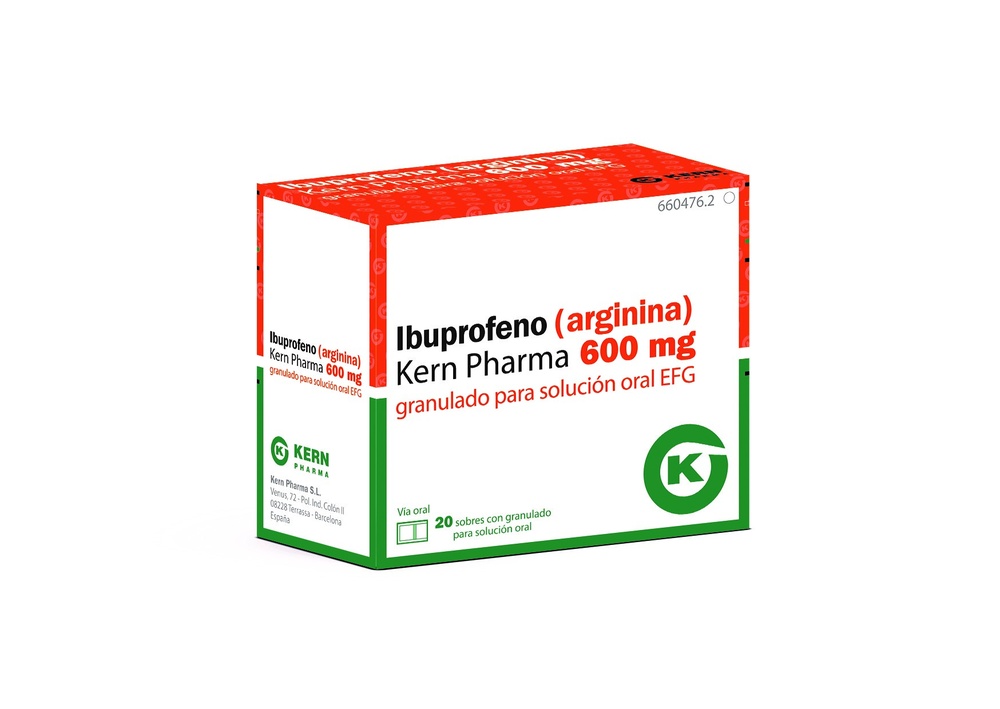
Illustrative image - Country of registration
- Dosage formORAL SOLUTION/SUSPENSION, 600 mg ibuprofen
- ATC codeM01AE01
- Average pharmacy price2.5 EUR
- Active substance
- Prescription requiredYes
- Manufacturer
- CompositionASPARTAMO (E-951) (30 mg mg), HIDROGENOCARBONATO DE SODIO (48 mg mg), SACARINA SODICA (10,5 mg mg), LAURILSULFATO DE SODIO (1,5 mg mg), SACAROSA DE COMPRESION (840 mg mg)
- This information is for reference only and does not constitute medical advice. Always consult a doctor before taking any medication. Oladoctor is not responsible for medical decisions based on this content.
- Alternatives to IBUPROFEN (ARGININE) VIR PHARMA 600 mg ORAL SOLUTION GRANULES
 ALGIDRIN 600 POWDER FOR ORAL SUSPENSIONIllustrative imageDosage form: ORAL SOLUTION/SUSPENSION, 600 mg ibuprofenActive substance: ibuprofenManufacturer: Laboratorio De Aplicaciones Farmacodinamicas S.A.Prescription required
 ALGIDRIN INFANTIL 200 mg POWDER FOR ORAL SUSPENSIONIllustrative imageDosage form: ORAL SOLUTION/SUSPENSION, 200 mgActive substance: ibuprofenManufacturer: Laboratorio De Aplicaciones Farmacodinamicas S.A.Prescription required
 ALGIDRIN PEDIATRIC 20 mg/mL ORAL SUSPENSIONIllustrative imageDosage form: ORAL SOLUTION/SUSPENSION, 20 mg/mlActive substance: ibuprofenManufacturer: Laboratorio De Aplicaciones Farmacodinamicas S.A.Prescription required
Online doctors for IBUPROFEN (ARGININE) VIR PHARMA 600 mg ORAL SOLUTION GRANULES
Discuss questions about IBUPROFEN (ARGININE) VIR PHARMA 600 mg ORAL SOLUTION GRANULES, including use, safety considerations and whether a prescription is appropriate, subject to medical assessment and local regulations.









Frequently Asked Questions
IBUPROFEN (ARGININE) VIR PHARMA 600 mg ORAL SOLUTION GRANULES requires a prescription in Spain. You can check with a doctor online whether this medicine may be appropriate for your situation.
The active ingredient in IBUPROFEN (ARGININE) VIR PHARMA 600 mg ORAL SOLUTION GRANULES is ibuprofen. This information helps identify medicines with the same composition but different brand names.
The average pharmacy price for IBUPROFEN (ARGININE) VIR PHARMA 600 mg ORAL SOLUTION GRANULES is around 2.5 EUR. Prices may vary depending on the manufacturer and dosage form.
IBUPROFEN (ARGININE) VIR PHARMA 600 mg ORAL SOLUTION GRANULES is manufactured by Industria Quimica Y Farmaceutica Vir S.A.. Pharmacy brands and packaging may differ depending on the distributor.
Doctors such as Endocrinologists, Rheumatologists, Neurologists, General medicine doctors may assess whether IBUPROFEN (ARGININE) VIR PHARMA 600 mg ORAL SOLUTION GRANULES is appropriate, depending on your situation and local regulations. You can book an online consultation to discuss your symptoms and possible next steps.
The prescription is issued by a doctor after assessing your health. In Spain, IBUPROFEN (ARGININE) VIR PHARMA 600 mg ORAL SOLUTION GRANULES is then dispensed in pharmacies with that prescription. An online consultation does not guarantee that a prescription will be issued: the decision always rests with the doctor.
To request an assessment, you can use Oladoctor:
Other medicines with the same active substance (ibuprofen) include ALGIDRIN 600 POWDER FOR ORAL SUSPENSION, ALGIDRIN INFANTIL 200 mg POWDER FOR ORAL SUSPENSION, ALGIDRIN PEDIATRIC 20 mg/mL ORAL SUSPENSION. These may have different brand names or formulations but contain the same therapeutic ingredient. Always consult a doctor before switching or starting a new medicine.
