






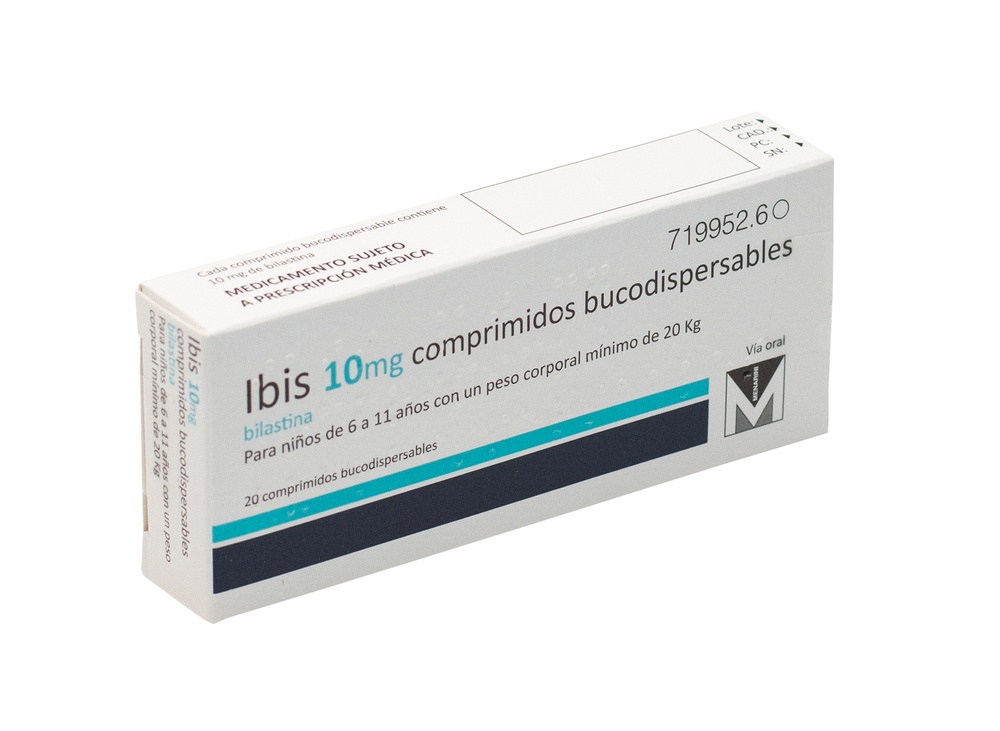
How to use IBIS 10 mg ORALLY DISPERSIBLE TABLETS
Translated with AI
This page provides general information and does not replace a doctor’s consultation. Always consult a doctor before taking any medication. Seek urgent medical care if symptoms are severe.
Show originalContents of the leaflet
Introduction
Patient Information Leaflet
Ibis 10 mg orodispersible tablets
Bilastine
For children from2 to 11 years with a minimum body weight of 15 kg
Read this leaflet carefully before your child starts taking this medicine, as it contains important information for you.
- Keep this leaflet, as you may need to read it again.
If you have any questions, ask your doctor or pharmacist.
- This medicine has been prescribed to your child only, and you should not give it to others, even if they have the same symptoms as your child, as it may harm them.
- If your child experiences side effects, consult your doctor or pharmacist, even if they are not listed in this leaflet. See section 4.
Contents of the pack
- What Ibis is and what it is used for
- What you need to know before taking Ibis
- How to take Ibis
- Possible side effects
- Storage of Ibis
- Contents of the pack and further information
1. What Ibis is and what it is used for
Ibis contains bilastine as the active substance, which is an antihistamine. Ibis is used to relieve the symptoms of allergic rhinoconjunctivitis (sneezing, nasal itching, nasal discharge, nasal congestion, and red and itchy eyes) and other forms of allergic rhinitis. It can also be used to treat itchy skin eruptions (hives or urticaria).
Ibis 10 mg orodispersible tablets are indicated in children from 2 to 11 years of age with a minimum body weight of 15 kg.

2. What you need to know before taking Ibis
Do not take Ibis:
- if your child is allergic to bilastine or any of the other ingredients of this medicine (listed in section 6).
Warnings and precautions
Consult your doctor or pharmacist before starting to take Ibis if your child has moderate or severe kidney or liver impairment, low blood levels of potassium, magnesium, or calcium, if your child has or has had heart rhythm problems or if their heart rate is very low, if your child is taking medicines that may affect the heart rhythm, if your child has or has had a certain abnormal heart rhythm pattern (known as QTc interval prolongation in the electrocardiogram) that may occur in some types of heart disease, or if your child is taking other medicines (see "Using Ibis with other medicines").
Children
Do not give this medicine to children under 2 years of age or with a body weight below 15 kg, as there is not enough data available.
Using Ibis with other medicines
Tell your doctor or pharmacist if your child is using, has recently used, or might use any other medicines, including those obtained without a prescription.
Some medicines should not be taken together, and others may require a dose adjustment when taken together.
Always tell your doctor or pharmacist if your child is taking or receiving any of the following medicines in addition to Ibis:
- Ketoconazole (an antifungal medicine)
- Erythromycin (an antibiotic)
- Diltiazem (for treating angina pectoris - chest pain or pressure)
- Ciclosporin (to reduce the activity of the immune system, and thus prevent transplant rejection or reduce disease activity in autoimmune and allergic disorders, such as psoriasis, atopic dermatitis, or rheumatoid arthritis)
- Ritonavir (for treating HIV)
- Rifampicin (an antibiotic)
Taking Ibis with food, drinks, and alcohol
These orodispersible tablets should notbe taken with food or withgrapefruit juice or other fruit juices, as this would decrease the effect of bilastine. To avoid this, you can:
- give your child the orodispersible tablet and wait for one hour before your child eats or takes fruit juices, or
- if your child has taken food or fruit juices, wait for two hours before giving the orodispersible tablet.
Bilastine, at the recommended dose in adults (20 mg), does not increase the sleepiness caused by alcohol.
Pregnancy, breastfeeding, and fertility
This medicine is for use in children from 2 to 11 years of age with a minimum body weight of 15 kg. However, the following information on the safe use of this medicine should be taken into account. There are no data or limited data available on the use of bilastine in pregnant or breastfeeding women and on its effects on fertility.
If you are pregnant or breastfeeding, or plan to become pregnant, consult your doctor or pharmacist before using this medicine.
Consult your doctor or pharmacist before taking any medicine.
Driving and using machines
It has been shown that bilastine 20 mg does not affect performance during driving in adults. However, each patient's response to the medicine may be different. Therefore, check how this medicine affects your child before they ride a bicycle or other vehicles or operate machinery.
Ibis contains ethanol and sodium
This medicine contains 0.0015 mg of alcohol (ethanol) per orodispersible tablet, equivalent to 1 mg/100 g (0.001% w/w). The amount in one orodispersible tablet is equivalent to less than 0.00004 ml of beer or 0.00002 ml of wine.
The small amount of alcohol in this medicine does not produce any noticeable effect.
This medicine contains less than 1 mmol of sodium (23 mg) per orodispersible tablet; this is essentially "sodium-free".
3. How to take Ibis
Follow exactly the administration instructions of this medicine given by your doctor or pharmacist. If you are unsure, consult your doctor or pharmacist again.
Use in children
The recommended dose in children from 2 to 11 years of age with a minimum body weight of 15 kg is 10 mg of bilastine (1 orodispersible tablet) once daily for the symptomatic relief of allergic rhinoconjunctivitis and urticaria.
Do not give this medicine to children under 2 years of age or with a body weight below 15 kg, as there is not enough data available.
For adults, including elderly patients and adolescents from 12 years of age, the recommended dose is 20 mg of bilastine once daily. For this patient population, a more suitable pharmaceutical form - tablets - is available; consult your doctor or pharmacist.
- The orodispersible tablet is for oral use.
- Please place the orodispersible tablet in your child's mouth. It will disperse rapidly in the saliva and can then be swallowed easily.
- Alternatively, you can disperse the orodispersible tablet in a spoonful of water before giving it to your child. This is highly recommended in children under 6 years, as they are prone to choking on tablets. Make sure there are no sediment remains in the spoon.
- You should use only water for dispersion;do not use grapefruit juice or any other fruit juice.
- You should give the orodispersible tablet to your child one hour before or two hours after they have taken any food or fruit juice.
The duration of treatment depends on your child's underlying disease, and your doctor will determine how long they should take Ibis.
If your child takes more Ibis than they should
If your child, or anyone else, exceeds the dose of this medicine, inform your doctor immediately or go to the casualty department of the nearest hospital. Please remember to take this medicine pack or this leaflet with you.
If your child forgets to take Ibis
If you forget to give your child their daily dose on time, give it to them the same day as soon as you remember. Then, give the next dose the following day at the usual time, as indicated by your doctor.
Never give a double dose to make up for a forgotten dose.
If your child stops taking Ibis
In general, no effects will appear after stopping treatment with Ibis.
If you have any other questions about the use of this medicine, ask your doctor or pharmacist.

4. Possible side effects
Like all medicines, this medicine can cause side effects, although not everybody gets them.
If your child experiences allergic reactions whose symptoms may include difficulty breathing, dizziness, collapse, or loss of consciousness, swelling of the face, lips, tongue, or throat, and/or swelling and redness of the skin, stop giving this medicine and go to your doctor immediately.
Other side effects that may appear in children:
Common: may affect up to 1 in 10 people
- allergic conjunctivitis (eye irritation)
- headache
Uncommon: may affect up to 1 in 100 people
- eye irritation
- dizziness
- loss of consciousness
- diarrhea
- nausea (feeling sick)
- lip swelling
- eczema
- urticaria (hives)
- fatigue
- rhinitis (nasal irritation)
- stomach pain (abdominal pain/upper abdominal pain)
Side effects that may appear in adults and adolescents:
Common: may affect up to 1 in 10 people
- headache
- drowsiness
Uncommon: may affect up to 1 in 100 people
- electrocardiogram changes
- blood tests showing changes in liver function
- dizziness
- stomach pain
- fatigue
- increased appetite
- irregular heartbeat
- weight gain
- nausea (feeling sick)
- anxiety
- dry or irritated nose
- abdominal pain
- diarrhea
- gastritis (inflammation of the stomach lining)
- vertigo (a feeling of dizziness or spinning)
- feeling weak
- thirst
- shortness of breath
- dry mouth
- indigestion
- itching
- cold sore (herpes labialis)
- fever
- tinnitus (ringing in the ears)
- difficulty sleeping
- blood tests showing changes in kidney function
- increased blood fats
Frequency not known: cannot be estimated from the available data
- palpitations (feeling the heartbeat)
- tachycardia (fast heartbeat)
- vomiting
Reporting of side effects
If your child experiences any side effects, consult your doctor or pharmacist, even if they are not listed in this leaflet. You can also report them directly through the Spanish Medicines and Healthcare Products Agency's (AEMPS) online system: www.notificaRAM.es. By reporting side effects, you can help provide more information on the safety of this medicine.
5. Storage of Ibis
Keep this medicine out of the sight and reach of children.
Do not use this medicine after the expiry date stated on the pack and blister after EXP. The expiry date is the last day of the month stated.
This medicine does not require any special storage conditions.
Medicines should not be disposed of via wastewater or household waste. Return any unused medicine to a pharmacy, or take it to a designated collection point. Ask your pharmacist how to dispose of medicines no longer required. This will help protect the environment.
6. Contents of the pack and further information
Composition of Ibis
- The active substance is bilastine. Each orodispersible tablet contains 10 mg of bilastine.
- The other ingredients are mannitol (E421), croscarmellose sodium, sodium stearyl fumarate, and sucralose (E955), red grape flavor (main components: gum arabic, ethyl butyrate, triacetin, methyl anthranilate, ethanol, d-limonene, linalool).
Appearance and packaging
Ibis 10 mg orodispersible tablets are round, slightly biconvex, and white, with a diameter of 8 mm.
The tablets are packaged in blisters of 10, 20, 30, or 50 tablets.
Not all pack sizes may be marketed.
Marketing authorization holder
Menarini International Operations Luxembourg, S.A.
1, Avenue de la Gare
L-1611 Luxembourg
Manufacturer
Faes Farma, S.A.
Maximo Agirre Kalea, 14
48940 Leioa (Bizkaia)
Spain
or
A.Menarini Manufacturing Logistics and Services S.r.l.
Campo di Pile
L’Aquila
Italy
You can obtain further information on this medicine from the local representative of the marketing authorization holder:
Laboratorios Menarini, S.A.
Alfons XII, 587 – E 08918 Badalona
(Barcelona) T. +34 934 628 800
E-mail: [email protected]
This medicine is authorized in the Member States of the European Economic Area and in the United Kingdom (Northern Ireland) under the following names:
Austria: Nasitop 10 mg Schmelztabletten
Belgium: Bellozal 10 mg orodispersible tablets
Bulgaria: ???????? ?? ???? 10 mg ???????????? ?? ? ?????? ????????
Cyprus: Bilaz 10 mg δισκ?α διασπειρ?μενα στο στ?μα
Czech Republic: Xados
Denmark: Revitelle, smeltetabletter 10 mg
Estonia: Opexa
Finland: Revitelle
France: Bilaska 10 mg comprimé orodispersible
Germany: Bilaxten 10 mg Schmelztabletten
Greece: Bilaz 10 mg δισκ?α διασπειρ?μενα στο στ?μα
Hungary: Lendin
Iceland: Bilaxten 10 mg munndreifitöflur
Ireland: Drynol
Latvia: Opexa 10 mg mute dispergejamas tabletes
Lithuania: Opexa
Luxembourg: Bellozal 10 mg orodispersible tablets
Malta: Gosall 10 mg orodispersible tablets
Norway: Zilas 10 mg smeltetablett
Poland: Clatra
Portugal: Lergonix 10 mg comprimido orodispersível
Romania: Borenar 10 mg comprimate orodispersabile
Slovakia: Omarit 10 mg orodispergovatelné tablety
Slovenia: Bilador 10 mg orodispersibilne tablete
Spain: Ibis 10 mg comprimidos bucodispersables
Sweden: Bilaxten
United Kingdom (Northern Ireland): Ilaxten
Date of last revision of this leaflet:March 2025
Detailed information on this medicine is available on the website of the Spanish Medicines and Healthcare Products Agency (AEMPS) (http://www.aemps.gob.es/)
-

- Country of registration
- Dosage formORALLY DISINTEGRATING TABLET/LIOTAB, 10 mg
- ATC codeR06AX29
- Average pharmacy price6.4 EUR
- Active substance
- Prescription requiredYes
- Manufacturer
- This information is for reference only and does not constitute medical advice. Always consult a doctor before taking any medication. Oladoctor is not responsible for medical decisions based on this content.
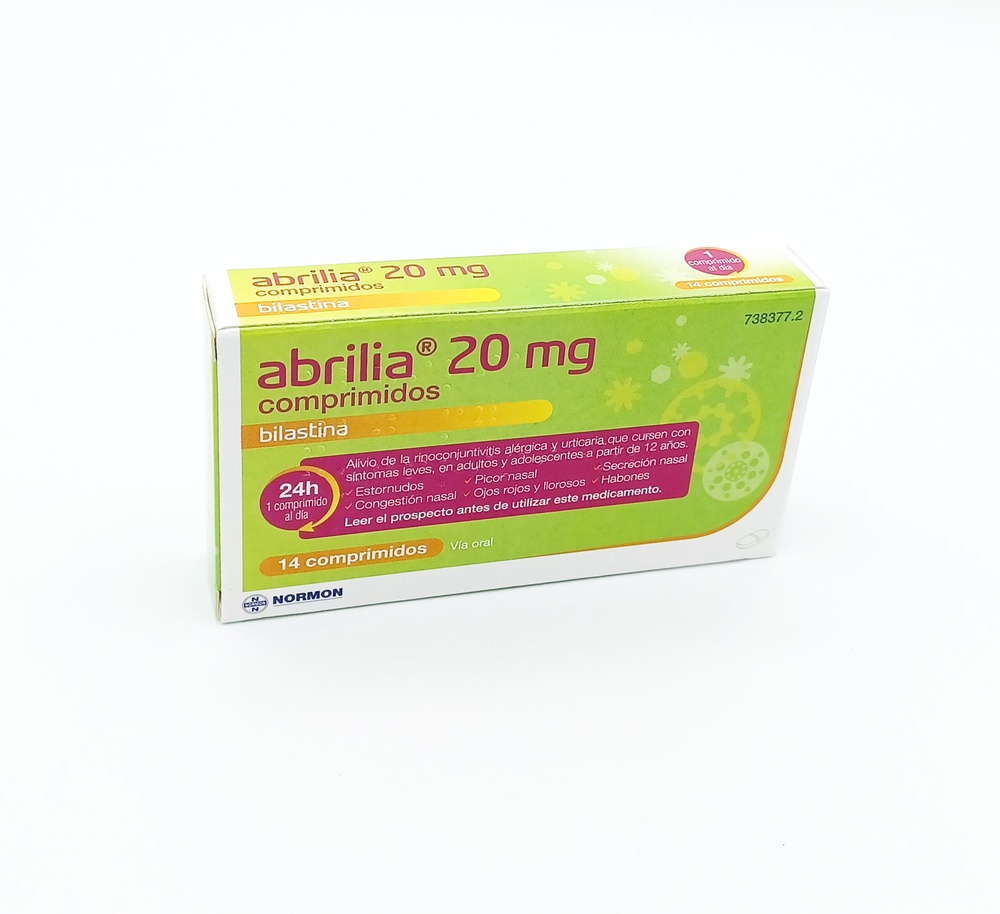
- Alternatives to IBIS 10 mg ORALLY DISPERSIBLE TABLETSDosage form: TABLET, 20 mgActive substance: bilastineManufacturer: Glenmark Arzneimittel GmbhPrescription requiredDosage form: TABLET, 20 mgActive substance: bilastineManufacturer: Laboratorios Normon S.A.Prescription not requiredDosage form: TABLET, 20 mgActive substance: bilastineManufacturer: Faes Farma S.A.Prescription not required
Online doctors for IBIS 10 mg ORALLY DISPERSIBLE TABLETS
Discuss questions about IBIS 10 mg ORALLY DISPERSIBLE TABLETS, including use, safety considerations and prescription review, subject to medical assessment and local regulations.


Get IBIS 10 mg ORALLY DISPERSIBLE TABLETS Prescription Online
Fill in a 2-min form
Tell us your symptoms, history, and what medicine you're requesting.
Pick a doctor or let us assign
Choose a specialist or we'll match you with the next available doctor.
Doctor reviews your case
Usually within 30 minutes. They may ask follow-up questions via chat.
Collect from any pharmacy
Electronic prescription sent to your email — valid across Spain.
Frequently Asked Questions
IBIS 10 mg ORALLY DISPERSIBLE TABLETS requires a prescription in Spain. You can check with a doctor online whether this medicine may be appropriate for your situation.
The active ingredient in IBIS 10 mg ORALLY DISPERSIBLE TABLETS is bilastine. This information helps identify medicines with the same composition but different brand names.
The average pharmacy price for IBIS 10 mg ORALLY DISPERSIBLE TABLETS is around 6.4 EUR. Prices may vary depending on the manufacturer and dosage form.
IBIS 10 mg ORALLY DISPERSIBLE TABLETS is manufactured by Menarini International Operations Luxembourg S.A.. Pharmacy brands and packaging may differ depending on the distributor.
Doctors such as Family doctors, Psychiatrists, Dermatologists, Cardiologists, Endocrinologists, Gastroenterologists, Pulmonologists, Nephrologists, Rheumatologists, Hematologists, Infectious disease physicians, Allergists, Geriatricians, Paediatricians, Oncologists may assess whether IBIS 10 mg ORALLY DISPERSIBLE TABLETS is appropriate, depending on your situation and local regulations. You can book an online consultation to discuss your symptoms and possible next steps.
Spain has a well-developed healthcare infrastructure across major cities such as Madrid, Barcelona, Valencia, and Seville. Pharmacies are widely available and operate under strict regulations, ensuring access to prescribed medications.
You can buy IBIS 10 mg ORALLY DISPERSIBLE TABLETS in Madrid, Barcelona, Seville, or Valencia at any local pharmacy with a valid prescription.
To obtain a prescription, you can use Oladoctor:
Other medicines with the same active substance (bilastine) include ABISAX 20 mg TABLETS, ABRILIA 20 mg TABLETS, ASTRILAX 20 mg TABLETS. These may have different brand names or formulations but contain the same therapeutic ingredient. Always consult a doctor before switching or starting a new medicine.
