



HEMOAL 3%/0.2% RECTAL SEMISOLID

Prescription review online
A doctor will review your case and decide whether a prescription is medically appropriate.

Talk to a doctor about this medicine
Discuss your symptoms and possible next steps in a quick online consultation.



How to use HEMOAL RECTAL OINTMENT
Contents of the leaflet
- Introduction
- What is Hemoal and what is it used for
- What you need to know before you start using Hemoal
- How to Use Hemoal
- Possible Side Effects
- Storage of Hemoal
- Contents of the Pack and Further Information
Introduction
Package Leaflet: Information for the User
Hemoal Rectal Ointment
Benzocaine, Ephedrine Hydrochloride Read all of this leaflet carefully before you start using this medicine because it contains important information for you. Follow exactly the administration instructions of the medicine contained in this leaflet or as indicated by your doctor or pharmacist.
Contents of the Package Leaflet 1. What is Hemoal and what is it used for. 2. What you need to know before you start using Hemoal. 3. How to use Hemoal. 4. Possible side effects. 5. Storage of Hemoal. 6. Contents of the pack and further information. |
1. What is Hemoal and what is it used for
It is a local anesthetic due to the action of benzocaine and a vasoconstrictor due to the action of ephedrine.
It is indicated for the symptomatic relief of pain, itching, or burning associated with hemorrhoids in adults.

Not sure if this medicine is right for you?
Discuss your symptoms and treatment with a doctor online.
2. What you need to know before you start using Hemoal
Do not use Hemoal:
- if you are allergic (hypersensitive) to benzocaine, ephedrine hydrochloride, or any of the other components of this medicine (listed in section 6), to other local anesthetics derived from p-aminobenzoic acid, parabens, or paraphenylenediamine, or commercial hair dyes
- if you have presented an allergy to local anesthetics
- if you have had, suspect you may have, or are at increased risk of an increase in methemoglobin in the blood (methemoglobinemia)
- if you are being treated with sulfonamides
- if you are being treated with cholinesterase inhibitors (medicines for Alzheimer's disease) or have reduced cholinesterase activity
- if you are being treated with sympathomimetic agents
- if you have severe coronary artery disease or cardiovascular disorder
- if you have hypertension
- if you have hyperthyroidism
- if you are currently being treated or have been treated in the last two weeks with medicines for treating depression, such as monoamine oxidase inhibitors (MAOIs)
- on extensive areas of skin, eczematous skin, sunburned skin, infected skin, or cracked skin
Warnings and Precautions
Consult your doctor or pharmacist before starting to use Hemoal.
This medicine should not be used if you have serious heart problems (complete heart block).
This medicine should be used with caution if you have diabetes, closed-angle glaucoma, Raynaud's phenomenon, pheochromocytoma, or prostatic hyperplasia.
Maintain normal intestinal function through a suitable diet (fruits, vegetables, adequate fluid intake, and regular exercise). It may be useful to take some laxative, volume enhancer, or stool softener simultaneously. Excessive use of laxatives should be avoided, as it could lead to intestinal laziness.
Use of Other Medicines
Tell your doctor or pharmacist if you are using or have recently used other medicines, including those obtained without a prescription.
This medicine may interact with:
- Phenothiazines (antipsychotic) or MAOI antidepressants may produce an increase in blood pressure, cardiac arrhythmia, or even cause death.
- Cardiac glycosides: the use of cardiac glycosides (e.g., digoxin) at the same time as ephedrine may increase the risk of irregular heartbeat or heart attack.
- Antidepressants: tricyclic antidepressants (e.g., amitriptyline) and noradrenergic-serotonergic antidepressants may increase the risk of cardiovascular side effects with ephedrine.
- Sympathomimetic agents: the use of ephedrine with other sympathomimetic agents may increase the risk of hypertension and other cardiovascular effects.
- Beta-blocker antihypertensives: the use of this medicine at the same time as beta-blocker antihypertensives or other antihypertensives may reduce their effectiveness.
- Sulfonamides (medicines for treating infections): should not be used at the same time as benzocaine, as it may decrease the effect of sulfonamides.
- Cholinesterase inhibitors (medicines for Alzheimer's disease): should not be used at the same time as benzocaine, as it may increase the effect of benzocaine.
- Alkaloids of ergot: risk of vasoconstriction and/or increased tension (hypertension) when used in combination with ephedrine.
- Linezolid (antibiotic for treating severe bacterial infections): risk of increased tension (hypertension) when used with ephedrine.
- Adrenergic neuron blockers: ephedrine may reduce or cancel the antihypertensive effects of guanethidine.
- Appetite suppressants and psychostimulants of the amphetamine type: risk of hypertension and increased heart rate with concomitant use of ephedrine and sibutramine.
- Halogenated anesthetics: ephedrine should be used with caution if you are undergoing anesthesia with halogenated anesthetics, as it may induce cardiac rhythm disorder (ventricular fibrillation).
- Other local anesthetics of the benzocaine type: there may be cross-reactivity between benzocaine and other local anesthetics of the ester type.
- Theophylline (anti-asthmatic, bronchodilator): increased risk of adverse reactions after concomitant administration of theophylline and ephedrine.
- Dexamethasone (glucocorticoid): ephedrine increases the elimination of dexamethasone.
- Doxapram (respiratory stimulant): risk of hypertension when used in combination with ephedrine.
- Oxytocin: risk of hypertension when used in combination with ephedrine.
Interactions with diagnostic tests:
Do not use Hemoal 72 hours before performing the pancreas puncture test with bentiromide, as there is a possibility of interference with the test result.
Pregnancy, Breastfeeding, and Fertility
If you are pregnant or breastfeeding, think you may be pregnant, or plan to become pregnant, consult your doctor or pharmacist before using this medicine.
Consult your doctor or pharmacist before using any medicine.
You should not use this medicine if you are pregnant or breastfeeding, unless it has been recommended by your doctor, as there is a possibility of absorption.
Use in People Over 65 Years and Weak Patients:
People over 65 years and weak patients may be more sensitive to benzocaine, so the dose should be reduced.
Use in Children
It is not recommended due to the lack of data on efficacy and safety.
Driving and Using Machines
No effects on the ability to drive or use machines have been described.
Hemoal Contains Acetylated Lanolin Alcohols
This medicine may produce local skin reactions (such as contact dermatitis) because it contains acetylated lanolin alcohols.
3. How to Use Hemoal
Follow exactly the administration instructions of this medicine indicated by your doctor or pharmacist. If in doubt, consult your doctor or pharmacist again.
This medicine is applied rectally.
Personal hygiene is essential to control hemorrhoidal symptoms. Therefore, the area should be kept clean, washing it, especially after each bowel movement, with a little mild soap and drying it without rubbing with a clean towel.
Apply a thin layer of ointment (approx. 1 cm) to the clean and dry affected anal area, in the morning, at night, and after each bowel movement. Generally, 3 to 4 times a day.
Apply with a finger, using the tip of the finger to overcome the resistance of the sphincter.
To use it inside the anal canal, remove the protection from the cannula, screw it onto the tube, lubricate it with a little ointment, and carefully insert it into the anal canal. Then, apply a small amount of ointment by exerting gentle pressure on the tube. If you encounter resistance during application, it should be interrupted as it may be harmful and damaging.
After application, unscrew the cannula from the tube and wash it before storing it.
Wash your hands before and after each application. For reasons of hygiene and to avoid infections, the cannula should only be used by a single patient.
Treatment should not last more than 7 days. If anorectal symptoms (pain, itching, burning) do not improve within this time or bleeding appears, you should consult your doctor.
People Over 65 Years and Weak Patients:should reduce the dose, see “Use in people over 65 years and weak patients”
If You Use More Hemoal Than You Should:
If you have used more Hemoal than you should, consult your doctor or pharmacist or the Toxicology Information Service. Phone 91 562.04.20 indicating the medicine and the amount applied.
The symptoms that may appear due to overdose are anxiety, nervousness, palpitations, headache, and insomnia.
If You Forget to Use Hemoal:
Do not apply a double dose to make up for forgotten doses.
If you have any other doubts about the use of this product, ask your doctor or pharmacist.

Started taking the medicine and have questions?
Discuss your symptoms and treatment with a doctor online.
4. Possible Side Effects
Like all medicines, this medicine can cause side effects, although not everybody gets them.
Rare side effects (may affect up to 1 in 1,000 people):
- reduction of blood flow to the area where the ointment is applied (ischemia)
Very rare side effects (in less than 1 in 10,000 people)
- hypersensitivity reactions
- anxiety
- headache, nervousness, insomnia
- palpitations
Side effects of unknown frequency: (cannot be estimated from the available data)
- increase in methemoglobin in the blood (methemoglobinemia) that causes a blue discoloration of the skin and mucous membranes (cyanosis)
- decreased appetite, decreased potassium level in the blood (hypokalemia)
- confusion, depression, psychotic states, fear, irritability
- restlessness, tremor
- accelerated heart rate (tachycardia), irregular heartbeats (arrhythmia), angina-like pain, slow heart rate (bradycardia), cardiac arrest
- high blood pressure (hypertension), cerebral hemorrhage, low blood pressure (hypotension)
- fluid accumulation in the lungs (pulmonary edema)
- nausea, vomiting, excessive saliva
- urinary retention
- weakness, increased sweating (hyperhidrosis)
- changes in blood glucose levels
- allergic dermatitis
Others:
Contact allergic reactions, anal burning sensation may occur.
Drying of the skin area where the ointment is applied (epithelium) and hardening of mucous membranes.
Reporting of Side Effects
If you experience any side effects, consult your doctor or pharmacist, even if it is a possible side effect not listed in this leaflet. You can also report them directly through the Spanish Medicines and Healthcare Products Agency (AEMPS) (http://www.aemps.gob.es/). By reporting side effects, you can help provide more information on the safety of this medicine.
5. Storage of Hemoal
Keep this medicine out of the sight and reach of children.
Store below 30°C.
Do not use after the expiration date stated on the packaging. The expiration date is the last day of the month indicated.
Medicines should not be disposed of via wastewater or household waste. Place the packaging and any unused medicines in the pharmacy's SIGRE collection point. If in doubt, ask your pharmacist how to dispose of the packaging and medicines you no longer need. This will help protect the environment.
6. Contents of the Pack and Further Information
Composition of Hemoal:
Per gram:
The active ingredients are: benzocaine 30 milligrams and ephedrine (hydrochloride) 2 milligrams.
The other ingredients (excipients) are: zinc oxide, white petrolatum, and acetylated lanolin alcohols.
Appearance of the Product and Contents of the Pack
Flexible aluminum tube, interior epoxy coating with screw cap made of polyethylene, containing 30g and 50g of rectal ointment. Each pack contains a cannula for rectal application.
Marketing Authorization Holder
Reckitt Benckiser Healthcare, S.A.
C/ Mataró, 28
08403 Granollers-Barcelona
Manufacturer
INDUSTRIA QUIMICA Y FARMACEUTICA VIR, S.A.
Laguna, 66-68-70. Poligono Industrial Urtinsa II (Alcorcón)
- 28923 – Spain
or
ALCALA FARMA, S.L.
Carretera M-300 Km 29,920 (Alcalá de Henares) - 28802 - Spain
Date of the Last Revision of this Leaflet: June 2025
Detailed information about this medicine is available on the website of the Spanish Agency for Medicines and Healthcare Products (AEMPS) (http://www.aemps.gob.es/).
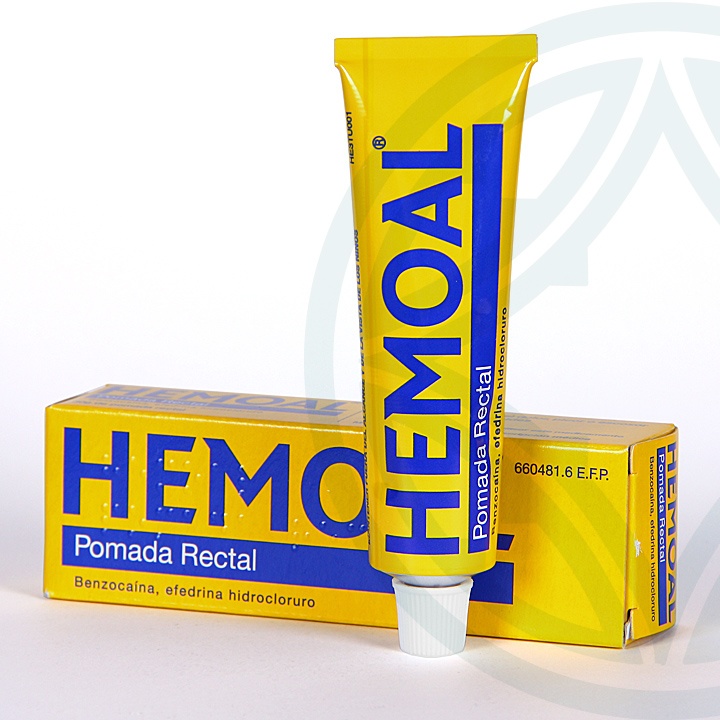
- Country of registration
- Dosage formRECTAL SEMISOLID, Benzocaine 3%; Ephedrine 0.2%/ 100 g
- ATC codeC05AD03
- Active substance
- Prescription requiredNo
- Manufacturer
- CompositionALCOHOL DE LANOLINA ACETILADO (5,0 g mg)
- This information is for reference only and does not constitute medical advice. Always consult a doctor before taking any medication. Oladoctor is not responsible for medical decisions based on this content.
- Alternatives to HEMOAL RECTAL OINTMENTDosage form: RECTAL SEMISOLID, Benzocaine 6%; Ephedrine 0.2%/ 100 gActive substance: benzocaineManufacturer: Reckitt Benckiser Healthcare S.A.Prescription not requiredDosage form: RECTAL SEMISOLID, 20 mg/g + 20 mg/g + 25 mg/gActive substance: lidocaineManufacturer: Jntl Consumer Health (Spain) S.L.Prescription not requiredDosage form: RECTAL SEMISOLID, 0.25 mg; 8 mg; 1 mg/gActive substance: fluocinonideManufacturer: Anotaciones Farmaceuticas, S.L.Prescription not required
Online doctors for HEMOAL RECTAL OINTMENT
Discuss questions about HEMOAL RECTAL OINTMENT, including use, safety considerations and prescription review, subject to medical assessment and local regulations.









Get HEMOAL RECTAL OINTMENT Prescription Online
Fill in a 2-min form
Tell us your symptoms, history, and what medicine you're requesting.
Pick a doctor or let us assign
Choose a specialist or we'll match you with the next available doctor.
Doctor reviews your case
Usually within 30 minutes. They may ask follow-up questions via chat.
Collect from any pharmacy
Electronic prescription sent to your email — valid across Spain.
Frequently Asked Questions
HEMOAL RECTAL OINTMENT does not require a prescription in Spain. You can check with a doctor online whether this medicine may be appropriate for your situation.
The active ingredient in HEMOAL RECTAL OINTMENT is benzocaine. This information helps identify medicines with the same composition but different brand names.
HEMOAL RECTAL OINTMENT is manufactured by Reckitt Benckiser Healthcare S.A.. Pharmacy brands and packaging may differ depending on the distributor.
Doctors such as Family doctors, Psychiatrists, Dermatologists, Cardiologists, Endocrinologists, Gastroenterologists, Pulmonologists, Nephrologists, Rheumatologists, Hematologists, Infectious disease physicians, Allergists, Geriatricians, Paediatricians, Oncologists may assess whether HEMOAL RECTAL OINTMENT is appropriate, depending on your situation and local regulations. You can book an online consultation to discuss your symptoms and possible next steps.
Spain has a well-developed healthcare infrastructure across major cities such as Madrid, Barcelona, Valencia, and Seville. Pharmacies are widely available and operate under strict regulations, ensuring access to prescribed medications.
You can buy HEMOAL RECTAL OINTMENT in Madrid, Barcelona, Seville, or Valencia at any local pharmacy with a valid prescription.
To obtain a prescription, you can use Oladoctor:
Other medicines with the same active substance (benzocaine) include HEMOAL FORTE RECTAL OINTMENT, TITANOREIN LIDOCAINE RECTAL CREAM, ABRASONE RECTAL, RECTAL CREAM. These may have different brand names or formulations but contain the same therapeutic ingredient. Always consult a doctor before switching or starting a new medicine.
