






How to use GLUCOSADO BRAUN 10% SOLUTION FOR INFUSION
Translated with AI
This page provides general information and does not replace a doctor’s consultation. Always consult a doctor before taking any medication. Seek urgent medical care if symptoms are severe.
Show originalContents of the leaflet
Introduction
Package Leaflet: Information for the User
Braun Glucose 10% Solution for Infusion
Glucose
Read the entire package leaflet carefully before starting to use the medicine, as it contains important information for you.
- Keep this package leaflet, you may need to read it again.
- If you have any further questions, ask your doctor or pharmacist.
- This medicine has been prescribed for you only. Do not pass it on to others, as it may harm them, even if their symptoms are the same as yours.
- If you experience any side effects, talk to your doctor or pharmacist, even if they are not mentioned in this package leaflet. See section 4.
Contents of the Package Leaflet:
- What is Braun Glucose 10% and what is it used for
- What you need to know before using Braun Glucose 10%
- How to use Braun Glucose 10%
- Possible side effects
- Storage of Braun Glucose 10%
- Contents of the pack and further information
1. What is Braun Glucose 10% and what is it used for
Braun Glucose 10% is a solution for infusion (administered intravenously through a drip) with a low concentration of glucose used for:
- providing a source of carbohydrates (sugar) alone or, if required, for parenteral nutrition. Parenteral nutrition is used to feed patients who cannot eat. It is administered through an infusion (slow injection) into a vein.
- preventing or treating low blood sugar levels (moderate hypoglycemia, which causes symptoms but is not fatal).
- providing the patient with extra fluid when the body does not have enough water (dehydration) and you need extra carbohydrates (sugar).
- diluting other medicines with water that are to be administered intravenously.

2. What you need to know before using Braun Glucose 10%
Do not use Braun Glucose 10%if you have any of the following conditions:
- allergy (hypersensitivity) to the active substance or any of the other components of Braun Glucose 10%.
- untreated diabetes, resulting in high blood glucose levels (uncontrolled diabetes).
- hyperosmolar coma. This is a type of coma that can occur if you have diabetes and do not receive adequate medication.
- blood thinning due to the addition of too much fluid (hemodilution) and when there is too much fluid in the body's extracellular spaces (extracellular hyperhydration) or increased blood volume in blood vessels (hypervolemia).
- high blood glucose levels (hyperglycemia) or high blood lactate levels.
- severe kidney failure (when the kidneys do not function properly and dialysis is required) with anuria (suppressed urine formation).
- uncontrolled heart failure.
- low potassium or sodium levels in the blood (hypokalemia or hyponatremia).
- fluid accumulation under the skin, affecting the entire body, including the brain and lungs (generalized edema).
- liver disease causing fluid accumulation in the abdomen (ascitic cirrhosis).
- after a stroke (cerebral hemorrhage).
- within the first 24 hours after a head injury.
- any other condition that affects how your body controls blood sugar levels.
If another medicine is added to your infusion solution, read its package leaflet. This will ensure that you can take that medicine.
Be careful with Braun Glucose 10%:
Tell your doctor if you have:
- diabetes mellitus. It can be used if adequate insulin treatment is initiated beforehand.
- kidney failure.
- increased pressure inside the skull (intracranial hypertension).
- acute ischemic attacks (reduced or absent circulation in arteries).
- acid-base balance disorders.
- malnutrition with vitamin B1 deficiency (essential for glucose metabolism).
Braun Glucose 10% should not be administered with the same infusion equipment, at the same time, before, or after a blood transfusion, as incompatibilities may occur.
Your blood sugar levels, electrolyte levels, and fluid balance should be regularly monitored.
Along with the glucose solution, you may be given potassium to prevent hypokalemia (low potassium levels in the blood) that may occur during parenteral nutrition.
Continuous administration in the same infusion site may cause thrombophlebitis (inflammation of the veins).
Patients with critical conditions, pain, postoperative stress, infections, burns, nervous system disorders, heart, liver, and kidney diseases, and patients taking medications that increase the effect of vasopressin (a hormone that regulates body fluids), when administered this solution, have a certain risk of developing abnormally low sodium levels in the blood (hyponatremia) that can lead to brain inflammation (encephalopathy).
Acute hyponatremia can cause acute hyponatremic encephalopathy (brain edema) characterized by headache, nausea, seizures, lethargy, and vomiting. Patients with brain edema are at risk of suffering severe, irreversible, and potentially fatal brain damage.
Children, women of childbearing age, and patients with severe brain disorders, such as meningitis (infection of the membranes surrounding the brain) or brain damage, are at risk of severe and potentially fatal brain inflammation caused by a sudden drop in blood sodium levels.
Older patients will receive special attention, as they may have impaired liver and/or kidney function.
Do not administer intramuscularly.
Using other medicines
Tell your doctor or pharmacist if you are using or have recently used any other medicines, including those obtained without a prescription.
It is important to inform your doctor if you are using any of the following medicines:
- Insulin or oral antidiabetics (biguanides, sulfonylureas): these medicines decrease the effect of glucose.
- Certain hormones (catecholamines) including adrenaline or corticosteroids: due to the risk of increased blood glucose levels.
- Digitalis glycosides (digoxin): if intravenous glucose administration coincides with digoxin treatment, there is a risk of developing toxicity from these medicines.
- Medicines that increase the effect of vasopressin and the risk of low sodium levels (hyponatremia):
- Carbamazepine and oxcarbazepine used to treat epilepsy.
- Vincristine and ifosfamide used to treat cancer.
- Cyclophosphamide to treat cancer and autoimmune diseases.
- Selective serotonin reuptake inhibitors (SSRIs) to treat depression.
- Antipsychotics for mental disorders.
- Opioid analgesics to relieve severe pain.
- Non-steroidal anti-inflammatory medicines to relieve mild to moderate pain and to treat body inflammation.
- Desmopressin to treat diabetes insipidus (extreme thirst and continuous production of large volumes of diluted urine).
- Oxytocin used during childbirth.
- Vasopressin and terlipressin used to treat bleeding esophageal varices (enlarged veins in the esophagus caused by liver problems).
- Diuretics (medicines that increase the amount of urine excreted).
Your doctor will check the compatibility of this solution with any additives before use. These solutions should not be administered with the same infusion equipment used or to be used for blood administration, as there is a possibility of agglutination.
Pregnancy and breastfeeding
Consult your doctor or pharmacist before using any medicine.
Braun Glucose 10% can be used safely during pregnancy and breastfeeding. However, your doctor will monitor the levels of chemicals in your body as well as the amount of fluid. These should always remain within normal levels.
Glucose solutions should be administered with caution in pregnant women during childbirth, especially if administered in combination with oxytocin, due to the risk of hyponatremia.
However, if another medicine is added to the infusion solution during pregnancy or breastfeeding, you should consult your doctor and read the package leaflet of the added medicine.
3. How to use Braun Glucose 10%
Follow the administration instructions of Braun Glucose 10% exactly as indicated by your doctor. Consult your doctor or pharmacist if you have any doubts.
It will be administered by healthcare personnel only, and the dose will depend on the patient's requirements, age, weight, physical condition, and treatment reason. The amount you receive may also be influenced by other treatments you are receiving.
Your doctor will monitor your fluid balance, blood glucose levels, and electrolyte levels (mainly sodium) before and during treatment, especially in patients with disorders in vasopressin release (hormone that regulates body fluids) and in patients taking medicines that increase the action of vasopressin due to the risk of abnormally low sodium levels in the blood (hyponatremia).
Braun Glucose 10% may become extremely hypotonic after administration due to glucose metabolism in the body.
If you receive more Braun Glucose 10% than you should
This is unlikely to happen since your doctor will determine your daily doses. However, if you receive too much Braun Glucose 10% (overdose) or if it is administered too quickly or too frequently, the following symptoms may occur:
- blood thinning (hemodilution) and excess fluid in the blood vessels (hypervolemia).
- high blood sugar levels and glucose in the urine (glucosuria).
- excessive levels of certain chemicals in the blood (hyperosmolarity).
- increased urine production (osmotic diuresis).
- water loss in the body (dehydration).
- an imbalance in the levels of salts and acidic and basic substances in the body.
If this happens, the infusion should be stopped immediately, and depending on the severity of the situation, electrolytes, diuretic medicines, or insulin should be administered.
If a medicine has been added before excessive administration, that medicine may also cause symptoms. You should read the list of possible symptoms in the package leaflet of the added medicine.
If you have any further questions about the use of this product, ask your doctor or pharmacist.

4. Possible side effects
Like all medicines, Braun Glucose 10% can cause side effects, although not everyone gets them.
If you think any of the side effects you are suffering from is serious, or if you notice any side effects not mentioned in this package leaflet, tell your doctor or pharmacist. They can be signs of a severe or even fatal allergic reaction (hypersensitivity):
- skin inflammation of the face and lips or throat inflammation.
- difficulty breathing.
- skin rash.
- skin redness (cutaneous erythema).
- hives (urticaria).
You will be prescribed a treatment according to the symptoms.
You may develop an imbalance in the levels of fluids and certain minerals in your body. You may develop low sodium (hyponatremia), potassium, phosphate, and magnesium levels in the blood.
Other side effects are:
-
- high blood sugar levels (hyperglycemia).
- excess fluid in the blood vessels (hemodilution and hypervolemia).
- glucose in the urine (glucosuria).
- chills.
- sweating.
- fever (febrile reaction).
- infection at the injection site.
- reactions related to the administration route:
- local reaction or pain (redness or swelling at the infusion site).
- irritation and inflammation of the vein through which the infusion is administered (phlebitis). It can cause redness, pain, or itching or swelling in the infusion vein.
- blood clot formation (venous thrombosis) at the infusion site, causing pain, inflammation, or redness in the clot area.
- leakage of the infusion solution into the tissues surrounding the vein (extravasation). This can damage tissues and cause scarring.
- Hospital hyponatremia.
- Hyponatremic encephalopathy.
Tell your doctor or nurse if you notice any side effects mentioned in this package leaflet or not. If a side effect occurs, the infusion should be stopped.
Reporting side effects
If you experience any side effects, talk to your doctor or pharmacist, even if they are not mentioned in this package leaflet. You can also report them directly through the Spanish Medicines Monitoring System for Human Use: www.notificaRAM.es. By reporting side effects, you can help provide more information on the safety of this medicine.
5. Storage of Braun Glucose 10%
Keep this medicine out of the sight and reach of children.
No special storage conditions are required.
Do not use Braun Glucose 10% after the expiration date stated on the packaging. The expiration date is the last day of the month indicated.
Do not use Braun Glucose 10% if the solution is cloudy or sedimented or if the packaging shows visible signs of deterioration.
Medicines should not be disposed of via wastewater or household waste. Ask your pharmacist how to dispose of the packaging and any unused medicines. This will help protect the environment.
6. Contents of the pack and further information
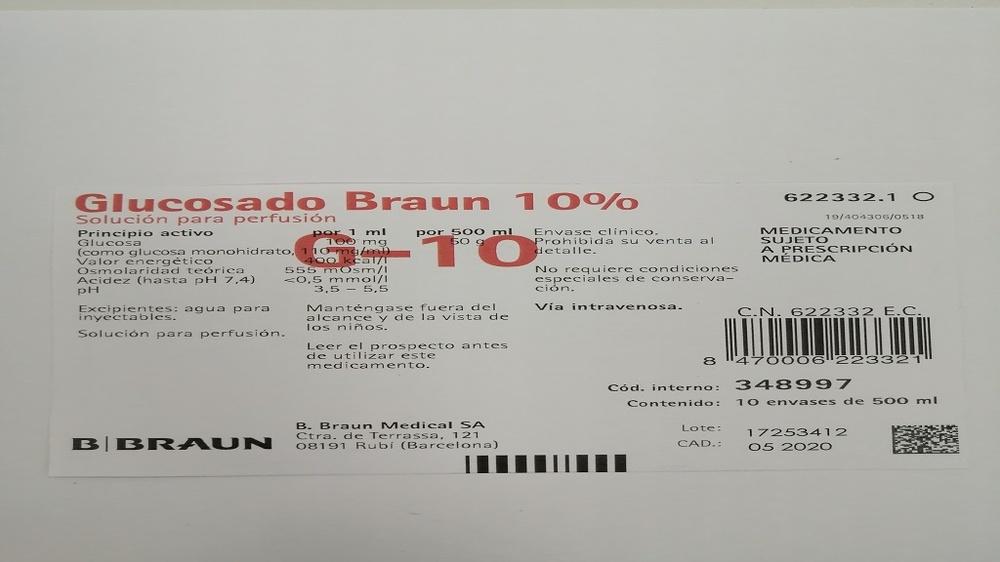
Composition of Braun Glucose 10%:
Active ingredients | Per 1 ml | Per 100 ml | Per 1,000 ml |
Glucose (as glucose monohydrate, 110 mg/ml) | 100 mg | 10 g | 100 g |
Energy value | 400 kcal/l |
Theoretical osmolality | 555 mOsm/l |
Acidity (up to pH 7.4) | <0.5 mmol/l |
pH | 3.5 – 5.5 |
The other ingredients are: water for injections.
Appearance of the product and packaging contents:
Braun Glucose 10% is a solution for infusion that comes in a low-density polyethylene bottle (Ecoflac Plus) 100, 250, and 500 ml (not all sizes may be marketed).
Clinical packaging: | 20 vials of 100 ml |
20 vials of 250 ml | |
10 vials of 500 ml |
Marketing authorization holder and manufacturer
B|BRAUN
- Braun Medical, S.A.
Ctra. de Terrassa, 121
08191-Rubí (Barcelona)
Spain
This package leaflet was approved in October 2019.
Detailed information on this medicine is available on the website of the Spanish Agency for Medicines and Health Products.
--------------------------------------------------------------------------------------------------------
This information is intended only for healthcare professionals:
The contents of each packaging are for a single infusion. The unused fraction should be discarded.
The infusion solution should be visually inspected before use. The solution should be transparent, not contain precipitates, and the packaging should be intact. Do not administer otherwise.
An aseptic procedure should be used to administer the solution and add medicines if necessary.
Before adding medicines to the solution or administering them simultaneously with other medicines, it should be checked that there are no incompatibilities.
These solutions should not be administered through the same infusion equipment used or to be used for blood administration, as there is a possibility of pseudoagglutination.
The disposal of unused medicines and all materials that have come into contact with them will be carried out in accordance with local regulations.
-

- Country of registration
- Dosage formINJECTABLE PERFUSION, 10 %
- ATC codeB05BA03
- Active substance
- Prescription requiredYes
- Manufacturer
- This information is for reference only and does not constitute medical advice. Always consult a doctor before taking any medication. Oladoctor is not responsible for medical decisions based on this content.
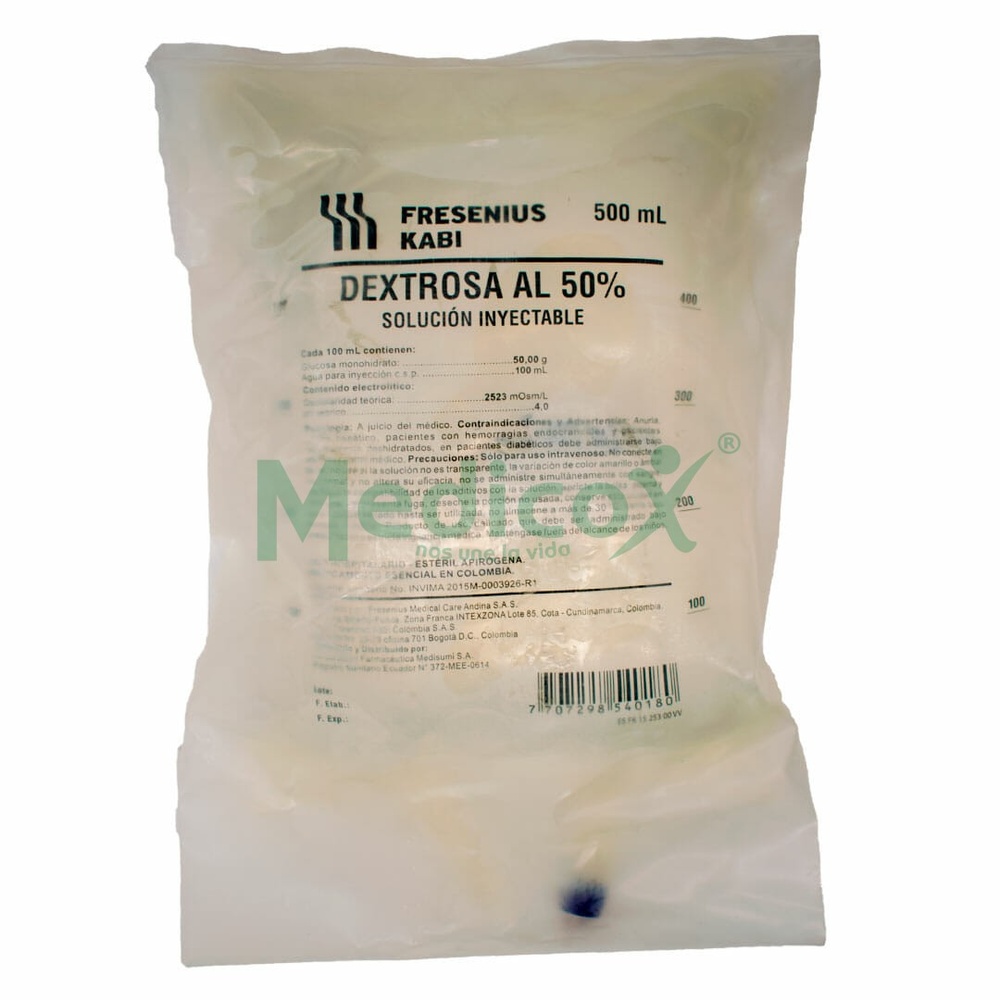
- Alternatives to GLUCOSADO BRAUN 10% SOLUTION FOR INFUSIONDosage form: INJECTABLE INFUSION, 50 g glucoseActive substance: carbohydratesManufacturer: Fresenius Kabi España, S.A.U.Prescription requiredDosage form: INJECTABLE PERFUSION, 11 gActive substance: carbohydratesManufacturer: Fresenius Kabi España, S.A.U.Prescription requiredDosage form: INJECTABLE INFUSION, Glucose Monohydrate 5.5 gActive substance: carbohydratesManufacturer: Fresenius Kabi España, S.A.U.Prescription required

Online doctors for GLUCOSADO BRAUN 10% SOLUTION FOR INFUSION
Discuss questions about GLUCOSADO BRAUN 10% SOLUTION FOR INFUSION, including use, safety considerations and prescription review, subject to medical assessment and local regulations.
Get GLUCOSADO BRAUN 10% SOLUTION FOR INFUSION Prescription Online
Fill in a 2-min form
Tell us your symptoms, history, and what medicine you're requesting.
Pick a doctor or let us assign
Choose a specialist or we'll match you with the next available doctor.
Doctor reviews your case
Usually within 30 minutes. They may ask follow-up questions via chat.
Collect from any pharmacy
Electronic prescription sent to your email — valid across Spain.
Frequently Asked Questions
GLUCOSADO BRAUN 10% SOLUTION FOR INFUSION requires a prescription in Spain. You can check with a doctor online whether this medicine may be appropriate for your situation.
The active ingredient in GLUCOSADO BRAUN 10% SOLUTION FOR INFUSION is carbohydrates. This information helps identify medicines with the same composition but different brand names.
GLUCOSADO BRAUN 10% SOLUTION FOR INFUSION is manufactured by B Braun Medical S.A.. Pharmacy brands and packaging may differ depending on the distributor.
Doctors such as Family doctors, Psychiatrists, Dermatologists, Cardiologists, Endocrinologists, Gastroenterologists, Pulmonologists, Nephrologists, Rheumatologists, Hematologists, Infectious disease physicians, Allergists, Geriatricians, Paediatricians, Oncologists may assess whether GLUCOSADO BRAUN 10% SOLUTION FOR INFUSION is appropriate, depending on your situation and local regulations. You can book an online consultation to discuss your symptoms and possible next steps.
Spain has a well-developed healthcare infrastructure across major cities such as Madrid, Barcelona, Valencia, and Seville. Pharmacies are widely available and operate under strict regulations, ensuring access to prescribed medications.
You can buy GLUCOSADO BRAUN 10% SOLUTION FOR INFUSION in Madrid, Barcelona, Seville, or Valencia at any local pharmacy with a valid prescription.
To obtain a prescription, you can use Oladoctor:
Other medicines with the same active substance (carbohydrates) include DEXTROSE FRESENIUS KABI 50% SOLUTION FOR INFUSION, FREEFLEX GLUCOSA 10% SOLUTION FOR INFUSION, FREEFLEX GLUCOSA 5% SOLUTION FOR INFUSION. These may have different brand names or formulations but contain the same therapeutic ingredient. Always consult a doctor before switching or starting a new medicine.
