



GLIMEPIRIDA 2 mg Tablets

Prescription review online
A doctor will review your case and decide whether a prescription is medically appropriate.

Talk to a doctor about this medicine
Discuss your symptoms and possible next steps in a quick online consultation.



How to use GLIMEPIRIDA STADA 2 mg TABLETS
Contents of the leaflet
- Introduction
- Package Leaflet: Information for the User
- Glimepiride Stada 2 mgTablets EFG
- What is Glimepiride Stada and what is it used for
- What you need to know before you take Glimepiride Stada
- How to take Glimepiride Stada
- Possible Adverse Effects
- Conservation of Glimepirida Stada
- Package Contents and Additional Information
Introduction
Package Leaflet: Information for the User

Not sure if this medicine is right for you?
Discuss your symptoms and treatment with a doctor online.
Glimepiride Stada 2 mgTablets EFG
Read all of this leaflet carefully before you start taking this medicine because it contains important information for you.
- Keep this leaflet, you may need to read it again.
- If you have any further questions, ask your doctor or pharmacist.
- This medicine has been prescribed for you only. Do not pass it on to others. It may harm them, even if their signs of illness are the same as yours.
- If you get any side effects, talk to your doctor or pharmacist. This includes any possible side effects not listed in this leaflet. See section 4.
Contents of the pack
- What is Glimepiride Stada and what is it used for
- What you need to know before you take Glimepiride Stada
- How to take Glimepiride Stada
- Possible side effects
- Storage of Glimepiride Stada
- Contents of the pack and other information
1. What is Glimepiride Stada and what is it used for
Glimepiride is an oral anti-diabetic medication used to reduce blood sugar levels. This medication belongs to a group of anti-diabetic medications called sulfonylureas. Glimepiride works by increasing the amount of insulin released by the pancreas. Insulin reduces blood sugar levels.
What glimepiride is used for:
- Glimepiride is used to treat a certain type of diabetes (type 2 diabetes mellitus) when diet, exercise, and weight reduction alone are not adequate to control blood sugar levels.

Started taking the medicine and have questions?
Discuss your symptoms and treatment with a doctor online.
2. What you need to know before you take Glimepiride Stada
Do not take glimepiride if:
- you are allergic to glimepiride, other sulfonylureas (medicines used to reduce blood sugar, such as glibenclamide) or sulfonamides (medicines used in bacterial infections, such as sulfamethoxazole) or any of the other components of this medicine (listed in Section 6)
- you have insulin-dependent diabetes (type 1 diabetes mellitus)
- you suffer from ketoacidosis (a complication of diabetes with some of the following symptoms: fatigue, nausea, frequent urination, and muscle stiffness)
- you suffer from diabetic coma
- you suffer from severe kidney disorders
- you suffer from severe liver disorders
Do not take this medicine if you have any of the above conditions. If you are not sure, consult your doctor or pharmacist before taking glimepiride.
Do not take Glimepiride Stada 2 mg tablets if you are allergic to tartrazine or orange yellow S (see section 2 "Glimepiride Stada contains tartrazine and orange yellow S").
Warnings and precautions
Consult your doctor or pharmacist before starting to take glimepiride:
- if you are recovering from any injury, surgery, infection with fever, or other forms of stress, inform your doctor as it may be necessary to temporarily change treatment.
- if you have severe liver or kidney disorders.
If you are not sure if you have any of these conditions, consult your doctor or pharmacist before taking glimepiride.
A reduction in hemoglobin levels and red blood cell breakdown (hemolytic anemia) may occur in patients with glucose-6-phosphate dehydrogenase enzyme deficiency.
Children and adolescents
Information on the use of glimepiride in children under 18 years is limited. Therefore, its use in these patients is not recommended.
Important information about hypoglycemia (low blood sugar levels)
When taking glimepiride, you may experience hypoglycemia (low blood sugar levels). See below for additional information on hypoglycemia, its signs, and treatment.
The following factors may increase the risk of hypoglycemia:
- malnutrition, irregular meal schedule, skipping meals or delaying a meal or periods of fasting
- changes in diet
- taking more glimepiride than necessary
- having reduced liver function
- having severe liver disorders
- suffering from hormone-induced disorders (thyroid, pituitary, or adrenal cortex disorders)
- consuming alcohol (especially when skipping a meal)
- taking certain medications (see "Taking glimepiride with other medications")
- if you exercise more and do not eat enough or ingest foods with fewer carbohydrates than usual
Signs of hypoglycemia include:
- feeling of hunger, headache, nausea, vomiting, inactivity, numbness, sleep disturbances, fatigue, aggression, decreased concentration. Reduced alertness and reaction time, depression, confusion, visual and speech disturbances, difficulty speaking, agitation, partial paralysis, sensory disturbances, dizziness, feeling of uselessness.
- the following signs may also appear: sweating, cold and moist skin, anxiety, rapid heart palpitations, high blood pressure, palpitations, severe chest pain that may radiate to nearby areas (angina pectoris and cardiac arrhythmias).
If blood sugar levels continue to decrease, you may experience severe confusion (delirium), develop convulsions, loss of control, shallow breathing, and slower heartbeats, which can lead to unconsciousness. The clinical picture of a severe reduction in blood sugar levels may resemble a stroke.
Treatment of hypoglycemia:
In most cases, the signs of low blood sugar disappear quickly after consuming any type of sugar, e.g., sugar cubes, juice, sugar-containing tea.
You should, therefore, always carry some sugar (e.g., sugar cubes). Remember that artificial sweeteners are not effective. Contact your doctor or go to the hospital if sugar intake does not help or if symptoms recur.
Laboratory tests
Blood sugar or urine levels should be regularly monitored. Your doctor will also perform blood tests to monitor your blood cell counts and liver function.
Taking glimepiride with other medications
Tell your doctor or pharmacist if you are using, have recently used, or might use any other medications.
Your doctor may adjust your glimepiride dose if you are taking other medications, which may weaken or increase the effect of glimepiride on blood sugar levels.
The following medications may increase the blood sugar-reducing effect of glimepiride. This may cause a risk of hypoglycemia (low blood sugar levels):
- other medications for the treatment of diabetes mellitus (such as insulin or metformin)
- medications for the treatment of pain and inflammation (phenylbutazone, azapropazone, oxyphenbutazone, and medications similar to aspirin)
- medications for the treatment of urinary tract infections (such as some long-acting sulfonamides)
- medications for the treatment of fungal and bacterial infections (tetracyclines, chloramphenicol, fluconazole, miconazole, quinolones, clarithromycin)
- medications to prevent blood clot formation (coumarin derivatives such as warfarin)
- medications to increase muscle mass (anabolic agents)
- medications used as hormone replacement therapy for male sex hormones
- medications for the treatment of depression (fluoxetine, MAO inhibitors)
- medications to reduce high cholesterol levels (fibrates)
- medications to reduce high blood pressure (ACE inhibitors)
- medications called antiarrhythmics used to control abnormal heart rhythm (disopyramide)
- medications for the treatment of gout (allopurinol, probenecid, sulfinpyrazone)
- medications for the treatment of cancer (cyclophosphamide, ifosfamide, trofosfamide)
- medications for weight loss (fenfluramine)
- medications to increase circulation when administered at high doses by intravenous infusion (pentoxifylline)
- medications for the treatment of nasal allergies such as hay fever (tritoqualine)
- medications called sympatholytics for the treatment of high blood pressure, heart failure, or prostate symptoms.
The following medications may reduce the blood sugar-reducing effect of glimepiride. This may cause a risk of hyperglycemia (high blood sugar levels):
- medications containing female sex hormones (estrogens and progestogens)
- medications to facilitate urine production (thiazide diuretics)
- medications used to stimulate the thyroid gland (such as levothyroxine)
- medications for the treatment of allergies and inflammation (glucocorticoids)
- medications for the treatment of severe mental disorders (chlorpromazine and other phenothiazine derivatives)
- medications to increase heart rate, for the treatment of asthma or nasal congestion, cough, and colds, used for weight loss, or in life-threatening emergencies (adrenaline and sympathomimetics)
- medications to reduce high cholesterol levels (nicotinic acid)
- medications for the treatment of constipation when used long-term (laxatives)
- medications for the treatment of seizures (phenytoin)
- medications for the treatment of nervousness and sleep problems (barbiturates)
- medications for the treatment of high eye pressure (acetazolamide)
- medications for the treatment of high blood pressure or to reduce blood sugar levels (diazoxide)
- medications for the treatment of infections, tuberculosis (rifampicin)
- medications for the treatment of severe low blood sugar (glucagon)
The following medications may increase or reduce the blood sugar-reducing effect of glimepiride:
- medications for the treatment of stomach ulcers (called H2 antagonists)
- medications for the treatment of high blood pressure or heart failure, such as beta-blockers, clonidine, guanethidine, and reserpine. These medications may also mask the symptoms of hypoglycemia, so be careful when administering these medications
Glimepiride may increase or reduce the effect of the following medications:
- medications to prevent blood clot formation (coumarin derivatives such as warfarin).
Taking glimepiride with food, drinks, and alcohol
Consuming alcohol may increase or reduce the blood sugar-reducing effect of glimepiride in an unpredictable manner.
Pregnancy and breastfeeding
If you are pregnant or breastfeeding, think you may be pregnant, or are planning to have a baby, ask your doctor or pharmacist for advice before taking this medicine.
Pregnancy
Do not take glimepiride during pregnancy. Inform your doctor if you are or might be pregnant, or if you are planning to have a baby.
Breastfeeding
Glimepiride may pass into breast milk. Do not take glimepiride during breastfeeding.
Driving and using machines
You should be aware that your ability to concentrate and react may be impaired due to hypoglycemia or hyperglycemia (decrease or increase in blood sugar levels) or if you experience visual disturbances as a result of these conditions. Be aware that you may put yourself or others at risk (e.g., when driving or using machines). Consult your doctor if you can drive in case of:
- Having frequent episodes of hypoglycemia.
- Having fever or not having warning signs in case of hypoglycemia.
Glimepiride Stada 2 mg contains lactose and sodium
If your doctor has told you that you have an intolerance to some sugars, consult them before taking this medicine.
This medicine contains less than 23 mg of sodium (1 mmol) per tablet; this is, essentially, "sodium-free".
Glimepiride Stada 2 mg contains tartrazine and orange yellow S
These colorants may cause allergic reactions (see Section 4).
They may cause asthma, especially in patients allergic to acetylsalicylic acid.
3. How to take Glimepiride Stada
Follow exactly the administration instructions of this medicine given by your doctor. In case of doubt, consult your doctor or pharmacist again.
The recommended dose is:
The dose of glimepiride depends on your needs, condition, and blood and urine test results and is determined by your doctor. Do not take more tablets than your doctor has indicated:
- The initial recommended dose is 1 mg of glimepiride per day orally.
- If necessary, your doctor may increase the dose every 1-2 weeks of treatment.
- The maximum recommended dose is 6 mg of glimepiride per day.
- Combination therapy with glimepiride and metformin or glimepiride and insulin may be initiated. In this case, your doctor will determine the appropriate dose of glimepiride, metformin, or insulin for you individually.
- If you change your weight or lifestyle, or if you are in a stressful situation, it may be necessary to change the dose of glimepiride; in this case, inform your doctor.
Method of administration
- Take this medicine orally, immediately before or with the first main meal of the day (usually breakfast). If you do not have breakfast, take the medicine every day at the same time as indicated by your doctor. It is important not to skip any meals when taking glimepiride.
- Swallow the tablets whole with at least half a glass of water. Do not crush or chew the tablets.
If you take more glimepiride than you should
If you take too much glimepiride or an additional dose, there is a risk of hypoglycemia (see section 2 for symptoms of hypoglycemia) and you should take sufficient sugar (e.g., sugar cube, juice, sugar-containing tea) immediately and inform your doctor immediately. When treating hypoglycemia due to accidental ingestion in children, the amount of sugar administered should be carefully controlled to avoid the possibility of causing dangerous hyperglycemia. Do not give food or drinks to unconscious persons.
Since the state of hypoglycemia can last for some time, it is very important that the patient is carefully monitored until there is no danger. Hospitalization may be necessary as a precaution. Show the doctor the package or remaining tablets, so they know what the patient has ingested.
Severe cases of hypoglycemia accompanied by loss of consciousness and severe neurological impairment are emergency cases that require immediate medical treatment and hospitalization. Make sure that there are always informed people who can call a doctor in case of an emergency.
In case of overdose or accidental ingestion, consult the Toxicology Information Service. Phone 91 562 04 20.
If you forget to take glimepiride
Do not take a double dose to make up for forgotten doses.
If you stop taking glimepiride
If you stop taking glimepiride, the desired blood sugar-reducing effect will not be achieved, or your condition will worsen again. Continue taking glimepiride until your doctor tells you that you can stop.
If you have any further questions on the use of this medicine, ask your doctor or pharmacist.
4. Possible Adverse Effects
Like all medicines, glimepiride can cause adverse effects, although not all people suffer from them.
Tell your doctor immediately if you experience any of the following symptoms:
- Allergic reactions (including inflammation of blood vessels, often with skin rash) that can transform into severe reactions with difficulty breathing, drop in blood pressure, and occasionally shock.
- Abnormal liver function, including yellowish skin and eyes (jaundice), problems with bile flow (cholestasis), liver inflammation (hepatitis), or liver failure.
- Skin allergy (hypersensitivity) such as itching, rash, hives, and increased sensitivity to the sun. Some mild allergic reactions can evolve into severe reactions.
- Severe hypoglycemia, including loss of consciousness, seizures, or coma.
Some patients experience the following adverse reactions when taking glimepiride:
Rare(may affect up to 1 in 1,000 patients)
- Blood sugar levels below normal (hypoglycemia) (see section 2 "Warnings and Precautions")
- Decrease in the number of blood cells:
- Platelets (which increases the risk of bleeding or bruising).
- White blood cells (which facilitates infections).
- Red blood cells (which can cause pale skin and lead to weakness or shortness of breath).
These reactions usually disappear when treatment with glimepiride is discontinued.
Very Rare(may affect up to 1 in 10,000 patients)
- Allergic reactions (including inflammation of blood vessels, often with skin rash) that can transform into severe reactions with difficulty breathing, drop in blood pressure, and occasionally shock. If you experience any of these symptoms, tell your doctor immediately.
- Abnormal liver function, including yellowish skin and eyes (jaundice), problems with bile flow (cholestasis), liver inflammation (hepatitis), or liver failure. If you experience any of these symptoms, tell your doctor immediately.
- Nausea, diarrhea, feeling of being bloated, and abdominal pain.
- Decrease in blood sodium levels (appreciable in blood tests).
Frequency Not Known(cannot be estimated from available data)
- Skin allergy (hypersensitivity) such as itching, rash, hives, and increased sensitivity to the sun. Some mild allergic reactions can evolve into severe reactions with difficulty swallowing or breathing, swelling of the lips, throat, or tongue. If you experience any of these adverse reactions, tell your doctor immediately.
- Allergic reactions to sulfonylureas, sulfonamides, or related medications may occur.
- Visual disturbances may appear when starting treatment with glimepiride. This is due to changes in blood sugar levels and should improve quickly.
- Increased liver enzymes.
- Severe decrease in blood platelets and abnormal bleeding or bruising under the skin.
Glimepirida Stada 2 mg contains the colorants tartrazine and orange yellow S, which may cause allergic reactions.
Reporting Adverse Effects
If you experience any type of adverse effect, consult your doctor or pharmacist, even if it is a possible adverse effect that is not listed in this prospectus. You can also report them directly through the Spanish Pharmacovigilance System for Human Use Medicines: https://www.notificaram.es. By reporting adverse effects, you can contribute to providing more information on the safety of this medication.
5. Conservation of Glimepirida Stada
Keep this medication out of sight and reach of children.
Do not store at a temperature above 30 °C.
Do not use this medication after the expiration date shown on the packaging after CAD. The expiration date is the last day of the month indicated.
Medicines should not be thrown away through drains or into the trash. Deposit the packaging and unused medications at the SIGRE Point in the pharmacy. In case of doubt, ask your pharmacist how to dispose of the packaging and unused medications. This way, you will help protect the environment.
6. Package Contents and Additional Information
Composition of Glimepirida Stada 2 mg
The active ingredient is glimepiride.
Each tablet contains 2 mg of glimepiride.
The other components are lactose monohydrate, sodium glycolate starch type A, magnesium stearate, microcrystalline cellulose, povidone K 29-32, yellow iron oxide (E-172), orange yellow S (E-110), tartrazine (E-102), and brilliant blue FCF (E-133).
Appearance of the Product and Package Contents
Glimepirida Stada 2 mg tablets are green, flat, oblong, 10x5 mm tablets with beveled edges, scored on one side, and with a "G" engraved on the other.
In case you need a dose corresponding to half a tablet, it can be split on a hard surface with the score facing up. Apply pressure from above with your thumb and with a small spatula, divide it into two equal halves.
Glimepirida Stada is presented in PVC/Al blisters.
The packaging of Glimepirida Stada 2 mg tablets contains 10, 20, 30, 50, 60, 90, 118, 120, 180, and 195 tablets.
Not all package sizes may be marketed.
Marketing Authorization Holder and Manufacturer
Marketing Authorization Holder
Laboratorio STADA, S.L.
Frederic Mompou, 5
08960 Sant Just Desvern (Barcelona) Spain
Manufacturer
STADA Arzneimittel AG
Stadastr. 2 – 18
61118 Bad Vilbel (Germany)
or
Actavis Ltd.
BLB015-016, Bulebel Industrial Estate
Zejtun ZTN 3000, Malta
or
Balkanpharma – Dupnitsa AD
3 Samokovsko Shosse Str.
Dupnitsa 2600
Bulgaria
or
KeVaRo Group EOOD
9 Tsaritsa Eleonora Str., Office #23
Krasno Selo Administrative District
1618 Sofia
Bulgaria
This medication is authorized in the member states of the European Economic Area with the following names:
Denmark Glimepirid Stada 1mg/2mg/3mg/4mg/6mg tablets
Spain Glimepirida STADA 2 mg/4 mg EFG tablets
Germany Glimepirid STADA 1mg/2mg/3mg/4mg/6mg tablets
Sweden Glimepirid Stada 1mg/2mg/3mg/4mg tablets
France Glimepirid EG 1mg/2mg/3mg/4mg/6mg tablets
Date of the Last Revision of this Prospectus:August 2019
Detailed and updated information on this medication is available on the website of the Spanish Agency for Medicines and Health Products (AEMPS) http://www.aemps.gob.es/
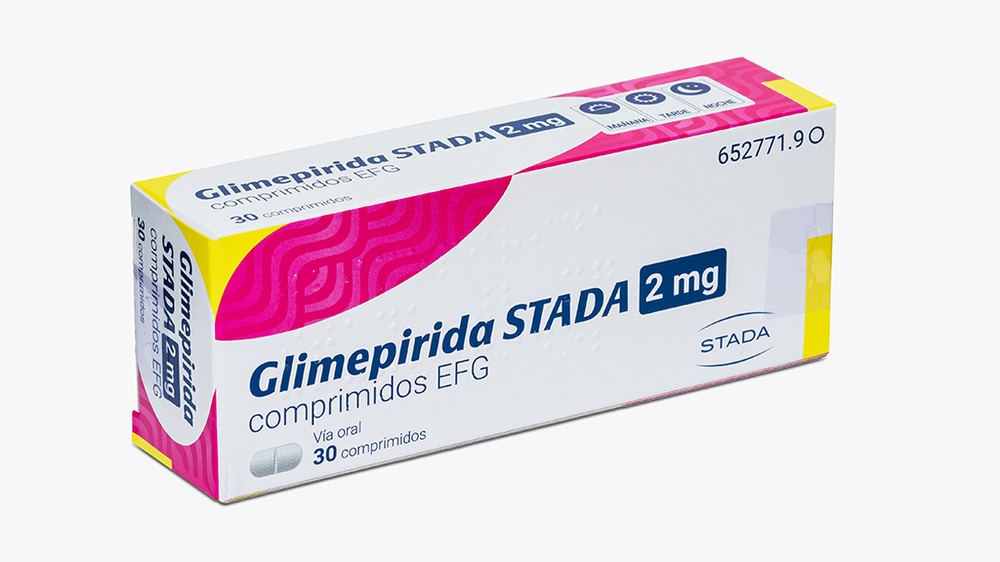
- Country of registration
- Dosage formTABLET, 2 mg
- ATC codeA10BB12
- Average pharmacy price10.18 EUR
- Active substance
- Prescription requiredYes
- Manufacturer
- CompositionLACTOSA HIDRATADA (140,0 mg mg), CARBOXIMETILALMIDON SODICO (8,0 mg mg), LACTOSA HIDRATADA (1,08 mg mg), TARTRAZINA (E-102; CI=19140) (0,14 mg mg), AMARILLO ANARANJADO S (E 110, CI=15985) (0,11 mg mg)
- This information is for reference only and does not constitute medical advice. Always consult a doctor before taking any medication. Oladoctor is not responsible for medical decisions based on this content.
- Alternatives to GLIMEPIRIDA STADA 2 mg TABLETSDosage form: TABLET, 2 mgActive substance: glimepirideManufacturer: Sanofi Aventis S.A.Prescription requiredDosage form: TABLET, 4 mgActive substance: glimepirideManufacturer: Sanofi Aventis S.A.Prescription requiredDosage form: TABLET, 2 mgActive substance: glimepirideManufacturer: Aurovitas Spain, S.A.U.Prescription required
Online doctors for GLIMEPIRIDA STADA 2 mg TABLETS
Discuss questions about GLIMEPIRIDA STADA 2 mg TABLETS, including use, safety considerations and prescription review, subject to medical assessment and local regulations.

Get GLIMEPIRIDA STADA 2 mg TABLETS Prescription Online
Fill in a 2-min form
Tell us your symptoms, history, and what medicine you're requesting.
Pick a doctor or let us assign
Choose a specialist or we'll match you with the next available doctor.
Doctor reviews your case
Usually within 30 minutes. They may ask follow-up questions via chat.
Collect from any pharmacy
Electronic prescription sent to your email — valid across Spain.
Frequently Asked Questions
GLIMEPIRIDA STADA 2 mg TABLETS requires a prescription in Spain. You can check with a doctor online whether this medicine may be appropriate for your situation.
The active ingredient in GLIMEPIRIDA STADA 2 mg TABLETS is glimepiride. This information helps identify medicines with the same composition but different brand names.
The average pharmacy price for GLIMEPIRIDA STADA 2 mg TABLETS is around 10.18 EUR. Prices may vary depending on the manufacturer and dosage form.
GLIMEPIRIDA STADA 2 mg TABLETS is manufactured by Laboratorio Stada S.L.. Pharmacy brands and packaging may differ depending on the distributor.
Doctors such as Family doctors, Psychiatrists, Dermatologists, Cardiologists, Endocrinologists, Gastroenterologists, Pulmonologists, Nephrologists, Rheumatologists, Hematologists, Infectious disease physicians, Allergists, Geriatricians, Paediatricians, Oncologists may assess whether GLIMEPIRIDA STADA 2 mg TABLETS is appropriate, depending on your situation and local regulations. You can book an online consultation to discuss your symptoms and possible next steps.
Spain has a well-developed healthcare infrastructure across major cities such as Madrid, Barcelona, Valencia, and Seville. Pharmacies are widely available and operate under strict regulations, ensuring access to prescribed medications.
You can buy GLIMEPIRIDA STADA 2 mg TABLETS in Madrid, Barcelona, Seville, or Valencia at any local pharmacy with a valid prescription.
To obtain a prescription, you can use Oladoctor:
Other medicines with the same active substance (glimepiride) include AMARYL 2 mg TABLETS, AMARYL 4 mg TABLETS, GLIMEPIRIDE AUROVITAS 2 mg TABLETS. These may have different brand names or formulations but contain the same therapeutic ingredient. Always consult a doctor before switching or starting a new medicine.
