



GIOTRIF 20 mg Film-Coated Tablets

Prescription review online
A doctor will review your case and decide whether a prescription is medically appropriate.

Talk to a doctor about this medicine
Discuss your symptoms and possible next steps in a quick online consultation.



How to use GIOTRIF 20 mg FILM-COATED TABLETS
Contents of the leaflet
- Introduction
- What is GIOTRIF and what is it used for
- What you need to know before taking GIOTRIF
- How to take GIOTRIF
- Possible side effects
- Storage of GIOTRIF
- Package Contents and Additional Information
Introduction
Prospective:Patient Information
GIOTRIF 20mg film-coated tablets
afatinib
Read the entire prospectus carefully before starting to take this medication, as it contains important information for you.
- Keep this prospectus, as you may need to read it again.
- If you have any doubts, consult your doctor or pharmacist.
- This medication has been prescribed to you only, and you should not give it to others, even if they have the same symptoms as you, as it may harm them.
- If you experience side effects, consult your doctor or pharmacist, even if they are not listed in this prospectus. See section 4.
Contents of the prospectus
- What is GIOTRIF and what is it used for
- What you need to know before taking GIOTRIF
- How to take GIOTRIF
- Possible side effects
- Storage of GIOTRIF
- Package contents and additional information
1. What is GIOTRIF and what is it used for
GIOTRIF is a medication that contains the active ingredient afatinib. It works by blocking the activity of a group of proteins called the ErbB family (including EGFR [Epidermal Growth Factor Receptor or ErbB1], HER2 [ErbB2], ErbB3, and ErbB4). These proteins are involved in the growth and spread of cancer cells and can be affected by changes (mutations) in the genes that produce them. By blocking the activity of these proteins, this medication can inhibit the growth and spread of cancer cells.
This medication is used alone to treat adult patients with a specific type of lung cancer (non-small cell lung cancer):
- that is characterized by a change (mutation) in the gene for EGFR. You may be prescribed GIOTRIF as your first treatment or if previous chemotherapy has been insufficient.
- of squamous type if previous chemotherapy treatment has been insufficient.

Not sure if this medicine is right for you?
Discuss your symptoms and treatment with a doctor online.
2. What you need to know before taking GIOTRIF
Do not take GIOTRIF
- if you are allergic to afatinib or any of the other components of this medication (listed in section 6).
Warnings and precautions
Consult your doctor or pharmacist before starting to take this medication:
- if you are a woman, weigh less than 50 kg, or have kidney problems. If any of these criteria apply to you, your doctor may subject you to closer monitoring, as side effects may be more intense.
- if you have a history of lung inflammation (interstitial lung disease).
- if you have liver problems. Your doctor may perform liver tests. Treatment with this medication is not recommended if you have severe liver disease.
- if you have a history of eye problems such as severe dry eye, inflammation of the transparent layer of the front of the eye (cornea), or ulcers on the outer eye, or if you use contact lenses.
- if you have a history of heart problems. Your doctor may subject you to closer monitoring.
Inform your doctor immediately while taking this medication:
- if you have diarrhea. It is essential to start treatment at the first symptoms of diarrhea.
- if you develop a skin rash. It is crucial to start treatment for the rash as soon as possible.
- if you notice the onset or sudden worsening of difficulty breathing, possibly with cough or fever. This could be symptoms of lung inflammation (interstitial lung disease) that can be life-threatening.
- if you experience severe stomach or intestinal pain, fever, chills, nausea, vomiting, or abdominal stiffness or swelling, as these could be symptoms of a tear in the stomach or intestinal wall (gastrointestinal perforation). Additionally, inform your doctor if you have had a history of gastrointestinal ulcers or diverticular disease, or if you are receiving concomitant treatment with non-steroidal anti-inflammatory drugs (NSAIDs) (used to treat pain and swelling) or steroids (used for inflammation and allergies), as this may increase the risk.
- if you experience redness and acute pain in the eye or worsening of these symptoms, increased tearing, blurred vision, and/or sensitivity to light. You may need urgent treatment.
See also section 4 "Possible side effects".
Children and adolescents
GIOTRIF is not recommended for use in children or adolescents. Do not administer this medication to children or adolescents under 18 years of age.
Other medications and GIOTRIF
Inform your doctor or pharmacist if you are taking, have recently taken, or may need to take any other medication, including herbal remedies and medications purchased without a prescription.
In particular, the following medications, if taken before GIOTRIF, may increase GIOTRIF levels in the blood and, therefore, the risk of side effects. Therefore, these medications should be taken with as much time as possible between them and the intake of GIOTRIF. This means leaving a gap of at least 6 hours (for medications taken twice a day) or 12 hours (for medications taken once a day) between them and the intake of GIOTRIF:
- Ritonavir, ketoconazole (except in shampoo), itraconazole, erythromycin, nelfinavir, and saquinavir, used to treat various types of infections.
- Verapamil, quinidine, and amiodarone, used to treat heart diseases.
- Cyclosporine A and tacrolimus, medications that affect the immune system.
The following medications may decrease the effectiveness of GIOTRIF:
- Carbamazepine, phenytoin, and phenobarbital, used to treat seizures.
- St. John's Wort (Hypericum perforatum), a herbal remedy for treating depression.
- Rifampicin, an antibiotic used to treat tuberculosis.
Ask your doctor if you are unsure when to take these medications.
GIOTRIF may increase blood levels of other medications, including the following:
- Sulfasalazine, used to treat inflammation/infection.
- Rosuvastatin, used to lower cholesterol.
Inform your doctor before taking these medications with GIOTRIF.
Pregnancy and breastfeeding
If you are pregnant or breastfeeding, think you may be pregnant, or plan to become pregnant, consult your doctor or pharmacist before using this medication.
Pregnancy
You should avoid becoming pregnant while taking this medication. If you could become pregnant, you should use adequate contraceptive methods during treatment and for at least 1 month after the last dose of this medication. This is because there may be a risk of harm to the fetus.
If you become pregnant while taking this medication, you should inform your doctor immediately. Your doctor will decide with you whether to continue treatment or not.
You should ask your doctor for advice if you plan to become pregnant after taking the last dose of this medication, as your body may not have completely eliminated this medication.
Breastfeeding
You should not breastfeed your baby while taking this medication, as there may be a risk to the breastfed child.
Driving and using machines
If you notice symptoms related to treatment that affect your vision (e.g., redness and/or irritation of the eye, dry eye, tearing, sensitivity to light) or your ability to concentrate and react, it is recommended that you do not drive or use machines until the side effects have disappeared (see section 4 Possible side effects).
GIOTRIF contains lactose
This medication contains a sugar called lactose. If your doctor has told you that you have an intolerance to certain sugars, consult with them before taking this medication.
3. How to take GIOTRIF
Follow the administration instructions of this medication indicated by your doctor exactly. In case of doubt, consult your doctor or pharmacist again.
Dosage
The recommended dose is 40 mg once a day.
Your doctor may adjust (increase or decrease) your dose based on how well you tolerate this medication.
When to take GIOTRIF
- It is essential to take this medication without food.
- Take this medication at least 1 hour before eating or
- If you have already eaten, wait at least 3 hours before taking this medication.
- Take this medication once a day, approximately at the same time each day. This makes it easier to remember to take the medication.
- Do not break, chew, or crush the tablet.
- Swallow the tablet whole with a glass of still water.
GIOTRIF should be taken orally. If you have difficulty swallowing the tablet, dissolve it in a glass of still water. Do not use other liquids. Place the tablet in the water without crushing it and stir the water occasionally for about 15 minutes until the tablet has dissolved into very small particles. Drink the liquid immediately. To ensure that you take all of the medication, fill the glass with water again and drink it.
If you are unable to swallow and have a gastric tube, your doctor may suggest that the medication be administered through the tube.
If you take more GIOTRIF than you should
Contact your doctor or pharmacist immediately. You may experience more intense side effects, and your doctor may interrupt treatment and provide supportive treatment.
If you forget to take GIOTRIF
- If your next dose is more than 8 hours away, take the missed dose as soon as you remember.
- If your next dose is within the next 8 hours, skip the missed dose and take the next dose at the usual time. Then continue taking your tablets as usual.
Do not take a double dose (two tablets at once instead of one) to make up for missed doses.
If you interrupt treatment with GIOTRIF
Do not stop taking this medication without consulting your doctor first. It is essential to take this medication every day, as long as your doctor prescribes it. If you do not take this medication as prescribed by your doctor, your cancer may grow again.
If you have any other questions about the use of this medication, ask your doctor or pharmacist.

Started taking the medicine and have questions?
Discuss your symptoms and treatment with a doctor online.
4. Possible side effects
Like all medications, GIOTRIF can cause side effects, although not everyone will experience them.
Inform your doctor immediately if you notice any of the following serious side effects. In some cases, your doctor may need to interrupt treatment and reduce your dose or stop treatment:
- Diarrhea(very common, may affect more than 1 in 10 patients).
Diarrhea that lasts more than 2 days or severe diarrhea can lead to fluid loss (frequent, may affect up to 1 in 10 patients), low potassium levels in the blood (frequent), and worsening of kidney function (frequent). Diarrhea can be treated. As soon as the first symptoms of diarrhea appear, drink plenty of fluids. Inform your doctor immediately and start antidiarrheal treatment as soon as possible. You should have an antidiarrheal medication on hand before starting treatment with GIOTRIF.
- Skin rash(very common).
It is essential to start treatment for the rash as soon as possible. Inform your doctor as soon as a rash appears. If the treatment for the rash does not work and the rash worsens (e.g., if your skin peels or blisters appear), you should inform your doctor immediately, as your doctor may decide to interrupt your treatment with GIOTRIF. The rash may appear or worsen in areas of the body exposed to the sun. It is recommended to use appropriate clothing and sunscreen as protective measures against the sun.
- Lung inflammation(uncommon, may affect up to 1 in 100 patients), known as "interstitial lung disease". Inform your doctor immediately if you notice the onset or sudden worsening of difficulty breathing, possibly with cough or fever.
- Eye irritation or inflammation
Eye irritation or inflammation can occur (conjunctivitis/dry eye occurs frequently and keratitis occurs uncommonly). Inform your doctor if you experience sudden onset or worsening of eye symptoms such as pain or redness of the eyes or dry eyes.
If you experience any of these symptoms, inform your doctor as soon as possible.
The following side effects have also been reported:
Very common side effects(may affect more than 1 in 10 patients):
- Mouth inflammation and ulcers
- Nail infections
- Loss of appetite
- Nosebleeds
- Nausea
- Vomiting
- Itching
- Dry skin
Common side effects(may affect up to 1 in 10 patients):
- Pain, redness, swelling, or peeling of the skin on your hands and feet
- Increased levels of liver enzymes aspartate aminotransferase and alanine aminotransferase in blood tests
- Inflammation of the inner layer of the bladder with a burning sensation when urinating and frequent or urgent need to urinate (cystitis)
- Altered taste (dysgeusia)
- Stomach pain, indigestion, heartburn
- Lip inflammation
- Weight loss
- Nasal congestion
- Muscle spasms
- Fever
- Nail problems
Uncommon side effects(may affect up to 1 in 100 patients):
- Pancreatitis (inflammation of the pancreas)
- Appearance of a tear in the stomach or intestinal wall (gastrointestinal perforation)
- Abnormal growth of eyelashes (including misdirected growth that can cause damage to the ocular surface)
Rare side effects(may affect up to 1 in 1,000 patients):
- Severe skin blistering or peeling (indicative of Stevens-Johnson syndrome and toxic epidermal necrolysis)
Reporting side effects
If you experience any side effects, consult your doctor or pharmacist, even if they are not listed in this prospectus. You can also report them directly through the national reporting system included in Appendix V. By reporting side effects, you can help provide more information on the safety of this medication.
5. Storage of GIOTRIF
Keep this medication out of the sight and reach of children.
Do not use this medication after the expiration date stated on the carton, pouch, and blister after EXP. The expiration date is the last day of the month indicated.
Store in the original packaging to protect it from moisture and light.
Medications should not be disposed of via wastewater or household waste. Ask your pharmacist how to dispose of the packaging and any unused medication. This will help protect the environment.
6. Package Contents and Additional Information
Composition of GIOTRIF
- The active ingredient is afatinib. Each film-coated tablet contains 30 mg of afatinib (as dimaleate).
- The other ingredients are lactose monohydrate, microcrystalline cellulose (E460), anhydrous colloidal silica (E551), crospovidone type A, magnesium stearate (E470b), hypromellose (E464), macrogol 400, titanium dioxide (E171), talc (E553b), polysorbate 80 (E433), aluminum lake of indigo carmine (E132).
Appearance and Package Contents of the Product
GIOTRIF 30 mg are dark blue, round film-coated tablets. They have the code “T30” engraved on one side and the Boehringer Ingelheim logo on the other.
GIOTRIF film-coated tablets are presented in packs containing 1, 2, or 4 single-dose precut blisters. Each blister contains 7 x 1 film-coated tablets and is packaged in an aluminum bag along with a desiccant that should not be swallowed.
Only certain pack sizes may be marketed.
Marketing Authorization Holder
Boehringer Ingelheim International GmbH
Binger Strasse 173
55216 Ingelheim am Rhein
Germany
Manufacturer
Boehringer Ingelheim Pharma GmbH & Co. KG
Binger Strasse 173
55216 Ingelheim am Rhein
Germany
Boehringer Ingelheim France
100-104 Avenue de France
75013 Paris
France
You can request more information about this medicinal product by contacting the local representative of the marketing authorization holder:
Belgium/Belgique/Belgien Boehringer Ingelheim SComm Tel: +32 2 773 33 11 | Lithuania Boehringer Ingelheim RCV GmbH & Co KG Lithuanian branch Tel: +370 5 2595942 |
| Luxembourg/Luxemburg Boehringer Ingelheim SComm Tel: +32 2 773 33 11 |
Czech Republic Boehringer Ingelheim spol. s r.o. Tel: +420 234 655 111 | Hungary Boehringer Ingelheim RCV GmbH & Co KG Hungarian branch office Tel: +36 1 299 8900 |
Denmark Boehringer Ingelheim Danmark A/S Tel: +45 39 15 88 88 | Malta Boehringer Ingelheim Ireland Ltd. Tel: +353 1 295 9620 |
Germany Boehringer Ingelheim Pharma GmbH & Co. KG Tel: +49 (0) 800 77 90 900 | Netherlands Boehringer Ingelheim B.V. Tel: +31 (0) 800 22 55 889 |
Estonia Boehringer Ingelheim RCV GmbH & Co KG Estonian branch Tel: +372 612 8000 | Norway Boehringer Ingelheim Norway KS Tel: +47 66 76 13 00 |
Greece Boehringer Ingelheim Ελλάς Μονοπρόσωπη Α.Ε. Tel: +30 2 10 89 06 300 | Austria Boehringer Ingelheim RCV GmbH & Co KG Tel: +43 1 80 105-7870 |
Spain Boehringer Ingelheim España, S.A. Tel: +34 93 404 51 00 | Poland Boehringer Ingelheim Sp. z o.o. Tel: +48 22 699 0 699 |
France Boehringer Ingelheim France S.A.S. Tel: +33 3 26 50 45 33 | Portugal Boehringer Ingelheim Portugal, Lda. Tel: +351 21 313 53 00 |
Croatia Boehringer Ingelheim Zagreb d.o.o. Tel: +385 1 2444 600 | Romania Boehringer Ingelheim RCV GmbH & Co KG Bucharest branch Tel: +40 21 302 2800 |
Ireland Boehringer Ingelheim Ireland Ltd. Tel: +353 1 295 9620 | Slovenia Boehringer Ingelheim RCV GmbH & Co KG Ljubljana branch office Tel: +386 1 586 40 00 |
Iceland Vistor hf. Tel: +354 535 7000 | Slovak Republic Boehringer Ingelheim RCV GmbH & Co KG organizational unit Tel: +421 2 5810 1211 |
Italy Boehringer Ingelheim Italia S.p.A. Tel: +39 02 5355 1 | Finland Boehringer Ingelheim Finland Ky Tel: +358 10 3102 800 |
Cyprus Boehringer Ingelheim Ελλάς Μονοπρόσωπη Α.Ε. Tel: +30 2 10 89 06 300 | Sweden Boehringer Ingelheim AB Tel: +46 8 721 21 00 |
Latvia Boehringer Ingelheim RCV GmbH & Co KG Latvian branch Tel: +371 67 240 011 | United Kingdom (Northern Ireland) Boehringer Ingelheim Ireland Ltd. Tel: +353 1 295 9620 |
Date of the Last Revision of this Leaflet:
Other Sources of Information
Detailed information on this medicinal product is available on the European Medicines Agency website: https://www.ema.europa.eu.
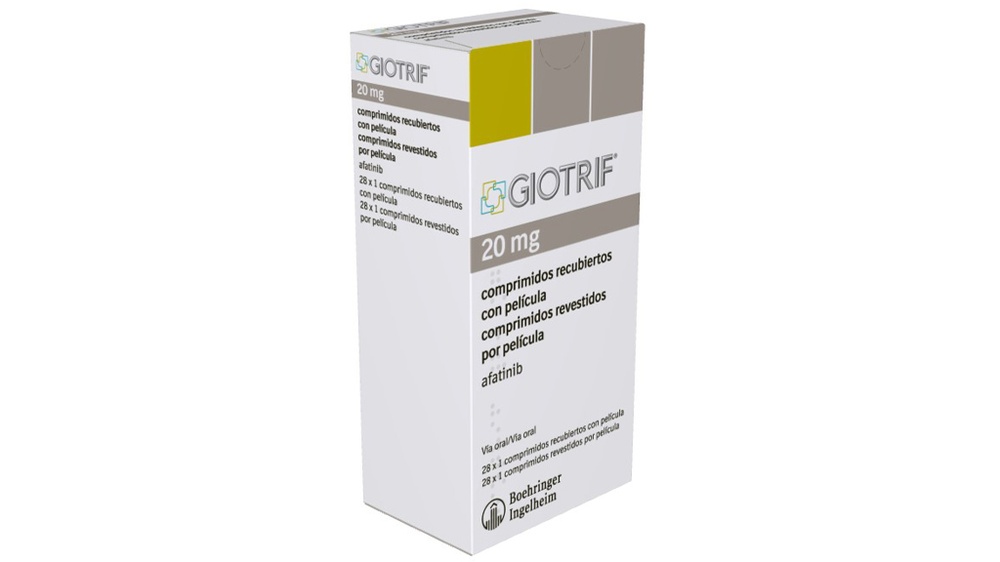
- Country of registration
- Dosage formTABLET, 20 mg
- ATC codeL01EB03
- Active substance
- Prescription requiredYes
- Manufacturer
- CompositionLACTOSA MONOHIDRATO (123,8600 mg mg), POLISORBATO 80 (0,1500 mg mg)
- This information is for reference only and does not constitute medical advice. Always consult a doctor before taking any medication. Oladoctor is not responsible for medical decisions based on this content.
- Alternatives to GIOTRIF 20 mg FILM-COATED TABLETSDosage form: TABLET, 30 mgActive substance: afatinibManufacturer: Boehringer Ingelheim International GmbhPrescription requiredDosage form: TABLET, 40 mgActive substance: afatinibManufacturer: Boehringer Ingelheim International GmbhPrescription requiredDosage form: TABLET, 50 mgActive substance: afatinibManufacturer: Boehringer Ingelheim International GmbhPrescription required
Online doctors for GIOTRIF 20 mg FILM-COATED TABLETS
Discuss questions about GIOTRIF 20 mg FILM-COATED TABLETS, including use, safety considerations and prescription review, subject to medical assessment and local regulations.
Get GIOTRIF 20 mg FILM-COATED TABLETS Prescription Online
Fill in a 2-min form
Tell us your symptoms, history, and what medicine you're requesting.
Pick a doctor or let us assign
Choose a specialist or we'll match you with the next available doctor.
Doctor reviews your case
Usually within 30 minutes. They may ask follow-up questions via chat.
Collect from any pharmacy
Electronic prescription sent to your email — valid across Spain.
Frequently Asked Questions
GIOTRIF 20 mg FILM-COATED TABLETS requires a prescription in Spain. You can check with a doctor online whether this medicine may be appropriate for your situation.
The active ingredient in GIOTRIF 20 mg FILM-COATED TABLETS is afatinib. This information helps identify medicines with the same composition but different brand names.
GIOTRIF 20 mg FILM-COATED TABLETS is manufactured by Boehringer Ingelheim International Gmbh. Pharmacy brands and packaging may differ depending on the distributor.
Doctors such as Family doctors, Psychiatrists, Dermatologists, Cardiologists, Endocrinologists, Gastroenterologists, Pulmonologists, Nephrologists, Rheumatologists, Hematologists, Infectious disease physicians, Allergists, Geriatricians, Paediatricians, Oncologists may assess whether GIOTRIF 20 mg FILM-COATED TABLETS is appropriate, depending on your situation and local regulations. You can book an online consultation to discuss your symptoms and possible next steps.
Spain has a well-developed healthcare infrastructure across major cities such as Madrid, Barcelona, Valencia, and Seville. Pharmacies are widely available and operate under strict regulations, ensuring access to prescribed medications.
You can buy GIOTRIF 20 mg FILM-COATED TABLETS in Madrid, Barcelona, Seville, or Valencia at any local pharmacy with a valid prescription.
To obtain a prescription, you can use Oladoctor:
Other medicines with the same active substance (afatinib) include GIOTRIF 30 mg FILM-COATED TABLETS, GIOTRIF 40 mg FILM-COATED TABLETS, GIOTRIF 50 mg FILM-COATED TABLETS. These may have different brand names or formulations but contain the same therapeutic ingredient. Always consult a doctor before switching or starting a new medicine.
