






How to use GADOVIST 1 mmol/ml INJECTABLE SOLUTION IN VIAL
Translated with AI
This page provides general information and does not replace a doctor’s consultation. Always consult a doctor before taking any medication. Seek urgent medical care if symptoms are severe.
Show originalContents of the leaflet
Introduction
Package Leaflet:information for the patient
Gadovist 1mmol/ml solution for injection in vial
Gadobutrol
Read all of this leaflet carefully before you start using this medicine,because it contains important information for you.
- Keep this leaflet, you may need to read it again.
- If you have any further questions, ask your doctor or the person who is giving you Gadovist (the radiologist) or the hospital or clinic staff where the MRI (Magnetic Resonance Imaging) is taking place.
- If you experience side effects, consult your doctor or radiologist, even if they are not listed in this leaflet. See section 4.
Contents of the pack
- What is Gadovist and what is it used for
- What you need to know before you use Gadovist
- How to use Gadovist
- Possible side effects
- Storage of Gadovist
- Contents of the pack and further information
1. What is Gadovist and what is it used for
Gadovist is a contrast medium for magnetic resonance imaging (MRI) used for the diagnosis of the brain, spine, and blood vessels. Gadovist can also help your doctor to determine the type of abnormalities (benign or malignant) known or suspected in the liver and kidneys.
Gadovist may also be used for MRI of abnormalities in other parts of the body. It facilitates the visualization of abnormal structures or lesions and helps in the differentiation of healthy tissue and diseased tissue.
It is indicated in adults and children of all ages (including full-term newborns).
How Gadovist works
MRI is a diagnostic imaging method that uses the behavior of water molecules in normal and abnormal tissues. This is done using a complex system of magnets and radio waves. Computers record the activity and transform it into images.
Gadovist is administered by injection into your vein. This medicine is for diagnostic use only and will only be administered by a healthcare professional with experience in the clinical practice of MRI.

2. What you need to know before you use Gadovist
Do not use Gadovist if you
- are allergic to gadobutrol or any of the other components of this medicine (listed in section 6).
Warnings and precautions
Consult your doctor before using Gadovist if you
- have or have had an allergy (e.g., hay fever, hives) or asthma
- have had a previous reaction to any contrast medium
- have severely impaired kidney function
- have cerebral disorders with seizures (fits) or have other nervous system diseases
- have a pacemaker or any implant or clip that contains iron in your body.
Your doctor will decide whether it is possible to perform the planned examination.
- Allergic reactions or other types of reactions that involve heart problems, difficulty breathing, or skin reactions may occur after using Gadovist. Severe reactions are possible. Most of these reactions occur within 30 minutes after administration of Gadovist. Therefore, you will be observed after treatment. Delayed reactions (after hours or days) have been observed (see section 4).
Kidneys/Liver
Tell your doctor if
- your kidneys are not working properly
- you have recently had or are about to have a liver transplant.
Your doctor may decide to perform a blood test to check the proper functioning of your kidneys before deciding on the use of Gadovist, especially if you are 65 years or older.
Newborns and Infants
Due to the immaturity of the renal function of newborns up to 4 weeks and infants up to 1 year of age, Gadovist should only be used in these patients after careful evaluation by the doctor.
Other medicines and Gadovist
Tell your doctor or pharmacist if you are using, have recently used, or might use any other medicines.
Pregnancy and breastfeeding
If you are pregnant or breastfeeding, think you may be pregnant, or plan to become pregnant, consult your doctor or pharmacist before using this medicine.
- Pregnancy
Gadobutrol may cross the placenta. It is not known whether it affects the fetus. You should inform your doctor if you think you are pregnant or might be, as Gadovist should not be used during pregnancy unless it is considered absolutely necessary.
- Breastfeeding
Tell your doctor if you are breastfeeding or about to start. Your doctor will assess whether you should continue or interrupt breastfeeding 24 hours after administration of Gadovist.
Gadovist contains sodium
This medicine contains less than 23 mg of sodium per dose (based on the average dose administered to a 70 kg person); i.e., it is essentially "sodium-free".

3. How to use Gadovist
Gadovist is injected by a healthcare professional through a small needle into a vein. Your MRI examination can start immediately.
After injection, you will be observed for at least 30 minutes.
Usual dosage
The usual dose that is right for you will depend on your body weight and the region examined by MRI:
In adults, a single injection of 0.1 milliliters of Gadovist per kilogram of body weight is recommended (this means that for a person weighing 70 kg, the dose would be 7 milliliters). However, an additional injection of up to 0.2 milliliters per kilogram of body weight may be administered within 30 minutes after the first injection. A total of 0.3 milliliters of Gadovist per kilogram of body weight may be administered as a maximum (this means that for a 70 kg person, the dose would be 21 milliliters) for the acquisition of images of the central nervous system (CNS) and magnetic resonance angiography (MRA) with contrast. A minimum dose of 0.075 milliliters of Gadovist per kilogram of body weight (this means that for a 70 kg person, the dose would be 5.25 milliliters) may be administered for the CNS.
At the end of the leaflet, additional information on the administration and handling of Gadovist is included.
Dosage in special populations
The use of Gadovist is not recommended in patients with severe kidney problems or in patients who have recently had or are about to have a liver transplant. However, if use is required, during an examination, only one dose of Gadovist should be administered, and a second injection should not be administered until at least 7 days have passed.
Use in newborns, infants, children, and adolescents
The recommended dose in children of all ages (including full-term newborns) is a single injection of 0.1 milliliters of Gadovist per kilogram of body weight for all indications (see section 1).
Due to the immaturity of the renal function of newborns up to 4 weeks and infants up to 1 year of age, Gadovist should only be used in these patients after careful evaluation by the doctor. Newborns and infants should only receive one dose of Gadovist during an examination and should not receive a second injection until at least 7 days have passed.
Elderly patients
If you are 65 years or older, it is not necessary to adjust the dose, but you may have a blood test to check the proper functioning of your kidneys.
If you use more Gadovist than you should
Overdose is unlikely to occur. If it happens, your doctor will treat all symptoms and may use dialysis to remove Gadovist from your body. There is no evidence to suggest that hemodialysis is suitable for preventing the development of nephrogenic systemic fibrosis (NSF; see section 4), so it should not be used to treat this disease. In some cases, your heart will be monitored.
In case of overdose or accidental ingestion, contact the Toxicology Information Service (telephone 91 562 04 20).
If you have any further questions about the use of this medicine, ask your doctor or radiologist.
4. Possible side effects
Like all medicines, this medicine can cause side effects, although not everybody gets them. Most of these reactions occur within 30 minutes after administration of Gadovist. In rare cases, delayed allergic reactions or other types of reactions have been observed, from a few hours to several days after receiving Gadovist. If this happens to you, inform your doctor or radiologist immediately.
The most serious side effects(which have been fatal or life-threatening in some cases) are:
- cardiac arrest, severe lung disease (acute respiratory distress syndrome)/ fluid in the lungs (pulmonary edema), and severe allergic reactions (anaphylactoid reactions)(including respiratory arrest and shock).
Additionally, the following life-threatening or fatal side effectshave been observed:
- shortness of breath (dyspnea), loss of consciousness, severe allergic reactions, severe drop in blood pressure that can lead to collapse, respiratory arrest, fluid in the lungs, inflammation of the mouth and throat, and low blood pressure.
In rare cases:
- allergic reactions (hypersensitivity and anaphylaxis)may occur, including severe reactions (shock) that require immediate medical intervention.
If you notice:
- swelling of the face, lips, tongue, or throat
- coughing and sneezing
- difficulty breathing
- itching
- nasal congestion
- hives (urticaria)
inform the MRI department staff immediately. These may be the first signs of a severe reaction. Your examination may be suspended, and you may need further treatment.
The most common side effects(may affect up to 1 in 10 people) are:
- headaches, feeling sick (nausea), and dizziness.
Most side effects are mild to moderate.
The following side effects have been observed in clinical trialsbefore the approval of Gadovist, according to their frequency:
Common:may affect up to 1 in 10 people
- headache
- feeling sick (nausea)
Uncommon:may affect up to 1 in 100 people
- allergic reaction, for example:
- low blood pressure
- hives (urticaria)
- swelling of the face
- swelling (edema)of the eyelids
- flushing
The frequency of the following allergic reactions is unknown:
- a severe allergic reaction (anaphylactoid shock)
- severe drop in blood pressure that can lead to collapse (shock)
- respiratory arrest
- difficulty breathing (bronchospasm)
- blue discoloration of the skin and mucous membranes (cyanosis)
- swelling of the mouth and throat
- swelling of the throat
- high blood pressure
- chest pain
- swelling of the face, throat, mouth, lips, and/or tongue (angioedema)
- conjunctivitis
- increased sweating
- coughing
- sneezing
- burning sensation
- paleness (pale skin)
- dizziness, altered taste, numbness, and tingling
- shortness of breath (dyspnea)
- vomiting
- redness of the skin (erythema)
- itching (pruritus, including generalized pruritus)
- rash (including generalized rash, flat red patches (macular rash), small raised patches (papular rash), itchy rash (pruritic rash))
- various reactions at the injection site (e.g., leakage into the surrounding tissue, burning, cold, heat, redness, rash, pain, or hematoma)
- feeling of heat
Rare:may affect up to 1 in 1,000 people
- fainting
- seizure (convulsions)
- altered sense of smell
- rapid heartbeat
- palpitations
- dry mouth
- general malaise
- feeling of cold
Additional side effects that have been reported after the approval of Gadovist with unknown frequency(the frequency cannot be estimated from the available data):
- cardiac arrest (cardiac arrest)
- Severe lung disease (acute respiratory distress syndrome)
- Fluid in the lungs (pulmonary edema)
- Cases of nephrogenic systemic fibrosis - NSF (which causes skin hardening and may also affect soft tissues and internal organs) have been reported.
After administration of Gadovist, changes in renal function test results (e.g., increased serum creatinine) have been observed.
Reporting of side effects
If you experience any side effects, consult your doctor or radiologist, even if they are not listed in this leaflet. You can also report them directly through the Spanish Pharmacovigilance System for Human Use Medicines https://www.notificaram.es. By reporting side effects, you can help provide more information on the safety of this medicine.
5. Storage of Gadovist
Keep this medicine out of the sight and reach of children.
Do not use this medicine after the expiry date which is stated on the label and carton after EXP. The expiry date is the last day of the month shown. This medicine does not require any special storage conditions.
Chemical, physical, and microbiological stability has been demonstrated for 24 hours at 20-25°C. From a microbiological point of view, the product should be used immediately after opening.
This medicine is a clear, colorless to pale yellow solution. Do not use this medicine if you notice a severe change in color or the presence of particles or if the container appears to be defective.
Medicines should not be disposed of via wastewater or household waste. The healthcare professional will dispose of this medicine when it is no longer needed. This will help protect the environment.
6. Container Contents and Additional Information
Composition of Gadovist
The active ingredient is gadobutrol.
1 ml of injectable solution contains 604.72 mg of gadobutrol (equivalent to 1 mmol of gadobutrol containing 157.25 mg of gadolinium).
1 vial with 2 ml contains 1,209.44 mg of gadobutrol.
1 vial with 7.5 ml contains 4,535.4 mg of gadobutrol.
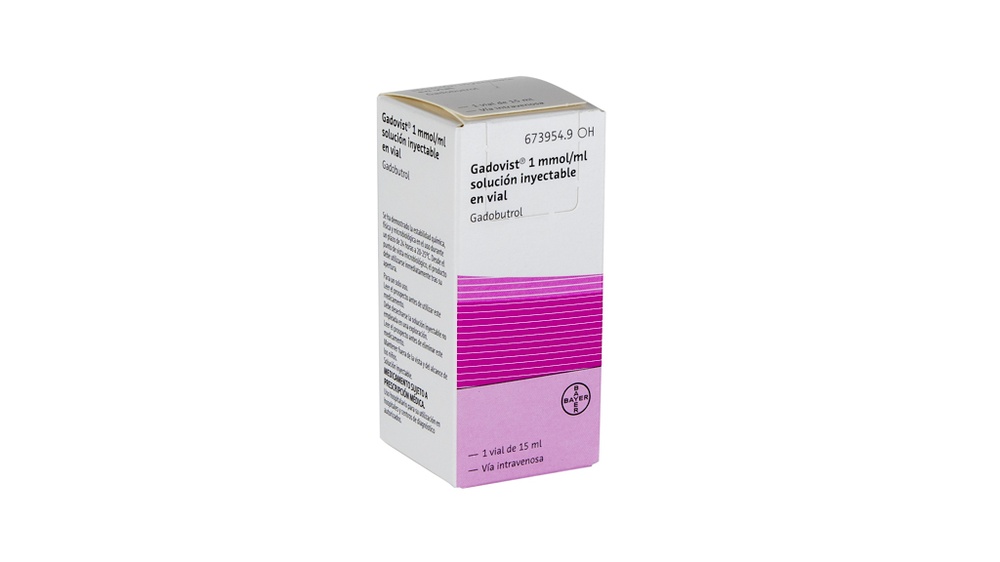
1 vial with 15 ml contains 9,070.8 mg of gadobutrol.
1 vial with 30 ml contains 18,141.6 mg of gadobutrol.
1 bottle with 65 ml contains 39,306.8 mg of gadobutrol.
The other componentsare sodium calcobutrol (see end of section 2), trometamol, 1N hydrochloric acid, and water for injectable preparations.
Appearance of the Product and Container Contents
Gadovist is a clear, colorless to pale yellow injectable solution.
The container contents are:
- 1 or 3 vials containing 2 ml of injectable solution
- 1 or 10 vials containing 7.5, 15, or 30 ml of injectable solution
- 1 or 10 bottles containing 65 ml of injectable solution (in a 100 ml bottle)
Clinical containers:
- 3 vials containing 2 ml of injectable solution
- 10 vials containing 7.5, 15, or 30 ml of injectable solution
- 10 bottles containing 65 ml of injectable solution
Only some package sizes may be marketed.
Marketing Authorization Holder and Manufacturer
Marketing Authorization Holder
Bayer Hispania, S.L.
Av. Baix Llobregat, 3-5
08970 Sant Joan Despí (Barcelona)
Spain
Manufacturer
Bayer AG
Müllerstrasse 178
13353 Berlin
Germany
This medicinal product is authorized in the Member States of the European Economic Area under the following names:
Austria, Germany | Gadovist 1.0 mmol/ml Injektionslösung |
Belgium, Bulgaria, Cyprus, Denmark, Estonia, Finland, Greece, Italy, Luxembourg, Norway, Portugal, Sweden | Gadovist |
Croatia | Gadovist 1.0 mmol/ml otopina za injekciju |
France | GADOVIST 1.0 mmol/ml, solution injectable |
Iceland | Gadovist 1.0 mmól/ml, stungulyf, lausn |
Ireland | Gadovist 1.0 mmol/ml solution for injection |
Netherlands | Gadovist 1.0 mmol/ml, oplossing voor injectie |
Slovenia | Gadovist 1.0 mmol/ml raztopina za injiciranje |
Slovakia | Gadovist 1.0 mmol/ ml injekcný roztok |
Spain | Gadovist 1 mmol/ml solución inyectable en vial |
Malta | Gadovist 1.0 mmol/ml solution for injection |
Date of the last revision of this leaflet:09/2024.
Other sources of information
Detailed information on this medicinal product is available on the website of the Spanish Agency for Medicines and Health Products (AEMPS) (http://www.aemps.gob.es)
----------------------------------------------------------------------------------------------------------------------------
This information is intended only for healthcare professionals:
- Renal Insufficiency
Before administration of Gadovist, it is recommended to evaluate all patients for possible renal dysfunction through laboratory tests.
Cases of nephrogenic systemic fibrosis (NSF) associated with the use of some gadolinium contrast agents have been reported in patients with severe acute or chronic renal insufficiency (GFR or glomerular filtration rate < 30 ml/minute/1.73 m2). Patients undergoing liver transplantation have a special risk since the incidence of renal failure is high in this group. Since there is a possibility that NSF may occur with Gadovist, it should only be used in patients with severe renal insufficiency and in patients in the perioperative period of a liver transplant after a careful risk-benefit assessment and if diagnostic information is essential and cannot be available through contrast-free magnetic resonance imaging. If the use of Gadovist is necessary, the dose should not exceed 0.1 mmol/kg body weight. During an examination, no more than one dose should be administered. Due to the lack of information on repeated administration, the administration of Gadovist should not be repeated unless an interval of at least 7 days has passed between injections.
Since the renal elimination of Gadovist may be reduced in elderly patients, it is especially important to evaluate patients aged 65 and older for possible renal dysfunction.
Hemodialysis shortly after administration of Gadovist may be useful for the elimination of Gadovist from the body. After 3 sessions of hemodialysis, approximately 98% of the contrast agent is eliminated from the body. However, there is no evidence that hemodialysis is suitable for the prevention of nephrogenic systemic fibrosis (NSF) in patients who are not yet undergoing hemodialysis.
- Pregnancy and Lactation
Gadovist should not be used during pregnancy unless the clinical situation of the woman requires treatment with Gadovist.
The continuation or interruption of breastfeeding 24 hours after administration of Gadovist will be at the discretion of the doctor and the breastfeeding mother.
- Hypersensitivity Reactions
As with other intravenous contrast agents, Gadovist may be associated with hypersensitivity/anaphylactoid reactions or other idiosyncratic reactions characterized by cardiovascular, respiratory, or cutaneous manifestations, which can range from mild to severe reactions, including shock. In general, patients with cardiovascular diseases are more susceptible to serious or even fatal consequences from severe hypersensitivity reactions.
The risk of hypersensitivity reactions may be greater in the following cases:
- previous reaction to contrast agents
- history of bronchial asthma
- history of allergic disorders
In patients with an allergic predisposition, the decision to use Gadovist should be made after a careful assessment of the benefit-risk ratio.
Most of these reactions occur within 30 minutes after administration. Therefore, it is recommended to observe the patient after treatment.
It is necessary to have the appropriate medication for the treatment of hypersensitivity reactions, as well as to prepare for the application of emergency measures.
In rare cases, delayed reactions (after hours or several days) have been observed.
- Seizure Disorders
As with other gadolinium-based contrast agents, special caution should be taken in patients with a low convulsive threshold.
- Overdose
In case of an accidental overdose, cardiovascular monitoring (including ECG) and monitoring of renal function are recommended as precautionary measures.
In the case of overdose in patients with renal insufficiency, Gadovist can be eliminated through hemodialysis. After 3 sessions of hemodialysis, approximately 98% of the contrast agent is eliminated from the body. However, there is no evidence that hemodialysis is suitable for the prevention of nephrogenic systemic fibrosis (NSF).
- Before Injection
This medicinal product is intended for single use.
This medicinal product is a clear, colorless to pale yellow solution. The solution should be visually inspected before use. Gadovist should not be used if it shows significant color changes, particle formation, or if the container is defective.
- Instructions for Use
Gadovist should not be placed in the syringe until immediately before use.
The rubber stopper should not be pierced more than once.
Unused contrast agent in an examination should be discarded.
If this medicinal product is intended to be used with an automated application system, the suitability of this system for the intended use must be demonstrated by the manufacturer of the system. Any additional instructions from the manufacturer must also be strictly followed.
Any unused contrast agent in an examination should be disposed of according to local regulations.
Validity Period after First Opening of the Container
Any unused solution for injection should be discarded. Chemical, physical, and microbiological stability have been demonstrated for 24 hours at 20-25°C. From a microbiological point of view, the product should be used immediately. If not used immediately, the storage times during use and the conditions prior to use are the responsibility of the user.
The detachable label of the vials/bottles should be stuck to the patient's medical record to allow for accurate recording of the gadolinium contrast agent used. The dose used should also be recorded. In the case of electronic patient records, the product name, batch number, and administered dose should be entered.
Posology
The lowest dose that provides sufficient contrast for diagnostic purposes should be used. The dose should be calculated based on the patient's body weight and should not exceed the recommended dose per kilogram of body weight indicated in this section.
- Adults
Indications in the CNS
The recommended dose in adults is 0.1 mmol per kilogram of body weight (mmol/kg bw), equivalent to 0.1 ml/kg bw of the 1.0 M solution.
If a clinically justified suspicion of a lesion persists despite a non-diagnostic MRI or when more precise information may influence patient treatment, an additional dose of up to 0.2 ml/kg bw may be administered within 30 minutes after the first injection. A dose of 0.075 mmol of gadobutrol per kg of body weight (equivalent to 0.075 ml of Gadovist per kg of body weight) may be administered as a minimum for CNS imaging.
Whole-body MRI (except MRA)
In general, administration of 0.1 ml of Gadovist per kg of body weight is sufficient to answer the clinical question.
Contrast-Enhanced Magnetic Resonance Angiography (MRA)
Imaging of 1 field of view (FOV): 7.5 ml for body weights below 75 kg; 10 ml for body weights of 75 kg or more (equivalent to 0.1-0.15 mmol/kg bw).
Imaging of more than 1 field of view (FOV): 15 ml for body weights below 75 kg; 20 ml for body weights of 75 kg or more (equivalent to 0.2-0.3 mmol/kg bw).
- Pediatric Population
The recommended dose in children of all ages (including term neonates) is 0.1 mmol of gadobutrol per kilogram of body weight (equivalent to 0.1 ml of Gadovist per kilogram of body weight) for all indications (see section 1).
Due to the immaturity of renal function in neonates up to 4 weeks and infants up to 1 year of age, Gadovist should only be used in these patients after careful assessment at a dose not exceeding 0.1 mmol/kg body weight. During an examination, no more than one dose should be administered. Due to the lack of information on repeated administration, the administration of Gadovist should not be repeated unless an interval of at least 7 days has passed between injections.
Images
The required dose is administered intravenously as a bolus injection. Contrast-enhanced MRI can begin immediately after (shortly after injection, depending on the pulse sequences used and the study protocol).
An optimal signal enhancement is observed during the first arterial pass for contrast-enhanced MRA and during a period of approximately 15 minutes after injection of Gadovist for CNS indications (the timing depends on the type of lesion/tissue).
T1-weighted image sequences are particularly suitable for contrast-enhanced examinations.
Additional information on the use of Gadovist is provided in section 3 of the leaflet.
-

- Country of registration
- Dosage formINJECTABLE, 604.72 mg gadobutrol/ml
- ATC codeV08CA09
- Active substance
- Prescription requiredYes
- Manufacturer
- This information is for reference only and does not constitute medical advice. Always consult a doctor before taking any medication. Oladoctor is not responsible for medical decisions based on this content.
- Alternatives to GADOVIST 1 mmol/ml INJECTABLE SOLUTION IN VIALDosage form: INJECTABLE, 604.72 mg gadobutrol/mlActive substance: gadobutrolManufacturer: Bayer Hispania S.L.Prescription requiredDosage form: INJECTABLE, 1.0 mmol/mlActive substance: gadobutrolManufacturer: Ge Healthcare Bio-Sciences, S.A.U.Prescription requiredDosage form: INJECTABLE, 1.0 mmol/mlActive substance: gadobutrolManufacturer: Ge Healthcare Bio-Sciences, S.A.U.Prescription required

Online doctors for GADOVIST 1 mmol/ml INJECTABLE SOLUTION IN VIAL
Discuss questions about GADOVIST 1 mmol/ml INJECTABLE SOLUTION IN VIAL, including use, safety considerations and prescription review, subject to medical assessment and local regulations.









Get GADOVIST 1 mmol/ml INJECTABLE SOLUTION IN VIAL Prescription Online
Fill in a 2-min form
Tell us your symptoms, history, and what medicine you're requesting.
Pick a doctor or let us assign
Choose a specialist or we'll match you with the next available doctor.
Doctor reviews your case
Usually within 30 minutes. They may ask follow-up questions via chat.
Collect from any pharmacy
Electronic prescription sent to your email — valid across Spain.
Frequently Asked Questions
GADOVIST 1 mmol/ml INJECTABLE SOLUTION IN VIAL requires a prescription in Spain. You can check with a doctor online whether this medicine may be appropriate for your situation.
The active ingredient in GADOVIST 1 mmol/ml INJECTABLE SOLUTION IN VIAL is gadobutrol. This information helps identify medicines with the same composition but different brand names.
GADOVIST 1 mmol/ml INJECTABLE SOLUTION IN VIAL is manufactured by Bayer Hispania S.L.. Pharmacy brands and packaging may differ depending on the distributor.
Doctors such as Family doctors, Psychiatrists, Dermatologists, Cardiologists, Endocrinologists, Gastroenterologists, Pulmonologists, Nephrologists, Rheumatologists, Hematologists, Infectious disease physicians, Allergists, Geriatricians, Paediatricians, Oncologists may assess whether GADOVIST 1 mmol/ml INJECTABLE SOLUTION IN VIAL is appropriate, depending on your situation and local regulations. You can book an online consultation to discuss your symptoms and possible next steps.
Spain has a well-developed healthcare infrastructure across major cities such as Madrid, Barcelona, Valencia, and Seville. Pharmacies are widely available and operate under strict regulations, ensuring access to prescribed medications.
You can buy GADOVIST 1 mmol/ml INJECTABLE SOLUTION IN VIAL in Madrid, Barcelona, Seville, or Valencia at any local pharmacy with a valid prescription.
To obtain a prescription, you can use Oladoctor:
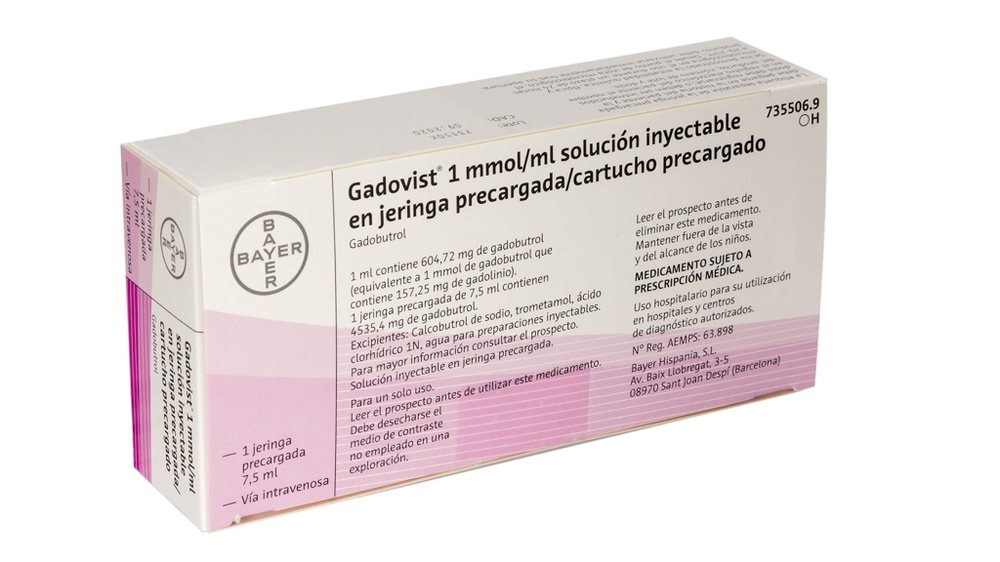
Other medicines with the same active substance (gadobutrol) include GADOVIST 1 mmol/ml INJECTABLE SOLUTION IN PRE-FILLED SYRINGE/PRE-FILLED CARTRIDGE, PIXXOSCAN 1.0 mmol/mL Injectable Solution, PIXXOSCAN 1.0 mmol/mL Injectable Solution in Pre-filled Syringe. These may have different brand names or formulations but contain the same therapeutic ingredient. Always consult a doctor before switching or starting a new medicine.
