


Gabitril 10 mg comprimidos recubiertos con película

Prescription request online
A doctor will review your case and decide whether a prescription is medically appropriate.

Talk to a doctor about this medicine
Discuss your symptoms and possible next steps in a quick online consultation.



How to use GABITRIL 10 mg FILM-COATED TABLETS
Contents of the leaflet
- Introduction
- What is Gabitril and what is it used for
- Before taking Gabitril
- How to take Gabitril
- Possible side effects
- Storage of Gabitril
- Further information
Introduction
Package Leaflet: Information for the User
Gabitril 10 mg Film-Coated Tablets
Tiagabine (as monohydrate hydrochloride)
Read all of this leaflet carefully before you start taking this medicine because it contains important information for you.
- Keep this leaflet, you may need to read it again.
- If you have any further questions, ask your doctor or pharmacist.
- This medicine has been prescribed for you only. Do not pass it on to others. It may harm them, even if their signs of illness are the same as yours.
- If you get any side effects, talk to your doctor or pharmacist. This includes any possible side effects not listed in this leaflet. See section 4.
Contents of the pack:
- What is Gabitril and what is it used for
- What you need to know before you take Gabitril
- How to take Gabitril
- Possible side effects
- Storage of Gabitril
- Contents of the pack and other information
1. What is Gabitril and what is it used for
Gabitril is an antiepileptic medicine. Tiagabine, the active substance of Gabitril, increases the brain levels of gamma-aminobutyric acid (GABA), thus preventing or reducing the number of seizures (epileptic episodes).
Gabitril is used to help control epilepsy in adults and adolescents over 12 years of age with partial seizures.
It is given in combination with other medicines when these are not effective enough on their own.

Not sure if this medicine is right for you?
Discuss your symptoms and treatment with a doctor online.
2. Before taking Gabitril
Do not take Gabitril:
- If you are allergic (hypersensitive) to tiagabine or any of the other ingredients of this medicine listed in section 6.
- If you have severe liver disease.
- In combination with herbal preparations containing St. John's Wort (Hypericum perforatum). See “Using other medicines”.
Be cautious when taking Gabitril:
- If you are under 12 years of age.
- If you have generalized epilepsy, as you may experience worsening of absences (short periods of clouding of consciousness).
- If you stop treatment with Gabitril because it may cause a recurrence of seizures. Do not stop taking Gabitril without consulting your doctor.
- If you have anxiety or depression, or have had them in the past, these symptoms may worsen or recur during treatment with Gabitril. You should inform your doctor if you feel absent, anxious, or depressed.
- A small number of people treated with antiepileptics such as tiagabine have had thoughts of self-harm or suicide. If at any time you experience these thoughts, contact your doctor immediately.
- If you notice an increase in the number of seizures or new types of seizures, you should inform your doctor. He will indicate whether it is necessary to modify your treatment.
- If you notice the appearance of a skin rash, including blisters or if you notice the spontaneous appearance of bruises on the skin or darkening of the skin, contact your doctor immediately.
- If you notice any vision problems, you should contact your doctor as Gabitril may occasionally cause visual field defects.
- If your doctor has told you that you have an intolerance to some sugars, do not take Gabitril, as it contains lactose.
- If you have mild or moderate liver problems, your doctor should adjust the dose of Gabitril.
If you experience (or have experienced) any of these symptoms, please inform your doctor.
Using other medicines:
If you are taking, have recently taken, or might take any of the following medicines, please consult your doctor or pharmacist before starting to take Gabitril:
- Other antiepileptic medicines such as phenytoin, carbamazepine, phenobarbital, and primidone, as they may reduce and shorten the effects of Gabitril.
- Rifampicin (a medicine for the treatment of tuberculosis), as it may reduce and shorten the effects of Gabitril.
- Herbal preparations containing St. John's Wort (Hypericum perforatum), as they should not be taken with Gabitril (see “Do not take Gabitril”).
In case you need to combine it with one or more of these medicines, your doctor may need to adjust the dose of Gabitril.
Taking Gabitril with food and drinks:
You should take Gabitril tablets with food or a snack.
Pregnancy and breastfeeding:
As a precautionary measure, it is preferable not to take Gabitril during pregnancy or breastfeeding.
Inform your doctor if you discover that you are pregnant or plan to have a child.
If you are pregnant or breastfeeding, think you may be pregnant, or are planning to have a baby, ask your doctor or pharmacist for advice before taking this medicine.
Driving and using machines:
This medicine may cause symptoms such as drowsiness, dizziness, or changes in vision and reduce your reaction ability. These effects, as well as the disease itself, may make it difficult for you to drive vehicles or operate machines. Therefore, do not drive, operate machines, or engage in other activities that require special attention until your doctor assesses your response to this medicine.
Important information about some of the ingredients of Gabitril:
This medicine contains lactose. If your doctor has told you that you have an intolerance to some sugars, consult with them before taking this medicine.
3. How to take Gabitril
Follow exactly the administration instructions of this medicine indicated by your doctor. In case of doubts, consult your doctor or pharmacist again.
Gabitril tablets should always be taken with water, during a meal or snack.
When you start taking Gabitril, your doctor will work with you to determine the appropriate dose to control your epilepsy. You will start taking Gabitril tablets once or twice a day. Then, the dose will be gradually increased until the sufficient dose to control your epilepsy is reached.
Once the dose is established, you may need to take Gabitril tablets two or three times a day.
The starting dose of Gabitril is 5 to 10 mg daily, with the dose increased weekly by 5 to 10 mg daily.
Depending on the other medicines you are taking, the average maintenance dose of Gabitril may range from 15 to 50 mg daily, although sometimes higher doses are indicated.
If you have mild or moderate liver problems, your doctor will need to adjust the dose of Gabitril.
Gabitril tablets can be used with caution for the treatment of elderly patients. Your doctor will decide what the most appropriate treatment is for you.
If you take more Gabitril than you should
In cases of overdose or accidental ingestion, consult your doctor, nurse, or call the Toxicology Information Service, phone 91 562 04 20, indicating the medicine and the amount ingested.
The most common symptoms of Gabitril overdose are seizures, mutism (silence), and withdrawal, loss of consciousness, loss of memory, coma, difficulty in coordinating movements, drowsiness, abnormal involuntary movements (dyskinesia), dizziness, confusion, speech alteration, agitation, tremors, muscle contraction, vomiting, and hostility.
If you forget to take Gabitril
If you forget your daily dose, take the next dose normally. Do not take a double dose to make up for the forgotten dose.
If you stop taking Gabitril
You should continue taking Gabitril for as long as your doctor considers it necessary.
Do not stop taking Gabitril without consulting your doctor first, as there is a risk of recurrence of seizures. Your doctor will explain how to gradually reduce the dose (over 2-3 weeks).
If you have any further questions on the use of this medicine, ask your doctor or pharmacist.
Started taking the medicine and have questions?
Discuss your symptoms and treatment with a doctor online.
4. Possible side effects
Like all medicines, Gabitril can cause side effects, although not everybody gets them.
Side effects are usually mild to moderate. Most occur during the first few months of treatment and are often brief. These may include:
Very common side effects (may affect more than 1 in 10 people):
- Dizziness
- Tremors
- Drowsiness
- Depression
- Nervousness
- Difficulty concentrating
- Fatigue
- Nausea
Common side effects (may affect up to 1 in 10 people):
- Diarrhea
- Appearance of bruises (darkening of the skin). If you notice the appearance of bruises, contact your doctor immediately.
Uncommon side effects (may affect up to 1 in 100 people)
Rare side effects (may affect up to 1 in 10,000 people):
- Epileptic state that remains without seizure, a decrease in brain activity as determined by electroencephalogram, due to either rapid dose adjustment or dose increase of the medicine.
- Visual defects
- Confusion
- Hallucination
- Agitation
- False beliefs
Frequency not known (cannot be estimated from the available data):
- Encephalopathy (lethargy, confusion, with or without convulsions)
- Severe blistering rash. If you notice skin changes, contact your doctor immediately.
- Severe rash, including blisters or a severe rash with redness and skin peeling.
- Vomiting, abdominal pain
- Difficulty controlling movements; walking, stopping, or running in an unusual way, difficulty speaking
- Muscle twitches
- Blurred vision
- Temporary memory loss
Reporting of side effects:
Ifyou experience any side effects, talk to your doctor or pharmacist. This includes any possible side effects not listed in this leaflet. You can also report side effects directly through the Spanish Pharmacovigilance System for Human Use Medicines: https://www.notificaram.es. By reporting side effects, you can help provide more information on the safety of this medicine.
5. Storage of Gabitril
Keep out of the sight and reach of children.
Do not use this medicine after the expiry date which is stated on the carton and blister after EXP. The expiry date refers to the last day of the month shown.
Do not store above 25°C. Store in the original package.
Do not remove the tablets from their packaging until you are ready to take them.
Do not use Gabitril if you notice that the appearance of the tablets has changed (e.g., if you notice that the color changes: they are usually white).
Medicines should not be disposed of via wastewater or household waste. Return any unused tablets to your pharmacist. This will help to protect the environment.
6. Further information
Composition of Gabitril
- The active substance is tiagabine, present in the medicine as monohydrate hydrochloride.
- Each Gabitril 5 mg film-coated tablet contains 5 mg of tiagabine.
- The other ingredients are:
Core of the tablet:
Microcrystalline cellulose (E 460)
Ascorbic acid (E300)
Lactose
Pregelatinized starch (maize)
Crospovidone
Colloidal anhydrous silica (E 551)
Hydrogenated vegetable oil (Type 1)
Stearic acid
Magnesium stearate
Coating:
Hypromellose
Hydroxypropylcellulose (E 463)
Titanium dioxide (E 171)
Appearance of the product and pack contents:
Gabitril is a white, film-coated tablet.
The Gabitril 5 mg tablets are round and have “251” engraved on them.
Gabitril tablets are presented in a plastic bottle with a screw cap and an integrated desiccant.
Gabitril tablets are available in bottles of 20, 30, 50, 100, and 200 tablets.
Not all pack sizes may be marketed.
Marketing Authorisation Holder:
Teva B.V.
Swensweg 5, 2031 GA Haarlem
Netherlands
Manufacturer:
Balkanpharma – Dupnitsa AD
3 Samokovsko Shosse Str.
Dupnitsa, 2600
Bulgaria
Local Representative:
Teva Pharma, S.L.U.
C/ Anabel Segura, 11 Edificio Albatros B, 1ª planta
28108 Alcobendas (Madrid), Spain
This leaflet was approved in August 2016
Detailed and updated information on this medicine is available on the website of the Spanish Agency for Medicines and Health Products (AEMPS) http://www.aemps.gob.es/
Illustrative image - Country of registration
- Dosage formTABLET, 10 mg
- ATC codeN03AG06
- Average pharmacy price141.28 EUR
- Active substance
- Prescription requiredYes
- Manufacturer
- CompositionLACTOSA ANHIDRA (116,500 mg mg)
- This information is for reference only and does not constitute medical advice. Always consult a doctor before taking any medication. Oladoctor is not responsible for medical decisions based on this content.
- Alternatives to GABITRIL 10 mg FILM-COATED TABLETS
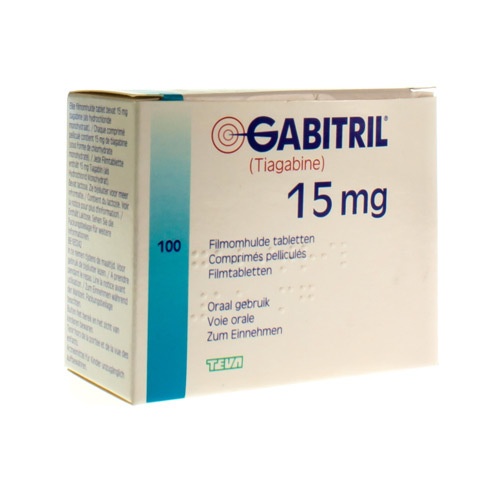 GABITRIL 15 mg FILM-COATED TABLETSIllustrative image
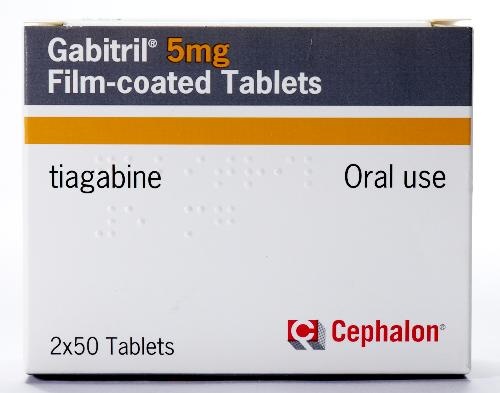 GABITRIL 5 mg FILM-COATED TABLETSIllustrative image
 VALPROIC ACID ALTAN 400 mg POWDER FOR INJECTABLE SOLUTIONIllustrative imageDosage form: INJECTABLE, 400 mgActive substance: valproic acidManufacturer: Altan Pharmaceuticals SaPrescription required
Online doctors for GABITRIL 10 mg FILM-COATED TABLETS
Discuss questions about GABITRIL 10 mg FILM-COATED TABLETS, including use, safety considerations and whether a prescription is appropriate, subject to medical assessment and local regulations.

Frequently Asked Questions
GABITRIL 10 mg FILM-COATED TABLETS requires a prescription in Spain. You can check with a doctor online whether this medicine may be appropriate for your situation.
The active ingredient in GABITRIL 10 mg FILM-COATED TABLETS is tiagabine. This information helps identify medicines with the same composition but different brand names.
The average pharmacy price for GABITRIL 10 mg FILM-COATED TABLETS is around 141.28 EUR. Prices may vary depending on the manufacturer and dosage form.
GABITRIL 10 mg FILM-COATED TABLETS is manufactured by Teva B.V.. Pharmacy brands and packaging may differ depending on the distributor.
Doctors such as Psychiatrists, Neurologists, General medicine doctors, Pain medicine doctors, Anaesthesiologists may assess whether GABITRIL 10 mg FILM-COATED TABLETS is appropriate, depending on your situation and local regulations. You can book an online consultation to discuss your symptoms and possible next steps.
The prescription is issued by a doctor after assessing your health. In Spain, GABITRIL 10 mg FILM-COATED TABLETS is then dispensed in pharmacies with that prescription. An online consultation does not guarantee that a prescription will be issued: the decision always rests with the doctor.
To request an assessment, you can use Oladoctor:
Other medicines with the same active substance (tiagabine) include GABITRIL 15 mg FILM-COATED TABLETS, GABITRIL 5 mg FILM-COATED TABLETS, VALPROIC ACID ALTAN 400 mg POWDER FOR INJECTABLE SOLUTION. These may have different brand names or formulations but contain the same therapeutic ingredient. Always consult a doctor before switching or starting a new medicine.
