


Furantoina 50 mg comprimidos

Prescription review online
A doctor will review your case and decide whether a prescription is medically appropriate.

Talk to a doctor about this medicine
Discuss your symptoms and possible next steps in a quick online consultation.



How to use FURANTOIN 50 mg TABLETS
Contents of the leaflet
- Introduction
- What is Furantoína and what is it used for
- What you need to know before you take Furantoína
- How to Take Furantoína
- Possible Side Effects
- Storage of Furantoína
- Contents of the Pack and Further Information
Introduction
Package Leaflet: Information for the User
Furantoína 50 mg Tablets
Nitrofurantoin
Read all of this leaflet carefully before you start taking this medicine because it contains important information for you.
- Keep this leaflet, you may need to read it again.
- If you have any further questions, ask your doctor, pharmacist, or nurse.
- This medicine has been prescribed for you only. Do not pass it on to others. It may harm them, even if their signs of illness are the same as yours.
- If you get any side effects, talk to your doctor, pharmacist, or nurse. This includes any possible side effects not listed in this leaflet. See section 4.
Contents of the Package Leaflet
- What is Furantoína and what is it used for
- What you need to know before you take Furantoína
- How to take Furantoína
- Possible side effects
- Storage of Furantoína
- Contents of the pack and further information
1. What is Furantoína and what is it used for
The active ingredient of Furantoína is nitrofurantoin.
Nitrofurantoin is an antibiotic belonging to the group of nitrofurans.
Antibiotics are used to treat bacterial infections and are not effective against viral infections such as the flu or the common cold. It is essential to follow the instructions regarding dosage, administration interval, and treatment duration indicated by your doctor. Do not store or reuse this medication. If you have any leftover antibiotic after completing treatment, return it to the pharmacy for proper disposal. Do not throw away medicines via wastewater or household waste. |
It is used to treat urinary tract infections caused by bacteria in girls over 6 years old, adolescents, and adult women.

Not sure if this medicine is right for you?
Discuss your symptoms and treatment with a doctor online.
2. What you need to know before you take Furantoína
Do not take Furantoína:
- If you are allergic to nitrofurantoin or any of the other components of this medication (listed in section 6).
- For more than 7 consecutive days or in frequent repeat treatments, see the section on Warnings and Precautionsbelow.
- If you have severe kidney problems.
- If you have a blood disorder called porphyria.
- If you have been diagnosed with a blood disorder called glucose-6-phosphate dehydrogenase deficiency, which is a substance that red blood cells need to function properly.
- If you are pregnant and in the last two weeks of gestation.
Warnings and Precautions
The use of nitrofurantoin in prolonged treatments (either continuous or frequent repeat treatments) has been associated with the occurrence of severe pulmonary, hepatic, and hypersensitivity reactions.
Consult your doctor or pharmacist before starting to take Furantoína if you:
- Have any kidney disease.
- Have been diagnosed with any neurological disease.
- Are prone to allergic reactions.
- Have liver or lung problems.
- Are diabetic.
- Have anemia.
- If you have a lack of vitamin B, especially a vitamin called folic acid.
- Experience fatigue, yellowing of the skin or eyes, itching, skin rashes, joint pain, abdominal discomfort, nausea, vomiting, loss of appetite, dark urine, and pale or gray stools. These may be symptoms of a liver disorder.
Keep in mind that when taking Furantoína, your urine may turn a dark yellow or brown color. This is a normal effect and you should not stop taking the medication because of it.
Furantoína may interfere with urine glucose tests, potentially giving false positive results.
Children and Adolescents
The tablets are not recommended for girls under 6 years of age (see section 3). There is another formulation of this medication: Furantoína oral suspension, which is suitable for this population group.
Using Furantoína with Other Medicines
Tell your doctor or pharmacist if you are taking, have recently taken, or might take any other medicines, such as:
- Antacids used to reduce stomach acidity, such as magnesium trisilicate. Take Furantoína at least 1 hour before or 2 hours after taking an antacid.
- Medicines for the treatment of gout, such as probenecid and sulfinpyrazone, as the effect of Furantoína may be reduced.
- Medicines for the treatment of ocular hypertension (glaucoma), such as carbonic anhydrase inhibitors, as they reduce the effect of Furantoína.
- Medicines that reduce the acidity of the urine because they reduce the effect of Furantoína.
- Other antibiotics, such as those belonging to the quinolone group, as it may reduce the effect of both antibiotics.
Using Furantoína with Food and Drinks
It is recommended to take Furantoína during meals or with a glass of milk and never on an empty stomach to increase tolerance and improve the absorption of the medication.
Pregnancy, Breastfeeding, and Fertility
If you are pregnant or breastfeeding, think you may be pregnant, or are planning to have a baby, ask your doctor or pharmacist for advice before taking this medicine.
- You must not take this medicine if you are in the last two weeks of pregnancy.
- You should avoid taking Furantoína during breastfeeding if your baby is under three months old or if the child has a blood disorder called glucose-6-phosphate dehydrogenase deficiency (G6PD).
Driving and Using Machines
Taking this medicine may cause dizziness, so you should not take Furantoína if you need to drive or use machines.
3. How to Take Furantoína
Follow exactly the administration instructions of this medicine indicated by your doctor or pharmacist. If in doubt, consult your doctor or pharmacist again.
The recommended dose is: In women over 18 years old: 50-100 mg (1-2 tablets) every 8 hours for 5-7 days.
Provided you do not have significant renal impairment, the recommended dose is the same as for women over 18 years old.
Use in Children and Adolescents
In girls over 6 years old and adolescents, the recommended dose is 5-7 mg/kg body weight per day, not exceeding the adult dose, divided into four doses for 5-7 days.
If You Take More Furantoína Than You Should
If you (or someone else) swallow many tablets at once or if you think a child has swallowed some tablets, contact your doctor or pharmacist immediately. Overdose could cause stomach irritation, nausea, and vomiting.
In case of overdose or accidental ingestion, consult your doctor or pharmacist or call the Toxicological Information Service, phone 91 562 04 20, indicating the medicine and the amount taken. Bring this leaflet, any remaining tablets, and the packaging to the hospital or your doctor so they know which tablets you have taken.
If You Forget to Take Furantoína
If you forget to take a tablet, take it as soon as you remember, unless it is almost time for your next dose. Do not take a double dose to make up for forgotten doses.
If You Stop Taking Furantoína
Do not stop taking your medicine without talking to your doctor first, even if you feel better. It is very important that you continue taking Furantoína for the time indicated by your doctor, or the infection may recur.
If you have any further questions on the use of this product, ask your doctor or pharmacist.

Started taking the medicine and have questions?
Discuss your symptoms and treatment with a doctor online.
4. Possible Side Effects
Like all medicines, this medicine can cause side effects, although not everybody gets them.
If you experience any of the following, stop taking Furantoína and contact your doctor immediately or go to the emergency department of your nearest hospital:
- Chest pain, cough, difficulty breathing.
- Abdominal pain and jaundice (caused by liver inflammation) characterized by a yellowish color of the skin or the white part of the eyes.
- Appearance of rashes, eruptions, blisters, or bubbles on the skin.
- Swelling of lips, face, or tongue.
- Loss of sensitivity in the hands or loss of muscle strength, confusion, weakness, blurred vision.
These are serious side effects that may require urgent medical attention or hospitalization.
When taking Furantoína, you may experience one or more of the following side effects:
Common
(may affect up to 1 in 100 people)
- Allergic reactions on the skin (itching, hives).
- Pseudo-lupus manifestations (fever, chills, and joint pain).
- Angioedema (swelling of lips, face, or tongue).
- Dizziness.
- Peripheral neuropathies (loss of sensitivity in the hands or loss of muscle strength).
- Nausea, vomiting, abdominal pain, diarrhea. Administration of nitrofurantoin with food reduces these effects.
Uncommon
(may affect up to 1 in 1,000 people)
- Leukopenia, thrombocytopenia, and aplastic anemia, affecting blood cells (reduction in the number of white blood cells or platelets). Due to this, you may experience bruising and delayed coagulation. These blood cells usually return to normal levels after stopping treatment.
- Collapse and cyanosis, which is a lack of oxygen in the blood that manifests externally as a bluish discoloration of the skin and mucous membranes.
- Skin diseases: Cutaneous eruptions and exfoliative dermatitis (inflammation of the skin with or without scaling), erythema multiforme, and Stevens-Johnson syndrome (appearance of blisters or bubbles on the skin).
Rare
(may affect up to 1 in 10,000 people)
- Acute pneumopathies, which are a type of lung disease characterized by fever, chills, cough, chest pain, and difficulty breathing. These symptoms disappear after stopping the antibiotic.
- Cytolytic hepatitis and cholestatic hepatitis, inflammation of the liver with abdominal pain and appearance of jaundice (yellowish color of the skin or the white part of the eyes).
Frequency Not Known
- Agranulocytosis, granulocytopenia, hemolytic anemia, megaloblastic anemia, glucose-6-phosphate dehydrogenase deficiency anemia, which are blood disorders characterized by the reduction and/or absence of one or more blood cells.
- Eosinophilia, which is the presence of an abnormally high number of eosinophils, a type of blood cell.
- Anaphylaxis (generalized allergic reaction that can be potentially severe), sialadenitis (inflammation of the salivary glands), pancreatitis (inflammation of the pancreas).
- Inflammation of the walls of small blood vessels, causing skin lesions with an unknown frequency.
- Fever and arthralgia (joint pain).
- Depression, euphoria, and psychotic reactions.
- Nystagmus (involuntary eye movements), vertigo (apparent sensation of spinning or movement), asthenia (feeling of fatigue, weakness, and physical and mental exhaustion), headache, and somnolence.
- Anorexia (severe alteration of eating behavior).
- Inflammation of the liver due to activation of the immune system against liver cells with an unknown frequency.
- Inflammation of the kidney tissue surrounding the tubules, causing renal failure with an unknown frequency.
In very long treatments (more than 6 months) or in very frequent repeat treatments, very serious side effects such as:
- Pulmonary fibrosis, which is a hardening of lung tissue with progressive loss of lung function.
- Chronic active hepatitis (chronic liver inflammation), liver necrosis (death of liver cells), and fulminant hepatitis (the liver suddenly stops functioning).
Other Adverse Reactions
- Transient alopecia (temporary hair loss), benign intracranial hypertension (increase in pressure within the cranial cavity, characterized by symptoms such as headache).
- As with other antibiotics, superinfections by fungi or other microorganisms resistant to nitrofurantoin, such as Pseudomonasspp., may occur. These superinfections are limited to the genitourinary tract.
Reporting of Side Effects
If you experience any side effects, talk to your doctor, pharmacist, or nurse, even if it is a possible side effect not listed in this leaflet. You can also report side effects directly through the Spanish Pharmacovigilance System for Human Use Medicines: https://www.notificaram.es. By reporting side effects, you can help provide more information on the safety of this medicine.
5. Storage of Furantoína
Keep this medicine out of the sight and reach of children.
Store the blister pack in the outer packaging to protect it from light.
Do not use Furantoína after the expiry date stated on the packaging, after EXP. The expiry date is the last day of the month indicated.
Medicines should not be disposed of via wastewater or household waste. Place the packaging and any unused medicines in the SIGRE collection point at your pharmacy. If in doubt, ask your pharmacist how to dispose of the packaging and any unused medicines. This will help protect the environment.
6. Contents of the Pack and Further Information
Composition of Furantoína
Each tablet contains 50 mg of the active ingredient nitrofurantoin.
- The other ingredients are: Povidone, sodium carboxymethylcellulose (type A) derived from potatoes, calcium hydrogen phosphate dihydrate, talc, magnesium stearate.
Appearance of the Product and Packaging
Round, yellow tablets, scored. The tablet can be divided into equal doses.
It is presented in PVC blisters sealed with a heat-sealable aluminum foil in packs of 21, 42 tablets, and 500 tablets (clinical packaging).
Marketing Authorization Holder
LABORATORIOS ERN, S.A.
Perú, 228 - 08020 Barcelona, Spain
Manufacturers
Laboratorios ERN, S.A.
Gorcs i Lladó, 188 – 08210 Barberá del Vallés. Barcelona. Spain.
Date of Last Revision of this Leaflet: February 2019
Detailed and updated information on this medicine is available on the website of the Spanish Agency for Medicines and Health Products (AEMPS) http://www.aemps.gob.es/
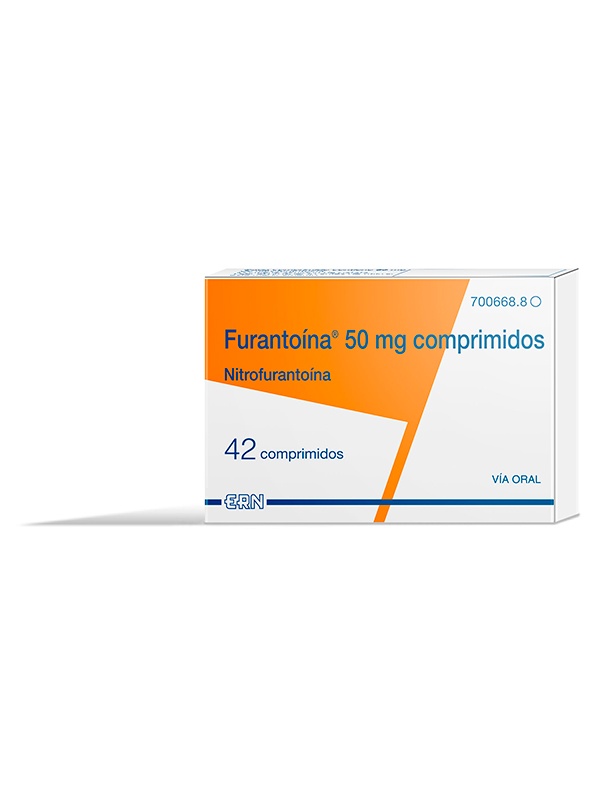
- Country of registration
- Dosage formTABLET, 50 mg Nitrofurantoin
- ATC codeJ01XE01
- Average pharmacy price3.61 EUR
- Active substance
- Prescription requiredYes
- Manufacturer
- CompositionCARBOXIMETILALMIDON SODICO (7 mg mg)
- This information is for reference only and does not constitute medical advice. Always consult a doctor before taking any medication. Oladoctor is not responsible for medical decisions based on this content.
- Alternatives to FURANTOIN 50 mg TABLETSDosage form: ORAL SOLUTION/SUSPENSION, 1 g nitrofurantoin/100 mlActive substance: nitrofurantoinManufacturer: Laboratorios Ern S.A.Prescription requiredDosage form: TABLET, 600 mgActive substance: linezolidManufacturer: Medochemie LimitedPrescription requiredDosage form: PULMONARY INHALATION, 1 MIUActive substance: colistinManufacturer: Pari Pharma GmbhPrescription required
Online doctors for FURANTOIN 50 mg TABLETS
Discuss questions about FURANTOIN 50 mg TABLETS, including use, safety considerations and prescription review, subject to medical assessment and local regulations.









Frequently Asked Questions
FURANTOIN 50 mg TABLETS requires a prescription in Spain. You can check with a doctor online whether this medicine may be appropriate for your situation.
The active ingredient in FURANTOIN 50 mg TABLETS is nitrofurantoin. This information helps identify medicines with the same composition but different brand names.
The average pharmacy price for FURANTOIN 50 mg TABLETS is around 3.61 EUR. Prices may vary depending on the manufacturer and dosage form.
FURANTOIN 50 mg TABLETS is manufactured by Laboratorios Ern S.A.. Pharmacy brands and packaging may differ depending on the distributor.
Doctors such as Family doctors, Psychiatrists, Dermatologists, Cardiologists, Endocrinologists, Gastroenterologists, Pulmonologists, Nephrologists, Rheumatologists, Hematologists, Infectious disease physicians, Allergists, Geriatricians, Paediatricians, Oncologists may assess whether FURANTOIN 50 mg TABLETS is appropriate, depending on your situation and local regulations. You can book an online consultation to discuss your symptoms and possible next steps.
The prescription is issued by a doctor after assessing your health. In Spain, FURANTOIN 50 mg TABLETS is then dispensed in pharmacies with that prescription. An online consultation does not guarantee that a prescription will be issued: the decision always rests with the doctor.
To request a review, you can use Oladoctor:
Other medicines with the same active substance (nitrofurantoin) include FURANTOIN 10 mg/ml ORAL SUSPENSION, APEL 600 mg FILM-COATED TABLETS, COLFINAIR 1 Million IU Powder for Solution for Nebulizer Inhalation. These may have different brand names or formulations but contain the same therapeutic ingredient. Always consult a doctor before switching or starting a new medicine.
