






How to use FERINJECT 50 mg/ml DISPERSION FOR INJECTION AND INFUSION
Translated with AI
This page provides general information and does not replace a doctor’s consultation. Always consult a doctor before taking any medication. Seek urgent medical care if symptoms are severe.
Show originalContents of the leaflet
Introduction
Package Leaflet: Information for the User
Ferinject 50mg/ml injectable dispersion and for infusion
Iron carboxymaltose
Read all of this leaflet carefully before you start using this medicine because it contains important information for you.
- Keep this leaflet, you may need to read it again.
- If you have any further questions, ask your doctor or pharmacist.
- If you get any side effects, talk to your doctor, even if you have read it in this leaflet. See section 4.
Contents of the pack
- What is Ferinject and what is it used for
- What you need to know before you use Ferinject
- How to use Ferinject
- Possible side effects
- Storage of Ferinject
- Contents of the pack and other information
1. What is Ferinject and what is it used for
Ferinject is a medicine that contains iron.
Medicines that contain iron are used when there is not enough iron in the body. This condition is called iron deficiency.
Ferinject is used to treat iron deficiency when:
- Oral iron is not effective enough. You cannot tolerate oral iron.
- Your doctor decides that you need iron very quickly to replenish your iron stores.
Your doctor will determine if you have iron deficiency by doing a blood test.

2. What you need to know before you use Ferinject
Do not useFerinject
- If you are allergic (hypersensitive) to iron carboxymaltose or any of the other ingredients of this medicine (listed in section 6).
- If you have had severe allergic reactions (hypersensitivity) to other injectable iron preparations.
- If you have anemia notcaused by iron deficiency.
- If you have iron overload (too much iron in the body) or problems with iron use.
Warnings and precautions
Talk to your doctor or nurse before you start receiving Ferinject:
- If you have a history of allergies to medicines.
- If you have systemic lupus erythematosus.
- If you have rheumatoid arthritis.
- If you have severe asthma, eczema, or other allergies.
- If you have any infection.
- If you have any liver disorder.
- If you have or have had low phosphate levels in the blood.
Ferinject should not be given to children under 1 year of age.
Incorrect administration of Ferinject can cause product loss at the administration site, which can lead to skin irritation and a brown discoloration of the administration site that can last for a long time. If this happens, administration should be stopped immediately.
Using Ferinject with other medicines
Tell your doctor if you are using, have recently used, or might use any other medicines, including medicines obtained without a prescription. If Ferinject is given with oral iron preparations, the oral preparations may be less effective.
Pregnancy
There are limited data on the use of Ferinject in pregnant women. If you are pregnant or breastfeeding, think you may be pregnant, or plan to become pregnant, ask your doctor for advice before using this medicine.
If you become pregnant during treatment, you should ask your doctor for advice; your doctor will decide whether you should be given the medicine or not.
Breastfeeding
If you are breastfeeding, ask your doctor for advice before Ferinject is given to you. It is unlikely that Ferinject will pose a risk to the breastfed infant.
Driving and using machines
Ferinject is unlikely to affect your ability to drive or use machines.
Ferinject contains sodium
This medicine contains up to 5.5 mg of sodium (a major component of table/cooking salt) per milliliter of undiluted dispersion.
Each 2 ml vial contains less than 1 mmol of sodium (23 mg); this is essentially "sodium-free".
Each 10 ml vial contains up to 55 mg of sodium (a major component of table/cooking salt). This is equivalent to 2.8% of the maximum recommended daily sodium intake for an adult.
Each 20 ml vial contains up to 110 mg of sodium (a major component of table/cooking salt). This is equivalent to 5.5% of the maximum recommended daily sodium intake for an adult.
3. How to use Ferinject
Your doctor will decide how much Ferinject to give you, how often you need it, and for how long. Your doctor will do a blood test to determine the dose you need.
Adults and adolescents 14 years and older
The doctor or nurse will give you Ferinject undiluted by injection, diluted by intravenous infusion, or during dialysis:
- By injection, you may be given up to 20 ml of Ferinject, which corresponds to 1,000 mg of iron, once a week, directly into a vein.
- With intravenous infusion, you may be given up to 20 ml of Ferinject, which corresponds to 1,000 mg of iron, once a week directly into a vein. Since Ferinject is diluted with sodium chloride solution for intravenous infusion, the volume of the solution may be up to 250 ml and will have a brown appearance.
- If you are on dialysis, you may receive Ferinject during a hemodialysis session through the dialyzer.
Children and adolescents 1 to 13 years
- The doctor or nurse will give Ferinject undiluted by injection or diluted by intravenous infusion: Your child will receive Ferinject directly into the vein. It will have a brown appearance.
- If your child is on dialysis, Ferinject should not be given.
Ferinject will be given in a facility where immune allergic reactions can be treated adequately and promptly. After each administration, you will be monitored for at least 30 minutes under the supervision of the doctor or nurse.
If you receive more Ferinject than you should
Since this medicine will be given to you by trained medical staff, it is unlikely that you will be given too high a dose.
Overdose may cause iron accumulation in the body. Your doctor will monitor your iron parameters to avoid iron accumulation.

4. Possible side effects
Like all medicines, this medicine can cause side effects, although not everybody gets them.
Serious side effects:
Tell your doctor immediately if you experience any of the following signs and symptoms that may indicate a severe allergic reaction: skin rash (e.g., hives), itching, difficulty breathing, wheezing, and/or swelling of the lips, tongue, throat, or body, and chest pain, which may be a sign of a potentially severe allergic reaction called Kounis syndrome.
In some patients, these allergic reactions (which affect less than 1 in 1,000 people) can be severe or potentially life-threatening (known as anaphylactic reactions) and may be associated with heart or circulatory problems and loss of consciousness.
You should talk to a doctor if you get worse tiredness, muscle or bone pain (pain in the arms or legs, joints, or back). This may be a sign of low phosphate levels in the blood, which could cause your bones to soften (osteomalacia). This condition can sometimes cause bone fractures. Your doctor may also check your phosphate levels in the blood, especially if you need several iron treatments over time.
Your doctor is aware of these possible side effects and will monitor you during and after Ferinject administration.
Other side effects that you should tell your doctor about if they become serious:
Common(may affect up to 1 in 10 people): headache, dizziness, feeling of heat (flushes), hypertension, nausea, and injection/infusion site reactions (see also section 2).
Uncommon(may affect up to 1 in 100 people): numbness, tingling, or prickling sensation in the skin, change in taste, increased heart rate, low blood pressure, difficulty breathing, vomiting, indigestion, stomach pain, constipation, diarrhea, itching, hives, redness of the skin, skin rash, muscle pain, joint pain, and/or back pain, pain in the arms or legs, muscle spasms, fever, tiredness, chest pain, swelling of the hands and/or feet, chills, and general malaise.
Rare(may affect up to 1 in 1,000 people): vein inflammation, anxiety, fainting, feeling of weakness, wheezing, excessive gas, sudden swelling of the face, mouth, tongue, or throat that can make breathing difficult, paleness, and change in skin color in areas of the body other than the injection site.
Unknown(frequency cannot be estimated from the available data): loss of consciousness and swelling of the face.
Pseudo-flu syndrome (may affect up to 1 in 1,000 people) may occur a few hours or several days after injection and is usually characterized by symptoms such as elevated temperature and pain in the muscles and joints.
Some blood parameters may be temporarily altered, which can be detected in laboratory tests.
The following change in blood parameters is common: decrease in blood phosphate levels.
The following changes in blood parameters are uncommon: increase in certain liver enzymes called alanine aminotransferase, aspartate aminotransferase, gamma-glutamyltransferase, and alkaline phosphatase, and increase in an enzyme called lactate dehydrogenase.
Ask your doctor for more information.
Reporting of side effects
If you experience any side effects, talk to your doctor or nurse, even if you think they are not related to this medicine. You can also report side effects directly to the Spanish Medicines Agency at www.notificaRAM.es.
By reporting side effects, you can help provide more information on the safety of this medicine.
5. Storage of Ferinject
Keep Ferinject out of the sight and reach of children.
Do not use Ferinject after the expiration date stated on the package after EXP. The expiration date is the last day of the month indicated.
Do not store above 30°C. Do not freeze.
To know the storage conditions after dilution or after the first opening of the medicine, see the section "This information is intended only for healthcare professionals".
Normally, it will be the doctor or hospital that stores Ferinject.
6. Package Contents and Additional Information
Ferinject Composition
The active ingredient is carboxymaltose iron, an iron carbohydrate compound. The iron concentration present in the product is 50 mg per milliliter. Each 2 ml vial contains carboxymaltose iron equivalent to 100 mg of iron. Each 10 ml vial contains carboxymaltose iron equivalent to 500 mg of iron. Each 20 ml vial contains carboxymaltose iron equivalent to 1,000 mg of iron. The other components (excipients) are sodium hydroxide (to adjust pH), hydrochloric acid (to adjust pH), and water for injectable preparations.
Product Appearance and Package Contents
Ferinject is a dark brown, non-transparent injectable and infusion dispersion.
Ferinject is presented in glass vials containing:
- 2 ml of dispersion. Package sizes: 1, 2, or 5 vials.
- 10 ml of dispersion. Package sizes: 1, 2, or 5 vials.
- 20 ml of dispersion. Package size: 1 vial of 20 ml.
Only some package sizes may be marketed.
Marketing Authorization Holder and Manufacturer
Vifor France
100-101 Terrasse Boieldieu
Tour Franklin La Défense 8
92042 Paris La Défense Cedex
France
Tel. +33 (0)1 41 06 58 90
Fax +33 (0)1 41 06 58 99
e-mail: [email protected]
This medicinal product is authorized in the Member States of the European Economic Area (EEA)and in the United Kingdom (Northern Ireland)under the following names:
Germany, Austria, Bulgaria, Cyprus, Croatia, Denmark, Slovakia, Spain, Estonia, Finland, France, Greece, Hungary, Ireland, Iceland, Italy, Latvia, Norway, Netherlands, Poland, Portugal, United Kingdom (Northern Ireland), Czech Republic, Romania, Sweden: Ferinject®. Belgium, Luxembourg: Injectafer®. Slovenia: Iroprem®.
Date of the last revision of this leaflet:May 2025.
Further information on this medicinal product can be obtained from the local representative of the marketing authorization holder.
Local Representative:
Vifor Pharma España S.L.
Av. Diagonal 611, Planta 10
08028 Barcelona
Spain
Telephone: 902 12 11 11
Fax: 932 202 340
E-mail: [email protected]
Detailed and updated information on this medicinal product is available on the website of the Spanish Agency for Medicines and Health Products (AEMPS) http://www.aemps.gob.es/
This information is intended only for healthcare professionals:
Patients should be closely monitored for signs and symptoms of hypersensitivity reactions during and after each administration of Ferinject.
Ferinject should only be administered when immediate availability of trained personnel and equipment to evaluate and treat anaphylactic reactions is present, in an environment where a complete resuscitation device can be guaranteed. The patient should be observed for at least 30 minutes after each administration of Ferinject for potential adverse effects.
Step 1: Determination of Iron Needed
Individual iron needs for replacement with Ferinject are determined based on the patient's body weight and hemoglobin (Hb) level. Refer to Table 1 for the determination of the total iron needed. Two doses may be necessary to replace all the necessary iron; refer to Step 2 for the maximum individual iron doses.
Table 1:Determination of Total Iron Needed
Hb | Patient Body Weight | |||
g/dl | mmol/l | Less than 35 kg | 35 kg to < 70 kg | 70 kg or more |
<10 | <6.2 | 30 mg/kg body weight | 1,500 mg | 2,000 mg |
10 to <14 | 6.2 to <8.7 | 15 mg/kg body weight | 1,000 mg | 1,500 mg |
≥14 | ≥8.7 | 15 mg/kg body weight | 500 mg | 500 mg |
Step 2: Calculation and Administration of the Maximum Individual Dose(s) of Iron
Based on the determined total iron need, the appropriate dose of Ferinject should be administered, taking into account the following:
Adults and adolescents 14 years or older
A single administration of Ferinject should not exceed:
- 15 mg of iron/kg body weight (for intravenous injection) or 20 mg of iron/kg body weight (for intravenous infusion)
- 1,000 mg of iron (20 ml of Ferinject)
The maximum recommended accumulated dose of Ferinject per week is 1,000 mg of iron (20 ml of Ferinject). If the total iron needed is higher, the administration of an additional dose should be at least 7 days after the first dose.
Children and adolescents 1 to 13 years
A single administration of Ferinject should not exceed:
- 15 mg of iron/kg body weight
- 750 mg of iron (15 ml of Ferinject)
The maximum recommended accumulated dose of Ferinject is 750 mg of iron (15 ml of Ferinject) per week. If the total iron needed is higher, the administration of an additional dose should be at least 7 days after the first dose.
Children under 1 year
The use of Ferinject is not recommended in children under 1 year.
Patients with Chronic Kidney Disease on Hemodialysis
In adults and adolescents 14 years or older, a single maximum daily dose of 200 mg of iron should not be exceeded in patients with chronic kidney disease on hemodialysis.
The use of Ferinject is not recommended in children 1 to 13 years with chronic kidney disease requiring hemodialysis.
Method of Administration
Ferinject should only be administered intravenously: by injection, by infusion, or during a hemodialysis session without dilution directly into the venous line of the dialyzer. Ferinject should not be administered subcutaneously or intramuscularly.
Caution should be exercised to avoid paravenous spillage when administering Ferinject. Paravenous spillage of Ferinject at the administration site may cause skin irritation and possible long-lasting brown discoloration. In case of paravenous spillage, the administration of Ferinject should be immediately interrupted.
Intravenous Injection
Ferinject can be administered by intravenous injection with an undiluted dispersion. In adults and adolescents 14 years or older, the single maximum dose is 15 mg of iron/kg body weight, but not exceeding 1,000 mg of iron. In children 1 to 13 years, the individual maximum dose is 15 mg/kg body weight, but not exceeding 750 mg of iron. The administration guidelines are shown in Table 2:
Table 2:Administration Guidelines for Intravenous Injection of Ferinject
Volume of Ferinject Needed | Equivalent Iron Dose | Administration Guidelines/Minimum Administration Time | ||
2 to | 4 ml | 100 to | 200 mg | No minimum administration time prescribed |
> 4 to | 10 ml | > 200 to | 500 mg | 100 mg of iron/minute |
> 10 to | 20 ml | > 500 to | 1,000 mg | 15 minutes |
Intravenous Infusion
Ferinject can be administered by intravenous infusion, in which case it should be diluted. In adults and adolescents 14 years or older, the single maximum dose is 20 mg of iron/kg body weight, but not exceeding 1,000 mg of iron. In children 1 to 13 years, the individual maximum dose is 15 mg of iron/kg body weight, but not exceeding 750 mg of iron.
For infusion, Ferinject can only be diluted in a sterile 0.9% m/V sodium chloride solution as shown in Table 3. Note: For stability reasons, Ferinject should not be diluted to concentrations below 2 mg of iron/ml (excluding the volume of the carboxymaltose iron dispersion).
Table 3:Dilution Guidelines for Intravenous Infusion of Ferinject
Volume of Ferinject Needed | Equivalent Iron Dose | Maximum Amount of Sterile 0.9% m/V Sodium Chloride Solution | Minimum Administration Time | ||
2 to | 4 ml | 100 to | 200 mg | 50 ml | No minimum administration time prescribed |
> 4 to | 10 ml | > 200 to | 500 mg | 100 ml | 6 minutes |
> 10 to | 20 ml | > 500 to | 1,000 mg | 250 ml | 15 minutes |
Monitoring Measures
The physician should perform a new assessment based on the patient's particular clinical picture. The Hb level should be reevaluated at least 4 weeks after the last administration of Ferinject, to allow sufficient time for erythropoiesis and iron utilization. If the patient needs further iron replacement, the iron needs should be recalculated using Table 1 above.
Incompatibilities
Oral iron absorption is reduced when administered simultaneously with parenteral iron preparations. Therefore, if necessary, oral iron therapy should not be started until at least 5 days have passed since the last administration of Ferinject.
Overdose
Administration of Ferinject in amounts exceeding the amount necessary to correct iron deficiency may lead to iron accumulation in deposits, which can cause hemosiderosis in the long term. Monitoring of iron parameters such as serum ferritin and transferrin saturation may help identify an iron accumulation situation. If iron accumulation occurs, treatment should be according to usual medical practice, i.e., considering the use of an iron chelator.
Stability During Use
Validity period after opening the package:
From a microbiological point of view, parenteral preparations should be used immediately.
If not used immediately, the times and conditions of storage during use are the responsibility of the user.
Administration of the product should be carried out under controlled and validated aseptic conditions. Chemical and physical stability during use has been demonstrated for 7 days at 30 °C.
Validity period in polyethylene and polypropylene containers after dilution with sterile 0.9% m/V sodium chloride solution:
From a microbiological point of view, parenteral preparations should be used immediately after dilution with sterile 0.9% m/V sodium chloride solution.
If not used immediately, the times and conditions of storage prior to use are the responsibility of the user and should not generally exceed 24 hours between 2 °C and 8 °C.
Chemical and physical stability during use has been demonstrated for 72 hours at 30 °C at concentrations of 2 mg/ml and 5 mg/ml.
Validity period in polypropylene syringe (undiluted):
From a microbiological point of view, this product should be used immediately.
If not used immediately, the times and conditions of storage prior to use are the responsibility of the user and should not generally exceed 24 hours between 2 °C and 8 °C.
Chemical and physical stability during use has been demonstrated for 72 hours at 30 °C.
-

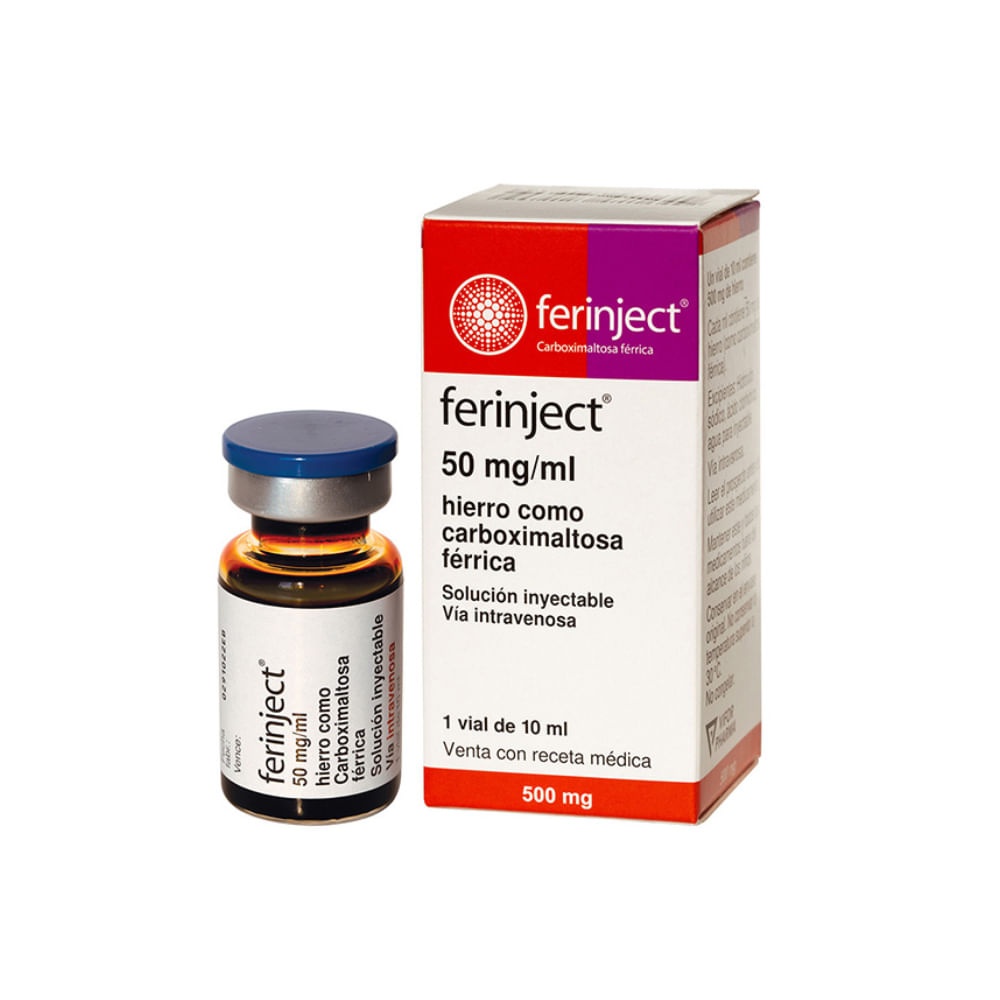
- Country of registration
- Dosage formINJECTABLE, 50 mg of iron per ml
- Prescription requiredYes
- Manufacturer
- This information is for reference only and does not constitute medical advice. Always consult a doctor before taking any medication. Oladoctor is not responsible for medical decisions based on this content.
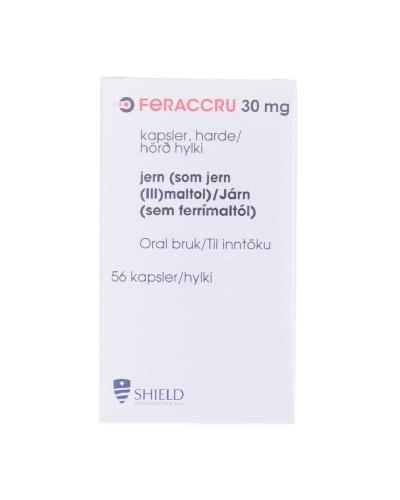
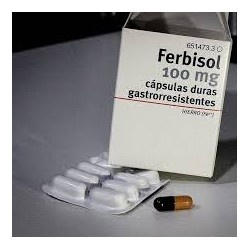
- Alternatives to FERINJECT 50 mg/ml DISPERSION FOR INJECTION AND INFUSIONDosage form: INJECTABLE, 50 mg/mlActive substance: Iron, parenteral preparationsManufacturer: Teva B.V.Prescription requiredDosage form: CAPSULE, 30 mgActive substance: ferric maltolManufacturer: Norgine B.V.Prescription requiredDosage form: CAPSULE, 100 mg ferrous glycinate sulfateActive substance: ferrous glycine sulfateManufacturer: Ucb Pharma S.A.Prescription required
Online doctors for FERINJECT 50 mg/ml DISPERSION FOR INJECTION AND INFUSION
Discuss questions about FERINJECT 50 mg/ml DISPERSION FOR INJECTION AND INFUSION, including use, safety considerations and prescription review, subject to medical assessment and local regulations.









Get FERINJECT 50 mg/ml DISPERSION FOR INJECTION AND INFUSION Prescription Online
Fill in a 2-min form
Tell us your symptoms, history, and what medicine you're requesting.
Pick a doctor or let us assign
Choose a specialist or we'll match you with the next available doctor.
Doctor reviews your case
Usually within 30 minutes. They may ask follow-up questions via chat.
Collect from any pharmacy
Electronic prescription sent to your email — valid across Spain.
Frequently Asked Questions
FERINJECT 50 mg/ml DISPERSION FOR INJECTION AND INFUSION requires a prescription in Spain. You can check with a doctor online whether this medicine may be appropriate for your situation.
FERINJECT 50 mg/ml DISPERSION FOR INJECTION AND INFUSION is manufactured by Vifor France. Pharmacy brands and packaging may differ depending on the distributor.
Doctors such as Family doctors, Psychiatrists, Dermatologists, Cardiologists, Endocrinologists, Gastroenterologists, Pulmonologists, Nephrologists, Rheumatologists, Hematologists, Infectious disease physicians, Allergists, Geriatricians, Paediatricians, Oncologists may assess whether FERINJECT 50 mg/ml DISPERSION FOR INJECTION AND INFUSION is appropriate, depending on your situation and local regulations. You can book an online consultation to discuss your symptoms and possible next steps.
Spain has a well-developed healthcare infrastructure across major cities such as Madrid, Barcelona, Valencia, and Seville. Pharmacies are widely available and operate under strict regulations, ensuring access to prescribed medications.
You can buy FERINJECT 50 mg/ml DISPERSION FOR INJECTION AND INFUSION in Madrid, Barcelona, Seville, or Valencia at any local pharmacy with a valid prescription.
To obtain a prescription, you can use Oladoctor:
Other medicines with the same active substance () include CARBOXIMALTOSA FERRICA TEVA 50 MG/ML Injectable Dispersion and Perfusion Solution, FERACCRU 30 mg HARD CAPSULES, FERBISOL 100 mg GASTRO-RESISTANT CAPSULES. These may have different brand names or formulations but contain the same therapeutic ingredient. Always consult a doctor before switching or starting a new medicine.
