



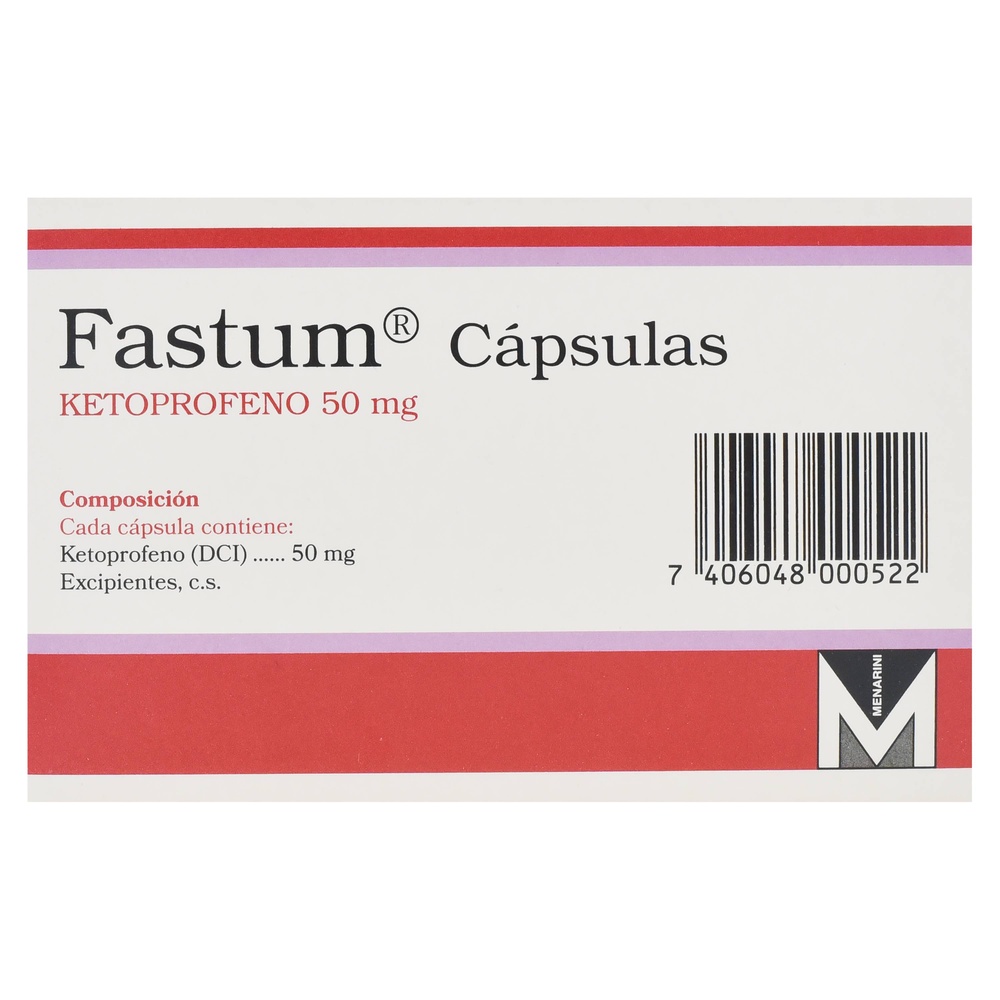
FASTUM 50 mg Hard Capsules

Prescription review online
A doctor will review your case and decide whether a prescription is medically appropriate.

Talk to a doctor about this medicine
Discuss your symptoms and possible next steps in a quick online consultation.



How to use FASTUM 50 mg HARD CAPSULES
Contents of the leaflet
- Introduction
- Read all of this leaflet carefully before you start taking this medicine because it contains important information for you.
- What is Fastum and what is it used for
- What you need to know before you take Fastum
- How to take Fastum
- Possible Adverse Effects
- Storage of Fastum
- Package Contents and Additional Information
Introduction
Package Leaflet: Information for the User
Fastum 50 mg Hard Capsules
Ketoprofen
Read all of this leaflet carefully before you start taking this medicine because it contains important information for you.
- Keep this leaflet, you may need to read it again.
- If you have any further questions, ask your doctor or pharmacist.
- This medicine has been prescribed for you only. Do not pass it on to others. It may harm them, even if their signs of illness are the same as yours.
- If you get any side effects, talk to your doctor or pharmacist. This includes any possible side effects not listed in this leaflet. See section 4.
Contents of the pack
- What is Fastum and what is it used for
- What you need to know before you take Fastum
- How to take Fastum
- Possible side effects
- Storage of Fastum
- Contents of the pack and other information

Not sure if this medicine is right for you?
Discuss your symptoms and treatment with a doctor online.
1. What is Fastum and what is it used for
Fastum contains ketoprofen, a pain reliever that belongs to a group of medicines called non-steroidal anti-inflammatory drugs (NSAIDs).
Fastum is indicated for the treatment of:
- Rheumatoid arthritis (a disease that causes inflammation of the joints)
- Osteoarthritis (a degenerative disease of the joints)
- Ankylosing spondylitis (a chronic form of arthritis that causes pain and stiffness in the vertebrae and joints at the base of the spine)
- Acute episodes of gout
- Mild to moderate acute pain, such as muscle or joint pain, toothache, and menstrual pain.
2. What you need to know before you take Fastum
Do not take Fastum
- If you are allergic to ketoprofen or any of the other ingredients of this medicine (listed in section 6).
- If you are allergic to acetylsalicylic acid or another non-steroidal anti-inflammatory medicine.
- If you have asthma or have had asthma attacks after taking acetylsalicylic acid (aspirin) or other non-steroidal anti-inflammatory medicines.
- If you have or have had a stomach or duodenal ulcer or bleeding, or have suffered a perforation of the digestive tract.
- If you have severe heart failure.
- If you have severe liver failure.
- If you have moderate to severe kidney failure.
- If you are in the third trimester of pregnancy or breastfeeding.
Warnings and precautions
- Use the smallest possible dose that relieves your symptoms and for the shortest possible time to minimize the risk of side effects.
Talk to your doctor or pharmacist:
- If you have allergic diseases.
- If you are being treated with other NSAIDs, including selective cyclooxygenase-2 inhibitors.
- If you have an infection; see the heading "Infections" below.
- If you have had or developed an ulcer, bleeding, or perforation in the stomach or intestine, which may be manifested by severe abdominal pain or persistent and/or black stools, or even without previous warning symptoms. Treatment with ketoprofen should be discontinued immediately if gastrointestinal bleeding occurs, an ulcer or perforation appears in the stomach or duodenum.
The risk of suffering an ulcer, bleeding, or perforation in the stomach or intestine is greater when high doses are used and treatments are prolonged, in patients with a history of ulcers, especially complicated ulcers with bleeding or perforation, and in the elderly. In these cases, treatment should be started with the lowest possible dose, and your doctor will consider the possibility of associating a stomach protective medication (e.g., misoprostol or other medications that block gastric acid production).
- Elderly patients suffer from a higher incidence of adverse reactions to NSAIDs, and in particular, they may suffer from gastrointestinal bleeding and perforation, which can be fatal. If you are an elderly person, you may suffer from a higher incidence of side effects (see section 4). If these occur, consult your doctor immediately.
- If you have kidney, liver, or heart disease (high blood pressure and/or heart failure).
Kidney function should be monitored in patients with heart, liver, or kidney disorders, those being treated with diuretics, and especially in elderly patients, as they are more prone to kidney function disorders.
Liver enzyme levels (transaminases) should be periodically monitored in patients with liver function disorders or a history of liver problems.
Hyperkalemia (elevated potassium levels in the blood) may occur, especially in patients with diabetes, kidney failure, or those receiving concomitant treatment with hyperkalemia-promoting agents. In these circumstances, potassium levels should be monitored.
- If you have a blood disorder and blood cell production, systemic lupus erythematosus, or mixed connective tissue disease (immune system diseases that affect connective tissue).
- If you have asthma. The administration of this medicine may cause asthma attacks or bronchospasm (sudden feeling of suffocation), particularly in people with aspirin or NSAID allergies.
- If you experience visual disturbances, such as blurred vision, treatment should be discontinued.
- If you are a woman of childbearing age, you should be aware that Fastum may reduce fertility. If you have fertility problems and are planning to become pregnant or are undergoing fertility studies, you should not take this medicine.
Tell your doctor:
- If you are taking medications that alter blood coagulation or increase the risk of ulcers, such as oral anticoagulants like warfarin or antiplatelet agents like acetylsalicylic acid (aspirin). You should also discuss the use of other medications that may increase the risk of such bleeding, such as oral corticosteroids and selective serotonin reuptake inhibitors.
- If you have Crohn's disease or ulcerative colitis (inflammatory bowel diseases), as medications like Fastum 50 mg capsules may worsen these conditions.
Cardiovascular precautions
Medicines like Fastum may be associated with a small increased risk of arterial thrombotic events (e.g., heart attacks or strokes), especially when used in high doses and for prolonged treatment. Do not exceed the recommended dose or duration of treatment.
If you have heart problems, a history of strokes, or think you may be at risk of these conditions (e.g., you have high blood pressure, diabetes, high cholesterol, or are a smoker), you should discuss this treatment with your doctor or pharmacist.
Similarly, these types of medications can cause fluid retention, especially in patients with heart failure and/or high blood pressure (hypertension).
The use of NSAIDs like Fastum may increase the risk of atrial fibrillation (irregular and often rapid heart rhythm) that can lead to blood clots in the heart.
Risk of severe skin reactions
Very rarely, severe skin reactions, some of which are fatal, have been reported in association with the use of NSAIDs, including exfoliative dermatitis, Stevens-Johnson syndrome, and toxic epidermal necrolysis (see section 4). It appears that patients have a higher risk of suffering these reactions at the beginning of treatment: the onset of this adverse reaction occurs in most cases during the first month of treatment. Fastum administration should be discontinued immediately in case of the first symptoms of skin erythema (redness), lesions, or other signs of hypersensitivity.
Infections
Fastum may mask the signs of an infection, such as fever and pain. Consequently, Fastum may delay appropriate treatment of the infection, which may increase the risk of complications. This has been observed in bacterial pneumonia and bacterial skin infections related to chickenpox. If you take this medicine while having an infection and the symptoms of the infection persist or worsen, consult a doctor without delay.
Children and adolescents
The use of Fastum is not recommended in children and adolescents, as there are no available data on safety and efficacy.
Other medicines and Fastum
Tell your doctor or pharmacist if you are taking, have recently taken, or might take any other medicines.
In particular, inform your doctor or pharmacist if you are taking any of the following medicines:
- Other non-salicylate anti-inflammatory medicines, including selective cyclooxygenase-2 inhibitors (medicines to relieve pain and inflammation), as they may increase the risk of ulcers and bleeding in the digestive tract.
- Anticoagulants (medicines that prevent blood clot formation) as they may increase the risk of bleeding: heparin, vitamin K antagonists like warfarin, antiplatelet agents like ticlopidine and clopidogrel, thrombin inhibitors like dabigatran, and direct factor Xa inhibitors like apixaban, rivaroxaban, and edoxaban.
- Medicines containing lithium (used in the treatment of bipolar disorder and recurrent major depression), as they may cause an increase in lithium plasma concentration (decreased renal excretion of lithium) that may reach toxic levels. Lithium levels should be monitored during treatment with ketoprofen.
- Methotrexate (used for the treatment of cancer and rheumatoid arthritis), as it increases the hematological toxicity (in blood) of methotrexate due to decreased renal clearance.
- Hydantoins and phenytoin, used for epilepsy, as their toxic effects may be increased.
- Diuretics (medicines that increase urine flow). Kidney function should be monitored.
- ACE inhibitors and angiotensin II antagonists (used in the treatment of high blood pressure). In patients with kidney problems, this may lead to further deterioration, even possible acute renal failure.
- Medicines that may promote hyperkalemia (such as potassium salts, potassium-sparing diuretics, ACE inhibitors, and angiotensin II antagonists, NSAIDs, heparins (low molecular weight or unfractionated), cyclosporine, tacrolimus, and trimethoprim): the risk of hyperkalemia (elevated potassium levels in the blood) may increase when administered together (see section "Warnings and precautions").
- Corticosteroids (used in the treatment of various diseases such as allergies, hormonal disorders, and inflammatory diseases): increase the risk of ulcers or bleeding in the digestive tract.
- Pentoxifylline (used to treat chronic venous ulcers) as it may increase the risk of bleeding.
- Sulfonylureas: NSAIDs may increase the hypoglycemic effect of sulfonylureas.
- Tenofovir (used in the treatment of AIDS (HIV)): may increase the risk of kidney failure.
- Nicorandil (used in heart diseases), as the combined use of nicorandil and NSAIDs increases the risk of serious complications such as gastrointestinal ulceration, perforation, and bleeding (see section "Warnings and precautions").
- Cyclosporine or tacrolimus (used in organ transplantation), as they increase the risk of nephrotoxicity (kidney toxicity)
- Cardiac glycosides (used in heart diseases), NSAIDs may increase the plasma levels of cardiac glycosides.
- Antihypertensives (beta blockers, ACE inhibitors, diuretics): medicines used to treat high blood pressure, as they may reduce the antihypertensive effect.
- Thrombolytics (dissolve blood clots) as they increase the risk of bleeding.
- Antiplatelet agents used to reduce platelet aggregation and blood clot formation, as they increase the risk of gastrointestinal bleeding.
- Selective serotonin reuptake inhibitors (medicines for depression): increase the risk of bleeding in the digestive tract.
- Probenecid (used in patients with gout): may increase ketoprofen concentrations in the blood, requiring a dose adjustment.
Taking Fastum with food and drinks
Take the capsules with liquids. It is recommended to take with food, as this helps to reduce the risk of side effects in the stomach or intestine.
The use of NSAIDs in combination with alcohol may worsen the adverse reactions caused by the active substance, especially if they affect the gastrointestinal tract or the central nervous system.
Pregnancy, breastfeeding, and fertility
Do not take Fastum during the last three months of pregnancy or during breastfeeding.
If you are pregnant or breastfeeding, think you may be pregnant, or are planning to have a baby, ask your doctor or pharmacist for advice before taking this medicine.
Pregnancy
Do not take Fastum during the first six months of pregnancy unless clearly necessary and as indicated by your doctor. If you need treatment during this period or while trying to become pregnant, you should take the minimum dose for the shortest possible time.
Ketoprofen may cause kidney and heart problems in your fetus. It may affect your and your baby's ability to bleed and delay or prolong labor more than expected.
From the 20th week of pregnancy, Fastum may cause kidney problems in your fetus if taken for more than a few days, which may lead to low levels of amniotic fluid surrounding the baby (oligohydramnios) or narrowing of a blood vessel (ductus arteriosus) in the baby's heart. If you need treatment for more than a few days, your doctor may recommend additional monitoring.
In the third trimester of pregnancy, the administration of ketoprofen is contraindicated.
Breastfeeding
Ketoprofen is excreted in breast milk. Therefore, the use of Fastum in women during breastfeeding is contraindicated.
Fertility
The use of Fastum may affect female fertility and is not recommended in women who are trying to conceive. In women with fertility problems or undergoing fertility investigations, the suspension of this medicine should be considered.
Driving and using machines
Fastum may slightly affect your ability to drive or use machines, as it may cause drowsiness, dizziness, convulsions, and/or vertigo, and visual disturbances as side effects of treatment. If you notice these effects, do not use machines or drive until these symptoms disappear.

Started taking the medicine and have questions?
Discuss your symptoms and treatment with a doctor online.
3. How to take Fastum
Follow exactly the administration instructions of this medicine indicated by your doctor. In case of doubt, consult your doctor or pharmacist again.
If you think the action of Fastum is too strong or too weak, tell your doctor or pharmacist.
The effective dose should be used for the shortest possible time to alleviate symptoms. If you have an infection, consult a doctor without delay if the symptoms (such as fever and pain) persist or worsen (see section 2).
Your doctor will indicate the duration of your treatment with Fastum. Do not stop treatment before, as the expected results will not be achieved. Similarly, do not take this medicine for longer than indicated by your doctor.
Adults
The recommended dose is 1 capsule 3 times a day (3 capsules a day, equivalent to 150 mg of ketoprofen per day). The maximum recommended dose is 200 mg per day (4 capsules per day).
Method of administration
The capsule should be taken with liquids. It is recommended to take with food, as this helps to reduce the risk of side effects in the stomach or intestine (see section 2 "Taking Fastum with food and drinks").
Use in children and adolescents
The use of Fastum is not recommended in children and adolescents, as there are no sufficient data on safety and efficacy available.
Patient with renal impairment (kidney dysfunction) and elderly patients
Your doctor may consider reducing the initial dose. Once good individual tolerance has been verified, the dose may be adjusted.
Patient with hepatic impairment
Your doctor will prescribe the minimum effective dose.
If you take more Fastum than you should
In case of overdose or accidental ingestion, consult your doctor or pharmacist immediately or call the Toxicology Information Service, phone: 91 562 04 20, indicating the medicine and the amount ingested.
Remember to always carry the medicine package or this leaflet with you to the healthcare professional.
If you forget to take Fastum
Do not take a double dose to make up for forgotten doses. Take the next dose when it is due (see section 3 "How to take Fastum").
4. Possible Adverse Effects
Like all medicines, this medicine can cause adverse effects, although not all people suffer from them.
Possible adverse effects have been grouped according to organ classification and frequency.
The following table indicates how many patients may experience these adverse effects:
Very frequent | May affect more than 1 in 10 people |
Frequent | May affect up to 1 in 10 people |
Infrequent | May affect up to 1 in 100 people |
Rare | May affect up to 1 in 1,000 people |
Very rare | May affect up to 1 in 10,000 people |
Frequency not known | Cannot be estimated from the available data |
Nervous System Disorders
- Infrequent: somnolence or insomnia, headache, dizziness.
- Rare: paresthesia (tingling or numbness sensation).
- Frequency not known: aseptic meningitis (benign process characterized by inflammation of the meninges that cover the brain, headache, and stiffness), dysgeusia (taste alteration), vertigo, convulsions.
Ear and Labyrinth Disorders
- Rare: tinnitus (ringing in the ears).
Psychiatric Disorders
- Frequency not known: depression, hallucinations, confusion, mood changes.
Gastrointestinal Disorders
- Frequent: dyspepsia (digestive disorders), nausea, vomiting, abdominal pain, diarrhea, constipation, flatulence.
- Infrequent: gastritis (inflammation of the stomach mucosa), rectal hemorrhage, gastrointestinal bleeding, intestinal ulceration.
- Rare: stomatitis (mouth infection), peptic ulcer.
- Frequency not known: melena (blood in stools), hematemesis (vomiting blood), Crohn's disease, worsening of ulcerative colitis (chronic inflammatory diseases of the intestine), pancreatitis, gastrointestinal perforation.
Respiratory, Thoracic, and Mediastinal Disorders
- Rare: asthma.
- Frequency not known: bronchospasm, particularly in patients with hypersensitivity to acetylsalicylic acid (aspirin) and other non-steroidal anti-inflammatory drugs, rhinitis.
Cardiovascular Disorders
- Infrequent: exacerbation of heart failure.
- Frequency not known: atrial fibrillation (very rapid and irregular heartbeats), vasculitis (inflammation of blood vessels), arterial hypertension (high blood pressure).
Hepatobiliary Disorders
- Rare: liver damage, hepatitis, elevation of transaminase levels, elevation of bilirubin level in blood due to hepatic disorders.
Skin and Subcutaneous Tissue Disorders
- Frequent: maculopapular rash, urticaria.
- Very rare: bullous reactions including Stevens-Johnson syndrome and toxic epidermal necrolysis (very severe skin reactions that resemble burns).
- Frequency not known: acute generalized exanthematous pustulosis (skin eruption characterized by pustule formation), purpura (skin spots due to small hemorrhages), bullous skin eruption, angioedema (swelling of the face, lips, or throat), exfoliative dermatitis (skin peeling), photosensitivity, alopecia.
Blood and Lymphatic System Disorders
- Rare: hemorrhagic anemia.
- Frequency not known: thrombocytopenia (decrease in platelet count), hemolytic anemia, leukopenia (decrease in white blood cell count).
Metabolic and Nutrition Disorders
- Frequency not known: hyponatremia (decrease in sodium levels in blood), hyperkalemia (increase in potassium levels in blood).
Renal and Urinary Disorders
- Frequency not known: acute renal failure, tubulointerstitial nephritis (kidney inflammation), nephrotic syndrome (abnormal protein excretion in urine), alterations in renal function tests.
Immune System Disorders
- Frequency not known: anaphylactic reactions (including shock).
General Disorders and Administration Site Conditions
- Infrequent: edema, fatigue.
Visual Disorders
- Rare: blurred vision (see section 2).
Reporting of Adverse Effects
If you experience any type of adverse effect, consult your doctor, pharmacist, or nurse, even if it is a possible adverse effect that does not appear in this prospectus. You can also report them directly through the Spanish Pharmacovigilance System for Human Use Medicines: www.notificaRAM.es. By reporting adverse effects, you can contribute to providing more information on the safety of this medicine.
5. Storage of Fastum
Keep this medicine out of the sight and reach of children.
This medicine does not require special storage conditions.
Do not use this medicine after the expiration date that appears on the packaging and on the blister after CAD. The expiration date is the last day of the month indicated.
Medicines should not be thrown away through wastewater or household waste. Deposit the packaging and medicines you no longer need at the SIGRE Point in the pharmacy. In case of doubt, ask your pharmacist how to dispose of the packaging and medicines you no longer need. This way, you will help protect the environment.
6. Package Contents and Additional Information
Composition of Fastum
- The active ingredient is ketoprofen. Each capsule contains 50 mg.
- The other components are:
- capsule content: cornstarch, microcrystalline cellulose, talc, magnesium stearate
- gelatin capsule components: gelatin, water, titanium dioxide (E-171), and printing ink (which contains shellac (E-904), dehydrated alcohol (E-1510), isopropyl alcohol, butyl alcohol, propylene glycol (E-1520), purified water, concentrated ammonia solution (E-527), potassium hydroxide, and black iron oxide (E-172)).
Appearance of the Product and Package Contents
White capsules, serigraphed with the name "Fastum" and the Menarini anagram "M".
Each package contains 40 capsules in PVC-Aluminum blisters.
Marketing Authorization Holder and Manufacturer
Laboratorios Menarini, S.A.
Alfons XII, 587 - Badalona (Barcelona) - Spain
You can request more information about this medicine by contacting the local representative of the marketing authorization holder
Guidotti Farma, S.L.
Alfons XII, 587 - Badalona (Barcelona) - Spain
Date of the last revision of this prospectus:December 2023.
Detailed information about this medicine is available on the website of the Spanish Agency for Medicines and Health Products (AEMPS) http://www.aemps.gob.es/
- Country of registration
- Dosage formCAPSULE, 50 mg
- ATC codeM01AE03
- Average pharmacy price3.03 EUR
- Active substance
- Prescription requiredYes
- Manufacturer
- This information is for reference only and does not constitute medical advice. Always consult a doctor before taking any medication. Oladoctor is not responsible for medical decisions based on this content.
- Alternatives to FASTUM 50 mg HARD CAPSULESDosage form: EFFERVESCENT TABLET, 25 mgActive substance: ketoprofenManufacturer: Dompe' Farmaceutici S.P.A.Prescription not requiredDosage form: TABLET, 25 mgActive substance: ketoprofenManufacturer: Dompe' Farmaceutici S.P.A.Prescription not requiredDosage form: ORAL SOLUTION/SUSPENSION, 25 mgActive substance: ketoprofenManufacturer: Dompe' Farmaceutici S.P.A.Prescription not required
Online doctors for FASTUM 50 mg HARD CAPSULES
Discuss questions about FASTUM 50 mg HARD CAPSULES, including use, safety considerations and prescription review, subject to medical assessment and local regulations.









Get FASTUM 50 mg HARD CAPSULES Prescription Online
Fill in a 2-min form
Tell us your symptoms, history, and what medicine you're requesting.
Pick a doctor or let us assign
Choose a specialist or we'll match you with the next available doctor.
Doctor reviews your case
Usually within 30 minutes. They may ask follow-up questions via chat.
Collect from any pharmacy
Electronic prescription sent to your email — valid across Spain.
Frequently Asked Questions
FASTUM 50 mg HARD CAPSULES requires a prescription in Spain. You can check with a doctor online whether this medicine may be appropriate for your situation.
The active ingredient in FASTUM 50 mg HARD CAPSULES is ketoprofen. This information helps identify medicines with the same composition but different brand names.
The average pharmacy price for FASTUM 50 mg HARD CAPSULES is around 3.03 EUR. Prices may vary depending on the manufacturer and dosage form.
FASTUM 50 mg HARD CAPSULES is manufactured by Laboratorios Menarini S.A.. Pharmacy brands and packaging may differ depending on the distributor.
Doctors such as Family doctors, Psychiatrists, Dermatologists, Cardiologists, Endocrinologists, Gastroenterologists, Pulmonologists, Nephrologists, Rheumatologists, Hematologists, Infectious disease physicians, Allergists, Geriatricians, Paediatricians, Oncologists may assess whether FASTUM 50 mg HARD CAPSULES is appropriate, depending on your situation and local regulations. You can book an online consultation to discuss your symptoms and possible next steps.
Spain has a well-developed healthcare infrastructure across major cities such as Madrid, Barcelona, Valencia, and Seville. Pharmacies are widely available and operate under strict regulations, ensuring access to prescribed medications.
You can buy FASTUM 50 mg HARD CAPSULES in Madrid, Barcelona, Seville, or Valencia at any local pharmacy with a valid prescription.
To obtain a prescription, you can use Oladoctor:
Other medicines with the same active substance (ketoprofen) include KETOPROFEN DOMPE 25 mg EFFERVSCENT TABLETS, OKIDOL 25 mg FILM-COATED TABLETS, OKIDOL 25 mg GRANULES. These may have different brand names or formulations but contain the same therapeutic ingredient. Always consult a doctor before switching or starting a new medicine.
