






How to use ERYTHROMYCIN NORMON 500 mg FILM-COATED TABLETS
Translated with AI
This page provides general information and does not replace a doctor’s consultation. Always consult a doctor before taking any medication. Seek urgent medical care if symptoms are severe.
Show originalContents of the leaflet
Introduction
Package Leaflet: Information for the Patient
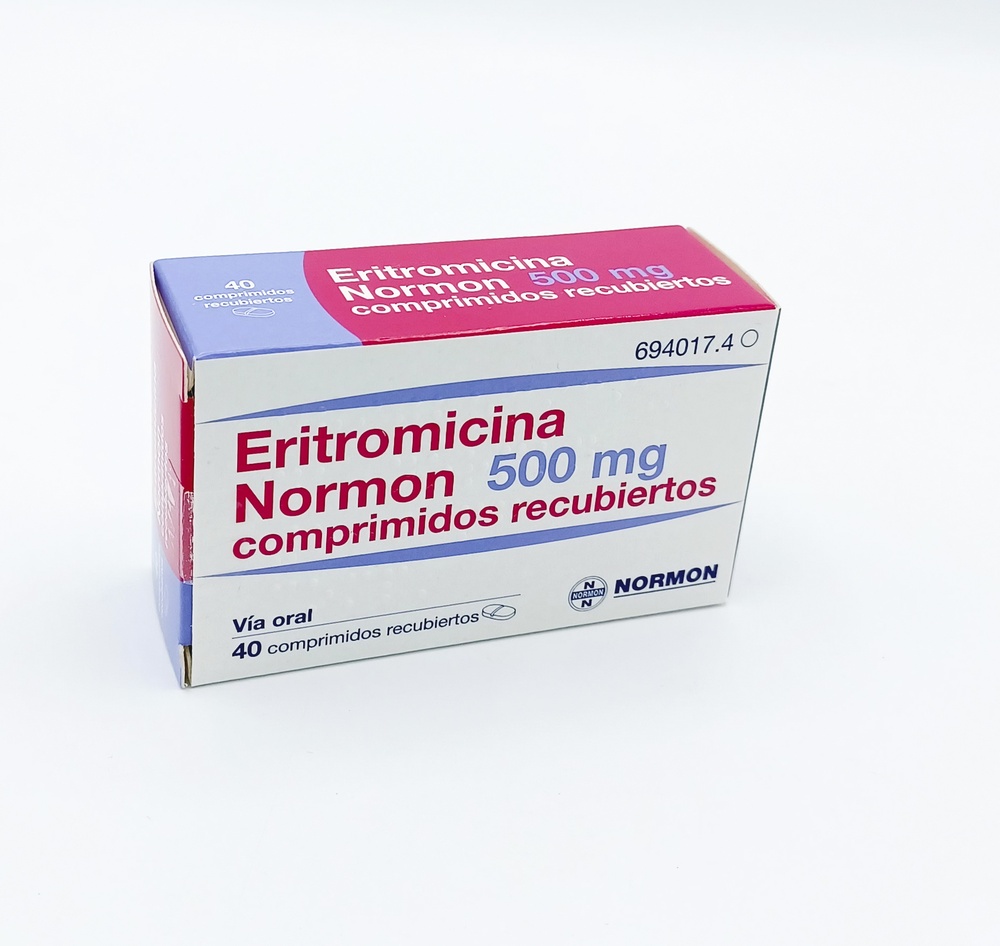
Eritromicina Normon 500 mg Film-Coated Tablets
erythromycin ethylsuccinate
Read all of this leaflet carefully before you start taking this medicine because it contains important information for you.
- Keep this leaflet, you may need to read it again.
- If you have any further questions, ask your doctor or pharmacist.
- This medicine has been prescribed for you only. Do not pass it on to others. It may harm them, even if their signs of illness are the same as yours.
- If you get any side effects, talk to your doctor or pharmacist. This includes any possible side effects not listed in this leaflet. See section 4.
Contents of the pack and other information
- What is Eritromicina Normon and what is it used for
- What you need to know before you take Eritromicina Normon
- How to take Eritromicina Normon
- Possible side effects
5 Storage of Eritromicina Normon
- Contents of the pack and other information
1. What is Eritromicina Normon and what is it used for
Eritromicina Normon contains erythromycin ethylsuccinate, an antibiotic that belongs to a group of antibiotics called "macrolides", and acts by preventing the growth and multiplication of bacteria.
Antibiotics are used to treat bacterial infections and are not effective against viral infections such as the flu or the common cold. It is important that you follow the instructions regarding the dose, administration interval, and treatment duration indicated by your doctor. Do not store or reuse this medication. If you have any leftover antibiotic after finishing the treatment, return it to the pharmacy for proper disposal. Do not throw away medications via the drain or in the trash. |
Erythromycin is used to treat:
- Throat infections such as tonsillitis, sore throat (pharyngitis), and diphtheria (a serious bacterial infection that causes sore throat, fever, inflammation of the glands, and weakness)
- Lung infection (pneumonia)
- Skin, muscle, tendon, and fat infections
- Inflammation of the digestive tract (enterocolitis) and frequent soft stools (diarrhea)
- Whooping cough
- Urethritis (inflammation of the tube that empties the bladder), cervicitis (inflammation of the cervix), or inflammation of the rectal mucosa (the last part of the digestive tube)
- Conjunctivitis (irritation and redness of the area that covers the eye) in newborns caused by Chlamydia trachomatis
- Lymphogranuloma venereum (a sexually transmitted infection caused by a microorganism called Chlamydia trachomatis)
Erythromycin is also used to prevent the following infections:
- Prevention of recurrences of rheumatic fever (an acute non-contagious fever characterized by inflammation and pain in the joints) in patients allergic to penicillin.
- Post-exposure prevention to Corynebacterium diphtheriae(the microorganism that causes diphtheria)
- Post-exposure prevention to Bordetella pertussis(the microorganism that causes whooping cough)

2. What you need to know before you take Eritromicina Normon
Do not take Eritromicina Normon
- If you are allergic to erythromycin or any of the other components of this medication (listed in section 6).
- If you are allergic to any macrolide antibiotic, such as azithromycin and clarithromycin, which are used to treat bacterial respiratory, throat, or nasal infections.
- If you are taking terfenadine or astemizole (antihistamines used to treat allergies), cisapride (used for intestinal movement problems), pimozide (an antipsychotic), or ergotamine or dihydroergotamine (used to treat migraines).
- If you have abnormally low levels of potassium or magnesium in your blood (hypomagnesemia or hypokalemia).
- If you or a family member has a history of heart rhythm disorders (ventricular cardiac arrhythmia or Torsades de pointes) or an electrocardiogram abnormality called "prolonged QT interval syndrome".
- If you are taking cholesterol-lowering medications, such as simvastatin or lovastatin.
- If you are currently taking a medication called lomitapide (used to reduce elevated blood fats, such as cholesterol and triglycerides). Taking this medication at the same time as erythromycin can cause an increase in liver enzymes (transaminases), which indicates that the liver is under stress and can cause liver problems.
Warnings and precautions
Consult your doctor or pharmacist before starting to take erythromycin.
- If you have heart problems or heart rate problems, such as ECG abnormalities (prolonged QT interval) or slow heart rate (bradycardia).
- If you have abnormal muscle breakdown that can cause kidney problems (rhabdomyolysis). Fever, nausea, vomiting, and abnormal muscle pain are indicative of muscle damage.
- If you have liver problems, inform your doctor so that they can adjust the treatment to your case.
- If you are pregnant and have been confirmed to have a sexually transmitted disease called syphilis. In this case, erythromycin may not be effective in preventing the transmission of this infection to the newborn. You should receive treatment with a suitable penicillin regimen. Consult your doctor before taking erythromycin.
- If you have mild to severe colon inflammation (pseudomembranous colitis).
- If you are taking other medications that are known to cause serious heart rhythm disorders.
- If you have heart problems.
- If you have previously experienced frequent soft stools after recent antibiotic use.
- If you are likely to suffer from vision loss.
- If you have a disease called myasthenia gravis, which causes muscle weakness.
- If you are about to undergo analytical tests. This medication interferes with urine analysis results.
The repeated or prolonged use of erythromycin can cause resistance in bacteria or fungi. In this case, treatment should be discontinued and appropriate measures taken.
If you are taking erythromycin to treat pneumonia, check with your doctor or pharmacist, as erythromycin is not the treatment of choice due to the frequent resistance of the main pathogen. In this case, it will only be used in combination with other antibiotics.
Children and adolescents
If you are treating a young child and they become irritable or vomit when eating, contact your doctor immediately.
Other medications and Eritromicina Normon
Tell your doctor or pharmacist if you are using, have recently used, or might use any other medications, including those without a prescription.
It is especially important that you inform them if you are taking any of the medications and treatments listed below.
The administration of erythromycin can increase the effect of:
- Medications for anxiety (such as benzodiazepines or hexobarbital)
- Ergot alkaloids (medications for migraines)
- Carbamazepine (medication for the treatment of epileptic seizures)
- Cyclosporin (medication for the treatment of rheumatic diseases and to prevent transplant rejection)
- Medications for allergies (such as terfenadine, astemizole, and mizolastine)
- Medications for fungal infections (such as fluconazole, ketoconazole, and itraconazole)
- Medications for reducing blood lipid levels (such as lovastatin and simvastatin)
- Rifabutin (medication for the treatment of tuberculosis)
- Anticoagulants, e.g., warfarin, acenocoumarol, and rivaroxaban (used to thin the blood)
- Digoxin (medication for the treatment of heart problems)
- Omeprazole (medication for the treatment of heartburn and indigestion)
- Treatment for reflux (such as cisapride)
- Pimozide (medication used to treat behavioral problems)
- Theophylline (medication for the treatment of asthma and other respiratory problems such as chronic obstructive pulmonary disease (COPD))
- Alfentanil (medication used to anesthetize the patient before surgery)
- Bromocriptine (medication for the treatment of Parkinson's disease)
- Anti-inflammatory medications (such as methylprednisolone)
- Cilostazol (medication for the treatment of leg pain caused by poor circulation)
- Vinblastine (medication for the treatment of cancer)
- Sildenafil (medication for the treatment of erectile dysfunction)
- Treatment for heart rhythm disorders or malaria (such as quinidine)
- Colchicine (medication for the treatment of joint problems, such as gout and arthritis)
- Zopiclone (medication for the treatment of sleep disorders)
- Corticosteroids administered orally, by injection, or inhaled (used to help inhibit the body's immune system. This is useful for treating a wide range of diseases).
The following medications may reduce the effect of erythromycin:
- Rifampicin (for the treatment of some infections),
- Phenytoin, carbamazepine, phenobarbital (treatment of seizures)
- St. John's Wort (herbal remedy for depression)
The administration of erythromycin can decrease the effect of:
- Contraceptives (medications used for birth control)
- Anti-HIV treatments called protease inhibitors
- Treatments for infections (such as clindamycin, lincomycin, chloramphenicol, streptomycin, tetracyclines, colistin)
The use of erythromycin with calcium channel blockers, such as verapamil, can cause a drop in blood pressure, a decrease in heart rate, or acidification of the blood.
The use of erythromycin with cimetidine (medication used to treat ulcers) can cause an increase in erythromycin levels in the blood.
The use of erythromycin with hydroxychloroquine or chloroquine (used to treat diseases such as rheumatoid arthritis or to treat or prevent malaria) can increase the risk of abnormal heart rhythms and other serious side effects that affect the heart.
Using Eritromicina Normon with food and drinks
Erythromycin can be administered before or after meals.
Pregnancy, breastfeeding, and fertility
If you are pregnant or breastfeeding, think you may be pregnant, or are planning to have a baby, ask your doctor or pharmacist for advice before taking this medication.
Erythromycin can cross the placenta in pregnant women and be excreted in breast milk. Information from studies on the risk of congenital anomalies is not consistent, but some studies have reported cardiac anomalies after the use of erythromycin at the beginning of pregnancy.
Erythromycin should be used in pregnant or breastfeeding women only if it is considered absolutely necessary.
Driving and using machines
Erythromycin has a mild influence on the ability to drive or use machines. If you experience symptoms such as dizziness or drowsiness, do not drive or use machines.
Warning about excipients
This medication contains less than 1 mmol of sodium (23 mg) per tablet; it is essentially "sodium-free".
This medication may cause allergic reactions because it contains Cochineal Red A (Ponceau 4R) (E-124). It can cause asthma, especially in patients allergic to acetylsalicylic acid.
3. How to take Eritromicina Normon
Follow exactly the administration instructions for this medication indicated by your doctor. If in doubt, consult your doctor or pharmacist again.
It is important that you follow the instructions regarding the dose, administration interval, and treatment duration prescribed by your doctor.
For oral use only.
The tablet can be divided into equal doses
The recommended dose is:
Adults and adolescents
The recommended dose is 2 or 4 tablets per day divided into 3 or 4 doses, which is the usual dose. This dose can be increased up to 8 tablets per day, depending on the severity of the infection.
Children over 8 years of age
The recommended dose is 1 or 2 g/day divided into 3 or 4 doses. This dose can be increased up to 4 g per day, depending on the severity of the infection.
Children from 2 to 8 years
Your doctor will prescribe the most suitable pharmaceutical form of erythromycin according to age, weight, and dose.
For children, the use of erythromycin suspensions is normally recommended
Elderly patients
The recommended dose is 2 or 4 tablets per day divided into 3 or 4 doses, which is the usual dose. This dose can be increased up to 8 tablets per day, depending on the severity of the infection.
Patients with liver or kidney problems
Inform your doctor if you have kidney or liver problems, as they may need to modify the dose.
Treatment duration
The duration of treatment depends on the person and the type and severity of the infection. To be effective, this antibiotic should be used regularly at the prescribed doses and for the duration indicated by your doctor. Do not stop taking this medication, even if you feel better, as premature discontinuation of this treatment may cause the infection to recur.
If you take more Eritromicina Normon than you should
Common symptoms are nausea, vomiting, and diarrhea.
Treatment should be discontinued and supportive treatment initiated.
In case of overdose or accidental ingestion, consult your doctor or pharmacist immediately or call the Toxicology Information Service, phone: 91 562 04 20, indicating the medication and the amount ingested.
If you forget to take Eritromicina Normon
In case of forgetting a dose, take another as soon as possible. Then continue as indicated. Do not take a double dose to make up for forgotten doses.
If you stop taking Eritromicina Normon
It is important that you complete the treatment cycle indicated by your doctor, even if you start to feel better after a few days. If you stop taking this medication before your doctor indicates, it is possible that the infection has not been completely cured and the symptoms may return or worsen.
Do not stop taking this medication without first consulting your doctor.
If you have any further questions about the use of this medication, ask your doctor or pharmacist.

4. Possible Adverse Effects
Like all medicines, this medicine can cause adverse effects, although not all people suffer from them.
Contact a doctor as soon as possible if you experience a severe skin reaction: a red and scaly rash with bumps under the skin and blisters (exanthematous pustulosis). The frequency of this adverse effect is considered unknown (it cannot be estimated from the available data).
Some adverse effects can be serious, if you experience any of the following, stop taking the medicine and seek medical attention immediately:
- Itching of the skin and reddened rash
- Severe allergic reaction with inflammation of the tongue, throat, face, or lips (angioedema)
- Feeling of dizziness or fainting, narrowing of the airways, which can cause wheezing or difficulty breathing (severe allergic reaction)
- Hearing loss, ringing in the ear, or feeling of imbalance (ototoxicity) in elderly patients with kidney or liver disease
- Irregular heartbeat (fast or slow)
- Severe skin reactions, such as the appearance of blisters on the skin, mouth, lips, eyes, and genitals (symptoms of a rare allergic reaction called Stevens-Johnson syndrome/toxic epidermal necrolysis)
- Abnormal muscle breakdown that can cause kidney problems (rhabdomyolysis)
- Muscle weakness and fatigue (myasthenia gravis)
- Inflammation of the kidney or inability of the kidney to function properly (tubulointerstitial nephritis)
- If the tests reveal a low white blood cell count (eosinophilia)
- If you have been indicated to have an inflamed pancreas
- Abnormal heart rhythms (such as palpitations, faster heartbeat, potentially life-threatening irregular heartbeat called Torsades de pointes or abnormal ECG tracing) or cardiac arrest
Other adverse effects include:
Very common (may affect more than 1 in 10 people):
- Lack of appetite
- Feeling of discomfort (nausea)
- Vomiting
- Stomach pain
- Diarrhea (frequent soft stools)
Common (may affect up to 1 in 10 people):
- Changes in liver enzyme levels
Uncommon (may affect up to 1 in 100 people):
- Hives
Rare (may affect up to 1 in 1,000 people):
- Accelerated heartbeats
- Liver inflammation
- Abnormal liver function test results
Very rare (may affect up to 1 in 10,000 people):
- Dizziness/fainting
- Seizures/attacks
- Confusional state (abnormal mood or mental state)
- Temporary alteration of consciousness (psychomotor crises)
- Intestinal infection (colon)
- Skin rash (erythema multiforme)
- Skin reaction
Frequency not known (cannot be estimated from the available data):
- Seeing or hearing things that are not real (hallucinations)
- Inability to see properly
- Hypotension
- Intestinal inflammation
- Changes in liver enzyme levels, inability of the liver to function properly (you may notice yellowing of the skin, dark urine, light-colored stools, or itching of the skin)
- Small blood vessels leaking fluid into the tissues, causing inflammation
- Itching
- Chest pain
- Fever
- Discomfort
Additional adverse effects in children and adolescents:
- Symptoms of worsening vomiting, dehydration, and increased appetite (this could be a sign of infantile hypertrophic pyloric stenosis)
Reporting of adverse effects
If you experience any type of adverse effect, consult your doctor or pharmacist, even if it is a possible adverse effect that is not listed in this leaflet. You can also report them directly through the Spanish Pharmacovigilance System for Human Use Medicines: https://www.notificaram.es. By reporting adverse effects, you can contribute to providing more information on the safety of this medicine.
5. Storage of Eritromicina Normon
It does not require special storage conditions.
Keep this medicine out of the sight and reach of children.
Do not use this medicine after the expiration date that appears on the box after CAD. The expiration date is the last day of the month indicated.
Medicines should not be thrown away through the sewage system or in the trash. Deposit the packaging and medicines that you no longer need in the SIGRE point of the pharmacy. In case of doubt, ask your pharmacist how to dispose of the packaging and medicines that you no longer need. This way, you will help protect the environment.
6. Package contents and additional information
Composition of Eritromicina Normon
The active ingredient is erythromycin (in the form of ethylsuccinate). Each coated tablet contains 500 mg of erythromycin ethylsuccinate.
The other components (excipients) are:
- Core: magnesium stearate, corn starch, povidone, and sodium carboxymethyl starch (type A) of potato.
- Coating: hypromellose, glycerol (E-422), macrogol 6000, cochineal red A (Ponceau 4R) (E-124), and titanium dioxide (E-171).
Appearance of the product and package contents
Eritromicina Normon 500 mg is presented in pink, oblong, and scored coated tablets.
Each package contains 30 or 40 tablets and clinical packages with 500 coated tablets.
Only some package sizes may be marketed.
Marketing authorization holder and manufacturer
Laboratorios Normon, S.A.
Ronda de Valdecarrizo, 6
28760 Tres Cantos – Madrid
Spain
Date of the last revision of this leaflet:April 2023
Detailed information about this medicine is available on the website of the Spanish Agency for Medicines and Health Products (AEMPS) http://www.aemps.gob.es/.
-

- Country of registration
- Dosage formTABLET, Erythromycin Ethylsuccinate 500 mg
- ATC codeJ01FA01
- Average pharmacy price5.76 EUR
- Active substance
- Prescription requiredYes
- Manufacturer
- This information is for reference only and does not constitute medical advice. Always consult a doctor before taking any medication. Oladoctor is not responsible for medical decisions based on this content.
- Alternatives to ERYTHROMYCIN NORMON 500 mg FILM-COATED TABLETSDosage form: INJECTABLE PERFUSION, 50 mg/mlActive substance: erythromycinManufacturer: PanpharmaPrescription requiredDosage form: ORAL SOLUTION/SUSPENSION, 500 mg erythromycin ethylsuccinate/5 mlActive substance: erythromycinManufacturer: Amdipharm LimitedPrescription requiredDosage form: INJECTABLE PERFUSION, 1 g erythromycinActive substance: erythromycinManufacturer: Amdipharm LimitedPrescription required


Online doctors for ERYTHROMYCIN NORMON 500 mg FILM-COATED TABLETS
Discuss questions about ERYTHROMYCIN NORMON 500 mg FILM-COATED TABLETS, including use, safety considerations and prescription review, subject to medical assessment and local regulations.









Get ERYTHROMYCIN NORMON 500 mg FILM-COATED TABLETS Prescription Online
Fill in a 2-min form
Tell us your symptoms, history, and what medicine you're requesting.
Pick a doctor or let us assign
Choose a specialist or we'll match you with the next available doctor.
Doctor reviews your case
Usually within 30 minutes. They may ask follow-up questions via chat.
Collect from any pharmacy
Electronic prescription sent to your email — valid across Spain.
Frequently Asked Questions
ERYTHROMYCIN NORMON 500 mg FILM-COATED TABLETS requires a prescription in Spain. You can check with a doctor online whether this medicine may be appropriate for your situation.
The active ingredient in ERYTHROMYCIN NORMON 500 mg FILM-COATED TABLETS is erythromycin. This information helps identify medicines with the same composition but different brand names.
The average pharmacy price for ERYTHROMYCIN NORMON 500 mg FILM-COATED TABLETS is around 5.76 EUR. Prices may vary depending on the manufacturer and dosage form.
ERYTHROMYCIN NORMON 500 mg FILM-COATED TABLETS is manufactured by Laboratorios Normon S.A.. Pharmacy brands and packaging may differ depending on the distributor.
Doctors such as Family doctors, Psychiatrists, Dermatologists, Cardiologists, Endocrinologists, Gastroenterologists, Pulmonologists, Nephrologists, Rheumatologists, Hematologists, Infectious disease physicians, Allergists, Geriatricians, Paediatricians, Oncologists may assess whether ERYTHROMYCIN NORMON 500 mg FILM-COATED TABLETS is appropriate, depending on your situation and local regulations. You can book an online consultation to discuss your symptoms and possible next steps.
Spain has a well-developed healthcare infrastructure across major cities such as Madrid, Barcelona, Valencia, and Seville. Pharmacies are widely available and operate under strict regulations, ensuring access to prescribed medications.
You can buy ERYTHROMYCIN NORMON 500 mg FILM-COATED TABLETS in Madrid, Barcelona, Seville, or Valencia at any local pharmacy with a valid prescription.
To obtain a prescription, you can use Oladoctor:
Other medicines with the same active substance (erythromycin) include ERYTHROMYCIN PANPHARMA 1 g POWDER FOR SOLUTION FOR INFUSION, PANTOMICINA 100mg/ml ORAL SUSPENSION GRANULES, PANTOMICINA 1g POWDER FOR SOLUTION FOR INFUSION. These may have different brand names or formulations but contain the same therapeutic ingredient. Always consult a doctor before switching or starting a new medicine.
