



DOLOTREN 75 mg Injectable Solution

Prescription review online
A doctor will review your case and decide whether a prescription is medically appropriate.

Talk to a doctor about this medicine
Discuss your symptoms and possible next steps in a quick online consultation.



How to use DOLOTREN 75 mg INJECTABLE SOLUTION
Contents of the leaflet
- Introduction
- What Dolotren Injectable is and what it is used for
- What you need to know before you use Dolotren Injectable
- How to use Dolotren Injectable
- Possible Adverse Effects
- Conservation of Dolotren Injectable
- Package Contents and Additional Information
Introduction
Patient Information: Summary of Product Characteristics
Dolotren 75 mg Solution for Injection
diclofenac sodium
Read all of this leaflet carefully before you start using this medicine because it contains important information for you.
- Keep this leaflet, you may need to read it again.
- If you have any further questions, ask your doctor or pharmacist.
- This medicine has been prescribed for you only. Do not pass it on to others. It may harm them, even if their signs of illness are the same as yours.
- If you get any side effects, talk to your doctor or pharmacist. This includes any possible side effects not listed in this leaflet. See section 4.
Contents of the Pack
- What Dolotren Injectable is and what it is used for
- What you need to know before you use Dolotren Injectable
- How to use Dolotren Injectable
- Possible side effects
- Storage of Dolotren Injectable
- Contents of the pack and other information
1. What Dolotren Injectable is and what it is used for
Dolotren contains diclofenac sodium, which belongs to a group of medicines called non-steroidal anti-inflammatory drugs (NSAIDs), used to treat pain and inflammation.
This medicine is used for the symptomatic treatment of severe acute pain associated with:
- rheumatoid arthritis
- ankylosing spondylitis
- osteoarthritis
- soft tissue rheumatism
- renal colic
- acute gout attack
- lower back pain
- musculoskeletal pain
- postoperative and post-traumatic pain.

Not sure if this medicine is right for you?
Discuss your symptoms and treatment with a doctor online.
2. What you need to know before you use Dolotren Injectable
It is important that you use the smallest dose of Dolotren that relieves or controls your pain and do not use this medicine for longer than necessary to control your symptoms.
Do not use Dolotren Injectable
- if you are allergic to diclofenac or any of the other ingredients of this medicine (listed in section 6).
- if you are allergic or have had allergic reactions to acetylsalicylic acid or other similar painkillers. Reactions can include asthma (difficulty breathing), hives (allergic reaction on the skin with itching), acute rhinitis (inflammation of the nasal mucosa), or facial swelling. If you think you may be allergic, consult your doctor.
- if you have had a stomach or duodenal hemorrhage or have suffered, on two or more occasions, a perforation of the digestive tract while taking a non-steroidal anti-inflammatory drug.
- if you currently have or have had, on more than one occasion, a stomach or duodenal ulcer or hemorrhage.
- if you suffer from active Crohn's disease or ulcerative colitis (diseases that produce diarrhea with or without blood and abdominal pain).
- if you have severe kidney disease.
- if you have severe liver disease.
- if you have established heart disease and/or cerebrovascular disease, for example, if you have had a heart attack, stroke, mini-stroke (TIA), or blockages in the blood vessels of the heart or brain, or have had surgery to remove a blockage or perform a coronary bypass.
- if you have blood coagulation disorders or are being treated for them.
- if you have had problems with blood circulation (peripheral arterial disease).
- if you are in the third trimester of pregnancy.
Make sure your doctor knows before taking diclofenac:
- If you smoke
- If you have diabetes
- If you have angina, blood clots, high blood pressure, high cholesterol, or high triglycerides.
Side effects can be minimized by using the lowest effective dose for the shortest possible time.
Warnings and Precautions
Consult your doctor or pharmacist before starting to use Dolotren Injectable:
- If you have had or developed an ulcer, hemorrhage, or perforation in the stomach or duodenum, which can be manifested by intense or persistent abdominal pain and/or black stools, even without previous warning symptoms.
This risk is greater when high doses and prolonged treatments are used, in patients with a history of peptic ulcer, and in the elderly. In these cases, your doctor will consider the possibility of associating a stomach protective medication.
- If you are taking other anti-inflammatory medications, including acetylsalicylic acid/aspirin, even at low doses, corticosteroids, anticoagulants, or antidepressants, because it increases the risk of ulcer and/or gastrointestinal bleeding (see section "Other medicines and Dolotren Injectable").
- If you suffer from any of the following conditions: asthma, mild heart disease, liver or kidney disease, high blood pressure (hypertension), bleeding disorders, or other blood disorders, including hepatic porphyria.
- If you are taking medications for blood pressure or cyclosporin, because it increases the risk of kidney damage (see section "Other medicines and Dolotren Injectable").
- Some people SHOULD NOT use Dolotren. Consult your doctor if you think you may be allergic to diclofenac sodium, acetylsalicylic acid, ibuprofen, or any other NSAID, or any of the other ingredients of Dolotren (listed at the end of the leaflet). The signs of a hypersensitivity reaction are swelling of the face and mouth (angioedema), breathing problems, chest pain, runny nose, skin rash, or any other allergic reaction.
- If you have ever had a severe skin rash or peeling, blisters, or sores in the mouth after taking Dolotren or other painkillers.
Tell your doctor:
- If you are taking medications that alter blood coagulation or increase the risk of ulcers, such as oral anticoagulants or antiplatelet agents like acetylsalicylic acid. You should also discuss the use of other medications that may increase the risk of such bleeding, such as corticosteroids and selective serotonin reuptake inhibitors.
- If you have Crohn's disease or ulcerative colitis, as medications like Dolotren can worsen these conditions.
- If you have liver or kidney failure, or blood disorders, you will need to have frequent blood tests during your treatment. This will allow your doctor to monitor the functioning of your liver (transaminase levels), kidneys (creatinine levels), or blood (lymphocyte, erythrocyte, and platelet levels). With this, your doctor can decide to interrupt or change the dose of Dolotren.
- Tell your doctor if you have recently undergone or are going to undergo stomach or intestinal surgery before taking Dolotren, as Dolotren can sometimes worsen the healing of intestinal wounds after surgery.
Patients with Cardiovascular Problems
Medicines like Dolotren can be associated with a moderate increase in the risk of heart attacks (myocardial infarction) or strokes, especially when used in high doses and for prolonged treatments. Do not exceed the recommended dose or treatment duration.
If you have heart problems, a history of strokes, or think you may be at risk of having them (for example, you have high blood pressure, diabetes, high cholesterol, or are a smoker), you should discuss this treatment with your doctor or pharmacist.
Similarly, this type of medication can cause fluid retention, especially in patients with heart disease and/or high blood pressure (hypertension).
Children and Adolescents
The use of Dolotren Injectable is not recommended in children and adolescents.
Other Medicines and Dolotren Injectable
Tell your doctor or pharmacist if you are using, have recently used, or might use any other medicines, including those bought without a prescription.
Certain medicines can interact with Dolotren Injectable; in these cases, it may be necessary to change the dose or interrupt treatment with one of them.
It is important that you inform your doctor if you are taking or have recently taken any of the following medicines:
- medicines containing lithium or serotonin reuptake inhibitors (for treating certain types of depression),
- medicines containing methotrexate (for treating rheumatoid arthritis and cancer),
- medicines containing cyclosporin or tacrolimus (after transplants),
- medicines containing trimethoprim (to prevent and treat urinary tract diseases),
- medicines for heart problems (digoxin, calcium antagonists such as verapamil or isradipine),
- medicines used to treat diabetes, except insulin,
- medicines for high blood pressure (diuretics, beta-blockers, and ACE inhibitors),
- medicines to prevent blood clots,
- medicines containing quinolone or ceftriaxone (for treating infections),
- corticosteroids (medicines that reduce inflammation and the action of the immune system),
- other medicines of the same group as Dolotren (NSAIDs), such as acetylsalicylic acid or ibuprofen,
- medicines containing voriconazole (a medicine used in the treatment of fungal infections),
- medicines containing phenytoin (a medicine used to treat epileptic seizures),
- medicines containing misoprostol (for treating stomach ulcers),
- medicines containing cholestyramine and colestipol (to reduce blood cholesterol levels),
- medicines containing pentazocine (for relieving pain).
As a general rule, Dolotren 75 mg Solution for Injection ampoules should not be mixed with other injectable solutions.
Using Dolotren Injectable and Alcohol
Using this medicine with alcohol consumption may increase the toxicity of Dolotren.
Pregnancy, Breastfeeding, and Fertility
If you are pregnant or breastfeeding, think you may be pregnant, or are planning to have a baby, ask your doctor or pharmacist for advice before using this medicine.
Pregnancy
Because the administration of medicines like Dolotren has been associated with an increased risk of congenital anomalies/abortions, it is not recommended during the first and second trimester of pregnancy unless strictly necessary and as indicated by your doctor. If you need treatment during this period or while trying to become pregnant, you should take the minimum dose for the shortest possible time.
From the 20th week of pregnancy, Dolotren can cause kidney problems in your fetus if taken for more than a few days, which can lead to low levels of amniotic fluid surrounding the baby (oligohydramnios). If you need treatment for more than a few days, your doctor may recommend additional checks.
In the third trimester, the administration of Dolotren is contraindicated as it may harm your fetus or cause problems during delivery. It can cause kidney and heart problems in your fetus. It can affect your and your baby's tendency to bleed and delay or prolong labor more than expected.
Breastfeeding
Small amounts of diclofenac sodium may appear in breast milk; therefore, you should not use Dolotren Injectable during breastfeeding.
Fertility
For female patients of childbearing age, it should be noted that medicines like Dolotren have been associated with a decrease in fertility.
Driving and Using Machines
The influence of diclofenac on the ability to drive and use machines is negligible or minimal. However, patients who experience visual disturbances, vertigo, dizziness, somnolence, or other central nervous system disorders while being treated with Dolotren should avoid driving vehicles or operating machinery.
Dolotren Injectable contains propylene glycol (E-1520), sodium metabisulfite (E-223), sodium (from sodium metabisulfite (E-223), sodium hydroxide, and diclofenac sodium), and benzyl alcohol
This medicine contains 624 mg of propylene glycol in each ampoule. It can produce symptoms similar to those of alcohol and may decrease the ability to drive or operate machinery.
This medicine can cause severe allergic reactions and bronchospasm (sudden feeling of suffocation) because it contains sodium metabisulfite (E-223).
This medicine contains less than 23 mg (1 mmol) of sodium per ampoule, which is essentially "sodium-free".
This medicine contains 93.6 mg of benzyl alcohol in each ampoule. Benzyl alcohol can cause allergic reactions. It should not be administered to premature or newborn infants (up to 4 weeks of age) unless recommended by your doctor. This medicine should not be used for more than one week in children under 3 years, as it can cause toxic and allergic reactions in children under this age.
Consult your doctor if you are pregnant or breastfeeding, as large amounts of benzyl alcohol can accumulate in your body and cause adverse effects (metabolic acidosis).
3. How to use Dolotren Injectable
Follow exactly the administration instructions of this medicine indicated by your doctor or pharmacist. In case of doubt, consult your doctor or pharmacist again.
Use in Adults
The recommended dose is 1 ampoule (75 mg of diclofenac sodium) once a day. Exceptionally, in severe cases, two daily injections can be administered, separated by several hours.
Dolotren Injectable should not be administered for more than two days. Once the acute crisis has stopped, treatment will continue with Dolotren in tablets or suppositories.
If an ampoule is combined with either of the other two pharmaceutical forms, the dosage should not exceed 150 mg/day.
Method of administration
The medicine will be injected intramuscularly in a deep intragluteal injection in the upper outer quadrant.
To open the ampoule, follow these instructions:
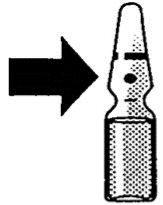
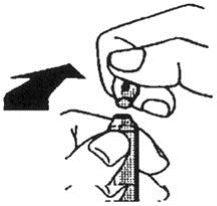
Breakable ampoule. Place your thumb below
the break line below the colored point
and break the ampoule by pressing
backwards
Use in Elderly Patients
Elderly patients may be more sensitive to the effects of Dolotren Injectable than other adults. Therefore, it is especially important that elderly patients immediately inform their doctor of any adverse reactions that occur.
If you use more Dolotren Injectable than you should
In case of overdose or accidental ingestion, consult your doctor or pharmacist, go to the emergency department of the nearest hospital, or call the Toxicology Information Service. Telephone (91) 562 04 20, indicating the medicine and the amount used. It is recommended to take the packaging and the leaflet of the medicine to the healthcare professional.
If you forget to use Dolotren Injectable
Do not use a double dose to make up for forgotten doses.
If you have any other questions about the use of this medicine, ask your doctor or pharmacist.

Started taking the medicine and have questions?
Discuss your symptoms and treatment with a doctor online.
4. Possible Adverse Effects
Like all medicines, this medicine can cause adverse effects, although not all people suffer from them.
Some adverse effects can be serious.
Stop using Dolotren and immediately inform your doctor if you present any of the following serious adverse effects; you may need urgent medical treatment:
- Severe allergic skin reaction, which can include large red or dark spots, skin swelling, blisters, and itching (generalized fixed drug eruption).
Other adverse effects:
Frequent Adverse Effects (occurring in at least 1 in 100 patients)
Nervous System Disorders
? headache
? dizziness
Ear and Labyrinth Disorders
? vertigo
Gastrointestinal Disorders
? nausea
? vomiting
? diarrhea
? acidity
? abdominal pain
? gas
? loss of appetite
Hepatobiliary Disorders
? alterations in blood test results for liver function (increased serum transaminases).
Skin and Subcutaneous Tissue Disorders
? skin rash
General Disorders and Administration Site Conditions
? reaction, hardening, and pain at the application site
Rare Adverse Effects (occurring in at least 1 in 10,000 patients):
Immune System Disorders
? swelling in the face, eyes, or tongue, difficulty swallowing, wheezing, hives, and generalized itching, skin rash, fever, abdominal cramps, discomfort or oppression in the chest, difficulty breathing, dizziness, unconsciousness (severe allergic reaction). If these symptoms appear, consult your doctor immediately.
Nervous System Disorders
? sleepiness
Respiratory, Thoracic, and Mediastinal Disorders
? asthma
Gastrointestinal Disorders
? stomach pain
? reflux
? bloody diarrhea
? gastric or intestinal ulcer with or without bleeding or perforation (vomiting blood and appearance of blood in stools). If these symptoms appear, consult your doctor immediately.
Hepatobiliary Disorders
? alteration of liver function
? hepatitis with or without yellowing. If these symptoms appear, consult your doctor immediately.
Skin and Subcutaneous Tissue Disorders
? hives
General Disorders and Administration Site Conditions
? fluid retention, with swelling (edema)
? appearance of a black crust on the skin
Very Rare Adverse Effects (occurring in less than 1 in 10,000 patients):
Blood and Lymphatic System Disorders
? signs of lack of blood cells that produce fatigue, headache, shortness of breath when exercising, dizziness, paleness (anemia), frequent infections with fever, chills, sore throat or mouth ulcers (leukopenia), bleeding or more bruising than usual (thrombocytopenia). If these symptoms appear, consult your doctor immediately.
Immune System Disorders
? swelling in the face
Psychiatric Disorders
? disorientation
? depression
? insomnia
? nightmares
? irritability
? psychotic reactions
Nervous System Disorders
? tingling sensation
? memory disorders
? seizures
? anxiety
? tremors
? meningitis (inflammation of the membranes surrounding the brain) with symptoms such as fever, nausea, vomiting, headache, neck stiffness or extreme sensitivity to bright light. If these symptoms appear, consult your doctor immediately.
? taste disorders
? cerebral infarction
Ocular Disorders
? blurred vision
? double vision
Ear and Labyrinth Disorders
? ringing in the ears
Cardiac Disorders
? palpitations
? chest pain
? heart failure
? heart attack (myocardial infarction)
Vascular Disorders
? hypertension (high blood pressure)
? vasculitis (inflammation of blood vessel walls)
Respiratory, Thoracic, and Mediastinal Disorders
? difficulty breathing, wheezing (pneumonitis).
If these symptoms appear, consult your doctor immediately.
Gastrointestinal Disorders
? worsening of Crohn's disease and ulcerative colitis
? constipation
? tongue swelling (glossitis)
? inflammation of the mouth mucosa (stomatitis)
? difficulty swallowing (esophageal disorder)
? severe abdominal pain, nausea, vomiting, and loss of appetite (signs of pancreatitis). If these symptoms appear, consult your doctor immediately.
Skin and Subcutaneous Tissue Disorders
? severe skin reactions with rash, redness, blisters on the lips, mouth, or eyes, skin peeling, accompanied by fatigue, nausea, loss of appetite, fever, chills, headache, cough, or body pain (Stevens-Johnson syndrome or toxic epidermal necrolysis). If these symptoms appear, consult your doctor immediately.
? generalized rash (eczema)
? redness (erythema and erythema multiforme)
? skin peeling (exfoliative dermatitis)
? hair loss
? sun allergy (photosensitivity reaction)
? appearance of bruises (purpura)
? itching
Renal and Urinary Disorders
? kidney function disorders that cause swelling in feet or legs and sudden decrease in urine output (acute renal failure, interstitial nephritis, renal papillary necrosis)
? blood in urine (hematuria)
? foam in urine (nephrotic syndrome)
If these symptoms appear, consult your doctor immediately.
Infections and Infestations
? infection at the injection site.
Frequency Not Known (cannot be estimated from available data)
Cardiac Disorders
? chest pain, which can be a sign of a potentially severe allergic reaction called Kounis syndrome. If this adverse effect appears, inform your doctor immediately.
Hepatobiliary Disorders
? liver function disorders that cause yellowing of the skin and eyes, fever, with pain in the upper abdomen and bruising (liver failure, fulminant hepatitis, liver necrosis)
If these symptoms appear, consult your doctor immediately.
Gastrointestinal Disorders
? mild abdominal colic and abdominal pain on palpation that begins shortly after starting treatment with Dolotren 75 mg injectable solution, followed by rectal bleeding or bloody diarrhea, usually observed within 24 hours after the onset of abdominal pain. If you notice these symptoms, stop using Dolotren 75 mg and consult your doctor immediately.
Skin and Subcutaneous Tissue Disorders
? allergic skin reaction, which can include round or oval patches of redness and skin swelling, blisters, and itching (fixed drug eruption). It can also cause darkening of the skin in the affected areas, which may persist after healing. The fixed drug eruption usually reappears in the same or the same areas if the medicine is taken again.
Infections and Infestations
? tissue damage at the injection site
General Disorders and Administration Site Conditions
? reactions at the injection site, including pain, redness, swelling, appearance of a hard lump, ulcers, or bruising at the injection site. These symptoms can evolve into blackening and necrosis of the skin and surrounding tissues at the injection site, leaving a scar after healing. This complication is also known as Nicolau syndrome. If you notice these symptoms, inform your doctor immediately.
If you use diclofenac for a prolonged period, go to your doctor for regular check-ups and ensure that no adverse effects occur.
Reporting Adverse Effects
If you experience any type of adverse effect, consult your doctor or pharmacist, even if it is a possible adverse effect that does not appear in this prospectus. You can also report them directly through the Spanish Pharmacovigilance System for Human Use Medicines: https://www.notificaram.es/. By reporting adverse effects, you can contribute to providing more information on the safety of this medicine.
5. Conservation of Dolotren Injectable
Keep this medicine out of sight and reach of children.
No special storage conditions are required.
Do not use Dolotren injectable after the expiration date shown on the packaging after CAD. The expiration date is the last day of the month indicated.
Medicines should not be thrown away through wastewater or household waste. Deposit the packaging and medicines you no longer need at the SIGRE point in the pharmacy. In case of doubt, ask your pharmacist how to dispose of the packaging and medicines you no longer need. This way, you will help protect the environment.
6. Package Contents and Additional Information
Composition of Dolotren Injectable
- The active ingredient is diclofenac sodium. Each 3 ml ampoule contains 75 mg of diclofenac sodium.
- The other components (excipients) are: propylene glycol (E-1520), benzyl alcohol, mannitol (E-421), sodium metabisulfite (E-223), sodium hydroxide, and water for injectable preparations.
Appearance of the Product and Package Contents
Each package contains an injectable holder with 6 colorless 3 ml ampoules containing a clear, colorless, or slightly yellowish aqueous solution, free of foreign particles.
Marketing Authorization Holder
Faes Farma, S.A.
Autonomia Etorbidea, 10
48940 Leioa (Bizkaia)
Spain
Manufacturer
Laboratórios Basi Indústria Farmacêutica S.A.
Parque Industrial Manuel Lourenço Ferreira, Lotes 8,15 e 16
3450-232 Mortágua-Portugal
Date of the Last Revision of this Prospectus: July 2025
Detailed information about this medicine is available on the website of the Spanish Agency for Medicines and Health Products (AEMPS)http://www.aemps.gob.es/
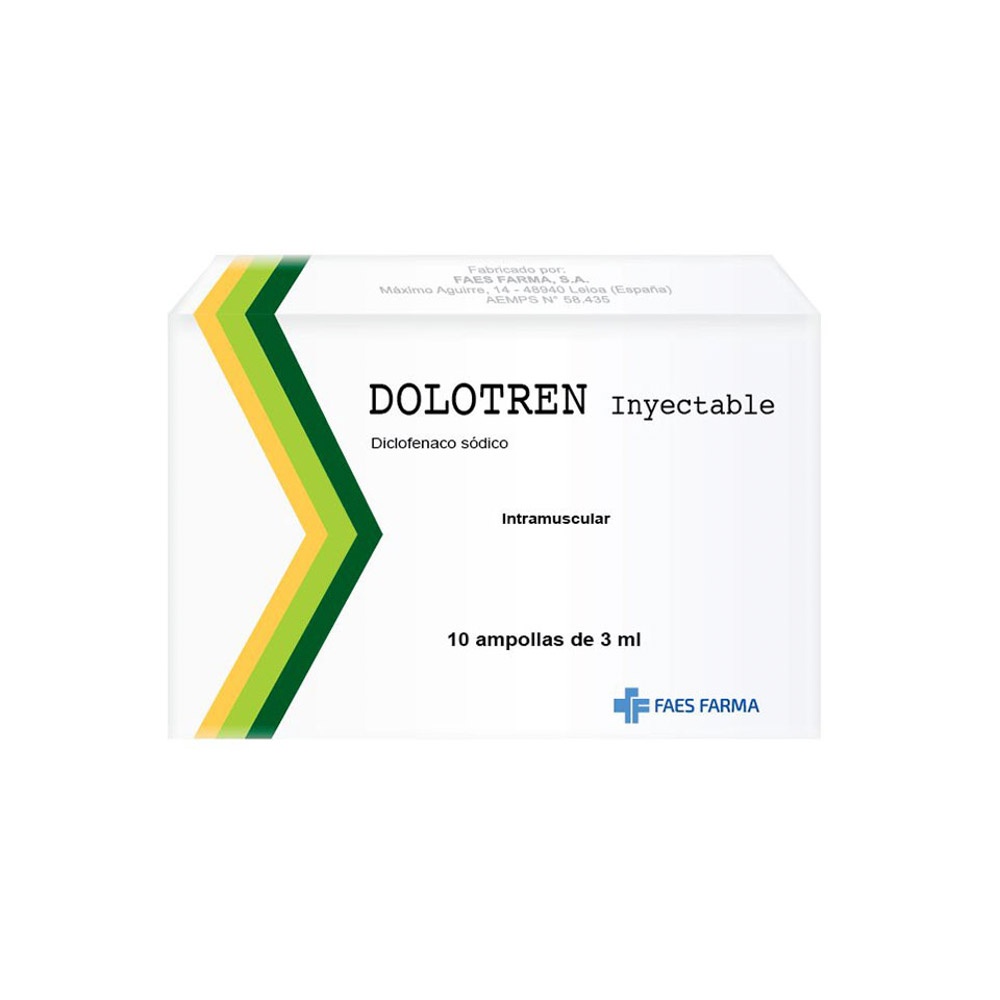
- Country of registration
- Dosage formINJECTABLE, 75 mg
- ATC codeM01AB05
- Average pharmacy price2.59 EUR
- Active substance
- Prescription requiredYes
- Manufacturer
- CompositionSODIO, METABISULFITO DE (E 223) (3 mg mg), ALCOHOL BENCILICO (0,09 ml mg), PROPILENGLICOL (0,6 ml mg), MANITOL (E-421) (15 mg mg), HIDROXIDO DE SODIO (E 524) (csp ajuste PH - mg)
- This information is for reference only and does not constitute medical advice. Always consult a doctor before taking any medication. Oladoctor is not responsible for medical decisions based on this content.
- Alternatives to DOLOTREN 75 mg INJECTABLE SOLUTIONDosage form: INJECTABLE, 25 mgActive substance: diclofenacManufacturer: Ibsa Farmaceutici Italia S.R.L.Prescription requiredDosage form: INJECTABLE, 50 mgActive substance: diclofenacManufacturer: Ibsa Farmaceutici Italia S.R.L.Prescription requiredDosage form: INJECTABLE, 75 mgActive substance: diclofenacManufacturer: Ibsa Farmaceutici Italia S.R.L.Prescription required
Online doctors for DOLOTREN 75 mg INJECTABLE SOLUTION
Discuss questions about DOLOTREN 75 mg INJECTABLE SOLUTION, including use, safety considerations and prescription review, subject to medical assessment and local regulations.









Get DOLOTREN 75 mg INJECTABLE SOLUTION Prescription Online
Fill in a 2-min form
Tell us your symptoms, history, and what medicine you're requesting.
Pick a doctor or let us assign
Choose a specialist or we'll match you with the next available doctor.
Doctor reviews your case
Usually within 30 minutes. They may ask follow-up questions via chat.
Collect from any pharmacy
Electronic prescription sent to your email — valid across Spain.
Frequently Asked Questions
DOLOTREN 75 mg INJECTABLE SOLUTION requires a prescription in Spain. You can check with a doctor online whether this medicine may be appropriate for your situation.
The active ingredient in DOLOTREN 75 mg INJECTABLE SOLUTION is diclofenac. This information helps identify medicines with the same composition but different brand names.
The average pharmacy price for DOLOTREN 75 mg INJECTABLE SOLUTION is around 2.59 EUR. Prices may vary depending on the manufacturer and dosage form.
DOLOTREN 75 mg INJECTABLE SOLUTION is manufactured by Faes Farma S.A.. Pharmacy brands and packaging may differ depending on the distributor.
Doctors such as Family doctors, Psychiatrists, Dermatologists, Cardiologists, Endocrinologists, Gastroenterologists, Pulmonologists, Nephrologists, Rheumatologists, Hematologists, Infectious disease physicians, Allergists, Geriatricians, Paediatricians, Oncologists may assess whether DOLOTREN 75 mg INJECTABLE SOLUTION is appropriate, depending on your situation and local regulations. You can book an online consultation to discuss your symptoms and possible next steps.
Spain has a well-developed healthcare infrastructure across major cities such as Madrid, Barcelona, Valencia, and Seville. Pharmacies are widely available and operate under strict regulations, ensuring access to prescribed medications.
You can buy DOLOTREN 75 mg INJECTABLE SOLUTION in Madrid, Barcelona, Seville, or Valencia at any local pharmacy with a valid prescription.
To obtain a prescription, you can use Oladoctor:
Other medicines with the same active substance (diclofenac) include AKIS 25 mg Injectable Solution in Pre-filled Syringe, AKIS 50 mg Injectable Solution in Pre-filled Syringe, AKIS 75 mg Injectable Solution in Pre-filled Syringe. These may have different brand names or formulations but contain the same therapeutic ingredient. Always consult a doctor before switching or starting a new medicine.
