







How to use DOLOMEDIL 500mg/10mg TABLETS
Translated with AI
This page provides general information and does not replace a doctor’s consultation. Always consult a doctor before taking any medication. Seek urgent medical care if symptoms are severe.
Show originalContents of the leaflet
Introduction
Package Leaflet: Information for the User
Dolomedil 500 mg/10 mg tablets
Paracetamol/codeine phosphate hemihydrate
Read all of this leaflet carefully before you start taking this medicine because it contains important information for you.
- Keep this leaflet, you may need to read it again.
- If you have any further questions, ask your doctor or pharmacist.
- This medicine has been prescribed for you only. Do not pass it on to others. It may harm them, even if their signs of illness are the same as yours.
- If you get any side effects, talk to your doctor or pharmacist. This includes any possible side effects not listed in this leaflet. See section 4.
Contents of the pack:
- What is Dolomedil and what is it used for
- What you need to know before you take Dolomedil
- How to take Dolomedil
- Possible side effects
- Storage of Dolomedil
- Contents of the pack and further information
1. What is Dolomedil and what is it used for
Dolomedil contains paracetamol and codeine phosphate as active ingredients. Paracetamol belongs to a group of medicines called analgesics and antipyretics, and codeine is an opioid analgesic.
Dolomedil is indicated for the symptomatic treatment of moderate acute pain in patients over 12 years of age for whom ibuprofen or paracetamol alone is not considered appropriate.

2. What you need to know before you take Dolomedil
Do not take Dolomedil
- If you are allergic to paracetamol, codeine, or any of the other ingredients of Dolomedil (listed in section 6)
- If you have acute respiratory depression, acute asthma, or chronic obstructive pulmonary disease
- In children and adolescents (under 18 years) after tonsillectomy or adenoidectomy who suffer from obstructive sleep apnea
- If you are an extensive or ultra-rapid metabolizer in the conversion of codeine to morphine
- If you are breastfeeding.
Warnings and precautions
It is important to use the smallest dose that relieves the pain and not to exceed the recommended doses in Section 3 - "How to take Dolomedil". To do this, avoid taking other medicines that contain paracetamol or codeine (used, for example, to treat colds, pain, and fever).
Consult your doctor, pharmacist, or nurse before starting to take Dolomedil:
- If you have any heart or lung disease and in patients with anemia (decrease in hemoglobin levels in the blood, due to or not due to a decrease in red blood cells), or with low levels of a blood enzyme called glucose-6-phosphate dehydrogenase, you should consult your doctor before taking the medicine.
- If you have liver (including Gilbert's syndrome) or kidney problems or suffer from chronic malnutrition or are dehydrated, you may need a dose reduction of this medicine.
- If you have any disease that affects your ability to breathe, have intracranial injuries, for example, due to a head injury, are asthmatic or have a history of asthma, and/or are sensitive to acetylsalicylic acid.
- If you have any thyroid, prostate, or urethral stricture (both of which cause difficulty urinating), adrenal insufficiency (Addison's disease), or intestinal or gallbladder conditions.
- If you are an elderly person or feel weakened.
- If you have chronic constipation, the use of this medicine can worsen the symptoms.
- Codeine is transformed into morphine through an enzyme in the liver. Morphine is the active substance responsible for pain relief. Some people may have variability in the activity of this enzyme, affecting them differently. In some, morphine is not produced or is produced in very small quantities, resulting in a lower analgesic effect. While those who produce large amounts of morphine are more likely to experience serious adverse reactions. If you notice any of the following side effects, you should stop taking this medicine and seek medical help immediately: slow or shallow breathing, confusion, drowsiness, small pupils, nausea and vomiting, constipation, loss of appetite.
- If you consume alcoholic beverages, it can cause paracetamol to damage the liver.
- Prolonged or frequent use of analgesics to treat headaches can worsen symptoms, which should not be treated with higher doses of the medicine.
- With repeated administration of this medicine, physical dependence and tolerance may appear. Administration should be gradually suspended after prolonged treatments.
- If you need to take this medicine for a prolonged period, the treatment should be periodically reevaluated by your doctor.
If the pain persists for more than 3 days (2 days for throat pain), worsens, or other symptoms appear, you should interrupt treatment and consult your doctor.
During treatment with Dolomedil, inform your doctor immediately if:
If you have severe diseases, such as severe renal failure or sepsis (when bacteria and their toxins circulate in the blood, causing damage to organs), or if you suffer from malnutrition, chronic alcoholism, or are also taking flucloxacillin (an antibiotic). A serious disease called metabolic acidosis (an anomaly in blood and fluids) has been reported in patients in these situations when paracetamol is used at regular doses for a prolonged period or when paracetamol is taken with flucloxacillin. The symptoms of metabolic acidosis may include: severe breathing difficulties with deep and rapid breathing, drowsiness, feeling unwell (nausea) and vomiting.
Interference with laboratory tests
If you are going to have any laboratory tests (including blood tests, urine tests, skin tests that use allergens, etc.), inform your doctor that you are taking this medicine, as it may alter the results of these tests.
Use of Dolomedil with other medicines
Inform your doctor or pharmacist if you are using or have recently used other medicines, even those purchased without a prescription.
In particular, if you are using medicines that contain any of the following active ingredients, it may be necessary to modify the dose or interrupt treatment of any of them.
Paracetamol may interact with the following medicines:
- Oral anticoagulants (acenocoumarol, warfarin)
- Antiepileptics (lamotrigine, phenytoin, or other hydantoins, phenobarbital, methylphenobarbital, primidone, carbamazepine)
- Barbiturates (used as sleep inducers, sedatives, and anticonvulsants)
- Antituberculars (isoniazid, rifampicin)
- Medicines used to treat gout (probenecid and sulfinpyrazone)
- Propranolol (used to treat high blood pressure and heart rhythm disorders)
- Anticholinergics (medicines used to relieve stomach, intestine, and bladder spasms or cramps)
- Metoclopramide and domperidone (used to prevent nausea and vomiting)
- Zidovudine (used to treat patients infected with the human immunodeficiency virus, the cause of AIDS)
- Colestyramine (used to decrease blood cholesterol levels)
- Flucloxacillin (antibiotic), due to a serious risk of blood and fluid anomaly (called metabolic acidosis) that requires urgent treatment.
On the other hand, codeine may interact with the following medicines:
- Narcotic analgesics (used to treat pain) such as nalbuphine, buprenorphine, pentazocine
- Antidepressants (used to treat depression)
- Sedatives (used to treat depression, anxiety)
- Sedating antihistamines H1 (used to treat allergies)
- Anxiolytics (used to treat anxiety)
- Neuroleptic hypnotics (used to treat insomnia)
- Clonidine and related medicines (used to treat hypertension and migraine)
- Thalidomide (used to treat some types of cancer)
- Benzodiazepines
- Medicines used to relieve stomach, intestine, and bladder spasms or cramps (anticholinergics).
Do not use with other analgesics (pain-relieving medicines) without consulting your doctor.
The concomitant use of codeine and sedative medicines such as benzodiazepines or related medicines increases the risk of drowsiness, breathing difficulties (respiratory depression), coma, and can be fatal. Therefore, concomitant use should only be considered when other treatment options are not possible.
However, if your doctor prescribes codeine along with sedative medicines, the dose and duration of concomitant treatment should be limited by your doctor.
Inform your doctor about all sedative medicines you are taking and follow your doctor's recommendations regarding the dose carefully. It may be useful to inform friends or family members so they are aware of the signs and symptoms mentioned above. Contact your doctor when you experience such symptoms.
Taking Dolomedil with food, drinks, and alcohol
The use of paracetamol in patients who habitually consume alcohol (three or more alcoholic drinks per day) can damage the liver. Additionally, alcohol can potentiate the depressive effect of codeine. Therefore, you should not drink alcohol during treatment with this medicine.
Pregnancy, breastfeeding, and fertility
If you are pregnant or breastfeeding, think you may be pregnant, or plan to become pregnant, consult your doctor or pharmacist before using this medicine.
Do not take this medicine during breastfeeding. Codeine and morphine pass into breast milk.
Driving and using machines
Dolomedil contains codeine, which can cause drowsiness, altering mental and/or physical ability.
If you notice these effects, avoid driving vehicles or using machines.
Dolomedil contains hydrogenated castor oil
This medicine may cause stomach upset and diarrhea because it contains hydrogenated castor oil.
Use in athletes:This medicine contains codeine. As a result of its metabolism, some compounds are produced that can result in a positive test in doping controls.
3. How to take Dolomedil
Follow the administration instructions of Dolomedil indicated by your doctor or pharmacist. In case of doubt, consult your doctor or pharmacist.
This medicine should not be taken for more than 3 days. If the pain does not subside within 3 days, you should consult your doctor.
The recommended dose is:
Adults:
1 or 2 tablets every 4 or 6 hours, depending on the severity of the symptoms, up to a maximum of 8 tablets per day. The doses should be spaced at least 4 hours apart. It is recommended to start treatment with 2 tablets.
Use in children and adolescents
Adolescents from 12 to 18 years: 1 tablet 4 or 5 times a day, as needed, and up to a maximum of 5 tablets per day.
Do not use in patients under 12 years due to the risk of serious respiratory problems.
Maximum recommended doses
In adults, the maximum dose corresponds to 8 tablets per day, and 5 tablets for adolescents from 12 to 18 years.
Patients with kidney and/or liver disease
If you have kidney and/or liver disease, your doctor may prescribe a lower dose than usual. If so, take the exact dose that your doctor has prescribed.
Elderly patients
Elderly people are more likely to experience adverse effects, so it may be necessary to reduce the dose. Consult your doctor.
Instructions for correct administration of the preparation
Dolomedil is administered orally.
The tablets should be taken with a glass of liquid, preferably water or another non-alcoholic liquid.
If you take more Dolomedil than you should
If you have taken more Dolomedil than you should, consult your doctor or pharmacist immediately or call the Toxicology Information Service, telephone 91 562 04 20, indicating the medicine and the amount used. It is recommended to take the package and the leaflet of the medicine to the healthcare professional.
The symptoms of paracetamol overdose may be: dizziness, vomiting, loss of appetite, yellowing of the skin and eyes (jaundice), and abdominal pain.
In case the patient is being treated with barbiturates or suffers from chronic alcoholism, they may be more susceptible to a paracetamol overdose.
The symptoms that characterize a codeine overdose consist of: drowsiness, leading to stupor or coma, cold skin, miosis, muscle flaccidity, and occasionally bradycardia, hypotension, and respiratory depression.
If you forget to take Dolomedil
Do not take a double dose to make up for forgotten doses.
In case you have forgotten a dose, take it as soon as possible and continue with the new schedule, maintaining the minimum interval between doses. However, if the time of the next dose is very close, skip the forgotten dose and take the next dose at the usual time.
If you stop taking Dolomedil
Your doctor will indicate the duration of treatment with Dolomedil and when and how you should stop it. Do not stop treatment beforehand, as you will not achieve the expected effect.
There is a risk of possible effects derived from abstinence when stopping treatment. Therefore, in prolonged treatments, the doses should be gradually reduced (see section 2).
If you have any other doubts about the use of this medicine, ask your doctor, pharmacist, or nurse.

4. Possible side effects
Like all medicines, this medicine can cause side effects, although not everybody gets them.
The side effects observed are described below according to their frequency of occurrence:
Rare (may affect up to 1 in 1,000 patients) and very rare (may affect up to 1 in 10,000 patients).
The side effects of paracetamol are:
Rare: Discomfort, increased levels of liver transaminases (liver enzymes), and hypotension (decrease in blood pressure).
Very rare: Allergic reactions (hypersensitivity) ranging from a simple skin rash or urticaria to anaphylactic shock, hepatotoxicity (liver toxicity), and jaundice (yellowing of the skin and mucous membranes), hypoglycemia (low blood sugar levels), thrombocytopenia (reduced platelet count), agranulocytosis, leucopenia, neutropenia (reduced white blood cell count), hemolytic anemia (reduced red blood cell count), sterile pyuria (cloudy urine), and adverse renal effects.
Very rare cases of serious skin reactions have been reported.
Frequency not known(cannot be estimated from the available data): A serious disease that can make the blood more acidic (called metabolic acidosis) in patients with severe disease who use paracetamol (see section 2).
The side effects of codeine are:
Rare: Discomfort, drowsiness (feeling of sleep), constipation, nausea, and vertigo, bronchospasm (spasms in the bronchi that make breathing difficult), and respiratory depression (slow breathing).
Very rare: Allergic reactions (hypersensitivity) ranging from a simple skin rash or urticaria to anaphylactic shock, fever, jaundice (yellowing of the skin and eyes), hypoglycemia (low blood sugar levels), thrombocytopenia, agranulocytosis, leucopenia, neutropenia, hemolytic anemia.
Reporting of side effects
If you experience any side effects, talk to your doctor or pharmacist. This includes any possible side effects not listed in this leaflet. You can also report side effects directly through the Spanish Medicines Agency's website: www.notificaRAM.es. By reporting side effects, you can help provide more information on the safety of this medicine.
5. Storage of Dolomedil
Keep out of the sight and reach of children.
No special storage conditions are required.
Do not use this medicine after the expiry date that appears on the packaging after "EXP". The expiry date is the last day of the month indicated.
Medicines should not be disposed of via wastewater or household waste. Return the packaging and any unused medicine to a pharmacy. If in doubt, ask your pharmacist how to dispose of the packaging and any unused medicine. This will help protect the environment.
6. Contents of the pack and further information
Composition of Dolomedil
- The active ingredients are paracetamol and codeine phosphate hemihydrate. Each tablet contains 500 mg of paracetamol and 10 mg of codeine phosphate hemihydrate.
- The other ingredients are: povidone, sodium croscarmellose, talc (E553b), corn starch, tricalcium phosphate (E341), stearic acid (E570), hydrogenated castor oil, and magnesium stearate (E470b).
Appearance of the product and packaging contents
Dolomedil tablets are white, biconvex, oblong, and scored on both sides. The tablets are packaged in PVC/Alu blisters. Each package contains 20 tablets.
The score line is to facilitate breaking and swallowing but not to divide into equal doses.
Marketing authorization holder and manufacturer
Kern Pharma, S.L.
Venus, 72 – Pol. Ind. Colón II
08228 Terrassa - Barcelona
Spain
Date of the last revision of this leaflet: January 2025
Detailed and updated information on this medicine is available on the website of the Spanish Agency for Medicines and Health Products (AEMPS) http://www.aemps.gob.es/
- Country of registration
- Dosage formTABLET, 500 mg paracetamol; 10 mg codeine phosphate
- ATC codeN02AJ06
- Average pharmacy price2.39 EUR
- Active substance
- Prescription requiredYes
- Manufacturer
- This information is for reference only and does not constitute medical advice. Always consult a doctor before taking any medication. Oladoctor is not responsible for medical decisions based on this content.
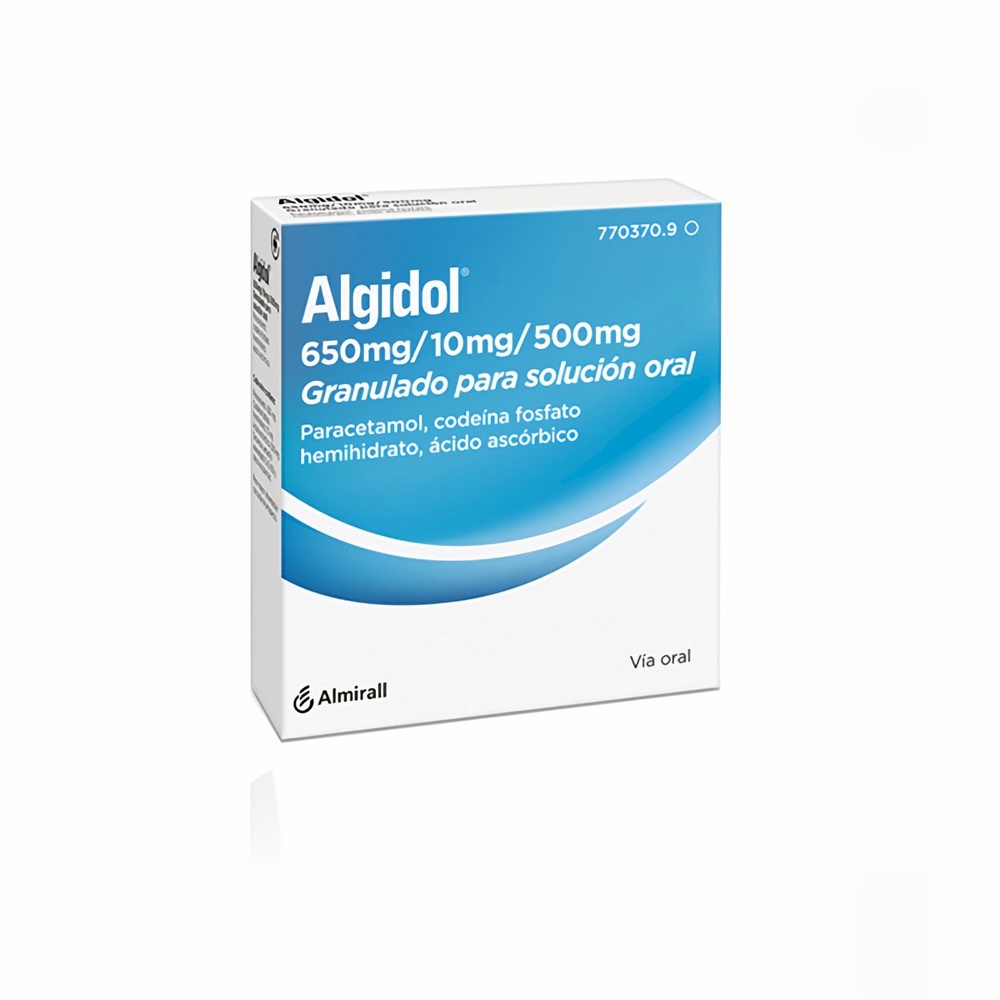
- Alternatives to DOLOMEDIL 500mg/10mg TABLETSDosage form: ORAL SOLUTION/SUSPENSION, 650/10/500 mg/mg/mgActive substance: codeine and paracetamolManufacturer: Laboratorios Ern S.A.Prescription requiredDosage form: TABLET, Paracetamol 500 mg/Caffeine 30 mg/Codeine Phosphate 10 mgActive substance: codeine and paracetamolManufacturer: Faes Farma S.A.Prescription requiredDosage form: TABLET, 500 mg paracetamol / 30 mg codeine phosphateActive substance: codeine and paracetamolManufacturer: Faes Farma S.A.Prescription required

Online doctors for DOLOMEDIL 500mg/10mg TABLETS
Discuss questions about DOLOMEDIL 500mg/10mg TABLETS, including use, safety considerations and prescription review, subject to medical assessment and local regulations.






Get DOLOMEDIL 500mg/10mg TABLETS Prescription Online
Fill in a 2-min form
Tell us your symptoms, history, and what medicine you're requesting.
Pick a doctor or let us assign
Choose a specialist or we'll match you with the next available doctor.
Doctor reviews your case
Usually within 30 minutes. They may ask follow-up questions via chat.
Collect from any pharmacy
Electronic prescription sent to your email — valid across Spain.
Frequently Asked Questions
DOLOMEDIL 500mg/10mg TABLETS requires a prescription in Spain. You can check with a doctor online whether this medicine may be appropriate for your situation.
The active ingredient in DOLOMEDIL 500mg/10mg TABLETS is codeine and paracetamol. This information helps identify medicines with the same composition but different brand names.
The average pharmacy price for DOLOMEDIL 500mg/10mg TABLETS is around 2.39 EUR. Prices may vary depending on the manufacturer and dosage form.
DOLOMEDIL 500mg/10mg TABLETS is manufactured by Kern Pharma S.L.. Pharmacy brands and packaging may differ depending on the distributor.
Doctors such as Family doctors, Psychiatrists, Dermatologists, Cardiologists, Endocrinologists, Gastroenterologists, Pulmonologists, Nephrologists, Rheumatologists, Hematologists, Infectious disease physicians, Allergists, Geriatricians, Paediatricians, Oncologists may assess whether DOLOMEDIL 500mg/10mg TABLETS is appropriate, depending on your situation and local regulations. You can book an online consultation to discuss your symptoms and possible next steps.
Spain has a well-developed healthcare infrastructure across major cities such as Madrid, Barcelona, Valencia, and Seville. Pharmacies are widely available and operate under strict regulations, ensuring access to prescribed medications.
You can buy DOLOMEDIL 500mg/10mg TABLETS in Madrid, Barcelona, Seville, or Valencia at any local pharmacy with a valid prescription.
To obtain a prescription, you can use Oladoctor:
Other medicines with the same active substance (codeine and paracetamol) include ALGIDOL 650 mg / 10 mg / 500 mg ORAL SOLUTION GRANULES, ANALGILASA 500 mg / 30 mg / 10 mg FILM-COATED TABLETS, ANALGIPLUS 500 mg/30 mg FILM-COATED TABLETS. These may have different brand names or formulations but contain the same therapeutic ingredient. Always consult a doctor before switching or starting a new medicine.
