



DOGMATIL 200 mg Tablets

Prescription review online
A doctor will review your case and decide whether a prescription is medically appropriate.

Talk to a doctor about this medicine
Discuss your symptoms and possible next steps in a quick online consultation.



How to use DOGMATIL FORTE 200 mg TABLETS
Contents of the leaflet
- Introduction
- What Dogmatil Fuerte is and what it is used for
- What you need to know before you take Dogmatil Fuerte
- How to take Dogmatil Fuerte
- Possible Adverse Effects
- Conservation of Dogmatil Fuerte
- Package Contents and Additional Information
Introduction
Package Leaflet: Information for the User
Dogmatil Fuerte 200 mg Tablets
Sulpiride
Read all of this leaflet carefully before you start taking this medicine because it contains important information for you.
- Keep this leaflet, you may need to read it again.
- If you have any further questions, ask your doctor or pharmacist.
- This medicine has been prescribed for you only. Do not pass it on to others. It may harm them, even if their signs of illness are the same as yours.
- If you get any side effects, talk to your doctor or pharmacist. This includes any possible side effects not listed in this leaflet. See section 4.
Contents of the pack:
- What Dogmatil Fuerte is and what it is used for
- What you need to know before you take Dogmatil Fuerte
- How to take Dogmatil Fuerte
- Possible side effects
- Storing Dogmatil Fuerte
- Contents of the pack and other information
1. What Dogmatil Fuerte is and what it is used for
Dogmatil Fuerte belongs to a group of medicines called antipsychotics, also known as neuroleptics.
Dogmatil Fuerte is indicated for:
- Treatment of depressive disorders with psychotic symptoms in combination with antidepressants, when treatment with antidepressants alone has not been effective, and for the treatment of other severe forms of depression resistant to antidepressants.
- Treatment of vertigo in cases where there is no response to habitual antivertiginous treatment.
- Treatment of acute and chronic psychoses.

Not sure if this medicine is right for you?
Discuss your symptoms and treatment with a doctor online.
2. What you need to know before you take Dogmatil Fuerte
Do not take Dogmatil Fuerte
- if you are allergic to sulpiride or any of the other ingredients of this medicine (listed in section 6),
- if you have multiple tumors (concomitant tumors) dependent on prolactin (hormone that stimulates milk secretion), such as prolactinomas of the pituitary gland and breast cancer,
- if you have pheochromocytoma (tumor of the adrenal gland),
- if you are being treated with levodopa or antiparkinsonian medicines (including ropinirol) (see "Using Dogmatil Fuerte with other medicines"),
- if you have a metabolic disorder known as acute porphyria,
- in patients with low heart rate (bradycardia), with rhythm disturbances or with any other clinically significant heart disease.
Warnings and precautions
Consult your doctor or pharmacist before starting to take Dogmatil Fuerte:
- If it is administered to patients with a clinical situation that may favor the appearance of heart rhythm disorders, since sulpiride may increase the risk of severe heart rhythm disturbances.
- If you have risk factors for stroke.
- If the medicine is administered to elderly patients, as there is a risk of sedation, decrease in blood pressure when standing up, or the appearance of dyskinesia (involuntary and uncontrollable repetitive movements).
- If you have kidney failure (renal function impairment), the dose should be reduced.
- If you have or have had epilepsy, since the group of medicines to which Dogmatil Fuerte belongs may favor the appearance of epileptic seizures and convulsions.
- If you have Parkinson's disease, since Dogmatil Fuerte is contraindicated, except in exceptional cases, in patients taking antiparkinsonian medication.
- Medicines of this type (antipsychotics) may cause a combination of fever, muscle stiffness, and vegetative symptoms, such as sweating or faster breathing (called "neuroleptic malignant syndrome"). If this happens, treatment should be discontinued and you should talk to your doctor immediately.
- If you have diabetes mellitus (high blood sugar levels) or have risk factors for diabetes.
- If you are an elderly patient with psychosis related to dementia being treated with antipsychotics (possibility of increased risk of death).
- If you are a patient with risk factors for thromboembolism (obstruction of a blood vessel by a thrombus) (see "Possible side effects"). Cases of venous thromboembolism, sometimes fatal, have been reported with antipsychotic treatment.
- If an infection or fever of unknown origin appears, inform your doctor, as it could be a blood disorder (see "Possible side effects"). Cases of leukopenia (decrease in the number of white blood cells), neutropenia (decrease in the number of a type of white blood cells called neutrophils), and agranulocytosis (decrease in a type of white blood cells called granulocytes) have been reported with the use of antipsychotics, including Dogmatil Fuerte.
- In patients with a history of glaucoma, ileus, congenital digestive stenosis, urinary retention, or prostate hyperplasia, it should be used with caution.
- If you are a patient with high blood pressure, especially in the elderly population, due to the risk of hypertensive crisis (sudden increase in blood pressure).
- In patients with a history or family history of breast cancer, it should be used with caution and the patient should be monitored during treatment with sulpiride.
Children and adolescents
This medicine is not recommended for administration to children, as sulpiride has not been extensively investigated in this patient group.
Using Dogmatil Fuerte with other medicines
Inform your doctor or pharmacist if you are using, have recently used, or may need to use any other medicine.
Do not take Dogmatil if you are being treated with:
- Levodopa (medicine for the treatment of Parkinson's disease), antiparkinsonian medicines (including ropinirol) (see "Do not take Dogmatil Fuerte").
Inform your doctor if you are currently being treated with any of the following medicines:
Not recommended combinations:
- Medicines that contain alcohol.
- Antiarrhythmic agents (medicines that regulate heart rhythm) such as quinidine, disopyramide, amiodarone, and sotalol.
- Cisapride (medicine for gastrointestinal motility disorders).
- Thioridazine (medicine for psychiatric diseases).
- Intravenous erythromycin (antibiotic).
- Intravenous vincamine (medicine that improves blood circulation to the brain).
- Halofantrine (medicine for malaria).
- Pentamidine (medicine for certain infectious diseases).
- Sparfloxacin (antibiotic).
- Methadone (medicine that relieves pain).
- Pimozide, haloperidol, and sultopride (medicines for psychiatric diseases).
- Bepridil (medicine for angina pectoris).
- Imipramine antidepressants (medicines for treating depression).
- Medicines that induce slowing of heart rate, such as diltiazem and verapamil, clonidine, guanfacine; digitalis.
- Medicines that induce a decrease in potassium levels: hypokalemic diuretics, stimulant laxatives, intravenous amphotericin B (antibiotic), glucocorticoids, tetracosactides.
Combinations to be taken into account:
- Medicines that depress the central nervous system, including narcotics, analgesics, sedating H1 antihistamines, barbiturates, benzodiazepines, and other anxiolytic drugs, clonidine, and derivatives.
- Lithium salts (medicines for the treatment of manic-depressive disorder, also known as bipolar affective disorder).
- Sucralfate (medicine for treating and preventing duodenal ulcers). (See "3. How to take Dogmatil Fuerte").
- Antacids. (See "3. How to take Dogmatil Fuerte").
- Medicines to lower blood pressure.
Taking Dogmatil Fuerte with food, drinks, and alcohol
Since alcohol enhances the sedative effect of sulpiride, it is not recommended to consume alcoholic beverages or other medicines that contain alcohol in their composition while taking this medicine.
Do not drink grapefruit juice during treatment with Dogmatil Fuerte.
Pregnancy, breastfeeding, and fertility
If you are pregnant or breastfeeding, think you may be pregnant, or are planning to have a baby, ask your doctor or pharmacist for advice before taking this medicine.
Pregnancy
The use of Dogmatil is not recommended during pregnancy and in women of childbearing age who do not use an effective contraceptive method.
If you use Dogmatil during the last three months of pregnancy, your baby may suffer from agitation, increased muscle tone, involuntary body tremors, drowsiness, breathing difficulties, or feeding disorders. Consult your doctor if your baby presents any of these symptoms.
Breastfeeding
Do not breastfeed during treatment with Dogmatil. Consult your doctor about the best way to feed your baby if you are taking Dogmatil.
Driving and using machines
Dogmatil may cause symptoms such as drowsiness, dizziness, or vision changes, and may decrease your reaction ability. These effects, as well as the disease itself, may impair your ability to drive vehicles or operate machines. Therefore, do not drive, operate machines, or engage in other activities that require special attention until your doctor assesses your response to this medicine.
Even when used according to the recommendations, this medicine may cause sedation, so your ability to drive and use machines may be altered.
Dogmatil Fuerte contains lactose
This medicine contains lactose. If your doctor has told you that you have an intolerance to some sugars, consult them before taking this medicine.
3. How to take Dogmatil Fuerte
Follow exactly the administration instructions of this medicine indicated by your doctor. In case of doubt, consult your doctor again.
The duration of this treatment is limited. Your doctor will indicate the duration of the treatment as well as the way to increase the dose. Do not stop treatment abruptly, as the symptoms of your disease may reappear.
The route of administration is oral. You should swallow the tablet with a little water.
The recommended dose is different depending on the disease you are suffering from:
- Depression and vertigo: the recommended dose is 150-300 mg/day.
- Acute and chronic psychoses: 200-1600 mg/day of sulpiride (1-8 tablets/day).
In these cases, treatment should be started with Dogmatil 50 mg/ml solution for injection, by intramuscular route, for the first two weeks.
The dose should be divided into three doses throughout the day, and preferably administered before meals.
Sulpiride should be taken at least two hours before antacids and sucralfate.
- Patient with kidney failure (renal impairment): your doctor will adjust the dose.
- Elderly patients: your doctor will adjust the dose. These patients may need a lower initial dose and a more gradual dose adjustment.
If you take more Dogmatil Fuerte than you should
If you have taken more Dogmatil Fuerte than you should, consult your doctor or pharmacist immediately or go to the nearest hospital.
In case of overdose, muscle spasms of the face, neck, and tongue may appear. Some patients may develop parkinsonian manifestations (tremor, rigidity) with vital risk and coma.
There have been reports of fatal outcomes, mainly in combination with other medicines that act on the central nervous system (psychotropic agents).
There is no specific antidote for sulpiride, treatment is only symptomatic, and hemodialysis is partially effective in removing the medicine. In case of overdose, appropriate supportive measures should be instituted, recommending close monitoring of vital functions and cardiac function until the patient recovers.
In case of severe extrapyramidal symptoms (tremor, increased muscle tone, decreased movement, hypersalivation, etc.), anticholinergic agents should be administered.
In case of overdose or accidental ingestion, consult your doctor or pharmacist immediately or call the Toxicology Information Service, phone: 91.562.04.20, indicating the medicine and the amount ingested.
If you forget to take Dogmatil Fuerte
Do not take a double dose to make up for forgotten doses.

Started taking the medicine and have questions?
Discuss your symptoms and treatment with a doctor online.
4. Possible Adverse Effects
Like all medicines, this medicine can cause adverse effects, although not all people suffer from them.
The adverse effects associated with Dogmatil are:
Blood and Lymphatic System Disorders
Uncommon (may affect up to 1 in 100 patients): leucopenia (decrease in the number of white blood cells) (see "Warnings and Precautions").
Frequency not known: neutropenia (decrease in the number of a type of white blood cells called neutrophils) and agranulocytosis (decrease in a type of white blood cells called granulocytes) (see "Warnings and Precautions").
Immune System Disorders
Frequency not known: anaphylactic reactions (severe allergic reaction): urticaria, difficulty breathing (dyspnea), decrease in blood pressure, and anaphylactic shock (severe allergic reaction that can be life-threatening).
Endocrine Disorders
Frequent (may affect up to 1 in 10 patients): increase in prolactin hormone levels.
Metabolic and Nutritional Disorders
Frequency not known: decrease in sodium levels in the blood (hyponatremia), a disease called "inadequate secretion of antidiuretic hormone syndrome (SIHAD)".
Psychiatric Disorders
Frequent (may affect up to 1 in 10 patients): insomnia (difficulty staying or falling asleep).
Frequency not known: confusion.
Nervous System Disorders
Frequent (may affect up to 1 in 10 patients): sedation or somnolence, extrapyramidal disorder (these symptoms are generally reversible if antiparkinsonian medication is administered), parkinsonism, tremor, akathisia (inability to sit or remain seated).
Uncommon (may affect up to 1 in 100 patients): increased muscle tone, dyskinesia (abnormal and involuntary movements), dystonia (muscle contractions).
Rare (may affect up to 1 in 1,000 patients): oculogyric crisis (involuntary deviation of gaze).
Frequency not known: convulsions, malignant neuroleptic syndrome (see "Warnings and Precautions"), which is a complication characterized by elevated body temperature, muscle rigidity, leading to death, lack or reduction in voluntary movements (hypokinesia), tardive dyskinesia (characterized by rhythmic and involuntary movements mainly of the tongue and/or face, as reported with all neuroleptics, after administration for more than 3 months. Antiparkinsonian medication is ineffective or may worsen symptoms).
Cardiac Disorders
Rare (may affect up to 1 in 1,000 patients): ventricular arrhythmia (change in heart rhythm), ventricular tachycardia (rapid succession of heartbeats whose cause resides in the ventricles), ventricular fibrillation.
Frequency not known: prolongation of the QT interval (conduction problems in the heart), cardiac arrest, torsades de pointes (alteration of the heart rhythm), sudden death (see "Warnings and Precautions").
Vascular Disorders
Uncommon (may affect up to 1 in 100 patients): orthostatic hypotension (decrease in blood pressure when standing up).
Frequency not known: venous thromboembolism (process characterized by blood clotting in the veins), pulmonary embolism, deep vein thrombosis, increased blood pressure (see "Warnings and Precautions").
Respiratory, Thoracic, and Mediastinal Disorders
Frequency not known: aspiration pneumonia (mainly in association with other central nervous system depressants).
Gastrointestinal Disorders
Frequent (may affect up to 1 in 10 patients): constipation.
Uncommon (may affect up to 1 in 100 patients): increased salivation.
Hepatobiliary Disorders
Frequent (may affect up to 1 in 10 patients): increase in liver enzymes.
Frequency not known: liver damage (hepatocellular, cholestatic, or mixed liver damage).
Skin and Subcutaneous Tissue Disorders
Frequent (may affect up to 1 in 10 patients): maculopapular rash (appearance of red spots and papules on the skin).
Musculoskeletal and Connective Tissue Disorders
Frequency not known: torticollis, trismus (contraction of the jaw muscles), muscle destruction that causes kidney damage (rhabdomyolysis).
Pregnancy, Puerperium, and Perinatal Disorders
Frequency not known: extrapyramidal symptoms (involuntary movements), withdrawal syndrome in newborns (see "Pregnancy and Lactation").
Reproductive System and Breast Disorders
Frequent (may affect up to 1 in 10 patients): chest pain, milk secretion from the breasts outside of pregnancy.
Uncommon (may affect up to 1 in 100 patients): absence of menstruation in a fertile woman, breast enlargement, abnormal orgasm, impotence.
Frequency not known: breast enlargement in men.
General Disorders and Administration Site Conditions
Frequent (may affect up to 1 in 10 patients): weight gain.
Frequency not known: fever.
Investigations
Frequency not known: increase in creatine phosphokinase levels in blood (an indicator of muscle damage).
Reporting of Adverse Reactions
If you experience any type of adverse reaction, consult your doctor or pharmacist, even if it is a possible adverse reaction that does not appear in this prospectus. You can also report them directly through the Spanish Pharmacovigilance System for Human Use Medicines: https://www.notificaram.es. By reporting adverse reactions, you can contribute to providing more information on the safety of this medicine.
5. Conservation of Dogmatil Fuerte
Keep this medicine out of sight and reach of children.
Do not use this medicine after the expiration date that appears on the packaging after CAD. The expiration date is the last day of the month indicated.
No special storage conditions are required.
Medicines should not be thrown away through wastewater or household waste. Deposit the packaging and medicines you no longer need at the SIGRE point in the pharmacy. In case of doubt, ask your pharmacist how to dispose of the packaging and medicines you no longer need. This way, you will help protect the environment.
6. Package Contents and Additional Information
Composition of Dogmatil Fuerte
- The active ingredient is sulpiride. Each tablet contains 200 mg of sulpiride.
- The other components are: lactose monohydrate, gluten-free potato starch, methylcellulose, colloidal silica, talc, magnesium stearate.
Appearance of the Product and Package Contents
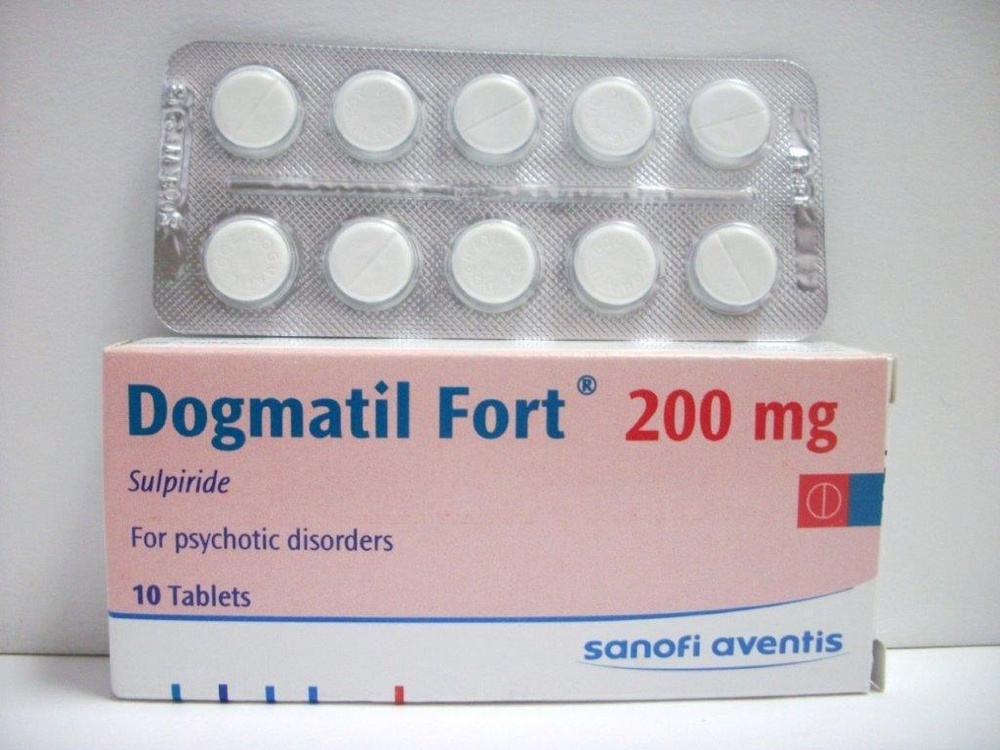
White tablets, scored on one side and with the inscription DOGMATIL 200 on the other.
Dogmatil Fuerte 200 mg tablets are presented in packages with 36 tablets packaged in PVC/Alu blister packs.
Other Presentations:
- Dogmatil 50 mg/ml injectable solution: Package with 12 ampoules of 2 ml. Ampoules of type I colorless glass.
Marketing Authorization Holder and Manufacturer
Holder:
Neuraxpharm Spain, S.L.U.
Avda. Barcelona, 69,
08970 Sant Joan Despí (Barcelona)
Spain
Manufacturer:
Famar Health Care Services Madrid, S.A.U.
Avda. de Leganés, 62
28923 Alcorcón (Madrid)
Spain
Date of the Last Revision of this Prospectus: December 2019
Detailed and updated information on this medicine is available on the website of the Spanish Agency for Medicines and Health Products (AEMPS) http://www.aemps.gob.es/
- Country of registration
- Dosage formTABLET, 200 mg sulpiride
- ATC codeN05AL01
- Average pharmacy price5.76 EUR
- Active substance
- Prescription requiredYes
- Manufacturer
- CompositionLACTOSA MONOHIDRATO (23 mg mg)
- This information is for reference only and does not constitute medical advice. Always consult a doctor before taking any medication. Oladoctor is not responsible for medical decisions based on this content.
- Alternatives to DOGMATIL FORTE 200 mg TABLETSDosage form: INJECTABLE, 100 mgActive substance: sulpirideManufacturer: Neuraxpharm Spain S.L.Prescription requiredDosage form: CAPSULE, 50 mg sulpirideActive substance: sulpirideManufacturer: Especialidades Farmaceuticas Centrum S.A.Prescription requiredDosage form: CAPSULE, 50 mgActive substance: sulpirideManufacturer: Kern Pharma S.L.Prescription required
Online doctors for DOGMATIL FORTE 200 mg TABLETS
Discuss questions about DOGMATIL FORTE 200 mg TABLETS, including use, safety considerations and prescription review, subject to medical assessment and local regulations.







Get DOGMATIL FORTE 200 mg TABLETS Prescription Online
Fill in a 2-min form
Tell us your symptoms, history, and what medicine you're requesting.
Pick a doctor or let us assign
Choose a specialist or we'll match you with the next available doctor.
Doctor reviews your case
Usually within 30 minutes. They may ask follow-up questions via chat.
Collect from any pharmacy
Electronic prescription sent to your email — valid across Spain.
Frequently Asked Questions
DOGMATIL FORTE 200 mg TABLETS requires a prescription in Spain. You can check with a doctor online whether this medicine may be appropriate for your situation.
The active ingredient in DOGMATIL FORTE 200 mg TABLETS is sulpiride. This information helps identify medicines with the same composition but different brand names.
The average pharmacy price for DOGMATIL FORTE 200 mg TABLETS is around 5.76 EUR. Prices may vary depending on the manufacturer and dosage form.
DOGMATIL FORTE 200 mg TABLETS is manufactured by Neuraxpharm Spain S.L.. Pharmacy brands and packaging may differ depending on the distributor.
Doctors such as Family doctors, Psychiatrists, Dermatologists, Cardiologists, Endocrinologists, Gastroenterologists, Pulmonologists, Nephrologists, Rheumatologists, Hematologists, Infectious disease physicians, Allergists, Geriatricians, Paediatricians, Oncologists may assess whether DOGMATIL FORTE 200 mg TABLETS is appropriate, depending on your situation and local regulations. You can book an online consultation to discuss your symptoms and possible next steps.
Spain has a well-developed healthcare infrastructure across major cities such as Madrid, Barcelona, Valencia, and Seville. Pharmacies are widely available and operate under strict regulations, ensuring access to prescribed medications.
You can buy DOGMATIL FORTE 200 mg TABLETS in Madrid, Barcelona, Seville, or Valencia at any local pharmacy with a valid prescription.
To obtain a prescription, you can use Oladoctor:
Other medicines with the same active substance (sulpiride) include DOGMATIL 50 mg/ml INJECTABLE SOLUTION, PSICOCEN 50 mg CAPSULES, SULPIRIDE KERN PHARMA 50 mg CAPSULES. These may have different brand names or formulations but contain the same therapeutic ingredient. Always consult a doctor before switching or starting a new medicine.
