



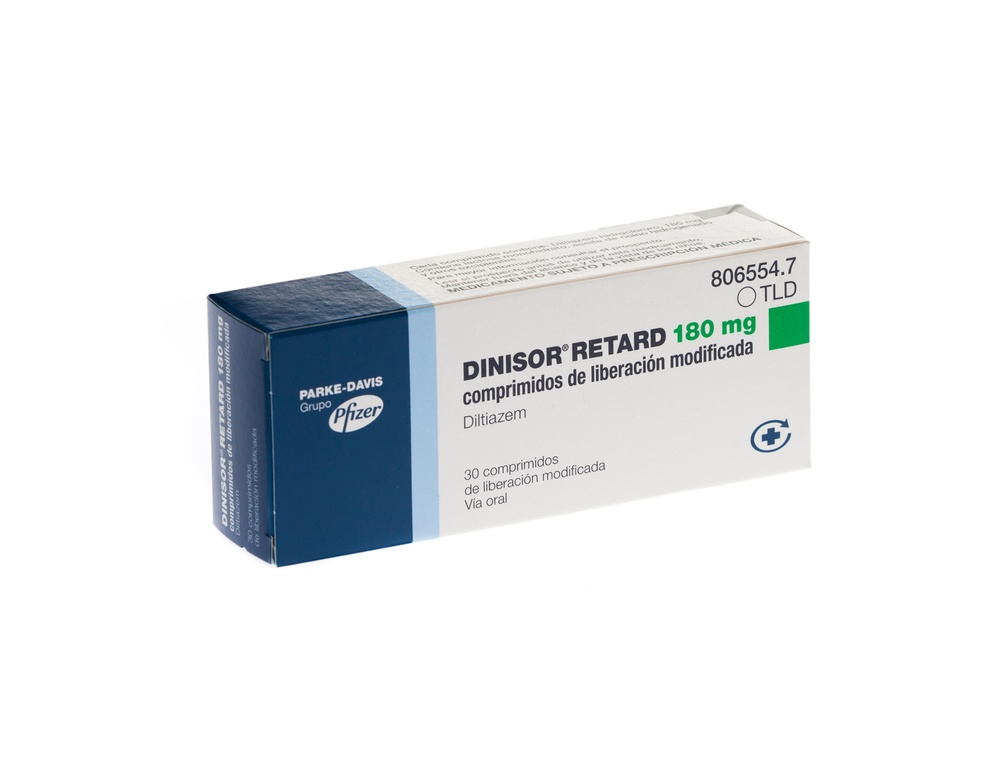
DINISOR 180 mg Modified-Release Tablets

Prescription review online
A doctor will review your case and decide whether a prescription is medically appropriate.

Talk to a doctor about this medicine
Discuss your symptoms and possible next steps in a quick online consultation.



How to use DINISOR RETARD 180 mg MODIFIED-RELEASE TABLETS
Contents of the leaflet
- Introduction
- What is DINISOR and what is it used for
- What you need to know before taking DINISOR
- How to take DINISOR
- Possible side effects
- Storage of DINISOR
- Container Content and Additional Information
Introduction
Package Leaflet: Information for the User
DINISOR RETARD 180 mg modified-release tablets
diltiazem hydrochloride
Read the entire package leaflet carefully before starting to take the medicine, as it contains important information for you.
- Keep this package leaflet, as you may need to read it again.
- If you have any questions, consult your doctor or pharmacist.
- This medicine has been prescribed to you and should not be given to others, even if they have the same symptoms, as it may harm them.
- If you experience side effects, consult your doctor or pharmacist, even if they are not listed in this package leaflet. See section 4.
Contents of the package leaflet:
- What is DINISOR and what is it used for
- What you need to know before taking DINISOR
- How to take DINISOR
- Possible side effects
- Storage of DINISOR
- Package contents and additional information
1. What is DINISOR and what is it used for
DINISOR, whose active ingredient is diltiazem, belongs to a group of medicines called calcium antagonists. DINISOR is used for the treatment and prevention of angina pectoris, as it widens (dilates) the heart's arteries, increasing blood flow. DINISOR also acts by widening other blood vessels in the body, so it is also used in the treatment of high blood pressure (hypertension).

Not sure if this medicine is right for you?
Discuss your symptoms and treatment with a doctor online.
2. What you need to know before taking DINISOR
Do not take DINISOR
- If you are allergic (hypersensitive) to the active ingredient or to any of the other components of DINISOR.
- If you have any heart rhythm or conduction disorders, such as sinus node dysfunction syndrome in patients without a pacemaker, second- or third-degree atrioventricular block in patients without a pacemaker, or severe bradycardia (heart rate less than 40 beats per minute).
- If you have any heart disease, such as left ventricular insufficiency.
- If you are being treated with dantrolene.
- If you are taking medications containing ivabradine for the treatment of certain heart diseases.
- If you are already taking a medication containing lomitapida used for the treatment of high cholesterol levels (see section: "Taking DINISOR with other medications").
Warnings and precautions
- If you have any cardiac arrhythmia(sick sinus node syndrome, atrioventricular block) or if you are receiving treatment with other medications used to treat heart diseases (beta blockers, digitalis) as the use of diltiazem in these situations may lead to an excessively slow pulse and heart rhythm (bradycardia).
- If you are going to have surgery,as diltiazem may enhance the effects of anesthetics.
- If you have a ventricular function disorder.
- If you have hypotension:treatment with diltiazem may lead to an excessive drop in blood pressure. Your doctor will inform you about how to avoid symptoms resulting from hypotension and what measures to take if these symptoms occur.
- If you have liver or kidney disease or are elderly:since there is no data available for these patients, DINISOR should be used with caution.
- The use of diltiazem has been associated with skin reactions and mood changes (including depression). Your doctor will assess these symptoms and indicate the measures to take.
- If you are at risk of developing an intestinal obstruction, as diltiazem, like other medications in the same group, causes a decrease in intestinal movement.
- If you have a history of heart failure, new difficulty breathing, slow heartbeats, or low blood pressure. Cases of kidney damage have been reported in patients with these conditions; your doctor may need to monitor your kidney function.
Use of DINISOR with other medications
Tell your doctor or pharmacist if you are taking, or have recently taken, any other medication, including those obtained without a prescription.
Contraindicated use:
Diltiazem should not be used with dantrolene (muscle relaxant).
In particular, do not take this medication and inform your doctor if you are taking:
Medications containing lomitapida used for the treatment of high cholesterol levels. Diltiazem may increase the concentration of lomitapida, which may lead to an increased risk and severity of liver-related side effects.
Effects of other medications on DINISOR
The following medications may increase the effects of DINISOR by increasing its concentration in the blood:
- fluconazole (used to treat fungal infections)
- erythromycin and other macrolides (antibiotics)
- ritonavir (used to treat viral infections)
- amiodarone (used to slow down the heart rate)
- cimetidine and ranitidine (used to reduce stomach acid production)
The following medications may decrease the effects of DINISOR by reducing its concentration in the blood:
- phenytoin (used to treat epilepsy)
- St. John's Wort (used for depression, fatigue, or sleep disorders)
- rifampicin (antibiotic)
Effects of DINISOR on other medications
DINISOR may increase the effects of the following medications by increasing their concentrations in the blood or by enhancing their effect:
- phenytoin, carbamazepine (used to treat epilepsy)
- triazolam, midazolam, buspirone (used to treat anxiety)
- digoxin (used to treat heart diseases)
- cyclosporin, sirolimus (used to suppress the immune system)
- methylprednisolone (corticosteroid used to treat inflammatory problems)
- simvastatin and lovastatin (medications to lower cholesterol levels in the blood)
- theophylline (used to treat asthma)
- medications that reduce blood clot formation (oral anticoagulants, such as acenocoumarol or warfarin)
- rifampicin (antibiotic)
- medications used to reduce blood pressure (nitrates, alpha and beta blockers, diuretics, angiotensin-converting enzyme inhibitors) and to slow down the heart rate (amiodarone)
- anesthetics
- lithium salts (used to treat certain mental illnesses): may increase the risk of severe agitation (psychotic episodes)
- sirolimus, temsirolimus, everolimus (medications that reduce immune system activity)
The combined use of DINISOR with other medications should be done under medical supervision and with gradual dose adjustment.
Use in children
There is no experience with the use of DINISOR in children.
Pregnancy and breastfeeding
If you are pregnant or breastfeeding, think you may be pregnant, or plan to become pregnant, consult your doctor or pharmacist before using this medication.
Consult your doctor or pharmacist before using any medication.
This medication should not be administered to pregnant women or women of childbearing age who are not using an effective contraceptive method.
This medication should not be taken during breastfeeding, as it passes into breast milk. If the doctor considers it essential to take this medication, the baby should be fed with an alternative method.
Driving and using machines
The ability to perform activities such as operating machinery or driving vehicles may be impaired, especially at the start of treatment with DINISOR.
DINISOR RETARD 180 mg contains lactose, hydrogenated castor oil, and sodium
This medication contains lactose. If your doctor has told you that you have an intolerance to certain sugars, consult with them before taking this medication.
This medication contains hydrogenated castor oil. It may cause stomach upset and diarrhea.
This medication contains less than 1 mmol of sodium (23 mg) per tablet; it is essentially "sodium-free".
3. How to take DINISOR
Follow the administration instructions for this medication exactly as indicated by your doctor or pharmacist. If in doubt, consult your doctor or pharmacist.
DINISOR is administered orally. Your doctor may start treatment with lower doses of DINISOR tablets. Your doctor will indicate how many tablets you should take each day.
Adults:
Angina pectoris:the dose is 1 tablet per day. Your doctor will gradually increase the dose to achieve the optimal response. The maximum dose is 2 tablets per day (360 mg/day).
Hypertension:the dose is 1 tablet per day. Your doctor will gradually increase the dose to achieve the optimal response. The maximum dose is 2 tablets per day (360 mg/day).
Elderly patients, renal or hepatic insufficiency:
Initial dose adjustment should be done with caution.
All dose modifications and monitoring should be done under medical supervision.
Instructions for correct administration
Swallow the tablets whole, without chewing, with a sufficient amount of liquid (e.g., a glass of water). The tablets should not be divided or crushed. DINISOR should be taken preferably before meals. If your doctor indicates that you need 2 tablets per day, take 1 tablet every 12 hours.
Take DINISOR every day and approximately at the same time. Taking the tablets at the same time each day will have a better effect on your blood pressure. It will also help you remember to take the tablets.
Follow these instructions unless your doctor has given you different instructions. Remember to take your medication.
Your doctor will indicate the duration of your treatment with DINISOR. Do not stop treatment before consulting your doctor, as it may be harmful to your health.
If you feel that the effect of DINISOR is too strong or too weak, consult your doctor or pharmacist.
If you take more DINISOR than you should:
An overdose of DINISOR may cause a drop in blood pressure, slowing of the heart rate, conduction disorders, and decreased kidney function. In case of a drop in blood pressure, sit with your head down.
In case of a significant overdose, you should be taken to a specialized center to apply the necessary measures.
In case of overdose or accidental ingestion, consult your doctor or pharmacist immediately, go to the nearest hospital, or call the Toxicology Information Service, phone 91 562 04 20, indicating the medication and the amount ingested.
If you forget to take DINISOR:
Do not take a double dose to make up for forgotten doses. It is important to take DINISOR regularly at the same time each day. If you forget to take a dose, take it as soon as you can. However, if it is almost time for the next dose, do not take the missed tablet.
If you stop treatment with DINISOR:
If you stop treatment with DINISOR, you may experience worsening of your disease, with symptoms such as chest pain or a sudden increase in blood pressure. Do not stop treatment with DINISOR without consulting your doctor first. If you have any other questions about the use of this product, ask your doctor or pharmacist.

Started taking the medicine and have questions?
Discuss your symptoms and treatment with a doctor online.
4. Possible side effects
Like all medications, this medication may cause side effects, although not everyone experiences them. Diltiazem reactions vary in intensity from one patient to another and should be taken into account, especially at the start of treatment or when changing medication.
Stop treatment with DINISOR and contact your doctor immediately if you experience any of the following symptoms:
- swelling of the face, tongue, or throat, difficulty swallowing, hives, and difficulty breathing (angioedema), frequency not known.
- a very severe allergic reaction with a rash, usually in the form of blisters or ulcers in the mouth and eyes, as well as in other mucous membranes, such as the genitals (Stevens-Johnson syndrome), frequency not known.
- severe and widespread skin damage (exfoliative dermatitis and mucosal lesions) (toxic epidermal necrolysis), frequency not known.
Other side effects:
Very common (may affect more than 1 in 10 patients)
- edema in the lower limbs.
Common (may affect up to 1 in 10 patients)
- headache, dizziness.
- atrioventricular block (a type of arrhythmia), palpitations, slow heart rate (bradycardia).
- flushing.
- constipation, difficult digestion (dyspepsia), stomach pain, nausea.
- skin rashes.
- joint swelling.
- fatigue (asthenia), tiredness, malaise.
Uncommon (may affect up to 1 in 100 patients)
- nervousness, difficulty sleeping (insomnia).
- drop in blood pressure when standing up quickly, with or without dizziness (hypotension).
- vomiting, diarrhea.
- increased liver enzyme levels in the blood.
Rare (may affect up to 1 in 1,000 patients)
- dry mouth.
- skin irritation and itching (urticaria).
Frequency not known (cannot be estimated from available data)
- reduction in platelet count (thrombocytopenia).
- decreased appetite, elevated blood sugar levels (hyperglycemia).
- mood changes, including depression, confusion, hallucinations, personality changes, and sleep disturbances.
- movement disorders (extrapyramidal syndrome), memory loss (amnesia), abnormal sensation of tingling, numbness, or burning (paresthesia), drowsiness (somnolence), temporary loss of consciousness (syncope), tremors, sudden involuntary muscle contractions.
- lazy eye (partial loss of vision in one or both eyes), eye irritation.
- ringing in the ears (tinnitus).
- disruption or alteration of the heart's electrical signal (sinoatrial block, sinus arrest), difficulty of the heart to pump blood (congestive heart failure), rapid heart rate (tachycardia), abnormal heart contractions (ventricular extrasystoles), irregular heartbeats (arrhythmia), chest pain or tightness (angina pectoris).
- inflammation of blood vessels (vasculitis).
- difficulty breathing (dyspnea), nosebleeds (epistaxis), nasal congestion.
- gum inflammation (gingival hyperplasia).
- hepatitis (inflammatory disease affecting the liver), liver disorder (granulomatous liver disease).
- sensitivity to light (photosensitivity), erythema multiforme (severe skin disease associated with red spots, blisters), sweating, exfoliative dermatitis (redness, itching, hair loss), and acute generalized exanthematous pustulosis (sudden onset of a rash accompanied by fever, with formation of pustules or lesions on the skin surface characterized by being small, inflamed, filled with pus, and similar to a blister), small red spots on the skin (petechiae), itching (pruritus).
- joint pain, muscle pain.
- need to urinate at night (nocturia), increased frequency of urination (polyuria).
- excessive breast tissue in men (gynecomastia), sexual function disorders.
- walking difficulties
- elevation of the enzyme creatine phosphokinase (CPK) in blood tests, weight gain.
- a condition in which the body's defense system attacks normal tissue, causing symptoms such as inflamed joints, fatigue, and skin rashes (called "lupus-like syndrome").
Reporting side effects
If you experience any side effects, consult your doctor or pharmacist, even if they are not listed in this package leaflet. You can also report them directly through the Spanish Pharmacovigilance System for Human Use Medicines: https://www.notificaram.es. By reporting side effects, you can contribute to providing more information on the safety of this medication.
5. Storage of DINISOR
Keep out of sight and reach of children.
Do not use DINISOR after the expiration date stated on the packaging after CAD. The expiration date is the last day of the month indicated. Store in the original packaging.
This medication does not require any special storage conditions.
Medications should not be disposed of through wastewater or household waste. Deposit the packaging and any unused medication in the SIGRE collection point at the pharmacy. If in doubt, ask your pharmacist how to dispose of the packaging and any unused medication. This will help protect the environment.
6. Container Content and Additional Information
Composition ofDINISOR RETARD 180 mg
The active ingredient is diltiazem hydrochloride. Each tablet contains 180 mg of diltiazem (as hydrochloride).
The other components are:
Core:lactose monohydrate, hydrogenated castor oil (ricinoleic acid), hydroxyethylcellulose, stearic acid, magnesium stearate.
Coating:hypromellose, titanium dioxide (E-171), talc, macrogol 6000, silicone antifoaming agent S184.
Appearance of DINISOR RETARD 180 mgand Container Content
DINISOR RETARD 180 mg tablets are white, oval, and scored on both sides.
DINISOR RETARD 180 mg tablets are presented in cardboard boxes with aluminum/PVC blisters containing 30 tablets.
Other Presentations
DINISOR RETARD 120 mg modified-release tablets
Marketing Authorization Holder
Pfizer, S.L.
Avda. de Europa, 20-B
Parque Empresarial La Moraleja
28108 Alcobendas (Madrid).
Manufacturer
Pfizer Manufacturing Deutschland GmbH
Mooswaldallee 1
79108 Freiburg Im Breisgau
Germany
Date of the Last Revision of this Prospectus: November 2024
Detailed and updated information on this medication is available on the website of the Spanish Agency for Medicines and Health Products (AEMPS) http://www.aemps.gob.es/
- Country of registration
- Dosage formMODIFIED-RELEASE TABLET, 180 mg
- ATC codeC08DB01
- Average pharmacy price13.71 EUR
- Availability in pharmaciesSupply issue reported
- Active substance
- Prescription requiredYes
- Manufacturer
- CompositionCARMELOSA SODICA (4,5 mg mg), LACTOSA (143 mg mg)
- This information is for reference only and does not constitute medical advice. Always consult a doctor before taking any medication. Oladoctor is not responsible for medical decisions based on this content.
- Alternatives to DINISOR RETARD 180 mg MODIFIED-RELEASE TABLETSDosage form: MODIFIED-RELEASE CAPSULE, 120 mgActive substance: diltiazemManufacturer: Viatris Healthcare LimitedPrescription requiredDosage form: MODIFIED-RELEASE CAPSULE, 180 mgActive substance: diltiazemManufacturer: Viatris Healthcare LimitedPrescription requiredDosage form: MODIFIED-RELEASE CAPSULE, 300 mgActive substance: diltiazemManufacturer: Viatris Healthcare LimitedPrescription required
Online doctors for DINISOR RETARD 180 mg MODIFIED-RELEASE TABLETS
Discuss questions about DINISOR RETARD 180 mg MODIFIED-RELEASE TABLETS, including use, safety considerations and prescription review, subject to medical assessment and local regulations.
Get DINISOR RETARD 180 mg MODIFIED-RELEASE TABLETS Prescription Online
Fill in a 2-min form
Tell us your symptoms, history, and what medicine you're requesting.
Pick a doctor or let us assign
Choose a specialist or we'll match you with the next available doctor.
Doctor reviews your case
Usually within 30 minutes. They may ask follow-up questions via chat.
Collect from any pharmacy
Electronic prescription sent to your email — valid across Spain.
Frequently Asked Questions
DINISOR RETARD 180 mg MODIFIED-RELEASE TABLETS requires a prescription in Spain. You can check with a doctor online whether this medicine may be appropriate for your situation.
The active ingredient in DINISOR RETARD 180 mg MODIFIED-RELEASE TABLETS is diltiazem. This information helps identify medicines with the same composition but different brand names.
The average pharmacy price for DINISOR RETARD 180 mg MODIFIED-RELEASE TABLETS is around 13.71 EUR. Prices may vary depending on the manufacturer and dosage form.
DINISOR RETARD 180 mg MODIFIED-RELEASE TABLETS is manufactured by Pfizer S.L.. Pharmacy brands and packaging may differ depending on the distributor.
Doctors such as Family doctors, Psychiatrists, Dermatologists, Cardiologists, Endocrinologists, Gastroenterologists, Pulmonologists, Nephrologists, Rheumatologists, Hematologists, Infectious disease physicians, Allergists, Geriatricians, Paediatricians, Oncologists may assess whether DINISOR RETARD 180 mg MODIFIED-RELEASE TABLETS is appropriate, depending on your situation and local regulations. You can book an online consultation to discuss your symptoms and possible next steps.
Spain has a well-developed healthcare infrastructure across major cities such as Madrid, Barcelona, Valencia, and Seville. Pharmacies are widely available and operate under strict regulations, ensuring access to prescribed medications.
You can buy DINISOR RETARD 180 mg MODIFIED-RELEASE TABLETS in Madrid, Barcelona, Seville, or Valencia at any local pharmacy with a valid prescription.
To obtain a prescription, you can use Oladoctor:
Other medicines with the same active substance (diltiazem) include ANGIODROX 120 mg PROLONGED-RELEASE HARD CAPSULES, ANGIODROX 180 mg PROLONGED-RELEASE HARD CAPSULES, ANGIODROX 300 mg PROLONGED-RELEASE HARD CAPSULES. These may have different brand names or formulations but contain the same therapeutic ingredient. Always consult a doctor before switching or starting a new medicine.
