






How to use DIFICLIR 40 mg/ml ORAL SUSPENSION GRANULES
Translated with AI
This page provides general information and does not replace a doctor’s consultation. Always consult a doctor before taking any medication. Seek urgent medical care if symptoms are severe.
Show originalContents of the leaflet
Introduction
Package Leaflet: Information for the User
DIFICLIR 40 mg/ml granules for oral suspension
fidaxomicin
Read all of this leaflet carefully before you start taking this medicine because it contains important information for you.
- Keep this leaflet, you may need to read it again.
- If you have any further questions, ask your doctor or pharmacist.
- This medicine has been prescribed for you only. Do not pass it on to others. It may harm them, even if their signs of illness are the same as yours.
- If you get any side effects, talk to your doctor or pharmacist. This includes any possible side effects not listed in this leaflet. See section 4.
Contents of the pack
- What DIFICLIR is and what it is used for
- What you need to know before you take DIFICLIR
- How to take DIFICLIR
- Possible side effects
- Storing DIFICLIR
- Contents of the pack and other information
1. What DIFICLIR is and what it is used for
DIFICLIR is an antibiotic that contains the active substance fidaxomicin.
DIFICLIR oral suspension is used in adults, adolescents, and children from birth to less than 18 years to treat infections of the lining of the colon (large intestine) caused by bacteria called Clostridioides difficile. This serious disease can cause severe and painful diarrhea. DIFICLIR works by killing the bacteria that cause the infection and helps reduce the associated diarrhea.

2. What you need to know before you take DIFICLIR
Do not take DIFICLIR
- If you are allergic to fidaxomicin or any of the other ingredients of this medicine (listed in section 6).
Warnings and precautions
Talk to your doctor or pharmacist before you start taking DIFICLIR.
If you think you may have a severe allergic reaction such as difficulty breathing (dyspnea), swelling of the face or throat (angioedema), severe rash, severe itching (pruritus), or severe hives (urticaria), stop taking DIFICLIR and seek urgent medical attention from your doctor, pharmacist, or hospital emergency department (see section 4).
If you are allergic to macrolides (a type of antibiotic), talk to your doctor before using this medicine. Your doctor will tell you if this medicine is suitable for you.
If you have liver or kidney problems, talk to your doctor before using this medicine. Your doctor will tell you if this medicine is suitable for you.
There is limited data on the use of fidaxomicin in severe cases of the disease (e.g., pseudomembranous colitis). Your doctor will know if your disease is in the severe categories and will tell you if this medicine is suitable for you.
Other medicines and DIFICLIR
Tell your doctor or pharmacist if you are taking, have recently taken, or might take any other medicines.
The levels of DIFICLIR in your blood may be affected by other medicines you are taking, and the levels of other medicines in your blood may be affected by taking DIFICLIR. Some examples of such medicines are:
- cyclosporin (a medicine used to suppress the body's immune reactions, used, for example, after an organ or bone marrow transplant, for psoriasis or eczema, or for rheumatoid arthritis or nephrotic syndrome)
- ketoconazole (a medicine used to treat fungal infections)
- erythromycin (a medicine used to treat ear, nose, throat, chest, and skin infections)
- clarithromycin (a medicine used to treat chest infections, throat and sinus infections, skin and tissue infections, and Helicobacter pyloriinfections associated with duodenal or stomach ulcers)
- verapamil (a medicine used to treat high blood pressure or to prevent chest pain, or used after a heart attack to prevent another)
- dronedarone and amiodarone (medicines used to control heart rhythm)
- dabigatran etexilate (a medicine used to prevent blood clots after hip or knee replacement surgery)
Do not use DIFICLIR in combination with any of these medicines unless your doctor tells you to. If you are taking any of these medicines, please talk to your doctor before taking this medicine.
Pregnancy and breast-feeding
Do not take DIFICLIR if you are pregnant unless your doctor tells you to.
This is because it is not known if fidaxomicin can harm your baby.
If you are pregnant or think you may be pregnant, talk to your doctor or pharmacist before using this medicine.
It is not known if fidaxomicin passes into breast milk, although it is not expected to. If you are breast-feeding, talk to your doctor or pharmacist before using this medicine.
Driving and using machines
DIFICLIR is not expected to affect your ability to drive or use tools or machines.
DIFICLIR contains sodium benzoate (E211)
This medicine contains 2.5 mg of sodium benzoate (E 211) in each ml of oral suspension. Sodium benzoate (E 211) may increase the risk of jaundice (yellowing of the skin and eyes) in newborn babies (up to 4 weeks of age).
DIFICLIR contains sodium
This medicine contains less than 1 mmol of sodium (23 mg) per 5 ml of suspension; this is essentially “sodium-free”.
3. How to take DIFICLIR
Follow the instructions for administration of this medicine exactly as told by your doctor or pharmacist. If you are unsure, talk to your doctor or pharmacist again.
Your doctor will decide the dose based on your weight.
The standard dosage for patients who weigh at least 12.5 kg is 200 mg (5 ml of oral suspension) given twice a day (every 12 hours) for 10 days (see Scheme 1 below). For adults and older children (e.g., adolescents), another formulation of this medicine (tablets) may be more suitable; talk to your doctor or pharmacist.
Your doctor may have prescribed an alternative dosage. The recommendation for an alternative dosage is administration twice a day for days 1-5. Do not take the dose on day 6, and then once a day on alternate days for days 7 to 25 (see also Scheme 2 below).
Scheme 1 – Standard dosage
DAY | 1 | 2 | 3 | 4 | 5 | 6 | 7 | 8 | 9 | 10 |
Morning | 5 ml | 5 ml | 5 ml | 5 ml | 5 ml | 5 ml | 5 ml | 5 ml | 5 ml | 5 ml |
Evening | 5 ml | 5 ml | 5 ml | 5 ml | 5 ml | 5 ml | 5 ml | 5 ml | 5 ml | 5 ml |
Scheme 2 – Alternative dosage
DAY | 1 | 2 | 3 | 4 | 5 | |||||
Morning | 5 ml | 5 ml | 5 ml | 5 ml | 5 ml | |||||
Evening | 5 ml | 5 ml | 5 ml | 5 ml | 5 ml | |||||
DAY | 6 | 7 | 8 | 9 | 10 | 11 | 12 | 13 | 14 | 15 |
- | 5 ml | - | 5 ml | - | 5 ml | - | 5 ml | - | 5 ml | |
DAY | 16 | 17 | 18 | 19 | 20 | 21 | 22 | 23 | 24 | 25 |
- | 5 ml | - | 5 ml | - | 5 ml | - | 5 ml | - | 5 ml |
5 ml - Dificlir 40 mg / ml granules for oral suspension
- No suspension
The recommended dose for children based on their body weight is as follows:
Patient weight range | Dose per dose (every 12 hours) | Volume of fidaxomicin oral suspension (every 12 hours) |
< 4.0 kg | 40 mg | 1 ml |
4.0 - < 7.0 kg | 80 mg | 2 ml |
7.0 - < 9.0 kg | 120 mg | 3 ml |
9.0 - < 12.5 kg | 160 mg | 4 ml |
≥ 12.5 kg | 200 mg | 5 ml |
You can take DIFICLIR before, during, or after meals.
How to take the dose of DIFICLIR using an oral syringe
Your pharmacist or healthcare professional will prepare the DIFICLIR oral suspension before giving it to you. If you have not been provided with the product in suspension form, contact your pharmacist or healthcare professional.
Instructions for use:
Use the oral syringe and adapter provided by your pharmacist or healthcare professional to ensure you measure the correct amount. If you have not been provided with an oral syringe and adapter, contact your pharmacist or healthcare professional.
Your pharmacist will inform you about how to measure the medicine using the oral syringe. Read the following instructions before using DIFICLIR in suspension.
- Take the bottle out of the refrigerator 15 minutes before administration.
- After 15 minutes, gently shake it 10 times and let it sit for 1 minute.
- Check that the liquid has a uniform appearance and is free of lumps (i.e., homogeneous).
- Remove the cap and attach the adapter to the bottle following the instructions of your pharmacist or healthcare professional.
- Insert the tip of the oral syringe into the adapter until it is firmly in place.
- Invert the bottle three times and leave it upside down, so the syringe is at the bottom.
- Pull the plunger of the oral syringe to draw the prescribed amount of medicine from the inverted bottle.
- Keep the syringe attached and turn the bottle right side up; being careful not to move the plunger. Gently remove the syringe from the adapter and confirm that you have measured the correct dose.
- Slowly administer the oral suspension directly into the patient's mouth until all the liquid is dispensed.
- If you have a pressure adapter, leave it in place on the neck of the bottle or follow the instructions of your pharmacist or healthcare professional.
- After administration, store the remaining suspension in the refrigerator.
- To reuse the oral syringe, rinse it with warm tap water (at least 3 times) or until clear water comes out of the syringe. Dry the outside and inside surfaces as well as possible. Let it air dry until the next use.
If you started using this product in the hospital, your pharmacist or healthcare professional will give you the suspension, oral syringe, and adapter when you are discharged.
If you take more DIFICLIR than you should
If you have taken more oral suspension than you should, talk to a doctor. Take the medicine package with you to show the doctor what you have taken.
If you forget to take DIFICLIR
Take the oral suspension as soon as you remember, unless it is time for your next dose. In this case, skip the missed dose. Do not take a double dose to make up for missed doses.
If you stop taking DIFICLIR
Do not stop taking DIFICLIR unless your doctor tells you to.
Keep taking this medicine until you finish the treatment, even if you feel better.
If you stop taking this medicine too soon, the infection may come back.
If you have any other questions about the use of this medicine, ask your doctor or pharmacist.

4. Possible side effects
Like all medicines, this medicine can cause side effects, although not everybody gets them.
A severe allergic reaction may occur, including difficulty breathing (dyspnea), swelling of the face or throat (angioedema), severe rash, severe itching (pruritus), or severe hives (urticaria) (see section 2). If such reactions occur, stop taking DIFICLIR and seek urgent medical attention from your doctor, pharmacist, or hospital emergency department.
The most commonside effects (may affect up to 1 in 10 people) are:
- vomiting
- nausea
- constipation
Other possible side effects are:
Uncommonside effects (may affect up to 1 in 100 people)
- decreased appetite
- dizziness, headache
- dry mouth, altered taste (dysgeusia)
- feeling full, gas (flatulence)
- rash, itching (pruritus)
Frequency not knownside effects (frequency cannot be estimated from the available data)
- swelling of the face and throat (angioedema), difficulty breathing (dyspnea)
Other side effects in children and adolescents
- hives
Reporting of side effects
If you experience any side effects, talk to your doctor or pharmacist, even if it is possible side effects not listed in this leaflet. You can also report side effects directly through the national reporting system listed in Appendix V. By reporting side effects, you can help provide more information on the safety of this medicine.
5. Storing DIFICLIR
Keep this medicine out of the sight and reach of children.
Do not use this medicine after the expiry date which is stated on the carton after “EXP”. The expiry date refers to the last day of the month shown.
DIFICLIR will be provided to you in the form of a suspension that can be stored for a maximum of 27 days. Store in a refrigerator (between 2°C and 8°C). Do not use the suspension after the expiry date written on the label of the bottle.
Medicines should not be disposed of via wastewater or household waste. Ask your pharmacist how to dispose of medicines no longer required. This will help protect the environment.
6. Container Contents and Additional Information
Composition of DIFICLIR
- The active ingredient is fidaxomicin.
- The other components are: microcrystalline cellulose, sodium starch glycolate, xanthan gum, citric acid, sodium citrate, sodium benzoate (see section 2), sucralose, and mixed berry flavor
Appearance of the Product and Container Contents
DIFICLIR is presented in an amber glass bottle as a granule for oral suspension with a color between white and yellowish white. Your pharmacist or healthcare professional will provide DIFICLIR to you in the form of a suspension with a color between white and yellowish white. The container does not include the oral syringe or adapter needed to administer this product. Both will be provided by your pharmacist or another healthcare professional.
DIFICLIR is also available in the form of film-coated tablets.
Only certain package sizes may be marketed.
Marketing Authorization Holder
Tillotts Pharma GmbH
Warmbacher Strasse 80
79618 Rheinfelden
Germany
Manufacturer
Almac Pharma Services Limited
Seagoe Industrial Estate, Portadown, Craigavon,
BT63 5UA,
United Kingdom
Tillotts Pharma GmbH
Warmbacher Strasse 80
79618 Rheinfelden
Germany
Date of Last Revision of this Leaflet:
Detailed information on this medicinal product is available on the European Medicines Agency website: http://www.ema.europa.eu
--------------------------------------------------------------------------------------------------------------------
This information is intended only for healthcare professionals:
Reconstitution Instructions:
- Shake the glass bottle to check that the granule moves freely and is not caked.
- Measure 105 ml of purified water and add it to the glass bottle. Note that the stability of the fidaxomicin granule suspended in mineral water, tap water, or other liquids has not been established.
- Close the glass bottle and shake it vigorously for at least 1 minute.
- Check that there are no lumps or caked granules in the resulting liquid at the bottom of the bottle. If lumps or caked granules are observed, shake the glass bottle vigorously again for at least 1 minute.
- Let the bottle rest for 1 minute.
- Check if the obtained suspension is homogeneous.
- Write the expiration date of the reconstituted suspension on the bottle label (the validity period of the reconstituted suspension is 27 days).
- Store the bottle at a temperature between 2 and 8 °C before and during use.
- Choose an oral syringe and adapter suitable for dispensing liquid medications to measure the dose correctly.
After reconstitution, the suspension (110 ml) will have a color between white and yellowish white.
The healthcare professional should choose a commercially available oral syringe and adapter suitable for dispensing liquid medications and allowing the patient or caregiver to measure the correct dose. The adapter should be suitable for use with the selected oral syringe and fit the bottle neck (e.g., a 27 mm pressure bottle adapter or a universal bottle adapter).
If treatment with fidaxomicin is initiated in the hospital setting and the patient is discharged before completing treatment in the hospital, the patient should be provided with the oral suspension along with a suitable oral syringe and adapter. Patients or their caregivers should not prepare the oral suspension at home.
The following table shows the recommended oral syringe capacity for accurate dosing of the oral suspension.
Recommended Oral Syringe Capacity for Accurate Dispensing
Prescribed Dosing Volume | Recommended Oral Syringe Capacity |
1 ml | 1 ml oral syringe |
2 – 5 ml | 5 ml oral syringe |
If possible, the graduation corresponding to the appropriate dose (according to the dosing table in section 3) should be marked or highlighted on the oral syringe.
Administration through an Enteral Feeding Tube:
In the case of administration through an enteral feeding tube, the healthcare professional should choose a commercially available enteral feeding tube suitable for this purpose. Polyvinylchloride (PVC) and polyurethane (PUR) parenteral nutrition tubes have been shown to be compatible with the oral suspension. The following table shows the recommended enteral feeding tube size and water flush volume.
Recommended Enteral Feeding Tube Size and Flush Volume
Recommended Tube Size (Diameter) | Recommended Flush Volume * |
4 Fr | at least 1 ml |
5 Fr | at least 2 ml |
6 – 7 Fr | at least 3 ml |
8 Fr | at least 4 ml |
- Based on 120 cm tubes
-

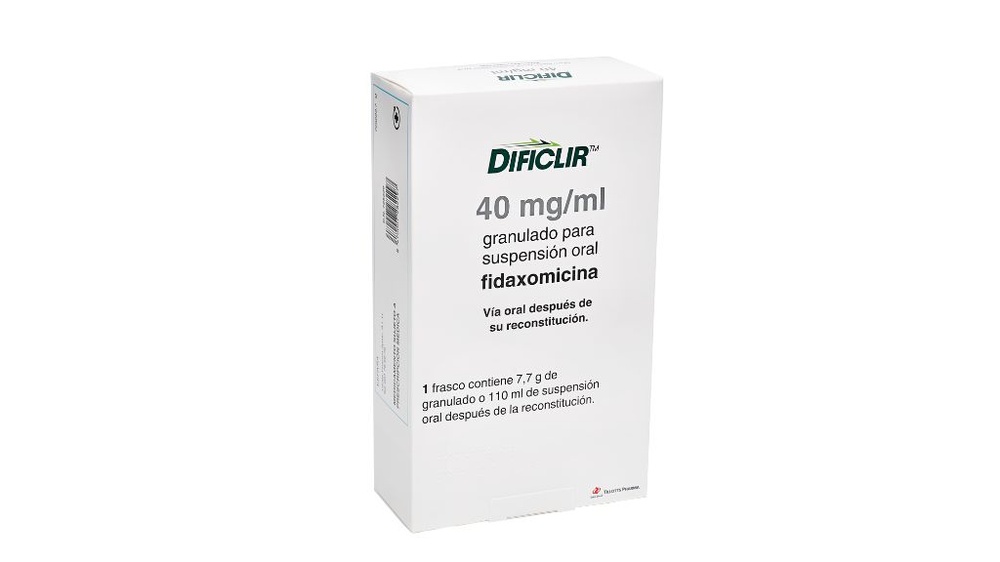
- Country of registration
- Dosage formORAL SOLUTION/SUSPENSION, 40 mg/ml
- ATC codeA07AA12
- Active substance
- Prescription requiredYes
- Manufacturer
- This information is for reference only and does not constitute medical advice. Always consult a doctor before taking any medication. Oladoctor is not responsible for medical decisions based on this content.
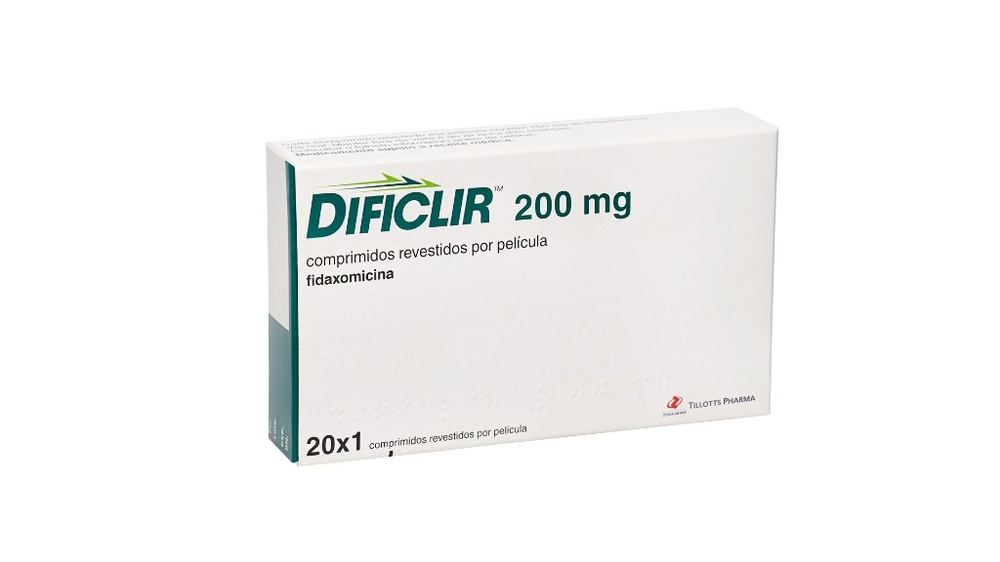
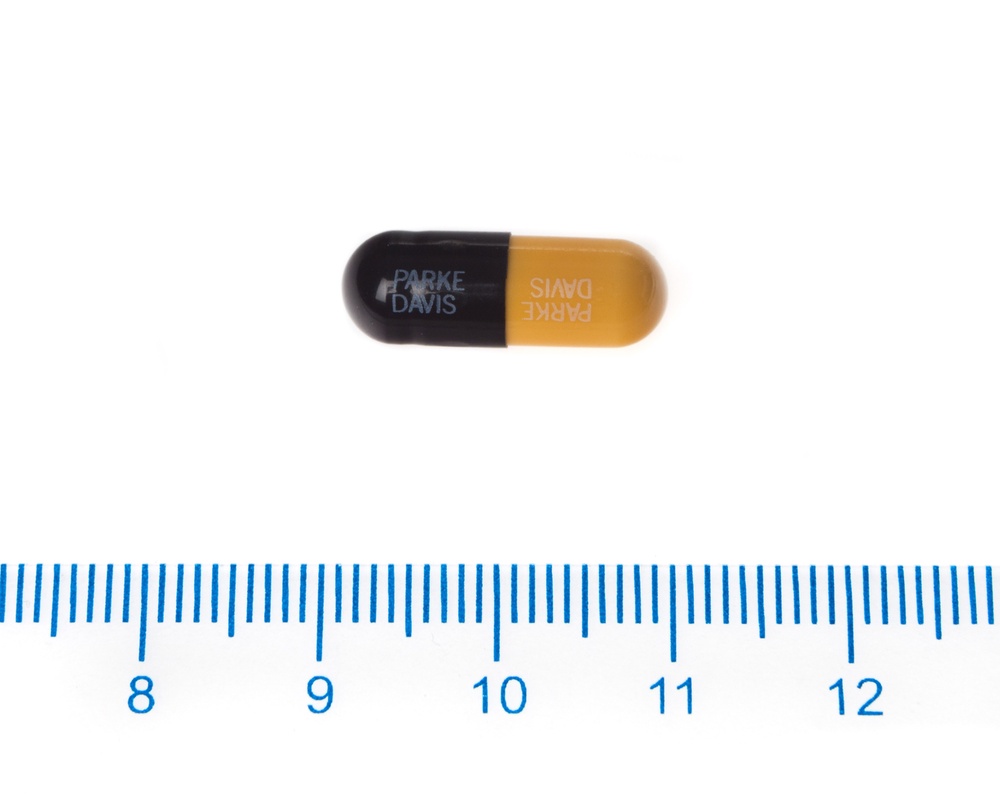
- Alternatives to DIFICLIR 40 mg/ml ORAL SUSPENSION GRANULESDosage form: TABLET, 200 mg fidaxomicinActive substance: fidaxomicinManufacturer: Tillotts Pharma GmbhPrescription requiredDosage form: CAPSULE, 250 mgActive substance: paromomycinManufacturer: Pfizer S.L.Prescription requiredDosage form: ORAL SOLUTION/SUSPENSION, 100,000 IU nystatin/mlActive substance: nystatinManufacturer: SubstipharmPrescription required
Online doctors for DIFICLIR 40 mg/ml ORAL SUSPENSION GRANULES
Discuss questions about DIFICLIR 40 mg/ml ORAL SUSPENSION GRANULES, including use, safety considerations and prescription review, subject to medical assessment and local regulations.





Get DIFICLIR 40 mg/ml ORAL SUSPENSION GRANULES Prescription Online
Fill in a 2-min form
Tell us your symptoms, history, and what medicine you're requesting.
Pick a doctor or let us assign
Choose a specialist or we'll match you with the next available doctor.
Doctor reviews your case
Usually within 30 minutes. They may ask follow-up questions via chat.
Collect from any pharmacy
Electronic prescription sent to your email — valid across Spain.
Frequently Asked Questions
DIFICLIR 40 mg/ml ORAL SUSPENSION GRANULES requires a prescription in Spain. You can check with a doctor online whether this medicine may be appropriate for your situation.
The active ingredient in DIFICLIR 40 mg/ml ORAL SUSPENSION GRANULES is fidaxomicin. This information helps identify medicines with the same composition but different brand names.
DIFICLIR 40 mg/ml ORAL SUSPENSION GRANULES is manufactured by Tillotts Pharma Gmbh. Pharmacy brands and packaging may differ depending on the distributor.
Doctors such as Family doctors, Psychiatrists, Dermatologists, Cardiologists, Endocrinologists, Gastroenterologists, Pulmonologists, Nephrologists, Rheumatologists, Hematologists, Infectious disease physicians, Allergists, Geriatricians, Paediatricians, Oncologists may assess whether DIFICLIR 40 mg/ml ORAL SUSPENSION GRANULES is appropriate, depending on your situation and local regulations. You can book an online consultation to discuss your symptoms and possible next steps.
Spain has a well-developed healthcare infrastructure across major cities such as Madrid, Barcelona, Valencia, and Seville. Pharmacies are widely available and operate under strict regulations, ensuring access to prescribed medications.
You can buy DIFICLIR 40 mg/ml ORAL SUSPENSION GRANULES in Madrid, Barcelona, Seville, or Valencia at any local pharmacy with a valid prescription.
To obtain a prescription, you can use Oladoctor:
Other medicines with the same active substance (fidaxomicin) include DIFICLIR 200 mg FILM-COATED TABLETS, HUMATIN 250 mg HARD CAPSULES, MYCOSTATIN 100,000 IU/ml ORAL SUSPENSION. These may have different brand names or formulations but contain the same therapeutic ingredient. Always consult a doctor before switching or starting a new medicine.
