



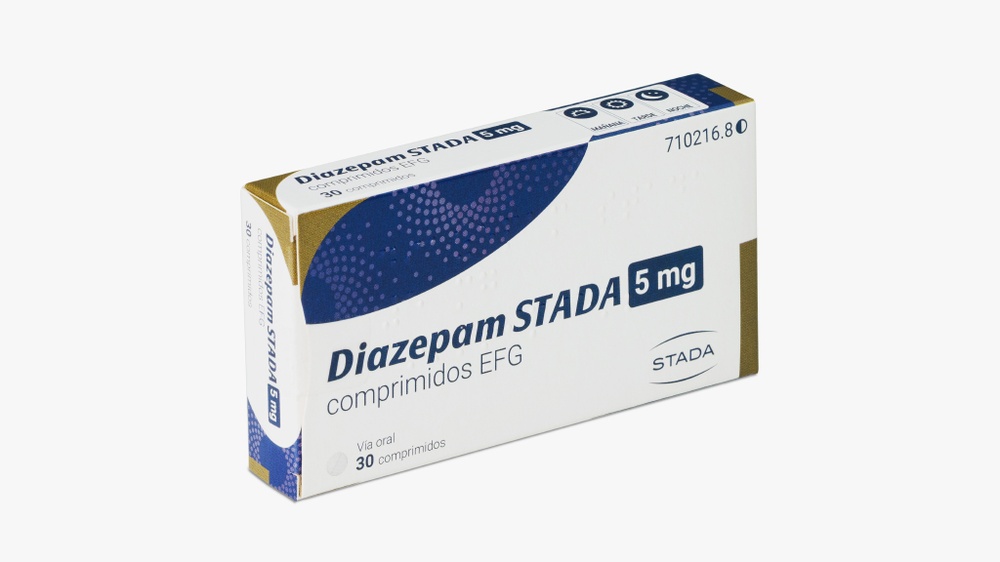
DIAZEPAM 5 mg Tablets

Prescription review online
A doctor will review your case and decide whether a prescription is medically appropriate.

Talk to a doctor about this medicine
Discuss your symptoms and possible next steps in a quick online consultation.



How to use DIAZEPAM STADA 5 mg TABLETS
Contents of the leaflet
- Introduction
- What is Diazepam Stada and what is it used for
- What you need to know before taking Diazepam Stada
- How to take Diazepam Stada
- Possible side effects
- Storage of Diazepam Stada
- Contents of the pack and further information
Introduction
Package Leaflet: Information for the User
Diazepam Stada 5 mg Tablets EFG
Read this package leaflet carefully before you start taking this medicine, because it contains important information for you.
- Keep this package leaflet, you may need to read it again.
- If you have any further questions, ask your doctor or pharmacist.
- This medicine has been prescribed for you, do not pass it on to others, as it may harm them, even if their symptoms are the same as yours.
- If you experience any side effects, talk to your doctor or pharmacist, even if they are not listed in this package leaflet. See section 4.
Contents of the Package Leaflet
- What is Diazepam Stada and what is it used for
- What you need to know before taking Diazepam Stada
- How to take Diazepam Stada
- Possible side effects
- Storage of Diazepam Stada
- Contents of the pack and further information
1. What is Diazepam Stada and what is it used for
Diazepam Stada contains the active substance diazepam, which belongs to a group of medicines called benzodiazepines.
Diazepam has a calming effect, sedative, muscle relaxant and anticonvulsant effects.
Doctors prescribe diazepam to people who have symptoms of anxiety, agitation and mental tension caused by psychoneurotic states and transient situational disorders. Benzodiazepines are only indicated for the treatment of intense disorders that limit activity or subject to significant stress.
It may also be useful for relieving symptoms of acute agitation, tremors and hallucinations in patients with alcohol withdrawal syndrome.
Diazepam contributes to the relief of muscle pain caused by muscle spasms or inflammation of muscles or joints, trauma, etc. It may also be used to combat spasms caused by diseases such as cerebral palsy (a group of disorders that affect a person's ability to move, maintain balance and posture) and paraplegia (paralysis of the lower half of the body, affecting both legs), as well as in athetosis (continuous, involuntary, slow and extravagant movements of fingers and hands) and in the stiff person syndrome.
Diazepam may be used as an adjunctive treatment (treatment administered after the main treatment to increase the chances of a cure) for convulsive disorders (such as epilepsy, convulsions), but it has not been shown to be useful as a single treatment. In these cases, your doctor will periodically assess the usefulness of the medicine for your case.

Not sure if this medicine is right for you?
Discuss your symptoms and treatment with a doctor online.
2. What you need to know before taking Diazepam Stada
Do not take Diazepam Stada
- If you are allergic to diazepam or any of the other ingredients of this medicine (listed in section 6).
- If you are allergic to other benzodiazepine medicines.
- If you have breathing difficulties related or not to sleepfor a long time.
- If you have a disease called "myasthenia gravis", which is characterized by muscle weakness and fatigue.
- If you have severe respiratory problems (severe respiratory failure).
- If you have severe liver problems (severe liver failure).
If you are drug or alcohol dependent, you should not take diazepam unless your doctor has formally indicated it.
This medicine is not recommended for the primary treatment of psychotic disorders (severe mental disorders that cause abnormal ideas and perceptions), nor should it be used as the only treatment in patients with depression, alone or associated with anxiety. Your doctor will probably have prescribed another medicine for these cases.
Warnings and precautions
Talk to your doctor or pharmacist before starting to take Diazepam Stada.
- If you have any liver or kidney disease
- If you have breathing difficulties
- If you have severe muscle weakness
- If you have other diseases
- If you have allergies
- If you have a history of drug or alcohol dependence
- If you are taking other medicines
Your doctor will decide whether it is convenient for you to take a lower dose of diazepam or not to take it at all.
If you are epileptic and are undergoing long-term treatment with diazepam, it is not recommended to use the benzodiazepine antagonist Anexate (flumazenil) to reverse the effect of diazepam, as convulsions may appear.
Children
Do not use this medicine in children under 6 months of age.
Taking Diazepam Stada with other medicines
Tell your doctor or pharmacist if you are taking or have recently taken or may need to take other medicines. This is extremely important because the simultaneous use of more than one medicine can increase or decrease its effect.
Therefore, you should not take diazepam with other medicines unless your doctor is informed and approves it beforehand. For example, tranquilizers, sleep inducers and similar medicines act on the brain and nerves and can reinforce the effect of diazepam.
Cisapride, cimetidine, ketoconazole, fluvoxamine, fluoxetine and omeprazole temporarily increase the sedative effect of diazepam, which increases the risk of drowsiness.
Also, the metabolism of phenytoin may be affected if you are taking diazepam, so if you are taking this medicine, your doctor will adjust the doses of the same.
The concomitant use of diazepam and opioids (potent analgesics, substitution therapy medications and some cough medications) increases the risk of drowsiness, difficulty breathing (respiratory depression), coma and can be potentially fatal. Therefore, concomitant use should only be considered when other treatment options are not possible.
However, if your doctor prescribes diazepam along with opioids, your doctor must limit the dose and duration of concomitant treatment.
Tell your doctor about all opioid medications you are taking and strictly follow your doctor's recommendation regarding the dose. It may be helpful to inform friends or family members who are aware of the signs and symptoms indicated above. Contact your doctor when you experience these symptoms.
If you need more information about this, consult your doctor or pharmacist.
Taking Diazepam Stada with food, drinks and alcohol
Alcoholic beverages increase the sedative effects of diazepam, so avoid using alcoholic beverages during treatment. If you need additional information, consult your doctor.
Risk of dependence
The use of benzodiazepines can lead to dependence. This occurs mainly after uninterrupted use of the medicine for a long time. To minimize the risk of dependence, the following precautions should be taken into account:
- The use of benzodiazepines will only be done under medical prescription (never because they have been effective in other patients), and never advise them to other people.
- Do not increase the prescribed doses in any way, nor prolong the treatment for longer than recommended.
- Consult your doctor regularly so that he decides whether to continue treatment.
Pregnancy and breastfeeding
Before starting treatment, your doctor should know if you are or suspect you may be pregnant or if you want to become pregnant. The doctor will then decide whether or not it is convenient for you to take diazepam.
Benzodiazepines pass into breast milk, so you should consult your doctor about taking diazepam while breastfeeding.
Driving and using machines
Do not drive or operate tools or machines because this medicine can cause sedation, amnesia, difficulty concentrating and muscle weakness, which can negatively affect the ability to drive vehicles or operate machinery. This effect is increased if you have also ingested alcohol.
Use in elderly people
Elderly people may need lower doses of diazepam than younger patients. If you are an elderly person, your doctor may prescribe a lower dose and check your response to treatment. Please follow your doctor's instructions carefully.
Diazepam Stada contains lactose
This medicine contains lactose. If your doctor has told you that you have an intolerance to certain sugars, consult with him before taking this medicine.
3. How to take Diazepam Stada
Follow the administration instructions of the medicine indicated by your doctor or pharmacist. In case of doubt, consult your doctor or pharmacist again.
Depending on the nature of your illness, your age and weight, your doctor will prescribe the most suitable dose and indicate the duration of your treatment with diazepam.
Remember to take your medicine.
Follow these instructions unless your doctor has given you different instructions:
Use in adults
Anxiety symptoms:2 to 10 mg, 2 to 4 times a day, depending on the severity of the symptoms.
Symptomatic relief in acute alcohol withdrawal:10 mg, 3 or 4 times during the first 24 hours, reducing to 5 mg 3 or 4 times a day, as needed.
Adjunctive treatment for muscle spasms:2 to 10 mg, 3 or 4 times a day.
Adjunctive therapy in anticonvulsant therapy: 2 to 10 mg, 2 or 4 times a day.
Use in children
From 2 to 2.5 mg, 1 or 2 times a day, gradually increasing as needed and tolerated; as a general rule 0.1-0.3 mg/kg per day. Due to the variety of response of children to medicines that act on the central nervous system, treatment should be started with the lowest dose and increased as required. Do not use in children under 6 months of age.
Use in elderly people or in the presence of debilitating diseases
From 2 to 2.5 mg, 1 or 2 times a day, gradually increasing as needed and tolerated.
Treatment should be started with the lowest dose. Do not exceed the maximum dose.
If you think the action of diazepam is too strong or too weak, tell your doctor or pharmacist.
In elderly patients or those with liver or kidney disorders, or muscle weakness, in children, in debilitated patients or those with low serum albumin levels, the doctor will prescribe a lower dose.
Rules for correct administration
Do not increase the doses prescribed by the doctor in any way.
Each individual dose should not exceed the indicated limits and the total daily dose should not either, unless your doctor prescribes a higher dose.
Diazepam tablets should be taken without chewing, with a little water or a non-alcoholic drink.
The tablets will be taken at the times that are most necessary, normally in the afternoon or evening. Never change the dose that has been prescribed for you.
Duration of treatment
The duration of treatment should be as short as possible and never more than 2-3 months. Consult your doctor regularly so that he decides whether to continue treatment.
Do not prolong treatment for longer than recommended.
To avoid withdrawal symptoms, you should not stop taking diazepam abruptly, especially if you have been taking it for a long time.
If you take more Diazepam Stada than you should
If you or someone else has ingested an overdose of diazepam, call your doctor, pharmacist or the nearest hospital immediately.
In case of overdose or accidental ingestion, consult your doctor or pharmacist immediately or call the Toxicology Information Service. Phone: 91 562 04 20 indicating the medicine and the amount used. It is recommended to take the package and the package leaflet of the medicine to the healthcare professional.
If you forget to take Diazepam Stada
Do not take a double dose to make up for forgotten doses. On the contrary, you should continue with the normal dose.
If you stop taking Diazepam Stada
When stopping the administration, restlessness, anxiety, insomnia, lack of concentration, headache and hot flashes may appear. It is not recommended to interrupt the medication abruptly, but to gradually reduce the dose, according to the doctor's instructions.
If you have any other questions about the use of this medicine, ask your doctor or pharmacist.

Started taking the medicine and have questions?
Discuss your symptoms and treatment with a doctor online.
4. Possible side effects
Like all medicines, this medicine can cause side effects, although not everyone gets them.
If you think any of the side effects you are suffering from is serious or if you notice any side effect not mentioned in this package leaflet, tell your doctor or pharmacist.
Most patients tolerate diazepam well, but the most frequent side effects, which occur especially at the beginning of treatment, are fatigue and drowsiness.
Occasionally, other side effects of the type of confusion, deterioration of the state of alertness, loss of sensitivity, constipation, depression, diplopia (double vision), ataxia (inability to coordinate voluntary muscle movements), difficulty articulating words, digestive alterations, alteration of heart rhythm, headache, hypotension, circulatory disorders, increased or decreased libido (sexual appetite), nausea, dry mouth or hypersalivation (exaggerated salivary secretion), incontinence or urinary retention, skin rashes, stuttering, tremors, dizziness and blurred vision. The most frequent skin reactions are rash (skin inflammation), urticaria (red patches) and pruritus (itching or uncomfortable skin irritation that causes the desire to scratch the affected area).
Very rarely, increased transaminases and alkaline phosphatase, jaundice (yellowish appearance of the skin and eyes), as well as cardiac arrest have been reported.
An increased risk of falls and fractures has been observed in elderly patients and in patients who are taking other sedative medicines (including alcoholic beverages) at the same time.
It is known that when benzodiazepines are used, behavioral side effects such as restlessness, agitation, irritability, delirium (incoherence of ideas), fits of rage, aggression, nightmares, hallucinations, psychosis (loss of contact with reality) or inappropriate behavior may occur. These reactions are more frequent in the elderly and in children. If you experience these effects, you should stop treatment and contact your doctor immediately.
On the other hand, the use of benzodiazepines can lead to dependence, mainly when the medicine is taken uninterruptedly for a long time. It is not recommended to interrupt the medication abruptly, but to gradually reduce the dose, according to the doctor's instructions.
Anterograde amnesia (difficulty remembering recent events) may appear at normal doses, the risk increases when the dose is increased. The amnestic effects may be associated with behavioral alterations.
If you notice any other reaction not described in this package leaflet, consult your doctor or pharmacist.
Reporting of side effects
If you experience any type of side effect, consult your doctor or pharmacist, even if it is a possible side effect that is not listed in this package leaflet. You can also report them directly through the Spanish Pharmacovigilance System for Human Use Medicines: www.notificaram.es. By reporting side effects, you can help provide more information on the safety of this medicine.
5. Storage of Diazepam Stada
Keep this medicine out of the sight and reach of children.
Do not use this medicine after the expiry date that appears on the packaging after CAD. The expiry date is the last day of the month indicated.
This medicine does not require special storage conditions.
Medicines should not be disposed of via wastewater or household waste. Deposit the packaging and medicines that you no longer need in the SIGRE collection point at the pharmacy. Ask your pharmacist how to dispose of the packaging and medicines that you no longer need. This way, you will help protect the environment.
6. Contents of the pack and further information
Composition of Diazepam Stada
- The active substance is diazepam. Each tablet contains 5 mg of diazepam.
- The other ingredients are lactose monohydrate, corn starch and magnesium stearate.
Appearance of the product and contents of the pack
Diazepam Stada 5 mg tablets: round, flat, beveled and scored tablets, white or almost white in color, with the inscription E on one face.
Diazepam Stada 5 mg tablets are available in packs of 30 and 40 tablets.
Not all pack sizes may be marketed.
Marketing authorization holder and manufacturer
Marketing authorization holder
Laboratorio Stada, S.L.
Frederic Mompou, 5
08960 Sant Just Desvern (Barcelona)
Spain
Manufacturer
Neuraxpharm Pharmaceuticals, S.L.
Avda. de Barcelona, 69
08970 Sant Joan Despí (Barcelona)
Spain
Date of the last revision of this package leaflet:July 2018
Detailed and updated information on this medicine is available on the website of the Spanish Agency for Medicines and Health Products (AEMPS) http://www.aemps.gob.es/
- Country of registration
- Dosage formTABLET, 5 mg
- ATC codeN05BA01
- Average pharmacy price1.5 EUR
- Active substance
- Prescription requiredYes
- Manufacturer
- CompositionLACTOSA MONOHIDRATO (46.45 mg mg)
- This information is for reference only and does not constitute medical advice. Always consult a doctor before taking any medication. Oladoctor is not responsible for medical decisions based on this content.
- Alternatives to DIAZEPAM STADA 5 mg TABLETSDosage form: TABLET, 10 mgActive substance: diazepamManufacturer: Aurovitas Spain, S.A.U.Prescription requiredDosage form: TABLET, 2.5 mgActive substance: diazepamManufacturer: Aurovitas Spain, S.A.U.Prescription requiredDosage form: TABLET, 5 mgActive substance: diazepamManufacturer: Aurovitas Spain, S.A.U.Prescription required
Online doctors for DIAZEPAM STADA 5 mg TABLETS
Discuss questions about DIAZEPAM STADA 5 mg TABLETS, including use, safety considerations and prescription review, subject to medical assessment and local regulations.







Get DIAZEPAM STADA 5 mg TABLETS Prescription Online
Fill in a 2-min form
Tell us your symptoms, history, and what medicine you're requesting.
Pick a doctor or let us assign
Choose a specialist or we'll match you with the next available doctor.
Doctor reviews your case
Usually within 30 minutes. They may ask follow-up questions via chat.
Collect from any pharmacy
Electronic prescription sent to your email — valid across Spain.
Frequently Asked Questions
DIAZEPAM STADA 5 mg TABLETS requires a prescription in Spain. You can check with a doctor online whether this medicine may be appropriate for your situation.
The active ingredient in DIAZEPAM STADA 5 mg TABLETS is diazepam. This information helps identify medicines with the same composition but different brand names.
The average pharmacy price for DIAZEPAM STADA 5 mg TABLETS is around 1.5 EUR. Prices may vary depending on the manufacturer and dosage form.
DIAZEPAM STADA 5 mg TABLETS is manufactured by Laboratorio Stada S.L.. Pharmacy brands and packaging may differ depending on the distributor.
Doctors such as Family doctors, Psychiatrists, Dermatologists, Cardiologists, Endocrinologists, Gastroenterologists, Pulmonologists, Nephrologists, Rheumatologists, Hematologists, Infectious disease physicians, Allergists, Geriatricians, Paediatricians, Oncologists may assess whether DIAZEPAM STADA 5 mg TABLETS is appropriate, depending on your situation and local regulations. You can book an online consultation to discuss your symptoms and possible next steps.
Spain has a well-developed healthcare infrastructure across major cities such as Madrid, Barcelona, Valencia, and Seville. Pharmacies are widely available and operate under strict regulations, ensuring access to prescribed medications.
You can buy DIAZEPAM STADA 5 mg TABLETS in Madrid, Barcelona, Seville, or Valencia at any local pharmacy with a valid prescription.
To obtain a prescription, you can use Oladoctor:
Other medicines with the same active substance (diazepam) include DIAZEPAM AUROVITAS 10 mg TABLETS, DIAZEPAM AUROVITAS 2.5 mg TABLETS, DIAZEPAM AUROVITAS 5 mg TABLETS. These may have different brand names or formulations but contain the same therapeutic ingredient. Always consult a doctor before switching or starting a new medicine.
