






How to use DESFLURANE PIRAMAL 100% LIQUID FOR INHALATION
Translated with AI
This page provides general information and does not replace a doctor’s consultation. Always consult a doctor before taking any medication. Seek urgent medical care if symptoms are severe.
Show originalContents of the leaflet
Introduction
Package Leaflet: Information for the User
Desflurano Piramal 100% (v/v) Liquid for Inhalation Vapor EFG
Desflurano
Read the entire package leaflet carefully before starting to use this medication, as it contains important information for you.
- Keep this package leaflet, as you may need to read it again.
- If you have any questions, consult your doctor, pharmacist, or nurse.
- This medication has been prescribed to you only, and you should not give it to others, even if they have the same symptoms as you, as it may harm them.
- If you experience side effects, consult your doctor, pharmacist, or nurse, even if they are side effects not listed in this package leaflet. See section 4.
Contents of the Package Leaflet
- What is Desflurano Piramal and what is it used for
- What you need to know before taking Desflurano Piramal
- How to use Desflurano Piramal
- Possible side effects
- Storage of Desflurano Piramal
- Package Contents and Additional Information
1. What is Desflurano Piramal and what is it used for
Desflurano Piramal contains desflurano and belongs to the group of halogenated hydrocarbons. Desflurano Piramal is a colorless liquid used as a general anesthetic in surgery. It is an inhalation anesthetic (administered in the form of vapor for you to breathe). Breathing desflurano vapor makes you fall into a deep sleep. It also maintains deep sleep (general anesthesia) during which you can undergo an operation. In adults, Desflurano Piramal is used for the induction and maintenance of anesthesia. In infants and children, it is used only for maintaining anesthesia.

2. What you need to know before taking Desflurano Piramal
Do not use Desflurano Piramal:
Before receiving this medication, inform your doctor or anesthesiologist if you meet any of the above conditions.
Warnings and Precautions
Consult your doctor or anesthesiologist before starting to use Desflurano Piramal:
The doctor may administer less Desflurano Piramal:
The doctor may decide not to administer desflurano and choose another type of anesthesia:
Jaundice (yellowing of the skin and eyes).
Fever.
Hepatocellular necrosis.
After anesthesia with Desflurano Piramal, you will wake up quickly. If it is expected that you will have pain after the operation, the doctor will give you an anesthetic. The doctor may also do this at the end of the operation or during the recovery phase. In this case, the anesthesiologist (doctor) will stop administering Desflurano Piramal, administer a medication to treat malignant hyperthermia (known as dantrolene), and provide other maintenance therapy.
The doctor must proceed with special caution if you have been administered an inhalation anesthetic previously, especially if it was multiple times during a short interval (repeated use).
Desflurano Piramal may cause a rapid and significant increase in body temperature during an operation (malignant hyperthermia).
Desflurano should be used with caution in patients without intubated airways.
Middle Ear Operations
Desflurano, like other volatile anesthetics, increases middle ear pressure, especially in children, and therefore, it is recommended to monitor middle ear pressure during desflurano anesthesia.
Children
- Desflurano should be used with caution in children with asthma or a history of recent upper respiratory tract infection due to the potential for airway narrowing and increased airway resistance.
- Desflurano Piramal should not be used to induce anesthesia in infants (see also section 2).
- Waking up from anesthetics can cause a brief state of agitation in children, making them uncooperative.
- Desflurano Piramal can be administered for the maintenance of anesthesia only if a breathing tube is placed in the airways to help you breathe (intubation). In these cases, caution should be exercised when removing the laryngeal mask after deep anesthesia to avoid side effects such as coughing or laryngospasm.
If any of the above conditions apply to you or your child, consult your doctor, nurse, or pharmacist. You may need to be closely monitored and your treatment modified.
Using Desflurano Piramal and Other Medications
Tell your doctor or pharmacist if you are using, have recently used, or may need to use any other medication, including those obtained without a prescription.
Special care is needed if you are taking any of the following medications:
- Muscle relaxants (such as suxamethonium, pancuronium, atracurium, vecuronium). These medications help relax the muscles. The anesthesiologist may adjust the dosage.
- Opioids (such as fentanyl, morphine, remifentanil). These medications are potent pain relievers used frequently during total anesthesia.
- Benzodiazepines (such as midazolam, diazepam, nitrazepam). These are tranquilizers used to relax an agitated patient before the operation.
- Nitrous oxide (laughing gas). This medication may be used during total anesthesia to put the patient to sleep and relieve pain.
Taking Desflurano Piramal with Food and Drinks
Desflurano Piramal is a medication to put you to sleep and keep you asleep so you can undergo surgery. You should ask your doctor, surgeon, or anesthesiologist when and what you can eat or drink before anesthesia and after waking up.
Pregnancy and Breastfeeding
If you are pregnant or breastfeeding, think you may be pregnant, or plan to become pregnant, consult your doctor or pharmacist before using this medication.
There is not enough data on the use of desflurano in pregnant or breastfeeding women; therefore, the use of desflurano is not recommended during pregnancy and breastfeeding. Desflurano should only be used in pregnant and breastfeeding women when it is absolutely necessary. Breastfeeding should be avoided after anesthesia with desflurano for approximately 24 hours.
Driving and Using Machines
Desflurano Piramal may affect your alertness and response for some time after receiving the medication. Therefore, do not drive or use machines for 24 hours after the operation.
3. How to Use Desflurano Piramal
Desflurano Piramal should be used under cardiorrespiratory supervision and in the presence of an anesthesiologist with technical means that allow anesthesia and resuscitation. Desflurano Piramal will always be administered by an anesthesiologist. The anesthesiologist will decide the dose you will receive, based on your age, body weight, and the type of operation you will undergo. During anesthesia, the anesthesiologist will check your blood pressure and heart rate. If necessary, the anesthesiologist will adjust the dose.
In most cases, Desflurano Piramal is administered through a tube placed in the airways after receiving an injection of another anesthetic that induces sleep. Only in rare cases may you be asked to breathe in Desflurano Piramal vapors through a mask to induce sleep.
Desflurano Piramal is a liquid for inhalation vapor that is administered using a vaporizer specifically calibrated for the use of this product, so that the administered concentration can be precisely controlled.
Waking Up After Anesthesia
After the operation, the anesthesiologist will stop giving you Desflurano Piramal. You will wake up within a few minutes.
If You Use More Desflurano Piramal Than You Should
If you receive more Desflurano Piramal than you should, the administration will be interrupted. You will be given pure oxygen. Your blood pressure and heart function will be closely monitored while you wake up.
In case of overdose or accidental ingestion, consult your doctor or pharmacist immediately or call the Toxicology Information Service, phone 915 620 420, indicating the medication and the amount ingested.
If you have any other questions about the use of this medication, ask your doctor, pharmacist, or nurse.

4. Possible Side Effects
Like all medications, this medication can cause side effects, although not everyone gets them.
Most side effects are mild to moderate and short-lived. However, some side effects can also be serious.
Serious side effects (frequency not known) such as:
- muscle fiber breakdown (rhabdomyolysis),
- irregular heartbeats or abnormal heart rhythm (arrhythmia) in children.
- Rapid and significant increase in body temperature during an operation (malignant hyperthermia). The signs of the disease include: Excess carbon dioxide in the blood (hypercapnia), Muscle stiffness (rigidity), Increased heart rate (tachycardia), Increased breathing rate (tachypnea), Blue discoloration of the skin (cyanosis), Irregular heartbeats or abnormal heart rhythm (arrhythmia), high or low blood pressure, and fever.
Most of these serious side effects can occur while you are under anesthesia and under the care of healthcare professionals.
Desflurano Piramal may cause a slight increase in blood sugar during anesthesia.
Possible side effects include:
Very Common(may affect more than 1 in 10 patients)
- Nausea
- Vomiting
These occur during the induction and maintenance of anesthesia with Desflurano Piramal.
Common(may affect up to 1 in 10 patients)
- Inflammation of the back of the throat (pharyngitis)
- Temporary breathing retention. This has occurred during the induction and maintenance of anesthesia with Desflurano Piramal.
- Headache
- Inflammation of the outer layer of the eye and the inner surface of the eyelids (conjunctivitis).
- Irregular heartbeat or abnormal heart rhythm.
- Slow heartbeat (bradycardia).
- Fast heartbeat (tachycardia).
- High blood pressure (hypertension).
- Temporary interruption of breathing (apnea), coughing, and excessive saliva production (hypersalivation). These have occurred during the induction and maintenance of anesthesia with Desflurano Piramal.
- Sudden spasm of the vocal cords that affects breathing and speech (laryngospasm).
- Increased blood levels of an enzyme called creatine phosphokinase.
- Abnormal electrocardiogram (ECG) reading.
- Abnormal heart rhythm (prolongation of the QTc interval (abnormal ECG)).
Uncommon(may affect up to 1-10 in 100 patients)
- Agitation.
- Dizziness.
- Heart attack (myocardial infarction).
- Reduced blood flow to the heart muscle (myocardial ischemia).
- Irregular heartbeat (arrhythmia).
- Dilated blood vessels (vasodilation).
- Reduced oxygen supply (hypoxia). This has occurred during the induction and maintenance of anesthesia with Desflurano Piramal.
- Muscle pain (myalgia).
Frequency Not Known(cannot be estimated from the available data)
- Blood clotting disorder (coagulopathy).
- High or low potassium levels in the blood (hyperkalemia/hypokalemia).
- Excess acid in the body fluids (metabolic acidosis).
- Seizures (convulsions).
- Yellowing of the eyeball (ocular jaundice).
- Heart failure (when the heart has difficulty pumping) or cardiac arrest (when the heart stops pumping).
- Serious heart rhythm disorders with rapid and irregular pulse (torsades de pointes).
- Ventricular failure (when two heart chambers do not function properly or stop functioning).
- Reduced heart muscle contraction (hypokinesia ventricular).
- Irregular heartbeat (atrial fibrillation).
- Very high blood pressure (malignant hypertension).
- Bleeding (hemorrhage).
- Low blood pressure (hypotension).
- When body tissues do not receive enough blood (shock).
- Breathing difficulties (respiratory failure) or cessation of breathing (respiratory arrest).
- Sudden narrowing of the airway muscles (bronchospasm).
- Coughing up blood from the lungs (hemoptysis).
- Sudden inflammation of the pancreas (acute pancreatitis).
- Stomach pain (abdominal pain).
- Death of liver tissue (hepatic necrosis).
- Inflammation of the liver (cytolytic hepatitis).
- Blockage of bile flow from the liver (cholestasis).
- Yellowing of the skin or eyeball (jaundice).
- Liver function disorders or liver disease.
- Hives (urticaria).
- Redness of the skin (erythema).
- Feeling of weakness (asthenia).
- General malaise.
- Abnormalities in the recording of heart activity (abnormal ST-T segment or T-wave inversion on the ECG).
- Increased liver enzymes (elevated alanine or aspartate aminotransferase levels).
- Blood clotting disorders (abnormal coagulation values).
- High ammonia levels.
- High bilirubin levels.
- Liver failure.
- Feeling of spinning and loss of balance (vertigo).
- Palpitations.
- Burning sensation in the eyes.
- Temporary blindness.
- Brain disease (encephalopathy).
- Inflammation or infection of part of the eye (ulcerative keratitis).
- Eye redness (ocular hyperthermia).
- Reduced visual acuity and clarity.
- Eye irritation.
- Eye pain.
- Fatigue.
- Burning sensation on the skin.
- Postoperative agitation.
Reporting Side Effects
If you experience any side effects, consult your doctor, pharmacist, or nurse, even if they are possible side effects not listed in this package leaflet. You can also report them directly through the Spanish Pharmacovigilance System for Human Use www.notificaRAM.es.
By reporting side effects, you can help provide more information on the safety of this medication.
Tell your doctor, pharmacist, or nurse if you notice any change in how you feel after receiving Desflurano Piramal. Some side effects may require treatment.
5. Storage of Desflurano Piramal
Keep this medication out of the sight and reach of children.
Do not use this medication after the expiration date stated on the label after "EXP". The expiration date is the last day of the month indicated.
Store below 30°C.
Keep the bottle in a vertical position with the cap perfectly closed.
6. Container Contents and Additional Information
Composition of Desflurano Piramal
- The active ingredient is desflurane 100% (v/v).
- It does not contain any other component.
This medication contains fluorinated greenhouse gases.
Each container contains 360 g of desflurane, equivalent to 0.9324 tons of CO2 (global warming potential GWP = 2950).
Appearance of Desflurano Piramal and Container Contents
Desflurano Piramal is a liquid for vapor inhalation.
Desflurano Piramal is a clear and colorless liquid.
250 ml type III amber glass bottle with a PVC coating on the outside of the bottle and an HDPE/Ethylene Propylene Diene Monomer (EPDM) closure with an aluminum cap.
Packaging of 1 and 6 bottles.
Not all package sizes may be marketed.
Marketing Authorization Holder and Manufacturer
Piramal Critical Care B.V.,
Rouboslaan 32, 2252 TR,
Voorschoten,
Netherlands
Or
(Manufacturer only for the United Kingdom)
Piramal Critical Care Limited
Suite 4, Ground Floor,
Heathrow Boulevard - East Wing,
280 Bath Road, West Drayton,
UB7 0DQ,
United Kingdom.
You can request more information about this medication by contacting the local representative of the marketing authorization holder:
Euromed Pharma Spain, S.L.
C/Eduard Maristany, 430-432
08918 Badalona
Barcelona - Spain
Tel: +34 932 684 208
Fax: +34 933 150 469
This medication is authorized in the Member States of the European Economic Area under the following names:
Austria | : | Desfluran Piramal 100% Liquid for the production of an inhalation vapor |
Belgium | : | FR - Desflurane Piramal 100% liquid for vapor inhalation NL - Desfluraan Piramal 100%, liquid for inhalation vapor DE - Desfluran Piramal 100%, liquid for the production of an inhalation vapor |
Denmark | : | Desfluran Piramal 100% Liquid for inhalation vapor |
Finland | : | Desfluraani Piramal |
France | : | DESFLURANE PIRAMAL 100% liquid for vapor inhalation |
Germany | : | Desfluran Piramal 100%, liquid for the production of an inhalation vapor |
Hungary | : | Dezflurán Piramal 100% liquid for inhalation vapor production |
Italy | : | Desflurano Piramal |
Netherlands | : | Desfluraan Piramal 100% liquid for inhalation vapor |
Norway | : | Desfluran Piramal |
Poland | : | Desfluran Piramal |
Portugal | : | Desflurano Piramal 100% liquid for inhalation by vaporization |
Spain | : | Desflurano Piramal 100% Liquid for vapor inhalation EFG |
Sweden | : | Desfluran Piramal 100% inhalation vapor, liquid |
United Kingdom | : | Desflurane 100% v/v Inhalation Vapour, liquid |
Date of the last revision of this prospectus:03/2024
Detailed and updated information on this medication is available on the website of the Spanish Agency for Medicines and Health Products (AEMPS) http://www.aemps.es/
-

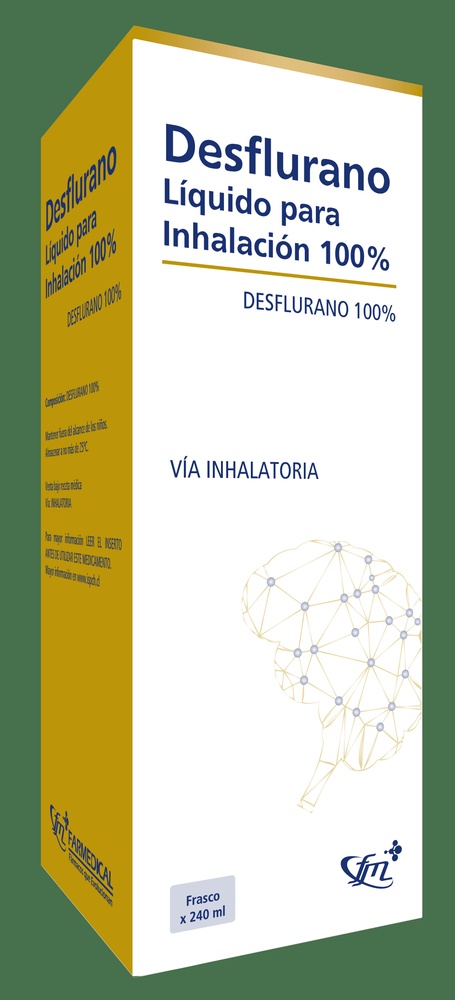
- Country of registration
- Dosage formPULMONARY INHALATION, 1 ml/ml
- ATC codeN01AB07
- Active substance
- Prescription requiredYes
- Manufacturer
- This information is for reference only and does not constitute medical advice. Always consult a doctor before taking any medication. Oladoctor is not responsible for medical decisions based on this content.
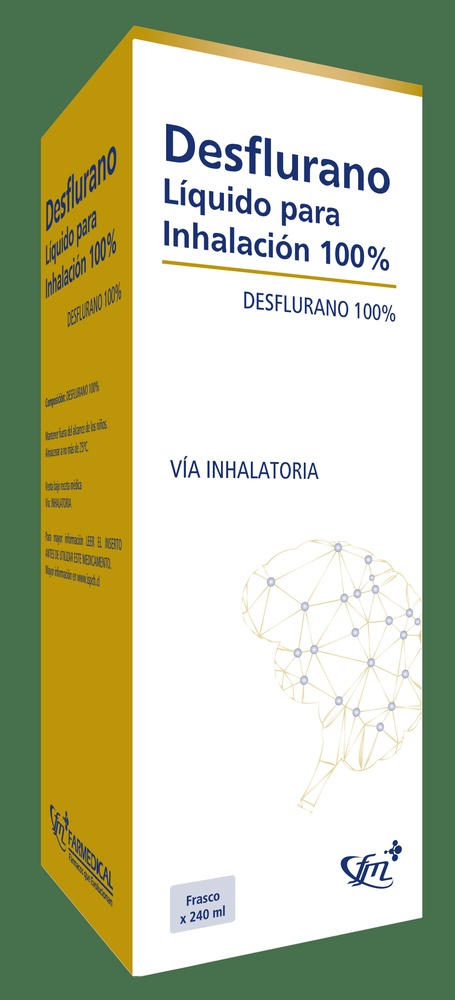
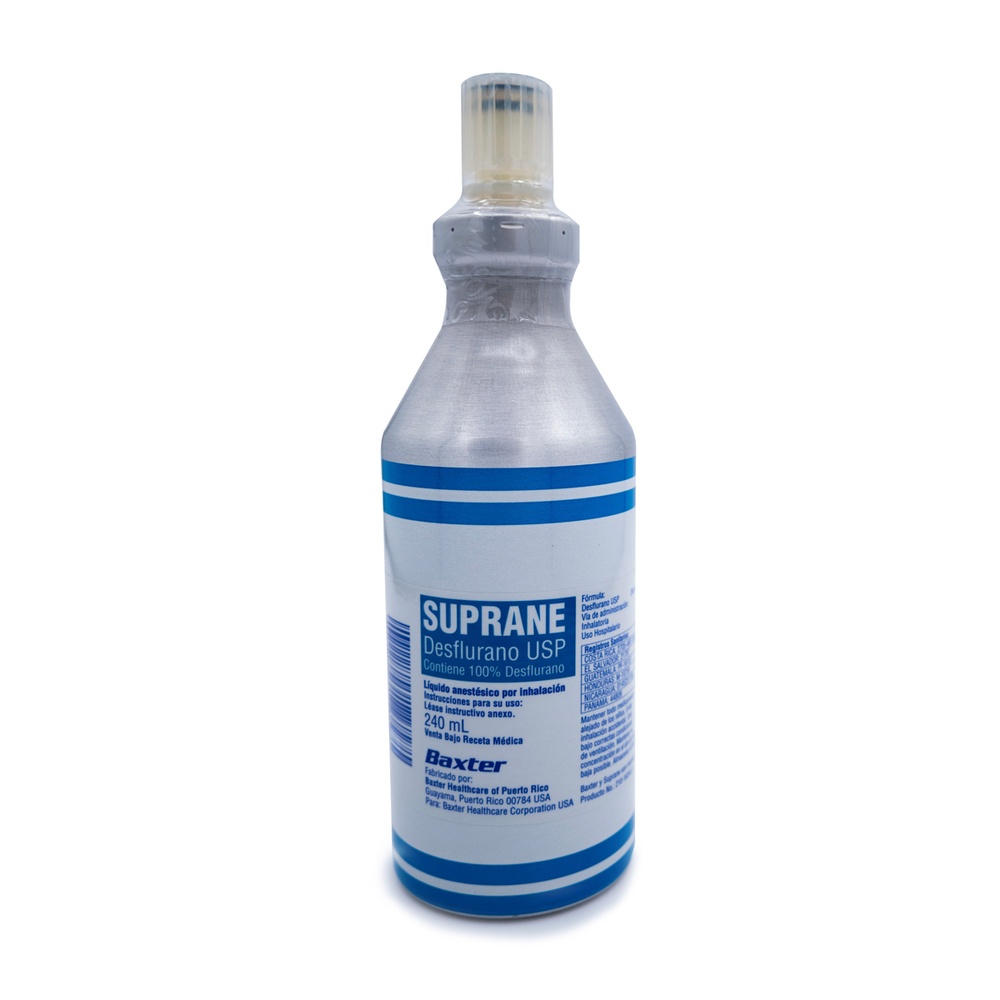
- Alternatives to DESFLURANE PIRAMAL 100% LIQUID FOR INHALATIONDosage form: PULMONARY INHALATION, 100 % (V/V)Active substance: desfluraneManufacturer: Baxter S.L.Prescription requiredDosage form: PULMONARY INHALATION, 240 ml desfluraneActive substance: desfluraneManufacturer: Baxter S.L.Prescription requiredDosage form: PULMONARY INHALATION, 250 ml isofluraneActive substance: isofluraneManufacturer: Baxter S.L.Prescription required
Online doctors for DESFLURANE PIRAMAL 100% LIQUID FOR INHALATION
Discuss questions about DESFLURANE PIRAMAL 100% LIQUID FOR INHALATION, including use, safety considerations and prescription review, subject to medical assessment and local regulations.



Get DESFLURANE PIRAMAL 100% LIQUID FOR INHALATION Prescription Online
Fill in a 2-min form
Tell us your symptoms, history, and what medicine you're requesting.
Pick a doctor or let us assign
Choose a specialist or we'll match you with the next available doctor.
Doctor reviews your case
Usually within 30 minutes. They may ask follow-up questions via chat.
Collect from any pharmacy
Electronic prescription sent to your email — valid across Spain.
Frequently Asked Questions
DESFLURANE PIRAMAL 100% LIQUID FOR INHALATION requires a prescription in Spain. You can check with a doctor online whether this medicine may be appropriate for your situation.
The active ingredient in DESFLURANE PIRAMAL 100% LIQUID FOR INHALATION is desflurane. This information helps identify medicines with the same composition but different brand names.
DESFLURANE PIRAMAL 100% LIQUID FOR INHALATION is manufactured by Piramal Critical Care B.V.. Pharmacy brands and packaging may differ depending on the distributor.
Doctors such as Family doctors, Psychiatrists, Dermatologists, Cardiologists, Endocrinologists, Gastroenterologists, Pulmonologists, Nephrologists, Rheumatologists, Hematologists, Infectious disease physicians, Allergists, Geriatricians, Paediatricians, Oncologists may assess whether DESFLURANE PIRAMAL 100% LIQUID FOR INHALATION is appropriate, depending on your situation and local regulations. You can book an online consultation to discuss your symptoms and possible next steps.
Spain has a well-developed healthcare infrastructure across major cities such as Madrid, Barcelona, Valencia, and Seville. Pharmacies are widely available and operate under strict regulations, ensuring access to prescribed medications.
You can buy DESFLURANE PIRAMAL 100% LIQUID FOR INHALATION in Madrid, Barcelona, Seville, or Valencia at any local pharmacy with a valid prescription.
To obtain a prescription, you can use Oladoctor:
Other medicines with the same active substance (desflurane) include DESFLURANE BAXTER 100% LIQUID FOR INHALATION, SUPRANE 100% LIQUID FOR INHALATION, AERRANE 100% LIQUID FOR INHALATION. These may have different brand names or formulations but contain the same therapeutic ingredient. Always consult a doctor before switching or starting a new medicine.
