



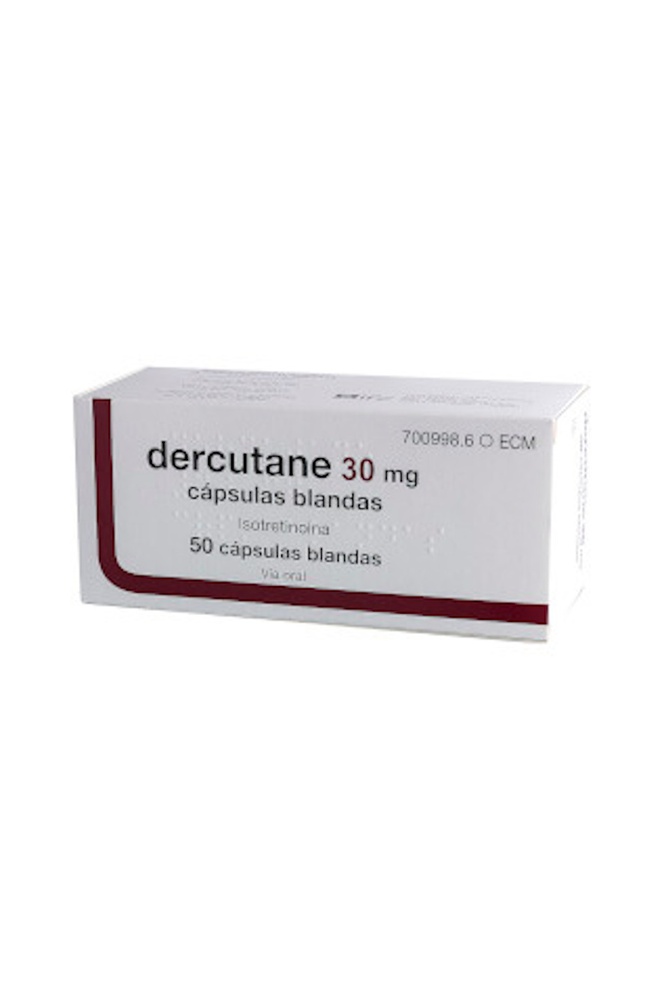
DERCUTANE 30 mg Soft Gel Capsules

Prescription review online
A doctor will review your case and decide whether a prescription is medically appropriate.

Talk to a doctor about this medicine
Discuss your symptoms and possible next steps in a quick online consultation.



How to use DERCUTANE 30 mg SOFT GEL CAPSULES
Contents of the leaflet
- Introduction
- What Dercutane 30 mg Soft Capsules are and what they are used for
- What you need to know before taking Dercutane 30 mg Soft Capsules
- How to take Dercutane 30 mg Soft Capsules
- Possible Adverse Effects
- Storage of Dercutane 30 mg Soft Capsules
- Package Contents and Additional Information
Introduction
Patient Information Leaflet
Dercutane 30 mg Soft Capsules
Isotretinoin
WARNING IF YOU ARE PREGNANT, IT CAN SERIOUSLY HARM YOUR BABY. Women must use effective contraceptives during the entire treatment. Do not use it if you are pregnant or think you may be pregnant. |
Read the entire leaflet carefully before starting to take this medication, as it contains important information for you.
- Keep this leaflet, as you may need to read it again.
- If you have any doubts, consult your doctor or pharmacist or nurse.
- This medication has been prescribed to you only, and you should not give it to others, even if they have the same symptoms as you, as it may harm them.
- If you experience side effects, consult your doctor or pharmacist, even if they are not listed in this leaflet. See section 4.
Contents of the leaflet:
- What Dercutane 30 mg Soft Capsules are and what they are used for
- What you need to know before taking Dercutane 30 mg Soft Capsules
- How to take Dercutane 30 mg Soft Capsules
- Possible side effects
- Storage of Dercutane 30 mg Soft Capsules
- Package contents and additional information
1. What Dercutane 30 mg Soft Capsules are and what they are used for
Isotretinoin belongs to a group of medications called systemic anti-acne preparations that work by suppressing the activity of the sebaceous glands (oil-producing glands) and reducing the size of these glands. Additionally, an anti-inflammatory effect of isotretinoin on the skin has been described.
Dercutane 30 mg is indicated for the treatment of severe forms of acne (e.g., nodular or conglobate acne, or acne with a risk of permanent scarring) that do not respond to conventional treatment with other medications (antibiotics).

Not sure if this medicine is right for you?
Discuss your symptoms and treatment with a doctor online.
2. What you need to know before taking Dercutane 30 mg Soft Capsules
Do not take Dercutane 30 mg
- If you are allergic to isotretinoin or any of the other components of this medication (listed in section 6).
- If you are pregnant or breastfeeding.
- If there is a possibility that you may become pregnant, you must follow the precautions of the "Pregnancy Prevention Plan", see the section "Warnings and Precautions".
- If you have liver problems.
- If you have very high levels of lipids (cholesterol, triglycerides) in your blood.
- If you have very high levels of vitamin A in your body (hypervitaminosis A).
- If you are taking tetracyclines (a type of antibiotic).
- This medication contains soybean oil. Do not use this medication if you are allergic to peanuts or soybeans.
Warnings and precautions
Treatment with isotretinoin should be monitored by a doctor who is experienced in the treatment of severe acne and is aware of the risks of treatment with isotretinoin, as well as the danger of birth defects (teratogenicity).
Pregnancy Prevention Plan
Pregnant women must not take Dercutane 30 mg
This medication can seriously harm your baby (the medication is considered "teratogenic", it can cause serious brain, face, ear, eye, heart, and certain gland abnormalities in the baby - thymus and parathyroid). It also increases the risk of spontaneous abortion. This can happen even if Dercutane 30 mg is taken for a short period during pregnancy.
- Do not take Dercutane 30 mg if you are pregnant or think you may be pregnant.
- Do not take Dercutane 30 mg if you are breastfeeding. It is likely that the medication will pass into your milk and harm your baby.
- Do not take Dercutane 30 mg if you may become pregnant during treatment.
- Do not become pregnant during the month following the end of this treatment, as the medication may still be in your body.
Women who may become pregnant are prescribed Dercutane 30 mg under strict rules. This is due to the risk of serious harm to the baby.
These are the rules:
- Your doctor must explain the risk of harm to the baby, you must understand why you should not become pregnant, and what you should do to avoid becoming pregnant.
- You must have discussed contraception (birth control) with your doctor. Your doctor will provide you with information on how to avoid becoming pregnant. Your doctor may refer you to a specialist for contraceptive advice.
- Before starting treatment, your doctor will ask you to have a pregnancy test. The test must show that you are not pregnant when you start treatment with Dercutane 30 mg.
Women must use effective contraceptives before, during, and after taking Dercutane 30 mg
- You must agree to use at least one very reliable contraceptive method (e.g., an intrauterine device or a contraceptive implant) or two effective methods that work in different ways (e.g., a hormonal contraceptive pill and a condom). Discuss with your doctor which methods are suitable for you.
- You must use contraceptives for one month before taking Dercutane 30 mg, during treatment, and for one month after finishing treatment.
- You must use contraceptives even if you do not have your period or are not sexually active (unless your doctor decides it is not necessary).
Women must accept to have pregnancy tests before, during, and after taking Dercutane 30 mg
- You must agree to have regular follow-up visits, ideally every month.
- You must agree to have regular pregnancy tests, ideally every month during treatment, and one month after finishing treatment with Dercutane 30 mg (unless your doctor decides it is not necessary).
- You must agree to have additional pregnancy tests if your doctor asks you to.
- You must not become pregnant during treatment or during the month following the end of treatment, as the medication may still be in your body.
- Your doctor will discuss all these points with you, using a checklist, and ask you (or a parent/guardian) to sign it. This checklist confirms that you have been informed about the risks and will follow the above rules.
If you become pregnant while taking Dercutane 30 mg, stop taking the medication immediatelyand consult your doctor. Your doctor may refer you to a specialist for advice.
Additionally, if you become pregnant within one month after stopping Dercutane 30 mg, you should consult your doctor. Your doctor may refer you to a specialist for advice.
Advice for men
The levels of oral retinoids in the semen of men taking Dercutane 30 mg are too low to harm the baby of their partners. However, you should never share your medication with anyone.
Additional precautions
Never give this medication to another person. Please take any unused capsules to your pharmacist at the end of treatment.
Do not donate blood during treatment with this medication, or for one month after stopping Dercutane 30 mg, as a baby could be harmed if a pregnant patient receives your blood.
Consult your doctor before starting to take Dercutane 30 mg:
- If you have ever had any mental health problems. This includes depression, aggressive tendencies, or mood changes. It also includes thoughts of self-harm or ending your life. This is because your mood may be affected while taking Dercutane 30 mg.
Mental health problems
You may not notice some changes in your mood and behavior, so it is very important that you tell your friends and family that you are taking this medication. They may notice these changes and help you identify any problems that you need to discuss with your doctor.
- If you experience constant headache, nausea, vomiting, or blurred vision, or severe diarrhea (hemorrhagic: with blood in the stool), stop treatment immediately and contact your doctor as soon as possible.
- If you have kidney problems, tell your doctor, as you may need to start treatment with a lower dose.
- If you experience allergic reactions (skin redness, itching), tell your doctor, as they may need to interrupt treatment with Dercutane 30 mg.
- It is possible that your acne may worsen during the first few weeks of treatment, although it should improve later.
- Your skin may become more sensitive to the sun's effects. Avoid exposure to the sun (even on cloudy days) and to ultraviolet lamps (UVA) while taking this medication. If you do go in the sun, apply a product with a high sun protection factor (at least 15) before exposure.
- Dercutane 30 mg may increase skin fragility. Chemical dermabrasion (controlled scraping of the skin to remove scars or lesions after acne), skin treatment with lasers, and wax depilation should be avoided during treatment and for at least 6 months after, as they may cause scarring or skin irritation.
- Avoid using topical keratolytic or exfoliating anti-acne preparations that have not been prescribed by your doctor.
- Use a moisturizing cream or ointment and a lip protector during treatment, as Dercutane 30 mg may dry your skin and lips.
- Treatment with Dercutane 30 mg may cause a decrease in night vision, which can sometimes appear suddenly (see "Driving and using machines"). Other visual disturbances (e.g., dry eyes) may also occur. You may experience intolerance to contact lenses, which may require you to wear glasses during treatment with Dercutane 30 mg. There have been reports of dry eyes that do not resolve after stopping treatment. Tell your doctor if you experience any of these symptoms. Your doctor may ask you to use an eye lubricant or tear replacement therapy. If you use contact lenses and have developed intolerance, you may be advised to wear glasses during treatment. Your doctor may refer you to a specialist if you experience visual difficulties, and it is possible that they may ask you to stop taking isotretinoin.
- It is recommended to reduce intense physical activity during treatment with Dercutane 30 mg, as muscle and joint pain have been observed during this treatment.
- Tell your doctor if you experience persistent pain in the lower back or buttocks during treatment with Dercutane 30 mg capsules. These symptoms may be signs of sacroiliitis, a type of inflammatory back pain. Your doctor may interrupt treatment with Dercutane 30 mg capsules and refer you to a specialist for the treatment of inflammatory back pain. Further evaluation, including imaging modalities such as magnetic resonance imaging, may be necessary.
- Your doctor will regularly monitor your liver function and blood lipid levels. If you are diabetic, obese, frequently drink alcohol, or have any lipid metabolism disorders, your doctor may need to monitor you more frequently. Diabetics are also advised to have their blood glucose levels checked more frequently.
Other medications and Dercutane 30 mg
Tell your doctor or pharmacist if you are taking, have recently taken, or might take any other medications.
Do not take vitamin A supplements or tetracyclines during treatment with Dercutane 30 mg. Taking them together increases the risk of side effects.
Do not use topical keratolytic or exfoliating anti-acne agents, as they may increase local irritation.
Pregnancy, breastfeeding, and fertility
Pregnancy
The use of isotretinoin during pregnancy can cause serious congenital malformations in the fetus and may increase the risk of abortion. Pregnancy is an absolute contraindication for treatment with Dercutane 30 mg. Your doctor must ensure that you are not pregnant before starting treatment, and you must avoid pregnancy during the entire treatment and for one month after finishing treatment. If you become pregnant while taking Dercutane 30 mg, stop taking the medication immediately and consult your doctor. |
For more information on pregnancy and contraception, see the "Pregnancy Prevention Plan" in the "Warnings and Precautions" section.
Breastfeeding
Do not take Dercutane 30 mg during breastfeeding, as isotretinoin may pass into breast milk and harm the newborn. |
Fertility
There is no data to suggest that fertility or offspring of men are affected by taking isotretinoin.
Driving and using machines
Dercutane 30 mg can cause a decrease in night vision in some cases, which can appear suddenly during treatment. Rarely, these disturbances may persist after stopping the medication. If you notice these or other effects on your vision, or if you feel drowsy or dizzy, you should not drive, use machines, or perform any activity that could put you or others at risk.
Dercutane 30 mgcontains soybean oil, sodium, and sorbitol
This medication contains 15.05 mg of sorbitol (E420) per capsule.
This medication contains less than 23 mg of sodium (1 mmol) per capsule; this is essentially "sodium-free".
3. How to take Dercutane 30 mg Soft Capsules
Follow exactly the administration instructions of this medication indicated by your doctor or pharmacist. In case of doubt, consult your doctor or pharmacist again.
Remember to take your medication. Your doctor will indicate the duration of your treatment with Dercutane 30 mg. Do not stop treatment before.
Other presentations are available depending on the dosage recommended by your doctor.
The capsules are taken with food, once or twice a day. You must swallow the capsules whole without chewing or sucking them.
Use in adults, including adolescents and elderly
Usually, treatment starts with a dose of 0.5 mg per kilogram of body weight and day (0.5 mg/kg/day). Your doctor may adjust this dose after a few weeks, depending on your response to treatment. The dose varies between 0.5 and 1.0 mg/kg/day in most cases.
Before starting treatment with Dercutane 30 mg, consult the "Pregnancy Prevention Plan" in the "Warnings and Precautions" section.
Use in patients withseverekidneyfunctionimpairment
Treatment should start with the lowest dose and be increased later.
Use in children
Dercutane 30 mg is not indicated for the treatment of acne that appears before puberty or in children under 12 years of age.
The usual treatment cycle lasts 16 to 24 weeks. Acne may continue to improve up to 8 weeks after finishing treatment. Most patients only need one treatment cycle.
If you think the effect of Dercutane 30 mg is too strong or too weak, tell your doctor or pharmacist.
If you take more Dercutane 30 mg than you should
If you have taken more Dercutane 30 mg than you should, consult your doctor or pharmacist immediately.
In case of overdose or accidental ingestion, consult your doctor or pharmacist or the nearest hospital or call the Toxicology Information Service, phone 91 562 04 20, indicating the medication and the amount taken.
If you forget to take Dercutane 30 mg
Do not take a double dose to make up for forgotten doses.
If you forget a dose, you should take the medication as soon as possible and continue treatment as prescribed. However, when the next administration is near, do not take the forgotten dose and wait for the next administration.

Started taking the medicine and have questions?
Discuss your symptoms and treatment with a doctor online.
4. Possible Adverse Effects
Like all medicines, this medicine can cause adverse effects, although not all people suffer from them. In general, such effects subside as treatment progresses. Your doctor will help you treat them if they occur.
Severe Adverse Effects
Mental Problems
Rare(may affect up to 1 in 1,000 people):
- Depression or related disorders. These signs include a sad or altered mood, anxiety, feelings of emotional distress.
- Worsening of existing depression.
- Becoming violent or aggressive.
Very Rare(may affect up to 1 in 10,000 people):
- Some people have had feelings or thoughts about self-harm or ending their own lives (suicidal thoughts), have attempted to end their own lives (suicide attempt), or have ended their own lives (suicide). These people may not seem to be depressed.
- Unusual behavior.
- Signs of psychosis: loss of contact with reality, such as hearing voices or seeing things that are not there.
Contact your doctor immediately if you experience signs of any of these mental problems.Your doctor may advise you to stop taking Dercutane 30 mg. This may not be enough to stop the effects: you may need more help, and your doctor can handle it.
It is very important that you inform your doctor if you have suffered from any disease such as depression, suicidal behavior, or psychosis and if you are receiving any medication for the treatment of these diseases.
Other Severe Adverse Effects
Rare(may affect up to 1 in 1,000 people):
Allergic reactions: allergic reaction with chest tightness or difficulty breathing (especially if you are asthmatic) with skin rashes and itching. If you experience an allergic reaction, therapy should be discontinued immediately and you should consult your doctor.
Very Rare(may affect up to 1 in 10,000 people):
Increased intracranial pressure (in the brain): in very rare cases, when isotretinoin is administered together with some antibiotics (tetracyclines), increased intracranial pressure, seizures, and drowsiness have been observed. If you are affected by persistent headache with nausea, vomiting, and blurred vision, this could mean that you are suffering from benign intracranial hypertension. Stop taking isotretinoin as soon as possible and consult your doctor.
Gastrointestinal disorders: pancreatitis (inflammation of the pancreas), gastrointestinal bleeding (blood in the stool), colitis, ileitis (intestinal inflammation), and inflammatory bowel disease. If you experience severe abdominal pain with or without severe diarrhea with blood, and vomiting, stop taking isotretinoin as soon as possible and consult your doctor.
Liver disorders: hepatitis. If your skin or eyes turn yellow and you feel tired, stop taking your medication as soon as possible and consult your doctor.
Kidney disorders: glomerulonephritis (inflammation of the kidneys). You may feel excessively tired, stop urinating, and have swollen and bulging eyelids. If this happens while you are taking your medication, suspend treatment with this medication and consult your doctor.
Frequency Not Known(cannot be estimated from the available data):
Skin disorders: severe skin rash (erythema multiforme, Stevens-Johnson syndrome, and toxic epidermal necrolysis) that can potentially be life-threatening and require immediate medical attention. They initially appear as circular spots, often with a central blister, usually on arms and hands or legs and feet; more severe rashes can also include blisters on the chest and back. Additionally, symptoms such as eye infection (conjunctivitis) or ulcers in the mouth, throat, or nose may occur. More severe forms of skin rash can lead to generalized peeling of the skin, which can be life-threatening. These types of skin rashes can often be preceded by headache, fever, body aches (symptoms similar to the flu). If you present this type of symptom on the skin, stop taking this medication and contact your doctor immediately.
Non-Severe Adverse Effects
Very Common(may affect more than 1 in 10 people):
Skin and eye disorders:dryness of the skin, lips, and face. You may have throat or skin inflammation, your skin or lips may crack, you may have a rash, some mild itching, and mild peeling. This dryness can be reduced with the regular use of a good moisturizer from the start of treatment.
You may feel your eyes irritated or with conjunctivitis, itching, and redness. You may also notice swollen eyelids. Normally, these adverse effects are reversible once treatment is stopped.
Muscle and bone disorders: lower back pain (lumbalgia), muscle pain, and joint pain. These effects are reversible once you stop treatment. You should try to reduce intense physical activity during treatment with isotretinoin.
Blood and urine test disorders: decrease in hemoglobin in the blood (anemia), decrease or increase in platelets, increase in liver enzymes (transaminases), increase in triglycerides in the blood, and decrease in certain fats (high-density lipoproteins).
Common(may affect up to 1 in 10 people):
Blood and urine test disorders: decrease in white blood cells that can make you more susceptible to infections, increase in cholesterol in the blood, increase in blood sugar, detection of proteins or blood in the urine.
Nervous system disorders: headache.
Respiratory disorders: nasal bleeding, dryness of the nose or inflammation of the nose and throat.
Rare(may affect up to 1 in 1,000 people):
- Hair loss (your hair will return to normal after finishing treatment).
- Cutaneous allergic reactions such as rash, itching, or swelling.
Very Rare(may affect up to 1 in 10,000 people):
Other adverse effects that may occur are the following:
- Sudden pressure in the chest and possible difficulty breathing (bronchospasm), particularly in patients with asthma
- Dryness of the throat, which can cause hoarseness
- Mild hearing loss
- Kidney inflammation: difficulty urinating or even inability to urinate along with swelling of the eyelids and severe fatigue
- Excessive thirst, frequent need to urinate, representative of an increase in blood sugar levels, which could mean the presence of diabetes. Your doctor may monitor your blood sugar levels more frequently during your treatment.
- Increased uric acid levels in the blood
- Increased creatine phosphokinase levels in the blood
- Swelling of the lymph glands
- Your acne may worsen at the beginning of treatment. However, it will improve as you continue treatment.
- Increased skin pigmentation
- Inflamed skin, more swollen and darker than normal, especially on the face
- Increased sensitivity to the sun during treatment
- Increased sweating
- Bacterial infections at the base of the nails, with swelling, redness, and pus
- Changes in the nails
- Increased body hair
- Changes in the texture of your hair, thickening of the hair. Your hair will return to normal after finishing treatment.
- Reduced night vision. This can happen suddenly.
- Changes in color vision
- Severe eye irritation, corneal swelling (keratitis), and cataracts
- Irritation when using contact lenses
- Abnormal sensitivity to light. You may need sunglasses to protect your eyes from glare.
- Redness, pain, swelling of blood vessels.
- Seizures or epilepsy, dizziness or increased sleepiness
- Blurred vision, vision difficulties, headaches, or even loss of vision
- Severe acne
- Abnormal rash or redness of the face
- Generalized rash
- Arthritis, bone changes (e.g., growth delay, changes in bone density, abnormal bone growth)
- Swelling of tendons and ligaments. Symptoms include stiffness, swelling, pain, and discomfort in the joints.
Frequency Not Known(cannot be estimated from the available data)
- Difficulty getting or maintaining an erection
- Decreased libido
- Breast inflammation with or without sensitivity in men
- Vaginal dryness
- Sacroiliitis, a type of inflammatory lower back pain that causes pain in the buttocks or lower back.
- Urethral inflammation
Reporting of Adverse Effects
If you experience any type of adverse effect, consult your doctor, pharmacist, or nurse, even if it is a possible adverse effect that is not listed in this prospectus. You can also report them directly through the Spanish Pharmacovigilance System for Human Use www.notificaram.es. By reporting adverse effects, you can contribute to providing more information on the safety of this medication.
5. Storage of Dercutane 30 mg Soft Capsules
Keep this medicine out of the sight and reach of children.
Store the blister pack in the outer packaging to protect it from light and moisture.
No special storage conditions are required
Do not use this medicine after the expiration date stated on the box after CAD.:. The expiration date is the last day of the month indicated.
Do not use this medicine if you notice visible signs of deterioration.
Medicines should not be disposed of via wastewater or household waste. Deposit the packaging and medicines you no longer need at the SIGRE collection point  in the pharmacy. Ask your pharmacist how to dispose of the packaging and medicines you no longer need. This way, you will help protect the environment.
Return unused capsules to your pharmacist. Store them only if your doctor asks you to.
6. Package Contents and Additional Information
Composition of Dercutane 30 mg:
- The active ingredient is isotretinoin. Each soft capsule contains 30 mg of isotretinoin.
- The other components (excipients) are: refined soybean oil, partially hydrogenated soybean oil, hydrogenated soybean oil, all-rac-alpha-tocopherol, disodium edetate, butylhydroxyanisole (E320), and yellow beeswax. The capsule shell contains: gelatin, glycerol (E422), non-crystallizable sorbitol liquid (E420), titanium dioxide (E171), red iron oxide (E172), and purified water.
Appearance of the Product and Package Contents
Dercutane 30 mg is presented in the form of soft capsules, each capsule has a pink coating containing a viscous opaque liquid of yellow/orange color. Each pack contains 30 or 50 soft capsules. Only some pack sizes may be marketed.
Marketing Authorization Holder and Manufacturer
Marketing Authorization Holder:
INDUSTRIAL FARMACEUTICA CANTABRIA, S.A.
Barrio Solía 30,
La Concha de Villaescusa
39690 Cantabria (Spain)
Manufacturer:
TOLL MANUFACTURING SERVICES, S.L.
C/ Aragoneses 2,
28108 Alcobendas (Madrid)
Spain
or
INDUSTRIAL FARMACEUTICA CANTABRIA, S.A.
C/ Pirita, 9
28850 Torrejón de Ardoz (Madrid)
Spain
or
EDEFARM, S.L.
Polígono Industrial Enchilagar del Rullo, 117
46191 Villamarchante (Valencia)
Spain
Date of the Last Revision of this Prospectus:February 2024
Detailed and updated information about this product is available by scanning the QR code included in the prospectus using a smartphone. The same information is also available at the following link:http://www.aemps.gob.es

- Country of registration
- Dosage formCAPSULE, 30 mg of isotretinoin per capsule
- ATC codeD10BA01
- Active substance
- Prescription requiredYes
- Manufacturer
- CompositionACEITE DE SOJA (149.04 mg mg), EDETATO DE DISODIO (0.74 mg mg), BUTILHIDROXIANISOL (E 320) (0.14 mg mg), ACEITE DE SOJA PARCIALMENTE HIDROGENADO (34.24 mg mg), SOJA, ACEITE DE, HIDROGENADO (15.75 mg mg), CERA AMARILLA DE ABEJAS (7.13 mg mg), GLICEROL (E 422) (23.99 mg mg), SOLUCION DE SORBITOL 70% (21.50 mg mg)
- This information is for reference only and does not constitute medical advice. Always consult a doctor before taking any medication. Oladoctor is not responsible for medical decisions based on this content.
- Alternatives to DERCUTANE 30 mg SOFT GEL CAPSULESDosage form: CAPSULE, 10 mgActive substance: isotretinoinManufacturer: Laboratorios Vinas S.A.Prescription requiredDosage form: CAPSULE, 20 mgActive substance: isotretinoinManufacturer: Laboratorios Vinas S.A.Prescription requiredDosage form: CAPSULE, 10 mgActive substance: isotretinoinManufacturer: Isdin S.A.Prescription required
Online doctors for DERCUTANE 30 mg SOFT GEL CAPSULES
Discuss questions about DERCUTANE 30 mg SOFT GEL CAPSULES, including use, safety considerations and prescription review, subject to medical assessment and local regulations.



Get DERCUTANE 30 mg SOFT GEL CAPSULES Prescription Online
Fill in a 2-min form
Tell us your symptoms, history, and what medicine you're requesting.
Pick a doctor or let us assign
Choose a specialist or we'll match you with the next available doctor.
Doctor reviews your case
Usually within 30 minutes. They may ask follow-up questions via chat.
Collect from any pharmacy
Electronic prescription sent to your email — valid across Spain.
Frequently Asked Questions
DERCUTANE 30 mg SOFT GEL CAPSULES requires a prescription in Spain. You can check with a doctor online whether this medicine may be appropriate for your situation.
The active ingredient in DERCUTANE 30 mg SOFT GEL CAPSULES is isotretinoin. This information helps identify medicines with the same composition but different brand names.
DERCUTANE 30 mg SOFT GEL CAPSULES is manufactured by Industrial Farmaceutica Cantabria S.A.. Pharmacy brands and packaging may differ depending on the distributor.
Doctors such as Family doctors, Psychiatrists, Dermatologists, Cardiologists, Endocrinologists, Gastroenterologists, Pulmonologists, Nephrologists, Rheumatologists, Hematologists, Infectious disease physicians, Allergists, Geriatricians, Paediatricians, Oncologists may assess whether DERCUTANE 30 mg SOFT GEL CAPSULES is appropriate, depending on your situation and local regulations. You can book an online consultation to discuss your symptoms and possible next steps.
Spain has a well-developed healthcare infrastructure across major cities such as Madrid, Barcelona, Valencia, and Seville. Pharmacies are widely available and operate under strict regulations, ensuring access to prescribed medications.
You can buy DERCUTANE 30 mg SOFT GEL CAPSULES in Madrid, Barcelona, Seville, or Valencia at any local pharmacy with a valid prescription.
To obtain a prescription, you can use Oladoctor:
Other medicines with the same active substance (isotretinoin) include ACNEMIN 10 mg SOFT GEL CAPSULES, ACNEMIN 20 mg SOFT GEL CAPSULES, ACNISDIN 10 mg SOFT CAPSULES. These may have different brand names or formulations but contain the same therapeutic ingredient. Always consult a doctor before switching or starting a new medicine.
