






How to use DARUNAVIR SANDOZ 800 mg FILM-COATED TABLETS
Translated with AI
This page provides general information and does not replace a doctor’s consultation. Always consult a doctor before taking any medication. Seek urgent medical care if symptoms are severe.
Show originalContents of the leaflet
Introduction
Package Leaflet: Information for the User
Darunavir Sandoz 800 mg film-coated tablets EFG
Read all of this leaflet carefully before you start taking this medicine because it contains important information for you.
- Keep this leaflet, you may need to read it again.
- If you have any further questions, ask your doctor, pharmacist, or nurse.
- This medicine has been prescribed for you only. Do not pass it on to others. It may harm them, even if their signs of illness are the same as yours.
- If you get any side effects, talk to your doctor, pharmacist, or nurse. This includes any possible side effects not listed in this leaflet. See section 4.
Contents of the pack
- What is Darunavir Sandoz and what is it used for
- What you need to know before you take Darunavir Sandoz
- How to take Darunavir Sandoz
- Possible side effects
- Storage of Darunavir Sandoz
- Contents of the pack and other information
1. What is Darunavir Sandoz and what is it used for
What is Darunavir Sandoz?
Darunavir Sandoz contains the active substance darunavir.
Darunavir is an antiretroviral medicine used to treat HIV infection. It belongs to a group of medicines called protease inhibitors. Darunavir reduces the amount of HIV in your body. This will improve your immune system and reduce the risk of diseases associated with HIV infection.
What is it used for?
Darunavir is used to treat adults and children (from 3 years of age and at least 40 kg) who are infected with HIV and:
- have not taken antiretroviral medicines before,
- have taken antiretroviral medicines before (as determined by your doctor).
Darunavir must be taken with a low dose of cobicistat or ritonavir and other HIV medicines. Your doctor will discuss with you which combination of medicines is best for you.

2. What you need to know before you take Darunavir Sandoz
Do not take Darunavir Sandoz:
- if you are allergicto darunavir or any of the other ingredients of this medicine (listed in section 6) or to cobicistat or ritonavir,
(including those listed in section 6) or to cobicistat or ritonavir,
- if you have severe liver problems. Ask your doctor if you are not sure about the severity of your liver disease. You may need to have some additional tests.
Tell your doctor about allthe medicines you are taking, including those you buy without a prescription, herbal remedies, and those you take for other illnesses.
Do not take darunavir with any of the following medicines:
If you are taking any of these medicines, consult your doctor to change to another medicine.
Medicine | Purpose of the medicine |
Avanafil | treatment of erectile dysfunction |
Astemizoleor terfenadine | treatment of allergy symptoms |
Triazolamand midazolam by mouth | to help you sleep and/or relieve anxiety |
Cisapride | treatment of stomach problems |
Colchicine(if you have kidney and/or liver problems) | treatment of gout or familial Mediterranean fever |
Lurasidone, pimozide, quetiapine, or sertindole | treatment of psychiatric problems |
Erergot alkaloidssuch as ergotamine, dihydroergotamine, ergometrineand methylergonovine | treatment of migraine headaches |
Amiodarone, bepridil, dronedarone, ivabradine, quinidine, ranolazine | treatment of certain heart rhythm problems, for example irregular heartbeat |
Lovastatin, simvastatin, and lomitapide | to lower cholesterol levels |
Rifampicin | treatment of certain infections such as tuberculosis |
The combination of medicines lopinavir/ritonavir | this HIV medicine belongs to the same class as darunavir |
Elbasvir/grazoprevir | to treat hepatitis C infection |
Alfuzosin | treatment of enlarged prostate |
Sildenafil | treatment of high blood pressure in the pulmonary circulation |
Ticagrelor | to help prevent platelet aggregation during treatment of patients with a history of heart attack |
Naloxegol | to treat opioid-induced constipation |
Dapoxetine | to treat premature ejaculation |
Domperidone | to treat nausea and vomiting |
Do not take darunavir with products containing St. John's Wort (Hypericum perforatum).
Warnings and precautions
Consult your doctor, pharmacist, or nurse before starting treatment with darunavir.
Darunavir does not cure HIV infection.
People taking darunavir may still develop other infections and diseases associated with HIV infection. You must keep in regular contact with your doctor.
People taking darunavir may develop a skin rash. It is not common for the rash to be severe or life-threatening. However, if you develop a rash, please consult your doctor.
Patient taking darunavir and raltegravir (for HIV infection) may develop rashes (usually mild or moderate) more frequently than patients taking either of these medicines separately.
Tell your doctor about your situation BEFORE and DURING treatment
Make sure you check the following points and tell your doctor if any of them apply to you.
- Tell your doctor if you have had any liver disease, including hepatitis B or C infection.
Your doctor will assess the severity of your liver disease before deciding if you can take darunavir.
- Tell your doctor if you have diabetes. Darunavir may increase blood sugar levels.
- Tell your doctor immediately if you notice any symptoms of infection(e.g., enlarged lymph nodes, fever). In some patients with advanced HIV infection and a history of opportunistic infections, signs and symptoms of inflammation from previous infections may occur soon after anti-HIV treatment is started. It is believed that these symptoms are due to an improvement in the body's immune response, enabling it to fight infections that have been present without causing symptoms.
In addition to opportunistic infections, autoimmune disorders (a condition where the immune system attacks healthy body tissue) may also occur after you start taking medicines for the treatment of your HIV infection. Autoimmune disorders may occur many months after the start of treatment. If you notice any symptoms of infection or other symptoms such as muscle weakness, weakness that starts in the hands and feet and moves up towards the trunk of the body, palpitations, tremor, or hyperactivity, inform your doctor immediately to receive the necessary treatment.
- Tell your doctor if you have hemophilia. Darunavir may increase the risk of bleeding.
- Tell your doctor if you are allergic to sulfonamides(e.g., used to treat certain infections).
- Tell your doctor if you notice any musculoskeletal problems. Some patients using combination antiretroviral therapy may develop a condition called osteonecrosis (death of bone tissue due to lack of blood supply to the bone). Some of the many risk factors for developing this disease include the duration of combination antiretroviral therapy, the use of corticosteroids, alcohol consumption, severe immunosuppression, and a higher body mass index. The signs of osteonecrosis are joint pain and stiffness (especially in the hip, knee, and shoulder) and difficulty moving. If you notice any of these symptoms, please consult your doctor.
Older adults
Darunavir has only been used in a limited number of patients aged 65 years or older. If you belong to this age group, please consult your doctor to see if you can use darunavir.
Children and adolescents
The 800-mg darunavir tablet should not be used in children under 3 years of age or weighing less than 40 kg.
Other medicines and Darunavir Sandoz
Tell your doctor or pharmacist if you are taking, have recently taken, or might take any other medicines.
Some medicines must not be takenwith darunavir. The list can be found in the section "Do not take Darunavir Sandoz with any of the following medicines:"
In most cases, darunavir can be taken with HIV medicines from other classes [e.g., NRTIs (nucleoside reverse transcriptase inhibitors), NNRTIs (non-nucleoside reverse transcriptase inhibitors), CCR5 antagonists, and FIs (fusion inhibitors)]. Darunavir has not been tested with all protease inhibitors (PIs) and must not be used with other HIV protease inhibitors. In some cases, it may be necessary to change the dose of the other medicines. Therefore, if you are taking other anti-HIV medicines, always tell your doctor and carefully follow their instructions on which medicines can be combined.
The effects of darunavir may be reduced if you take any of the following products.
Tell your doctor if you are taking:
- Phenobarbital, phenytoin(to prevent seizures),
- Dexamethasone(corticosteroid),
- Efavirenz(for HIV infection),
- Rifapentine, rifabutin(medicines to treat certain infections like tuberculosis),
- Saquinavir(for HIV infection).
Darunavir may also affect the effects of other medicines, and your doctor may want to do some additional blood tests. Tell your doctor if you are taking:
- Amlodipine, diltiazem, disopyramide, carvedilol, felodipine, flecainide, lidocaine, metoprolol, mexiletine, nifedipine, nicardipine, propafenone, timolol, verapamil(for heart disorders) because the therapeutic or adverse effects of these medicines may be increased,
- Apixaban, dabigatran etexilate, edoxaban, rivaroxaban, warfarin, clopidogrel(to reduce blood clotting) because the therapeutic or adverse effects of these medicines may be altered,
- hormonal contraceptives based on estrogen and hormone replacement therapy, darunavir may reduce their effectiveness. For birth control, alternative non-hormonal contraceptive methods are recommended,
- Ethinylestradiol/drospirenone. Darunavir may increase the risk of elevated potassium levels due to the effect of drospirenone,
- Atorvastatin, pravastatin, rosuvastatin(to lower blood cholesterol). There may be an increased risk of muscle damage. Your doctor will determine which cholesterol-lowering treatment is best for you based on your personal circumstances,
- Clarithromycin(antibiotic),
- Cyclosporine, everolimus, tacrolimus, sirolimus(to suppress the immune system) because the therapeutic or adverse effects of these medicines may be increased.
- Corticosteroids,including betamethasone, budesonide, fluticasone, mometasone, prednisone, triamcinolone.These medicines are used to treat allergies, asthma, inflammatory bowel disease, inflammatory skin, eye, joint, and muscle disorders, and other inflammatory conditions. These medicines are usually taken orally, inhaled, injected, or applied to the skin. If alternatives cannot be used, their use should only be done after a clinical evaluation and with close monitoring by your doctor to assess the adverse effects of corticosteroids.
- Buprenorphine/naloxone(medicines for opioid dependence treatment),
- Salmeterol(medicine for asthma treatment),
- Artemether/lumefantrine(a combination of medicines to treat malaria),
- Dasatinib, everolimus, irinotecan, nilotinib, vinblastine, vincristine(for cancer treatment),
- Sildenafil, tadalafil, vardenafil(for erectile dysfunction or to treat a heart and lung disorder called pulmonary arterial hypertension),
- Glecaprevir/pibrentasvir, simeprevir(to treat hepatitis C infection),
- Fentanyl, oxycodone, tramadol(for pain treatment),
- Fesoterodine, solifenacin(for urological disorders treatment).
Your doctor may want to do some additional blood tests and, in certain cases, it may be necessary to adjust the dose of some medicines because when combined, the effects of these or darunavir may be affected.
Tell your doctor if you are taking:
- Dabigatran etexilate, edoxaban, warfarin (to reduce blood clotting),
- Alfentanil(a strong and short-acting injectable pain reliever used in surgical procedures),
- Digoxin(for the treatment of certain heart disorders),
- Clarithromycin(antibiotic),
- Itraconazole, isavuconazole, fluconazole, posaconazole, clotrimazole(to treat fungal infections). Voriconazole can only be administered after a medical evaluation,
- Rifabutin(against bacterial infections),
- Sildenafil, vardenafil, tadalafil(for erectile dysfunction or high blood pressure in the pulmonary circulation),
- Amitriptyline, desipramine, imipramine, nortriptyline, paroxetine, sertraline, trazodone(for
depression andanxiety),
- Maraviroc(for HIV infection treatment),
- Methadone(for narcotic dependence treatment),
- Carbamazepine, clonazepam(to prevent seizures or to treat certain types of neuropathic pain),
- Colchicine(for the treatment of gout or familial Mediterranean fever),
- Bosentan(for the treatment of high blood pressure in the pulmonary circulation),
- Buspirone, clorazepate, diazepam, estazolam, flurazepam, midazolam,given by injection, zolpidem(sedatives),
- Perphenazine, risperidone, thioridazine (for psychiatric conditions),
- Metformin (for type 2 diabetes treatment).
This is nota complete list of medicines. Tell your doctor about allthe medicines you are taking.
Taking Darunavir Sandoz with food and drink
See section 3 "How to take Darunavir Sandoz."
Pregnancy and breastfeeding
If you are pregnant or breastfeeding, think you may be pregnant, or are planning to have a baby, ask your doctor for advice before taking this medicine.
Pregnant women should not take darunavir with ritonavir unless their doctor specifically instructs them to do so.
Pregnant women should not take darunavir with cobicistat. Given the potential adverse effects for the breastfed child, women should not breastfeed their children if they are taking darunavir.
It is not recommended that HIV-infected women breastfeed their babies because HIV can be transmitted through breast milk. If you are breastfeeding or thinking of breastfeeding, consult your doctor as soon as possible.
Driving and using machines
Do not drive or use machines if you feel dizzy after taking Darunavir Sandoz.
3. How to take Darunavir Sandoz
Follow the administration instructions of the medication contained in this prospectus or as indicated by your doctor, pharmacist, or nurse. In case of doubt, ask your doctor, pharmacist, or nurse. Do not stop taking darunavir or cobicistat or ritonavir without consulting your doctor first, even if you feel better.
Once treatment has started, the dose or form of the dose should not be changed or treatment interrupted without medical instructions.
Darunavir 800 mg tablets are used only for the 800 mg once-daily regimen.
Dose for adults who have not taken antiretroviral medications before (to be determined by your doctor)
The dose will be determined by your doctor)
The normal dose of darunavir is 800 milligrams (2 tablets of 400 milligrams of darunavir or 1 tablet containing 800 milligrams of darunavir) once a day.
You must take darunavir every day and always in combination with 150 milligrams of cobicistat or 100 milligrams of ritonavir and with food. Darunavir does not work properly without cobicistat or ritonavir and food. Before taking darunavir and cobicistat or ritonavir, you must eat 30 minutes before. The type of food is not important. Do not interrupt treatment with darunavir or cobicistat or ritonavir without consulting your doctor first, even if you feel better.
Instructions for adults
- Take one 800-milligram tablet at a time, once a day, every day.
- Always take darunavir with 150 milligrams of cobicistat or 100 milligrams of ritonavir.
- Take darunavir with food.
- Swallow the tablets with a drink, which can be water or milk.
- Take the other HIV medications used in combination with darunavir and cobicistat or ritonavir as your doctor recommends.
Dose for adults who have taken antiretroviral medications before (to be determined by your doctor)
The dose is:
- 800 milligrams of darunavir (2 tablets containing 400 milligrams of darunavir or 1 tablet containing 800 milligrams of darunavir) with 150 milligrams of cobicistat or 100 milligrams of ritonavir once a day.
or
- 600 milligrams of darunavir (2 tablets containing 300 milligrams of darunavir or 1 tablet containing 600 milligrams of darunavir) with 100 milligrams of ritonavir twice a day.
Please talk to your doctor about which dose is correct for you.
Dose for children from 3 years of age with ritonavir and from 12 years of age with cobicistat, with more than 40 kilograms who have not taken antiretroviral medications before (the doctor will determine the dose for your child)
- The usual dose of darunavir is 800 milligrams (2 tablets containing 400 milligrams of darunavir or 1 tablet containing 800 milligrams of darunavir)
with 100 milligrams of ritonavir or 150 mg of cobicistat once a day.
Dose for children from 3 years of age with ritonavir and from 12 years of age with cobicistat, with more than 40 kilograms who have taken antiretroviral medications before (the doctor will determine the dose for your child)
The dose is:
- 800 milligrams of darunavir (2 tablets containing 400 milligrams of darunavir or 1 tablet containing 800 milligrams of darunavir) with 100 milligrams of ritonavir or 150 mg of cobicistat once a day.
or
- 600 milligrams of darunavir (2 tablets containing 300 milligrams of darunavir or 1 tablet containing 600 milligrams of darunavir) with 100 milligrams of ritonavir twice a day.
Please talk to your doctor about which dose is correct for you.
Instructions for children from 3 years of age with ritonavir and from 12 years of age with cobicistat, with more than 40 kilograms
- Take 800 milligrams of darunavir (2 tablets containing 400 milligrams of darunavir or 1 tablet containing 800 milligrams of darunavir) at the same time once a day, every day.
- Always take darunavir with 100 milligrams of ritonavir or 150 mg of cobicistat.
- Take darunavir with food.
- Swallow the tablets with a liquid such as water or milk.
- Take the rest of the medications used in combination with darunavir and ritonavir or cobicistat as your doctor has indicated.
Child-resistant cap removal
The plastic bottle has a child-resistant closure and is opened as follows:
- Push the plastic cap down while turning it counterclockwise.
- Remove the cap by unscrewing.

If you take more Darunavir Sandoz than you should
If you have taken more darunavir than you should, consult your doctor, pharmacist, or nurse immediately, or call the Toxicology Information Service, phone: 91 562 04 20, indicating the medication and the amount used.
If you forget to take Darunavir Sandoz
If you realize within 12 hours, take the tablets immediately. Always with cobicistat or ritonavir and with food. If you realize after 12 hours, skip that dose and do the next one as usual. Do not take a double dose to make up for forgotten doses.
If you vomit after taking Darunavir Sandoz and cobicistat or ritonavir
If you vomit within 4 hours after taking the medication, you should take another dose of darunavir and cobicistat or ritonavir with some food as soon as possible. If you vomit when more than 4 hours have passed since you took the medication, it is not necessary to take another dose of darunavir and cobicistat or ritonavir until the next scheduled administration time.
Contact your doctor if you have doubtsabout what to do if you forget a dose or vomit.
Do not stop taking Darunavir Sandoz without talking to your doctor first
HIV medications can make you feel better. Even if you feel better, do not stop taking darunavir. Consult your doctor first.
If you have any other questions about the use of this medication, ask your doctor, pharmacist, or nurse.

4. Possible side effects
During HIV treatment, there may be an increase in weight and glucose and lipid levels in the blood. This may be partly related to the recovery of health and lifestyle, and in the case of blood lipids, sometimes to HIV medications themselves. Your doctor will monitor these changes.
Like all medications, this medication can cause side effects, although not all people experience them.
Tell your doctor if you develop any of the following side effects.
Cases of liver problems have been reported, which can occasionally be severe. Your doctor will perform a blood test before starting treatment with darunavir. If you have a chronic infection caused by hepatitis B or C, your doctor will frequently check your blood tests, as there is a greater likelihood of developing liver problems. Talk to your doctor about the signs and symptoms of liver problems. These may include yellowing of the skin and the white of the eyes, darkening (tea color) of the urine, pale stools (bowel movements), nausea, vomiting, loss of appetite, or pain, discomfort, or tenderness on the right side below the ribs.
Skin rash (more frequent when used in combination with raltegravir), itching. The skin rash is usually mild to moderate. A skin rash can also be a symptom of a rare and serious situation. It is essential to talk to your doctor if you develop a rash. Your doctor will advise you on how to control the symptoms or if you should stop taking darunavir.
Other serious side effects were diabetes (frequent) and pancreatitis (uncommon).
Very common side effects(may affect more than 1 in 10 patients):
- diarrhea.
Common side effects(may affect up to 1 in 10 patients):
- vomiting, nausea, abdominal pain or distension, upper abdominal pain (dyspepsia), flatulence,
- headache, fatigue, dizziness, drowsiness, numbness, tingling, or pain in the hands or feet, weakness, difficulty staying asleep.
Uncommon side effects(may affect up to 1 in 100 patients):
- chest pain, changes in the electrocardiogram, rapid heart rate,
- decreased or abnormal skin sensitivity, tingling, attention disorder, memory loss, difficulty maintaining balance,
- breathing difficulties, cough, nosebleeds, throat irritation,
- stomach or mouth inflammation, heartburn, belching, dry mouth, abdominal discomfort, constipation, burping,
- kidney failure, kidney stones, difficulty urinating, excessive or frequent urination, sometimes at night,
- hives, severe swelling of the skin and other tissues (especially the lips or eyes), eczema, excessive sweating, night sweats, hair loss, acne, scaly skin, nail discoloration,
- muscle pain, sensitivity, or weakness. In rare cases, these muscle disorders can be severe.
Rare side effects(may affect up to 1 in 1,000 patients):
- a reaction called DRESS [severe rash, which can be accompanied by fever, fatigue, swelling of the face or lymph nodes, increased eosinophils (a type of white blood cell), liver, kidney, or lung damage],
- myocardial infarction, slow heart rate, palpitations,
- visual impairment,
- chills, strange sensation,
- a feeling of confusion or disorientation, altered mood, agitation,
- fainting, epileptic seizure, changes or loss of taste,
- mouth ulcers, vomiting blood, lip inflammation, dry lips, tongue with thrush,
- nasal discharge,
- skin lesions, dry skin,
- muscle or joint stiffness, joint pain with or without inflammation,
- changes in some blood cell or biochemical values. These changes can be seen in blood and/or urine tests. Your doctor will explain them to you. For example:
increase in some white blood cells.
- Darunavir crystals in the kidney that cause kidney disease.
Some side effects are typical of HIV medications that belong to the same family as darunavir. These are:
- muscle pain, sensitivity, or weakness. In rare cases, these muscle disorders can be severe.
Reporting side effects
If you experience any side effects, consult your doctor, pharmacist, or nurse, even if they are possible side effects not listed in this prospectus. You can also report them directly through the Spanish Pharmacovigilance System for Human Use Medications: https://www.notificaram.es. By reporting side effects, you can contribute to providing more information on the safety of this medication.
5. Storage of Darunavir Sandoz
Keep this medication out of sight and reach of children.
Do not use this medication after the expiration date shown on the box, blister, and bottle after "EXP". The expiration date is the last day of the month indicated.
Blister:
Do not store above 30°C.
Bottle:
This medication does not require special storage conditions.
Storage conditions after the first opening of the bottle:
Do not store above 25°C.
Validity period after the first opening of the bottle: 6 months.
Medications should not be thrown away in drains or trash. Deposit the packaging and medications you no longer need in the SIGRE Point of the pharmacy. If in doubt, ask your pharmacist how to dispose of the packaging and medications you no longer need. This way, you will help protect the environment.
6. Package contents and additional information
Composition of Darunavir Sandoz
- The active ingredient is darunavir. Each tablet contains 800 milligrams of darunavir.
- The other ingredients are microcrystalline cellulose (E 460), anhydrous colloidal silica (E 551), crospovidone (type A) (E 1202), magnesium stearate (E 470b), poly(vinyl alcohol) (E 1203), macrogol (3350) (E 1521), titanium dioxide (E 171), talc (E 553b), and red iron oxide (E 172).
Appearance of the product and package contents
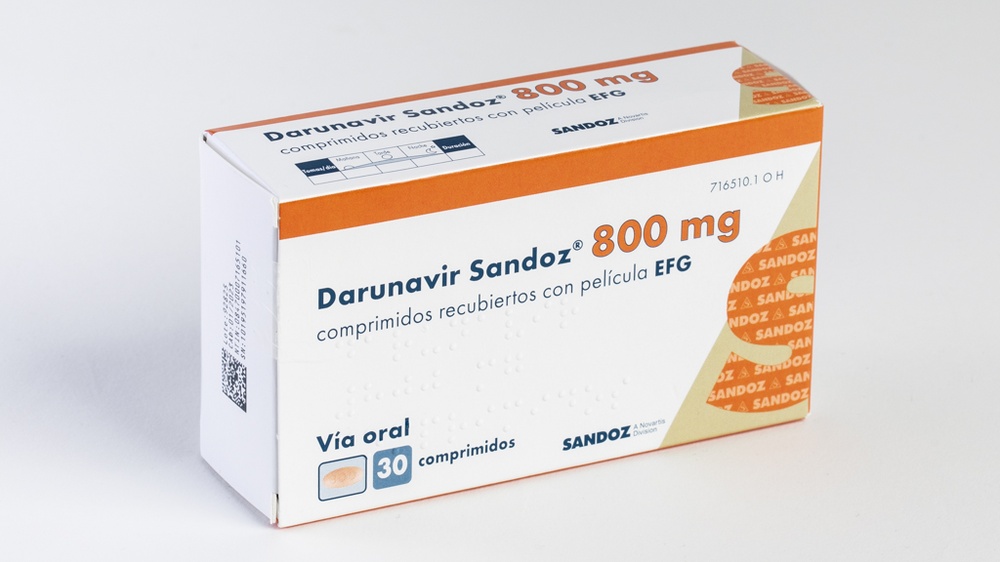
Dark red, oval-shaped, film-coated tablet with "800" engraved on one side and smooth on the other.
Dimensions: approximately 20.2 mm x 10.1 mm
The film-coated tablets are available in perforated aluminum-PVC/PE/PVDC blisters, single-dose perforated aluminum-PVC/PE/PVDC blisters, or HDPE bottles with a child-resistant polypropylene (PP) cap.
Package sizes:
Bottle: 30, 60 (2x30), 90 (3x30), 120 (4x30), 240 (8x30) film-coated tablets.
Blister: 10, 30, 60, 90, 120 film-coated tablets.
Single-dose blister: 30x1 film-coated tablets.
Not all package sizes may be marketed.
Marketing authorization holder
Sandoz Farmacéutica, S.A.
Centro Empresarial Parque Norte
Edificio Roble
C/ Serrano Galvache, 56
28033 Madrid
Spain
Manufacturer
Lek Pharmaceuticals d.d.
Verovskova, 57
1526 Ljubljana
Slovenia
or
Salutas Pharma GmbH
Otto-von-Guericke-Allee 1
39179 Barleben
Germany
or
Remedica Ltd
Aharnon Street, Limassol
Industrial Estate
3056 Limassol
Cyprus
Date of the last revision of this prospectus: May 2023.
Detailed information about this medication is available on the website of the Spanish Agency for Medicines and Health Products (AEMPS) http://www.aemps.gob.es/
-

- Country of registration
- Dosage formTABLET, 800 mg
- ATC codeJ05AE10
- Active substance
- Prescription requiredYes
- Manufacturer
- This information is for reference only and does not constitute medical advice. Always consult a doctor before taking any medication. Oladoctor is not responsible for medical decisions based on this content.
- Alternatives to DARUNAVIR SANDOZ 800 mg FILM-COATED TABLETSDosage form: TABLET, 600 mgActive substance: darunavirManufacturer: Aurovitas Spain, S.A.U.Prescription requiredDosage form: TABLET, 800 mgActive substance: darunavirManufacturer: Aurovitas Spain, S.A.U.Prescription requiredDosage form: TABLET, 400 mgActive substance: darunavirManufacturer: Krka D.D. Novo MestoPrescription required
Online doctors for DARUNAVIR SANDOZ 800 mg FILM-COATED TABLETS
Discuss questions about DARUNAVIR SANDOZ 800 mg FILM-COATED TABLETS, including use, safety considerations and prescription review, subject to medical assessment and local regulations.









Get DARUNAVIR SANDOZ 800 mg FILM-COATED TABLETS Prescription Online
Fill in a 2-min form
Tell us your symptoms, history, and what medicine you're requesting.
Pick a doctor or let us assign
Choose a specialist or we'll match you with the next available doctor.
Doctor reviews your case
Usually within 30 minutes. They may ask follow-up questions via chat.
Collect from any pharmacy
Electronic prescription sent to your email — valid across Spain.
Frequently Asked Questions
DARUNAVIR SANDOZ 800 mg FILM-COATED TABLETS requires a prescription in Spain. You can check with a doctor online whether this medicine may be appropriate for your situation.
The active ingredient in DARUNAVIR SANDOZ 800 mg FILM-COATED TABLETS is darunavir. This information helps identify medicines with the same composition but different brand names.
DARUNAVIR SANDOZ 800 mg FILM-COATED TABLETS is manufactured by Sandoz Farmaceutica S.A.. Pharmacy brands and packaging may differ depending on the distributor.
Doctors such as Family doctors, Psychiatrists, Dermatologists, Cardiologists, Endocrinologists, Gastroenterologists, Pulmonologists, Nephrologists, Rheumatologists, Hematologists, Infectious disease physicians, Allergists, Geriatricians, Paediatricians, Oncologists may assess whether DARUNAVIR SANDOZ 800 mg FILM-COATED TABLETS is appropriate, depending on your situation and local regulations. You can book an online consultation to discuss your symptoms and possible next steps.
Spain has a well-developed healthcare infrastructure across major cities such as Madrid, Barcelona, Valencia, and Seville. Pharmacies are widely available and operate under strict regulations, ensuring access to prescribed medications.
You can buy DARUNAVIR SANDOZ 800 mg FILM-COATED TABLETS in Madrid, Barcelona, Seville, or Valencia at any local pharmacy with a valid prescription.
To obtain a prescription, you can use Oladoctor:
Other medicines with the same active substance (darunavir) include DARUNAVIR AUROVITAS 600 mg FILM-COATED TABLETS, DARUNAVIR AUROVITAS 800 mg FILM-COATED TABLETS, DARUNAVIR KRKA 400 mg FILM-COATED TABLETS. These may have different brand names or formulations but contain the same therapeutic ingredient. Always consult a doctor before switching or starting a new medicine.
