






How to use DAPTOMYCIN BAXTER 500 mg POWDER FOR INJECTION AND INFUSION SOLUTION
Translated with AI
This page provides general information and does not replace a doctor’s consultation. Always consult a doctor before taking any medication. Seek urgent medical care if symptoms are severe.
Show originalContents of the leaflet
Introduction
Package Leaflet: Information for the Patient
Daptomycin Baxter 500 mg powder for solution for injection and infusion EFG
Read all of this leaflet carefully before you start using this medicine because it contains important information for you.
- Keep this leaflet, you may need to read it again.
- If you have any further questions, ask your doctor or nurse.
- This medicine has been prescribed for you only. Do not pass it on to others. It may harm them, even if their signs of illness are the same as yours.
- If you get any side effects, talk to your doctor or nurse. This includes any possible side effects not listed in this leaflet. See section 4.
Contents of the pack
- What Daptomycin Baxter is and what it is used for
- What you need to know before you are given Daptomycin Baxter
- How Daptomycin Baxter is given
- Possible side effects
- Storing Daptomycin Baxter
- Contents of the pack and other information
1. What Daptomycin Baxter is and what it is used for
The active substance of this medicine is daptomycin. Daptomycin is an antibacterial agent capable of stopping the growth of certain bacteria. Daptomycin is used in adults and in children and adolescents (aged 1 to 17 years) to treat skin and soft tissue infections. It is also used to treat blood infections when associated with a skin infection.
Daptomycin is also used in adults to treat infections of the tissues that line the inside of the heart (including heart valves), caused by a type of bacteria called Staphylococcus aureus.It is also used to treat blood infections caused by the same type of bacteria associated with a heart infection.
Depending on the type of infection(s) you have, your doctor may also prescribe other antibacterial agents while you are being treated with this medicine.

2. What you need to know before you are given Daptomycin Baxter
You should not be given Daptomycin Baxter:
If you are allergic to daptomycin or any of the other ingredients of this medicine (listed in section 6).
If this is the case, tell your doctor or nurse. If you think you may be allergic, consult your doctor or nurse.
Warnings and precautions
Talk to your doctor or nurse before you are given Daptomycin Baxter.
- If you have or have ever had kidney problems. Your doctor may need to change the dose of this medicine (see section 3 of this leaflet).
- Occasionally, patients who receive daptomycin may develop increased sensitivity, pain, or muscle weakness (see section 4 of this leaflet for more information). Tell your doctor if this happens. Your doctor will make sure you have a blood test and advise whether or not you should continue using daptomycin. The symptoms usually go away within a few days after stopping treatment with daptomycin.
- If you have ever had a severe skin rash, blisters, and/or sores in the mouth, or severe kidney problems after taking daptomycin.
- If you are significantly overweight, there is a possibility that your blood levels of daptomycin may be higher than those found in people of average weight and that you may need closer monitoring in case of side effects.
If any of the above applies to you, tell your doctor or nurse before you are given this medicine.
Tell your doctor or nurse immediately if you develop any of the following symptoms:
- Severe allergic reactions, including anaphylaxis and angioedema, have been reported in patients treated with almost all antibacterial agents, including daptomycin. These severe allergic reactions require immediate medical attention. Tell your doctor or nurse immediately if you have any of the following symptoms:
- chest pain or tightness;
- skin rash or hives;
- swelling around the throat;
- rapid or weak pulse;
- shortness of breath;
- fever;
- chills or shivering;
- flushing;
- dizziness;
- fainting;
- metallic taste.
Talk to your doctor immediately if you have pain, increased sensitivity, or muscle weakness of unknown origin. Muscle problems can be severe and include muscle breakdown (rhabdomyolysis), which can cause kidney damage.
Other side effects that have been reported with the use of daptomycin are:
- A rare but potentially serious lung condition called eosinophilic pneumonia, mostly after more than 2 weeks of treatment. The symptoms may include difficulty breathing, coughing, or worsening cough, fever or worsening fever.
- Severe skin conditions. The symptoms may include:
- fever or worsening fever;
- red patches on the skin that are raised or filled with fluid, which can start in the armpits or on the chest or groin and can spread over a large area of the body;
- blisters or sores in the mouth or genitals.
- A serious kidney problem. The symptoms may include fever and skin rash.
If you have these symptoms, tell your doctor or nurse immediately. Your doctor will do additional tests to establish a diagnosis.
Children and adolescents
Daptomycin should not be given to children under 1 year of age; animal studies have shown that this age group may experience serious side effects.
Use in older people
People over 65 years of age may receive the same dose as other adults, as long as their kidneys are working properly.
Other medicines and Daptomycin Baxter
Tell your doctor or nurse if you are using, have recently used, or might use any other medicines.
It is particularly important that you mention the following:
- Medicines called statins or fibrates (to lower cholesterol) or cyclosporin (a medicine used in transplants to prevent organ rejection or for other conditions, e.g., rheumatoid arthritis or atopic dermatitis). It is possible that the risk of muscle side effects may increase if you take any of these medicines (and others that may affect the muscles) during treatment with daptomycin. Your doctor may decide not to give you daptomycin or temporarily stop treatment with the other medicine.
- Pain-relieving medicines called non-steroidal anti-inflammatory drugs (NSAIDs) or COX-2 inhibitors (e.g., celecoxib). These may interfere with the elimination of daptomycin by the kidneys.
- Oral anticoagulants (e.g., warfarin), which are medicines that prevent blood clotting. Your doctor may need to check your blood clotting times.
Pregnancy and breastfeeding
Daptomycin is not normally given to pregnant women. If you are pregnant or breastfeeding, think you may be pregnant, or are planning to have a baby, ask your doctor or pharmacist for advice before using this medicine.
You should not breastfeed if you are given daptomycin because it may pass into breast milk and affect the baby.
Driving and using machines
Daptomycin has no known effects on the ability to drive or use machines.
Daptomycin Baxter contains sorbitol
Daptomycin Baxter contains the excipient sorbitol, which is a source of fructose. If you (or your child) have hereditary fructose intolerance (HFI), a rare genetic disorder, you (or your child) should not receive this medicine. Patients with HFI cannot break down fructose, which may cause serious side effects.
Talk to your doctor before receiving this medicine if you (or your child) have HFI or cannot take sweet foods or drinks because they make you feel sick, vomit, or have unpleasant effects such as bloating, stomach cramps, or diarrhea.
Daptomycin Baxter contains sodium
This medicine contains less than 1 mmol of sodium (23 mg) per vial; this is essentially "sodium-free".
3. How Daptomycin Baxter is given
Daptomycin will be given to you by your doctor or nurse.
Adults (18 years of age and older)
The dose will depend on your weight and the type of infection being treated. The usual dose for adults is 4 mg per kilogram (kg) of body weight once a day for skin infections or 6 mg per kilogram of body weight once a day for heart or blood infections associated with skin infections. In adult patients, this dose is given directly into your bloodstream (into a vein), either as an infusion that lasts about 30 minutes or as an injection that lasts about 2 minutes.
The same dose is recommended for people over 65 years of age, as long as their kidneys are working properly.
If your kidneys do not work well, you may receive daptomycin less often, e.g., every other day. If you are on dialysis and your next dose of daptomycin is on a dialysis day, you will usually receive daptomycin after the dialysis session.
Children and adolescents (1 to 17 years)
The recommended doses in children and adolescents (1 to 17 years) will depend on the patient's age and the type of infection being treated. This dose is given directly into the bloodstream (into a vein) as an infusion that lasts about 30-60 minutes.
Duration of use
A complete treatment for skin infections usually lasts between 1 and 2 weeks. Your doctor will decide the duration of your treatment for blood or heart infections and for skin infections.
Detailed instructions for use and handling are provided at the end of the leaflet.

4. Possible side effects
Like all medicines, this medicine can cause side effects, although not everybody gets them.
The following are described the most serious side effects:
Serious side effects with frequency not known(cannot be estimated from the available data)
- Some cases of hypersensitivity reactions (severe allergic reactions including anaphylaxis and angioedema) have been reported during the administration of daptomycin. These severe allergic reactions require immediate medical attention. Tell your doctor or nurse immediately if you have any of the following symptoms:
- chest pain or tightness;
- skin rash or hives;
- swelling around the throat;
- rapid or weak pulse;
- shortness of breath;
- fever;
- chills or shivering;
- flushing;
- dizziness;
- fainting;
- metallic taste.
Talk to your doctor immediately if you have pain, increased sensitivity, or muscle weakness of unknown origin. Muscle problems can be severe and include muscle breakdown (rhabdomyolysis), which can cause kidney damage.
Other side effects that have been reported with the use of daptomycin are:
- A rare but potentially serious lung condition called eosinophilic pneumonia, mostly after more than 2 weeks of treatment. The symptoms may include difficulty breathing, coughing, or worsening cough, fever or worsening fever.
- Severe skin conditions. The symptoms may include:
- fever or worsening fever;
- red patches on the skin that are raised or filled with fluid, which can start in the armpits or on the chest or groin and can spread over a large area of the body;
- blisters or sores in the mouth or genitals.
- A serious kidney problem. The symptoms may include fever and skin rash.
If you have these symptoms, tell your doctor or nurse immediately. Your doctor will do additional tests to establish a diagnosis.
The following are described the most common side effects:
Common side effects(may affect up to 1 in 10 people)
- fungal infections, such as thrush (mouth ulcers);
- urinary tract infection;
- decrease in red blood cell count (anemia);
- dizziness, anxiety, difficulty sleeping;
- headache;
- fever, weakness (asthenia);
- high or low blood pressure;
- constipation, abdominal pain;
- diarrhea, nausea or vomiting;
- flatulence;
- abdominal swelling or distension;
- skin rash or itching;
- pain, itching, or redness at the infusion site;
- pain in arms or legs;
- high levels of liver enzymes or creatine phosphokinase (CPK) in blood tests.
The following are described other side effects that may occur with the use of daptomycin:
Uncommon side effects(may affect up to 1 in 100 people)
- blood disorders (e.g., increased platelet count, which may increase the tendency to develop blood clots, or increased white blood cell count);
- decreased appetite;
- tingling or numbness in hands or feet, taste disturbances;
- tremor;
- changes in heart rhythm, flushing;
- indigestion (dyspepsia), tongue inflammation;
- itchy rash;
- muscle pain, cramps, or weakness, muscle inflammation (myositis), joint pain;
- kidney problems;
- vaginal inflammation and irritation;
- generalized pain or weakness, fatigue;
- high blood sugar, serum creatinine, myoglobin, or lactate dehydrogenase (LDH) levels, prolonged blood clotting time, or electrolyte imbalance in blood tests;
- itchy eyes.
Rare side effects(may affect up to 1 in 1,000 people)
- yellowing of the skin and eyes (jaundice);
- prolonged prothrombin time.
Frequency not known(cannot be estimated from the available data)
Antibiotic-associated colitis, including pseudomembranous colitis (severe or persistent diarrhea with blood and/or mucus, associated with abdominal pain or fever), bruising more easily, bleeding gums, or nosebleeds.
Reporting of side effects
If you experience any side effects, talk to your doctor, pharmacist, or nurse, even if it is not listed in this leaflet. You can also report side effects directly via the Spanish Medicines Agency's website: www.notificaRAM.es. By reporting side effects, you can help provide more information on the safety of this medicine.
5. Storing Daptomycin Baxter
- Keep this medicine out of the sight and reach of children.
- Do not use this medicine after the expiry date which is stated on the carton and label after EXP. The expiry date refers to the last day of the month shown.
- Store below 30°C.
- From a microbiological point of view, the product should be used immediately. If not used immediately, in-use storage times are the responsibility of the user. The physical and chemical stability of the reconstituted solution of Daptomycin Baxter has been demonstrated, as shown in Table A below, when reconstitution/dilution of Daptomycin Baxter has taken place in controlled and validated aseptic conditions. Do not exceed the in-use storage times of reconstituted and diluted Daptomycin Baxter solutions indicated in Table A. Dispose of any unused Daptomycin Baxter.
Table A: In-use storage conditions and storage time of Daptomycin Baxter after reconstitution in acceptable intravenous diluents
Container | Diluent | In-use storage time | |
Ambient temperature(20°C–25°C) | Refrigerated(2°C–8°C) | ||
Vial | Water for injections | 1 day | 3 days |
Syringe* | Water for injections | 1 day | 3 days |
Intravenous bag | Reconstitution: water for injections for immediate dilution with 50 ml of sodium chloride 0.9% injection | 1 day | 3 days |
- Polypropylene syringe with elastomeric plunger stopper.
Medicines should not be disposed of via wastewater or household waste. Ask your pharmacist how to dispose of medicines no longer required. These measures will help protect the environment.
6. Container Content and Additional Information
Composition of Daptomycin Baxter
- The active ingredient is daptomycin. One vial of powder contains 500 mg of daptomycin.
- The other components are 238 mg of sorbitol (E420) and 238 mg of mannitol, sodium hydroxide 1N or 5N or hydrochloric acid 1N (for pH adjustment).
Appearance of Daptomycin Baxter and Container Content
Daptomycin Baxter powder for solution for injection and infusion is supplied in a glass vial in the form of a pale yellow to light brown powder or cake. It is mixed with a solvent to form a liquid before administration.
Daptomycin Baxter is supplied in containers containing 1 vial.
Marketing Authorization Holder and Manufacturer
Marketing Authorization Holder:
Baxter Holding B.V.
Kobaltweg 49
3542 CE Utrecht
Netherlands
Manufacturer
Baxter Oncology GmbH
Kantstrasse 2
33790 Halle/Westfalen
Germany
For further information on this medicinal product, please contact the local representative of the marketing authorization holder:
Baxter, S.L.
Polígono Industrial Sector 14
C/Pouet de Camilo, 2
46394 Ribarroja del Turia (Valencia)
Spain
This medicinal product is authorized in the Member States of the European Economic Area and in the United Kingdom (Northern Ireland) under the following names:
Germany: Daptomycin Baxter 500 mg Powder for solution for injection or infusion
Italy: Daptomycin Baxter
France: Daptomycine Baxter 500 mg, powder for solution for injection or infusion
Spain: Daptomycin Baxter 500 mg powder for solution for injection and infusion EFG
United Kingdom (Northern Ireland): Daptomycin 500 mg powder for solution for injection or infusion
Date of last revision of this leaflet: July 2021
Detailed information on this medicinal product is available on the website of the Spanish Agency for Medicines and Health Products (AEMPS) http://www.aemps.gob.es/
This information is intended exclusively for healthcare professionals:
Important: Consult the summary of product characteristics or package leaflet before prescribing.
Instructions for use and handling
500 mg presentation:
In adults, daptomycin can be administered intravenously as an infusion over 30 minutes or as an injection over 2 minutes. In the case of pediatric patients, however, daptomycin should not be administered as an injection over 2 minutes. Pediatric patients from 7 to 17 years of age should receive daptomycin as an infusion over 30 minutes. Pediatric patients under 7 years of age who receive doses of 9 to 12 mg/kg should be administered daptomycin via an infusion over 60 minutes. Preparation of the infusion solution requires an additional dilution phase, as described below.
Daptomycin Baxter administered as an intravenous infusion over 30 or 60 minutes
Reconstitution of Daptomycin Baxter in the vial should only be performed with water for injectable preparations.
DO NOT use saline-based diluents for reconstitution in the vial.
To obtain a concentration of 50 mg/ml of Daptomycin Baxter 500 mg powder for infusion, the lyophilized product should be reconstituted with 10 ml of water for injectable preparations.
The lyophilized product takes approximately 2 minutes to dissolve. The fully reconstituted product has a transparent appearance and may present some small bubbles or foam around the edge of the vial.
To prepare Daptomycin Baxter for intravenous infusion, follow the instructions below:
For reconstitution or dilution of Daptomycin Baxter lyophilized, aseptic technique should be used throughout the process.
For reconstitution:
- Remove the polypropylene "flip-off" closure cap to expose the central part of the rubber stopper.
- Clean the top of the rubber stopper with an alcohol swab or other antiseptic solution and let it dry. Do not touch the rubber stopper after cleaning, nor allow it to come into contact with other surfaces.
- Transfer 10 ml of water for injectable preparations to the Daptomycin Baxter vial through the central part of the rubber stopper. Use a sterile, beveled 21-gauge needle or smaller and direct it towards the vial wall.
- Gently rotate or swirl the vial contents for a few minutes, as necessary, until a fully reconstituted solution is obtained. Avoid shaking or agitating too forcefully to prevent foam formation.
- Before using the reconstituted solution, carefully inspect it to ensure that the product has dissolved and that no particles are present in suspension. The color of the reconstituted Daptomycin Baxter solution may vary from pale yellow to light brown.
- Then, dilute the reconstituted solution with sodium chloride 9 mg/ml (0.9%) (typical volume of 50 ml).
For dilution:
- With a new, sterile 21-gauge needle or smaller, slowly withdraw the required amount of reconstituted liquid (50 mg of daptomycin/ml) from the vial. Invert the vial so that the solution moves towards the stopper. Using a syringe, insert the needle into the inverted vial. With the vial inverted, place the tip of the needle at the lowest point of the solution in the vial while withdrawing the solution into the syringe. Before removing the needle from the vial, pull the syringe plunger back to the end of the cylinder to withdraw the required solution from the inverted vial.
- Expel air, large bubbles, and any excess solution to obtain the required dose.
- Transfer the required reconstituted dose to 50 ml of sodium chloride 9 mg/ml (0.9%).
- Then, administer the reconstituted and diluted solution as an intravenous infusion over 30 or 60 minutes.
Daptomycin is not physically or chemically compatible with solutions containing glucose. The following medications have been shown to be compatible when added to infusion solutions containing daptomycin: aztreonam, ceftazidime, ceftriaxone, gentamicin, fluconazole, levofloxacin, dopamine, heparin, and lidocaine.
Physical and chemical stability has been demonstrated during use of the reconstituted solution in the vial, syringe, and intravenous bag, as indicated in Table A below. From a microbiological point of view, the product should be used immediately. If not used immediately, the in-use storage times and conditions are the responsibility of the user and normally should not exceed 24 hours at 2°C to 8°C, unless reconstitution/dilution (etc.) has taken place in controlled and validated aseptic conditions.
Table A: In-use storage conditions and validity period of Daptomycin Baxter after reconstitution in acceptable intravenous diluents
Container | Diluent | In-use storage period | |
Room temperature (20°C-25°C) | Refrigerated (2°C-8°C) | ||
Vial | Water for injectable preparations | 1 day | 3 days |
Syringe* | Water for injectable preparations | 1 day | 3 days |
Intravenous bag | Reconstitution: water for injectable preparations for immediate dilution with 50 ml of sodium chloride 0.9% injectable solution | 1 day | 3 days |
- Polypropylene syringe with elastomeric plunger stopper.
Daptomycin Baxter administered as an intravenous injection over 2 minutes (only for adult patients)
Reconstitution of Daptomycin Baxter in the vial should only be performed with water for injectable preparations.
DO NOT use saline-based diluents for reconstitution in the vial, as this will result in a hyperosmotic solution that could cause infusion-site reactions if the reconstituted product is administered as an intravenous injection over 2 minutes.
To obtain a concentration of 50 mg/ml of Daptomycin Baxter 500 mg powder for solution for injection, the lyophilized product should be reconstituted with 10 ml of water for injectable preparations.
The lyophilized product takes approximately 2 minutes to dissolve. The fully reconstituted product has a transparent appearance and may present some small bubbles or foam around the edge of the vial.
To prepare Daptomycin Baxter for intravenous injection, follow the instructions below:
For reconstitution of Daptomycin Baxter lyophilized, aseptic technique should be used throughout the process.
- Remove the polypropylene "flip-off" closure cap to expose the central part of the rubber stopper.
- Clean the top of the rubber stopper with an alcohol swab or other antiseptic solution and let it dry. Do not touch the rubber stopper after cleaning, nor allow it to come into contact with other surfaces.
- Transfer 10 ml of water for injectable preparations to the Daptomycin Baxter vial through the central part of the rubber stopper. Use a sterile, beveled 21-gauge needle or smaller and direct it towards the vial wall.
- Gently rotate or swirl the vial contents for a few minutes, as necessary, until a fully reconstituted solution is obtained. Avoid shaking or agitating too forcefully to prevent foam formation.
- Before using the reconstituted solution, carefully inspect it to ensure that the product has dissolved and that no particles are present in suspension. The color of the reconstituted Daptomycin Baxter solution may vary from pale yellow to light brown.
- With a sterile 21-gauge needle or smaller, slowly withdraw the reconstituted liquid (50 mg of daptomycin/ml) from the vial.
- Invert the vial so that the solution moves towards the stopper. Using a new syringe, insert the needle into the inverted vial. With the vial inverted, place the tip of the needle at the lowest point of the solution in the vial while withdrawing the solution into the syringe. Before removing the needle from the vial, pull the syringe plunger back to the end of the cylinder to withdraw the entire solution from the inverted vial.
- Replace the needle with a new one for intravenous injection.
- Expel air, large bubbles, and any excess solution to obtain the required dose.
- Then, administer the reconstituted solution as an intravenous injection over 2 minutes.
Physical and chemical stability has been demonstrated during use of the reconstituted solution in the vial, as indicated in Table A. From a microbiological point of view, the medicinal product should be administered immediately. If not used immediately, the in-use storage times and conditions are the responsibility of the user and normally should not exceed 24 hours at 2°C to 8°C, unless reconstitution/dilution (etc.) has taken place in controlled and validated aseptic conditions.
This medicinal product should not be mixed with other medicinal products, except those mentioned above.
The vials of Daptomycin Baxter are for single use only. Disposal of unused medicinal product and all materials that have come into contact with it should be done in accordance with local regulations.
-

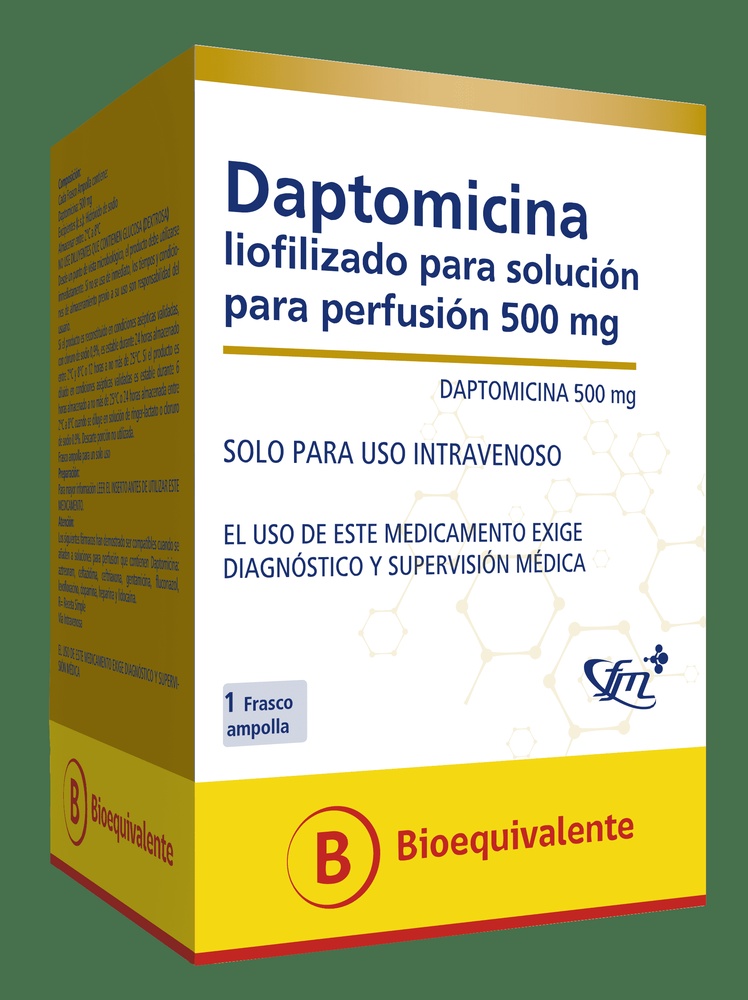
- Country of registration
- Dosage formINJECTABLE, 500 mg
- ATC codeJ01XX09
- Active substance
- Prescription requiredYes
- Manufacturer
- This information is for reference only and does not constitute medical advice. Always consult a doctor before taking any medication. Oladoctor is not responsible for medical decisions based on this content.
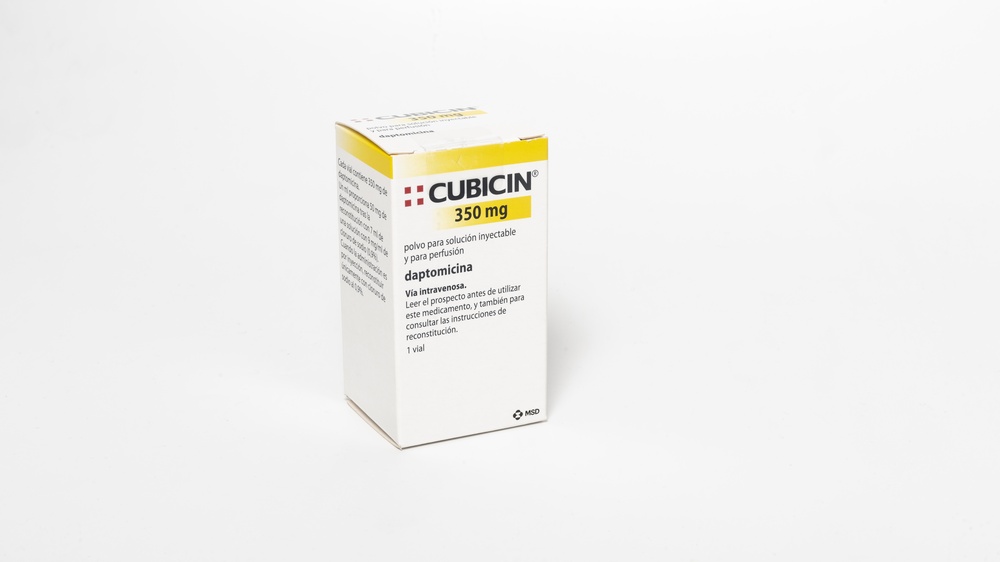
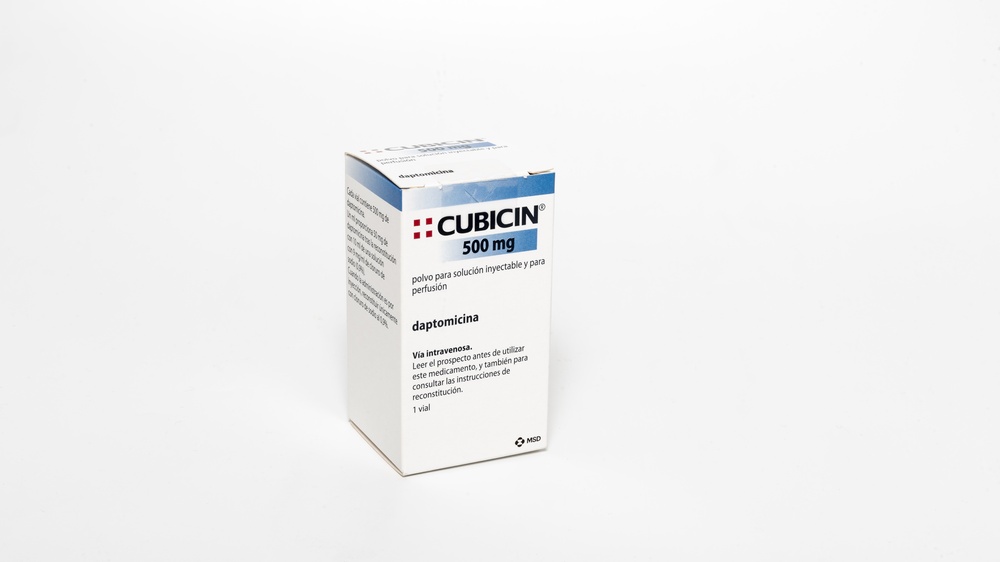
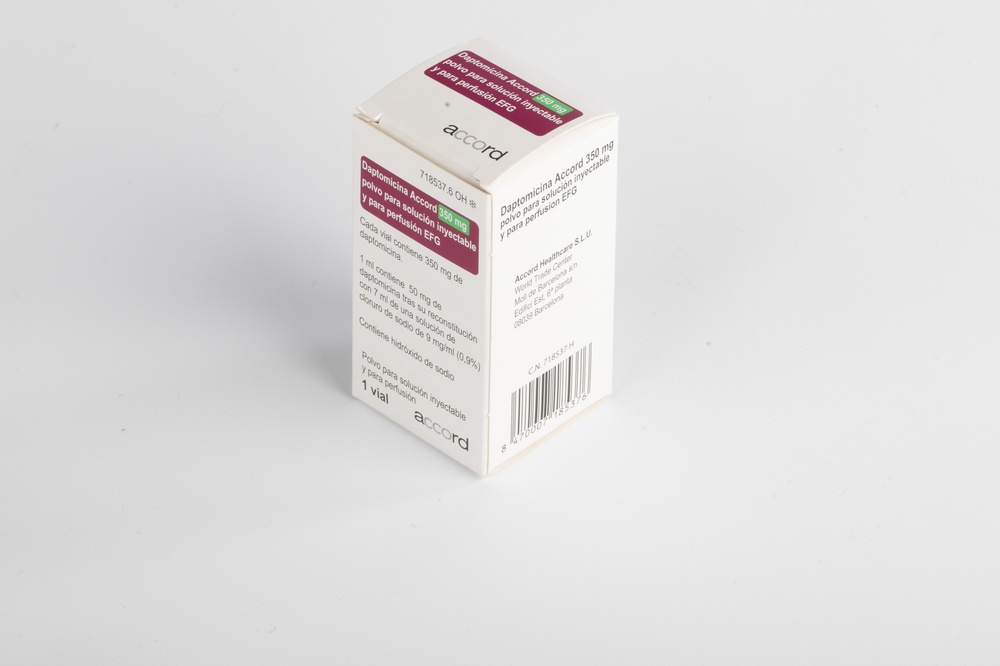
- Alternatives to DAPTOMYCIN BAXTER 500 mg POWDER FOR INJECTION AND INFUSION SOLUTIONDosage form: INJECTABLE, 350 mgActive substance: daptomycinManufacturer: Merck Sharp & Dohme B.V.Prescription requiredDosage form: INJECTABLE, 500 mgActive substance: daptomycinManufacturer: Merck Sharp & Dohme B.V.Prescription requiredDosage form: INJECTABLE, 350 mgActive substance: daptomycinManufacturer: Accord Healthcare S.L.U.Prescription required
Online doctors for DAPTOMYCIN BAXTER 500 mg POWDER FOR INJECTION AND INFUSION SOLUTION
Discuss questions about DAPTOMYCIN BAXTER 500 mg POWDER FOR INJECTION AND INFUSION SOLUTION, including use, safety considerations and prescription review, subject to medical assessment and local regulations.









Get DAPTOMYCIN BAXTER 500 mg POWDER FOR INJECTION AND INFUSION SOLUTION Prescription Online
Fill in a 2-min form
Tell us your symptoms, history, and what medicine you're requesting.
Pick a doctor or let us assign
Choose a specialist or we'll match you with the next available doctor.
Doctor reviews your case
Usually within 30 minutes. They may ask follow-up questions via chat.
Collect from any pharmacy
Electronic prescription sent to your email — valid across Spain.
Frequently Asked Questions
DAPTOMYCIN BAXTER 500 mg POWDER FOR INJECTION AND INFUSION SOLUTION requires a prescription in Spain. You can check with a doctor online whether this medicine may be appropriate for your situation.
The active ingredient in DAPTOMYCIN BAXTER 500 mg POWDER FOR INJECTION AND INFUSION SOLUTION is daptomycin. This information helps identify medicines with the same composition but different brand names.
DAPTOMYCIN BAXTER 500 mg POWDER FOR INJECTION AND INFUSION SOLUTION is manufactured by Baxter Holding B.V.. Pharmacy brands and packaging may differ depending on the distributor.
Doctors such as Family doctors, Psychiatrists, Dermatologists, Cardiologists, Endocrinologists, Gastroenterologists, Pulmonologists, Nephrologists, Rheumatologists, Hematologists, Infectious disease physicians, Allergists, Geriatricians, Paediatricians, Oncologists may assess whether DAPTOMYCIN BAXTER 500 mg POWDER FOR INJECTION AND INFUSION SOLUTION is appropriate, depending on your situation and local regulations. You can book an online consultation to discuss your symptoms and possible next steps.
Spain has a well-developed healthcare infrastructure across major cities such as Madrid, Barcelona, Valencia, and Seville. Pharmacies are widely available and operate under strict regulations, ensuring access to prescribed medications.
You can buy DAPTOMYCIN BAXTER 500 mg POWDER FOR INJECTION AND INFUSION SOLUTION in Madrid, Barcelona, Seville, or Valencia at any local pharmacy with a valid prescription.
To obtain a prescription, you can use Oladoctor:
Other medicines with the same active substance (daptomycin) include CUBICIN 350 mg POWDER FOR INJECTABLE SOLUTION AND FOR INFUSION, CUBICIN 500 mg POWDER FOR INJECTABLE SOLUTION AND FOR INFUSION, DAPTOMYCIN ACCORD 350 mg POWDER FOR SOLUTION FOR INJECTION AND FOR INFUSION. These may have different brand names or formulations but contain the same therapeutic ingredient. Always consult a doctor before switching or starting a new medicine.
