


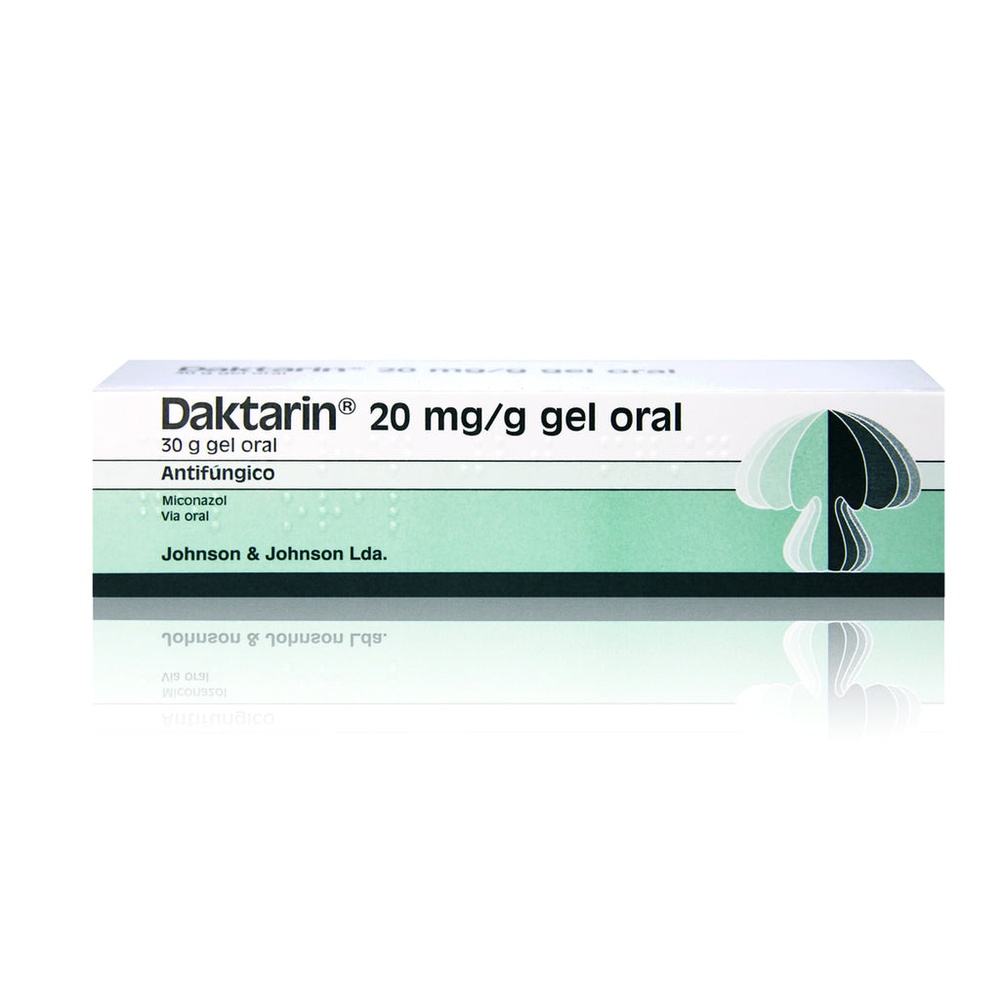
Daktarin 20 mg/g oral gel

Prescription review online
A doctor will review your case and decide whether a prescription is medically appropriate.

Talk to a doctor about this medicine
Discuss your symptoms and possible next steps in a quick online consultation.



How to use DAKTARIN 20 mg/g ORAL GEL
Contents of the leaflet
- Introduction
- What is Daktarin and what is it used for
- What you need to know before you use Daktarin
- How to use Daktarin
- Possible side effects
- Storage of Daktarin
- Contents of the pack and other information
Introduction
Package Leaflet: Information for the Patient
Daktarin 20 mg/g Oral Gel
Miconazole
Read all of this leaflet carefully before you start using this medicine because it contains important information for you.
- Keep this leaflet, you may need to read it again.
- If you have any further questions, ask your doctor or pharmacist.
- This medicine has been prescribed for you only. Do not pass it on to others. It may harm them, even if their signs of illness are the same as yours.
- If you get any side effects, talk to your doctor or pharmacist. This includes any possible side effects not listed in this leaflet. See section 4.
Contents of the Package Leaflet
- What is Daktarin and what is it used for
- What you need to know before you use Daktarin
- How to use Daktarin
- Possible side effects
- Storage of Daktarin
- Contents of the pack and other information
1. What is Daktarin and what is it used for
Daktarin contains the active substance miconazole, which belongs to a group of medicines called antifungals. Miconazole works by preventing the growth of fungi that cause infections.
Daktarin is used to treat infections of the mouth and throat, and of the digestive tract caused by a type of fungus called Candida, in adults, adolescents, and children from 4 months of age.

Not sure if this medicine is right for you?
Discuss your symptoms and treatment with a doctor online.
2. What you need to know before you use Daktarin
Do not use Daktarin:
- if you are allergic to miconazole, to other similar antifungals, or to any of the other ingredients of this medicine (listed in section 6);
- in infants under 4 months of age or in those infants with difficulty swallowing, because there is a risk of choking (see section "Warnings and Precautions");
- if you have liver problems;
- if you are taking any of the following medicines (see section "Using Daktarin with other medicines"):
- some medicines for allergies: terfenadine, astemizole, mizolastine;
- cisapride, a medicine used to treat some digestive problems;
- some medicines used to lower cholesterol, such as simvastatin and lovastatin;
- midazolam given orally and triazolam, medicines used for anxiety or to help you sleep (tranquilizers);
- pimozide and sertindole, medicines used to treat diseases related to thought, feeling, and behavior disorders;
- halofantrine, an antimalarial medicine;
- some medicines used to treat migraines, such as ergot alkaloids: ergotamine, dihydroergotamine, ergometrine;
- some medicines used to treat heart rhythm disorders: bepridil, quinidine, dofetilide;
- warfarin, an anticoagulant medicine used to prevent blood clots from forming or getting bigger in the blood and blood vessels.
Warnings and Precautions
Consult your doctor or pharmacist before starting to use this medicine.
Daktarin may cause severe allergic reactions. You should be aware of the signs of an allergic reaction when taking or administering this medicine (see section "Possible side effects").
Infants (from 28 days to 23 months of age) and Children (from 2 to 11 years of age)
It should not be administered to infants under 4 months of age.
In premature infants, or in infants showing slow neuromuscular development, this medicine should not be administered until they are 5 or 6 months old.
Choking in Infants and Children
Daktarin is a thick gel. This ensures that it stays in the mouth for as long as possible. It is essential to ensure that the gel does not block the child's throat, as they may choke.
Due to the risk of choking, Daktarin should not be administered to infants under 4 months of age or to infants with difficulty swallowing.
Take the following precautions:
- the gel should be administered to the front part of the mouth, never to the back of the throat;
- the total amount of gel to be administered should be divided into small portions (never put the entire amount to be administered into the child's mouth at once);
- apply the gel to the affected areas of the mouth (white patches) with a clean finger and as directed by your doctor or pharmacist;
Using Daktarin with other medicines
Tell your doctor, dentist, or pharmacist if you are using, have recently used, or might use any other medicines.
Some medicines may affect the way Daktarin works or make it more likely that you will have side effects. Daktarin may also affect the way other medicines work.
If you are taking any of these medicines or others, consult your doctor or pharmacist before starting to use Daktarin:
- the anticoagulant medicine warfarin;
- some oral medicines for diabetes: sulfonylureas (e.g., tolbutamide, gliclazide, glipizide, gliburide);
- certain medicines used in cancer treatment: busulfan, docetaxel;
- some products used to treat certain heart and blood vessel diseases (calcium channel blockers), e.g., dihydropyridines and verapamil;
- drugs used normally after organ transplantation;
- certain medicines for treating HIV infection. HIV protease inhibitors (e.g., lopinavir, saquinavir, amprenavir, and nelfinavir);
- phenytoin, a medicine used to treat epilepsy;
- some anesthetics used in hospitals, such as alfentanil;
- sildenafil, a medicine for treating male impotence;
- some medicines for anxiety or to help you sleep (tranquilizers);
- some medicines for tuberculosis;
- methylprednisolone, taken orally or by injection, a medicine used for inflammation;
- trimetrexate, a medicine used to treat certain types of pneumonia;
- ebastine, a medicine used for allergies;
- reboxetine, a medicine used to treat depression.
While using Daktarin, do not start taking a new medicine without telling your doctor or pharmacist first.
Pregnancy and Breastfeeding
If you are pregnant or breastfeeding, think you may be pregnant, or are planning to have a baby, ask your doctor or pharmacist for advice before using this medicine.
Daktarin should not be used during pregnancy unless your doctor considers it necessary.
It is not known whether miconazole or its components pass into breast milk.
Given the risk of choking when administering the gel to small children, this medicine should not be applied to the nipple of a breastfeeding woman (see section "Warnings and Precautions").
Driving and Using Machines
Daktarin is not expected to affect your ability to drive or use machines.
Daktarin contains ethanol and orange flavor
This medicine contains 7.47 mg of alcohol (ethanol) per gram, which is equivalent to 0.00747 mg/mg (0.747% w/w). The amount in the maximum single dose of this medicine for an adult (10ml) is equivalent to less than 3 ml of beer or 1 ml of wine.
The small amount of alcohol in this medicine does not produce any noticeable effect.
This medicine contains orange flavorwith the following allergens: limonene, linalool, citral, citronellol, and geraniol, which may cause allergic reactions.
3. How to use Daktarin
This medicine is for oral use. The amount to be used and the duration of treatment will depend on the type and location of the infection.
Follow your doctor's or pharmacist's instructions for administering this medicine exactly. If in doubt, consult your doctor or pharmacist again.
Mouth or Throat Infection
The recommended dose for treating infections of the mouth or throat is:
Adults: apply 2.5 ml of gel (the contents of the large measuring spoon provided with the pack; equivalent to 61 mg of miconazole), four times a day after meals. The gel should not be swallowed immediately; it should be kept in the mouth for as long as possible before swallowing.
Treatment should continue for at least 1 week after the disappearance of symptoms.
If you wear dental prostheses, you should remove them at night and brush them with the gel, keeping them out overnight. This may prevent possible infections in your dentures.
Use in Children and Adolescents
Children over 2 years of age and adolescents: the same dose as for adults should be used.
Infants over 4 months of age and children up to 2 years of age: apply 1.25 ml of gel (the contents of the small measuring spoon provided with the pack; equivalent to approximately 30.5 mg of miconazole), four times a day after meals. Each dose should be divided into small portions, and the gel should be applied to the affected area with a clean finger. The gel should not be applied to the throat due to the possible risk of choking. The gel should not be swallowed immediately; it should be kept in the mouth for as long as possible before swallowing.
It should not be administered to infants under 4 months of age or to those infants with difficulty swallowing (see section "Do not use Daktarin").
Stomach or Intestine Infection
For treating infections of the stomach or intestine, with or without mouth or throat infections: the dose depends on body weight.
Adults, adolescents, children, and infants over 4 months of age: the dose to be administered is 20 mg/kg of body weight per day, divided into four doses. The daily dose should not exceed 250 mg or 10 ml of oral gel four times a day.
It should not be administered to infants under 4 months of age or to those infants with difficulty swallowing (see section "Do not use Daktarin").
Treatment should continue for at least 1 week after the disappearance of symptoms.
Daktarin should be taken or administered orally.
Unscrew the cap and pierce the seal on the mouth of the tube by inserting the back of the cap into the mouth of the tube.
If you use more Daktarin than you should
In case of overdose or accidental ingestion, consult your doctor or pharmacist immediately or call the Toxicology Information Service, telephone: 91 562 04 20, indicating the medicine and the amount ingested.
In case of overdose or accidental ingestion, vomiting and diarrhea may occur.
Symptomatic and supportive treatment will be applied. There is no specific antidote known for miconazole.
If you forget to use Daktarin
Do not take a double dose to make up for forgotten doses.
If you stop using Daktarin
Do not stop using Daktarin unless your doctor tells you to. If you stop treatment too early, it may not work.
If you have any further questions on the use of this medicine, ask your doctor or pharmacist.

Started taking the medicine and have questions?
Discuss your symptoms and treatment with a doctor online.
4. Possible side effects
Like all medicines, this medicine can cause side effects, although not everybody gets them.
If you have any of the following side effects, stop taking Daktarin and contact your doctor immediately:
- Swelling of the face, tongue, or throat; difficulty swallowing; hives and difficulty breathing (angioedema, anaphylactic reactions).
Tell your doctor or pharmacist if you have any of the following side effects:
The commonside effects (may affect up to 1 in 10 people) may include:
- dry mouth
- nausea
- discomfort in the mouth
- vomiting
- regurgitation
- unusual taste of the medicine
The uncommonside effects (may affect up to 1 in 100 people) may include:
- dysgeusia (taste disturbance)
The frequency not knownside effects (cannot be estimated from the available data) may include:
- Generalized pustular psoriasis (rash with pus-filled bumps that can spread across the body, sometimes with fever).
- Toxic epidermal necrolysis (life-threatening rash with blisters and skin peeling across much of the body).
- Stevens-Johnson syndrome (severe rash with blisters and skin peeling, particularly on the mouth, nose, eyes, and genitals).
- Urticaria (hives, itching, and redness).
- Skin rash.
- Severe skin reaction over the body, usually with fever and swelling of the lymph nodes, and effects on blood cells and organs (Drug Reaction with Eosinophilia and Systemic Symptoms or DRESS).
- Choking.
- Diarrhea.
- Mouth ulcers.
- Discoloration of the tongue.
- Hepatitis (inflammation of the liver).
- You should stop using Daktarin and see your doctor immediately if you have any of the following symptoms:
Fixed drug eruption (circular, oval patches of redness and swelling of the skin, blisters, and itching). This may also cause darkening of the skin in the affected areas, which could persist after healing. Fixed drug eruption usually recurs in the same spot(s) if the medicine is taken again.
Additional side effects in children
The side effects seen in children are similar to those seen in adults and adolescents.
Choking in Infants and Children
(see sections "Do not use Daktarin" and "Warnings and Precautions").
Reporting of side effects
If you experience any side effects, talk to your doctor or pharmacist. This includes any possible side effects not listed in this leaflet. You can also report side effects directly via the Spanish Pharmacovigilance System for Human Use Medicines: http://www.notificaram.es. By reporting side effects, you can help provide more information on the safety of this medicine.
5. Storage of Daktarin
Keep this medicine out of the sight and reach of children.
Do not use this medicine after the expiry date stated on the carton after EXP. The expiry date is the last day of the month stated.
This medicine does not require any special storage conditions.
Medicines should not be disposed of via wastewater or household waste. Return any unused medicine to a pharmacy for disposal. Ask your pharmacist how to dispose of medicines no longer required. This will help protect the environment.
6. Contents of the pack and other information
Composition of Daktarin
- The active substance is miconazole. Each gram of gel contains 20 mg of miconazole.
- The other ingredients (excipients) are: sodium saccharin, pregelatinized potato starch, polysorbate 20, orange flavor (contains limonene, linalool, citral, citronellol, and geraniol), cocoa flavor (contains ethanol), glycerol, ethanol, and purified water.
Appearance of the product and pack contents
Daktarin is a homogeneous white gel, presented in an aluminum tube with a white high-density polyethylene cap containing 40 g of gel, along with a double polystyrene spoon with the volume of each spoon engraved, the small one with a volume of 1.25 ml and the large one with a volume of 2.5 ml.
Marketing Authorization Holder and Manufacturer
Marketing Authorization Holder
Esteve Pharmaceuticals, S.A.
Passeig de la Zona Franca, 109
08038 Barcelona (Spain)
Manufacturer
Kern Pharma, S.L.
Venus, 72 - Pol. Ind. Colón II
08228 Terrassa - Barcelona
Spain
Date of last revision of this leaflet: August 2025
Detailed information on this medicine is available on the website of the Spanish Agency for Medicines and Health Products (AEMPS) (http://www.aemps.gob.es/)
- Country of registration
- Dosage formORAL SOLUTION/SUSPENSION, 20 mg/g
- ATC codeA01AB09
- Average pharmacy price2.83 EUR
- Availability in pharmaciesSupply issue reported
- Active substance
- Prescription requiredYes
- Manufacturer
- CompositionSACARINA SODICA (1,0 mg mg), ALCOHOL ETILICO (ETANOL) (0,0093 ml mg), POLISORBATO 20 (0,0020 ml mg), GLICEROL (E 422) (- Cantidad suficiente mg)
- This information is for reference only and does not constitute medical advice. Always consult a doctor before taking any medication. Oladoctor is not responsible for medical decisions based on this content.
- Alternatives to DAKTARIN 20 mg/g ORAL GELDosage form: GEL/PASTE/ORAL LIQUID, -Active substance: hydrocortisoneManufacturer: Laboratorios Ern S.A.Prescription requiredDosage form: GEL/PASTE/ORAL LIQUID, 1.5 mg/mlActive substance: benzydamineManufacturer: Aristo Pharma GmbhPrescription not requiredDosage form: ORAL SPRAY, 0.51 mg/doseActive substance: benzydamine, benzydamineManufacturer: Angelini Pharma Espana S.L.Prescription not required
Online doctors for DAKTARIN 20 mg/g ORAL GEL
Discuss questions about DAKTARIN 20 mg/g ORAL GEL, including use, safety considerations and prescription review, subject to medical assessment and local regulations.









Frequently Asked Questions
DAKTARIN 20 mg/g ORAL GEL requires a prescription in Spain. You can check with a doctor online whether this medicine may be appropriate for your situation.
The active ingredient in DAKTARIN 20 mg/g ORAL GEL is miconazole. This information helps identify medicines with the same composition but different brand names.
The average pharmacy price for DAKTARIN 20 mg/g ORAL GEL is around 2.83 EUR. Prices may vary depending on the manufacturer and dosage form.
DAKTARIN 20 mg/g ORAL GEL is manufactured by Esteve Pharmaceuticals S.A.. Pharmacy brands and packaging may differ depending on the distributor.
Doctors such as Family doctors, Psychiatrists, Dermatologists, Cardiologists, Endocrinologists, Gastroenterologists, Pulmonologists, Nephrologists, Rheumatologists, Hematologists, Infectious disease physicians, Allergists, Geriatricians, Paediatricians, Oncologists may assess whether DAKTARIN 20 mg/g ORAL GEL is appropriate, depending on your situation and local regulations. You can book an online consultation to discuss your symptoms and possible next steps.
The prescription is issued by a doctor after assessing your health. In Spain, DAKTARIN 20 mg/g ORAL GEL is then dispensed in pharmacies with that prescription. An online consultation does not guarantee that a prescription will be issued: the decision always rests with the doctor.
To request a review, you can use Oladoctor:
Other medicines with the same active substance (miconazole) include AFTAJUVENTUS 2 mg/ml + 0.1 mg/ml ORAL SOLUTION, DRACOSAN 1.5 mg/ml ORAL SOLUTION, JUANOLGAR 0.51 mg/puff ORAL SPRAY SOLUTION. These may have different brand names or formulations but contain the same therapeutic ingredient. Always consult a doctor before switching or starting a new medicine.
