







How to use DABIGATRAN ETEXILATE ADAMED 75 mg HARD CAPSULES
Translated with AI
This page provides general information and does not replace a doctor’s consultation. Always consult a doctor before taking any medication. Seek urgent medical care if symptoms are severe.
Show originalContents of the leaflet
Introduction
Package Leaflet:information for the patient
Dabigatran etexilate Adamed 75 mg hard capsules EFG
Read all of this leaflet carefully before you start taking this medicine because it contains important information for you.
- Keep this leaflet, you may need to read it again.
- If you have any further questions, ask your doctor or pharmacist.
- This medicine has been prescribed for you only. Do not pass it on to others. It may harm them, even if their signs of illness are the same as yours.
- If you get any side effects, talk to your doctor or pharmacist. This includes any possible side effects not listed in this leaflet. See section 4.
Contents of the pack
- What Dabigatran etexilate Adamed is and what it is used for
- What you need to know before you take Dabigatran etexilate Adamed
- How to take Dabigatran etexilate Adamed
- Possible side effects
5. Storage of Dabigatran etexilate Adamed
- Contents of the pack and other information
1. What Dabigatran etexilate Adamed is and what it is used for
Dabigatran etexilate Adamed contains the active substance dabigatran etexilate and belongs to a group of medicines called anticoagulants. It works by blocking a substance in the body involved in the formation of blood clots.
Dabigatran etexilate is used in adults to:
- prevent the formation of blood clots in the veins after knee or hip replacement surgery.
Dabigatran etexilate is used in children aged 8 years and older to:
- treat blood clots and prevent them from forming again.

2. What you need to know before you take Dabigatran etexilate Adamed
Do not takeDabigatran etexilate Adamed
- if you are allergic to dabigatran etexilate or any of the other ingredients of this medicine (listed in section 6).
- if your kidney function is severely reduced.
- if you are currently bleeding.
- if you have any disease in an organ of the body that increases the risk of bleeding
severely (e.g. stomach ulcer, injury or bleeding in the brain, recent brain or eye surgery).
- if you are prone to bleeding. This tendency may be congenital, of unknown cause, or
caused by other medicines.
- if you are taking medicines to prevent blood clots (e.g. warfarin, rivaroxaban, apixaban, or heparin), except when switching anticoagulant treatment, while having a venous or arterial catheter and being given heparin through this catheter to keep it open, or while your normal heart rhythm is being restored through a procedure called catheter ablation for atrial fibrillation.
- if your liver function is severely reduced or you have a life-threatening liver disease.
- if you are taking ketoconazole or itraconazol, medicines used to treat fungal infections.
- if you are taking ciclosporin, a medicine used to prevent organ rejection after a transplant.
- if you are taking dronedarone, a medicine used to treat irregular heart rhythm.
- if you are taking a combination product of glecaprevir and pibrentasvir, an antiviral medicine used to treat hepatitis C.
- if you have been implanted with an artificial heart valve that requires permanent anticoagulant treatment.
Warnings and precautions
Consult your doctor before starting to take this medicine. During treatment with this medicine, you may also need to consult your doctor if you experience any symptoms or if you need to undergo surgery.
Tell your doctorif you have or have had any disorder or disease, especially any of the following:
- If you have an increased risk of bleeding, for example:
- if you have recently had bleeding.
- if you have had surgical removal of tissue (biopsy) in the last month.
- if you have had a severe injury (e.g. a bone fracture, a head injury, or any injury that required surgical treatment).
- if you have inflammation of the esophagus or stomach.
- if you have problems with acid reflux from the stomach into the esophagus.
- if you are taking medicines that may increase the risk of bleeding. See "Other medicines and Dabigatran etexilate Adamed" below.
- if you are using anti-inflammatory medicines such as diclofenac, ibuprofen, or piroxicam.
- if you have a heart infection (bacterial endocarditis).
- if you know you have reduced kidney function or if you are dehydrated (symptoms include feeling thirsty and passing small amounts of dark-colored urine/concentrated urine with foam).
- if you are over 75 years old.
- if you are an adult patient and weigh 50 kg or less.
- only if used in children: if the child has an infection in the brain or around it.
- If you have had a heart attack or if you have been diagnosed with diseases that increase the risk of having a heart attack.
- If you have a liver disease associated with changes in blood tests. The use of this medicine is not recommended in this case.
Be careful withDabigatran etexilate Adamed
- If you need to undergo surgery:
In this case, dabigatran etexilate should be temporarily discontinued due to an increased risk of bleeding during and shortly after surgery. It is very important that you take dabigatran etexilate before and after surgery exactly at the times indicated by your doctor.
- If surgery requires the placement of a catheter or injection into the spinal column (e.g. for epidural or spinal anesthesia or for pain relief):
- It is very important that you take dabigatran etexilate before and after surgery exactly at the times indicated by your doctor.
- Tell your doctor immediately if you experience numbness or weakness in your legs or bowel or bladder problems after the end of anesthesia, as this situation requires urgent attention.
- If you fall or injure yourself during treatment, especially if you hit your head. Seek urgent medical attention. You may need to be examined by a doctor, as you may have an increased risk of bleeding.
- If you know you have a disease called antiphospholipid syndrome (an immune system disorder that increases the risk of blood clots), tell your doctor so that they can decide if it is necessary to modify your treatment.
Other medicines and Dabigatran etexilate Adamed
Tell your doctor or pharmacist if you are taking, have recently taken, or might take any other medicines. In particular, you must tell your doctor before taking dabigatran etexilate if you are taking any of the following medicines:
- Medicines to reduce blood clotting (e.g. warfarin, phenprocoumon, acenocoumarol, heparin, clopidogrel, prasugrel, ticagrelor, rivaroxaban, acetylsalicylic acid)
- Medicines for the treatment of fungal infections (e.g. ketoconazole, itraconazole), except if only applied to the skin
- Medicines used to treat irregular heart rhythm (e.g. amiodarone, dronedarone, quinidine, verapamil)
If you are taking medicines containing amiodarone, quinidine, or verapamil, your doctor may instruct you to use a reduced dose of this medicine, depending on the disease for which it was prescribed. See also section 3.
- Medicines for the prevention of organ rejection after a transplant (e.g. tacrolimus, ciclosporin)
- A combination product of glecaprevir and pibrentasvir (an antiviral medicine used to treat hepatitis C)
- Anti-inflammatory and pain-relieving medicines (e.g. acetylsalicylic acid, ibuprofen, diclofenac)
- St. John's Wort, a herbal medicine for depression
- Antidepressant medicines called selective serotonin reuptake inhibitors or selective serotonin and norepinephrine reuptake inhibitors
- Rifampicin or clarithromycin (two antibiotics)
- Antiviral medicines for HIV (e.g. ritonavir)
- Certain medicines for the treatment of epilepsy (e.g. carbamazepine, phenytoin)
Pregnancy and breastfeeding
The effects of dabigatran etexilate on pregnancy and the fetus are not known. You should not use this medicine if you are pregnant unless your doctor tells you it is safe to do so. If you are of childbearing age, you should avoid becoming pregnant during treatment with dabigatran etexilate.
Breastfeeding is not recommended during treatment with dabigatran etexilate.
Driving and using machines
Dabigatran etexilate has no known effects on the ability to drive and use machines.
3. How to take Dabigatran etexilate Adamed
Dabigatran etexilate capsules can be used in adults and children aged 8 years or older who are able to swallow the capsules whole.
Follow the instructions for administration of this medicine exactly as indicated by your doctor. If you are in doubt, consult your doctor again.
Take Dabigatran etexilate Adamed as recommended for the following situations:
Prevention of blood clot formation after knee or hip replacement surgery
The recommended dose is 220 mg once daily(administered as 2 capsules of 110 mg).
If your kidney function is reducedby more than half or if you are 75 years of age or older, the recommended dose is 150 mg once daily(administered as 2 capsules of 75 mg).
If you are taking medicines containing amiodarone, quinidine, or verapamil, the recommended dose is 150 mg once daily(administered as 2 capsules of 75 mg).
If you are taking medicines containing verapamil and your kidney function is reducedby more than half, you should be given a reduced dose of dabigatran etexilate of 75 mgbecause your risk of bleeding may be increased.
In both types of surgery, treatment should not be started if there is bleeding at the site of surgery. If treatment cannot be started until the day after surgery, dosing should be started with 2 capsules once daily.
After knee replacement surgery
Treatment with dabigatran etexilate should be started 1-4 hours after surgery, taking a single capsule. After that, 2 capsules should be taken once daily for a total of 10 days.
After hip replacement surgery
Treatment with dabigatran etexilate should be started 1-4 hours after surgery, taking a single capsule. After that, 2 capsules should be taken once daily for a total of 28-35 days.
Treatment of blood clots and prevention of blood clots in children
Dabigatran etexilate should be taken twice daily, one dose in the morning and one dose in the evening, approximately at the same time every day. The administration interval should be as close as possible to 12 hours.
The recommended dose depends on weight and age. Your doctor will determine the correct dose. Your doctor may adjust the dose during treatment. Continue using all other medicines unless your doctor tells you to stop using any.
Table 1 shows the single and total daily doses of dabigatran etexilate in milligrams (mg). The doses depend on the patient's weight in kilograms (kg) and age in years.
Weight/Age Combinations | Single Dose in mg | Total Daily Dose in mg | |
Weight in kg | Age in years | ||
11 to less than 13 kg | 8 to less than 9 years | 75 | 150 |
13 to less than 16 kg | 8 to less than 11 years | 110 | 220 |
16 to less than 21 kg | 8 to less than 14 years | 110 | 220 |
21 to less than 26 kg | 8 to less than 16 years | 150 | 300 |
26 to less than 31 kg | 8 to less than 18 years | 150 | 300 |
31 to less than 41 kg | 8 to less than 18 years | 185 | 370 |
41 to less than 51 kg | 8 to less than 18 years | 220 | 440 |
51 to less than 61 kg | 8 to less than 18 years | 260 | 520 |
61 to less than 71 kg | 8 to less than 18 years | 300 | 600 |
71 to less than 81 kg | 8 to less than 18 years | 300 | 600 |
81 kg or more | 10 to less than 18 years | 300 | 600 |
Doses that require combinations of more than one capsule:
300 mg: two 150 mg capsules or four 75 mg capsules
260 mg: one 110 mg capsule plus one 150 mg capsule or one 110 mg capsule plus two 75 mg capsules
220 mg: two 110 mg capsules
185 mg: one 75 mg capsule plus one 110 mg capsule
150 mg: one 150 mg capsule or two 75 mg capsules
How to takeDabigatran etexilate Adamed
Dabigatran etexilate can be taken with or without food. The capsule should be swallowed whole with a glass of water to ensure release in the stomach. Do not break, chew, or open the capsule to take only its contents, as this may increase the risk of bleeding.
Changing anticoagulant treatment
Do not change your anticoagulant treatment without specific instructions from your doctor.
If you take moreDabigatran Etexilate Adamedthan you should
Taking too much of this medicine increases the risk of bleeding. Contact your doctor immediately if you have taken too many capsules. There are specific treatment options available.
In case of overdose or accidental ingestion, consult your doctor or pharmacist immediately or call the Toxicology Information Service, telephone: 91 562 04 20, indicating the medicine and the amount ingested.
If you forget to takeDabigatran etexilate Adamed
Prevention of blood clot formation after knee or hip replacement surgery
Take the remaining daily doses of dabigatran etexilate at the same time the next day.
Do not take a double dose to make up for forgotten doses.
Treatment of blood clots and prevention of blood clots in children
A forgotten dose can be taken up to 6 hours before the next dose.
A forgotten dose should be omitted if the time before the next dose is less than 6 hours.
Do not take a double dose to make up for forgotten doses.
If you stop takingDabigatran etexilate Adamed
Take dabigatran etexilate exactly as prescribed. Do not stop your treatment with this medicine without consulting your doctor first, as the risk of developing a blood clot may be greater if you stop treatment too soon.
Contact your doctor if you experience indigestion after taking dabigatran etexilate.
If you have any other questions about the use of this medicine, ask your doctor or pharmacist.

4. Possible Adverse Effects
Like all medicines, this medicine can cause adverse effects, although not all people suffer from them.
Dabigatran etexilate acts on blood coagulation; therefore, most adverse effects are related to signs such as bruising or bleeding.
Episodes of major or severe bleeding may occur, which are the most serious adverse effects and, regardless of their location, can cause disability, be potentially life-threatening, or even cause death. In some cases, these bleedings may not be apparent.
If you experience any episode of bleeding that does not stop by itself or if you experience signs of excessive bleeding (exceptional weakness, fatigue, paleness, dizziness, headache, or unexplained swelling), consult your doctor immediately. Your doctor may decide to keep you under close observation or change your medication.
Inform your doctor immediately if you experience a severe allergic reaction that causes
difficulty breathing or dizziness.
The possible adverse effects are detailed below, grouped according to their frequency of occurrence.
Prevention of blood clot formation after knee or hip arthroplasty
Frequent (may affect up to 1 in 10 people):
- Decrease in the amount of hemoglobin in the blood (the substance present in red blood cells)
- Anomalies in liver function tests
Infrequent (may affect up to 1 in 100 people):
- Bleeding may occur from the nose, in the stomach or intestine, from the penis/vagina or urinary tract (including blood in the urine that stains the urine pink or red), from hemorrhoids, from the rectum, under the skin, from a joint, or after an injury or surgery
- Formation of hematomas or bruising after surgery
- Detection of blood in stool in a laboratory test
- Decrease in the number of red blood cells in the blood
- Decrease in the proportion of blood cells
- Allergic reaction
- Vomiting
- Frequent loose or liquid stools
- Feeling like vomiting
- Purulent discharge from a wound (secretion of liquid from a surgical wound)
- Increased liver enzymes
- Yellowish discoloration of the skin or whites of the eyes, caused by liver or blood problems
Rare (may affect up to 1 in 1,000 people):
- Bleeding
- Bleeding may occur in the brain, at the site of a surgical incision, at the site of an injection, or at the site of a catheter entry in a vein
- Purulent discharge from the site of a catheter entry in a vein
- Coughing up blood or sputum with blood spots
- Decrease in the number of platelets in the blood
- Decrease in the number of red blood cells in the blood after surgery
- Severe allergic reaction that causes difficulty breathing or dizziness
- Severe allergic reaction that causes swelling of the face or throat
- Skin rash with dark red, prominent, and itchy bumps, caused by an allergic reaction
- Sudden change in skin color and physical appearance
- Itching
- Ulcer in the stomach or intestine (including ulcer in the esophagus)
- Inflammation of the esophagus and stomach
- Reflux of gastric juice into the esophagus
- Abdominal pain or stomach pain
- Indigestion
- Difficulty swallowing
- Fluid leaking from a wound
- Fluid leaking from a wound after surgery
Frequency not known (frequency cannot be estimated from available data):
- Difficulty breathing or wheezing
- Decrease in the number or even absence of white blood cells (which help fight infections)
- Hair loss
Treatment of blood clots and prevention of blood clot formation in children
Frequent (may affect up to 1 in 10 people):
- Decrease in the number of red blood cells in the blood
- Decrease in the number of platelets in the blood
- Skin rash with dark red, prominent, and itchy bumps, caused by an allergic reaction
- Sudden change in skin color and physical appearance
- Formation of hematomas
- Nosebleeds
- Reflux of gastric juice into the esophagus
- Vomiting
- Feeling like vomiting
- Frequent loose or liquid stools
- Indigestion
- Hair loss
- Increased liver enzymes
Infrequent (may affect up to 1 in 100 people):
- Decrease in the number of white blood cells (which help fight infections)
- Bleeding may occur in the stomach or intestine, brain, rectum, penis/vagina or urinary tract (including blood in the urine that stains the urine pink or red), or under the skin
- Decrease in the amount of hemoglobin in the blood (the substance present in red blood cells)
- Decrease in the proportion of blood cells
- Itching
- Coughing up blood or sputum with blood spots
- Abdominal pain or stomach pain
- Inflammation of the esophagus and stomach
- Allergic reaction
- Difficulty swallowing
- Yellowish discoloration of the skin or whites of the eyes, caused by liver or blood problems
Frequency not known (frequency cannot be estimated from available data):
- Absence of white blood cells (which help fight infections)
- Severe allergic reaction that causes difficulty breathing or dizziness
- Severe allergic reaction that causes swelling of the face or throat
- Difficulty breathing or wheezing
- Bleeding
- Bleeding may occur in a joint or wound, at a surgical incision site, at an injection site, or at a catheter entry site in a vein
- Bleeding may occur from hemorrhoids
- Ulcer in the stomach or intestine (including ulcer in the esophagus)
- Anomalies in liver function tests
Reporting of Adverse Effects
If you experience any type of adverse effect, consult your doctor or pharmacist, even if it is a possible adverse effect that is not listed in this prospectus. You can also report it directly through the Spanish Pharmacovigilance System for Human Use Medicines https://www.notificaram.es. By reporting adverse effects, you can contribute to providing more information on the safety of this medicine.
5. Storage of Dabigatran Etexilate Adamed
Keep this medicine out of the sight and reach of children.
Do not use this medicine after the expiration date stated on the box or blister after "EXP". The expiration date is the last day of the month indicated.
Do not store above 30°C. Store in the original packaging to protect from light and moisture.
Medicines should not be disposed of via wastewater or household waste. Deposit the packaging and medicines you no longer need at the SIGRE collection point in your pharmacy. In case of doubt, ask your pharmacist how to dispose of the packaging and medicines you no longer need. This will help protect the environment.
6. Package Contents and Additional Information
Composition ofDabigatran Etexilate Adamed
- The active ingredient is dabigatran. Each hard capsule contains 75 mg of dabigatran etexilate (in the form of mesilate).
- The other ingredients are tartaric acid, arabic gum, hypromellose, dimeticone, talc, and hydroxypropylcellulose.
- The capsule shell contains carrageenan, potassium chloride, titanium dioxide (E171), water, and hypromellose.
- The black printing ink contains shellac, iron oxide black (E172), and potassium hydroxide.
Appearance and Package Contents of the Product
Dabigatran Etexilate Adamed 75 mg is presented in the form of hard capsules with a white opaque cap with "D75" printed in black and a white opaque body, which contain yellowish granules.
This medicine is presented in cardboard boxes containing 30 or 60 hard capsules in Poliamide/Aluminum/PVC//Aluminum blisters.
Only certain package sizes may be marketed.
Marketing Authorization Holder and Manufacturer
Marketing Authorization Holder
Adamed Pharma S.A.
ul. M. Adamkiewicza 6A, Pienków
05-152 Czosnów
Poland
Manufacturer
Adamed Pharma S.A.
Ul. Marszalka Jósefa Pilsudskiego 5
95-200 Pabianice, Lodzkie
Poland
This medicine is authorized in the Member States of the European Economic Area under the following names:
Poland | Dabigatran Etexilate Adamed |
Bulgaria | ?????????? ????????? ?????? 75 mg ?????? ??????? |
Italy | Dabigatran Etexilato Adamed |
Spain | Dabigatrán etexilato Adamed 75 mg hard capsules EFG |
Portugal | Dabigatran Etexilate Adamed |
Croatia | Dabigatraneteksilat Adamed 75 mg hard capsules |
Romania | Dabigatran Etexilate Adamed 75 mg capsules |
France | Dabigatran Etexilate Adamed 75 mg capsules |
Austria | Dabigatran Etexilate Adamed 75 mg hard capsules |
Netherlands | Dabigatran Etexilaat Adamed 75 mg hard capsules |
Date of the last revision of this prospectus: February 2024
Detailed information on this medicine is available on the website of the Spanish Agency for Medicines and Health Products (AEMPS) (http://www.aemps.gob.es/)
- Country of registration
- Dosage formCAPSULE, 75 mg
- ATC codeB01AE07
- Active substance
- Prescription requiredYes
- Manufacturer
- This information is for reference only and does not constitute medical advice. Always consult a doctor before taking any medication. Oladoctor is not responsible for medical decisions based on this content.
- Alternatives to DABIGATRAN ETEXILATE ADAMED 75 mg HARD CAPSULESDosage form: CAPSULE, 110 mgActive substance: dabigatran etexilateManufacturer: Adamed Laboratorios S.L.U.Prescription requiredDosage form: CAPSULE, 150 mgActive substance: dabigatran etexilateManufacturer: Adamed Laboratorios S.L.U.Prescription requiredDosage form: CAPSULE, 75 mgActive substance: dabigatran etexilateManufacturer: Adamed Laboratorios S.L.U.Prescription required
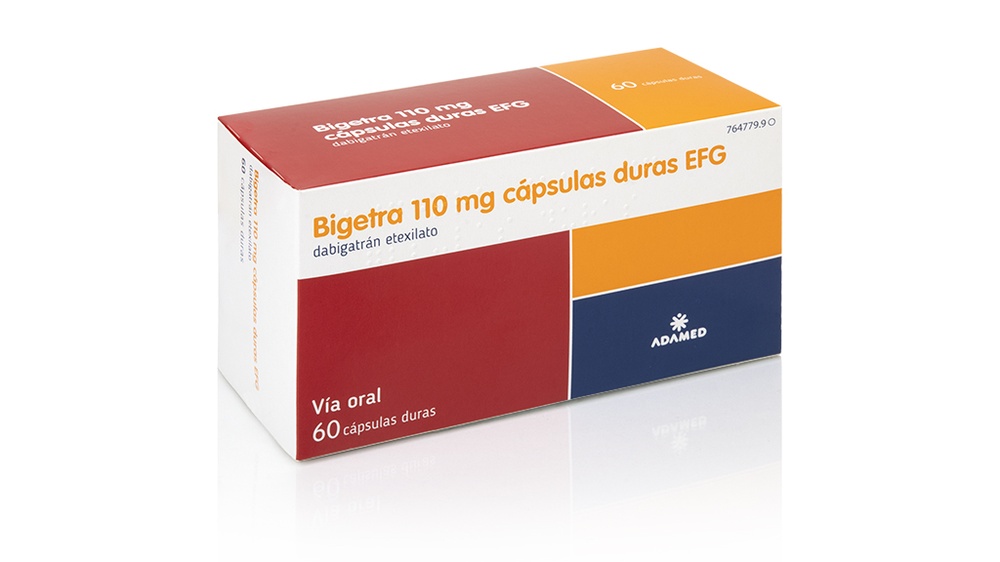
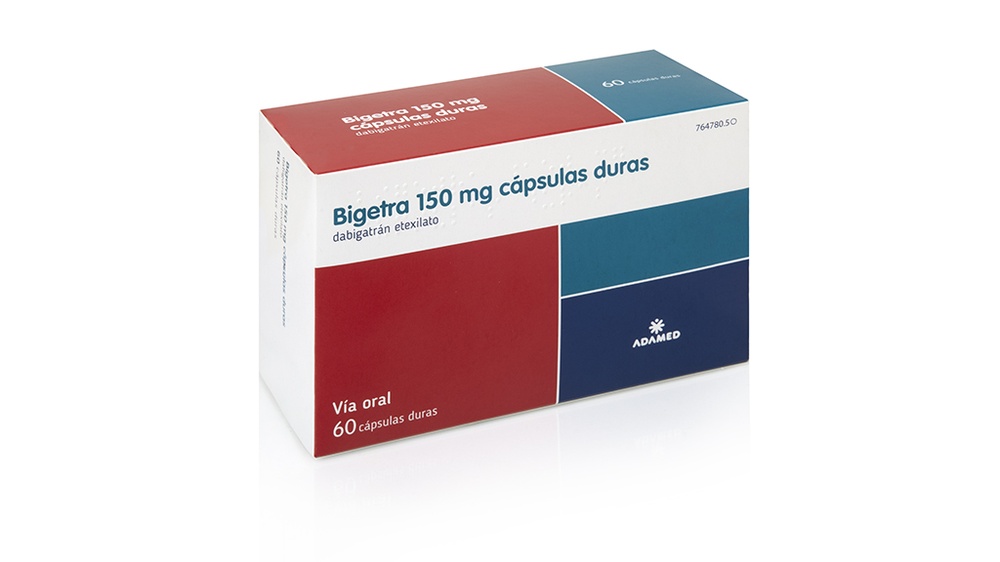

Online doctors for DABIGATRAN ETEXILATE ADAMED 75 mg HARD CAPSULES
Discuss questions about DABIGATRAN ETEXILATE ADAMED 75 mg HARD CAPSULES, including use, safety considerations and prescription review, subject to medical assessment and local regulations.









Get DABIGATRAN ETEXILATE ADAMED 75 mg HARD CAPSULES Prescription Online
Fill in a 2-min form
Tell us your symptoms, history, and what medicine you're requesting.
Pick a doctor or let us assign
Choose a specialist or we'll match you with the next available doctor.
Doctor reviews your case
Usually within 30 minutes. They may ask follow-up questions via chat.
Collect from any pharmacy
Electronic prescription sent to your email — valid across Spain.
Frequently Asked Questions
DABIGATRAN ETEXILATE ADAMED 75 mg HARD CAPSULES requires a prescription in Spain. You can check with a doctor online whether this medicine may be appropriate for your situation.
The active ingredient in DABIGATRAN ETEXILATE ADAMED 75 mg HARD CAPSULES is dabigatran etexilate. This information helps identify medicines with the same composition but different brand names.
DABIGATRAN ETEXILATE ADAMED 75 mg HARD CAPSULES is manufactured by Adamed Pharma S.A.. Pharmacy brands and packaging may differ depending on the distributor.
Doctors such as Family doctors, Psychiatrists, Dermatologists, Cardiologists, Endocrinologists, Gastroenterologists, Pulmonologists, Nephrologists, Rheumatologists, Hematologists, Infectious disease physicians, Allergists, Geriatricians, Paediatricians, Oncologists may assess whether DABIGATRAN ETEXILATE ADAMED 75 mg HARD CAPSULES is appropriate, depending on your situation and local regulations. You can book an online consultation to discuss your symptoms and possible next steps.
Spain has a well-developed healthcare infrastructure across major cities such as Madrid, Barcelona, Valencia, and Seville. Pharmacies are widely available and operate under strict regulations, ensuring access to prescribed medications.
You can buy DABIGATRAN ETEXILATE ADAMED 75 mg HARD CAPSULES in Madrid, Barcelona, Seville, or Valencia at any local pharmacy with a valid prescription.
To obtain a prescription, you can use Oladoctor:
Other medicines with the same active substance (dabigatran etexilate) include BIGETRA 110 mg HARD CAPSULES, BIGETRA 150 mg HARD CAPSULES, BIGETRA 75 mg HARD CAPSULES. These may have different brand names or formulations but contain the same therapeutic ingredient. Always consult a doctor before switching or starting a new medicine.
