



CYTOTEC 200 µg Tablets

Prescription review online
A doctor will review your case and decide whether a prescription is medically appropriate.

Talk to a doctor about this medicine
Discuss your symptoms and possible next steps in a quick online consultation.



How to use CYTOTEC 200 micrograms tablets
Contents of the leaflet
- Introduction
- What Cytotec is and what it is used for
- What you need to know before you take Cytotec
- Pregnancy, breastfeeding, and fertility
- How to take Cytotec
- Possible side effects
- Storage of Cytotec
- Contents of the pack and other information
Introduction
Leaflet: Information for the user
Cytotec 200 micrograms tablets
Misoprostol
Read all of this leaflet carefully before you start taking this medicine because it contains important information for you.
- Keep this leaflet, you may need to read it again.
- If you have any further questions, ask your doctor or pharmacist.
- This medicine has been prescribed for you only. Do not pass it on to others. It may harm them, even if their signs of illness are the same as yours.
- If you get any side effects, talk to your doctor or pharmacist. This includes any possible side effects not listed in this leaflet. See section 4.
Contents of the pack
- What Cytotec is and what it is used for
- What you need to know before you take Cytotec
- How to take Cytotec
- Possible side effects
- Storage of Cytotec
- Contents of the pack and other information
1. What Cytotec is and what it is used for
Misoprostol is a prostaglandin that belongs to a group of medicines called anti-ulcer medicines. It is indicated in adults for the treatment of duodenal ulcer and for the prevention of gastrointestinal lesions induced by the administration of non-steroidal anti-inflammatory drugs in long-term treatments.

Not sure if this medicine is right for you?
Discuss your symptoms and treatment with a doctor online.
2. What you need to know before you take Cytotec
Do not takeCytotec
- if you are a woman of childbearing age and are not using an effective contraceptive method to avoid becoming pregnant (see section "Pregnancy" for more information).
- if you are pregnant, if you plan to become pregnant or do not have a negative pregnancy test, as misoprostol increases uterine tone and contractions during pregnancy, which can cause an abortion.
- if you are allergic to misoprostol, to other prostaglandins or to any of the other components of this medicine (listed in section 6).
Warnings and precautions
Consult your doctor or pharmacist before starting to take Cytotec
- if you are pregnant or plan to become pregnant (see subsection "Pregnancy" below). Due to the risk to the fetus, treatment with Cytotec should be discontinued immediately,
- if you are a woman of childbearing age (see subsection "Pregnancy" below). Due to the risk to the fetus, it is essential to use effective contraceptive methods while taking Cytotec,
- if you are a woman of childbearing age, as treatment with misoprostol should not begin until a possible pregnancy has been ruled out. You should use an adequate contraceptive method during treatment with this medicine. If you suspect pregnancy, you should discontinue treatment with misoprostol and consult your doctor,
- if you are being treated with non-steroidal anti-inflammatory drugs (NSAIDs), there is a possibility that gastrointestinal bleeding, ulceration, or perforation may occur despite treatment with misoprostol. You should take this possibility into account even in the absence of gastrointestinal symptoms. If you are a patient prone to diarrhea, for example, if you have irritable bowel syndrome,
- if you have dehydration,
- if you have heart or circulatory disease, including high blood pressure.
Taking Cytotec with other medicines
Tell your doctor or pharmacist if you are taking, have recently taken, or might take any other medicines.
The use of antacids containing magnesium during treatment with misoprostol should be avoided, as they may worsen the possible diarrhea induced by it.
The concomitant administration of misoprostol with non-steroidal anti-inflammatory drugs, in rare cases, produces swelling in the extremities (peripheral edema) and alteration of biochemical tests (elevation of transaminases).
Taking Cytotec with food and drinks
Cytotec should be taken during or after meals and before bedtime with a glass of water.
Pregnancy, breastfeeding, and fertility
If you are pregnant or breastfeeding, think you may be pregnant, or are planning to have a baby, ask your doctor or pharmacist for advice before taking this medicine.
Pregnancy
Do not take Cytotec if you are pregnant or planning to become pregnant. Your doctor will inform you of the risks if you become pregnant, as Cytotec can cause spontaneous abortion, premature birth, or birth defects. Pregnancies exposed to misoprostol during the first trimester have been associated with an approximately 3-fold increased risk of birth defects, particularly facial paralysis, limb malformations, cerebral and cranial anomalies. If you are exposed to Cytotec during pregnancy, consult your doctor. If you decide to continue the pregnancy, you will be closely monitored prenatally and periodic ultrasound examinations will be performed, paying special attention to the limbs and head.
Cytotec is contraindicated in pregnant women as it induces uterine contractions associated with abortions, premature births, birth defects, and fetal death. Therefore, pregnancy should be ruled out before starting to use this medicine, and an adequate contraceptive method should be used during treatment with it.
Misoprostol is excreted in breast milk and should not be administered to breastfeeding mothers, as it may have adverse effects on the infant.
Driving and using machines
Although no effects are expected, if dizziness occurs, do not drive or use hazardous machinery.
Cytotec contains castor oil and sodium
This medicine may cause stomach upset and diarrhea because it contains castor oil.
This medicine contains less than 1 mmol of sodium (23 mg) per tablet; this is, essentially "sodium-free".

Started taking the medicine and have questions?
Discuss your symptoms and treatment with a doctor online.
3. How to take Cytotec
Follow exactly the administration instructions of this medicine indicated by your doctor or pharmacist. In case of doubt, consult your doctor or pharmacist again.
The recommended dose in adults and elderly patients is:
For the prevention of gastrointestinal lesions induced by non-steroidal anti-inflammatory drugs (NSAIDs) in patients with long-term treatment: 1 tablet (200 micrograms of misoprostol) 2 to 4 times a day, during or after meals and at bedtime. The maximum recommended daily dose is 2 to 4 tablets (400 to 800 micrograms of misoprostol).
For the treatment of duodenal ulcer: 4 tablets (800 micrograms of misoprostol) per day divided into 4 doses, for a minimum period of 4 weeks, even if symptoms have disappeared before. Your doctor may indicate to continue treatment for up to 8 weeks.
Use in children and adolescents
The safety and efficacy in children under 18 years have not been established.
Patient with renal impairment
If you have kidney problems (renal failure), your doctor may recommend a lower dose.
Cytotec is administered orally. The tablets should be swallowed whole with a sufficient amount of liquid during or after meals or before bedtime.
The score line should not be used to divide the tablet
If you take more Cytotec than you should
You may experience the following symptoms: sedation, tremor, convulsions, difficulty breathing, abdominal pain, diarrhea, fever, palpitations, low blood pressure or slower heartbeats.
If you have taken more misoprostol than you should, consult your doctor, pharmacist, or call the Toxicology Information Service, phone: 91 562 04 20, indicating the medicine and the amount taken. It is recommended to take the package and the leaflet of the medicine to the healthcare professional.
If you forget to take Cytotec
In case of forgetting a dose, take the medicine as soon as possible, continuing the treatment as prescribed. Do not take a double dose to make up for forgotten doses.
If you stop taking Cytotec
Do not stop treatment without consulting your doctor, as there is a risk of suffering a gastrointestinal lesion.
If you have any further questions on the use of this medicine, ask your doctor or pharmacist.
4. Possible side effects
Like all medicines, this medicine can cause side effects, although not everybody gets them.
Diarrhea is the most frequent side effect. It usually appears in the first days of treatment and is transitory. To reduce the risk of diarrhea, it is recommended to take the medicine with food.
The reported side effects are classified according to their frequency as:
Very common(may affect more than 1 in 10 people):
- diarrhea,
- rash.
Common(may affect up to 1 in 10 people):
- dizziness, headache,
- abdominal pain, constipation, indigestion, gas, nausea, and vomiting,
- birth defects (fetal malformations). If you become pregnant during treatment, stop taking Cytotec immediately and seek medical attention.
Uncommon(may affect up to 1 in 100 people):
- vaginal bleeding (including bleeding after menopause), bleeding between periods, menstrual disorders, and uterine cramps,
- fever.
Rare(may affect up to 1 in 1,000 people):
- excessive or prolonged menstrual bleeding (menorrhagia), painful menstruation (dysmenorrhea),
- uterine rupture (after administration of prostaglandins in the second or third trimester of pregnancy, mainly in women with previous deliveries or with a cesarean section scar). Seek urgent medical attention.
Frequency not known(cannot be estimated from the available data):
- allergy,
- amniotic fluid embolism in the mother's bloodstream, which can cause cardiac failure, abnormal uterine contractions, fetal death, abortion, premature birth, retention of the placenta in the uterus after delivery, uterine bleeding,
- chills.
Reporting of side effects
If you experience any side effects, talk to your doctor or pharmacist, even if they are not listed in this leaflet. You can also report them directly through the Spanish Pharmacovigilance System for Human Use Medicines: https://www.notificaram.es. By reporting side effects, you can help provide more information on the safety of this medicine.
5. Storage of Cytotec
Store below 30°C. Store in the original packaging to protect it from light.
Keep this medicine out of the sight and reach of children.
Do not use this medicine after the expiry date which is stated on the packaging after EXP. The expiry date is the last day of the month stated.
Medicines should not be disposed of via wastewater or household waste. Return the packaging and any unused medicine to a pharmacy. Ask your pharmacist how to dispose of medicines no longer required. This will help protect the environment.
6. Contents of the pack and other information
Composition of Cytotec
- The active substance is misoprostol. Each tablet contains 200 micrograms of misoprostol.
- The other components (excipients) are: hypromellose, microcrystalline cellulose, sodium carboxymethylcellulose (type A) (potato starch), hydrogenated castor oil. See section 2 "Cytotec contains castor oil".
Appearance of the product and packaging contents
Cytotec 200 mcg is presented in the form of white to off-white, hexagonal, scored tablets, with the marks "SEARLE" and "1461" on one side. Each pack contains 40 tablets.
Marketing authorisation holder and manufacturer
Marketing authorisation holder
Pfizer, S.L.
Avda. de Europa, 20 B. Parque Empresarial La Moraleja. 28108 Alcobendas, Madrid.
Manufacturer
Piramal Pharma Solutions (Dutch) B.V.
Bargelaan 200
2333 CW
Leiden
Netherlands
Date of last revision of this leaflet:06/2018
Detailed and updated information on this medicine is available on the website of the Spanish Agency for Medicines and Health Products (AEMPS) http://www.aemps.es/
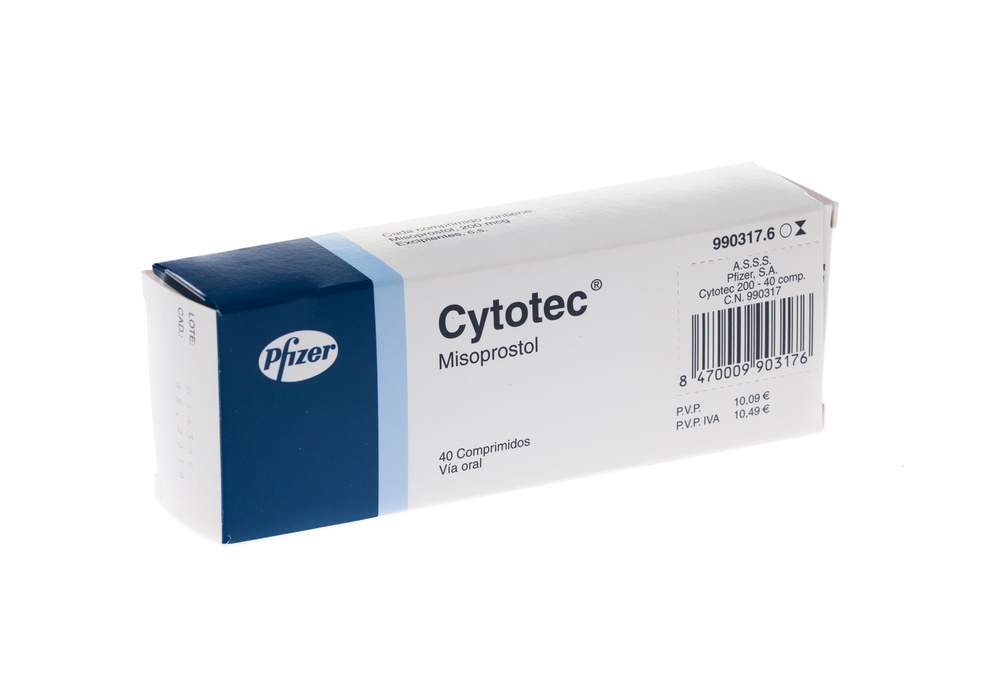
- Country of registration
- Dosage formTABLET, 200 µg
- ATC codeA02BB01
- Average pharmacy price10.49 EUR
- Active substance
- Prescription requiredYes
- Manufacturer
- CompositionCARBOXIMETILALMIDON SODICO (3 mg mg)
- This information is for reference only and does not constitute medical advice. Always consult a doctor before taking any medication. Oladoctor is not responsible for medical decisions based on this content.
- Alternatives to CYTOTEC 200 micrograms tabletsDosage form: TABLET, 40 mgActive substance: pantoprazoleManufacturer: Especialidades Farmaceuticas Centrum S.A.Prescription requiredDosage form: TABLET, 20 mg pantoprazoleActive substance: pantoprazoleManufacturer: Takeda GmbhPrescription requiredDosage form: TABLET, 40 mg pantoprazoleActive substance: pantoprazoleManufacturer: Takeda GmbhPrescription required
Online doctors for CYTOTEC 200 micrograms tablets
Discuss questions about CYTOTEC 200 micrograms tablets, including use, safety considerations and prescription review, subject to medical assessment and local regulations.









Get CYTOTEC 200 micrograms tablets Prescription Online
Fill in a 2-min form
Tell us your symptoms, history, and what medicine you're requesting.
Pick a doctor or let us assign
Choose a specialist or we'll match you with the next available doctor.
Doctor reviews your case
Usually within 30 minutes. They may ask follow-up questions via chat.
Collect from any pharmacy
Electronic prescription sent to your email — valid across Spain.
Frequently Asked Questions
CYTOTEC 200 micrograms tablets requires a prescription in Spain. You can check with a doctor online whether this medicine may be appropriate for your situation.
The active ingredient in CYTOTEC 200 micrograms tablets is misoprostol. This information helps identify medicines with the same composition but different brand names.
The average pharmacy price for CYTOTEC 200 micrograms tablets is around 10.49 EUR. Prices may vary depending on the manufacturer and dosage form.
CYTOTEC 200 micrograms tablets is manufactured by Pfizer S.L.. Pharmacy brands and packaging may differ depending on the distributor.
Doctors such as Family doctors, Psychiatrists, Dermatologists, Cardiologists, Endocrinologists, Gastroenterologists, Pulmonologists, Nephrologists, Rheumatologists, Hematologists, Infectious disease physicians, Allergists, Geriatricians, Paediatricians, Oncologists may assess whether CYTOTEC 200 micrograms tablets is appropriate, depending on your situation and local regulations. You can book an online consultation to discuss your symptoms and possible next steps.
Spain has a well-developed healthcare infrastructure across major cities such as Madrid, Barcelona, Valencia, and Seville. Pharmacies are widely available and operate under strict regulations, ensuring access to prescribed medications.
You can buy CYTOTEC 200 micrograms tablets in Madrid, Barcelona, Seville, or Valencia at any local pharmacy with a valid prescription.
To obtain a prescription, you can use Oladoctor:
Other medicines with the same active substance (misoprostol) include ALAPANZOL 40 mg GASTRO-RESISTANT TABLETS, ANAGASTRA 20 mg GASTRO-RESISTANT TABLETS, ANAGASTRA 40 mg GASTRO-RESISTANT TABLETS. These may have different brand names or formulations but contain the same therapeutic ingredient. Always consult a doctor before switching or starting a new medicine.
