



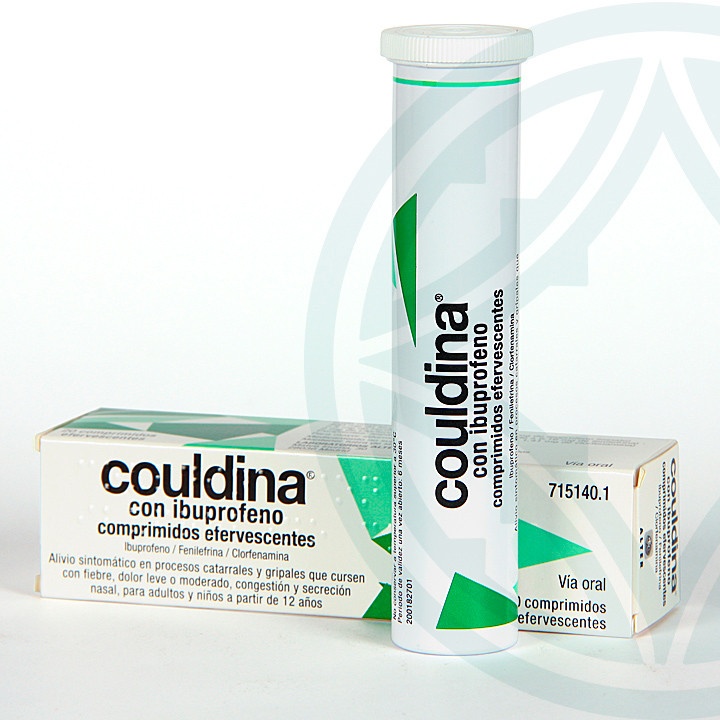
COULDINA 400 mg/2 mg /7.5 Mg Effervescent Tablet

Prescription review online
A doctor will review your case and decide whether a prescription is medically appropriate.

Talk to a doctor about this medicine
Discuss your symptoms and possible next steps in a quick online consultation.



How to use COULDINA with IBUPROFEN effervescent tablets
Contents of the leaflet
- Introduction
- What is Couldina with Ibuprofen and what is it used for
- What you need to know before taking Couldina with Ibuprofen
- How to take Couldina with ibuprofen
- Possible adverse effects
- Conservation of Couldina with ibuprofen
- Package contents and additional information
Introduction
Package Leaflet: Information for the User
Couldina with Ibuprofen Effervescent Tablets
Ibuprofen / Phenylephrine / Chlorphenamine
Read the entire package leaflet carefully before starting to take this medicine, as it contains important information for you.
Follow the administration instructions for the medicine contained in this package leaflet or as indicated by your doctor or pharmacist exactly.
- Keep this package leaflet, as you may need to read it again.
- If you need advice or more information, consult your pharmacist.
- If you experience side effects, consult your doctor or pharmacist, even if they are side effects not listed in this package leaflet. See section 4. You should consult a doctor if it worsens or does not improve or:
- if this medicine is needed for more than 5 days in adults
- if this medicine is needed for more than 3 days in children over 12 years old.
Contents of the Package Leaflet
- What is Couldina with Ibuprofen and what is it used for
- What you need to know before taking Couldina with Ibuprofen
- How to take Couldina with Ibuprofen
- Possible side effects
- Storage of Couldina with Ibuprofen
- Package Contents and Additional Information
1. What is Couldina with Ibuprofen and what is it used for
It is an association of ibuprofen, chlorphenamine, and phenylephrine.
Ibuprofen is an anti-inflammatory and analgesic that reduces inflammation, pain, and fever.
Chlorphenamine is an antihistamine that relieves nasal secretion.
Phenylephrine is a sympathomimetic that reduces nasal congestion.
It is indicated in adults and children from 12 years old for the relief of symptoms of colds and flu that occur with fever or mild or moderate pain, congestion, and nasal secretion.

Not sure if this medicine is right for you?
Discuss your symptoms and treatment with a doctor online.
2. What you need to know before taking Couldina with Ibuprofen
Do not take Couldina with Ibuprofen
- If you are allergic to the active ingredients or to any of the other components of this medicine (listed in section 6).
- If you have had a stomach or duodenal ulcer (last part of the small intestine) or have suffered a perforation of the digestive system;
- If you have presented allergic reactions of an asthmatic type when taking anti-inflammatory drugs, aspirin, or other analgesics,
- If you suffer from or have suffered from asthma (difficulty breathing, shortness of breath, and, in some cases, cough or wheezing when breathing), rhinitis (inflammation of the nasal mucosa), and urticaria (rashes on the skin and intense itching)
- If you have a serious liver, kidney, or heart disease (heart failure)
- If you have a serious heart or artery disease (such as coronary artery disease or angina pectoris).
- If you have bleeding or blood coagulation disorders;
- If you vomit blood, have black stools, or have bloody diarrhea;
- If you have high blood pressure.
- If you have hyperthyroidism.
- If you have diabetes mellitus.
- If you have tachycardia (rapid heartbeats).
- If you are being treated with a monoamine oxidase inhibitor (MAOI) (such as some antidepressant medications or medications for treating Parkinson's disease).
- If you are being treated with sympathomimetic medications (medications used to treat asthma or medications to accelerate heart rate).
- If you are being treated with beta-blocker medications (medications for the heart or for treating artery diseases) (see: Taking Couldina with Ibuprofen with other medications).
- If you have glaucoma (increased eye pressure).
- If you are in the third trimester of pregnancy.
- If you are under 12 years old
Warnings and Precautions
Severe skin reactions, such as exfoliative dermatitis, erythema multiforme, Stevens-Johnson syndrome, toxic epidermal necrolysis, drug reaction with eosinophilia and systemic symptoms (DRESS), and acute generalized exanthematous pustulosis (AGEP), have been reported in association with ibuprofen treatment. Discontinue treatment with Couldina with Ibuprofen and seek immediate medical attention if you notice any of the symptoms related to these severe skin reactions described in section 4.
While being treated with this medicine, you should not consume alcohol, as alcohol increases the possibility of gastrointestinal side effects produced by ibuprofen. Additionally, alcohol can potentiate the chronic irritation produced by ibuprofen and also potentiate the sedative effect produced by chlorphenamine.
If during treatment with this medicine you notice intense or persistent abdominal pain and/or black stools, discontinue the use of this medicine and consult your doctor immediately, as you may have a hemorrhage or perforation in the stomach or duodenum. This risk is higher when using high doses and prolonged treatments, in patients who have previously suffered from peptic ulcer, and in elderly individuals.
Anti-inflammatory/analgesic medications like ibuprofen may be associated with a small increased risk of heart attack or stroke, especially when used in high doses. Do not exceed the recommended dose or treatment duration.
Consult your doctor or pharmacist before starting to take this medicine.
- If you have an infection. Ibuprofen, one of the components of this medicine, can hide the signs of an infection, such as fever and pain. Consequently, Couldina with Ibuprofen may delay the appropriate treatment of the infection, which can increase the risk of complications. This has been observed in bacterial pneumonia and bacterial skin infections related to chickenpox. If you take this medicine while having an infection and the symptoms of the infection persist or worsen, consult a doctor without delay.
- Do not take more than 3 tablets per day (1200 mg of ibuprofen per day) to avoid the possible appearance of circulatory or heart problems.
- If you have suffered from stomach or intestinal diseases (e.g., ulcer), in which case you should not consume this medicine without medical supervision. Stomach or intestinal pain should not be treated with this medicine.
- If you notice burning or stomach pain when taking the medicine, you should discontinue treatment and consult your doctor.
- You have heart problems, including heart failure, angina (chest pain), or if you have had a heart attack, bypass surgery, peripheral artery disease (poor circulation in the legs due to narrow or blocked arteries), or any type of stroke (including "mini-stroke" or transient ischemic attack "TIA").
- With ibuprofen, signs of allergic reaction to this medicine have been reported, such as respiratory problems, swelling of the face and neck (angioedema), and chest pain. Stop using this medicine immediately and contact your doctor or the emergency medical service immediately if you observe any of these signs.
- Severe skin reactions, such as exfoliative dermatitis, erythema multiforme, Stevens-Johnson syndrome, toxic epidermal necrolysis, drug reaction with eosinophilia and systemic symptoms (DRESS), and acute generalized exanthematous pustulosis (AGEP), have been reported in association with treatment with ibuprofen. Discontinue treatment with Couldina with Ibuprofen and seek immediate medical attention if you notice any of the symptoms related to these severe skin reactions described in section 4.
- If you have high blood pressure, diabetes, high cholesterol, a family history of heart disease or stroke, or if you are a smoker
- If you suffer from another disease or have some type of allergy, consult your doctor or pharmacist before taking this medicine.
- If you have Crohn's disease or ulcerative colitis, as medications with ibuprofen can worsen these diseases.
- If you have high blood pressure, kidney, liver, or heart disease, blood coagulation disorders, or are being treated with anticoagulants, you should consult your doctor before taking this medicine.
- If you have chickenpox, you should not take ibuprofen.
- In case of dehydration due to severe diarrhea or vomiting, especially in children, take plenty of fluids and go to the doctor immediately.
- If you have acute intermittent porphyria (a rare blood disorder). Patients with kidney, liver, heart, or lung diseases and patients with anemia.
- Asthmatic patients sensitive to acetylsalicylic acid.
- Patient sensitive (allergic) to an antihistamine, as they may be sensitive to other antihistamines (such as chlorphenamine).
- Patient being treated with medications for: prostate hypertrophy, bronchial asthma, very slow heartbeats, hypotension, cerebral arteriosclerosis, pancreatitis, peptic ulcer, pyloroduodenal obstruction (between the stomach and intestine), thyroid diseases, patients sensitive to the sedative effects of some medications.
- If you are being treated with tricyclic antidepressants or medications with a similar effect, you should stop taking this medicine and consult your doctor immediately, as you may experience paralytic ileus (stop of normal movements of a part of the intestine).
Children and Adolescents
Children under 12 years old should not take this medicine.
Interference with Analytical Tests
If you are going to have any analytical test (including blood tests, urine tests, etc.), inform your doctor that you are taking/using this medicine, as it may alter the results.
Taking Couldina with Ibuprofen with Other Medications
Inform your doctor or pharmacist if you are taking, have recently taken, or may need to take any other medication.
In particular, if you are taking any of the following medications, it may be necessary to modify the dose of some of them or interrupt treatment:
- Oral anticoagulants (e.g., acetylsalicylic acid, warfarin, acenocoumarol (Sintrom), ticlopidine) medications to make the blood less thick and prevent clots.
- Baclofen (used to treat involuntary and persistent contractions of some muscle).
- Medications for high blood pressure (ACE inhibitors such as captopril, beta-blockers such as atenolol, angiotensin II receptor antagonists such as losartan).
- Cyclosporine and tacrolimus (used to prevent organ rejection in transplants).
- Medications used for the heart, such as digoxin and antiarrhythmics.
- Medications used to treat epilepsy: Antiepileptics (lamotrigine, phenytoin, or other hydantoins, phenobarbital, methylphenobarbital, primidone, carbamazepine).
- Medications used to increase urine elimination (loop diuretics such as furosemide, or other diuretics), and other diuretics that produce potassium loss (such as diuretics for treating high blood pressure or other).
- Insulin and oral hypoglycemics (used to decrease blood sugar levels).
- Lithium (used to treat depression).
- Methotrexate (used in cancer treatment and rheumatoid arthritis)
- Mifepristone (abortion inducer)
- Pentoxifylline (used in circulatory disorders)
- Probenecid (used in patients with gout or with penicillin in infections)
- Quinolones (used in infections)
- Ion exchange resins such as cholestyramine (used to decrease cholesterol levels in blood)
- Sulfonamides (used in infections)
- Sulfinpyrazone (used in gout treatment)
- Tacrine (used in Alzheimer's disease treatment)
- Thrombolytics (medications that dissolve or break down blood clots)
- Zidovudine (used in HIV-infected patients, the cause of AIDS)
- Medications used to treat tuberculosis (isoniazid, rifampicin).
- Medications used to treat seizures and depression (barbiturics), used as hypnotics, sedatives, and anticonvulsants.
- Medications used to prevent nausea and vomiting (metoclopramide and domperidone).
- Medications used to treat gout (probenecid and sulfinpyrazone).
- Medications used to decrease cholesterol levels in blood (cholestyramine).
- Medications used to treat depression, Parkinson's disease, or other diseases (monoamine oxidase inhibitors (MAOIs)). Couldina with Ibuprofen administration should be separated by a minimum of 15 days after finishing the treatment.
- Other medications used to treat depression (tricyclic and tetracyclic antidepressants).
- Medications used to treat migraines; medications taken for childbirth; medications taken to treat blood pressure or other diseases (alpha-adrenergic blocking medications).
- Alpha and beta-adrenergic blockers such as labetalol and carvedilol (used for the heart or for treating artery diseases).
- General anesthetic medications.
- Medications containing thyroid hormones (used to treat thyroid diseases).
- Medications used for heart or digestive diseases (atropine sulfate).
- Medications that produce depression on the central nervous system (such as those used for insomnia or anxiety).
- This medicine should not be used with other analgesic and anti-inflammatory medications (non-steroidal anti-inflammatory drugs and corticosteroids) that decrease pain and inflammation without consulting a doctor.
Some other medications may also affect or be affected by treatment with Couldina with Ibuprofen. Therefore, you should always seek the advice of your doctor or pharmacist before using Couldina with Ibuprofen with other medications.
If your doctor has prescribed an antiplatelet medication (to prevent blood clot formation) that contains acetylsalicylic acid, and you also take Couldina with Ibuprofen, you should separate the intake of both medications (see Warnings and Precautions section).
Taking Couldina with Ibuprofen with Food, Drinks, and Alcohol
Take this medicine after meals or with some food.
While being treated with this medicine, you should not consume alcoholic beverages, as it may potentiate the appearance of side effects of this medicine.
If you habitually consume alcohol (3 or more alcoholic beverages - beer, wine, liquor... - per day), taking Couldina with Ibuprofen may cause a stomach hemorrhage.
Taking this medicine with food does not affect its efficacy.
Pregnancy, Breastfeeding, and Fertility
If you are pregnant or breastfeeding, think you may be pregnant, or plan to become pregnant, consult your doctor or pharmacist before using this medicine.
Do not take Couldina with Ibuprofen if you are in the last 3 months of pregnancy, as it may harm the fetus or cause problems during delivery. It may cause kidney and heart problems in your fetus. It may affect your and your baby's tendency to bleed and delay or prolong delivery more than expected. You should not take Couldina with Ibuprofen during the first 6 months of pregnancy unless it is absolutely necessary and indicated by your doctor. If you need treatment during this period or while trying to become pregnant, you should take the lowest dose for the shortest possible time. If you take it for more than a few days from the 20th week of pregnancy, Couldina with Ibuprofen may cause kidney problems in your fetus, which can cause low levels of amniotic fluid surrounding the baby (oligohydramnios) or narrowing of a blood vessel (ductus arteriosus) in the baby's heart. If you need treatment for more than a few days, your doctor may recommend additional checks.
Women who are breastfeeding should consult their doctor or pharmacist before taking this medicine.
This medicine cannot be used during breastfeeding, as it may cause side effects in the baby.
Ibuprofen belongs to a group of medications that may decrease fertility (ability to become pregnant) in women. This effect is reversible when the medication is stopped.
Driving and Using Machines
This medicine may cause drowsiness, altering mental and/or physical ability. If you notice these effects, avoid driving vehicles or using machines.
Couldina with Ibuprofen Contains Sodium
This medicine contains 501.6 mg of sodium (main component of table salt) per tablet. This is equivalent to 26% of the maximum recommended daily sodium intake for an adult.
Consult your doctor or pharmacist if you need 1 or more tablets per day for a prolonged period, especially if you have been recommended a low-salt diet (sodium).
Couldina with Ibuprofen Contains Aspartame
This medicine may be harmful to people with phenylketonuria, as it contains aspartame, which is a source of phenylalanine.
3. How to take Couldina with ibuprofen
Follow the administration instructions of the medication contained in this prospectus or as indicated by your doctor or pharmacist. In case of doubts, ask your doctor or pharmacist.
The recommended dose is:
Adults and children from 12 years old
1 effervescent tablet every 8-12 hours as needed. No more than 3 tablets can be taken in 24 hours, and a minimum time of 6 hours must be left between each intake.
Patients with kidney, liver, or heart disease
Reduce the dose and consult a doctor.
The lowest effective dose should be used for the shortest time necessary to relieve symptoms. If you have an infection, consult a doctor without delay if symptoms (fever and pain) persist or worsen (see section 2).
Use in children
This medication is contraindicated in children under 12 years old.
Use in elderly patients
Elderly people cannot use this medication without consulting a doctor because they may be especially affected by some adverse effects of the medication, such as the appearance of slow heartbeats (bradycardia) or reduced cardiac output, due to the content of phenylephrine and chlorphenamine. They are also more likely to experience adverse effects such as sedation, confusion, hypotension, or excitement, and may be more sensitive to effects such as dry mouth and urinary retention.
Take Couldina with ibuprofen after meals or with some food or milk (especially if digestive discomfort is noticed).
It is not recommended to take it on an empty stomach.
Couldina with ibuprofen is taken orally. Dissolve the tablet completely in a little liquid, preferably half a glass of water, and then drink. If any white residue remains in the glass, add water again, stir until dissolved, and take.
Always take the lowest effective dose.
The intake of this medication is subject to the appearance of symptoms. As they disappear, treatment should be suspended.
If the fever persists for more than 3 days of treatment, the pain or other symptoms persist for more than 5 days, or worsen or new ones appear, consult a doctor.
If you take more Couldina with ibuprofen than you should
If you have taken more Couldina with ibuprofen than you should, or if a child has accidentally ingested the medication, consult a doctor or go to the nearest hospital immediately to find out about the risk and ask for advice on the measures to be taken.
The symptoms of overdose may include nausea, stomach pain, vomiting (which may contain bloody sputum), gastrointestinal bleeding, diarrhea, headache, ringing in the ears, confusion, and involuntary eye movement. Agitation, drowsiness, disorientation, or coma may also appear. Occasionally, patients develop convulsions. At high doses, symptoms of drowsiness, chest pain, palpitations, loss of consciousness, convulsions (mainly in children), weakness, and dizziness, blood in the urine, low potassium levels in the blood, chills, and breathing difficulties have been reported.
Additionally, the prothrombin time/INR may be prolonged, probably due to interference with the actions of circulating coagulation factors. Acute renal failure and liver damage may occur. An exacerbation of asthma in asthmatics is possible. Additionally, there may be low blood pressure and difficulty breathing.
In case of overdose or accidental ingestion, consult your doctor or pharmacist immediately or call the Toxicology Information Service, phone 91 562 04 20, indicating the medication and the amount ingested.

Started taking the medicine and have questions?
Discuss your symptoms and treatment with a doctor online.
4. Possible adverse effects
Like all medications, this medication can produce adverse effects, although not all people suffer from them.
During the period of use with each of the drugs that are part of the association of Couldina with ibuprofen, the following adverse effects have been reported, whose frequency has not been established with precision:
- Frequent(may affect up to 1 in 10 people):
Fatigue, headache, burning and stomach pain, skin disorders (rashes, itching), ringing in the ears, mild drowsiness, dizziness, muscle weakness, these adverse effects may disappear after 2-3 days of treatment. Dryness of the mouth, nose, and throat, nausea, vomiting, diarrhea, constipation, and thickening of mucus.
- Uncommon (may affect up to 1 in 100 people):
Allergic reactions, asthma, rhinitis (inflammation of the nasal mucosa) and urticaria (hives and intense itching), difficulty in facial movements, clumsiness, tremors, alterations in sensations and tingling, loss of appetite, alterations in taste or smell, bleeding and gastrointestinal ulcers, sleep disturbances and mild restlessness, blurred vision, decreased visual acuity or changes in color perception, auditory alterations, and coagulation disorders when taking high doses.
- Rare (may affect up to 1 in 1,000 people):
Edema (swelling due to fluid retention), blood disorders (leukopenia), stomach and intestinal perforation, liver disorders (including jaundice, i.e., yellowing of the skin and eyes), kidney disorders consisting of: acute interstitial nephritis with hematuria (blood in urine), proteinuria (elimination of proteins in the urine), and occasionally nephrotic syndrome (set of symptoms that appear as a consequence of kidney damage); depression, vision disorders (vision loss), neck stiffness, and bronchospasm (sudden feeling of suffocation), dyspnea (difficulty breathing), and angioedema (inflammation of the deep layers of the skin, which occurs with swelling of the face, lips, tongue, or throat, which can cause difficulty swallowing or breathing). Malaise, low blood pressure (hypotension). Myocardial infarction, ventricular arrhythmia (irregular heartbeats), pulmonary edema (increased volume of fluid in the lungs), and cerebral hemorrhage (at high doses or in sensitive patients).
Excitement (generally with high doses, and more frequent in the elderly and children), which can include symptoms such as: restlessness, insomnia, nervousness, and even convulsions. Other adverse effects that may appear with low frequency are: rapid or irregular heartbeats (generally with overdose), cross-sensitivity (allergy) to medications related to chlorphenamine. Low or high blood pressure.
- Very rare (may affect up to 1 in 10,000 people):
Aseptic meningitis (inflammation of the meninges not caused by bacteria), blood and coagulation disorders, hypertension, and heart failure, severe skin disorders (erythema), eyes, and mucous membranes such as Stevens-Johnson syndrome (severe skin condition) and toxic epidermal necrolysis (lesions on the skin and mucous membranes that cause skin detachment) and erythema multiforme (inflammation of the skin) and hypoglycemia (low blood sugar).
- Frequency not known (frequency cannot be estimated from available data):
Anxiety, irritability, weakness, high blood pressure (hypertension, generally with high doses and in sensitive patients), headache (with high doses and may be a symptom of hypertension), very slow heartbeats (severe bradycardia), reduction of peripheral blood vessel caliber (peripheral vasoconstriction), reduction of heart performance that especially affects the elderly and patients with poor cerebral or coronary circulation, possible production or worsening of heart disease, urinary retention, paleness, goosebumps, high blood sugar (hyperglycemia), low potassium levels in the blood, metabolic acidosis (metabolic disorder), coldness in the extremities (legs or arms), flushing, feeling of fainting (hypotension), chest pain, which can be a sign of a potentially serious allergic reaction called Kounis syndrome. With high doses, vomiting, palpitations, psychotic states with hallucinations; with prolonged use, a decrease in blood volume may occur.
Stop treatment with Couldina with ibuprofen and seek immediate medical attention if you notice any of the following symptoms:
- Reddish spots, not raised, in the form of a target or circular on the trunk, often with blisters in the center, skin peeling, mouth, throat, nose, genital, and eye ulcers. These severe skin rashes may be preceded by fever and flu-like symptoms [exfoliative dermatitis, erythema multiforme, Stevens-Johnson syndrome, toxic epidermal necrolysis].
- Widespread skin rash, elevated body temperature, and swollen lymph nodes (DRESS syndrome).
- Widespread, red, and scaly rash, with bumps under the skin and blisters, accompanied by fever. Symptoms usually appear at the start of treatment (acute generalized exanthematous pustulosis).
Reporting of adverse effects:
If you experience any type of adverse effect, consult your doctor or pharmacist, even if it is a possible adverse effect that does not appear in this prospectus. You can also report them directly through the Spanish Pharmacovigilance System for Human Use Medications http://www.notificaram.es. By reporting adverse effects, you can contribute to providing more information on the safety of this medication.
5. Conservation of Couldina with ibuprofen
Keep out of sight and reach of children.
Do not use Couldina with ibuprofen after the expiration date that appears on the box, after CAD or expiration. The expiration date is the last day of the month indicated.
Keep the container perfectly closed. Store in the original container.
Do not store at a temperature above 30°C.
Validity period once opened: 6 months
Medications should not be thrown down the drain or into the trash. Deposit the containers and medications that are no longer needed at the SIGRE point in the pharmacy. In case of doubt, ask your pharmacist how to dispose of the containers and medications that are no longer needed. This way, you will help protect the environment.
6. Package contents and additional information
Composition of Couldina with ibuprofen
- The active ingredients are ibuprofen, phenylephrine, and chlorphenamine. Each tablet contains 400 mg of ibuprofen (as ibuprofen lysinate), 7.5 mg of phenylephrine (as phenylephrine hydrochloride), and 2 mg of chlorphenamine (as chlorphenamine maleate).
- The other components (excipients) are: povidone K 30 (E1201), sodium docusate,crospovidone,meglumine,anhydrous citric acid (E330),sodium bicarbonate, glycine (E640),mannitol (E421),sodium saccharin (E954ii),aspartame (E951),lemon flavor.
Appearance of the product and package contents
This medication is presented in the form of effervescent tablets, flat cylindrical, white, and shiny, packaged in aluminum tubes coated with an epoxy paint layer, closed with a polyethylene plug that contains silica gel, in packages of 20 tablets.
Marketing authorization holder and manufacturer
Laboratorios Alter, S.A.
Mateo Inurria, 30
28036 Madrid
Spain
Date of the last revision of this prospectus: March 2025
Detailed and updated information on this medication is available on the website of the Spanish Agency for Medicines and Health Products (AEMPS) http://www.aemps.gob.es/
.
- Country of registration
- Dosage formEFFERVESCENT TABLET, 400 mg/2 mg/7.5 mg
- Prescription requiredNo
- Manufacturer
- CompositionDOCUSATO DE SODIO (0,08 mg mg), MANITOL (E-421) (200 mg mg), SACARINA SODICA (35 mg mg), ASPARTAMO (E-951) (25 mg mg), HIDROGENO CARBONATO DE SODIO (1816,18 C.S mg)
- This information is for reference only and does not constitute medical advice. Always consult a doctor before taking any medication. Oladoctor is not responsible for medical decisions based on this content.
- Alternatives to COULDINA with IBUPROFEN effervescent tabletsDosage form: ORAL SOLUTION/SUSPENSION, 7 mg/mlActive substance: Hederae helicis foliumManufacturer: Engelhard Arzneimittel Gmbh & Co. KgPrescription not requiredDosage form: EFFERVESCENT TABLET, 600 mgActive substance: acetylcysteineManufacturer: Kern Pharma S.L.Prescription not requiredDosage form: EFFERVESCENT TABLET, 600 mgActive substance: acetylcysteineManufacturer: Laboratorios Alter S.A.Prescription required
Online doctors for COULDINA with IBUPROFEN effervescent tablets
Discuss questions about COULDINA with IBUPROFEN effervescent tablets, including use, safety considerations and prescription review, subject to medical assessment and local regulations.









Get COULDINA with IBUPROFEN effervescent tablets Prescription Online
Fill in a 2-min form
Tell us your symptoms, history, and what medicine you're requesting.
Pick a doctor or let us assign
Choose a specialist or we'll match you with the next available doctor.
Doctor reviews your case
Usually within 30 minutes. They may ask follow-up questions via chat.
Collect from any pharmacy
Electronic prescription sent to your email — valid across Spain.
Frequently Asked Questions
COULDINA with IBUPROFEN effervescent tablets does not require a prescription in Spain. You can check with a doctor online whether this medicine may be appropriate for your situation.
COULDINA with IBUPROFEN effervescent tablets is manufactured by Laboratorios Alter S.A.. Pharmacy brands and packaging may differ depending on the distributor.
Doctors such as Family doctors, Psychiatrists, Dermatologists, Cardiologists, Endocrinologists, Gastroenterologists, Pulmonologists, Nephrologists, Rheumatologists, Hematologists, Infectious disease physicians, Allergists, Geriatricians, Paediatricians, Oncologists may assess whether COULDINA with IBUPROFEN effervescent tablets is appropriate, depending on your situation and local regulations. You can book an online consultation to discuss your symptoms and possible next steps.
Spain has a well-developed healthcare infrastructure across major cities such as Madrid, Barcelona, Valencia, and Seville. Pharmacies are widely available and operate under strict regulations, ensuring access to prescribed medications.
You can buy COULDINA with IBUPROFEN effervescent tablets in Madrid, Barcelona, Seville, or Valencia at any local pharmacy with a valid prescription.
To obtain a prescription, you can use Oladoctor:
Other medicines with the same active substance () include ABRILAR SYRUP, ACETYLCYSTEINE ABEX 600 mg EFFERVSCENT TABLETS, ACETYLCYSTEINE ALTER 600 mg EFFERVSCENT TABLETS. These may have different brand names or formulations but contain the same therapeutic ingredient. Always consult a doctor before switching or starting a new medicine.
