

SODIUM COLISTIMETHATE ACCORD 2 Million IU POWDER FOR INJECTABLE SOLUTION AND FOR INFUSION





How to use SODIUM COLISTIMETHATE ACCORD 2 Million IU POWDER FOR INJECTABLE SOLUTION AND FOR INFUSION
Translated with AI
This page provides general information and does not replace a doctor’s consultation. Always consult a doctor before taking any medication. Seek urgent medical care if symptoms are severe.
Show originalContents of the leaflet
Introduction
Package Leaflet: Information for the User
Sodium Colistimethate Accord 2 million IU powder for solution for injection and infusion EFG
Read all of this leaflet carefully before you start using this medicine because it contains important information for you.
- Keep this leaflet, you may need to read it again.
- If you have any further questions, ask your doctor, pharmacist, or nurse.
- If you experience any side effects, talk to your doctor or pharmacist, even if they are not listed in this leaflet. See section 4.
Contents of the pack
- What Sodium Colistimethate Accord is and what it is used for
- What you need to know before you take Sodium Colistimethate Accord
- How to take Sodium Colistimethate Accord
- Possible side effects
- Storage of Sodium Colistimethate Accord
- Contents of the pack and other information
1. What Sodium Colistimethate Accord is and what it is used for
Sodium Colistimethate Accord contains the active substance sodium colistimethate. Sodium colistimethate is an antibiotic belonging to the group of polymyxins.

Antibiotics are used to treat bacterial infections and are not effective against viral infections such as the flu or the common cold.
It is essential that you follow the dosage instructions, the number of doses, and the duration of treatment indicated by your doctor.
Do not store or reuse this medication. If you have any leftover antibiotic after completing treatment, return it to the pharmacy for proper disposal. Do not throw away medications down the drain or in the trash.
Sodium Colistimethate Accord is indicated for adults and pediatric patients who can use it.
- By intravenous route. Sodium Colistimethate Accord is administered by injection to treat certain severe infections caused by specific bacteria. Sodium Colistimethate Accord is used when other antibiotics are not suitable.
- By inhalation route. Sodium Colistimethate Accord is administered in the form of inhalation to treat chronic respiratory infections in patients with cystic fibrosis. Sodium Colistimethate Accord is used when such infections are caused by a specific bacterium called Pseudomonas aeruginosa.

2. What you need to know before you take Sodium Colistimethate Accord
Do not use Sodium Colistimethate Accord
- If you are allergic (hypersensitive) to sodium colistimethate, colistin, or other polymyxins.
Warnings and precautions
Consult your doctor, pharmacist, or nurse before starting to use sodium colistimethate
- If you have or have had kidney problems
- If you have myasthenia gravis
- If you have porphyria
- If you have asthma (when used by inhalation route).
- If you experience muscle spasms, fatigue, or increased urine production at any time, inform your doctor immediately, as these episodes may be related to a disease known as pseudo-Bartter syndrome.
In premature infants and newborns, caution should be exercised when using sodium colistimethate because the kidneys are not yet fully developed.
Using Sodium Colistimethate Accord with other medications
- Medications that may affect kidney function. Taking such medications at the same time as sodium colistimethate may increase the risk of kidney damage
- Medications that may affect the nervous system. Taking such medications at the same time as sodium colistimethate may increase the risk of adverse effects on your nervous system
- Medications called muscle relaxants, often used during general anesthesia. Sodium colistimethate may increase the effects of these medications. If you are going to be administered general anesthesia, inform your anesthesiologist that you are using sodium colistimethate.
If you have myasthenia gravis and are also taking other antibiotics called macrolides (such as azithromycin, clarithromycin, or erythromycin), or antibiotics called fluoroquinolones (such as ofloxacin, norfloxacin, and ciprofloxacin), taking this medication increases the risk of muscle weakness and respiratory difficulties.
Receiving sodium colistimethate by infusion at the same time as receiving sodium colistimethate by inhalation may increase your risk of experiencing adverse effects.
Pregnancy, breastfeeding, and fertility
If you are pregnant or breastfeeding, think you may be pregnant, or plan to become pregnant, consult your doctor or pharmacist before using this medication.
Sodium Colistimethate Accord should only be administered to pregnant patients if the expected benefit outweighs any potential risk.
Breastfeeding should be interrupted during treatment with this medication, as this medication may pass into breast milk.
Driving and using machines
Sodium Colistimethate Accord may cause dizziness, confusion, or visual problems, so you should not drive or use any tool or machinery in these cases.
Sodium Colistimethate Accord contains sodium
This medication contains less than 23 mg (1 mmol) of sodium per dose, which is essentially "sodium-free"
3. How to take Sodium Colistimethate Accord
Follow the administration instructions for this medication exactly as indicated by your doctor or pharmacist. If in doubt, consult your doctor or pharmacist.
- Intravenous route:
Your doctor has prescribed sodium colistimethate as an infusion in a vein over 30 to 60 minutes.
The usual dose in adults is 9 million units, divided into two or three doses. If you are very ill, you will be given a larger dose of 9 million units once at the beginning of treatment.
In some cases, your doctor may decide to give you a higher daily dose of up to 12 million units.
The usual daily dose in children who weigh up to 40 kg is 75,000 to 150,000 units per kilogram of body weight, divided into three doses.
In cases of cystic fibrosis, higher doses have been administered occasionally.
Children and adults with kidney problems, including those on dialysis, are usually given lower doses.
Your doctor will monitor your kidney function regularly while you are receiving sodium colistimethate.
- Inhalation route:
The usual dose in adults, adolescents, and children over 2 years of age is 1-2 million units, two or three times a day (up to 6 million units per day).
The usual dose in children under 2 years of age is 0.5-1 million units, two times a day (up to 2 million units per day).
Your doctor may decide to adjust the dose depending on your circumstances. If you are taking other inhaled medications, your doctor will indicate the order in which you should take them.
If you use more Sodium Colistimethate Accord than you should:
If you have used more Sodium Colistimethate Accord than you should, you may experience breathing problems, muscle weakness, and kidney function problems.
In case of overdose or accidental ingestion, consult your doctor or pharmacist immediately or call the Toxicology Information Service, phone: 91 562 04 20, indicating the medication and the amount ingested.
If you forget to use Sodium Colistimethate Accord:
Do not take a double dose to make up for forgotten doses.
If you are receiving this medication by intravenous route and it has not been more than 3 hours since the time you should have received your dose, you can ask to be administered the corresponding dose. If more than 3 hours have passed since the forgotten dose, wait until the next administration.
In the case of inhalation administration, take the corresponding dose as soon as you remember and continue with the next dose normally.
If you stop treatment with Sodium Colistimethate Accord
Your doctor will indicate the duration of treatment with Sodium Colistimethate Accord. Do not stop treatment before, as there is a risk that the infection will recur.
If you have any other questions about the use of this medication, ask your doctor, pharmacist, or nurse.

4. Possible side effects
Like all medications, this medication can cause side effects, although not everyone experiences them.
Adverse effects have been classified by organs and systems and by frequencies using the following convention: very common (may affect more than 1 in 10 people); common (may affect up to 1 in 10 people); uncommon (may affect up to 1 in 100 people); rare (may affect up to 1 in 1,000 people); very rare (may affect up to 1 in 10,000 people); frequency not known (cannot be estimated from available data).
In the case of sodium colistimethate, these affect mainly the nervous system and kidney function. The most common adverse effects after nebulization are cough and difficulty breathing.
Possible adverse effects after intravenous administration:
Nervous system disorders
- Very common: Tingling or numbness around the lips and face, headache.
- Unknown: Difficulty speaking, visual disturbances, confusion, mental changes, or flushing (redness of the face), psychosis, dizziness, vertigo, difficulty controlling movements.
Renal and urinary disorders
- Very common: This medication may affect the kidneys, especially if the dose is high or you are taking other medication that may affect the kidneys (including increased results of special kidney tests, such as urea and creatinine).
- Rare: Renal failure.
General disorders and administration site conditions
- Very common: Muscle weakness, itching.
- Unknown: Allergic reactions such as skin rashes or swelling (of lips, mouth, throat). If this occurs, inform your doctor immediately, as treatment may need to be discontinued. Pain at the injection site.
After intravenous administration, you may experience the following symptoms that may be related to a disease known as pseudo-Bartter syndrome (see section 2):
- muscle spasms
- increased urine production
- fatigue
Possible adverse effects after inhalation administration:
Respiratory, thoracic, and mediastinal disorders
- Very common: Nebulization of this medication through a nebulizer may cause cough and provoke chest tightness, wheezing, or shortness of breath in some people.
General disorders and administration site conditions
- Unknown: Allergic reactions such as skin rashes. If this occurs, inform your doctor immediately, as treatment may need to be discontinued. Throat pain and irritation in the mouth that may be due to allergy to the medication or an additional fungal infection when this medication is administered through a nebulizer.
Reporting of side effects:
If you experience any side effects, talk to your doctor or pharmacist, even if they are not listed in this leaflet. You can also report them directly through the Spanish Pharmacovigilance System for Human Use Medicines: https://www.notificaram.es. By reporting side effects, you can help provide more information on the safety of this medication.
5. Storage of Sodium Colistimethate Accord
Keep this medication out of the sight and reach of children.
Do not use this medication after the expiration date stated on the packaging as "EXP". The expiration date is the last day of the month indicated.
This medication does not require special storage conditions.
Sodium Colistimethate Accord does not contain preservatives. After preparation, it should be used immediately. The diluted injectable solutions with a volume greater than the original vial volume and/or a concentration <80,000 IU/ml should be used immediately, as sodium colistimethate is significantly hydrolyzed below this concentration.
In case of intrathecal and intraventricular administration, the volume of solution administered should not exceed 1 ml (reconstituted concentration of 125,000 IU/ml). The reconstituted solution should be administered immediately.
Any remaining solution should be discarded.
Do not use this medication if you notice any signs of deterioration.
Medications should not be thrown away down the drain or in the trash. Deposit the packaging and medications you no longer need in the SIGRE Point of the pharmacy. If in doubt, ask your pharmacist how to dispose of the packaging and medications you no longer need. This will help protect the environment.
6. Contents of the pack and other information
Composition of Sodium Colistimethate Accord
- The active substance is sodium colistimethate.
Each vial contains 1 million international units (IU) of sodium colistimethate, which weighs approximately 80 milligrams (mg) of sodium colistimethate.
- There are no other components.
Appearance and packaging of the product
Sodium Colistimethate Accord is a white to off-white powder supplied in a glass vial.
The powder should be dissolved in an injection or infusion solution.
Sodium Colistimethate Accord is supplied in packs of 10 vials.
Marketing authorization holder
Accord Healthcare, S.L.U.
Moll de Barcelona s/n,
World Trade Center Edifici Est 6ªplanta
08039 Barcelona
Manufacturer
Xellia Pharmaceuticals ApS
Dalslandsgade 11
2300 Copenhagen S
Denmark
Date of last revision of this leaflet: June 2023
Detailed and updated information on this medication is available on the website of the Spanish Agency for Medicines and Health Products (AEMPS) http://www.aemps.es/.
The following information is intended exclusively for healthcare professionals:
- Intravenous route:
For bolus injection:
Reconstitute the vial contents with no more than 10 ml of water for injection or 0.9% sodium chloride.
For infusion:
The reconstituted vial contents may be diluted, normally with 50 ml of 0.9% sodium chloride.
Reconstitute the vial contents with water for injection or 0.9% sodium chloride solution. The reconstituted Sodium Colistimethate is a clear and particle-free solution. Discard the solution if particles are observed.
When using intrathecal and intraventricular administration routes, the administered volume should not exceed 1 ml (reconstituted concentration of 125,000 IU/ml). The reconstituted solution should be administered immediately.
- Inhalation route with nebulizer:
Reconstitute the vial contents with water for injection, a 50:50 mixture of water for injection and 0.9% sodium chloride, or 0.9% sodium chloride solution. The volume of reconstitution will be adjusted according to the instructions for use provided with the nebulizer device and normally does not exceed 4 ml.
Once reconstituted, Sodium Colistimethate Accord can be administered with any conventional nebulizer suitable for the administration of antibiotic solutions.
The reconstituted Sodium Colistimethate is a clear and particle-free solution. Discard the solution if particles are observed.
The solutions are for single use, and any remaining solution should be discarded.
-


- Country of registration
- Dosage formINJECTABLE, 2 IU
- ATC codeJ01XB01
- Active substance
- Prescription requiredYes
- Manufacturer
- This information is for reference only and does not constitute medical advice. Always consult a doctor before taking any medication. Oladoctor is not responsible for medical decisions based on this content.
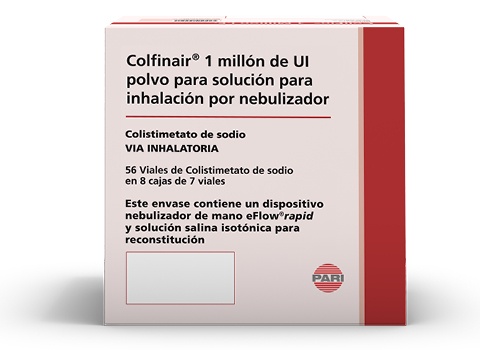
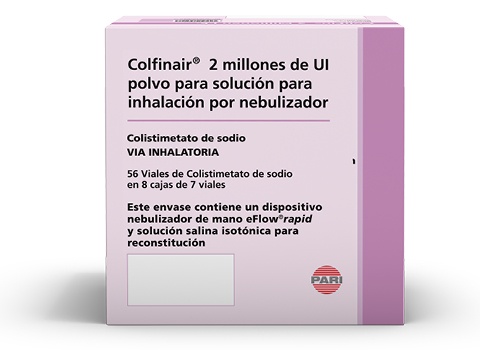
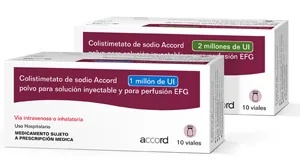
- Alternatives to SODIUM COLISTIMETHATE ACCORD 2 Million IU POWDER FOR INJECTABLE SOLUTION AND FOR INFUSIONDosage form: PULMONARY INHALATION, 1 MIUActive substance: colistinManufacturer: Pari Pharma GmbhPrescription requiredDosage form: PULMONARY INHALATION, 2 MIUActive substance: colistinManufacturer: Pari Pharma GmbhPrescription requiredDosage form: INJECTABLE, 1 IUActive substance: colistinManufacturer: Accord Healthcare S.L.U.Prescription required
Online doctors for SODIUM COLISTIMETHATE ACCORD 2 Million IU POWDER FOR INJECTABLE SOLUTION AND FOR INFUSION
Discuss questions about SODIUM COLISTIMETHATE ACCORD 2 Million IU POWDER FOR INJECTABLE SOLUTION AND FOR INFUSION, including use, safety considerations and prescription review, subject to medical assessment and local regulations.









Get SODIUM COLISTIMETHATE ACCORD 2 Million IU POWDER FOR INJECTABLE SOLUTION AND FOR INFUSION Prescription Online
Fill in a 2-min form
Tell us your symptoms, history, and what medicine you're requesting.
Pick a doctor or let us assign
Choose a specialist or we'll match you with the next available doctor.
Doctor reviews your case
Usually within 30 minutes. They may ask follow-up questions via chat.
Collect from any pharmacy
Electronic prescription sent to your email — valid across Spain.
Frequently Asked Questions
SODIUM COLISTIMETHATE ACCORD 2 Million IU POWDER FOR INJECTABLE SOLUTION AND FOR INFUSION requires a prescription in Spain. You can check with a doctor online whether this medicine may be appropriate for your situation.
The active ingredient in SODIUM COLISTIMETHATE ACCORD 2 Million IU POWDER FOR INJECTABLE SOLUTION AND FOR INFUSION is colistin. This information helps identify medicines with the same composition but different brand names.
SODIUM COLISTIMETHATE ACCORD 2 Million IU POWDER FOR INJECTABLE SOLUTION AND FOR INFUSION is manufactured by Accord Healthcare S.L.U.. Pharmacy brands and packaging may differ depending on the distributor.
Doctors such as Family doctors, Psychiatrists, Dermatologists, Cardiologists, Endocrinologists, Gastroenterologists, Pulmonologists, Nephrologists, Rheumatologists, Hematologists, Infectious disease physicians, Allergists, Geriatricians, Paediatricians, Oncologists may assess whether SODIUM COLISTIMETHATE ACCORD 2 Million IU POWDER FOR INJECTABLE SOLUTION AND FOR INFUSION is appropriate, depending on your situation and local regulations. You can book an online consultation to discuss your symptoms and possible next steps.
Spain has a well-developed healthcare infrastructure across major cities such as Madrid, Barcelona, Valencia, and Seville. Pharmacies are widely available and operate under strict regulations, ensuring access to prescribed medications.
You can buy SODIUM COLISTIMETHATE ACCORD 2 Million IU POWDER FOR INJECTABLE SOLUTION AND FOR INFUSION in Madrid, Barcelona, Seville, or Valencia at any local pharmacy with a valid prescription.
To obtain a prescription, you can use Oladoctor:
Other medicines with the same active substance (colistin) include COLFINAIR 1 Million IU Powder for Solution for Nebulizer Inhalation, COLFINAIR 2 MILLION IU POWDER FOR SOLUTION FOR NEBULIZER INHALATION, SODIUM COLISTIMETHATE ACCORD 1 Million IU POWDER FOR INJECTABLE SOLUTION AND FOR INFUSION. These may have different brand names or formulations but contain the same therapeutic ingredient. Always consult a doctor before switching or starting a new medicine.
