






How to use POTASSIUM CHLORIDE MEINSOL 2 mEq/ml CONCENTRATE FOR PERFUSION SOLUTION
Translated with AI
This page provides general information and does not replace a doctor’s consultation. Always consult a doctor before taking any medication. Seek urgent medical care if symptoms are severe.
Show originalContents of the leaflet
Introduction
Prospective: Information for the User
Potassium Chloride Meinsol 2 mEq/ml, Concentrate for Solution for InfusionPotassium Chloride
Read the entire prospectus carefully before starting to use this medication, as it contains important information for you.
- Keep this prospectus, as you may need to read it again.
- If you have any doubts, consult your doctor or pharmacist.
- This medication has been prescribed to you only, and you should not give it to others,
even if they have the same symptoms as you, as it may harm them.
- If you experience adverse effects, consult your doctor or pharmacist, even if they are not listed in this prospectus. See section 4.
Contents of the Prospectus:
- What Potassium Chloride Meinsolis and what it is used for
- What you need to know before starting to use Potassium Chloride Meinsol
- How to use Potassium Chloride Meinsol
- Possible adverse effects
- Storage of Potassium Chloride Meinsol
- Package contents and additional information
1. What Potassium Chloride Meinsol is and what it is used for
This product belongs to the group of "Additives for intravenous solutions: Electrolyte solutions" and is dispensed with a medical prescription.
Potassium Chloride Meinsol is indicated for the treatment of potassium deficits in patients where dietary measures or oral medication are inadequate.
You should consult a doctor if it worsens or does not improve.

2. What you need to know before starting to use Potassium Chloride Meinsol
Do not use Potassium Chloride Meinsol
- If you suffer from excess potassium in the blood (hyperkalemia).
Warnings and precautions:
Consult your doctor before starting to use Potassium Chloride.
Administration must be performed by your doctor or under their direct supervision, who will be careful with the following situations:
- Direct injection of concentrated potassium chloride without proper dilution could cause instant death.
- Administration should be done slowly (usually 10 mEq/h, not exceeding 20 mEq/h) and cardiac activity should be monitored.
- Adequate urine flow should be ensured and it is therefore necessary to monitor it.
- The patient's serum electrolyte levels and acid-base balance should be monitored, and the dose should be adjusted according to the patient's needs.
- Patients with heart disease, acute fluid deficiency (acute dehydration), heat cramps, massive tissue destruction such as in severe burns, and the elderly should be closely monitored, as renal function may be impaired or other conditions may predispose to the onset of hyperkalemia.
- Initial potassium replacement therapy should not involve glucose perfusion, as glucose could cause a further decrease in plasma potassium concentrations.
- If signs of renal failure appear, intravenous administration of potassium-containing solutions should be discontinued.
Your doctor may need to take special precautions and decide whether you can use potassium chloride if you suffer from:
- uncompensated heart failure, are being treated with digitalis (medications used to treat heart disease), or have severe or complete heart block.
- conditions frequently associated with excess potassium in the blood (hyperkalemia): episodic hereditary adynamia (a type of periodic paralysis), sickle cell anemia, impaired adrenal gland function (adrenal insufficiency), decreased renal function (renal insufficiency), oliguria after surgery, shock with hemolysis and/or dehydration, metabolic acidosis (a type of acidosis in the blood), treatment with potassium-sparing diuretics (medications used to increase urine excretion that retain potassium in the blood), excess chloride in the blood (hyperchloremia).
Your doctor should be careful with intravenous administration, as the leakage of perfusion fluid outside the vessel (extravasation) can cause tissue death (necrotic lesions in the tissue).
Children:The safety and efficacy of potassium chloride have not been clearly established in pediatric patients.
Use of Potassium Chloride Meinsol with other medications:
Tell your doctor or pharmacist that you are using, have recently used, or may need to use any other medication.
Combinations not recommended (except in cases of severe potassium deficiency):
+ Potassium-sparing diuretics (medications used to increase urine excretion that retain potassium in the blood), alone or in combination, such as: amiloride, spironolactone, triamterene, potassium canrenoate, eplerenone; risk of potentially lethal excess potassium (hyperkalemia), particularly in patients with renal insufficiency (addition of effects that increase potassium).
+ Angiotensin-converting enzyme inhibitors (ACE), angiotensin II receptor antagonists, non-steroidal anti-inflammatory drugs (NSAIDs), cyclosporine, tacrolimus: suxamethonium: potentially lethal excess potassium in the blood (hyperkalemia), particularly in patients with renal insufficiency (addition of effects that increase potassium).
+ Blood products, potassium penicillin salts: potential risk of excess potassium in the blood (hyperkalemia) due to the amount of potassium present in these products.
Combinations possible with special precautions:
+ Quinidine: potassium may increase the anti-arrhythmic effects of quinidine.
+ Thiazides, adrenocorticoids, glucocorticoids, mineralocorticoids: potential decrease in the effects of potassium supplements.
+ Digoxin: excess potassium in the blood (hyperkalemia) can be dangerous if you use digitalis medications for heart disease treatment,
+ Ion exchange resins: serum potassium levels are reduced by replacing potassium with sodium.
In the absence of compatibility studies, this medication should not be mixed with other medications.
However, the 2 mEq/ml potassium chloride concentrate for solution for infusion is physically incompatible with the following medicinal substances: amikacin, amphotericin B, dobutamine, fat emulsions, 20-25% mannitol solutions, and sodium penicillin G.
Pregnancy, breastfeeding, and fertility:
If you are pregnant or breastfeeding, think you may be pregnant, or plan to become pregnant, consult your doctor or pharmacist before using a medication.
There are limited or no data on the use of potassium chloride in pregnant women.
The use of Potassium Chloride 2 mEq/ml, concentrate for solution for infusion, may be considered during pregnancy in cases where it is clinically indicated.
Potassium chloride is excreted in breast milk in a proportion such that it is expected to have an effect on newborns/infants.
The risk to newborns/infants cannot be excluded.
Your doctor will decide whether it is necessary to interrupt breastfeeding or treatment after considering the benefit of breastfeeding for the child and the benefit of treatment for the mother.
Driving and using machines:
There is no indication that this medication may affect the ability to drive vehicles or operate complex machinery.
3. How to use Potassium Chloride Meinsol
Potassium Chloride will be administered to you by your doctor, or under their direct supervision, who will closely monitor the appropriate amount of potassium chloride.
Your doctor will decide the correct dose you should receive.
The recommended dose in adults and adolescents is:
Administration only by intravenous route after dilution in a suitable solution, up to a maximum concentration of 3 g/l of potassium chloride (or 40 mEq/l of potassium). For the treatment of severe hypokalemia or diabetic ketoacidosis, higher concentrations may be necessary; in this case, perfusion should be in a vein with high blood flow, and continuous ECG monitoring is recommended.
1 g of potassium chloride corresponds to 13.4 mEq or 524 mg of potassium.
The dose depends on the results of serum electrolyte levels and acid-base balance. The
potassium deficit should be calculated using the following formula:
Potassium deficit (mEq) = kg of body weight x 0.2 x 2 x (4.5 mEq/l - serum potassium). (The extracellular volume is calculated from body weight in kg x 0.2).
The normal daily intake is approximately 0.8 to 2 mEq of potassium per kilogram of body weight. Normally, the maximum dose in adults should not exceed 150 mEq per day.
Use in children:
Intravenous administration is recommended after dilution in a suitable solution, with a maximum dose of 3 mEq of potassium/kg of body weight, or 40 mEq/m2 of body surface area. For children with a body weight of 25 kg or more, see adult dose.
The maximum daily dose in children is 3 mEq/kg of body weight. In patients with renal insufficiency, the dose should be reduced.
Mode of administration:
The medication will be administered to you diluted by intravenous perfusion. The perfusion rate should be slow, and the amount of potassium chloride will depend on your specific needs.
A rate of 10 mEq/h is considered safe. As a general rule, the perfusion rate should not exceed 20 mEq/h.
Administration via a perfusion pump is recommended, especially in solutions with higher concentrations.
Your doctor will indicate the duration of treatment with Potassium Chloride Meinsol.
If you think the effect of Potassium Chloride Meinsol is too strong or too weak, tell your doctor or pharmacist.
If you use more Potassium Chloride Meinsol than you should:
Overdose as a result of excess potassium in the blood can cause ECG abnormalities, decreased heart rate (bradycardia), irregular heart rhythm with very rapid and uncoordinated palpitations in the lower chambers of the heart (ventricular fibrillation), other heart rhythm disorders (arrhythmias) including cardiac arrest, confusion, fatigue, diarrhea, swallowing disorders, abnormal sensations in the skin of arms and legs (paresthesia of the extremities), breathing difficulties, paralysis of voluntary muscles, and death.
In the event of any of these effects, treatment should be interrupted immediately, and any potassium-containing food and potassium-sparing diuretics (medications used to increase urine excretion that retain potassium in the blood) should be eliminated from the diet.
In case of overdose or accidental ingestion, go immediately to a medical center or call the Toxicology Information Service at 91 562 04 20, indicating the medication and the amount ingested.
If you experience any of these symptoms or think you may have received too much potassium chloride, tell your doctor or healthcare professional immediately.
If you have any other questions about the use of this medication, ask your doctor or pharmacist.

4. Possible adverse effects
Like all medications, this medication can cause adverse effects, although not everyone experiences them.
Excessive potassium intake may cause excess potassium in the blood (hyperkalemia), which can cause neuromuscular and cardiac disorders, especially heart rhythm disorders and even cardiac arrest.
Other adverse reactions:
Metabolic and nutritional disorders:
- acidic blood (acidosis)
- excess chloride in the blood (hyperchloremia)
Vascular disorders
- blood clot in a blood vessel (venous thrombosis)
General disorders and administration site conditions:
- nausea
- pain at the injection site,
- tissue death in cases of perfusion fluid leakage outside the vessel (extravasation)
- inflammation of the veins in case of locally high concentrations.
Reporting adverse effects
If you experience any type of adverse effect, consult your doctor or pharmacist, even if it is not listed in this prospectus. You can also report them directly through the Spanish Pharmacovigilance System for Human Use Medicines, http://www.notificaram.es. By reporting adverse effects, you can contribute to providing more information on the safety of this medication.
5. Storage of Potassium Chloride Meinsol
Keep this medication out of the sight and reach of children.
Do not use this medication after the expiration date shown on the packaging after CAD. The expiration date is the last day of the month indicated.
This medication does not require special storage conditions.
Do not use this medication if the solution is cloudy, contains visible particles, or shows discoloration.
Medications should not be thrown away through wastewater or household waste. Ask your pharmacist how to dispose of the packaging and medications you no longer need. This will help protect the environment.
6. Package contents and additional information
Composition of Potassium Chloride Meinsol
The active ingredient is Potassium Chloride (DCI).
The only excipient is water for injectable preparations.
Each 1 ml of solution contains 150 mg of potassium chloride (15% w/v) equivalent to 2 mEq of potassium ions.
Each 5 ml of solution contains 750 mg of potassium chloride (15% w/v) equivalent to 10 mEq of potassium ions.
Each 10 ml of solution contains 1500 mg of potassium chloride (15% w/v) equivalent to 20 mEq of potassium ions.
Each 20 ml of solution contains 3000 mg of potassium chloride (15% w/v) equivalent to 40 mEq of potassium ions.
ionic content: K+ 2000 mEq/ml or 2000 mmol/l
Cl– 2000 mEq/ml or 2000 mmol/l
Theoretical osmolality: 4000 mosm/l
Appearance of the product and package contents
Potassium Chloride Meinsol is a clear and colorless solution. Potassium Chloride Meinsol is available in the following formats:
Package with 20 ampoules of 5 ml Package with 50 ampoules of 5 ml Package with 20 ampoules of 10 ml Package with 50 ampoules of 10 ml Package with 20 ampoules of 20 ml
Not all package sizes may be marketed. Instructions for correct administration:
Potassium Chloride Meinsol is a sterile potassium chloride solution for intravenous perfusion. It must be diluted in a minimum of 50 times its volume of isotonic sodium chloride solution 0.9% for perfusion or another suitable perfusion solution.
The compatibility of potassium chloride with any other perfusion solution should be established before dilution.
To avoid poor homogenization of the diluted solution, the concentrated potassium chloride solution should not be added to a hanging perfusion bottle/bag. Once the concentrated solution is added to the perfusion bottle/bag, the product should be mixed well before use; therefore, shake the perfusion bottle/bag carefully with 3-5 slow movements to achieve good homogenization of the product. Then, hang the perfusion bottle/bag and start the perfusion process.
For single use. Always use diluted!
To open:
To separate an ampoule from the rest, turn one ampoule on itself against the rest of the ampoules in the strip without touching the head and neck of the ampoules (1). Shake the ampoule with a single movement as shown in the drawing to eliminate any liquid that may be in the stopper (2). To open the ampoule, turn the body and head of the ampoule in opposite directions until it breaks at the neck (3). Connect the Luer or Luer-lock syringe as shown in the drawing (4).

It is not necessary to use a needle to extract the solution. Extract the liquid.
Marketing authorization holder and manufacturer
FRESENIUS KABI ESPAÑA, S.A.U C/ Marina 16 – 18,
08005 Barcelona (Spain)
This medication is authorized in the Member States of the European Economic Area with the following names:
Belgium Kaliumchloride Fresenius Kabi 150 mg/ml concentrate for solution for infusion
Spain Potassium Chloride Meinsol 2 mEq/ml, concentrate for solution for infusion
Estonia Potassium chloride Kabi 150 mg/ml
Greece Potassium Chloride/Fresenius, Πυκν? δι?λυμα για την Παρασκευ? διαλ?ματος
προς ?γχυση, 2M.
Ireland Potassium Chloride 15% w/v concentrate for solution for infusion
Latvia Potassium chloride Kabi 150 mg/ml koncentrats infuziju škiduma pagatavošanai
Lithuania Potassium chloride Kabi 150 mg/ml koncentratas infuziniam tirpalui
Poland Kalium chloratum 15% Kabi
Portugal Potassium Chloride Kabi
Romania Clorura de potasiu Kabi 150 mg/ml, concentrat pentru solutie perfuzabila
United Kingdom Potassium Chloride 15% w/v concentrate for solution for infusion
This prospectus was approved in January 2015
-


- Country of registration
- Dosage formINJECTABLE PERFUSION, 2mEq/ml
- ATC codeB05XA01
- Active substance
- Prescription requiredYes
- Manufacturer
- This information is for reference only and does not constitute medical advice. Always consult a doctor before taking any medication. Oladoctor is not responsible for medical decisions based on this content.
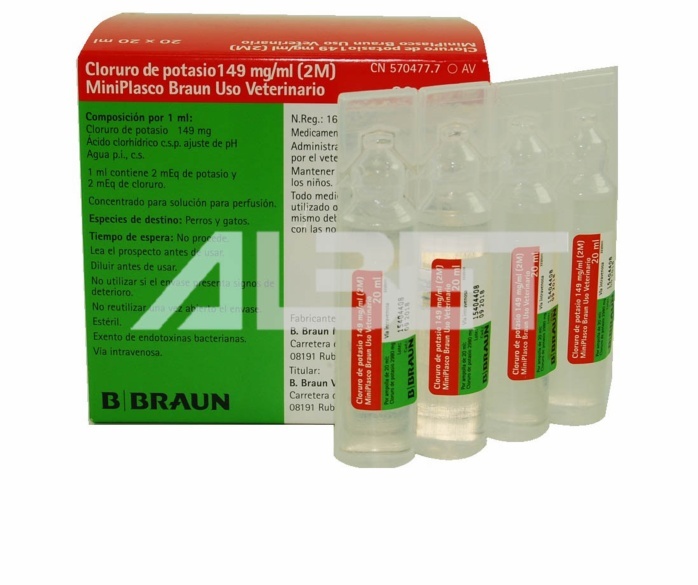
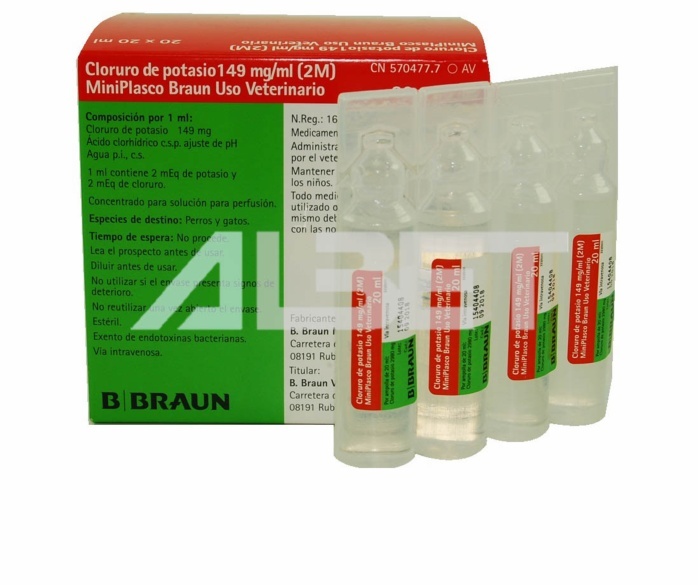
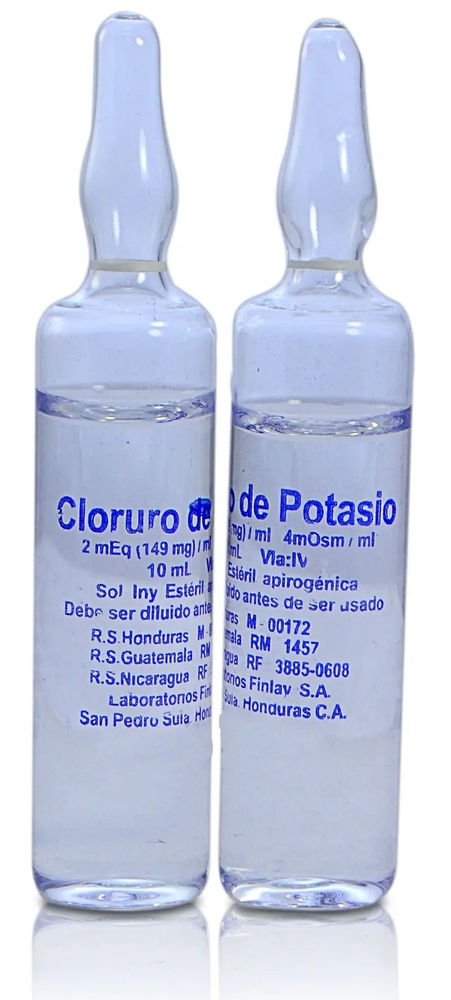
- Alternatives to POTASSIUM CHLORIDE MEINSOL 2 mEq/ml CONCENTRATE FOR PERFUSION SOLUTIONDosage form: INJECTABLE INFUSION, -Active substance: potassium chlorideManufacturer: B Braun Medical S.A.Prescription requiredDosage form: INJECTABLE PERFUSION, -Active substance: potassium chlorideManufacturer: B Braun Medical S.A.Prescription requiredDosage form: INJECTABLE PERFUSION, 15% w/vActive substance: potassium chlorideManufacturer: Laboratorios Serra Pamies S.A.Prescription required
Online doctors for POTASSIUM CHLORIDE MEINSOL 2 mEq/ml CONCENTRATE FOR PERFUSION SOLUTION
Discuss questions about POTASSIUM CHLORIDE MEINSOL 2 mEq/ml CONCENTRATE FOR PERFUSION SOLUTION, including use, safety considerations and prescription review, subject to medical assessment and local regulations.









Get POTASSIUM CHLORIDE MEINSOL 2 mEq/ml CONCENTRATE FOR PERFUSION SOLUTION Prescription Online
Fill in a 2-min form
Tell us your symptoms, history, and what medicine you're requesting.
Pick a doctor or let us assign
Choose a specialist or we'll match you with the next available doctor.
Doctor reviews your case
Usually within 30 minutes. They may ask follow-up questions via chat.
Collect from any pharmacy
Electronic prescription sent to your email — valid across Spain.
Frequently Asked Questions
POTASSIUM CHLORIDE MEINSOL 2 mEq/ml CONCENTRATE FOR PERFUSION SOLUTION requires a prescription in Spain. You can check with a doctor online whether this medicine may be appropriate for your situation.
The active ingredient in POTASSIUM CHLORIDE MEINSOL 2 mEq/ml CONCENTRATE FOR PERFUSION SOLUTION is potassium chloride. This information helps identify medicines with the same composition but different brand names.
POTASSIUM CHLORIDE MEINSOL 2 mEq/ml CONCENTRATE FOR PERFUSION SOLUTION is manufactured by Fresenius Kabi España, S.A.U.. Pharmacy brands and packaging may differ depending on the distributor.
Doctors such as Family doctors, Psychiatrists, Dermatologists, Cardiologists, Endocrinologists, Gastroenterologists, Pulmonologists, Nephrologists, Rheumatologists, Hematologists, Infectious disease physicians, Allergists, Geriatricians, Paediatricians, Oncologists may assess whether POTASSIUM CHLORIDE MEINSOL 2 mEq/ml CONCENTRATE FOR PERFUSION SOLUTION is appropriate, depending on your situation and local regulations. You can book an online consultation to discuss your symptoms and possible next steps.
Spain has a well-developed healthcare infrastructure across major cities such as Madrid, Barcelona, Valencia, and Seville. Pharmacies are widely available and operate under strict regulations, ensuring access to prescribed medications.
You can buy POTASSIUM CHLORIDE MEINSOL 2 mEq/ml CONCENTRATE FOR PERFUSION SOLUTION in Madrid, Barcelona, Seville, or Valencia at any local pharmacy with a valid prescription.
To obtain a prescription, you can use Oladoctor:
Other medicines with the same active substance (potassium chloride) include POTASSIUM CHLORIDE BRAUN 1 mEq/ml CONCENTRATE FOR INFUSION SOLUTION, POTASSIUM CHLORIDE BRAUN 2 mEq/ml CONCENTRATE FOR INFUSION SOLUTION, POTASSIUM CHLORIDE SERRACLINICS 2 mEq/mL CONCENTRATE FOR PERFUSION SOLUTION. These may have different brand names or formulations but contain the same therapeutic ingredient. Always consult a doctor before switching or starting a new medicine.
