


CLINDAMYCIN QUALIGEN 300 mg HARD CAPSULES



How to use CLINDAMYCIN QUALIGEN 300 mg HARD CAPSULES
Translated with AI
This page provides general information and does not replace a doctor’s consultation. Always consult a doctor before taking any medication. Seek urgent medical care if symptoms are severe.
Show originalContents of the leaflet
Introduction
Package Leaflet: Information for the User
Clindamicina Qualigen 300 mg Hard Capsules EFG
Read all of this leaflet carefully before you start taking this medicine because it contains important information for you.
- Keep this leaflet, you may need to read it again.
- If you have any further questions, ask your doctor or pharmacist.
- This medicine has been prescribed for you only. Do not pass it on to others. It may harm them, even if their signs of illness are the same as yours.
- If you get any side effects, talk to your doctor or pharmacist. This includes any possible side effects not listed in this leaflet. See section 4.
Contents of the Package Leaflet
- What is Clindamicina Qualigen and what is it used for
- What you need to know before you take Clindamicina Qualigen
- How to take Clindamicina Qualigen
- Possible side effects
- Storage of Clindamicina Qualigen
- Contents of the Pack and Further Information
1. What is Clindamicina Qualigen and what is it used for
This medicine belongs to a group of antibiotics called lincosamides.
Antibiotics are used to treat bacterial infections and do not work for viral infections such as flu or common cold.
It is important to follow the instructions regarding dosage, administration, and treatment duration as indicated by your doctor.
Do not store or reuse this medicine. If you have any leftover antibiotic after finishing the treatment, return it to the pharmacy for proper disposal. Do not throw away medicines via wastewater or household waste.
It is used to treat infections caused by bacteria in different parts of the body, in adults.
Additionally, this medicine is used to treat acute sinusitis (infection of the paranasal sinuses) in children over 1 month and under 18 years of age.

2. What you need to know before you take Clindamicina Qualigen
Do not take Clindamicina hard capsules
- If you are allergic to clindamycin, lincomycin, or any of the other ingredients of this medicine (listed in section 6).
- If you have had antibiotic-associated colitis in the past.
Warnings and Precautions
- During treatment, allergic reactions (including anaphylactic reaction and shock) may occur, in which case, treatment with Clindamicina should be discontinued and appropriate treatment initiated.
- During treatment with this medicine or after it, symptoms suggesting antibiotic-associated colitis (diarrhea) may appear. If so, treatment should be suspended, and your doctor will prescribe the most suitable treatment.
- If you have an inflammatory bowel disease, such as Crohn's disease or ulcerative colitis, inform your doctor to confirm whether you should use this medicine.
- Prolonged administration of this medicine may cause the growth of other microorganisms, especially fungi.
- If you are being treated with neuromuscular blockers (used to produce muscle paralysis, such as pancuronium, tubocurarine), inform your doctor, as clindamycin may enhance the effect of these medicines.
- If treatment with Clindamicina is long, you should have periodic blood tests and tests to assess blood count and liver and kidney function.
- Acute kidney disorders may occur. Inform your doctor about any medication you are currently taking and if you have any kidney problems. If you experience decreased urine production, fluid retention causing swelling in legs, ankles, or feet, shortness of breath, or nausea, you should contact your doctor immediately.
Children and Adolescents
This medicine is not suitable for children who are unable to swallow the capsules whole.
The recommended dose in children over 1 month is 8 to 25 mg/kg/day divided into 3 or 4 equal doses, see section 3.
Using Clindamicina hard capsules with other medicines
Inform your doctor or pharmacist if you are using or have recently used other medicines, including those obtained without a prescription.
You should inform your doctor if you are taking any of the following medicines:
- Vitamin K antagonist (anticoagulants), as they should prescribe frequent blood coagulation tests.
- Neuromuscular blocking agent (such as pancuronium, tubocurarine), as their effect may be enhanced by the use of this medicine.
- Oral typhoid vaccine, as it is inactivated by concomitant administration of antibacterial agents; Clindamicina should not be administered 3 days before or after vaccination.
Taking Clindamicina hard capsules with food and drinks
The capsules can be taken with food, as food intake does not modify the absorption of Clindamicina. It is recommended to take the capsules with a large glass of water to avoid possible esophageal irritation.
Pregnancy, Breastfeeding, and Fertility
Pregnancy
If you are pregnant or breastfeeding, think you may be pregnant, or plan to become pregnant, consult your doctor or pharmacist before using this medicine.
Clindamicina crosses the placental barrier in humans. In clinical studies with pregnant women, systemic administration of clindamycin during the second and third trimesters has not been associated with an increased frequency of congenital anomalies. There are no sufficient and well-controlled studies with pregnant women during the first trimester of pregnancy.
Therefore, clindamycin should not be used during pregnancy unless it is strictly necessary.
Breastfeeding
Clindamicina is excreted in breast milk after oral or intravenous administration. Due to potential serious adverse reactions in the infant, the use of clindamycin is contraindicated during breastfeeding.
Driving and Using Machines
The influence of this medicine on the ability to drive or use machines is negligible.
Clindamicina hard capsules contain lactose
If your doctor has told you that you have an intolerance to some sugars, consult them before taking this medicine.
3. How to take Clindamicina Qualigen
Follow exactly the administration instructions of the medicine contained in this leaflet or as indicated by your doctor. In case of doubt, consult your doctor or pharmacist.
This medicine is administered orally.
Your doctor will determine the most suitable dose and treatment duration for you, according to your condition and response to treatment.
Adults
The recommended dose in adults is 600 to 1800 mg per day divided into 2, 3, or 4 equal doses depending on the severity, location of the infection, and sensitivity of the microorganism. Your doctor will indicate the regimen to follow.
The treatment duration should be determined based on the type of infection and response and should be as short as possible, generally 7 to 14 days.
The usual dosage in acute pharyngitis and certain pneumonias is 300 mg, 2 times a day for 10 days.
Pelvic inflammatory disease: after intravenous treatment administered by a healthcare professional, 450-600 mg of clindamycin every 6 hours orally until completion of 10-14 days (complete treatment, intravenous and oral administration).
Pneumonia in patients with HIV infection: 300-450 mg of clindamycin every 6 hours orally for 21 days. Treatment is performed in combination therapy with primaquine (15-30 mg/day orally).
Toxoplasmosis encephalitis in patients with HIV infection: 600-1200 mg of clindamycin every 6 hours intravenously or orally for 2 weeks.
After this period, 300-600 mg every 6 hours orally for 8-10 weeks. Treatment is performed in combination therapy with pyrimethamine (25-75 mg/day orally) and folinic acid (10-20 mg/day) with the highest doses of pyrimethamine.
Use in Elderly Patients
No dose adjustment is required in elderly patients with normal liver and kidney function.
Use in Patients with Renal Impairment
No dose adjustment is required in patients with renal impairment.
Use in Patients with Hepatic Impairment
No dose adjustment is required in patients with hepatic impairment.
Use in Children
The recommended dose in children over 1 month is 8 to 25 mg/kg/day divided into 3 or 4 equal doses. The capsules should be taken whole, which should be taken into account when administering the medicine.
If you take more Clindamicina hard capsules than you should
In case of overdose, you may experience nausea, vomiting, diarrhea, or allergic reactions.
In case of overdose or accidental ingestion, consult your doctor or pharmacist immediately or call the Toxicology Information Service at 91 562 04 20, indicating the medicine and the amount ingested.
Information for the Healthcare Professional
In case of overdose, peritoneal dialysis or hemodialysis is not effective in removing the medicine. Gastric lavage can be performed. Treatment with activated charcoal and implementation of adequate symptomatic treatment is recommended.
In case of an allergic reaction, the usual emergency treatment should be applied, including corticosteroids, adrenaline, and antihistamines.
If you forget to take Clindamicina
In case of a missed dose, use the medicine as soon as possible, continuing with the treatment as prescribed. However, if the next dose is near, it is better not to take the missed dose and wait for the next one. Do not take a double dose to make up for the missed dose. Continue using Clindamicina as your doctor has indicated.
If you stop taking Clindamicina
If you stop treatment with Clindamicina before your doctor recommends, symptoms may worsen or reappear.
If you have any further questions about the use of this product, ask your doctor or pharmacist.

4. Possible Side Effects
Like all medicines, Clindamicina can cause side effects, although not everybody gets them.
Inform your doctor immediately if you experience:
- fluid retention causing swelling in legs, ankles, or feet, difficulty breathing, or nausea.
The frequency of adverse effects during clinical trials was:
Common: may affect up to 1 in 10 people
- abdominal pain, diarrhea, pseudomembranous colitis.
- liver function test abnormalities.
Uncommon: may affect up to 1 in 100 people
- nausea, vomiting.
- red skin rash with small bumps (macules or papules) (maculopapular rash), red, elevated, and itchy skin lesions (urticaria).
Frequency not known (cannot be estimated from the available data)
- vaginal infection.
- decreased white blood cells (agranulocytosis, leucopenia, neutropenia), decreased platelets (thrombocytopenia), increased white blood cells (eosinophilia).
- allergic reaction (anaphylactoid reaction), drug reaction with eosinophilia and systemic symptoms (DRESS syndrome).
- taste disturbance.
- esophageal ulcer, esophagitis.
- yellowing of skin and mucous membranes (jaundice).
- severe skin reactions: toxic epidermal necrolysis, Stevens-Johnson syndrome, erythema multiforme, exfoliative dermatitis, vesicular dermatitis, pruritus.
Reporting of Side Effects
If you experience any side effects, talk to your doctor or pharmacist, even if they are not listed in this leaflet. You can also report side effects directly through the Spanish Medicines and Healthcare Products Agency (AEMPS) website: www.notificaram.es.
By reporting side effects, you can help provide more information on the safety of this medicine.
5. Storage of Clindamicina Qualigen
Keep this medicine out of the sight and reach of children.
Store below 30°C. Store in the original packaging to protect from light.
Do not use this medicine after the expiry date stated on the carton. The expiry date is the last day of the month indicated.
Medicines should not be disposed of via wastewater or household waste. Place the empty packaging and any unused medicine in the pharmacy's SIGRE collection point. If you have any doubts, ask your pharmacist how to dispose of the packaging and any unused medicine. This will help protect the environment.
6. Contents of the Pack and Further Information
Composition
The active substance is clindamycin (as hydrochloride). Each capsule contains 300 mg of clindamycin (in the form of hydrochloride).
The other ingredients are: capsule content (lactose monohydrate, cornstarch, magnesium stearate, and talc) and capsule ingredients (titanium dioxide (E171), gelatin, and printing ink (shellac, iron oxide black (E-172), propylene glycol (E1520), and ammonium hydroxide (E527)).
Appearance of the Product and Pack Contents
White-white opaque hard capsules, size 0 el, and engraved with "CLIN 300".
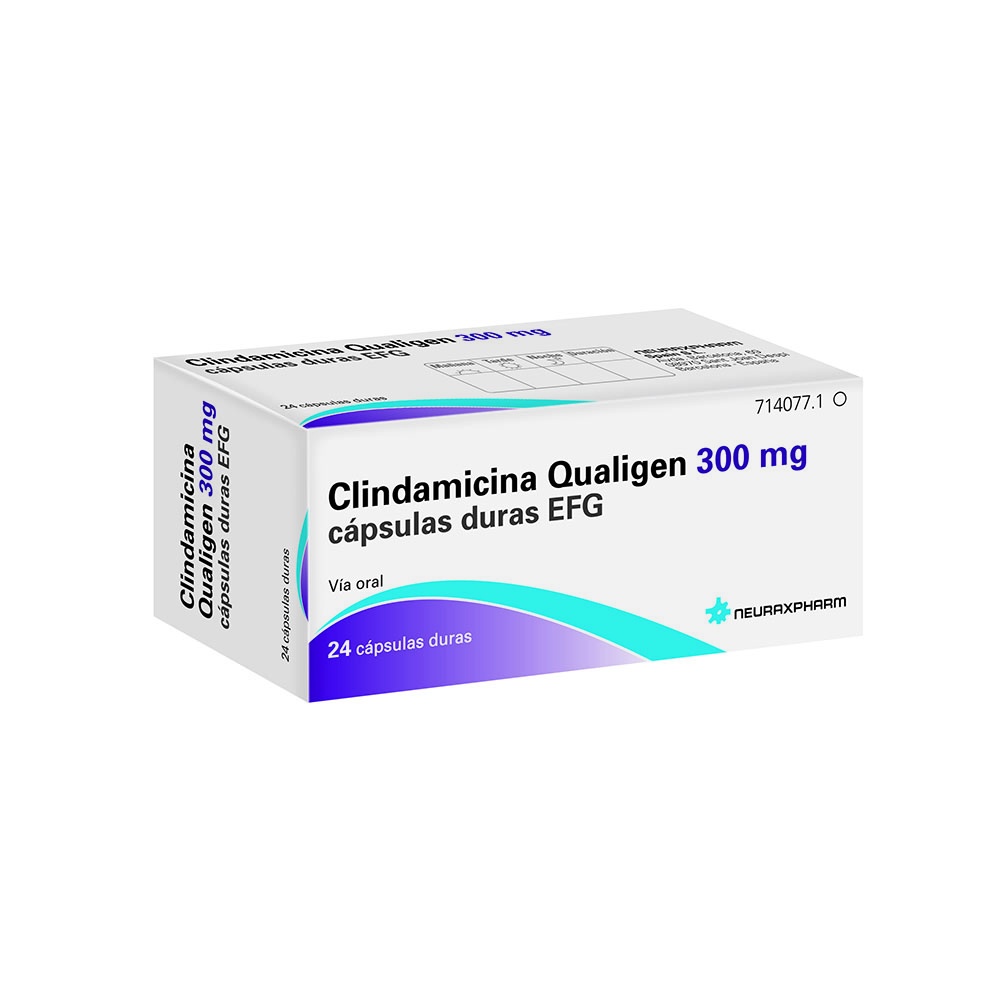
Alu/PVC blister pack in a cardboard box containing 24 capsules.
Marketing Authorization Holder and Manufacturer
Marketing Authorization Holder
Neuraxpharm Spain, S.L.U.
Avda. Barcelona, 69
08970 Sant Joan Despí
Barcelona – Spain
Manufacturer
Holsten Pharma GmbH
Hahnstrasse 31-35,
Frankfurt/Main
Hessen - 60528
Germany
Date of the Last Revision of this Leaflet: July 2021
Detailed and updated information on this medicine is available on the website of the Spanish Agency for Medicines and Healthcare Products (AEMPS) http://www.aemps.gob.es/.
- Country of registration
- Dosage formCAPSULE, 300 mg
- ATC codeJ01FF01
- Average pharmacy price6.57 EUR
- Active substance
- Prescription requiredYes
- Manufacturer
- This information is for reference only and does not constitute medical advice. Always consult a doctor before taking any medication. Oladoctor is not responsible for medical decisions based on this content.
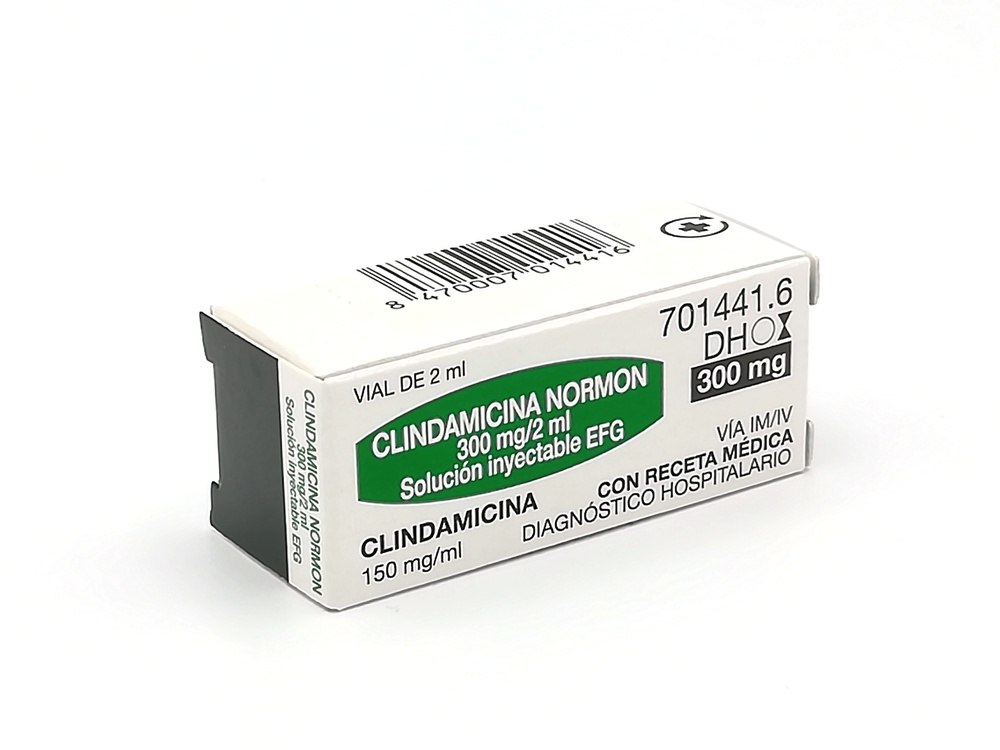
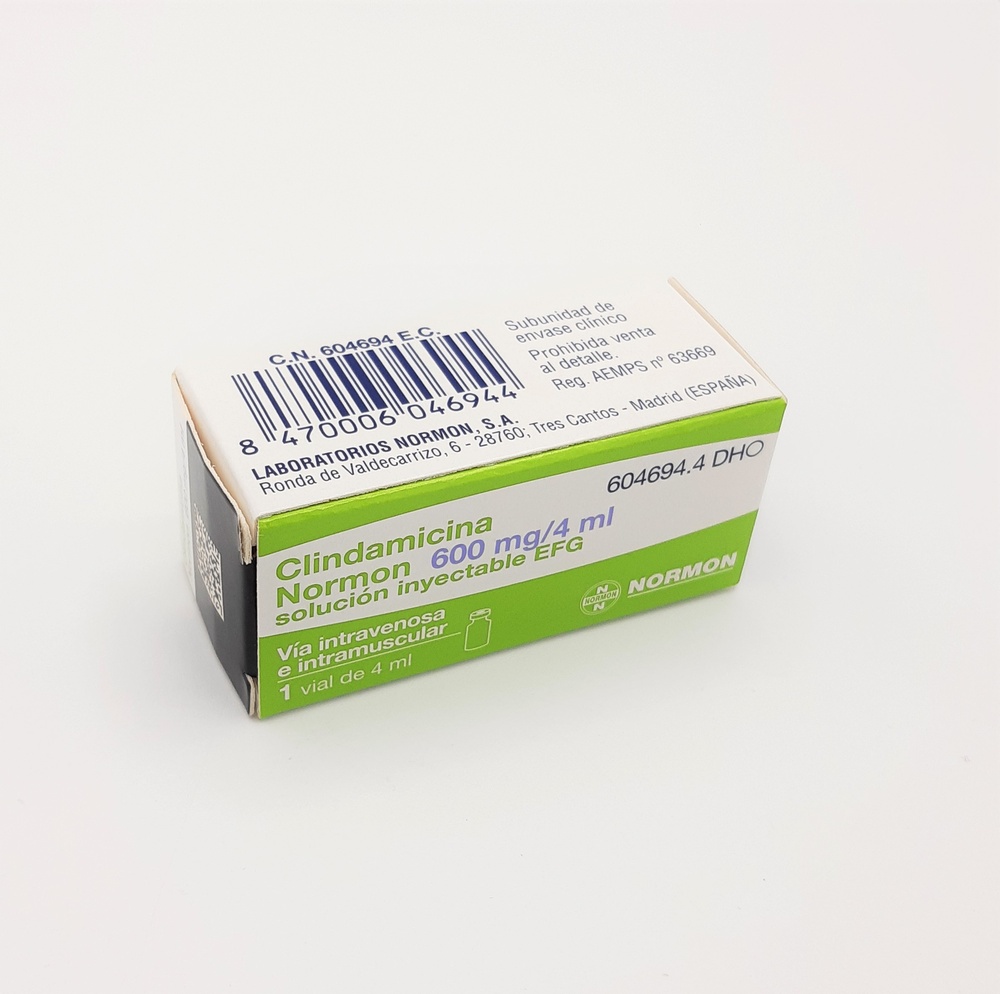
- Alternatives to CLINDAMYCIN QUALIGEN 300 mg HARD CAPSULESDosage form: INJECTABLE, 150 mg/mlActive substance: clindamycinManufacturer: Kalceks AsPrescription requiredDosage form: INJECTABLE, -Active substance: clindamycinManufacturer: Laboratorios Normon S.A.Prescription requiredDosage form: INJECTABLE, 600 mgActive substance: clindamycinManufacturer: Laboratorios Normon S.A.Prescription required

Online doctors for CLINDAMYCIN QUALIGEN 300 mg HARD CAPSULES
Discuss questions about CLINDAMYCIN QUALIGEN 300 mg HARD CAPSULES, including use, safety considerations and prescription review, subject to medical assessment and local regulations.











Frequently Asked Questions
