






How to use CITORSAL powder for oral solution in sachets
Translated with AI
This page provides general information and does not replace a doctor’s consultation. Always consult a doctor before taking any medication. Seek urgent medical care if symptoms are severe.
Show originalContents of the leaflet
Introduction
Package Leaflet: Information for the User
Citorsal
Powder for Oral Solution in Sachet
Calcium lactate anhydrous, magnesium sulfate anhydrous, citric acid anhydrous, sodium citrate anhydrous, sodium chloride anhydrous, potassium chloride anhydrous, sodium phosphate anhydrous, and glucose monohydrate
Read this entire leaflet carefully before starting to take this medication, as it contains important information for you.
- Keep this leaflet, as you may need to read it again.
- If you have any questions, consult your doctor or pharmacist.
- This medication has been prescribed to you only, and you should not give it to others, even if they have the same symptoms as you, as it may harm them.
- If you experience side effects, consult your doctor or pharmacist, even if they are not listed in this leaflet. See section 4.
Contents of the Package Leaflet
- What Citorsal is and what it is used for
- What you need to know before taking Citorsal
- How to take Citorsal
- Possible side effects
- Storage of Citorsal
- Package Contents and Additional Information
1. What Citorsal is and what it is used for
Citorsal belongs to the pharmacotherapeutic group of oral rehydration salts and is used in the prevention and treatment of mild and moderate dehydration caused by various factors, such as acute gastrointestinal disorders in infants, acidosis, acetonemic vomiting, extrarenal uremia, vomiting in pregnant women, and all cases of abundant fluid loss due to persistent vomiting or diarrhea.
Citorsal is indicated for adults, infants, and children.

2. What you need to know before taking Citorsal
Do not take Citorsal:
- If you are allergic to the active ingredients or any of the components of this medication (listed in section 6).
- If you have glucose or galactose malabsorption.
- If you have diabetes.
- If you are unable to drink.
- If you require oral administration through a gastric tube or intravenously.
- If you have severe, persistent diarrhea, or other critical fluid losses that require parenteral therapy.
- If you have intense and sustained vomiting.
- If you have intestinal obstruction, paralytic ileus, or intestinal perforation.
- If you have anuria (cessation of urine secretion) or oliguria (decreased urine production).
- If you have renal insufficiency.
- Premature infants or infants under one month of age.
Warnings and Precautions
Consult your doctor or pharmacist before starting to take Citorsal.
Be particularly careful with Citorsal:
- When parenteral rehydration is indicated, such as in cases of severe dehydration and continuous or frequent vomiting, as oral administration of Citorsal is not appropriate in these cases.
- You can eat food normally once the diarrhea is corrected.
Taking Citorsal with Other Medications
Inform your doctor or pharmacist if you are taking, have recently taken, or may need to take any other medication.
Due to its calcium content, it interferes with the absorption of tetracyclines.
Taking Citorsal with Food and Drinks
- Avoid taking foods or other liquids with high sugar content, such as fruit juices or other liquids containing electrolytes; if additional liquid is desired, use water.
- Avoid salty foods.
- Cow's milk should only be stopped if the diarrhea worsens considerably after taking it, replacing it with another protein-rich food.
Pregnancy and Breastfeeding
If you are pregnant or breastfeeding, think you may be pregnant, or plan to become pregnant, consult your doctor or pharmacist before using this medication.
Driving and Using Machines
This medication does not affect your ability to drive or use machines.
Citorsal Contains Glucose, Sodium, Potassium, and Yellow-Orange Colorant (E-110)
This medication contains glucose. If your doctor has told you that you have an intolerance to certain sugars, consult with them before taking this medication.
Patients with diabetes mellitus should note that this medication contains 5g of glucose per 100ml of reconstituted solution.
This medication contains 115mg of sodium (main component of table salt/cooking salt) per 100ml of prepared solution. This is equivalent to 6% of the maximum recommended daily sodium intake for an adult.
Patients with renal insufficiency or those on low-potassium diets should note that this medication contains 78mg (2mmol) of potassium per 100ml of prepared solution.
This medication may cause allergic reactions because it contains yellow-orange colorant (E-110). It can trigger asthma, especially in patients allergic to acetylsalicylic acid.
3. How to Take Citorsal
Follow the administration instructions for this medication exactly as indicated by your doctor or pharmacist. If in doubt, consult your doctor or pharmacist again.
Citorsal should be taken by dissolving the contents of one sachet in half a liter of water (500ml) or two sachets in one liter.
The solution should be prepared and administered at room temperature.
The water, if necessary, can be previously boiled, but not after preparation.
No other ingredients, such as sugar, should be added.
Citorsal is administered orally.
The normal dose should be calculated individually based on the patient's weight and the severity of their illness, although the recommended dose is generally:
Infants from one month: recommended between 1-1.5 times their usual food volume.
Children from one year: 200ml of solution per diarrheal episode.
Adults: between 200-400ml of solution per diarrheal episode.
Treatment should continue while diarrhea persists, and once it has stopped, your doctor will assess whether rehydration has been achieved and there is no risk of dehydration, which is usually achieved in 4 or 5 days.
Administration is usually done "ad libitum," allowing the patient to drink as much as they want. In cases of patients with very frequent diarrhea, they should be encouraged to drink, and in cases of very weak patients, they should be helped.
In children, especially if they are weak or have vomiting, it is advisable to administer the solution at a rate of 25-30ml at intervals of 10-15 minutes.
If dehydration is mild and in children under 2 years, on the first day of treatment, a dose of water alone should be administered for every two doses of Citorsal oral solution powder, all of the same volume. On subsequent days, drink water frequently.
Always start with small amounts and increase as required by the patient. In all cases, it is recommended to administer the solution frequently, in small amounts, and slowly to facilitate its absorption. In infants and children, continued feeding, including breastfeeding, is important to maintain hydration and nutrition.
In adults, the diet should be resumed as soon as appetite returns.
Elderly Patients
The recommended dosage is the same as for adults.
Patient with Hepatic Impairment
In this case, no dose adjustment is necessary.
Patient with Renal Impairment
In patients with altered renal function, Citorsal should not be administered, as these patients may develop very high levels of sodium (hypernatremia) and potassium (hyperkalemia) in the blood.
Instructions for Correct Administration of the Preparation:
Pour the contents of one sachet into half a liter of water (500ml) or two sachets into one liter. To facilitate dissolution of the product, it is recommended to slowly add the powder to the water while vigorously stirring with a tablespoon until completely dissolved.
Under certain circumstances, which do not affect its therapeutic qualities, Citorsal may harden in the packaging. Simply pressing the sachet with your hand will convert it into a fine, equally soluble powder.
If You Take More Citorsal Than You Should
In case of overdose or accidental ingestion, consult your doctor or pharmacist immediately or call the Toxicology Information Service, phone: 91 562 04 20, indicating the medication and the amount used.
An excess of Citorsal can cause overhydration. Suspend treatment if you notice that your eyelids are swollen.
In patients with renal impairment, overdose can lead to hypernatremia and hyperkalemia.
If You Forget to Take Citorsal
Do not take a double dose to make up for forgotten doses.

4. Possible Side Effects
Like all medications, this medication can cause side effects, although not everyone will experience them. The most common are vomiting, which can occur when administered too quickly. In these cases, administration of Citorsal should be interrupted for 10 minutes and then resumed with smaller, more frequent amounts.
Reporting Side Effects
If you experience any side effects, consult your doctor or pharmacist, even if they are not listed in this leaflet. You can also report them directly through the Spanish Pharmacovigilance System for Human Use Medications: https://www.notificaram.es. By reporting side effects, you can contribute to providing more information on the safety of this medication.
5. Storage of Citorsal
Keep this medication out of the sight and reach of children.
Unused solution should be discarded 24 hours after preparation and does not require any special storage precautions.
Do not use this medication after the expiration date stated on the packaging after CAD. The expiration date is the last day of the month indicated.
Medications should not be disposed of through wastewater or household waste. Deposit the packaging and any unused medications at the SIGRE collection point in your pharmacy. If in doubt, ask your pharmacist how to dispose of the packaging and any unused medications. This will help protect the environment.
6.
Composition of Citorsal
- The active ingredients are calcium lactate anhydrous, magnesium sulfate anhydrous, citric acid anhydrous, sodium citrate anhydrous, sodium chloride anhydrous, potassium chloride anhydrous, sodium phosphate anhydrous, and glucose monohydrate.
- The other components are: neohesperidin, orange flavor, and yellow-orange colorant (E-110).
Each sachet should be dissolved in half a liter (500ml) of water. Each 100ml of the resulting solution contains as active ingredients: 0.0436g of calcium lactate anhydrous, 0.024g of magnesium sulfate anhydrous, 0.032g of citric acid anhydrous, 0.258g of sodium citrate anhydrous, 0.0585g of sodium chloride anhydrous, 0.149g of potassium chloride anhydrous, 0.071g of sodium phosphate anhydrous, and 5g of glucose (monohydrate).
Appearance of the Product and Package Contents
Citorsal is presented in the form of sachets with a lightly orange-colored powder for oral solution and an orange odor. It can be presented in two formats: boxes containing 2 or 5 paper-aluminum sachets.
Marketing Authorization Holder
LABORATORIOS ERN, S.A.
Perú, 228 - 08020 Barcelona, Spain
Manufacturer
LABORATORIOS ERN, S.A.
Gorgs Lladó, 188 – 08210 Barberá del Vallés, Barcelona, Spain
Date of the Last Revision of this Leaflet:June 2020
Detailed and updated information on this medication is available on the website of the Spanish Agency for Medicines and Health Products (AEMPS) http://www.aemps.gob.es/.
-

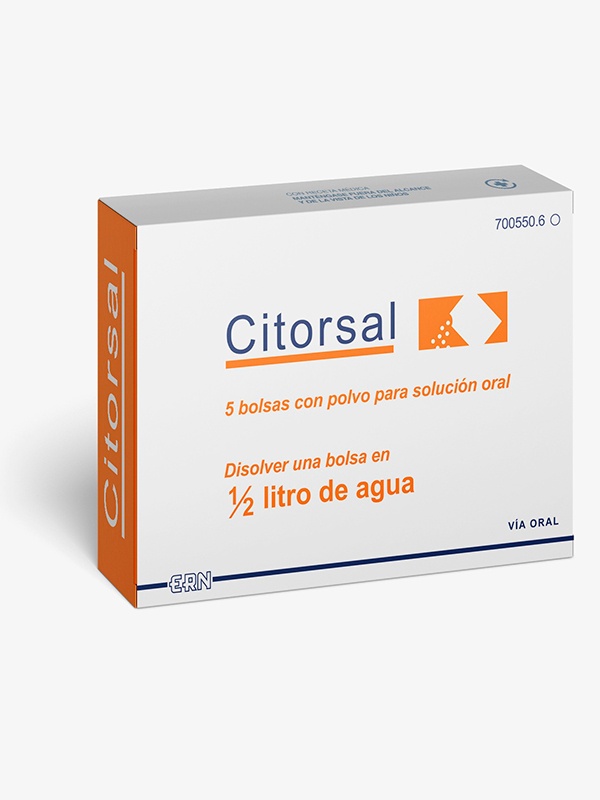
- Country of registration
- Dosage formORAL SOLUTION/SUSPENSION, 43.6 mg / 24 mg / 258 mg / 32 mg / 149 mg / 5 g / 58.5 mg / 71 mg
- ATC codeA07CA91
- Average pharmacy price4.62 EUR
- Active substance
- Prescription requiredYes
- Manufacturer
- This information is for reference only and does not constitute medical advice. Always consult a doctor before taking any medication. Oladoctor is not responsible for medical decisions based on this content.
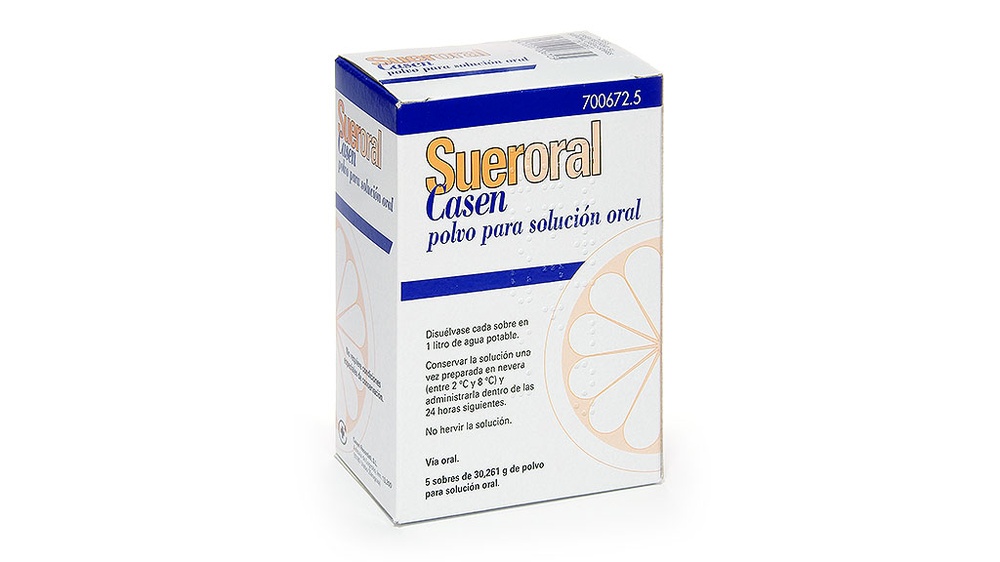
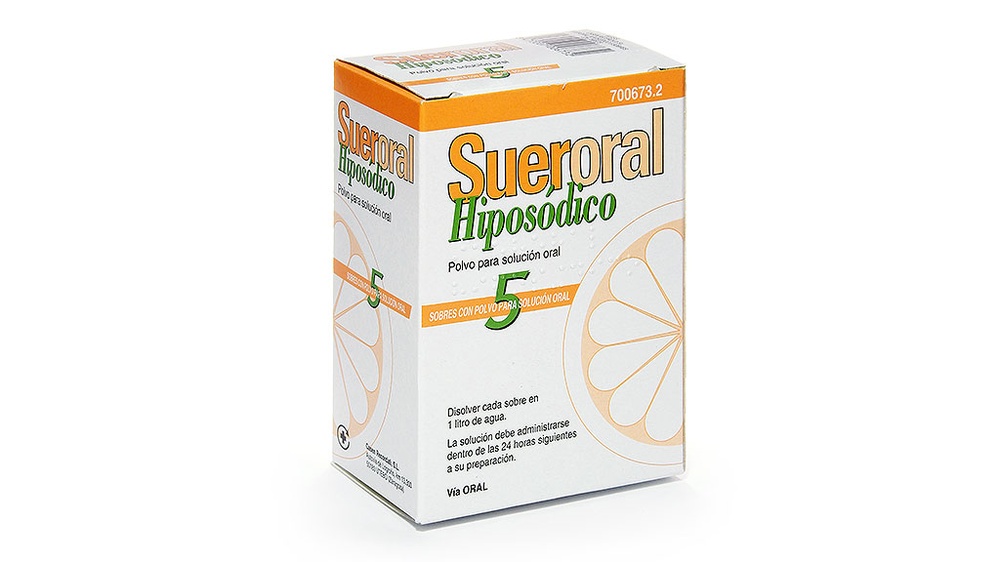
- Alternatives to CITORSAL powder for oral solution in sachetsDosage form: ORAL SOLUTION/SUSPENSION, 20 g / 1.5 g / 3.5 g / 2.9 gActive substance: Oral rehydration salt formulationsManufacturer: Casen Recordati S.L.Prescription not requiredDosage form: ORAL SOLUTION/SUSPENSION, -Active substance: Oral rehydration salt formulationsManufacturer: Casen Recordati S.L.Prescription not requiredDosage form: TABLET, 2 mgActive substance: loperamideManufacturer: Uxa Farma S.A.Prescription not required
Online doctors for CITORSAL powder for oral solution in sachets
Discuss questions about CITORSAL powder for oral solution in sachets, including use, safety considerations and prescription review, subject to medical assessment and local regulations.





Get CITORSAL powder for oral solution in sachets Prescription Online
Fill in a 2-min form
Tell us your symptoms, history, and what medicine you're requesting.
Pick a doctor or let us assign
Choose a specialist or we'll match you with the next available doctor.
Doctor reviews your case
Usually within 30 minutes. They may ask follow-up questions via chat.
Collect from any pharmacy
Electronic prescription sent to your email — valid across Spain.
Frequently Asked Questions
CITORSAL powder for oral solution in sachets requires a prescription in Spain. You can check with a doctor online whether this medicine may be appropriate for your situation.
The active ingredient in CITORSAL powder for oral solution in sachets is Oral rehydration salt formulations. This information helps identify medicines with the same composition but different brand names.
The average pharmacy price for CITORSAL powder for oral solution in sachets is around 4.62 EUR. Prices may vary depending on the manufacturer and dosage form.
CITORSAL powder for oral solution in sachets is manufactured by Laboratorios Ern S.A.. Pharmacy brands and packaging may differ depending on the distributor.
Doctors such as Family doctors, Psychiatrists, Dermatologists, Cardiologists, Endocrinologists, Gastroenterologists, Pulmonologists, Nephrologists, Rheumatologists, Hematologists, Infectious disease physicians, Allergists, Geriatricians, Paediatricians, Oncologists may assess whether CITORSAL powder for oral solution in sachets is appropriate, depending on your situation and local regulations. You can book an online consultation to discuss your symptoms and possible next steps.
Spain has a well-developed healthcare infrastructure across major cities such as Madrid, Barcelona, Valencia, and Seville. Pharmacies are widely available and operate under strict regulations, ensuring access to prescribed medications.
You can buy CITORSAL powder for oral solution in sachets in Madrid, Barcelona, Seville, or Valencia at any local pharmacy with a valid prescription.
To obtain a prescription, you can use Oladoctor:
Other medicines with the same active substance (Oral rehydration salt formulations) include SUERORAL CASEN Powder for Oral Solution, SUERORAL HYPOSODIC, ABECLIN 2 mg TABLETS. These may have different brand names or formulations but contain the same therapeutic ingredient. Always consult a doctor before switching or starting a new medicine.
