



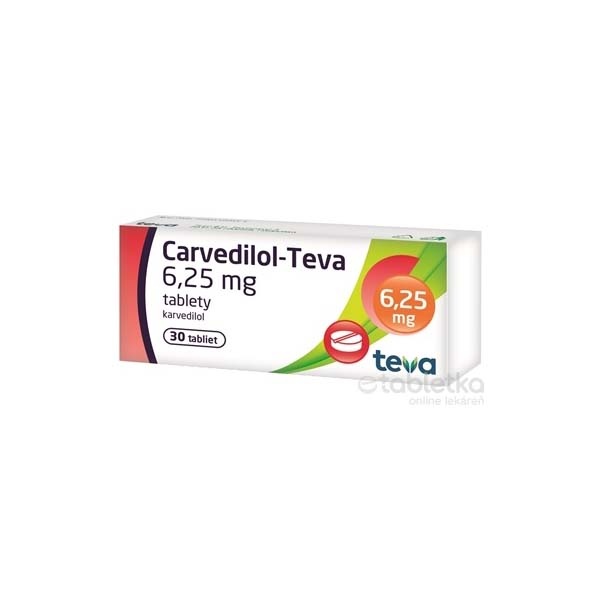
CARVEDILOL 6.25 mg Tablets

Prescription review online
A doctor will review your case and decide whether a prescription is medically appropriate.

Talk to a doctor about this medicine
Discuss your symptoms and possible next steps in a quick online consultation.



How to use CARVEDILOL TEVA 6.25 mg TABLETS
Contents of the leaflet
- Introduction
- What is Carvedilol Teva and what is it used for
- What you need to know before you take Carvedilol Teva
- How to take Carvedilol Teva
- Possible side effects
- Storing Carvedilol Teva
- Contents of the pack and other information
Introduction
Package Leaflet: Information for the User
Carvedilol Teva 6.25 mg TabletsEFG
Read all of this leaflet carefully before you start taking this medicine because it contains important information for you.
|
Contents of the pack and other information
- What is Carvedilol Teva and what is it used for.
- What you need to know before you take Carvedilol Teva.
- How to take Carvedilol Teva
- Possible side effects.
- Storing Carvedilol Teva
- Contents of the pack and other information.
1. What is Carvedilol Teva and what is it used for
Carvedilol belongs to a group of medicines called beta blockers. Beta blockers cause the blood vessels to relax and widen, and slow the heart rate, which makes the heartbeat slower and reduces blood pressure.
Carvedilol is used to:
- Treat angina pectoris.
- Control high blood pressure.
- Carvedilol may also be used in combination with other therapies to treat heart failure.

Not sure if this medicine is right for you?
Discuss your symptoms and treatment with a doctor online.
2. What you need to know before you take Carvedilol Teva
Do not take Carvedilol Teva if
- you are allergic (hypersensitive) to carvedilol or any of the other ingredients of this medicine (listed in section 6)
- you have a history of asthma or other lung diseases unless you have first consulted your doctor or pharmacist
- you have heart problems (e.g. "heart block" or unstable heart failure), as Carvedilol is not suitable for some people with certain types of heart problems
- you have a heart with an unusually slow rhythm (<50 bpm) or very low blood pressure (systolic below 85 mmhg) which sometimes causes dizziness, fainting dizziness when standing up< li>
- you are taking verapamil or diltiazem by injection or as an infusion (with a drip).
- you have problems with acid levels in your body (metabolic acidosis)
- you have liver problems.
Warnings and precautions
Consult your doctor before starting to take this medicine if:
- you have diabetes, as it may mask the usual symptoms of low blood sugar.
- you have kidney problems
- you have Raynaud's syndrome or peripheral vascular disease which causes cold hands and feet
- you have thyroid problems
- you have previously suffered from severe allergic reactions or are undergoing desensitization therapy to prevent allergies, for example to bee or wasp stings
- you have psoriasis (thickened skin plaques)
- you wear contact lenses, as carvedilol may cause dry eyes
- you have had problems taking debrisoquine (used to treat high blood pressure).
- you have a phaeochromocytoma (a tumour of one of your adrenal glands) unless it is adequately controlled with medication
- you have a type of angina pectoris called Prinzmetal's angina
- severe bradycardia (<50 bpm)< li>
Using Carvedilol Teva with other medicines
Tell your doctor or pharmacist if you are taking, have recently taken or might take any other medicines. This includes medicines without a prescription and herbal medicines. This is because carvedilol can affect the way some medicines work. Also, some medicines can affect the way carvedilol works.
Tell your doctor if you are taking any of the following medicines:
- other medicines used especially for the heart or for high blood pressure:
- anti-arrhythmics, e.g. amiodarone
- calcium channel blockers, e.g. amlodipine, diltiazem, verapamil, nifedipine.
- digitalis, e.g. digoxin
- nitrates, e.g. glyceryl trinitrate
- guanethidine, reserpine, methyldopa
- clonidine
- monoamine oxidase inhibitors (used to treat depression), e.g. moclobemide
- barbiturates, e.g. amylobarbitone (for insomnia)
- phenothiazines, e.g. prochlorperazine (to help stop nausea and vomiting)
- antidepressants, e.g. amitriptyline, fluoxetine (used to treat depression)
- cyclosporin (used to prevent organ rejection after a transplant)
- insulin or tablets for diabetes
- non-steroidal anti-inflammatory medicines (NSAIDs), e.g. ibuprofen (for pain, stiffness and painful inflammation of the bones, joints and muscles)
- corticosteroids (used to reduce inflammation), e.g. beclometasone
- hormone replacement therapy (used as contraceptives or hormone replacement therapy)
- rifampicin (used to treat tuberculosis)
- cimetidine (used to treat ulcers)
- ketoconazole (used to treat fungal infections)
- haloperidol (used in mental illness)
- erythromycin (an antibiotic used in bacterial infections)
- sympathomimetics (used for the nervous system), e.g. ephedrine, or beta-agonist bronchodilators
- ergotamine (used to treat migraine)
- neuromuscular blocking agents (muscle relaxants used in anaesthesia), e.g. atracurium besylate
- vasodilators (these medicines open up blood vessels)
- guanfacine (used to treat high blood pressure)
If you have to be anaesthetized for surgery, tell your hospital doctor or dentist that you are taking Carvedilol tablets.
Carvedilol with food and drinks
Do not drink alcohol while taking Carvedilol.
Pregnancy and breast-feeding
If you are pregnant or breast-feeding, think you may be pregnant or are planning to have a baby, ask your doctor or pharmacist for advice before taking this medicine. You should not take this medicine unless your doctor has told you to.
Driving and using machines
Carvedilol may reduce your alertness and you may feel dizzy during treatment with carvedilol. This is more likely to happen when you first start treatment or if you change your treatment and when you drink alcohol. If you are affected, do not drive or operate machinery.
Carvedilol Teva contains lactose
This medicine contains lactose. If your doctor has told you that you have an intolerance to some sugars, contact them before taking this medicine.
3. How to take Carvedilol Teva
Take Carvedilol Teva exactly as your doctor has told you. If you are not sure, ask your doctor or pharmacist.
- The tablets should be taken preferably with a glass of water.
- Your doctor may monitor you at the start of treatment or if your dose is increased. This may affect your urine and blood tests.
The normal dose is:
Hypertension
- Adults:The usual starting dose is 12.5 mg once daily for the first two days, after which the recommended dose is 25 mg once daily. If necessary, your doctor may gradually increase the dose. The maximum single dose is 25 mg and the maximum daily dose is 50 mg.
- Elderly patients:The usual starting dose is 12.5 mg once daily. If necessary, your doctor may increase the dose.
Angina pectoris
- Adults:The usual starting dose is 12.5 mg twice daily for two days, after which the recommended dose is 25 mg twice daily. If necessary, your doctor may gradually increase the dose. The maximum daily dose is 50 mg twice daily.
- Elderly patients: The usual starting dose is 12.5 mg twice daily for two days, after which the recommended dose is 25 mg twice daily, which is the maximum daily dose.
Heart failure
The tablets should be taken with food to reduce the risk of a drop in blood pressure when standing up, which can cause dizziness, fainting or dizziness.
- Adults: The initial dose is 3.125 mg twice daily for 2 weeks. Your doctor may gradually increase the dose to 25 mg twice daily. The maximum dose is 25 mg twice daily for patients weighing less than 85 kg. Patients weighing more than 85 kg may take a maximum dose of 50 mg twice daily.
Liver or kidney problems
If you have liver or kidney problems, your doctor may prescribe a lower dose.
Elderly patients
Your doctor may monitor you if you are elderly.
Use in children and adolescents (under 18 years)
Carvedilol is not recommended for use in children and adolescents under 18 years.
If you take more Carvedilol Teva than you should
If you (or someone else) swallow too many tablets or think a child has swallowed some, contact your doctor or go to the nearest hospital casualty department immediately. An overdose may cause a drop in blood pressure (leading to feeling weak and shaky), wheezing, vomiting, very slow heart rate, heart failure, breathing problems and loss of consciousness. You can also contact the National Poison Information Service on 020 7188 0200 for advice.
If you forget to take Carvedilol Teva
If you forget to take a dose, take another as soon as you remember, unless it is nearly time for your next dose. Do not take a double dose to make up for a forgotten dose.
If you stop taking Carvedilol Teva
Do not stop treatment abruptly, as side effects may occur. If treatment needs to be stopped, your doctor will reduce your dose gradually.
If you have any further questions on the use of this product, ask your doctor or pharmacist.

Started taking the medicine and have questions?
Discuss your symptoms and treatment with a doctor online.
4. Possible side effects
Like all medicines, this medicine can cause side effects, although not everybody gets them.
Side effects are less likely if you are being treated for angina pectoris or high blood pressure than if you are being treated for heart failure.
Possible side effects in patients treated for heart failure:
Very common (may affect more than 1 in 10 people):
- dizziness
- headache
- heart problems
- feeling tired or weak
- low blood pressure (feeling dizzy or lightheaded)
- slow heart rate, dizziness, weakness when standing up (due to low blood pressure)
Common (may affect up to 1 in 10 people):
- respiratory tract infections (bronchitis), lungs (pneumonia), nose and throat
- urinary tract infections
- anaemia
- weight gain
- increased cholesterol (fat) in the blood
- loss of control of blood sugar levels in people with diabetes
- feeling depressed
- vision problems, eye pain or dryness, eye irritation
- slow heart rate
- swelling of hands, ankles or feet
- circulation problems, fluid retention
- feeling faint or dizzy when standing up (due to low blood pressure)
- worsening of Raynaud's disease or circulation problems in patients who have these conditions
- breathing problems
- feeling sick, stomach upset, vomiting
- diarrhoea
- pain in hands or feet
- kidney problems, including changes in urination
Uncommon (may affect up to 1 in 100 people)
- sleeping problems
- feeling weak or faint
- tingling or numbness
- heart problems, chest pain
- skin problems (rash, itching, dry skin patches)
- hair loss
- impotence (difficulty getting or keeping an erection)
Rare (may affect up to 1 in 1,000 people):
- low platelet count in the blood (causing unusual bleeding or bruising)
- stuffy nose
Very rare (may affect up to 1 in 10,000 people):
- low white blood cell count in the blood
- allergic reactions
- changes in liver function (detected by blood tests)
- problems controlling urination (incontinence in women)
- skin blistering (including Stevens-Johnson syndrome, a rare skin condition with severe blisters and bleeding in the lips, eyes, mouth, nose and genitals), or severe skin blistering (toxic epidermal necrolysis, a rare skin condition with severe blisters and peeling of large areas of skin, accompanied by fever and chills, muscle pain and general feeling of being unwell), or erythema multiforme: a serious skin condition that can affect the mouth and other parts of the body. It appears as red patches, often with itching, similar to measles, starting on the extremities and sometimes on the face and the rest of the body. The patches can turn into blisters or can progress to form red, pale, centred marks. Those affected may have fever, sore throat, headache and/or diarrhoea.
Changes in blood sugar levels and worsening of glucose control in patients with diabetes may occur.
You should tell your doctor if your symptoms get worse, as you may need to have your dose of other medicines or Carvedilol changed.
Reporting of side effects
If you get any side effects, talk to your doctor, pharmacist or nurse. This includes any possible side effects not listed in this leaflet. You can also report side effects directly via the Yellow Card Scheme at: www.mhra.gov.uk/yellowcard. By reporting side effects you can help provide more information on the safety of this medicine.
5. Storing Carvedilol Teva
Keep this medicine out of the sight and reach of children.
Do not store above 25°C.
Do not use this medicine after the expiry date which is stated on the carton after EXP. The expiry date refers to the last day of that month.
Medicines should not be disposed of via wastewater or household waste. Ask your pharmacist how to dispose of medicines no longer required. These measures will help to protect the environment.
6. Contents of the pack and other information
What Carvedilol Teva 6.25 mg Tablets contain
The active substance is Carvedilol.
Each 6.25 mg tablet contains 6.25 mg of the active substance Carvedilol.
The other ingredients are: lactose monohydrate, povidone, crospovidone, colloidal anhydrous silica and magnesium stearate. The tablets contain the following colourants:
- 6.25 mg tablets: yellow iron oxide (E172).
Appearance and packaging
Carvedilol tablets are round, flat, scored on one side and engraved on the other side with "CVL" on the top. Additionally:
6.25 mg tablets are light yellow in colour and have "T2" on the bottom.
They are available in packs of 14, 28, 30, 50, 56 and 100 tablets.
Not all pack sizes may be marketed.
Marketing Authorisation Holder and Manufacturer
Marketing Authorisation Holder:
Teva Pharma, S.L.U.
C/ Anabel Segura 11. Edificio B, 1ª planta
28108 Alcobendas, Madrid (Spain)
Manufacturer
Teva Operatios Poland Sp. Z.o.o.,
Mogilska 80 Str, 31-546 Kraków
Poland
Or
Pharmachemie B.V.
Swensweg 5, PO Box 552, 2003 RN, Haarlem,
Netherlands
Or
Teva Pharmaceutical Works Private Limited Company
Pallagi Street 13 Debrecen
H-4042, Hungary
Or
TEVA PHARMACEUTICALS CR S.R.O
Sokolovska 651/136A.Business park Futurama (Prague)
18000 - Czech Republic
This medicine is authorised in the Member States of the EEA under the following names:
Germany: Carvedilol-Teva 6,25mg Tabletten
Belgium: Carvedilol Teva 6.25mg Tabletten
Denmark: Carvedilol Teva 6.25 mg Tabletter
Slovakia: Carvedilol-Teva 6.25 mg
Spain: Carvedilol Teva 6,25mg comprimidos EFG
Hungary: Carvol 6,25mg tabletta
Italy: Carvedilolo Ratiopharm compresse 6.25 mg
Portugal: Carvedilol Teva 6.25mg Comprimidos
Date of last revision of this leaflet:June 2014
- Country of registration
- Dosage formTABLET, 6.25 mg carvedilol
- ATC codeC07AG02
- Average pharmacy price2.5 EUR
- Active substance
- Prescription requiredYes
- Manufacturer
- CompositionLACTOSA HIDRATADA (86,25 mg mg), ALCOHOL ETILICO (ETANOL) (ND - mg)
- This information is for reference only and does not constitute medical advice. Always consult a doctor before taking any medication. Oladoctor is not responsible for medical decisions based on this content.
- Alternatives to CARVEDILOL TEVA 6.25 mg TABLETSDosage form: TABLET, 25 mgActive substance: carvedilolManufacturer: Almus Farmaceutica S.A.U.Prescription requiredDosage form: TABLET, 6.25 mgActive substance: carvedilolManufacturer: Almus Farmaceutica S.A.U.Prescription requiredDosage form: TABLET, 25 mgActive substance: carvedilolManufacturer: Laboratorios Alter S.A.Prescription required
Online doctors for CARVEDILOL TEVA 6.25 mg TABLETS
Discuss questions about CARVEDILOL TEVA 6.25 mg TABLETS, including use, safety considerations and prescription review, subject to medical assessment and local regulations.
Get CARVEDILOL TEVA 6.25 mg TABLETS Prescription Online
Fill in a 2-min form
Tell us your symptoms, history, and what medicine you're requesting.
Pick a doctor or let us assign
Choose a specialist or we'll match you with the next available doctor.
Doctor reviews your case
Usually within 30 minutes. They may ask follow-up questions via chat.
Collect from any pharmacy
Electronic prescription sent to your email — valid across Spain.
Frequently Asked Questions
CARVEDILOL TEVA 6.25 mg TABLETS requires a prescription in Spain. You can check with a doctor online whether this medicine may be appropriate for your situation.
The active ingredient in CARVEDILOL TEVA 6.25 mg TABLETS is carvedilol. This information helps identify medicines with the same composition but different brand names.
The average pharmacy price for CARVEDILOL TEVA 6.25 mg TABLETS is around 2.5 EUR. Prices may vary depending on the manufacturer and dosage form.
CARVEDILOL TEVA 6.25 mg TABLETS is manufactured by Teva Pharma S.L.U.. Pharmacy brands and packaging may differ depending on the distributor.
Doctors such as Family doctors, Psychiatrists, Dermatologists, Cardiologists, Endocrinologists, Gastroenterologists, Pulmonologists, Nephrologists, Rheumatologists, Hematologists, Infectious disease physicians, Allergists, Geriatricians, Paediatricians, Oncologists may assess whether CARVEDILOL TEVA 6.25 mg TABLETS is appropriate, depending on your situation and local regulations. You can book an online consultation to discuss your symptoms and possible next steps.
Spain has a well-developed healthcare infrastructure across major cities such as Madrid, Barcelona, Valencia, and Seville. Pharmacies are widely available and operate under strict regulations, ensuring access to prescribed medications.
You can buy CARVEDILOL TEVA 6.25 mg TABLETS in Madrid, Barcelona, Seville, or Valencia at any local pharmacy with a valid prescription.
To obtain a prescription, you can use Oladoctor:
Other medicines with the same active substance (carvedilol) include CARVEDILOL ALMUS 25 mg TABLETS, CARVEDILOL ALMUS 6.25 mg TABLETS, CARVEDILOL ALTER 25 mg TABLETS. These may have different brand names or formulations but contain the same therapeutic ingredient. Always consult a doctor before switching or starting a new medicine.
