



CARVEDILOL 6.25 mg Tablets

Prescription review online
A doctor will review your case and decide whether a prescription is medically appropriate.

Talk to a doctor about this medicine
Discuss your symptoms and possible next steps in a quick online consultation.



How to use CARVEDILOL NORMON 6.25 mg TABLETS
Contents of the leaflet
- Introduction
- What is Carvedilol Normon and what is it used for
- Before taking Carvedilol Normon
- How to take Carvedilol Normon
- Essential hypertension
- Oral. The recommended dose to start therapy is 12.5 mg once a day, which has provided satisfactory control in some patients. If the response is not adequate, your doctor will adjust the dose (at intervals of at least two weeks).
- Ischemic heart disease
- Treatment of symptomatic congestive heart failure
- Possible Adverse Effects
- Storage of Carvedilol Normon
- Package Contents and Additional Information
Introduction
PACKAGE LEAFLET: INFORMATION FOR THE USER
Carvedilol Normon6.25mg EFG tablets
Carvedilol
Read all of this leaflet carefully before you start taking this medicine because it contains important information for you.
- Keep this leaflet, you may need to read it again.
- If you have any further questions, ask your doctor or pharmacist.
- This medicine has been prescribed for you only. Do not pass it on to others. It may harm them, even if their signs of illness are the same as yours.
- If you get any side effects, talk to your doctor or pharmacist. This includes any possible side effects not listed in this leaflet.
Contents of the pack:
- What is Carvedilol Normon and what is it used for
- Before taking Carvedilol Normon
- How to take Carvedilol Normon
- Possible side effects
- Storage of Carvedilol Normon
- Further information
1. What is Carvedilol Normon and what is it used for
Carvedilol Normon contains carvedilol as the active ingredient, which belongs to a group of medicines known as alpha and beta blockers.
Carvedilol Normon has antioxidant, antihypertensive (reducing blood pressure), vasodilatory, and antianginal properties. It also reduces cardiac output and has favorable effects on blood circulation at the heart level.
Carvedilol Normon is indicated for the treatment of:
- Symptomatic congestive heart failure (the heart has lost some of its ability to pump blood) of moderate to severe degree, of ischemic or non-ischemic origin.
- Essential hypertension (high blood pressure).
- Ischemic heart disease (the heart receives little blood and oxygen).

Not sure if this medicine is right for you?
Discuss your symptoms and treatment with a doctor online.
2. Before taking Carvedilol Normon
Do not take Carvedilol Normon
- If you are hypersensitive (allergic) to carvedilol or any of the other components of Carvedilol Normon.
- If you have decompensated heart failure of the so-called class IV (the heart is unable to perform its pumping function during physical activity and at rest).
- If you have chronic obstructive pulmonary disease (COPD) with obstructed bronchi (difficulty breathing).
- If your liver is not functioning properly.
- If you have bronchial asthma.
- If you have a heart condition that consists of atrioventricular (A-V) block of second and third degree (unless a permanent pacemaker has been implanted).
- If your heart beats slowly (less than 50 heartbeats per minute).
- In case of heart failure (or shock, a state in which the heart has been so damaged that it is unable to supply enough blood to the body's organs).
- In case of a heart condition that consists of sinoatrial node block.
- In case of low blood pressure (systolic pressure less than 85 mmHg).
Warnings and precautions
Consult your doctor or pharmacist before starting to take Carvedilol Normon.
Tell your doctor if you have any of the following diseases:
- If you have any lung disease.
- If you are diabetic.
- If you have a heart condition.
- If you are taking other heart medications, especially if you are taking any of the following medications, you should inform your doctor: digitalis (increases the strength of the heartbeat), diuretics (increases urine production), ACE inhibitors (antihypertensive medication), calcium antagonists (antihypertensive medication), and antiarrhythmics (act on the heart rhythm).
- If you have any thyroid disorder.
- If you are allergic and are receiving treatment for your allergy.
- If you have circulation problems or Raynaud's phenomenon.
- If you are scheduled for surgery, inform your doctor that you are being treated with carvedilol.
- If you have a disease called pheochromocytoma.
- If you have psoriasis (skin disease).
- If you have Prinzmetal's angina (chest pain that starts during rest without obvious causes).
- If you are going to undergo surgery with anesthesia. You should inform the anesthesiologist.
- If you use contact lenses, Carvedilol Normon may reduce tear production.
- If you have severe adverse skin reactions (e.g., toxic epidermal necrolysis, Stevens-Johnson syndrome).
As with all beta-blocking medications, you should not stop treatment with Carvedilol Normon abruptly. The dose should be gradually reduced according to your doctor's instructions.
Use in athletes
This medication contains carvedilol, which may produce a positive result in doping tests.
Children and adolescents
Carvedilol is not recommended for use in children and adolescents under 18 years of age due to insufficient safety and efficacy data.
Taking Carvedilol Normon with other medications
Tell your doctor or pharmacist if you are using, have recently used, or may need to use any other medication, including those purchased without a prescription.
This is very important because taking several medications at the same time can increase or decrease their effect. Therefore, you should not take Carvedilol Normon with any other medication unless your doctor has allowed it.
Note that these instructions may also apply to medications that have been used before or may be used after.
It is essential that you inform your doctor if you are taking or have recently taken any of the following medications:
- Fluoxetine and paroxetine (medications for depression).
- Cyclosporine and tacrolimus (medications used to prevent rejection in transplants).
- Digoxin, verapamil, diltiazem, and antiarrhythmic medications (medications used to treat heart problems and high blood pressure).
- Amiodarone (medication used to treat certain heart problems).
- Certain pain relievers such as aspirin and ibuprofen (NSAIDs).
- Other blood pressure medications, barbiturates, phenothiazines, tricyclic antidepressants, vasodilators, and alcohol.
- Medications for diabetes (including insulin and oral antidiabetics).
- Clonidine (medication used to control blood pressure or migraines).
- Rifampicin (medication used to treat infections).
- Cimetidine (medication used to treat stomach problems).
- Inducers or inhibitors of hepatic metabolism (medications that modify the elimination of other medications from the body).
- Monoamine oxidase inhibitors (medications for depression).
- Bronchodilators beta-agonists (medications used to improve respiratory capacity, such as in asthma).
- Adrenaline/epinephrine (used to treat severe allergic reactions).
Taking Carvedilol Normon with food, drinks, and alcohol
Avoid taking carvedilol simultaneously or immediately after taking grapefruit or grapefruit juice. Grapefruit or grapefruit juice may lead to an increase in the active ingredient carvedilol in the blood and cause unpredictable side effects. Excessive and simultaneous or occasional consumption of alcohol should also be avoided because alcohol influences the effect of carvedilol. Your doctor or pharmacist will inform you about the meals with which you should take the medication.
Pregnancy and breastfeeding
If you are pregnant or breastfeeding, think you may be pregnant, or plan to become pregnant, consult your doctor before using this medication.
The use of Carvedilol Normon is not recommended during pregnancy and breastfeeding.
Carvedilol Normon may cause fetal death in the womb, as well as premature births. Additionally, side effects may occur in the fetus and newborn. After birth, the newborn has a higher risk of experiencing heart and lung problems.
Carvedilol Normon passes into breast milk, so its use is not recommended during breastfeeding.
Driving and using machines
Occasionally, Carvedilol Normon may impair your ability to drive or operate machines. This occurs especially when starting or changing treatment and when taken together with alcohol.
Carvedilol Normon contains lactose
This medication contains lactose. If your doctor has told you that you have an intolerance to certain sugars, consult with them before taking this medication.
3. How to take Carvedilol Normon
Follow the administration instructions of Carvedilol Normon indicated by your doctor. Consult your doctor or pharmacist if you have any doubts.

Started taking the medicine and have questions?
Discuss your symptoms and treatment with a doctor online.
Essential hypertension
Adults:
Oral. The recommended dose to start treatment is 12.5 mg once a day for the first two days.
Then, the recommended dose is 25 mg once a day.
If necessary, your doctor may increase the dose you receive (at intervals of at least two weeks) up to 50 mg once a day or in two doses of 25 mg each.
Elderly patients:
Oral. The recommended dose to start therapy is 12.5 mg once a day, which has provided satisfactory control in some patients. If the response is not adequate, your doctor will adjust the dose (at intervals of at least two weeks).
Ischemic heart disease
Adults:
Oral. The recommended dose to start treatment is 12.5 mg twice a day (a total of 25 mg per day) for the first two days. Then, the recommended dose is 25 mg twice a day (a total of 50 mg per day). If necessary, your doctor may increase the dose you receive (at intervals of at least two weeks) up to 50 mg twice a day (a total of 100 mg per day).
Elderly patients:
Oral. The maximum recommended dose for elderly patients is 50 mg administered in divided doses (twice a day).
Treatment of symptomatic congestive heart failure
Adults and elderly patients:
Oral. Your doctor will tell you individually the dose you should take, monitoring you closely during the adjustment to higher doses.
In case you are using heart medications (digitalis) or blood pressure medications (diuretics and/or ACE inhibitors) and before starting treatment with Carvedilol Normon, your doctor will adjust the amount of these medications you should take.
In any case, the recommended dose for starting treatment with Carvedilol Normon in the treatment of symptomatic congestive heart failure is 3.125 mg twice a day (a total of 6.25 mg per day) for two weeks. If you tolerate this dose well, it can be increased later (at intervals of at least two weeks) up to 6.25 mg twice a day (a total of 12.5 mg per day). Your doctor may prescribe higher doses of Carvedilol Normon later (after at least two weeks).
If you weigh less than 85 kg, the maximum recommended dose is 25 mg twice a day (a total of 50 mg per day). If your weight is over 85 kg, the maximum recommended dose is 50 mg twice a day (100 mg per day).
Your doctor will indicate the duration of your treatment with Carvedilol Normon.
As a general rule, regardless of your disease, the withdrawal of Carvedilol Normon should be done gradually over a few days, or the dose should be reduced by half every three days.
Use in children and adolescents
Carvedilol Normon is not recommended for use in children and adolescents under 18 years of age due to insufficient safety and efficacy data.
Guidelines for correct administration
Take the tablets with a sufficient amount of liquid, a glass of water.
If you have congestive heart failure (your heart has lost some of its ability to pump blood and may produce difficulty breathing, weakness, and fluid accumulation), you should take Carvedilol Normon while eating to avoid feeling dizzy when standing up.
Remember to take your medication.
If you take more Carvedilol Normon than you should
If you take more Carvedilol Normon than you should, contact your doctor or go to the nearest hospital immediately. Bring the medication with you.
In case of overdose or accidental ingestion, consult the Toxicology Information Service. Phone 91 562.04.20.
If you forget to take Carvedilol Normon
Do not take a double dose to make up for forgotten doses.
If you stop treatment with Carvedilol Normon
Treatment with Carvedilol Normon should not be stopped abruptly, especially if you have ischemic heart disease, a condition that causes the heart to not pump blood well. Your doctor will gradually reduce the dose over a few days until you stop taking Carvedilol Normon completely.
If you have any other questions about the use of this medication, ask your doctor or pharmacist.
4. Possible Adverse Effects
Like all medicines, Carvedilol Normon can produce adverse effects, although not all people suffer from them.
Adverse effects are classified into: very frequent (may affect more than 1 in 10 people), frequent (may affect up to 1 in 10 people), infrequent (may affect up to 1 in 100 people), rare (may affect up to 1 in 1,000 people), very rare (may affect up to 1 in 10,000 people), and unknown frequency (cannot be estimated from available data).
Infections and Infestations
Frequent: Bronchitis, pneumonia, upper respiratory tract infections, urinary tract infections.
Disorders of the Nervous System
Very frequent: Headache, dizziness, and weakness that are usually mild and occur mainly at the beginning of treatment.
Frequent: Presyncope, syncope (fainting), especially at the start of treatment.
Infrequent: Paresthesias (tingling sensation).
Psychiatric Disorders
Frequent: Depressed mood, depression.
Infrequent: Sleep disorders.
Unknown frequency: Hallucinations.
Cardiac Disorders
Very frequent: Increased heart failure (the heart has lost part of its ability to pump blood).
Frequent: Bradycardia (decreased heart rate), fluid overload, increased blood volume in the body.
Infrequent: Atrioventricular (AV) block (heart problems), and angina pectoris (chest pain).
Unknown frequency: Sinus arrest (a condition that makes the heartbeats very slow or stop), especially in elderly patients or patients with other heart rhythm problems.
Vascular Disorders
Very frequent: Low blood pressure.
Frequent: Postural hypotension (dizziness when standing up or changing body position), peripheral circulation disorders (cold hands and feet), increased symptoms in patients with intermittent claudication (increased leg pain when walking) or Raynaud's phenomenon (decreased blood flow to fingers and toes, ears, and nose), hypertension.
Respiratory, Thoracic, and Mediastinal Disorders
Frequent: Asthma and breathing difficulties in predisposed patients, fluid accumulation in the lungs.
Rare: Nasal congestion.
Gastrointestinal Disorders
Frequent: Gastrointestinal disorders with symptoms such as nausea, diarrhea, abdominal pain, indigestion, vomiting.
Infrequent: Constipation.
Rare: Dry mouth.
Disorders of the Skin and Subcutaneous Tissue
Infrequent: Skin reactions (e.g., allergic exanthema, dermatitis, urticaria, itching, psoriasis, skin lesions of lichen planus type).
Unknown frequency: Hair loss, severe cutaneous adverse reactions (e.g., toxic epidermal necrolysis, Stevens-Johnson syndrome), excessive sweating (hyperhidrosis).
Disorders of the Blood and Lymphatic System
Frequent: Decreased red blood cell count (anemia).
Rare: Decreased platelet count (thrombocytopenia).
Very rare: Decreased white blood cell count (leukopenia).
Hepatobiliary Disorders
Very rare: Alterations in serum transaminases (changes in the amount of certain liver enzymes in the blood).
Eye Disorders
Frequent: Decreased tear production (dry eye), eye irritation, vision changes.
Renal and Urinary Disorders
Frequent: Acute renal failure (kidney dysfunction) and renal function disorders in patients with diffuse vascular disease and/or altered renal function.
Rare: Urination problems.
Unknown frequency: Urinary incontinence in women (disappears when stopping the medication).
Disorders of the Immune System
Very rare: Allergic reactions.
Musculoskeletal and Connective Tissue Disorders
Frequent: Pain in the limbs.
Disorders of the Reproductive System and Breast
Infrequent: Impotence.
Metabolic and Nutritional Disorders
Frequent: Worsening of blood sugar control in diabetic patients (hyperglycemia, hypoglycemia), weight gain, increased cholesterol in the blood.
Unknown frequency: It is possible that latent diabetes mellitus may manifest or that existing diabetes may worsen.
General Disorders and Administration Site Conditions
Very frequent: Fatigue.
Frequent: Pain, edema (fluid retention, swelling of the legs, ankles, and feet).
If you consider that any of the adverse effects you are experiencing is serious or if you notice any adverse effect not mentioned in this prospectus, inform your doctor or pharmacist.
Reporting of Adverse Effects
If you experience any type of adverse effect, consult your doctor, pharmacist, or nurse, even if it is a possible adverse effect that does not appear in this prospectus. You can also report them directly through the Spanish Pharmacovigilance System for Human Use Medicines: https://www.notificaram.es. By reporting adverse effects, you can contribute to providing more information on the safety of this medicine.
5. Storage of Carvedilol Normon
Keep out of sight and reach of children.
Store below 30°C.
Keep in the original packaging to protect it from light and moisture.
Do not use Carvedilol Normon after the expiration date shown on the packaging after CAD. The expiration date is the last day of the month indicated.
Medicines should not be disposed of through wastewater or household waste. Deposit the packaging and unused medicines at the SIGRE point of your usual pharmacy. In case of doubt, ask your pharmacist how to dispose of the packaging and unused medicines. This way, you will help protect the environment.
6. Package Contents and Additional Information
Composition of Carvedilol NORMON
The active ingredient is carvedilol. Each tablet contains 6.25 mg of carvedilol.
The other components (excipients) are: lactose monohydrate, povidone, crospovidone, magnesium stearate, yellow iron oxide (E-172), and colloidal silica.
Appearance of the Product and Package Contents
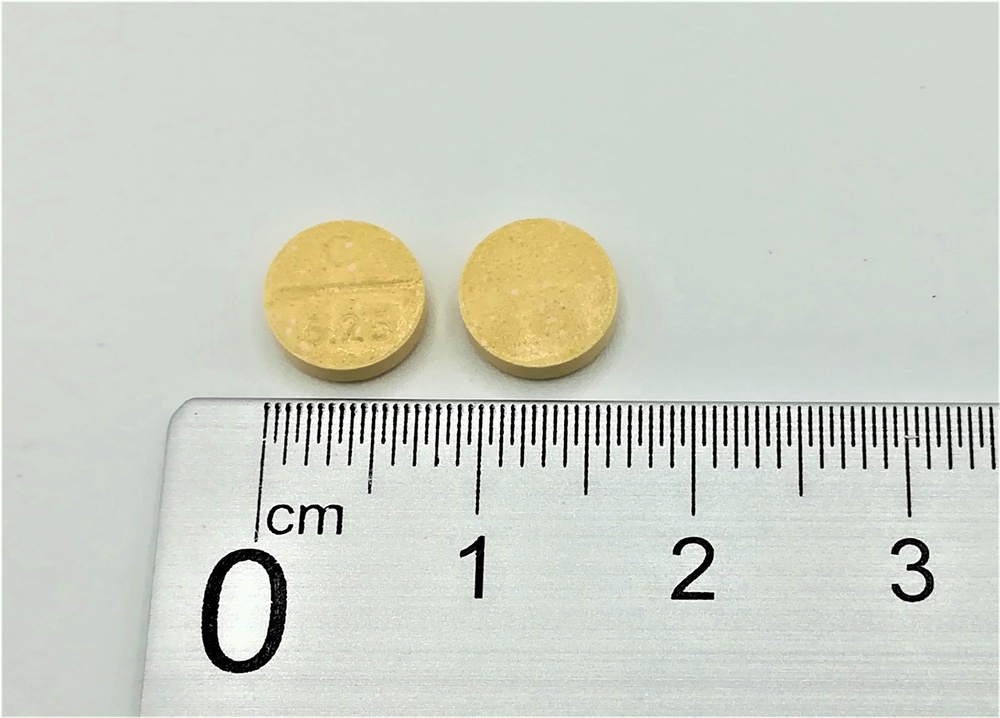
Carvedilol NORMON 6.25 mg tablets are yellow, round, biconvex, with a break line, and marked with "C/6.25" on one face and anonymous on the other. The packages contain 28 tablets.
Marketing Authorization Holder and Manufacturer
LABORATORIOS NORMON, S.A.
Ronda de Valdecarrizo, 6 – 28760 Tres Cantos – Madrid (SPAIN)
Date of the Last Revision of this Prospectus:May 2024
Detailed and updated information on this medicine is available on the website of the Spanish Agency for Medicines and Health Products (AEMPS) http://www.aemps.gob.es/.
You can access detailed and updated information about this medicine by scanning the QR code included in the prospectus and packaging with your mobile phone (smartphone).
You can also access this information at the following internet address:
https://cima.aemps.es/cima/dochtml/p/68876/P_68876.html.
- Country of registration
- Dosage formTABLET, Carvedilol 6.25 mg
- ATC codeC07AG02
- Average pharmacy price2.5 EUR
- Active substance
- Prescription requiredYes
- Manufacturer
- CompositionLACTOSA HIDRATADA (115,00 mg mg)
- This information is for reference only and does not constitute medical advice. Always consult a doctor before taking any medication. Oladoctor is not responsible for medical decisions based on this content.
- Alternatives to CARVEDILOL NORMON 6.25 mg TABLETSDosage form: TABLET, 25 mgActive substance: carvedilolManufacturer: Almus Farmaceutica S.A.U.Prescription requiredDosage form: TABLET, 6.25 mgActive substance: carvedilolManufacturer: Almus Farmaceutica S.A.U.Prescription requiredDosage form: TABLET, 25 mgActive substance: carvedilolManufacturer: Laboratorios Alter S.A.Prescription required
Online doctors for CARVEDILOL NORMON 6.25 mg TABLETS
Discuss questions about CARVEDILOL NORMON 6.25 mg TABLETS, including use, safety considerations and prescription review, subject to medical assessment and local regulations.
Get CARVEDILOL NORMON 6.25 mg TABLETS Prescription Online
Fill in a 2-min form
Tell us your symptoms, history, and what medicine you're requesting.
Pick a doctor or let us assign
Choose a specialist or we'll match you with the next available doctor.
Doctor reviews your case
Usually within 30 minutes. They may ask follow-up questions via chat.
Collect from any pharmacy
Electronic prescription sent to your email — valid across Spain.
Frequently Asked Questions
CARVEDILOL NORMON 6.25 mg TABLETS requires a prescription in Spain. You can check with a doctor online whether this medicine may be appropriate for your situation.
The active ingredient in CARVEDILOL NORMON 6.25 mg TABLETS is carvedilol. This information helps identify medicines with the same composition but different brand names.
The average pharmacy price for CARVEDILOL NORMON 6.25 mg TABLETS is around 2.5 EUR. Prices may vary depending on the manufacturer and dosage form.
CARVEDILOL NORMON 6.25 mg TABLETS is manufactured by Laboratorios Normon S.A.. Pharmacy brands and packaging may differ depending on the distributor.
Doctors such as Family doctors, Psychiatrists, Dermatologists, Cardiologists, Endocrinologists, Gastroenterologists, Pulmonologists, Nephrologists, Rheumatologists, Hematologists, Infectious disease physicians, Allergists, Geriatricians, Paediatricians, Oncologists may assess whether CARVEDILOL NORMON 6.25 mg TABLETS is appropriate, depending on your situation and local regulations. You can book an online consultation to discuss your symptoms and possible next steps.
Spain has a well-developed healthcare infrastructure across major cities such as Madrid, Barcelona, Valencia, and Seville. Pharmacies are widely available and operate under strict regulations, ensuring access to prescribed medications.
You can buy CARVEDILOL NORMON 6.25 mg TABLETS in Madrid, Barcelona, Seville, or Valencia at any local pharmacy with a valid prescription.
To obtain a prescription, you can use Oladoctor:
Other medicines with the same active substance (carvedilol) include CARVEDILOL ALMUS 25 mg TABLETS, CARVEDILOL ALMUS 6.25 mg TABLETS, CARVEDILOL ALTER 25 mg TABLETS. These may have different brand names or formulations but contain the same therapeutic ingredient. Always consult a doctor before switching or starting a new medicine.
