






How to use BUPIVACAINE PHYSAN 2.5 mg/mL INJECTABLE SOLUTION
Translated with AI
This page provides general information and does not replace a doctor’s consultation. Always consult a doctor before taking any medication. Seek urgent medical care if symptoms are severe.
Show originalContents of the leaflet
- Introduction
- What Bupivacaine Physan 2.5 mg/ml is and what it is used for
- What you need to know before you use Bupivacaine Physan 2.5 mg/ml
- How to use Bupivacaine Physan 2.5 mg/ml
- Possible side effects
- If you experience any side effects, talk to your doctor or pharmacist, even if it is possible side effects not listed in this leaflet. You can also report side effects directly through the Spanish Medicines and Health Products Agency's website: www.notificaram.es. By reporting side effects, you can help provide more information on the safety of this medicine.
- Storage of Bupivacaine Physan 2.5 mg/ml
- Medicines should not be disposed of via wastewater or household waste. Ask your pharmacist how to dispose of medicines no longer required. This will help protect the environment.
- Contents of the pack and other information
Introduction
Package Leaflet: Information for the User
Bupivacaine Physan 2.5 mg/ml Solution for Injection
Bupivacaine Hydrochloride
Read all of this leaflet carefully before you start using this medicine because it contains important information for you
- Keep this leaflet, you may need to read it again.
- If you have any further questions, ask your doctor, pharmacist, or nurse.
- This medicine has been prescribed for you only. Do not pass it on to others. It may harm them, even if their signs of illness are the same as yours.
- If you get any side effects, talk to your doctor, pharmacist, or nurse. This includes any possible side effects not listed in this leaflet. See section 4.
Contents of the pack:
- What Bupivacaine Physan 2.5 mg/ml is and what it is used for
- What you need to know before you use Bupivacaine Physan 2.5 mg/ml
- How to use Bupivacaine Physan 2.5 mg/ml
- Possible side effects
- Storage of Bupivacaine Physan 2.5 mg/ml
- Contents of the pack and other information
1. What Bupivacaine Physan 2.5 mg/ml is and what it is used for
This medicine contains bupivacaine hydrochloride, a local anesthetic (an agent that reduces or eliminates sensations, affecting a particular region) belonging to the amide subgroup.
It has been prescribed for you to provide an anesthetic effect.

2. What you need to know before you use Bupivacaine Physan 2.5 mg/ml
Do not use Bupivacaine Physan 2.5 mg/ml:
- If you are allergic to bupivacaine hydrochloride or any of the other ingredients of this medicine (listed in section 6).
- If you are allergic to any other local anesthetic of the same group (e.g., articaine, mepivacaine, lidocaine, or prilocaine).
- If it is used as intravenous regional anesthesia (Bier block), as the unintended passage of bupivacaine into the bloodstream can lead to acute systemic toxicity reactions.
- If you have any of the following conditions, epidural anesthesia should not be performed:
- Pre-existing central nervous system disease due to infection, tumors, or other causes.
- Spinal deformity and active disease (e.g., spondylitis, tumor, tuberculosis) or recent injury (e.g., fracture) of the spine.
- Skin infection at the injection site or nearby.
- Cardiovascular disease, especially heart block or hypovolemic shock.
- Coagulation disorders or ongoing anticoagulant treatment.
Warnings and precautions
Consult your doctor before using Bupivacaine Physan 2.5 mg/ml:
- If you have any type of heart block
- If you have heart rhythm disorders
- If you have low blood pressure
- If you have bleeding
- If you have any type of infection
- If you have liver or kidney disorders.
Children
Bupivacaine should be used with caution in children from 1 to 12 years old, as they have a higher probability of systemic toxicity.
Other medicines and Bupivacaine Physan 2.5 mg/ml
Tell your doctor or pharmacist if you are using or have recently used or may use any other medicines, including those obtained without a prescription.
Bupivacaine should be used with caution in patients receiving treatment with agents structurally similar to amide-type local anesthetics, as an increase in systemic toxic effects may occur.
Tell your doctor if you are taking any of the following medicines, as they may alter the effects of Bupivacaine Physan 2.5 mg/ml:
- Anticoagulants, such as heparin.
- Non-steroidal anti-inflammatory drugs (NSAIDs) such as ibuprofen, to combat inflammation, pain, or fever.
- Plasma substitutes (dextran).
Pregnancy and breastfeeding
If you are pregnant or breastfeeding, think you may be pregnant, or plan to become pregnant, consult your doctor or pharmacist before using this medicine.
Pregnancy
If you are pregnant, your doctor will prescribe Bupivacaine Physan 2.5 mg/ml, taking into account the benefit to you and the risk to your baby.
Breastfeeding
Bupivacaine is excreted in breast milk, but at the therapeutic doses of this medicine, no effects are expected in nursing infants.
Driving and using machines
Bupivacaine Physan 2.5 mg/ml may temporarily alter your ability to move, pay attention, and coordinate. Your doctor will indicate if you can drive or use machines.
Bupivacaine Physan 2.5 mg/ml contains sodium
This medicine contains 31.5 mg of sodium (a major component of table/cooking salt) per 10 ml ampoule. This is equivalent to 1.58% of the maximum recommended daily sodium intake for an adult.
3. How to use Bupivacaine Physan 2.5 mg/ml

This medicine should only be administered under the supervision of a doctor with experience in the use of this type of medicine.
This medicine is administered by injection through infiltration, subcutaneously, intramuscularly, epidurally, intra-articularly, perineurally, and periosteally.
The dose, rate of administration, and duration of treatment will vary depending on the anesthetic procedure, the area to be anesthetized, and the patient's weight, clinical situation, and response.
If more Bupivacaine Physan 2.5 mg/ml is administered than it should be
As with other local anesthetics, due to excessive dosing, rapid absorption, or accidental injection into blood vessels, symptoms of intoxication may occur, which can manifest:
- On the central nervous system:
Characterized by tingling, numbness of the tongue, mild fainting, ringing in the ears, blurred vision, and muscle tremors. Then, convulsions and loss of consciousness may appear, followed by breathing problems.
- On the cardiovascular system:
Low blood pressure (hypotension), decreased heart rate, arrhythmia, and cardiac arrest.
If toxic effects occur, the first measure is to stop the administration of the local anesthetic. The subsequent treatment consists of stopping the convulsions and ensuring adequate breathing with oxygen, if necessary by assisted breathing. If convulsions occur, they can be treated with 100-150 mg of thiopental i.v. or 5-10 mg of diazepam i.v. If hypotension exists, a vasopressor should be administered intravenously, for example, 5-10 mg of ephedrine. If cardiac arrest occurs, cardiopulmonary resuscitation should be applied immediately, and 0.1-0.2 mg of adrenaline should be administered intravenously or intracardially as soon as possible. If cardiac arrest appears, prolonged resuscitation efforts should be applied.
In case of overdose or accidental administration, consult your doctor or pharmacist immediately or call the Toxicology Information Service, phone: 91 562 04 20, indicating the medicine and the amount taken.
4. Possible side effects
Like all medicines, Bupivacaine Physan 2.5 mg/ml can cause side effects, although not everybody gets them.
The side effects you may experience can be classified according to their frequency as:
- Very common (may affect more than 1 in 10 people): low blood pressure and nausea.
- Common (may affect up to 1 in 10 people): tingling, dizziness, decreased heart rate, increased blood pressure, vomiting, urinary retention.
- Uncommon (may affect up to 1 in 100 people): convulsions, tingling around the mouth, numbness of the tongue, increased hearing sensitivity, visual disturbances, loss of consciousness, tremors, mild headache, ringing in the ears, difficulty speaking correctly.
- Rare (may affect up to 1 in 1,000 people): allergic reactions, anaphylactic shock, nervous system disorders, double vision, cardiac arrest, arrhythmias, breathing difficulties.
Reporting of side effects
If you experience any side effects, talk to your doctor or pharmacist, even if it is possible side effects not listed in this leaflet. You can also report side effects directly through the Spanish Medicines and Health Products Agency's website: www.notificaram.es. By reporting side effects, you can help provide more information on the safety of this medicine.
5. Storage of Bupivacaine Physan 2.5 mg/ml
Keep this medicine out of the sight and reach of children.
Do not store above 25°C. Do not freeze.
Do not use this medicine after the expiry date stated on the ampoule and carton. The expiry date is the last day of the month stated.
The solutions do not contain preservatives and should be used immediately after opening. Any remaining solution should be discarded.
Medicines should not be disposed of via wastewater or household waste. Ask your pharmacist how to dispose of medicines no longer required. This will help protect the environment.
6. Contents of the pack and other information
Composition of Bupivacaine Physan 2.5 mg/ml
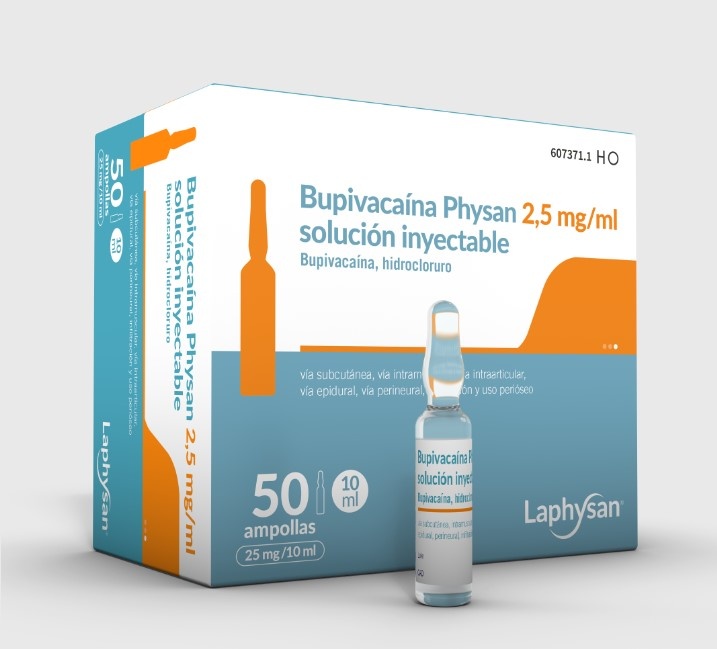
- The active substance is bupivacaine hydrochloride. One ml contains 2.5 mg of bupivacaine hydrochloride. Each 10 ml ampoule contains 25 mg of bupivacaine hydrochloride.
- The other ingredients are: sodium chloride, sodium hydroxide (E-524) and/or hydrochloric acid (for pH adjustment) and water for injections.
Appearance and pack contents
Bupivacaine Physan 2.5 mg/ml is packaged in glass ampoules.
This medicine is presented in clinical packs containing 50 ampoules or 100 glass ampoules of 10 ml.
Not all pack sizes may be marketed.
Marketing authorization holder
LAPHYSAN S.A.U.
Anabel Segura, 11 Edificio A, Planta 4, Puerta D,
28108 Alcobendas
MADRID. SPAIN
Manufacturer
LABORATORIOS BASI – INDUSTRIA FARMACÉUTICA, S.A.
Parque Industrial Manuel Lourenço Ferreira,
Nº 8, Nº 15 y Nº 16
3450-232 Mortágua - Portugal
This information is intended only for healthcare professionals
The solutions should be used immediately after opening. Any remaining solution should be discarded.
Precautions should be taken to prevent acute toxicity reactions, avoiding intravascular injection. Aspiration before and during administration is recommended. Accidental intravascular injection can be detected by a temporary increase in heart rate. The maximum dose should be administered very slowly, at a rate of 25-50 mg/min, or in dose increments, maintaining constant verbal contact with the patient. If symptoms of toxicity appear, administration should be stopped immediately.
Regional or local anesthesia procedures, except for those of a trivial nature, should always be performed by properly trained professionals and in areas with immediate access to resuscitation equipment and medicines. When performing major blocks, an intravascular catheter should be inserted beforehand at the injection site of the local anesthetic. Doctors should receive adequate training according to the procedure they will perform and be familiar with the diagnosis and treatment of side effects, systemic toxicity, and other complications.
In any case, and considering that the dosage should be calculated based on several factors, we recommend consulting the information provided in the Technical Data Sheet before using this medicine.
Incompatibilities
Bupivacaine has limited solubility at pH above 6.5. This should be taken into account if alkaline solutions (e.g., carbonates) need to be added, as precipitation may occur.
Last revision of the leaflet: October 2020
Detailed and updated information on this medicine is available on the website of the Spanish Agency for Medicines and Health Products (AEMPS) http://www.aemps.es/
-

- Country of registration
- Dosage formINJECTABLE, 0.25% bupivacaine hydrochloride
- ATC codeN01BB01
- Active substance
- Prescription requiredYes
- Manufacturer
- This information is for reference only and does not constitute medical advice. Always consult a doctor before taking any medication. Oladoctor is not responsible for medical decisions based on this content.
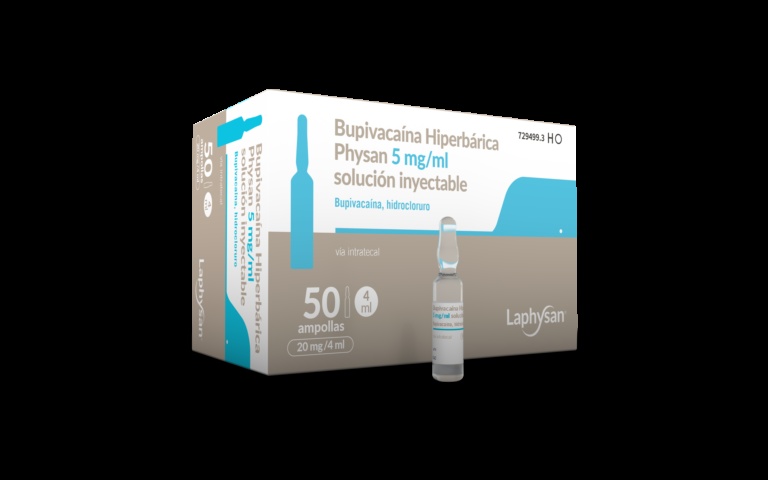
- Alternatives to BUPIVACAINE PHYSAN 2.5 mg/mL INJECTABLE SOLUTIONDosage form: INJECTABLE, 2.5 mg/mlActive substance: bupivacaineManufacturer: Eugia Pharma (Malta) LimitedPrescription requiredDosage form: INJECTABLE, 5 mg/mlActive substance: bupivacaineManufacturer: Eugia Pharma (Malta) LimitedPrescription requiredDosage form: INJECTABLE, 50 mg bupivacaine hydrochloride / 10 mlActive substance: bupivacaineManufacturer: B Braun Medical S.A.Prescription required
Online doctors for BUPIVACAINE PHYSAN 2.5 mg/mL INJECTABLE SOLUTION
Discuss questions about BUPIVACAINE PHYSAN 2.5 mg/mL INJECTABLE SOLUTION, including use, safety considerations and prescription review, subject to medical assessment and local regulations.


Get BUPIVACAINE PHYSAN 2.5 mg/mL INJECTABLE SOLUTION Prescription Online
Fill in a 2-min form
Tell us your symptoms, history, and what medicine you're requesting.
Pick a doctor or let us assign
Choose a specialist or we'll match you with the next available doctor.
Doctor reviews your case
Usually within 30 minutes. They may ask follow-up questions via chat.
Collect from any pharmacy
Electronic prescription sent to your email — valid across Spain.
Frequently Asked Questions
BUPIVACAINE PHYSAN 2.5 mg/mL INJECTABLE SOLUTION requires a prescription in Spain. You can check with a doctor online whether this medicine may be appropriate for your situation.
The active ingredient in BUPIVACAINE PHYSAN 2.5 mg/mL INJECTABLE SOLUTION is bupivacaine. This information helps identify medicines with the same composition but different brand names.
BUPIVACAINE PHYSAN 2.5 mg/mL INJECTABLE SOLUTION is manufactured by Laphysan S.A.U.. Pharmacy brands and packaging may differ depending on the distributor.
Doctors such as Family doctors, Psychiatrists, Dermatologists, Cardiologists, Endocrinologists, Gastroenterologists, Pulmonologists, Nephrologists, Rheumatologists, Hematologists, Infectious disease physicians, Allergists, Geriatricians, Paediatricians, Oncologists may assess whether BUPIVACAINE PHYSAN 2.5 mg/mL INJECTABLE SOLUTION is appropriate, depending on your situation and local regulations. You can book an online consultation to discuss your symptoms and possible next steps.
Spain has a well-developed healthcare infrastructure across major cities such as Madrid, Barcelona, Valencia, and Seville. Pharmacies are widely available and operate under strict regulations, ensuring access to prescribed medications.
You can buy BUPIVACAINE PHYSAN 2.5 mg/mL INJECTABLE SOLUTION in Madrid, Barcelona, Seville, or Valencia at any local pharmacy with a valid prescription.
To obtain a prescription, you can use Oladoctor:
Other medicines with the same active substance (bupivacaine) include BUPIVACAINE AUROVITAS 2.5 mg/ml INJECTABLE SOLUTION, BUPIVACAINE AUROVITAS 5 mg/ml INJECTABLE SOLUTION, BUPIVACAINE B. BRAUN 5 mg/ml INJECTABLE SOLUTION. These may have different brand names or formulations but contain the same therapeutic ingredient. Always consult a doctor before switching or starting a new medicine.
