



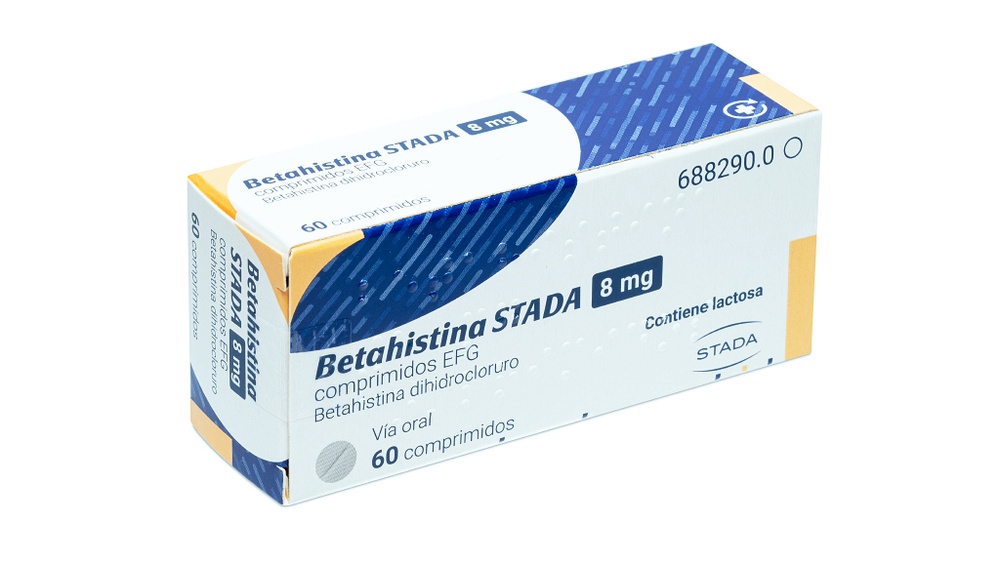
BETAHISTINA 8 mg Tablets

Prescription review online
A doctor will review your case and decide whether a prescription is medically appropriate.

Talk to a doctor about this medicine
Discuss your symptoms and possible next steps in a quick online consultation.



How to use BETAHISTINE STADA 8 mg TABLETS
Contents of the leaflet
- Introduction
- What is Betahistina Stada and what is it used for
- What you need to know before taking Betahistina Stada
- How to take Betahistina Stada
- Possible side effects
- Mild stomach problems (such as vomiting, gastrointestinal pain, abdominal distension, and bloating). These effects can usually be treated by taking the medication during meals or reducing the dose.
- Storage of Betahistina Stada
- Contents of the pack and further information
Introduction
Package Leaflet: Information for the User
Betahistina Stada 8 mg Tablets EFG
Dihydrochloride of betahistine
Read the entire package leaflet carefully before starting to take this medication, because
it contains important information for you.
- Keep this package leaflet, as you may need to read it again.
- If you have any questions, consult your doctor, pharmacist, or nurse.
- This medication has been prescribed to you only, and you should not give it to others
even if they have the same symptoms as you, as it may harm them.
- If you experience side effects, consult your doctor or pharmacist, even if it is a side effect not listed in this package leaflet. See section 4.
Contents of the Package Leaflet
- What is Betahistina Stada and what is it used for
- What you need to know before taking Betahistina Stada
- How to take Betahistina Stada
- Possible side effects
- Storage of Betahistina Stada
- Contents of the pack and further information
1. What is Betahistina Stada and what is it used for
Betahistine belongs to a group of medications called anti-vertigo drugs.
Betahistine is used to treat Meniere's Syndrome, which is a disorder characterized by the following symptoms: vertigo (with nausea and vomiting), hearing loss, and a sensation of noise in the ear (tinnitus).
The active ingredient of this medication is a histamine analogue that acts by improving circulation in the inner ear and thus reducing pressure. The inner ear is one of the organs responsible for the sense of balance.

Not sure if this medicine is right for you?
Discuss your symptoms and treatment with a doctor online.
2. What you need to know before taking Betahistina Stada
Do not take Betahistina Stada
- if you are allergic to the active ingredient or any of the other components of this medication (listed in section 6).
- if your doctor has told you that you have a certain type of adrenal gland cancer called pheochromocytoma.
Warnings and precautions
Consult your doctor or pharmacist before starting to take Betahistina Stada:
- if you have bronchial asthma
- if you have or have had stomach ulcers
- if you suffer from skin rashes and intense itching (urticaria), skin eruptions (exanthema), or hay fever
- if you have low blood pressure
Other medications and Betahistina Stada
Tell your doctor or pharmacist if you are using, have recently used, or might use any other medication.
Taking betahistine at the same time as antiallergic medications such as antihistamines(especially H1 antagonists) may reduce the effectiveness of both medications.
Using Betahistina Stada with food, drinks, and alcohol
It is recommended to take betahistine during or after meals to avoid stomach upset.
Pregnancy, breastfeeding, and fertility
If you are pregnant or breastfeeding, think you may be pregnant, or plan to become pregnant, consult your doctor or pharmacist before using this medication.
It is not known if this medication affects the fetus, so betahistine should not be taken during pregnancy unless your doctor considers it necessary.
It is not known if this medication passes into breast milk, so if you are taking betahistine, you should not breastfeed your child.
Driving and using machines
Betahistina is indicated for Meniere's syndrome. This disease may negatively affect the ability to drive and use machines. In clinical trials specifically designed to investigate the ability to drive or use machines, betahistine had no effects or were insignificant.
Betahistina Stada contains lactose
This medication contains lactose. If your doctor has told you that you have an intolerance to certain sugars, consult with them before taking this medication.
3. How to take Betahistina Stada
Follow exactly the administration instructions of this medication indicated by your doctor or pharmacist. In case of doubt, consult your doctor or pharmacist again.
Your doctor will adjust the dose based on your response to treatment, starting from an initial dose of 1 tablet of 8 mg three times a day up to 2 tablets of 8 mg three times a day (maximum dose). The maintenance dose will be adjusted based on your response, with the minimum effective dose being 1 tablet of 8 mg three times a day.
In some cases, improvement may not begin to become apparent until two weeks after starting treatment. The optimal result is obtained after several months of treatment.
The tablets should be taken with water.
The tablets can be taken with or without food. However, if taken without food, they may cause mild stomach problems (listed in section 4). Taking the tablets with food may help reduce stomach problems.
The score line is only for breaking the tablet if you find it difficult to swallow it whole.
Use in children and adolescents
Betahistina is not recommended for use in children and adolescents under 18 years of age due to the scarcity of data on safety and efficacy.
If you take more Betahistina Stada than you should
In case of overdose or accidental ingestion, consult your doctor or pharmacist immediately, or call the Toxicology Information Service, phone: 91 562 04 20, indicating the medication and the amount ingested. It is recommended to bring the packaging and the package leaflet of the medication to the healthcare professional.
You may experience the following symptoms due to an overdose: nausea, drowsiness, abdominal pain. You may also experience rapid heartbeat (tachycardia), low blood pressure (hypotension), difficulty breathing with a feeling of suffocation (bronchospasm), and fluid accumulation in the tissues (edema). Seizures may occur after taking very high doses.
Symptomatic treatment is recommended since there is no specific antidote.
If you forget to take Betahistina Stada
Do not take a double dose to make up for forgotten doses. If you forget to take a dose, wait
until the next dose and continue with the normal treatment.
If you stop taking Betahistina Stada
You should take betahistine for as long as your doctor recommends. Do not stop treatment before, as the expected results will not be achieved.
If you have any other questions about the use of this medication, ask your doctor, pharmacist, or nurse

Started taking the medicine and have questions?
Discuss your symptoms and treatment with a doctor online.
4. Possible side effects
Like all medications, this medication can cause side effects, although not everyone experiences them.
The classification by frequency is as follows:
Very common: may affect more than 1 in 10 people
Common: may affect up to 1 in 10 people
Uncommon: may affect up to 1 in 100 people
Rare: may affect up to 1 in 1,000 people
Very rare: may affect up to 1 in 10,000 people
Frequency not known: the frequency cannot be estimated from the available data
In clinical trials, the following side effects were found:
Gastrointestinal disorders
Common: nausea and dyspepsia (discomfort in the upper abdomen with a feeling of bloating).
Nervous system disorders
Common: headache
After marketing and in the scientific literature, the following side effects have been reported with an unknown frequency:
Immune system disorders
Hypersensitivity reactions, such as anaphylaxis.
Gastrointestinal disorders
Mild stomach problems (such as vomiting, gastrointestinal pain, abdominal distension, and bloating). These effects can usually be treated by taking the medication during meals or reducing the dose.
Skin and subcutaneous tissue disorders
Hypersensitivity reactions of the skin and subcutaneous tissue, in particular, angioneurotic edema (swelling of the skin and mucous membranes, especially of the face, mouth, tongue, and hands), urticaria, skin eruptions, and itching (pruritus).
Reporting side effects:
If you experience any side effects, consult your doctor or pharmacist, even if it is a possible side effect not listed in this package leaflet. You can also report them directly through the Spanish Medication Surveillance System for Human Use: https://www.notificaram.es. By reporting side effects, you can contribute to providing more information on the safety of this medication.
5. Storage of Betahistina Stada
Keep this medication out of the sight and reach of children.
Do not store above 30°C.
Do not use this medication after the expiration date stated on the packaging after CAD. The expiration date is the last day of the month indicated.
Medications should not be disposed of through wastewater or household waste. Deposit the packaging and medications you no longer need at the pharmacy's SIGRE point. Ask your pharmacist how to dispose of the packaging and medications you no longer need. This will help protect the environment.
6. Contents of the pack and further information
Composition of Betahistina Stada:
- The active ingredient is dihydrochloride of betahistine. Each tablet contains 8 mg of dihydrochloride of betahistine.
- The other components (excipients) are lactose monohydrate, microcrystalline cellulose (E-460i), povidone (E-1201), colloidal anhydrous silica, crospovidone, stearic acid, and talc.
Appearance of the product and contents of the pack
Betahistina STADA is presented in the form of white, round tablets with a score line on one side and "K" on the other.
Each pack contains 60 tablets.
Marketing authorization holder and manufacturer
Marketing authorization holder
Laboratory STADA, S.L.
Frederic Mompou, 5
08960 Sant Just Desvern
(Barcelona)
Spain
Manufacturer
Kern Pharma, S.L.
Polígono Industrial Colón II
C/ Venus 72
08228 Terrassa (Barcelona)
Spain
Date of the last revision of this package leaflet:August 2021
Detailed and updated information on this medication is available on the website of the Spanish Agency for Medicines and Health Products (AEMPS) http://www.aemps.gob.es/.
- Country of registration
- Dosage formTABLET, 8 mg
- ATC codeN07CA01
- Average pharmacy price2.73 EUR
- Active substance
- Prescription requiredYes
- Manufacturer
- CompositionLACTOSA MONOHIDRATO (70,00 mg mg)
- This information is for reference only and does not constitute medical advice. Always consult a doctor before taking any medication. Oladoctor is not responsible for medical decisions based on this content.
- Alternatives to BETAHISTINE STADA 8 mg TABLETSDosage form: TABLET, 24 mgActive substance: betahistineManufacturer: Accord Healthcare S.L.U.Prescription requiredDosage form: TABLET, 16 mgActive substance: betahistineManufacturer: Aurovitas Spain, S.A.U.Prescription requiredDosage form: TABLET, 8 mgActive substance: betahistineManufacturer: Aurovitas Spain, S.A.U.Prescription required
Online doctors for BETAHISTINE STADA 8 mg TABLETS
Discuss questions about BETAHISTINE STADA 8 mg TABLETS, including use, safety considerations and prescription review, subject to medical assessment and local regulations.









Get BETAHISTINE STADA 8 mg TABLETS Prescription Online
Fill in a 2-min form
Tell us your symptoms, history, and what medicine you're requesting.
Pick a doctor or let us assign
Choose a specialist or we'll match you with the next available doctor.
Doctor reviews your case
Usually within 30 minutes. They may ask follow-up questions via chat.
Collect from any pharmacy
Electronic prescription sent to your email — valid across Spain.
Frequently Asked Questions
BETAHISTINE STADA 8 mg TABLETS requires a prescription in Spain. You can check with a doctor online whether this medicine may be appropriate for your situation.
The active ingredient in BETAHISTINE STADA 8 mg TABLETS is betahistine. This information helps identify medicines with the same composition but different brand names.
The average pharmacy price for BETAHISTINE STADA 8 mg TABLETS is around 2.73 EUR. Prices may vary depending on the manufacturer and dosage form.
BETAHISTINE STADA 8 mg TABLETS is manufactured by Laboratorio Stada S.L.. Pharmacy brands and packaging may differ depending on the distributor.
Doctors such as Family doctors, Psychiatrists, Dermatologists, Cardiologists, Endocrinologists, Gastroenterologists, Pulmonologists, Nephrologists, Rheumatologists, Hematologists, Infectious disease physicians, Allergists, Geriatricians, Paediatricians, Oncologists may assess whether BETAHISTINE STADA 8 mg TABLETS is appropriate, depending on your situation and local regulations. You can book an online consultation to discuss your symptoms and possible next steps.
Spain has a well-developed healthcare infrastructure across major cities such as Madrid, Barcelona, Valencia, and Seville. Pharmacies are widely available and operate under strict regulations, ensuring access to prescribed medications.
You can buy BETAHISTINE STADA 8 mg TABLETS in Madrid, Barcelona, Seville, or Valencia at any local pharmacy with a valid prescription.
To obtain a prescription, you can use Oladoctor:
Other medicines with the same active substance (betahistine) include BETAHISTINE ACCORD 24 mg TABLETS, BETAHISTINE AUROVITAS 16 mg TABLETS, BETAHISTINE AUROVITAS 8 mg TABLETS. These may have different brand names or formulations but contain the same therapeutic ingredient. Always consult a doctor before switching or starting a new medicine.
