






How to use BECOTIDE 50 micrograms/inhalation PRESSURIZED INHALATION SOLUTION
Translated with AI
This page provides general information and does not replace a doctor’s consultation. Always consult a doctor before taking any medication. Seek urgent medical care if symptoms are severe.
Show originalContents of the leaflet
Introduction
Package Leaflet: Information for the User
Becotide 50 micrograms/inhalation, inhalation solution in a pressurized container
beclometasone dipropionate
Read all of this leaflet carefully before you start using this medicine because it contains important information for you.
- Keep this leaflet, you may need to read it again.
- If you have any further questions, ask your doctor or pharmacist.
- This medicine has been prescribed for you only. Do not pass it on to others. It may harm them, even if their signs of illness are the same as yours.
- If you get any side effects, talk to your doctor or pharmacist. This includes any possible side effects not listed in this leaflet. See section 4.
Contents of the package leaflet
- What is Becotide and what is it used for
- What you need to know before you use Becotide
- How to use Becotide
- Possible side effects
- Storing Becotide
- Contents of the pack and further information
1. What is Becotide and what is it used for
Beclometasone dipropionate belongs to a group of medicines called corticosteroids, simply called steroids. Corticosteroids are used to treat asthma as they have, among other things, an anti-inflammatory action. They reduce swelling and irritation in the walls of the small airways in the lungs and make breathing easier.
Corticosteroids also help prevent asthma attacks.
Beclometasone dipropionate should not be confused with other steroids, such as anabolic steroids, which are misused by some athletes and taken as tablets or by injection.
Becotide is used to prevent asthma symptoms in people who need regular treatment.

2. What you need to know before you use Becotide
Do not use Becotide
- if you are allergic to beclometasone dipropionate or any of the other ingredients of this medicine (listed in section 6)
- to treat a sudden attack of breathing difficulties
Warnings and precautions
Consult your doctor or pharmacist before starting to use Becotide:
- if you have had thrush in your mouth
- if you are taking or have recently taken any other type of steroid tablet or injection
- if you are being or have been treated for tuberculosis
Patients who have previously been treated with Becotide should be aware that it no longer contains chlorofluorocarbons (CFCs). It should be used exactly as your doctor indicates. Your doctor may change your dosage regimen.
The active ingredient of Becotide without CFCs is exactly the same as that of Becotide that contained CFCs. The only differences that may be noticed are the taste and the sensation of feeling the spray in the mouth, as well as the sound of the inhaler during use. This is due to the change of propellant to eliminate CFCs. This modification does not affect the mechanism of action of the drug. Becotide without CFCs can be used in the same way as the previous one.
Contact your doctor if you experience blurred vision or other visual disturbances.
Other medicines and Becotide
Tell your doctor or pharmacist if you are using, have recently used, or might use any other medicines, including those obtained without a prescription.
Inform your doctor if you are taking disulfiram or metronidazole, as there is a potential risk of interaction in particularly sensitive individuals.
Some medicines may increase the effects of Becotide, so your doctor will monitor you closely if you are taking these medicines (including some for HIV: ritonavir, cobicistat).
Pregnancy and breastfeeding
If you are pregnant or breastfeeding, think you may be pregnant, or plan to become pregnant, consult your doctor or pharmacist before using this medicine.
Driving and using machines
Becotide is unlikely to affect your ability to drive or use machines.
Becotide contains ethanol
This medicine contains 7.68 mg of alcohol (ethanol) per unit dose, which is equivalent to 13.01% w/w. The amount in a dose of this medicine is equivalent to less than 1 ml of beer or 1 ml of wine.
The small amount of alcohol in this medicine does not produce any noticeable effect.
3. How to use Becotide
Follow the instructions for administration of this medicine exactly as indicated by your doctor or pharmacist. Do not exceed the recommended dose. If in doubt, consult your doctor or pharmacist again.
Remember to use your medicine.
Your doctor will indicate the duration of your treatment with Becotide. Do not stop treatment before, even if you feel better, unless your doctor tells you to or you notice that your breathing worsens when taking the medicine.
Becotide should only be used by inhalation.
Adults
Two inhalations (100 micrograms) per dose, three or four times a day. In severe cases, it can start with 12-16 inhalations per day and decrease to the normal dose when improvement begins. The maximum daily dose should not exceed 20 inhalations.
Use in children
One or two inhalations (50-100 micrograms) per dose, two, three, or four times a day. The maximum daily dose should not exceed 10 inhalations in children under 12 years of age.
If you have just started using Becotide instead of, or at the same time as, oral steroids, you should carry a warning card stating that you are taking steroids until your doctor tells you that you no longer need it.
It may take several days before you notice the benefits produced by the medicine. It is very important that you use it regularly every day.
Do not use this medicine to treat a sudden attack of breathing difficulties, it will not help. You will need a different type of medicine. If you take or use more than one medicine, be careful not to confuse them.
The instructions for use are given below. If you have difficulties or do not understand these instructions, consult your doctor or pharmacist.
Checking the inhaler:
The first time you use the inhaler, or if you have not used it for a week or more, shake it well and perform an application to the air to ensure it works.
If you think the action of Becotide is too strong or too weak, tell your doctor or pharmacist.
Instructions for use:
- Remove the cap from the mouthpiece by squeezing it gently on the sides.
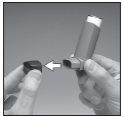
- Check that there are no foreign particles inside and outside the inhaler, including the mouthpiece.
- Shake the inhaler well to ensure that any foreign particles are eliminated and that the contents of the inhaler are mixed properly.
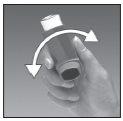
- Hold the inhaler vertically between your index and thumb fingers, placing your thumb on the base, below the mouthpiece.
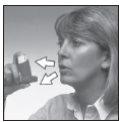
- Exhale as much air as you reasonably can and then put the mouthpiece in your mouth, between your teeth, closing your lips around the device, but not biting it.
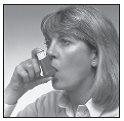
- Immediately after starting to take air through your mouth, press the top of the inhaler to release the medicine and continue taking air deeply and steadily.
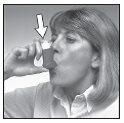
- Hold your breath and remove the inhaler from your mouth, removing your finger from the top of the inhaler. Continue holding your breath for as long as you reasonably can.
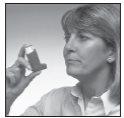
- If you are going to administer another inhalation, keep the inhaler in a vertical position and wait for about half a minute before repeating steps 3 to 7.
- Put the cap back on the mouthpiece, pushing it firmly and adjusting it until you hear a click.
IMPORTANT
Do not perform steps 5, 6, and 7 quickly. It is important to start breathing in as slowly as possible, just before pressing the inhaler. Practice in front of a mirror the first few times. If you see a "kind of mist" coming out of the top of the inhaler or the sides of your mouth, start again from step 2.
Young children may need help, and their parents should handle the inhaler for them. Encourage the child to exhale and handle the inhaler just after the child starts to take air. Practice the technique together. Older children or people with fragile hands should hold the inhaler with both hands, placing the two index fingers on the top of the inhaler and the two thumbs on the base, below the mouthpiece.
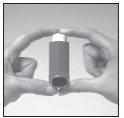
Patients who have difficulty coordinating the handling of the inhaler with inhalation may alternatively use a suitable inhalation chamber, Volumaticor Babyhaler(inhalation chamber for children under 5 years).
Cleaning the inhaler
Clean the inhaler at least once a week.
|
|
|
|
A mild detergent or a solution of the type used to clean baby bottles can be added to the water. Rinse thoroughly with clean water before drying. DO NOT SUBMERGE THE METAL CARTRIDGE IN WATER.
If you use more Becotide than you should
It is important that you take your dose exactly as your doctor has indicated. Do not increase or decrease your dose without medical supervision.
If you have used more Becotide than you should, consult your doctor or pharmacist immediately or the Toxicology Information Service, telephone: 91 562 04 20.
If you forget to use Becotide
Do not take a double dose to make up for forgotten doses, simply wait for the next dose.

4. Possible side effects
Like all medicines, this medicine can cause side effects, although not everybody gets them.
The side effects due to the administration of Becotide may be:
Very common (may affect more than 1 in 10 people)
- Oral and/or pharyngeal candidiasis (thrush).
Common (may affect up to 1 in 10 people)
- Hoarseness and/or throat irritation. In such cases, gargle with water and spit immediately after each dose. The use of a suitable inhalation chamber, Volumaticor Babyhaler(inhalation chamber for children under 5 years), may help. Consult your doctor but do not interrupt treatment unless the doctor tells you to.
Uncommon (may affect up to 1 in 100 people)
- Skin rashes, hives, itching, and/or redness.
Very rare (may affect up to 1 in 10,000 people)
- Allergies, which manifest with swelling of the eyelids, face, lips, and/or throat (angioedema).
- Respiratory disorders such as dyspnea (feeling of lack of air or difficulty breathing) and/or bronchospasm (narrowing of the bronchial walls with decreased air intake).
- Anaphylactic or anaphylactoid reactions (severe allergic reactions that can make breathing difficult or alter your level of consciousness).
- Delayed growth in children and adolescents.
- Round face (moon face) (Cushing's syndrome).
- Loss of bone density.
- Eye problems (cataracts and glaucoma).
- Anxiety, sleep disorders, and mood changes, including hyperactivity and irritability (mainly in children).
- Paradoxical bronchospasm.
Frequency not known:
- Depression or aggression. These effects are more likely to occur in children.
- Blurred vision
If, despite using your medicine, your breathing difficulties or wheezing worsen, stop treatment immediately and inform your doctor as soon as possible.
Reporting of side effects
If you experience any side effects, consult your doctor or pharmacist, even if it is a possible side effect not listed in this leaflet. You can also report them directly through the Spanish Pharmacovigilance System for Human Use Medicines: www.notificaRAM.es. By reporting side effects, you can help provide more information on the safety of this medicine.
5. Storing Becotide
Immediately after using the medicine, put the mouthpiece cap back on by pushing it firmly until you hear a click. No excessive force is necessary.
Keep this medicine out of the sight and reach of children.
Do not store above 30°C.
Do not freeze. Store in the outer packaging to protect it from direct sunlight.
As with many medications administered in inhalation cartridges, the therapeutic effect of this medication may decrease when the cartridge is cold.
The cartridge contains a pressurized liquid. Do not expose to temperatures above 50°C. Do not puncture, break, or burn the cartridge even if it is empty.
Do not use this medicine after the expiry date stated on the packaging. The expiry date is the last day of the month indicated.
Medicines should not be disposed of via wastewater or household waste. Return the packaging and any unused medicine to the pharmacy. If in doubt, ask your pharmacist how to dispose of the packaging and any unused medicine. This will help protect the environment.
6. Contents of the pack and further information
Composition of Becotide
- The active ingredient is 50 micrograms of beclometasone dipropionate per application.
- The other ingredients are norflurane (HFA 134a), glycerol (E422), and ethanol.
This medicine contains fluorinated greenhouse gases.
Each inhaler contains 12.1 g of HFC-134a (also known as norflurane or HFA 134a), which corresponds to 0.0173 tons of CO2 equivalent (global warming potential GWP = 1,430).
Appearance of the product and contents of the pack
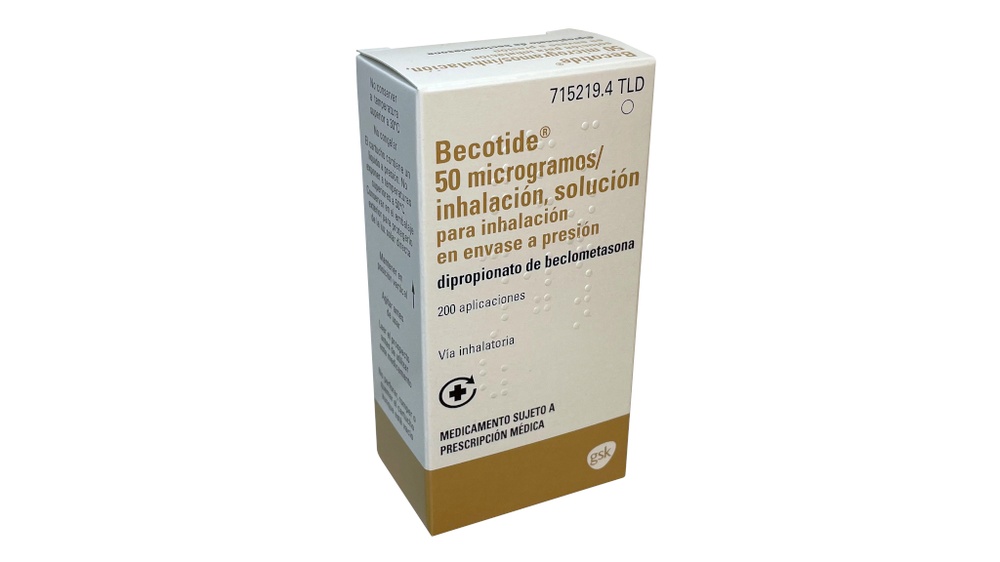
Becotide is an inhalation solution in a pressurized container. Each inhaler provides 200 applications.
Marketing authorization holder and manufacturer
Marketing authorization holder:
GlaxoSmithKline, S.A.
P.T.M. C/ Severo Ochoa, 2
28760 Tres Cantos (Madrid)
Tel: +34 900 202 700
Manufacturer:
Glaxo Wellcome Production
Zone Industrielle N. 2
23 rue Lavoiser
27000 Evreux – France
Date of last revision of this leaflet:01/2025
Detailed and updated information on this medicine is available on the website of the Spanish Agency for Medicines and Health Products (AEMPS) http://www.aemps.gob.es/
-

- Country of registration
- Dosage formPULMONARY INHALATION, 50 mcg beclomethasone dipropionate
- ATC codeR03BA01
- Average pharmacy price3.5 EUR
- Active substance
- Prescription requiredYes
- Manufacturer
- This information is for reference only and does not constitute medical advice. Always consult a doctor before taking any medication. Oladoctor is not responsible for medical decisions based on this content.
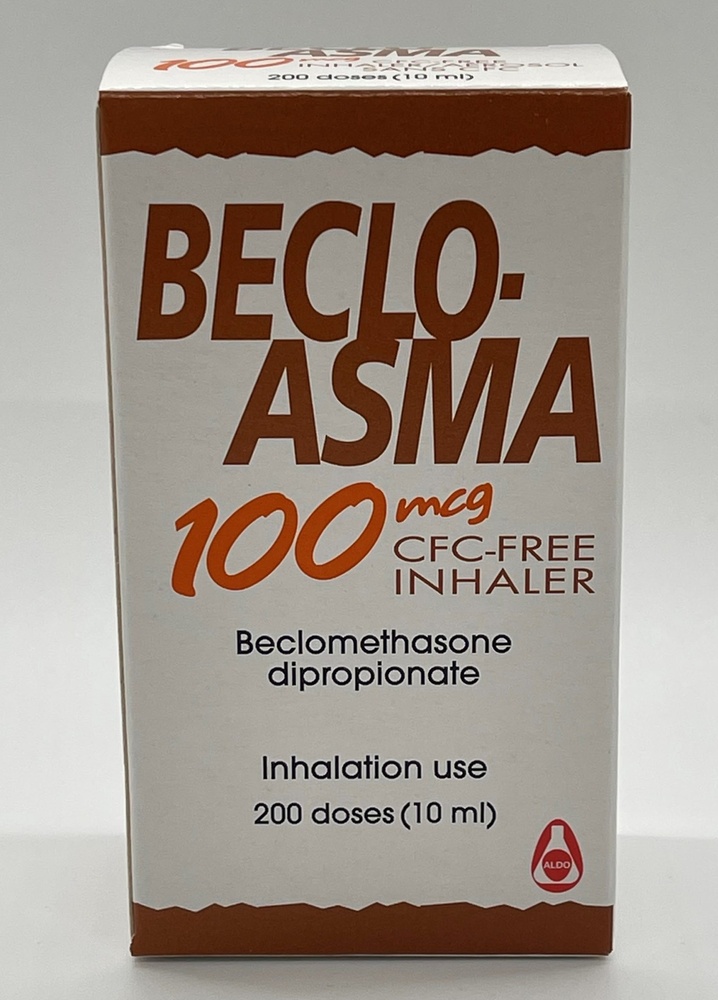
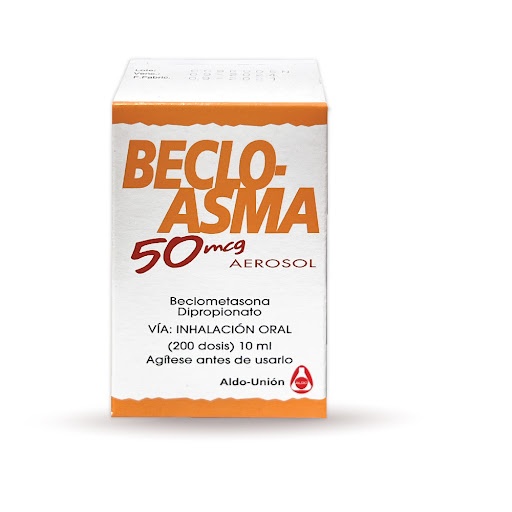
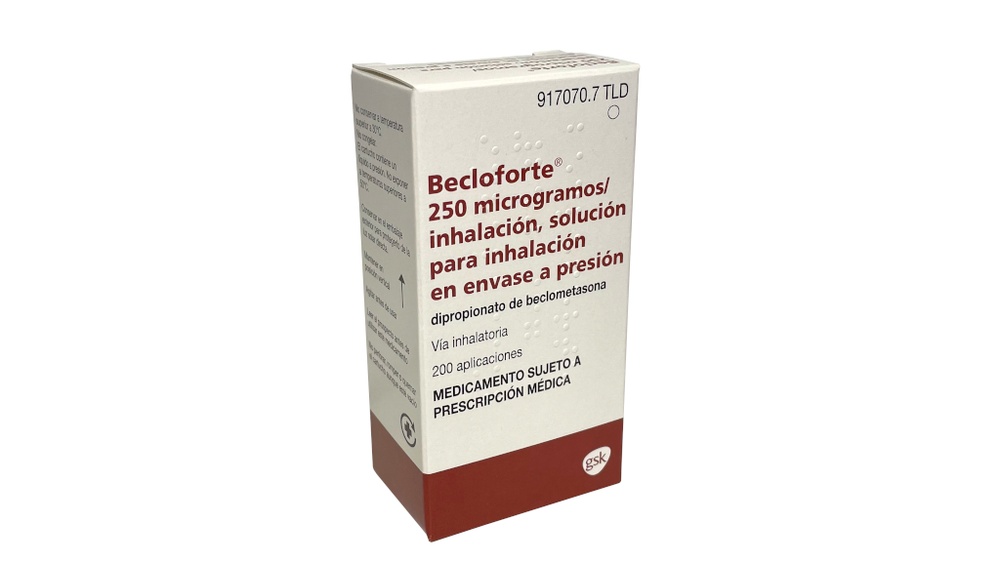
- Alternatives to BECOTIDE 50 micrograms/inhalation PRESSURIZED INHALATION SOLUTIONDosage form: PULMONARY INHALATION, 100 micrograms/actuationActive substance: beclometasoneManufacturer: Laboratorio Aldo Union S.L.Prescription requiredDosage form: PULMONARY INHALATION, 50 micrograms/actuationActive substance: beclometasoneManufacturer: Laboratorio Aldo Union S.L.Prescription requiredDosage form: PULMONARY INHALATION, 250 µg beclomethasone dipropionateActive substance: beclometasoneManufacturer: Glaxosmithkline S.A.Prescription required
Online doctors for BECOTIDE 50 micrograms/inhalation PRESSURIZED INHALATION SOLUTION
Discuss questions about BECOTIDE 50 micrograms/inhalation PRESSURIZED INHALATION SOLUTION, including use, safety considerations and prescription review, subject to medical assessment and local regulations.



Get BECOTIDE 50 micrograms/inhalation PRESSURIZED INHALATION SOLUTION Prescription Online
Fill in a 2-min form
Tell us your symptoms, history, and what medicine you're requesting.
Pick a doctor or let us assign
Choose a specialist or we'll match you with the next available doctor.
Doctor reviews your case
Usually within 30 minutes. They may ask follow-up questions via chat.
Collect from any pharmacy
Electronic prescription sent to your email — valid across Spain.
Frequently Asked Questions
BECOTIDE 50 micrograms/inhalation PRESSURIZED INHALATION SOLUTION requires a prescription in Spain. You can check with a doctor online whether this medicine may be appropriate for your situation.
The active ingredient in BECOTIDE 50 micrograms/inhalation PRESSURIZED INHALATION SOLUTION is beclometasone. This information helps identify medicines with the same composition but different brand names.
The average pharmacy price for BECOTIDE 50 micrograms/inhalation PRESSURIZED INHALATION SOLUTION is around 3.5 EUR. Prices may vary depending on the manufacturer and dosage form.
BECOTIDE 50 micrograms/inhalation PRESSURIZED INHALATION SOLUTION is manufactured by Glaxosmithkline S.A.. Pharmacy brands and packaging may differ depending on the distributor.
Doctors such as Family doctors, Psychiatrists, Dermatologists, Cardiologists, Endocrinologists, Gastroenterologists, Pulmonologists, Nephrologists, Rheumatologists, Hematologists, Infectious disease physicians, Allergists, Geriatricians, Paediatricians, Oncologists may assess whether BECOTIDE 50 micrograms/inhalation PRESSURIZED INHALATION SOLUTION is appropriate, depending on your situation and local regulations. You can book an online consultation to discuss your symptoms and possible next steps.
Spain has a well-developed healthcare infrastructure across major cities such as Madrid, Barcelona, Valencia, and Seville. Pharmacies are widely available and operate under strict regulations, ensuring access to prescribed medications.
You can buy BECOTIDE 50 micrograms/inhalation PRESSURIZED INHALATION SOLUTION in Madrid, Barcelona, Seville, or Valencia at any local pharmacy with a valid prescription.
To obtain a prescription, you can use Oladoctor:
Other medicines with the same active substance (beclometasone) include BECLO-ASMA 100 micrograms/actuation pressurized inhalation solution, BECLO-ASMA 50 micrograms/actuation pressurized inhalation solution, BECLOFORTE 250 micrograms/inhalation PRESSURIZED INHALATION SOLUTION. These may have different brand names or formulations but contain the same therapeutic ingredient. Always consult a doctor before switching or starting a new medicine.
