



APO-GO 5 mg /Ml Solution For Infusion In Pre-Filled Syringe

Prescription review online
A doctor will review your case and decide whether a prescription is medically appropriate.

Talk to a doctor about this medicine
Discuss your symptoms and possible next steps in a quick online consultation.



How to use APO-GO PFS 5 mg/ml SOLUTION FOR INFUSION IN PRE-FILLED SYRINGE
Contents of the leaflet
- Introduction
- What APO-go PFS is and what it is used for
- What you need to know before you use APO-go PFS
- How to use APO-go PFS
- Possible side effects
- Storage of APO-go PFS
- Contents of the pack and other information
Introduction
PACKAGE LEAFLET: Information for the user
APO-go PFS 5 mg/ml Solution for Infusion in Pre-filled Syringe
Apomorphine Hydrochloride
For use in adults
Read all of this leaflet carefully before you start using this medicine because it contains important information for you.
- Keep this leaflet, you may need to read it again.
- If you have any further questions, ask your doctor, pharmacist or nurse.
- This medicine has been prescribed for you only. Do not pass it on to others. It may harm them, even if their signs of illness are the same as yours.
- If you get any side effects, talk to your doctor, pharmacist or nurse. This includes any possible side effects not listed in this leaflet. See section 4.
Contents of the pack:
- What APO-go PFS is and what it is used for
- What you need to know before you use APO-go PFS
- How to use APO-go PFS
- Possible side effects
- Storage of APO-go PFS
- Contents of the pack and other information
1. What APO-go PFS is and what it is used for
APO-go contains apomorphine hydrochloride. Apomorphine hydrochloride belongs to a group of medicines called dopamine agonists, which are used to treat Parkinson's disease. It helps to reduce the amount of time spent in an "off" or immobile state in people who have been previously treated for Parkinson's disease with levodopa and/or other dopamine agonists. Your doctor or nurse will help you recognize the signs that indicate when you should use this medicine.
Despite the name of the medicine, apomorphine does not contain morphine.

Not sure if this medicine is right for you?
Discuss your symptoms and treatment with a doctor online.
2. What you need to know before you use APO-go PFS
Before using APO-go PFS, your doctor will perform an ECG (electrocardiogram) and ask for a list of all other medicines you are taking. This ECG will be repeated in the first few days of treatment and at any time your doctor considers it necessary. Your doctor will also ask about other illnesses you may have, especially those related to the heart. Some of the questions and additional tests may be repeated at each medical visit. If you experience symptoms that may be related to your heart, such as palpitations, fainting or dizziness, you should inform your doctor immediately. If you have diarrhea or start using a new medicine, you should also inform your doctor.
Do not use APO-go PFS if:
- you are under 18 years old
- you have breathing difficulties or asthma
- you have dementia or Alzheimer's disease
- you suffer from confusion, hallucinations or similar problems
- you have liver problems
- you have severe dyskinesia (involuntary movements) or severe dystonia (inability to move) due to treatment with levodopa
- you are allergic to apomorphine or any of the other components of this medicine (listed in section 6)
- you or a family member have an electrocardiogram anomaly called "long QT syndrome"
- you are taking ondansetron (a medicine used to treat nausea and vomiting)
Warnings and precautions:
Consult your doctor, pharmacist or nurse before starting to use APO-go PFS if:
- you have kidney problems
- you have lung problems
- you have heart problems
- you have low blood pressure or feel dizzy or faint when standing up
- you are taking medicine for high blood pressure
- you have nausea or vomiting
- you have any mental disorder when starting to use APO-go PFS
- you are elderly or weak
Tell your doctor if you or your family/caregiver notice that you are developing impulses or desires to behave in an unusual way and cannot resist the impulse, drive or temptation to drive or perform an act that could be harmful to you or another person. These behaviors are called impulse control disorders and may include:
addictive gambling despite having serious personal or family consequences
altered or increased sexual interest or behavior that affects you or your relationship with others, for example, increased sexual activity
excessive or uncontrolled buying or spending
binge eating (eating large amounts of food in a short period) or compulsive eating (eating more food than normal and more than needed to satisfy hunger)
fainting
aggression, agitation
headache
If you experience any of these behaviors, inform your doctor; your doctor will discuss with you how to control or reduce the symptoms.
Children and adolescents
APO-go PFS should not be used in children and adolescents under 18 years old.
Using APO-go PFS with other medicines
Tell your doctor or pharmacist if you are taking, have recently taken or might take any other medicines.
Consult your doctor or pharmacist before taking this medicine if:
- you are using medicines that affect heart rate. This includes medicines used for heart rhythm problems such as (quinidine and amiodarone), for depression (including tricyclic antidepressants such as amitriptyline and imipramine) and for bacterial infections (macrolide antibiotics such as erythromycin, azithromycin and clarithromycin) and domperidone
- you are taking ondansetron (a medicine used to treat nausea and vomiting) as this may cause severe low blood pressure and loss of consciousness
If you use this medicine at the same time as other medicines, the effect of these medicines may be altered. This is particularly true for:
- medicines such as clozapine for treating mental disorders
- medicines for lowering blood pressure
- other medicines used to treat Parkinson's disease
Your doctor will inform you if you need to change the dose of apomorphine or any other medicine you are using.
If you are also using levodopa (another medicine for Parkinson's disease), your doctor should perform regular blood tests.
Using APO-go PFS with food and drinks
Food and drinks do not affect the way this medicine works.
Pregnancy and breastfeeding
APO-go PFS should not be used during pregnancy unless strictly necessary. Consult your doctor or pharmacist before using APO-go PFS if you are pregnant, think you may be pregnant or are planning to become pregnant.
It is not known if APO-go PFS is excreted in breast milk. Inform your doctor if you are breastfeeding or plan to breastfeed; your doctor will explain whether you should continue or stop breastfeeding or taking this medicine.
Consult your doctor or pharmacist before using any medicine.
Driving and using machines
APO-go PFS may cause drowsiness and a strong desire to sleep. You should not drive or operate machinery if APO-go PFS causes this effect.
APO-go PFS contains sodium metabisulfite
APO-go PFS contains sodium metabisulfite, which can rarely cause severe allergic reactions with symptoms such as skin rash or itching, difficulty breathing, swelling of eyelids, face or lips, inflammation or redness of the tongue. If you experience these side effects, go to the nearest hospital immediately.
APO-go PFS contains less than 1 mmol (23 mg) of sodium per ml, so it is considered essentially "sodium-free"
3. How to use APO-go PFS
Before using APO-go PFS, your doctor will check that you tolerate this medicine and an antiemetic medicine that you must take at the same time.
The infusion is administered subcutaneously (i.e., in the area under the skin).
Follow exactly the administration instructions of this medicine indicated by your doctor. In case of doubt, consult your doctor, nurse or pharmacist again.
Do not use APO-go PFS if:
- the solution has turned green
- APO-go PFS has been designed to be administered in continuous infusion with a mechanical injection syringe. It should not be used by intermittent injection. Your doctor will decide which mini-pump and/or mechanical injection syringe to use and what dose
How much to use:Both the amount of APO-go PFS you should use and the total amount of time you should receive your medicine daily will depend on your personal needs. Your doctor will discuss this with you and indicate how much medicine you should administer. This amount that works best for you will be determined during your visit to the specialist. The average infusion dose per hour is between 1 mg and 4 mg of apomorphine hydrochloride. Continuous infusion is usually administered while you are awake and generally stopped before sleeping. The amount of apomorphine hydrochloride you receive daily should not exceed 100 mg. Your doctor or nurse will decide what dose is most suitable for you.
You should use a different infusion site every 12 hours.
This medicine should not be administered intravenously.
It is not necessary to dilute APO-go PFS before using it. Additionally, it should not be mixed with other medicines.
If you use more APO-go PFS than you should
In case of overdose or accidental ingestion, consult your doctor or call the Toxicology Information Service, telephone 91 562 04 20, indicating the medicine and the amount ingested.
- It is important to administer the correct dose of APO-go PFS and not use more than the amount recommended by your doctor. Higher doses may cause a slower heart rate, excessive vomiting, excessive drowsiness and/or difficulty breathing. You may also feel dizzy or faint, especially when standing up due to low blood pressure. Lying down with your feet raised will help you treat low blood pressure
If you forget to use APO-go PFS
- Wait for the next dose
- Do not use a double dose to make up for the forgotten dose
If you stop using APO-go PFS
- Consult your doctor before stopping the use of APO-go PFS to decide if it is or is not appropriate
If you have any other questions about the use of this medicine, ask your doctor, pharmacist or nurse.

Started taking the medicine and have questions?
Discuss your symptoms and treatment with a doctor online.
4. Possible side effects
Like all medicines, this medicine can cause side effects, although not everybody gets them. Inform your doctor if you think the medicine is making you feel unwell or if you experience any of the following side effects:
Very common side effects (may affect more than 1 in 10 people):
- Appearance of lumps under the skin at the injection site that are painful, annoying and may become red and itchy. To avoid the appearance of these lumps, it is recommended to change the injection site each time the needle is inserted
- Hallucinations (seeing, hearing or feeling things that do not exist)
Common side effects (may affect up to 1 in 10 people):
- Nausea or vomiting, especially when starting treatment with APO-go PFS. You should start taking domperidone 2 days before APO-go PFS to avoid nausea and vomiting. If you are taking domperidone and still feel nauseous or if you are not taking domperidone and have vomiting, consult your doctor as soon as possible
- Excessive fatigue or drowsiness
- Confusion or hallucinations
- Yawning
- Feeling dizzy or weak when standing up
Uncommon side effects (may affect up to 1 in 100 people):
- Increased involuntary movements or increased tremors during "on" periods
- Hemolytic anemia (abnormal destruction of red blood cells in blood vessels or other parts of the body). This is an uncommon side effect that may occur in patients who also take levodopa
- Sudden sleep
- Rash
- Difficulty breathing
- Ulceration at the injection site
- Reduction in the number of red blood cells, which can cause paleness of the skin and weakness and shortness of breath
- Reduction in the number of platelets, which increases the risk of bleeding or bruising
Rare side effects (may affect up to 1 in 1,000 people):
- An allergic reaction, such as:
- Difficulty breathing or chest tightness
- Swelling of eyelids, face or lips
- Inflammation or redness of the tongue
- Eosinophilia, an abnormally high number of white blood cells in the blood or tissues
Side effects of unknown frequency (frequency cannot be estimated from the available data):
- Swelling of legs, feet or toes
- Inability to resist the impulse or temptation to perform an act that could be harmful to you or another person, which may include:
- strong impulse to gamble excessively despite having serious personal or family consequences
- altered or increased sexual interest or behavior that affects you or your relationship with others, for example, increased sexual activity
- excessive or uncontrolled buying or spending
- binge eating (eating large amounts of food in a short period) or compulsive eating (eating more food than normal and more than needed to satisfy hunger)
- fainting
- aggression, agitation
- headache
- Sodium metabisulfite (E223)
- Hydrochloric acid, concentrated
- Water for injections
Tell your doctor if you experience any of these behaviors; your doctor will discuss with you how to control or reduce the symptoms.
Reporting of side effects
If you experience any side effects, talk to your doctor, pharmacist or nurse, even if they are not listed in this leaflet. You can also report side effects directly through the Spanish Pharmacovigilance System for Human Use Medicines: https://www.notificaRAM.es. By reporting side effects, you can help provide more information on the safety of this medicine.
5. Storage of APO-go PFS
Keep this medicine out of the sight and reach of children.
Do not use this medicine after the expiry date which is stated on the label/carton after EXP. The expiry date is the last day of the month shown.
Store the pre-filled syringes in the outer carton to protect them from light.
Do not store above 25°C.
Once opened, APO-go PFS should be used immediately and the unused solution discarded.
For single use only.
Do not use this medicine if the solution has turned green. It should only be used when the solution is clear, colorless and free of visible particles.
Remove the contents immediately after opening. Be careful not to spill or splash the carpet, as it may stain green. After use, the glass pre-filled syringe should be disposed of in a puncture-resistant container, as well as any plastic syringe used and the adapter.
Medicines should not be disposed of via wastewater or household waste. Return the containers and medicines you no longer need to the pharmacy. If you have any doubts, ask your pharmacist how to dispose of the containers and medicines you no longer need. This will help protect the environment.
6. Contents of the pack and other information
Composition of APO-go PFS
The active substance is apomorphine hydrochloride. 1 ml of solution contains 5 mg of apomorphine hydrochloride. Each 10 ml pre-filled syringe contains 50 mg of apomorphine hydrochloride.
The other components (excipients) are:
See section 2: APO-go PFS contains sodium metabisulfite.
Appearance of APO-go PFS and contents of the pack
APO-go PFS is a solution for infusion in pre-filled syringes. The solution is clear and colorless.
Contents of the pack
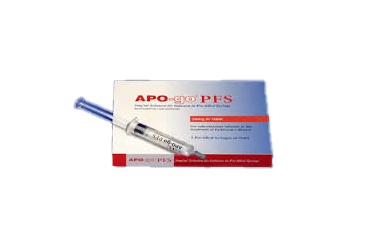
APO-go PFS is supplied in clear glass pre-filled syringes. Each pack contains 5 syringes with 10 ml of solution in a cardboard box. Not all pack sizes may be marketed.
Marketing authorization holder and manufacturer
STADA Arzneimittel AG
Stadastrasse 2-18
61118 Bad Vilbel, Germany
Manufacturer
Catalent Belgium S.A.
Font Saint Landry 10
B-1120 Brussels (Neder Over Heembeek)
Belgium
Or
Rovi Pharma Industrial Services S.A.
Julián Camarillo, 35
28037 Madrid
Spain
Or
STADA Arzneimittel AG
Stadastrasse 2 – 18 D-61118 Bad Vilbel, Germany
You can obtain further information on this medicine by contacting the local representative of the marketing authorization holder:
ITALFARMACO S.A.
San Rafael, 3
28108 Alcobendas (Madrid)
Tel. 916572323
This medicine is authorized in the Member States of the European Economic Area and in the United Kingdom (Northern Ireland) under the following names:
Austria, Germany: APO-go 5mg/ml Infusionslösung in einer Fertigspritze
Bulgaria: APO-go PFS 5mg/ml ??????? ?? ??????? ? ????????????? ????????? ??????????
Cyprus: APO-go® PFS 5mg/ml Δι?λυμα για ?γχυση σε Προγεμισμ?νη Σ?ριγγα
Denmark: APO-go Pumpfill 5 mg/ml infusionsvæske, opløsning i fyldt injektionssprøjte
Greece: APO-go PFS 5mg/ml
Ireland, United Kingdom (Northern Ireland),
Malta: APO-go PFS 5mg/ml Solution for Infusion in Pre-filled Syringe
Netherlands: APO-go 5mg/ml oplossing voor infusie in een voorgevulde spuit
Norway: Britaject 5mg/ml infusjonsvæske, oppløsning i ferdigfylt sprøyte
Portugal: Apo-go 5mg/ml Solução para perfusão em seringa pré-cheia
Romania: APO-go 5mg/ml solutie perfuzabila în seringa preumpluta unidoza
Slovenia: APO-go 5 mg/ml raztopina za infundiranje v napolnjeni injekcijski brizgi
Spain: APO-go PFS 5 mg/ml Solución para Perfusión en Jeringa Precargada
Sweden: APO-go Pumpfill 5 mg/ml infusionsvätska, lösning i förfylld spruta
Date of last revision of this leaflet: November 2023
Detailed information on this medicine is available on the website of the Spanish Agency for Medicines and Health Products (AEMPS) (http://www.aemps.gob.es)
- Country of registration
- Dosage formINJECTABLE PERFUSION, 5 mg/mL
- ATC codeN04BC07
- Active substance
- Prescription requiredYes
- Manufacturer
- CompositionSODIO, METABISULFITO DE (E 223) (0,05 % P/V mg)
- This information is for reference only and does not constitute medical advice. Always consult a doctor before taking any medication. Oladoctor is not responsible for medical decisions based on this content.
- Alternatives to APO-GO PFS 5 mg/ml SOLUTION FOR INFUSION IN PRE-FILLED SYRINGEDosage form: INJECTABLE, 10 mg/mLActive substance: apomorphineManufacturer: Stada Arzneimittel AgPrescription requiredDosage form: INJECTABLE, 10 mg/ml apomorphine hydrochlorideActive substance: apomorphineManufacturer: Stada Arzneimittel AgPrescription requiredDosage form: INJECTABLE, 5 mg/mlActive substance: apomorphineManufacturer: Stada Arzneimittel AgPrescription required
Online doctors for APO-GO PFS 5 mg/ml SOLUTION FOR INFUSION IN PRE-FILLED SYRINGE
Discuss questions about APO-GO PFS 5 mg/ml SOLUTION FOR INFUSION IN PRE-FILLED SYRINGE, including use, safety considerations and prescription review, subject to medical assessment and local regulations.



Get APO-GO PFS 5 mg/ml SOLUTION FOR INFUSION IN PRE-FILLED SYRINGE Prescription Online
Fill in a 2-min form
Tell us your symptoms, history, and what medicine you're requesting.
Pick a doctor or let us assign
Choose a specialist or we'll match you with the next available doctor.
Doctor reviews your case
Usually within 30 minutes. They may ask follow-up questions via chat.
Collect from any pharmacy
Electronic prescription sent to your email — valid across Spain.
Frequently Asked Questions
APO-GO PFS 5 mg/ml SOLUTION FOR INFUSION IN PRE-FILLED SYRINGE requires a prescription in Spain. You can check with a doctor online whether this medicine may be appropriate for your situation.
The active ingredient in APO-GO PFS 5 mg/ml SOLUTION FOR INFUSION IN PRE-FILLED SYRINGE is apomorphine. This information helps identify medicines with the same composition but different brand names.
APO-GO PFS 5 mg/ml SOLUTION FOR INFUSION IN PRE-FILLED SYRINGE is manufactured by Stada Arzneimittel Ag. Pharmacy brands and packaging may differ depending on the distributor.
Doctors such as Family doctors, Psychiatrists, Dermatologists, Cardiologists, Endocrinologists, Gastroenterologists, Pulmonologists, Nephrologists, Rheumatologists, Hematologists, Infectious disease physicians, Allergists, Geriatricians, Paediatricians, Oncologists may assess whether APO-GO PFS 5 mg/ml SOLUTION FOR INFUSION IN PRE-FILLED SYRINGE is appropriate, depending on your situation and local regulations. You can book an online consultation to discuss your symptoms and possible next steps.
Spain has a well-developed healthcare infrastructure across major cities such as Madrid, Barcelona, Valencia, and Seville. Pharmacies are widely available and operate under strict regulations, ensuring access to prescribed medications.
You can buy APO-GO PFS 5 mg/ml SOLUTION FOR INFUSION IN PRE-FILLED SYRINGE in Madrid, Barcelona, Seville, or Valencia at any local pharmacy with a valid prescription.
To obtain a prescription, you can use Oladoctor:
Other medicines with the same active substance (apomorphine) include APO-GO 10 mg/ml INJECTABLE SOLUTION OR PERFUSION SOLUTION IN AMPULES, APO-GO PEN 10 mg/ml INJECTABLE SOLUTION, APO-GO POD 5 mg/ml SOLUTION FOR INFUSION IN CARTRIDGE. These may have different brand names or formulations but contain the same therapeutic ingredient. Always consult a doctor before switching or starting a new medicine.
