






How to use ANESTEFARIN 5 mg/5 mg LOZENGES
Translated with AI
This page provides general information and does not replace a doctor’s consultation. Always consult a doctor before taking any medication. Seek urgent medical care if symptoms are severe.
Show originalContents of the leaflet
Introduction
Package Leaflet: Information for the User
ANESTEFARIN 5 mg/5 mg Lozenges
Chlorhexidine dihydrochloride/benzocaine
Read the entire package leaflet carefully before starting to use this medication, as it contains important information for you.
Follow the administration instructions for the medication contained in this package leaflet or as indicated by your doctor or pharmacist.
- Keep this package leaflet, as you may need to read it again.
- If you need advice or more information, consult your pharmacist.
- If you experience side effects, consult your doctor or pharmacist, even if they are side effects not listed in this package leaflet. See section 4.
- You should consult a doctor if your condition worsens or does not improve after 2 days of starting treatment or if fever, headache, nausea, or vomiting appear.
Contents of the Package Leaflet:
- What Anestefarin is and what it is used for
- What you need to know before taking Anestefarin
- How to take Anestefarin
- Possible side effects
- Storage of Anestefarin
- Package Contents and Additional Information
1. What Anestefarin is and what it is used for
The active ingredients of this medication work by combining the antiseptic and disinfectant action of chlorhexidine with the local anesthetic action of benzocaine.
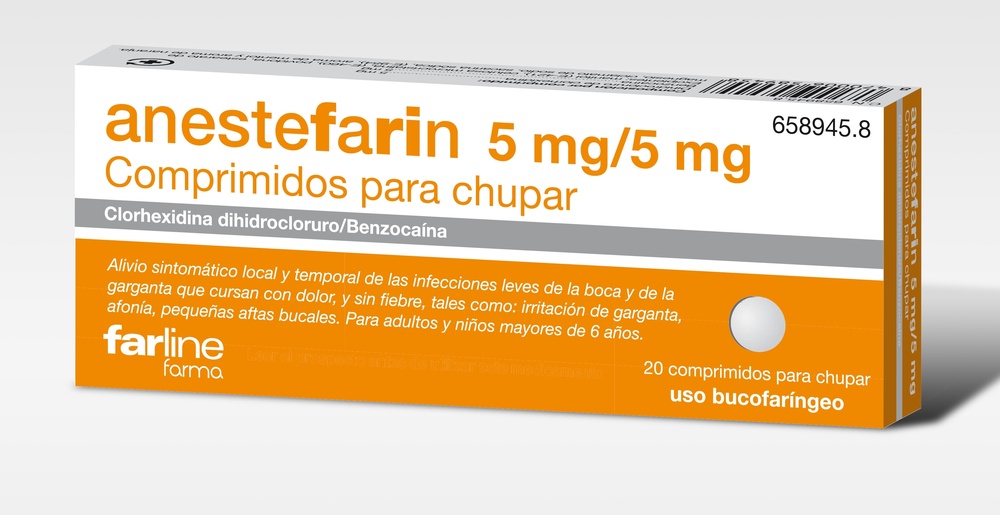
This medication is used in adults and children over 6 years old for the symptomatic local and temporary relief of mild mouth and throat infections that occur with pain and without fever, such as throat irritation, hoarseness, and small mouth ulcers.
You should consult a doctor if your condition worsens or does not improve after 2 days of starting treatment or if fever, headache, nausea, or vomiting appear.

2. What you need to know before taking Anestefarin
Do not use Anestefarin:
- if you are allergic to chlorhexidine, benzocaine, or any of the other components of this medication (listed in section 6).
Warnings and Precautions
Consult your doctor or pharmacist before starting to use Anestefarin:
- if you do not tolerate other local anesthetics like para-aminobenzoic acid (PABA), parabens, or para-phenylenediamine (a component of hair dye).
- if you have any severe or extensive oral lesions.
- if you have periodontitis (gum disease), as chlorhexidine may cause an increase in supragingival calculus.
It may produce a mild laxative effect because it contains mannitol (542 mg).
This medication contains less than 23 mg of sodium (1 mmol) per unit dose; it is essentially "sodium-free".
It is recommended to maintain good oral hygiene to reduce the accumulation of plaque and possible tooth discoloration that may be caused by chlorhexidine.
Children and Adolescents
This medication should not be administered to children under 6 years old without consulting a doctor first.
Using Anestefarin with Other Medications:
Tell your doctor or pharmacist if you are taking, have recently taken, or may need to take any other medication.
Although not described in the recommended conditions of use, it should not be used with other medications for oral application without consulting a doctor or pharmacist.
This is especially important in the case of:
- Other mouth or throat antiseptics.
- Cholinesterase inhibitor medications (medications for Alzheimer's disease).
- Sulfonamides (used for infections).
Anionic compounds and suspending agents, common components of toothpastes, decrease the effectiveness of chlorhexidine, so the mouth should be rinsed well after using toothpaste.
Interference with Diagnostic Tests
This medication may interact with the test for determining pancreatic function that uses bentiromide. Do not use this medication at least three days before the test and inform your doctor.
Pregnancy and Breastfeeding:
If you are pregnant or breastfeeding, think you may be pregnant, or plan to become pregnant, consult your doctor or pharmacist before using this medication.
Driving and Using Machines:
No cases have been reported that affect the ability to drive or operate machinery.
3. How to Take Anestefarin
Follow the administration instructions for the medication contained in this package leaflet or as indicated by your doctor or pharmacist. In case of doubt, ask your doctor or pharmacist.
The recommended dose is:
Adults and children over 6 years old: 1 lozenge every 2 or 3 hours, dissolving slowly in the mouth. Do not use more than 8 lozenges in 24 hours (1 day).
Use in Children
This medication is indicated for children over 6 years old.
Use in Elderly
Elderly people and debilitated patients may be more sensitive to benzocaine.
This medication is for buccopharyngeal use, so the lozenges should be dissolved slowly in the mouth without chewing or swallowing, as its action is local and only manifests when the product is in direct contact with the affected area.
Always use the lowest effective dose.
If you use more Anestefarin than you should:
Signs of overdose manifest as: slurred speech, numbness, staggering gait, blurred or double vision, dizziness, excitement, or convulsions, ringing in the ears, increased sweating. A decrease in blood pressure may also occur.
In case of overdose or accidental ingestion, go immediately to a medical center or call the Toxicology Information Service (Telephone 91 562 04 20), indicating the medication and the amount ingested.

4. Possible Side Effects
Like all medications, Anestefarin can cause side effects, although not everyone will experience them.
Tooth discoloration may appear. This staining or discoloration may be more pronounced in people with plaque on their teeth. This alteration of tooth color is not permanent and can be removed by a dental cleaning. The color of fillings may also be altered, in which case this discoloration may be permanent.
Alteration in taste perception may appear.
In some cases, Anestefarin may cause irritation in the mouth or irritation of the tip of the tongue, which are usually transient, as well as allergic reactions to chlorhexidine or benzocaine.
Reporting Side Effects:
If you experience any type of side effect, consult your doctor or pharmacist, even if it is a possible side effect not listed in this package leaflet. You can also report them directly through the Spanish Medication Surveillance System for Human Use: https://www.notificaram.es. By reporting side effects, you can contribute to providing more information on the safety of this medication.
5. Storage of Anestefarin
Do not store above 30°C.
Keep this medication out of sight and reach of children.
Do not use this medication after the expiration date shown on the packaging, after CAD. The expiration date is the last day of the month indicated.
Medications should not be disposed of through wastewater or household waste. Deposit the packaging and any unused medications in the SIGRE Collection Point (or any other medication waste collection system) at your pharmacy. If in doubt, ask your pharmacist how to dispose of the packaging and any unused medications. This will help protect the environment.
6. Package Contents and Additional Information
Composition of ANESTEFARIN:
Each lozenge contains:
- The active ingredients are: 5 mg of chlorhexidine dihydrochloride and 5 mg of benzocaine.
- The other components (excipients) are: mannitol (E-421), microcrystalline cellulose (E-460), povidone, magnesium stearate, sodium cyclamate, sodium saccharin (E-954), menthol flavor, and orange flavor.
Appearance of the Product and Package Contents:
They are orange-flavored lozenges. This medication is presented in packages of 20 lozenges.
Marketing Authorization Holder:
Farline Comercializadora de Productos Farmacéuticos, S.A.
C/ Sta. Engracia, 31. 28010 MADRID
Manufacturer:
ALCALÁ FARMA, S.L.
Avenida de Madrid 82,
Alcala de Henares. 28802. Spain
This package leaflet was approved in September 2014
Detailed and updated information on this medication is available on the website of the Spanish Agency for Medicines and Health Products (AEMPS) http://www.aemps.gob.es/
-

- Country of registration
- Dosage formBUCCAL TABLET/LOZENGE, 5 mg chlorhexidine dihydrochloride/5mg benzocaine/tablet
- Prescription requiredNo
- Manufacturer
- This information is for reference only and does not constitute medical advice. Always consult a doctor before taking any medication. Oladoctor is not responsible for medical decisions based on this content.
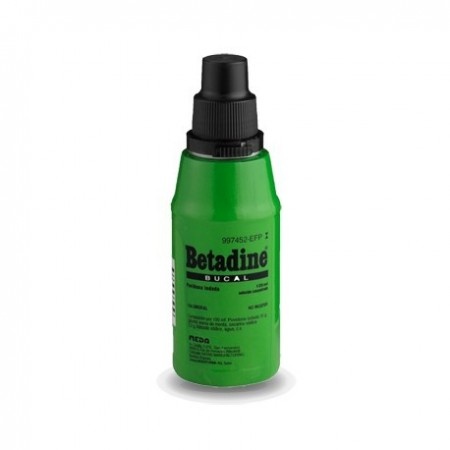
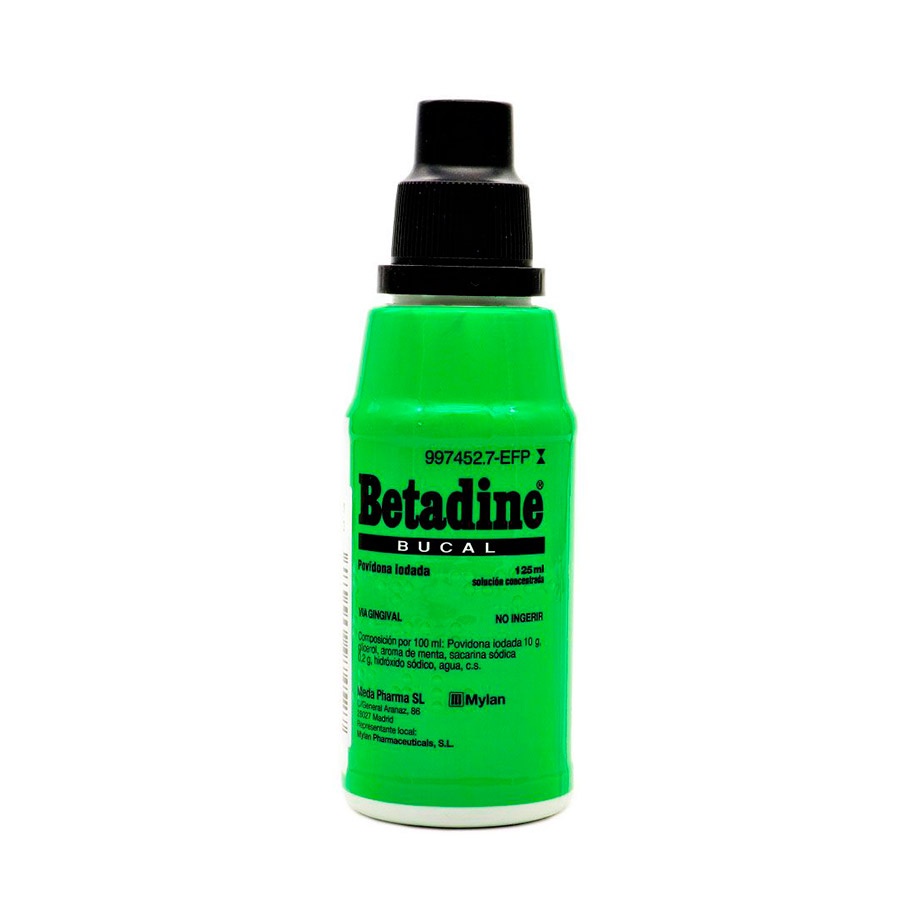
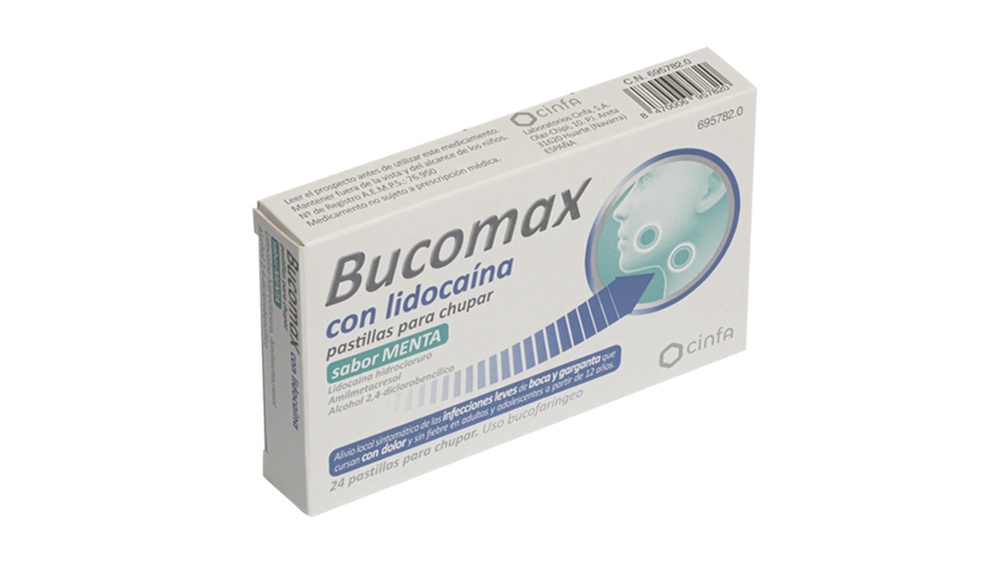
- Alternatives to ANESTEFARIN 5 mg/5 mg LOZENGESDosage form: TOPICAL ORAL PRODUCT, 10 mg/mlActive substance: povidone-iodineManufacturer: Cooper Consumer Health B.V.Prescription not requiredDosage form: GEL/PASTE/ORAL LIQUID, 10% povidone iodineActive substance: povidone-iodineManufacturer: Cooper Consumer Health B.V.Prescription not requiredDosage form: BUCCAL TABLET/LOZENGE, 2mg lidocaine/0.6mg amylmetacresol/1.2mg diclofenac alcoholActive substance: variousManufacturer: Laboratorios Cinfa S.A.Prescription not required
Online doctors for ANESTEFARIN 5 mg/5 mg LOZENGES
Discuss questions about ANESTEFARIN 5 mg/5 mg LOZENGES, including use, safety considerations and prescription review, subject to medical assessment and local regulations.









Get ANESTEFARIN 5 mg/5 mg LOZENGES Prescription Online
Fill in a 2-min form
Tell us your symptoms, history, and what medicine you're requesting.
Pick a doctor or let us assign
Choose a specialist or we'll match you with the next available doctor.
Doctor reviews your case
Usually within 30 minutes. They may ask follow-up questions via chat.
Collect from any pharmacy
Electronic prescription sent to your email — valid across Spain.
Frequently Asked Questions
ANESTEFARIN 5 mg/5 mg LOZENGES does not require a prescription in Spain. You can check with a doctor online whether this medicine may be appropriate for your situation.
ANESTEFARIN 5 mg/5 mg LOZENGES is manufactured by Farline Comercializadora De Productos Farmaceuticos S.A.. Pharmacy brands and packaging may differ depending on the distributor.
Doctors such as Family doctors, Psychiatrists, Dermatologists, Cardiologists, Endocrinologists, Gastroenterologists, Pulmonologists, Nephrologists, Rheumatologists, Hematologists, Infectious disease physicians, Allergists, Geriatricians, Paediatricians, Oncologists may assess whether ANESTEFARIN 5 mg/5 mg LOZENGES is appropriate, depending on your situation and local regulations. You can book an online consultation to discuss your symptoms and possible next steps.
Spain has a well-developed healthcare infrastructure across major cities such as Madrid, Barcelona, Valencia, and Seville. Pharmacies are widely available and operate under strict regulations, ensuring access to prescribed medications.
You can buy ANESTEFARIN 5 mg/5 mg LOZENGES in Madrid, Barcelona, Seville, or Valencia at any local pharmacy with a valid prescription.
To obtain a prescription, you can use Oladoctor:
Other medicines with the same active substance () include BETADINE 10 mg/ml MOUTH RINSE SOLUTION, BETADINE BUCAL 100 mg/mL ORAL SOLUTION, BUCOMAX WITH LIDOCAINE LOZENGES MINT FLAVOR. These may have different brand names or formulations but contain the same therapeutic ingredient. Always consult a doctor before switching or starting a new medicine.
