



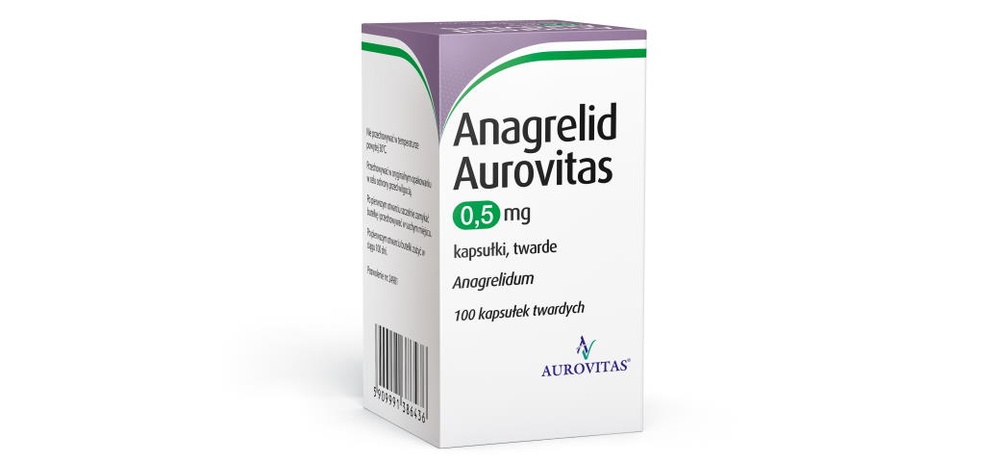
ANAGRELIDA 0.5 mg HARD CAPSULES

Prescription review online
A doctor will review your case and decide whether a prescription is medically appropriate.

Talk to a doctor about this medicine
Discuss your symptoms and possible next steps in a quick online consultation.



How to use ANAGRELIDE AUROVITAS 0.5 mg HARD CAPSULES
Contents of the leaflet
- Introduction
- What is Anagrelida Aurovitas and what is it used for
- What you need to know before you take Anagrelida Aurovitas
- How to take Anagrelida Aurovitas
- Possible side effects
- Storage of Anagrelida Aurovitas
- Contents of the pack and other information
Introduction
Package Leaflet: Information for the User
Anagrelida Aurovitas 0.5 mg Hard Capsules EFG
Read all of this leaflet carefully before you start taking this medicine because it contains important information for you.
- Keep this leaflet, you may need to read it again.
- If you have any further questions, ask your doctor or pharmacist.
- This medicine has been prescribed for you only. Do not pass it on to others. It may harm them, even if their signs of illness are the same as yours.
- If you get any side effects, talk to your doctor or pharmacist. This includes any possible side effects not listed in this leaflet. See section 4.
Contents of the pack
- What is Anagrelida Aurovitas and what is it used for
- What you need to know before you take Anagrelida Aurovitas
- How to take Anagrelida Aurovitas
- Possible side effects
- Storage of Anagrelida Aurovitas
- Contents of the pack and other information
1. What is Anagrelida Aurovitas and what is it used for
Anagrelida Aurovitas contains the active substance anagrelide. Anagrelida Aurovitas is a medicine that interferes with the production of platelets. It reduces the number of platelets produced by the bone marrow, which leads to a reduction in the platelet count in the blood to a more normal level. For this reason, it is used to treat patients with essential thrombocythemia.
Essential thrombocythemia is a condition that occurs when the bone marrow produces too many of the blood cells known as platelets. A high number of platelets in the blood can cause serious problems with blood circulation and clotting.

Not sure if this medicine is right for you?
Discuss your symptoms and treatment with a doctor online.
2. What you need to know before you take Anagrelida Aurovitas
Do not take Anagrelida Aurovitas
- If you are allergic to anagrelide or any of the other ingredients of this medicine (listed in section 6). Allergic reactions may appear as a rash, itching, swelling of the face and lips or difficulty breathing (dyspnea);
- If you have moderate or severe liver problems;
- If you have moderate or severe kidney problems.
Warnings and precautions
Consult your doctor before starting to take Anagrelida Aurovitas:
- If you have or think you may have a heart problem;
- If you were born with a prolonged QT interval or have a family history of prolonged QT interval (observed in the ECG, electrical recording of the heart) or if you are taking other medicines that produce abnormal changes in the ECG or if you have low levels of electrolytes, e.g. potassium, magnesium or calcium (see the section "Other medicines and Anagrelida Aurovitas");
- If you have liver or kidney problems.
In combination with acetylsalicylic acid (a substance present in many medicines used to relieve pain and lower fever, as well as to prevent blood clotting, also known as aspirin), there is a greater risk of major bleeding (bleeding) (see section "Other medicines and Anagrelida Aurovitas").
While taking anagrelide, you must take the exact dose prescribed by your doctor. Do not stop taking the medicine without talking to your doctor first. Do not stop taking this medicine abruptly without consulting your doctor. Stopping the medicine suddenly can increase the risk of stroke.
The signs and symptoms of a stroke can include sudden numbness or weakness in the face, arm, or leg, especially on one side of the body, sudden confusion, difficulty speaking or difficulty understanding speech, sudden difficulty seeing with one or both eyes, sudden difficulty walking, dizziness, loss of balance or lack of coordination, and severe and sudden headache without known cause. Please seek immediate medical attention.
Children and adolescents
Information on the use of anagrelide in children and adolescents is limited, and therefore, this medicine should be used with caution.
Other medicines and Anagrelida Aurovitas
Tell your doctor or pharmacist if you are taking, have recently taken, or might take any other medicines.
Tell your doctor if you are taking any of the following medicines:
- Medicines that can alter your heart rhythm, such as sotalol, amiodarone;
- Fluvoxamine, used to treat depression;
- Certain types of antibiotics, such as enoxacin, used to treat infections;
- Theophylline, used to treat asthma and severe respiratory problems;
- Medicines to treat heart conditions, such as milrinone, enoximone, amrinone, olprinone, and cilostazol;
- Acetylsalicylic acid (a substance present in many medicines used to relieve pain and lower fever, as well as to prevent blood clotting, also known as aspirin);
- Other medicines to treat diseases that affect platelets in the blood, such as clopidogrel;
- Omeprazole, used to reduce the amount of acid produced in the stomach;
- Oral contraceptives. If you experience severe diarrhea while taking this medicine, it may reduce the effect of the oral contraceptive and it is recommended to use an additional contraceptive method (e.g. condom). Consult the instructions in the package leaflet of the oral contraceptive you are taking.
If used together, Anagrelida Aurovitas or these medicines may not work correctly.
Consult your doctor or pharmacist if you have any doubts.
Pregnancy and breastfeeding
If you are pregnant or breastfeeding, think you may be pregnant, or plan to become pregnant, consult your doctor or pharmacist before using this medicine. If you are pregnant, you should not take anagrelide. Women who may become pregnant must ensure they take effective contraceptive measures while taking anagrelide. Consult your doctor if you need advice on contraceptives.
You cannot take anagrelide while breastfeeding. If you are taking anagrelide, you should stop breastfeeding.
Driving and using machines
Some patients who were taking anagrelide have reported symptoms of dizziness. Do not drive or operate machinery if you feel dizzy.
Anagrelida Aurovitas contains lactose
If your doctor has told you that you have an intolerance to certain sugars, consult with them before taking this medicine.
Anagrelida Aurovitas contains sodium
This medicine contains less than 1 mmol of sodium (23 mg) per capsule; this is essentially "sodium-free".
3. How to take Anagrelida Aurovitas
Follow exactly the administration instructions of this medicine given by your doctor. In case of doubt, consult your doctor or pharmacist again.
The amount of anagrelide that different patients can take may vary, and this amount depends on the disease. Your doctor will prescribe the most convenient dose for your case.
The initial normal dose of anagrelide is equivalent to 1 mg. This dose is taken with a 0.5 mg capsule twice a day for at least one week. After this period, your doctor may increase or decrease the number of capsules you should take until they find the dose that best suits your case and treats the condition most effectively.
The capsules should be swallowed whole with a glass of water. Do not crush the capsules or dissolve the contents in a liquid. You can take the capsules with food, after meals, or on an empty stomach. It is recommended to take the capsule(s) always at the same time.
Do not take more or fewer capsules than your doctor has recommended. Do not stop taking the medicine without talking to your doctor first. Do not stop taking this medicine abruptly without consulting your doctor.
Your doctor will ask you to have a blood test regularly to check if the medicine is working and if your liver and kidneys are working well.
If you take more Anagrelida Aurovitas than you should
If you take more anagrelide than you should or if someone else has taken this medicine, inform your doctor or pharmacist immediately. You should show them the Anagrelida Aurovitas package.
If you forget to take Anagrelida Aurovitas
Take the capsules as soon as you remember. Take the next dose at the usual time. Do not take a double dose to make up for forgotten doses.

Started taking the medicine and have questions?
Discuss your symptoms and treatment with a doctor online.
4. Possible side effects
Like all medicines, this medicine can cause side effects, although not everybody gets them.
Serious side effects:
Uncommon: heart failure (symptoms include shortness of breath, chest pain, swelling of legs due to fluid accumulation), serious heart rhythm problems (ventricular tachycardia, supraventricular tachycardia, or atrial fibrillation), pancreatitis (inflammation of the pancreas that causes severe back and abdominal pain), vomiting blood or black, tarry stools, severe decrease in blood cell count that can cause weakness, bruising, bleeding, or infection (pancytopenia), pulmonary hypertension (symptoms include shortness of breath, swelling of legs or ankles, and bluish discoloration of the lips and skin).
Rare: kidney failure (when little or no urine is produced), heart attack.
If you notice any of these side effects, contact your doctor immediately.
Very common side effects: may affect more than 1 in 10 patients
Headache.
Common side effects: may affect up to 1 in 10 patients
Dizziness, fatigue, rapid heartbeat, strong or irregular heartbeat (palpitations), nausea, diarrhea, stomach pain, gas, vomiting, decrease in red blood cell count (anemia), fluid retention or rash.
Uncommon side effects: may affect up to 1 in 100 patients
Feeling weak or unwell, high blood pressure, irregular heartbeat, fainting, chills or fever, indigestion, loss of appetite, constipation, bruising, bleeding, swelling (edema), weight loss, muscle pain, joint pain, back pain, loss or decrease in sensation or feeling like numbness (especially in the skin), sensitivity or abnormal sensation like tingling and numbness, insomnia, depression, confusion, nervousness, dry mouth, memory loss, shortness of breath, nosebleeds, severe lung infection with fever, shortness of breath, cough, or sputum, hair loss, itching, skin color changes, impotence, chest pain, decrease in platelet count in the blood that increases the risk of bleeding or bruising (thrombocytopenia), fluid accumulation in the lungs or an increase in liver enzymes. Your doctor may perform blood tests that may indicate an increase in liver enzymes.
Rare side effects: may affect up to 1 in 1,000 patients
Bleeding gums, weight gain, severe chest pain (angina pectoris), heart muscle disease (symptoms include fatigue, chest pain, and palpitations), heart enlargement, fluid accumulation in the heart, painful spasms of the heart's blood vessels (at rest, especially at night or early in the morning) (Prinzmetal's angina), loss of coordination, difficulty speaking, dry skin, migraine, visual disturbances or double vision, ringing in the ears, dizziness when standing up (especially when standing up after sitting or lying down), increased need to urinate at night, pain, "flu-like" symptoms, drowsiness, dilation of blood vessels, inflammation of the large intestine (symptoms include diarrhea accompanied by blood or mucus, stomach pain, fever), inflammation of the stomach (symptoms include pain, nausea, vomiting), abnormal density area in the lungs, increased creatinine levels in blood tests that may indicate kidney problems.
The following side effects have been reported, but the exact frequency is unknown:
- Potentially life-threatening irregular heartbeat (torsades de pointes);
- Liver inflammation, among the symptoms are nausea, vomiting, itching, yellowing of the skin and eyes, abnormal coloration of stools and urine (hepatitis);
- Lung inflammation (symptoms include fever, cough, difficulty breathing, or wheezing; this causes lung scarring) (allergic alveolitis including interstitial lung disease and pneumonitis);
- Kidney inflammation (tubulointerstitial nephritis);
- Stroke (see section 2).
Reporting of side effects
If you experience any side effects, talk to your doctor or pharmacist. This includes any possible side effects not listed in this leaflet. You can also report side effects directly through the Spanish Pharmacovigilance System for Human Use Medicines: https://www.notificaram.es. By reporting side effects, you can help provide more information on the safety of this medicine.
5. Storage of Anagrelida Aurovitas
Keep this medicine out of the sight and reach of children.
Do not use this medicine after the expiry date which is stated on the carton, blister, or label of the bottle after EXP. The expiry date is the last day of the month stated.
Blister:Store below 30°C.
High-density polyethylene (HDPE) bottle:Store below 30°C. Store in the original packaging to protect from moisture. After the first opening, keep the bottle tightly closed and store in a dry environment.
If your doctor stops the treatment, do not keep the remaining capsules unless the doctor tells you to. Medicines should not be disposed of via wastewater or household waste. Place the packaging and any unused medicine in the SIGRE collection point at the pharmacy. Ask your pharmacist how to dispose of the packaging and any unused medicine. This will help protect the environment.
6. Contents of the pack and other information
Composition of Anagrelida Aurovitas
- The active substance is anagrelide. Each capsule contains 0.5 mg of anagrelide (as anagrelide hydrochloride monohydrate).
- The other ingredients are:
Capsule content:lactose monohydrate, microcrystalline cellulose (PH 101), sodium croscarmellose, hydroxypropylcellulose, and magnesium stearate.
Capsule shell:gelatin, black iron oxide (E172), titanium dioxide (E171).
Printing ink:shellac, black iron oxide (E172), potassium hydroxide.
Appearance and packaging
Hard gelatin capsule of size "4", with the cap gray opaque and the body white opaque, filled with white-white powder, marked with "1453" on the cap and "0.5 mg" on the body printed with black ink.
OPA/Al/PVC-Al blister:
Package sizes: 84, 90, and 100 capsules.
HDPE bottle:
Round white opaque high-density polyethylene (HDPE) bottle with a screw cap. Each bottle contains silica gel as a desiccant.
Package size: 100 capsules.
Not all pack sizes may be marketed.
Marketing authorization holder and manufacturer
Marketing authorization holder:
Aurovitas Spain, S.A.U.
Avda. de Burgos, 16-D
28036 Madrid
Spain
Manufacturer:
APL Swift Services (Malta) Limited
HF26, Hal Far Industrial Estate, Hal Far
Birzebbugia, BBG 3000
Malta
Or
Generis Farmacêutica, S.A.
Rua João de Deus, 19
2700-487 Amadora
Portugal
Or
Arrow Generiques – Lyon
26 avenue Tony Garnier,
Lyon, 69007
France
Or
PUREN Pharma GmbH & Co. KG
Willy-Brandt-Allee 2
81829 München
Germany
This medicine is authorized in the Member States of the European Economic Area under the following names:
Germany: Anagrelid PUREN 0.5 mg Hartkapseln
Spain: Anagrelida Aurovitas 0.5 mg hard capsules EFG
France: Anagrelide Arrow 0.5 mg gélule
Italy: Anagrelide Aurobindo
Poland: Anagrelid Aurovitas
Portugal: Anagrelida Aurovitas
Date of last revision of this leaflet:October 2022
Detailed information on this medicine is available on the website of the Spanish Agency for Medicines and Health Products (AEMPS) (http://www.aemps.gob.es/)
- Country of registration
- Dosage formCAPSULE, 0.5 mg
- ATC codeL01XX35
- Active substance
- Prescription requiredYes
- Manufacturer
- CompositionLACTOSA MONOHIDRATO (PHARMATOSE 200M) (71,795 mg mg), CROSCARMELOSA SODICA (0,85 mg mg)
- This information is for reference only and does not constitute medical advice. Always consult a doctor before taking any medication. Oladoctor is not responsible for medical decisions based on this content.
- Alternatives to ANAGRELIDE AUROVITAS 0.5 mg HARD CAPSULESDosage form: CAPSULE, 0.5 mgActive substance: anagrelideManufacturer: Bluefish Pharmaceuticals Ab (Publ)Prescription requiredDosage form: CAPSULE, 0.5 mgActive substance: anagrelideManufacturer: Glenmark Arzneimittel GmbhPrescription requiredDosage form: CAPSULE, 0.5 mgActive substance: anagrelideManufacturer: Pharmavic Iberica S.L.Prescription required
Online doctors for ANAGRELIDE AUROVITAS 0.5 mg HARD CAPSULES
Discuss questions about ANAGRELIDE AUROVITAS 0.5 mg HARD CAPSULES, including use, safety considerations and prescription review, subject to medical assessment and local regulations.
Get ANAGRELIDE AUROVITAS 0.5 mg HARD CAPSULES Prescription Online
Fill in a 2-min form
Tell us your symptoms, history, and what medicine you're requesting.
Pick a doctor or let us assign
Choose a specialist or we'll match you with the next available doctor.
Doctor reviews your case
Usually within 30 minutes. They may ask follow-up questions via chat.
Collect from any pharmacy
Electronic prescription sent to your email — valid across Spain.
Frequently Asked Questions
ANAGRELIDE AUROVITAS 0.5 mg HARD CAPSULES requires a prescription in Spain. You can check with a doctor online whether this medicine may be appropriate for your situation.
The active ingredient in ANAGRELIDE AUROVITAS 0.5 mg HARD CAPSULES is anagrelide. This information helps identify medicines with the same composition but different brand names.
ANAGRELIDE AUROVITAS 0.5 mg HARD CAPSULES is manufactured by Aurovitas Spain, S.A.U.. Pharmacy brands and packaging may differ depending on the distributor.
Doctors such as Family doctors, Psychiatrists, Dermatologists, Cardiologists, Endocrinologists, Gastroenterologists, Pulmonologists, Nephrologists, Rheumatologists, Hematologists, Infectious disease physicians, Allergists, Geriatricians, Paediatricians, Oncologists may assess whether ANAGRELIDE AUROVITAS 0.5 mg HARD CAPSULES is appropriate, depending on your situation and local regulations. You can book an online consultation to discuss your symptoms and possible next steps.
Spain has a well-developed healthcare infrastructure across major cities such as Madrid, Barcelona, Valencia, and Seville. Pharmacies are widely available and operate under strict regulations, ensuring access to prescribed medications.
You can buy ANAGRELIDE AUROVITAS 0.5 mg HARD CAPSULES in Madrid, Barcelona, Seville, or Valencia at any local pharmacy with a valid prescription.
To obtain a prescription, you can use Oladoctor:
Other medicines with the same active substance (anagrelide) include ANAGRELIDE BLUEFISH 0.5 mg HARD CAPSULES, ANAGRELIDE GLENMARK 0.5 mg HARD CAPSULES, ANAGRELIDE PHARMAVIC 0.5 mg HARD CAPSULES. These may have different brand names or formulations but contain the same therapeutic ingredient. Always consult a doctor before switching or starting a new medicine.
