


Amoxicilina 100 mg/ml + 12,5 mg/ml suspensión oral polvo

Prescription request online
A doctor will review your case and decide whether a prescription is medically appropriate.

Talk to a doctor about this medicine
Discuss your symptoms and possible next steps in a quick online consultation.



How to use AMOXICILLIN/CLAVULANIC ACID SANDOZ 100 mg/mL + 12.5 mg/mL ORAL SUSPENSION POWDER
Contents of the leaflet
- Introduction
- What Amoxicillin/Clavulanic Acid Sandoz is and what it is used for
- What you need to know before taking Amoxicillin/Clavulanic Acid Sandoz
- How to take Amoxicillin/Clavulanic Acid Sandoz
- Possible Adverse Effects
- Storage of Amoxicillin/Clavulanic acid Sandoz
- Package contents and additional information
Introduction
Package Leaflet: Information for the Patient
Amoxicillin/Clavulanic Acid Sandoz 100 mg/ml + 12.5 mg/ml Powder for Oral Suspension EFG
Read the entire package leaflet carefully before starting to take this medication, as it contains important information for you.
- Keep this package leaflet, as you may need to read it again.
- If you have any questions, consult your doctor, pharmacist, or nurse.
- This medication is normally prescribed to infants and children, and should not be given to others even if they have the same symptoms as your child, as it may harm them.
- If your child experiences side effects, consult your doctor, pharmacist, or nurse, even if they are side effects not listed in this package leaflet. See section 4.
Contents of the Package Leaflet
- What Amoxicillin/Clavulanic Acid Sandoz is and what it is used for
- What you need to know before taking Amoxicillin/Clavulanic Acid Sandoz
- How to take Amoxicillin/Clavulanic Acid Sandoz
- Possible side effects
- Storage of Amoxicillin/Clavulanic Acid Sandoz
- Package Contents and Additional Information
1. What Amoxicillin/Clavulanic Acid Sandoz is and what it is used for
Pharmaceutical form: Combination of penicillins, including beta-lactamase inhibitors, ATC code: J01CR02.
Amoxicillin/Clavulanic Acid is an antibiotic that eliminates bacteria that cause infections. It contains two different medications called amoxicillin and clavulanic acid. Amoxicillin belongs to a group of medications known as "penicillins" that can sometimes lose their effectiveness (become inactivated). The other medication (clavulanic acid) prevents this from happening.
Antibiotics are used to treat bacterial infections and are not effective against viral infections such as the flu or common cold.
It is essential to follow the instructions regarding dosage, administration, and treatment duration indicated by your doctor.
Do not store or reuse this medication. If you have any leftover antibiotic after completing treatment, return it to the pharmacy for proper disposal. Do not throw medications down the drain or in the trash.
Amoxicillin/Clavulanic Acid 100 mg/ml + 12.5 mg/ml powder for oral suspension is used in infants and children for the treatment of the following infections:
- Middle ear and paranasal sinus infections,
- Respiratory tract infections,
- Urinary tract infections,
- Skin and soft tissue infections, including dental infections,
- Bone and joint infections.

Not sure if this medicine is right for you?
Discuss your symptoms and treatment with a doctor online.
2. What you need to know before taking Amoxicillin/Clavulanic Acid Sandoz
Do not administer Amoxicillin/Clavulanic Acid Sandoz to your child:if they are allergic (hypersensitive) to amoxicillin, clavulanic acid, penicillins, or any of the other components of this medication (listed in section 6),
- if they have ever had a severe allergic reaction (hypersensitivity) to any other antibiotic. This could include skin rash or swelling of the face or neck,
- if they have ever had liver problems or jaundice (yellowing of the skin) when taking an antibiotic.
Do not give Amoxicillin/Clavulanic Acid Sandoz to your child if any of the above applies.
Before starting treatment with this medication, if you are unsure, consult your child's doctor, pharmacist, or nurse.
Warnings and Precautions
Consult your child's doctor or pharmacist before administering amoxicillin/clavulanic acid to the child, if the child:
- has infectious mononucleosis,
- is receiving treatment for liver or kidney problems,
- does not urinate regularly.
If you are unsure whether any of the above symptoms affect your child, inform your doctor or pharmacist before administering amoxicillin/clavulanic acid to your child.
In some cases, your doctor may investigate the type of bacteria causing your child's infection. Depending on the results, your child may receive a different dose of amoxicillin/clavulanic acid or another medication.
Symptoms to be aware of
Amoxicillin/Clavulanic Acid may worsen certain existing conditions or cause severe side effects. These include allergic reactions, seizures, and inflammation of the large intestine. You should be aware of certain symptoms while your child is taking this medication to reduce the risk of problems. See "Symptoms to be aware of"in section 4.
Blood and urine tests
If your child is undergoing blood tests (such as red blood cell tests or liver function tests) or urine tests (to check glucose levels), inform your doctor or nurse that they are taking amoxicillin/clavulanic acid. This is because this medication may alter the results of these types of tests.
Other medications and Amoxicillin/Clavulanic Acid Sandoz
Inform your doctor or pharmacist if your child is using, has recently used, or may need to use any other medication, including those purchased without a prescription and herbal medicines.
If your child is taking allopurinol (for the treatment of gout) with amoxicillin/clavulanic acid, they may be more likely to have an allergic skin reaction.
If your child is taking probenecid (used to treat gout), concomitant use of probenecid may reduce the excretion of amoxicillin and is not recommended; your doctor may adjust the dose of amoxicillin/clavulanic acid.
If anticoagulants (such as warfarin) are taken with amoxicillin/clavulanic acid, more blood tests will be needed.
Amoxicillin/Clavulanic Acid may affect the action of methotrexate (a medication used to treat cancer and severe psoriasis), as penicillins may reduce the excretion of methotrexate and cause a potential increase in side effects.
Amoxicillin/Clavulanic Acid may affect the functioning of mycophenolate mofetil (a medication used to prevent organ rejection in transplant patients).
Pregnancy and Breastfeeding
This subsection does not apply to Amoxicillin/Clavulanic Acid Sandoz, as this medication is intended for use in children weighing less than 40 kg; however, the following information applies to the active ingredients, amoxicillin/clavulanic acid.
Pregnancy
This medication should only be used during pregnancy under the advice of your doctor. If you discover that you are pregnant during treatment, consult your doctor, as only they can decide whether you should continue.
An increased risk of intestinal inflammation (enterocolitis) has been observed in neonates in women with imminent childbirth who receive amoxicillin/clavulanic acid.
If you are pregnant or breastfeeding, think you may be pregnant, or plan to become pregnant, consult your doctor or pharmacist before using this medication.
Breastfeeding
Breastfeeding is possible when taking this medication. If your newborn develops problems such as diarrhea, skin rash, or candidiasis (a condition caused by certain microscopic fungi), inform your doctor immediately, who will advise you on what to do, as these effects in your child may be due to this medication.
Driving and Using Machines
This subsection does not apply to Amoxicillin/Clavulanic Acid Sandoz, as this medication is intended for use in children weighing less than 40 kg; however, the following information applies to the active ingredients, amoxicillin/clavulanic acid.
This medication may cause side effects, whose symptoms may affect your ability to drive. Do not drive a vehicle or operate machinery unless you feel perfectly well.
Amoxicillin/Clavulanic Acid Sandoz contains 3 mg of aspartame in each ml of reconstituted solution
Aspartame contains a source of phenylalanine that may be harmful in case of phenylketonuria (PKU), a rare genetic disorder in which phenylalanine accumulates because the body is unable to eliminate it properly.
Amoxicillin/Clavulanic Acid Sandoz contains maltodextrin (a source of glucose)
If your doctor has told you that you have an intolerance to certain sugars, consult with them before taking this medication. It may be harmful to teeth.
Amoxicillin/Clavulanic Acid Sandoz contains potassium
This medication contains 0.68 mg of potassium per dose, i.e., 2.5 mg per ml of oral suspension, which should be taken into account in patients with renal insufficiency or in patients with low-potassium diets.
3. How to take Amoxicillin/Clavulanic Acid Sandoz
Follow the administration instructions for this medication exactly as indicated by your doctor or pharmacist. If you are unsure, consult your doctor or pharmacist again.
Dosage
Adults and children weighing 40 kg or more
It is not normally recommended for adults and children weighing more than 40 kg. Consult your doctor or pharmacist.
Children weighing less than 40 kg
All doses are expressed based on the child's body weight in kilograms.
- Your doctor will advise you on how much amoxicillin/clavulanic acid to give to your baby or child.
- You will be provided with a plastic dosing syringe. You should use it to give the correct dose to your baby or child.
- The recommended dose is 40 mg/5 mg to 80 mg/10 mg per kilogram of body weight per day, administered in three divided doses.
Patients with kidney and liver problems
- If your child has kidney problems, the dose may be reduced. Your doctor may choose a different presentation or medication.
- If your child has liver problems, they will have more frequent blood tests to check how their liver is functioning.
How to administer Amoxicillin/Clavulanic Acid Sandoz
Oral route.
Administer the medication to your child preferably at the start of a meal or a little before.
As soon as you add water and between uses, keep the bottle refrigerated.
Shake the bottle well before each use.
It is administered using an oral syringe graduated in kg of body weight.
Distribute the doses evenly throughout the day, with at least 4 hours between them. Do not administer 2 doses in 1 hour.
Do not give amoxicillin/clavulanic acid to your child for more than 2 weeks. If your child's symptoms persist, consult a doctor again.
INSTRUCTIONS FOR USE OF THE ORAL SYRINGE
The dose amount is indicated on the plunger of the oral syringe, graduated in kg, according to the child's weight. Therefore, the dose can be read directly from the syringe graduations. The indicated weight corresponds to a single dose. It should be taken three times a day.
For example, the 20 graduation corresponds to the amount to be administered per dose to a child weighing 20 kg, three times a day.
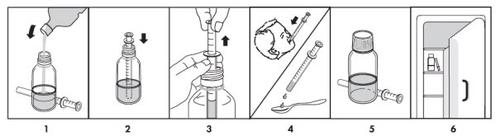
For the first use
- Fill with non-carbonated water up to the fill level. Shake well to obtain a homogeneous liquid. Refill with water if necessary.
- Insert the oral syringe into the bottle.
- Pull the plunger up to the graduation corresponding to the child's weight. Read the weight in kg on the neck of the syringe. Remove the syringe from the bottle to administer. Note: do not pull the plunger again.
- Place the medication directly into the child's mouth or with a spoon.
- After each use, rinse the oral syringe well with water. Close the bottle carefully after each use.
- Return the bottle to the refrigerator after each use.
For each new use
- Shake the bottle well before each use.
- Repeat steps 2 to 6 (see above).
Note that this oral syringe should not be used to administer any other medication, as the graduation of this oral syringe is specific to this medication. |
3 doses per day.
For this antibiotic to be effective, it must be used regularly in the prescribed doses and for the duration indicated by your doctor.
The disappearance of fever or any other symptom does not mean that your child is completely cured. Any feeling of fatigue is not due to the antibiotic treatment but to the infection itself. Reducing or suspending your child's treatment would have no effect on this feeling and would delay your child's recovery.
If you administer more Amoxicillin/Clavulanic Acid Sandoz than you should
If you give your child too much amoxicillin/clavulanic acid, symptoms such as stomach upset (nausea, vomiting, or diarrhea) or seizures may occur. Consult your child's doctor as soon as possible. Bring the bottle to show the doctor.
In case of overdose or accidental ingestion, consult your doctor or pharmacist immediately or call the Toxicology Information Service, phone: 91 562 04 20, indicating the medication and the amount ingested.
If you forget to administer amoxicillin/clavulanic acid to your child
If you forget to give your child a dose, give it as soon as you remember. Wait at least 4 hours before giving the next dose. Do not give a double dose to make up for forgotten doses.
If your child stops treatment with amoxicillin/clavulanic acid
Continue administering amoxicillin/clavulanic acid to your child until the treatment is finished, even if they feel better. All doses are important to combat the infection. If some bacteria survive, they could cause a recurrence of the infection.
If you have any other questions about the use of this medication, ask your doctor or pharmacist.

Started taking the medicine and have questions?
Discuss your symptoms and treatment with a doctor online.
4. Possible Adverse Effects
Like all medicines, this medicine can cause adverse effects, although not all people suffer from them.
The following adverse effects may occur with this medicine:
Symptoms to which you should pay attention
Allergic reactions:
- skin rash,
- inflammation of the blood vessels (vasculitis) that may appear as red or purple spots on the skin, but can affect other parts of the body,
- fever, joint pain, swollen glands in the neck, armpits, or groin,
- swelling, sometimes of the face or throat (angioedema), which causes difficulty breathing
- sudden discomfort with a drop in blood pressure,
- chest pain in the context of allergic reactions, which can be a symptom of an allergy-triggered heart attack (Kounis syndrome).
Contact your doctor immediately if your child experiences any of these symptoms.
Stop administering amoxicillin/clavulanic acid.
Colitis
Inflammation of the colon, which causes watery diarrhea, usually with blood and mucus, stomach pain, and/or fever.
Acute pancreatitis
If you have severe and persistent stomach pain, this could be a sign of acute pancreatitis.
Drug-induced enterocolitis syndrome (DIES)
DIES has been reported mainly in children who receive amoxicillin/clavulanic acid. It is a certain type of allergic reaction with the main symptom of repeated vomiting (1 to 4 hours after administering the medicine). Other symptoms may include abdominal pain, lethargy, diarrhea, and low blood pressure.
Contact your doctor as soon as possible for adviceif your child has these symptoms.
Very common adverse effects
May affect more than 1 in 10 people:
- diarrhea (in adults).
Common adverse effects
May affect up to 1 in 10 people:
- thrush (caused by a fungus, Candida, that causes infections in the vagina, mouth, or mucous membranes),
- nausea, especially when taking high doses,
If your child experiences these adverse effects, administer Amoxicillin/Clavulanic acid Sandoz before meals
- vomiting,
- diarrhea (in children).
Uncommon adverse effects
May affect up to 1 in 100 people:
- skin rash, itching,
- increased pruritic rash (urticarial wheal),
- indigestion,
- dizziness,
- headache.
Uncommon adverse effects that may appear in blood tests
- increase in some substances (enzymes) produced by the liver.
Rare adverse effects
May affect up to 1 in 1,000 people:
- skin rash, which can form blisters that look like small targets (dark central spot surrounded by a paler area, with a dark ring around the edge – erythema multiforme),
If you experience any of these symptoms, consult your doctor urgently.
Rare adverse effects that may appear in blood tests
- low count of cells involved in blood clotting (platelets),
- low count of white blood cells.
Frequency not known
Cannot be estimated from the available data.
- allergic reactions (see above),
- colitis (see above),
- inflammation of the membranes surrounding the brain and spinal cord (aseptic meningitis),
- severe skin reactions:
- widespread rash with blisters and skin peeling, particularly around the mouth, nose, eyes, and genitals (Stevens-Johnson syndrome), and in its most severe form, causing widespread skin peeling (more than 30% of the body surface – toxic epidermal necrolysis),
- widespread rash with small blisters with pus (bullous exfoliative dermatitis),
- red rash with bumps under the skin and blisters (pustular exanthematous)
- flu-like symptoms with skin rash, fever, gland inflammation, and abnormal blood test results (such as increased white blood cells (eosinophilia) and elevated liver enzymes) (Drug Reaction with Eosinophilia and Systemic Symptoms (DRESS)).
- rash with blisters arranged in a circle with a central crust or like a necklace (linear IgA disease),
Contact your doctor immediately for adviceif your child has these symptoms.
- liver inflammation (hepatitis),
- jaundice, caused by an increase in bilirubin in the blood (a substance produced by the liver) that can make the skin and the whites of the eyes turn yellow
- inflammation of the kidney ducts,
- delayed blood clotting,
- hyperactivity,
- seizures (in patients taking high doses of Augmentine or with kidney problems),
- black hairy tongue,
- spots on the teeth (in children), which usually disappear with brushing.
Adverse effects that may appear in blood or urine tests
- significant reduction in the number of white blood cells,
- low count of red blood cells (hemolytic anemia),
- crystals in the urine that cause acute kidney injury.
Reporting of adverse effects
If you experience any type of adverse effect, consult your doctor or pharmacist, even if it is a possible adverse effect that is not listed in this prospectus. You can also report them directly through the Spanish Pharmacovigilance System for Human Use Medicines: https://www.notificaram.es. By reporting adverse effects, you can contribute to providing more information on the safety of this medicine.
5. Storage of Amoxicillin/Clavulanic acid Sandoz
Keep this medicine out of the sight and reach of children.
Do not use this medicine after the expiration date that appears on the packaging and blister after CAD/EXP. The expiration date is the last day of the month indicated.
Before reconstitution:
Do not store at a temperature above 30 °C.
After reconstitution:
The suspension can be stored for a maximum of 7 days at a temperature between 2 °C and 8 °C (in the refrigerator).
After opening the cap, make sure the inner seal of the bottle is intact and firmly attached to the edge. Do not use it if it is not intact.
Do not use this medicine if powder aggregates are visible in the vial before reconstitution.
Do not use the reconstituted suspension if the color is not off-white.
Do not use this medicine if you notice a change in the color of the suspension after reconstitution. This is due to non-compliance with the special precautions for storing the reconstituted suspension: this change indicates a loss of medicine activity.
IT IS ESSENTIAL IN THIS CASE TO USE A NEW BOTTLE.
Medicines should not be thrown away through wastewater or household waste. Deposit the packaging and medicines you no longer need at the SIGRE point in the pharmacy. In case of doubt, ask your pharmacist how to dispose of the packaging and medicines you no longer need. This will help protect the environment.
6. Package contents and additional information
Composition of Amoxicillin/Clavulanic acid Sandoz 100 mg/ml + 12.5 mg/ml powder for oral suspension EFG
- The active ingredients are: amoxicillin 100 mg in the form of amoxicillin trihydrate and clavulanic acid 12.5 mg in the form of potassium clavulanate per ml of reconstituted suspension.
- The other ingredients (excipients) are: succinic acid, xanthan gum, anhydrous colloidal silica, aspartame (E951), aroma E99-294-55 (contains maltodextrin = glucose), hydrated colloidal silica.
Appearance of the product and package contents
This medicine is presented in the form of powder for oral suspension in a bottle [10.5 g of powder is equivalent to 60 ml of reconstituted oral suspension, i.e., 224 dose graduations (1 dose = 1 kg)] with an oral syringe for administration.
Marketing authorization holder and manufacturer
Marketing authorization holder
Sandoz Farmacéutica, S.A.
Centro Empresarial Parque Norte
Edificio Roble
C/ Serrano Galvache, 56
28033 Madrid
Spain
Manufacturer
Sandoz GmbH
Biochemiestrasse, 10
6250 Kundl
Austria
or
SANDOZ S.A.S.,
49 Av. Georges Pompidou,
92300 Levallois-Perret
France
Date of the last revision of this prospectus: March 2024
Detailed information about this medicine is available on the website of the Spanish Agency for Medicines and Health Products (AEMPS) http://www.aemps.gob.es.
General advice on the use of antibiotics Antibiotics are used to treat bacterial infections. They are not effective against viral infections. Sometimes a bacterial infection does not respond to antibiotic treatment. One of the most common reasons for this is that the bacteria that cause the infection are resistant to the antibiotic being taken. This means that the bacteria can survive or grow despite the antibiotic. Bacteria can become resistant to antibiotics for many reasons. Using antibiotics properly can reduce the chances of bacteria becoming resistant to them. When your doctor prescribes an antibiotic, it is only to treat your current illness. Paying attention to the following tips will help you prevent the appearance of resistant bacteria that can make the antibiotic not work:
|
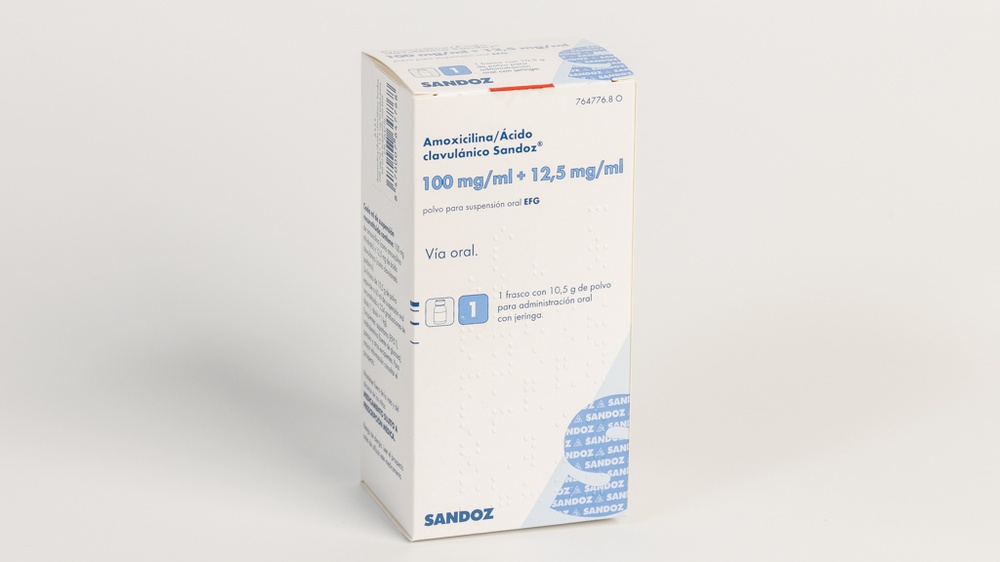
- Country of registration
- Dosage formORAL SOLUTION/SUSPENSION, 100 mg/ml + 12.5 mg/ml
- ATC codeJ01CR02
- Average pharmacy price5.25 EUR
- Active substance
- Prescription requiredYes
- Manufacturer
- CompositionASPARTAMO (E-951) (3 mg mg)
- This information is for reference only and does not constitute medical advice. Always consult a doctor before taking any medication. Oladoctor is not responsible for medical decisions based on this content.
- Alternatives to AMOXICILLIN/CLAVULANIC ACID SANDOZ 100 mg/mL + 12.5 mg/mL ORAL SUSPENSION POWDERDosage form: ORAL SOLUTION/SUSPENSION, 250 mg amoxicillin/62.5 mg clavulanic acidActive substance: amoxicillin and beta-lactamase inhibitorManufacturer: Sandoz Farmaceutica S.A.Prescription requiredDosage form: INJECTABLE PERFUSION, 2 g / 200 mgActive substance: amoxicillin and beta-lactamase inhibitorManufacturer: Laboratorio Reig Jofre, S.A.Prescription requiredDosage form: TABLET, 500 mg amoxicillin/125 mg clavulanic acidActive substance: amoxicillin and beta-lactamase inhibitorManufacturer: Sun Pharmaceutical Industries (Europe) B.V.Prescription required
Online doctors for AMOXICILLIN/CLAVULANIC ACID SANDOZ 100 mg/mL + 12.5 mg/mL ORAL SUSPENSION POWDER
Discuss questions about AMOXICILLIN/CLAVULANIC ACID SANDOZ 100 mg/mL + 12.5 mg/mL ORAL SUSPENSION POWDER, including use, safety considerations and whether a prescription is appropriate, subject to medical assessment and local regulations.









Frequently Asked Questions
AMOXICILLIN/CLAVULANIC ACID SANDOZ 100 mg/mL + 12.5 mg/mL ORAL SUSPENSION POWDER requires a prescription in Spain. You can check with a doctor online whether this medicine may be appropriate for your situation.
The active ingredient in AMOXICILLIN/CLAVULANIC ACID SANDOZ 100 mg/mL + 12.5 mg/mL ORAL SUSPENSION POWDER is amoxicillin and beta-lactamase inhibitor. This information helps identify medicines with the same composition but different brand names.
The average pharmacy price for AMOXICILLIN/CLAVULANIC ACID SANDOZ 100 mg/mL + 12.5 mg/mL ORAL SUSPENSION POWDER is around 5.25 EUR. Prices may vary depending on the manufacturer and dosage form.
AMOXICILLIN/CLAVULANIC ACID SANDOZ 100 mg/mL + 12.5 mg/mL ORAL SUSPENSION POWDER is manufactured by Sandoz Farmaceutica S.A.. Pharmacy brands and packaging may differ depending on the distributor.
Doctors such as Family doctors, Psychiatrists, Dermatologists, Cardiologists, Endocrinologists, Gastroenterologists, Pulmonologists, Nephrologists, Rheumatologists, Hematologists, Infectious disease physicians, Allergists, Geriatricians, Paediatricians, Oncologists may assess whether AMOXICILLIN/CLAVULANIC ACID SANDOZ 100 mg/mL + 12.5 mg/mL ORAL SUSPENSION POWDER is appropriate, depending on your situation and local regulations. You can book an online consultation to discuss your symptoms and possible next steps.
The prescription is issued by a doctor after assessing your health. In Spain, AMOXICILLIN/CLAVULANIC ACID SANDOZ 100 mg/mL + 12.5 mg/mL ORAL SUSPENSION POWDER is then dispensed in pharmacies with that prescription. An online consultation does not guarantee that a prescription will be issued: the decision always rests with the doctor.
To request an assessment, you can use Oladoctor:
Other medicines with the same active substance (amoxicillin and beta-lactamase inhibitor) include AMOXICILLIN / CLAVULANIC ACID SANDOZ 250 mg/62.5 mg/5 ml ORAL SUSPENSION POWDER, AMOXICILLIN CLAVULANATE POWDER FOR SOLUTION FOR INFUSION 2000 mg/200 mg, AMOXICILLIN CLAVULANATE SUN 500 mg/125 mg FILM-COATED TABLETS. These may have different brand names or formulations but contain the same therapeutic ingredient. Always consult a doctor before switching or starting a new medicine.
