


Ambrisentan Alembic 10 mg comprimidos recubiertos con película

Prescription request online
A doctor will review your case and decide whether a prescription is medically appropriate.

Talk to a doctor about this medicine
Discuss your symptoms and possible next steps in a quick online consultation.



How to use AMBRISENTAN ALEMBIC 10 mg FILM-COATED TABLETS
Contents of the leaflet
- Introduction
- Read all of this leaflet carefully before you start taking this medicine because it contains important information for you.
- Contents of the pack
- What is Ambrisentan Alembic and what is it used for
- What you need to know before you take Ambrisentan Alembic
- Do not take Ambrisentan Alembic
- Warnings and precautions
- → Inform your doctor immediately.
- Children
- Taking Ambrisentan Alembic with other medicines
- Pregnancy
- →
- →Do not take ambrisentan if you are pregnant or planning to become pregnant.
- Breast-feeding
- Fertility
- Driving and using machines
- →Do not drive or use machines if you do not feel well.
- How to take Ambrisentan Alembic
- How much ambrisentan to take
- How to take Ambrisentan Alembic
- How to remove the tablet
- If you take more Ambrisentan Alembic than you should
- If you forget to take Ambrisentan Alembic
- → Do not take a double dose to make up for forgotten doses.
- →
- Possible side effects
- Serious side effects:
- Tell your doctor if you have any of these:
- Allergic reactions
- Swelling (oedema), especially of the ankles and feet
- Heart failure
- Reduced number of red blood cells (
- Low blood pressure ()
- Other side effects:
- In combination with tadalafil (another medicine for PAH)
- Common side effects (may affect up to 1 in 10 people):
- In combination with tadalafil
- ?
- Uncommon side effects (may affect up to 1 in 100 people):
- In combination with tadalafil
- Side effects in children and adolescents
- Reporting of side effects
- Storage of Ambrisentan Alembic
- Contents of the pack and further information
- Appearance and packaging
- Marketing authorisation holder
- Date of last revision of this leaflet: August 2025
Introduction
Package Leaflet: Information for the User
AmbrisentanAlembic 5 mg film-coated tablets EFG
AmbrisentanAlembic 10 mg film-coated tablets EFG
Read all of this leaflet carefully before you start taking this medicine because it contains important information for you.
- Keep this leaflet, you may need to read it again.
- If you have any further questions, ask your doctor, pharmacist, or nurse.
- This medicine has been prescribed for you only. Do not pass it on to others. It may harm them, even if their signs of illness are the same as yours.
- If you get any side effects, talk to your doctor, pharmacist, or nurse. This includes any possible side effects not listed in this leaflet. See section 4.

Not sure if this medicine is right for you?
Discuss your symptoms and treatment with a doctor online.
Contents of the pack
- What is Ambrisentan Alembic and what is it used for
- What you need to know before you take Ambrisentan Alembic
- How to take Ambrisentan Alembic
- Possible side effects
- Storage of Ambrisentan Alembic
- Contents of the pack and further information
1. What is Ambrisentan Alembic and what is it used for
Ambrisentan Alembic contains the active substance ambrisentan. It belongs to a group of medicines called other antihypertensives (used to treat high blood pressure).
It is indicated for the treatment of pulmonary arterial hypertension (PAH) in adults, adolescents, and children from 8 years of age and older. PAH consists of high blood pressure in the blood vessels (the pulmonary arteries) that carry blood from the heart to the lungs. In people with PAH, these arteries become narrower, so the heart has to work harder to pump blood to the lungs. This makes people feel tired, dizzy, and have difficulty breathing.
Ambrisentan widens the pulmonary arteries, making it easier for the heart to pump blood through them. This reduces blood pressure and alleviates symptoms.
Ambrisentan may also be used in combination with other medicines used to treat PAH.

Started taking the medicine and have questions?
Discuss your symptoms and treatment with a doctor online.
2. What you need to know before you take Ambrisentan Alembic
Do not take Ambrisentan Alembic
- if you are allergic to ambrisentan, soy, or any of the other ingredients of this medicine (listed in section 6).
- if you are pregnant, planning to become pregnant, or may become pregnant because you are not using a reliable method of birth control (contraceptive). Please read the information under the heading "Pregnancy".
- if you are breast-feeding, read the information under the heading “Breast-feeding”.
- if you have liver disease. Consult your doctor, who will decide if this medicine is suitable for you.
- if you have pulmonary fibrosis of unknown cause (idiopathic pulmonary fibrosis).
Warnings and precautions
Consult your doctor before starting to take this medicine if you have:
- liver problems
- anaemia (reduction in the number of red blood cells)
- swelling of the hands, ankles, or feet caused by fluid retention (peripheral oedema)
- pulmonary veno-occlusive disease (a disease where the veins in the lungs are blocked).
→Your doctor will decide if ambrisentan is suitable for you.
You will need to have regular blood tests
Before starting to take ambrisentan, and periodically while taking it, your doctor will perform blood tests to check:
- if you have anaemia
- if your liver is working properly.
→It is important that you have these blood tests regularly while taking ambrisentan
The signs that your liver may not be working properly include:
- loss of appetite
- nausea (feeling sick)
- vomiting
- high temperature (fever)
- stomach pain (abdomen)
- yellowing of the skin or eyes (jaundice)
- darkening of the urine
- itching of the skin.
If you notice any of these circumstances:
→ Inform your doctor immediately.
Children
Do not give this medicine to children under 8 years of age, as the safety and efficacy in this age group are unknown.
Taking Ambrisentan Alembic with other medicines
Tell your doctor or pharmacist if you are taking, have recently taken, or might take any other medicines.
If you start taking ciclosporin A (a medicine used after a transplant or to treat psoriasis), your doctor may need to adjust your dose of ambrisentan.
If you are taking rifampicin (an antibiotic used to treat serious infections), your doctor will monitor you when you start taking ambrisentan.
If you are taking other medicines used to treat PAH (iloprost, epoprostenol, sildenafil), your doctor may need to monitor you.
→Inform your doctor or pharmacist if you are taking this medicine.
Pregnancy
Ambrisentan may harm the fetus conceived before, during, or shortly after treatment.
→
→Do not take ambrisentan if you are pregnant or planning to become pregnant.
→ If you become pregnant or think you may be pregnant while taking ambrisentan, consult your doctor immediately.
If you are a woman of childbearing age, your doctor will ask you to have a pregnancy test before starting to take ambrisentan and periodically while taking this medicine.
Breast-feeding
It is not known if ambrisentan can pass into breast milk.
→Do not breast-feed while taking ambrisentan.Consult your doctor about this.
Fertility
If you are a man taking ambrisentan, this medicine may decrease your sperm count. Talk to your doctor if you have any questions or concerns about this.
Driving and using machines
Ambrisentan may cause side effects such as low blood pressure, dizziness, fatigue (see section 4) that may affect your ability to drive and use machines. The symptoms of your disease may also reduce your ability to drive or use machines
→Do not drive or use machines if you do not feel well.
Ambrisentan Alembic contains lactose
This medicine contains lactose. If your doctor has told you that you have an intolerance to some sugars, consult them before taking this medicine.
Ambrisentan Alembic contains soybean lecithin
This medicine contains soybean oil. It must not be used in case of peanut or soy allergy (see section 2 “do not take Ambrisentan Alembic”).
Ambrisentan Alembic contains the azoic colourant Allura red AC aluminium lake (E129)
This medicine may cause allergic reactions because it contains Allura red AC aluminium lake (E129) (see section 4).
Ambrisentan Alembic contains sodium
This medicine contains less than 1 mmol of sodium (23 mg) per tablet; this is, essentially “sodium-free”.
3. How to take Ambrisentan Alembic
Follow exactly the administration instructions of this medicine given by your doctor or pharmacist. In case of doubt, consult your doctor or pharmacist again.
How much ambrisentan to take
Adults
The usual dose is one 5 mg tablet, once a day. Your doctor may decide to increase your dose to 10 mg, once a day.
If you are taking ciclosporin A, do not take more than one 5 mg tablet of ambrisentan once a day.
Adolescents and children from 8 years to less than 18 years of age
Usual starting dose of ambrisentan | |
Weight of 35 kg or more | One 5 mgtablet, once a day |
Weight of at least 20 kg and less than 35 kg | One 2.5 mgtablet, once a day |
Your doctor may decide to increase your dose. It is important that children attend their regular medical appointments, as their dose needs to be adjusted as they grow or gain weight.
If taken in combination with ciclosporin A, the dose of ambrisentan should be limited to 2.5 mg once a day in adolescents and children who weigh less than 50 kg or to 5 mg once a day if they weigh 50 kg or more.
Ambrisentan tablets should not be split to try to provide a fraction of the dose. If treatment requires different doses of 5 mg and 10 mg, an alternative medicine containing ambrisentan should be used.
How to take Ambrisentan Alembic
It is best to take the tablet at the same time every day. Swallow the tablet whole, with a glass of water; do not divide, crush, or chew the tablet. You can take ambrisentan with or without food.
How to remove the tablet
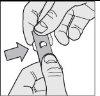
For Ambrisentan Alembic, different packaging materials can be used: normal pressure blisters, single-dose pressure blisters without a removable foil or single-dose pressure blisters with a removable foil (to prevent children from removing the tablets). For single-dose pressure blisters with a removable foil, follow these instructions:
- Separate a tablet: tear along the cutting lines to separate a "blister" from the strip.
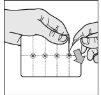
- Open the outer foil: open and separate the foil along the blister.
- Remove the tablet: gently push the tablet through the foil from one side.
If you take more Ambrisentan Alembic than you should
If you take too many tablets, you may be more likely to have side effects, such as headache, flushing, dizziness, nausea (feeling sick), or low blood pressure, which can cause a mild feeling of dizziness:
→in case of overdose or accidental ingestion, consult the Toxicology Information Service. Telephone: 91 562 04 20, consult your doctor or pharmacist.
If you forget to take Ambrisentan Alembic
If you forget to take a dose of ambrisentan, take it as soon as you remember and then continue as before.
→ Do not take a double dose to make up for forgotten doses.
If you stop taking Ambrisentan Alembic
Ambrisentan is a treatment that you will need to continue taking to control your PAH.
→
If you have any other questions about the use of this medicine, ask your doctor or pharmacist.
4. Possible side effects
Like all medicines, this medicine can cause side effects, although not everybody gets them.
Serious side effects:
Tell your doctor if you have any of these:
Allergic reactions
This is a common side effect that may affect up to 1 in 10 people treated. You may notice
- that a rash or itching and swelling (usually of the face, lips, tongue, or throat) appear, which can cause difficulty breathing or swallowing.
Swelling (oedema), especially of the ankles and feet
This is a very common side effect that may affect more than 1 in 10 people treated.
Heart failure
This is because the heart does not pump enough blood. This is a common side effect that may affect up to 1 in 10 people treated. The symptoms include:
- difficulty breathing
- extreme tiredness
- swelling in the ankles and legs
Reduced number of red blood cells (
This is a very common side effect that may affect more than 1 in 10 people. Sometimes this requires a blood transfusion. The symptoms include:
- fatigue and weakness
- difficulty breathing
- general malaise
Low blood pressure ()
This is a common side effect that may affect up to 1 in 10 people treated.
The symptoms include:
- dizziness
→ Tell your doctor immediately if you experience these effects or if they occur suddenly after taking ambrisentan
It is important to have regular blood tests to check if you have anaemia and that your liver is working properly.
Make sure you have also read the information in section 2 about "the need for regular blood tests" and "signs that your liver may not be working properly".
Other side effects:
Very common(may affect more than 1 in 10 people):
- headache
- dizziness
- palpitations (rapid or irregular heartbeats)
- worsening of breathing difficulties shortly after starting to take Ambrisentan
- runny nose or stuffy nose, congestion or pain in the nasal passages
- nausea
- diarrhoea
- feeling of tiredness.
In combination with tadalafil (another medicine for PAH)
In addition to the above:
- flushing (redness of the skin)
- vomiting
- chest pain/discomfort.
Common side effects (may affect up to 1 in 10 people):
- blurred vision or other changes in vision
- fainting
- abnormal results in blood tests for liver function
- increased nasal secretion
- constipation
- stomach pain (abdomen)
- chest pain or discomfort
- flushing (redness of the skin)
- vomiting
- feeling of weakness
- nosebleeds
- skin rash.
In combination with tadalafil
In addition to the above, except for abnormal results in blood tests for liver function:
?
Uncommon side effects (may affect up to 1 in 100 people):
- liver damage
- liver inflammation caused by the body's own defences (autoimmune hepatitis).
In combination with tadalafil
- sudden loss of hearing.
Side effects in children and adolescents
These are expected to be similar to those listed above for adults.
Reporting of side effects
If you experience any side effects, talk to your doctor, pharmacist, or nurse, even if it is possible that they are not listed in this leaflet. You can also report side effects directly through the Spanish Medicines Monitoring System for Human Use: www.notificaRAM.es. By reporting side effects, you can help provide more information on the safety of this medicine.
5. Storage of Ambrisentan Alembic
Keep this medicine out of the sight and reach of children.
Do not use this medicine after the expiry date which is stated on the carton and blister after EXP.
The expiry date is the last day of the month shown.
This medicine does not require any special storage conditions.
Medicines should not be disposed of via wastewater or household waste. Return any unused medicine to your pharmacist. Ask your pharmacist how to dispose of medicines no longer required. This will help to protect the environment.
6. Contents of the pack and further information
Composition of Ambrisentan Alembic
The active substance is ambrisentan.
Each film-coated tablet contains 5 or 10 mg.
The other ingredients are: lactose monohydrate, microcrystalline cellulose, hydroxypropylcellulose, poloxamer, sodium croscarmellose, magnesium stearate, polyvinyl alcohol (partially hydrolysed) (E1203), talc (E553b), titanium dioxide (E171), macrogol, soybean lecithin (E322), and Allura red AC aluminium lake (E129).
Appearance and packaging
Ambrisentan Alembic 5 mg is a pink, square, convex, film-coated tablet with "L" engraved on one side and "20" on the other side. It is approximately 4.70 mm long and approximately 4.70 mm wide.
Ambrisentan Alembic 10 mg is a dark pink, oval, convex, film-coated tablet with "L" engraved on one side and "722" on the other side. It is approximately 9.90 mm long and approximately 4.90 mm wide.
Ambrisentan Alembic is available in 5 mg and 10 mg film-coated tablets in blisters of 10 or 30 tablets.
Not all pack sizes may be marketed.
Marketing authorisation holder
Alembic Pharmaceuticals Europe Ltd
Palazzo Pietro Stiges, 103, Strait Street, Valletta
VLT 1436, Malta
Manufacturer
Pharmadox Healthcare Ltd
KW20A, Corradino Industrial Estate, Paola
PLA 3000, Malta
Date of last revision of this leaflet: August 2025
Detailed and up-to-date information on this medicine is available on the website of the Spanish Agency for Medicines and Health Products (AEMPS) http://www.aemps.gob.es/
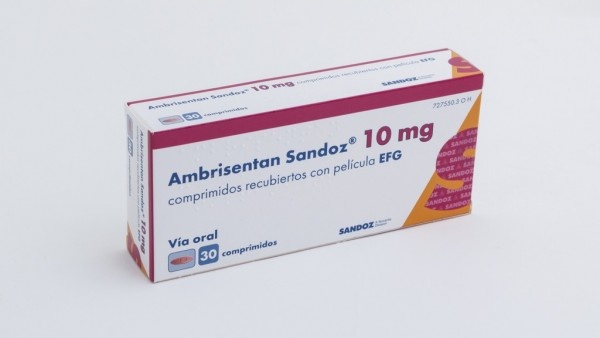
- Country of registration
- Dosage formTABLET, 10 mg
- ATC codeC02KX02
- Active substance
- Prescription requiredYes
- Manufacturer
- CompositionCROSCARMELOSA SODICA (4.000 mg mg)
- This information is for reference only and does not constitute medical advice. Always consult a doctor before taking any medication. Oladoctor is not responsible for medical decisions based on this content.
- Alternatives to AMBRISENTAN ALEMBIC 10 mg FILM-COATED TABLETSDosage form: TABLET, 10 mgActive substance: ambrisentanManufacturer: Accord Healthcare S.L.U.Prescription requiredDosage form: TABLET, 5 mgActive substance: ambrisentanManufacturer: Accord Healthcare S.L.U.Prescription requiredDosage form: TABLET, 5 mgActive substance: ambrisentanManufacturer: Alembic Pharmaceuticals Europe LimitedPrescription required
Online doctors for AMBRISENTAN ALEMBIC 10 mg FILM-COATED TABLETS
Discuss questions about AMBRISENTAN ALEMBIC 10 mg FILM-COATED TABLETS, including use, safety considerations and whether a prescription is appropriate, subject to medical assessment and local regulations.
Frequently Asked Questions
AMBRISENTAN ALEMBIC 10 mg FILM-COATED TABLETS requires a prescription in Spain. You can check with a doctor online whether this medicine may be appropriate for your situation.
The active ingredient in AMBRISENTAN ALEMBIC 10 mg FILM-COATED TABLETS is ambrisentan. This information helps identify medicines with the same composition but different brand names.
AMBRISENTAN ALEMBIC 10 mg FILM-COATED TABLETS is manufactured by Alembic Pharmaceuticals Europe Limited. Pharmacy brands and packaging may differ depending on the distributor.
Doctors such as Family doctors, Psychiatrists, Dermatologists, Cardiologists, Endocrinologists, Gastroenterologists, Pulmonologists, Nephrologists, Rheumatologists, Hematologists, Infectious disease physicians, Allergists, Geriatricians, Paediatricians, Oncologists may assess whether AMBRISENTAN ALEMBIC 10 mg FILM-COATED TABLETS is appropriate, depending on your situation and local regulations. You can book an online consultation to discuss your symptoms and possible next steps.
The prescription is issued by a doctor after assessing your health. In Spain, AMBRISENTAN ALEMBIC 10 mg FILM-COATED TABLETS is then dispensed in pharmacies with that prescription. An online consultation does not guarantee that a prescription will be issued: the decision always rests with the doctor.
To request an assessment, you can use Oladoctor:
Other medicines with the same active substance (ambrisentan) include AMBRISENTAN ACCORD 10 mg FILM-COATED TABLETS, AMBRISENTAN ACCORD 5 mg FILM-COATED TABLETS, AMBRISENTAN ALEMBIC 5 mg FILM-COATED TABLETS. These may have different brand names or formulations but contain the same therapeutic ingredient. Always consult a doctor before switching or starting a new medicine.
