


UTABON 0.5 mg/ml NASAL SPRAY SOLUTION WITH METERED-DOSE PUMP
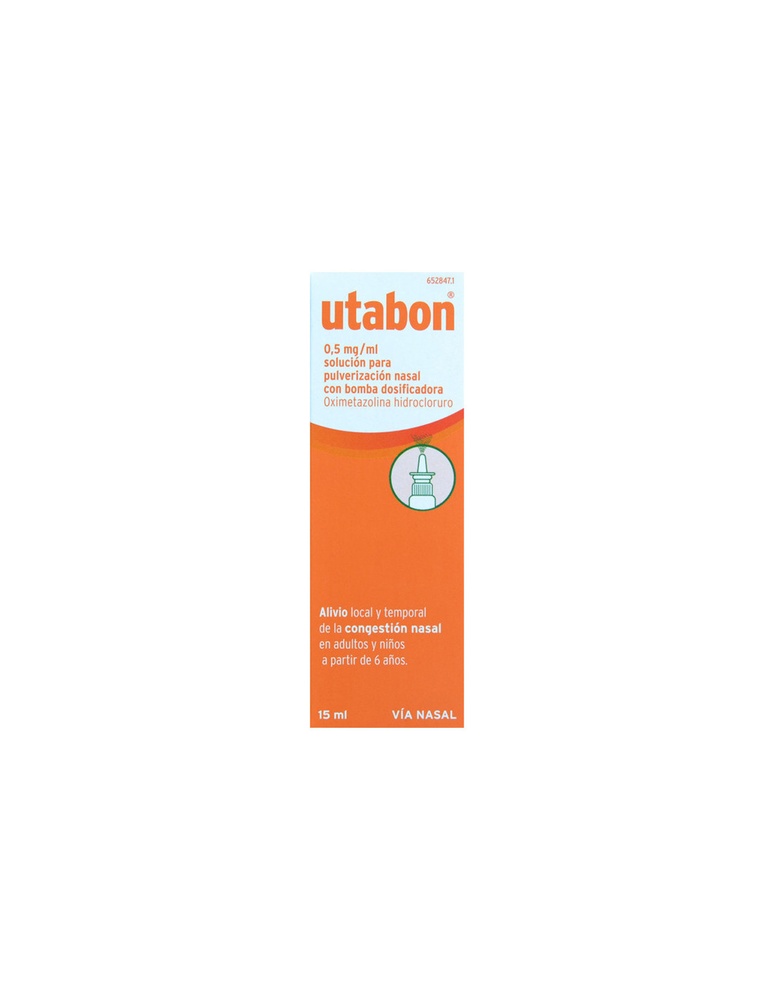



How to use UTABON 0.5 mg/ml NASAL SPRAY SOLUTION WITH METERED-DOSE PUMP
Translated with AI
This page provides general information and does not replace a doctor’s consultation. Always consult a doctor before taking any medication. Seek urgent medical care if symptoms are severe.
Show originalContents of the leaflet
Introduction
Leaflet: information for the user
Utabon 0.5 mg/ml nasal spray solution with dosing pump
Oxymetazoline hydrochloride
Read the entire leaflet carefully before starting to use this medication, as it contains important information for you.
Follow the administration instructions for the medication contained in this leaflet or as indicated by your doctor or pharmacist.
- Keep this leaflet, as you may need to read it again.
- If you need advice or more information, consult your pharmacist.
- If you experience side effects, consult your doctor or pharmacist, even if they are not listed in this leaflet.
- You should consult a doctor if your condition worsens or does not improve after 3 days of treatment.
Contents of the leaflet:
- What is Utabon and what is it used for
- What you need to know before starting to use Utabon
- How to use Utabon
- Possible side effects
- Storage of Utabon
- Package contents and additional information
1. What is Utabon and what is it used for
This medication belongs to the group of medications called sympathomimetics. It is a nasal decongestant medication that contains oxymetazoline as the active ingredient. Oxymetazoline administered through the nose produces local vasoconstriction, decongesting the nasal mucosa.
It is indicated for the local and temporary relief of nasal congestion in adults and children from 6 years of age.
You should consult a doctor if your condition worsens or does not improve after 3 days of treatment.

2. What you need to know before starting to use Utabon
Do not use Utabon
- if you are allergic to oxymetazoline, other nasal decongestants, or any of the other components of this medication (listed in section 6).
- if you have recently undergone surgery on the head (if you have undergone any cranial, transnasal, or transoral surgical intervention).
Warnings and precautions
Inform your doctor or pharmacist before starting to use Utabon if:
- You are being treated with antidepressant medications, phenothiazine (a tranquilizer), or methyldopa (to lower blood pressure).
- You have had or currently have any of the following diseases or symptoms:
- If you have high blood sugar levels (diabetes mellitus)
- If you have high blood pressure (arterial hypertension)
- If you have any heart or circulatory disease
- If you have any prostate disease with difficulty urinating (prostatic hyperplasia)
- If you have any thyroid disease (hyperthyroidism)
- If you have ever experienced insomnia or dizziness when treated with other sympathomimetic medications, such as those used to treat heart disease, hypotension (low blood pressure), or asthma.
In rare cases, oxymetazoline may increase nasal congestion instead of reducing it due to its temporary effects and prolonged use; this is known as rebound effect.
Insomnia may rarely occur after using the medication. If this happens, avoid using it in the late afternoon or evening.
Do not exceed the recommended dose in section 3. How to use Utabon.
To avoid contagion, the medication should not be used by more than one person, and the applicator should be cleaned after each use with a clean, damp cloth.
Children
Do not use in children under 6 years of age without consulting a doctor. Children may be especially prone to adverse effects of this medication.
Interaction of Utabon with other medications
Inform your doctor or pharmacist if you are using or have recently used other medications, including those purchased without a prescription.
This medication should not be used by people who are taking or have taken in the last 2 weeks: medications used to treat depression (tricyclic antidepressants or monoamine oxidase inhibitors (MAOIs)), or with a medication to lower blood pressure called methyldopa.
It should also not be used in case of treatment with phenothiazine (a tranquilizer) or with medications to treat asthma.
Pregnancy and breastfeeding
If you are pregnant or breastfeeding, or think you may be pregnant or plan to become pregnant, consult your doctor or pharmacist before using a medication.
This medication should not be used during pregnancy or breastfeeding.
Driving and using machines
Although it is not expected that this medication will affect your ability to drive or use machines, if you notice drowsiness or dizziness, do not drive or operate hazardous machinery.
Utabon contains benzalkonium chloride
This medication may cause inflammation of the nasal mucosa, especially with long-term treatment, because it contains benzalkonium chloride. If such a reaction is suspected (persistent nasal congestion), whenever possible, a nasal medication that does not contain this excipient should be used.
3. How to use Utabon
Follow the administration instructions for the medication contained in this leaflet or as indicated by your doctor or pharmacist. In case of doubt, ask your doctor or pharmacist.
The normal dose is:
Adults and children over 6 years of age:one application in each nostril, once a day. If necessary, another application can be made every 12 hours. Do not use more than 2 times in 24 hours.
Use in children
This medication should not be used in children under 6 years of age.
Children may be especially prone to adverse effects of this medication.
Over 65 years of age
Consult your doctor or pharmacist, as older people are more sensitive to the adverse effects of this medication.
How to use
This medication is used nasally.
Instructions for correct administration of the medication
Before the first use, press the doser several times, directing it towards a safe place, until the first spray is produced.
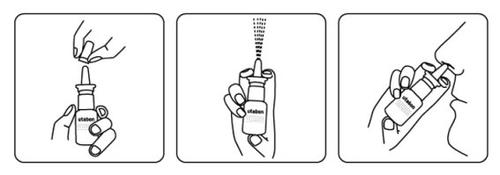
1. Remove the protective cap from the bottle. |
|
|
Before applying this medication, eliminate any existing nasal fluids by blowing your nose well.
To avoid contagion, after each use and before closing the package, clean the applicator tip with a clean, damp cloth. Also, each package should be used by only one person.
If your condition worsens or does not improve after 3 days of treatment, discontinue treatment and consult your doctor.
If you use more Utabon than you should
By applying excessive doses or very continuous doses, you may notice: headache, tremors, insomnia, excessive sweating, palpitations, tachycardia, increased blood pressure, or sleep disturbances.
In case of overdose or accidental ingestion, consult your doctor or pharmacist immediately, or call the Toxicology Information Service, phone 915 620 420, indicating the medication and the amount ingested.

4. Possible side effects
Like all medications, Utabon can cause side effects, although not everyone will experience them.
During the period of use of oxymetazoline, the following side effects have been observed, whose frequency has not been established with precision:
The most common side effects are:
Irritation at the application site, dryness, itching of the nasal mucosa, or sneezing.
Rare side effects that may occur are:
Anxiety, restlessness, insomnia, hallucinations, tremors, and sleep disorders in children. Tachycardia, palpitations, increased blood pressure, headache, nausea, and exanthema (skin redness).
Excessive or continuous use of this medication can lead to nasal congestion.
If you experience side effects, consult your doctor or pharmacist, even if they are not listed in this leaflet.
5. Storage of Utabon
Keep this medication out of sight and reach of children.
Store below 30°C.
Do not use this medication after the expiration date shown on the package after CAD. The expiration date is the last day of the month indicated.
Medications should not be thrown away in drains or trash. Deposit the packages and medications you no longer need in the SIGRE point of the pharmacy. In case of doubt, ask your pharmacist how to dispose of the packages and medications you no longer need. This will help protect the environment.
6. Package contents and additional information
Composition of Utabon
- The active ingredient is: oxymetazoline hydrochloride. Each ml contains 0.5 mg of oxymetazoline hydrochloride (35 micrograms per 0.07 ml puff).
- The other components (excipients) are: benzalkonium chloride, anhydrous disodium hydrogen phosphate, sodium dihydrogen phosphate dihydrate, glycine (E-640), sorbitol (E-420), and purified water.
Appearance of the product and package contents
Utabon is a clear, colorless solution. It is presented in a package with a dosing pump that contains 15 ml of solution.
Marketing authorization holder and manufacturer
Marketing authorization holder:
Uriach Consumer Healthcare, S.L.
Av. Generalitat 163-167
08174 Sant Cugat del Vallès
(Barcelona - Spain)
Manufacturer:
ITALFARMACO, S.A.
San Rafael, 3
28108 – Alcobendas
(Spain)
Date of the last revision of this leaflet: December 2012
Detailed and updated information on this medication is available on the website of the Spanish Agency for Medicines and Health Products (AEMPS) http://www.aemps.gob.es/.
- Country of registration
- Active substance
- Prescription requiredNo
- Manufacturer
- This information is for reference only and does not constitute medical advice. Always consult a doctor before taking any medication. Oladoctor is not responsible for medical decisions based on this content.
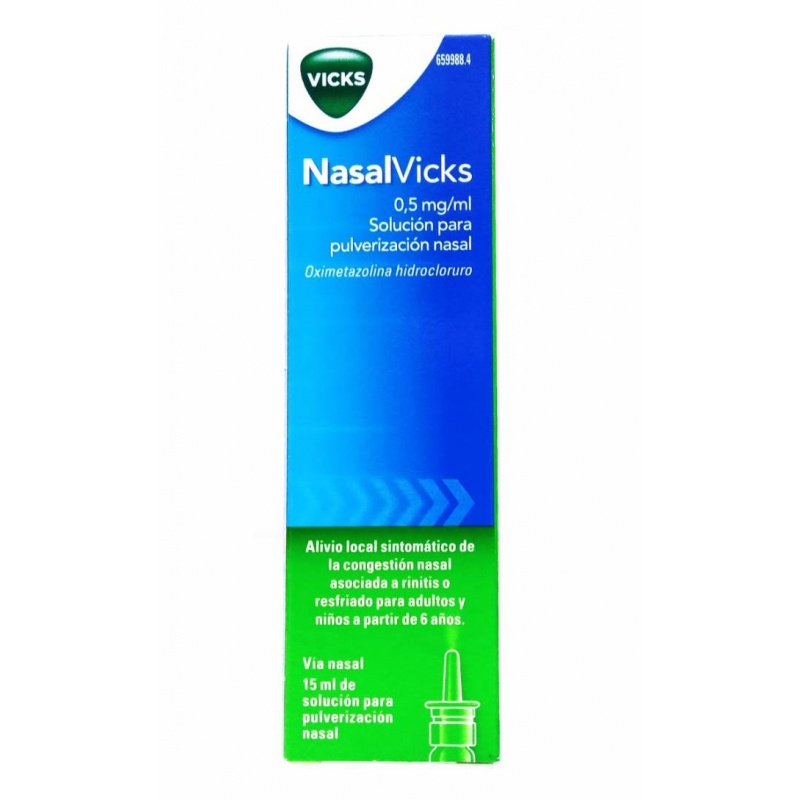
- Alternatives to UTABON 0.5 mg/ml NASAL SPRAY SOLUTION WITH METERED-DOSE PUMPDosage form: NASAL PRODUCT, 0.5 mg/mlActive substance: oxymetazolineManufacturer: Pharmex Advanced Laboratories S.L.Prescription not requiredDosage form: NASAL PRODUCT, 0.5 mg/mlActive substance: oxymetazolineManufacturer: Interpharma S.A.Prescription not requiredDosage form: NASAL PRODUCT, 0.5 mg/mlActive substance: oxymetazolineManufacturer: Laboratorios Vicks S.L.Prescription not required
Online doctors for UTABON 0.5 mg/ml NASAL SPRAY SOLUTION WITH METERED-DOSE PUMP
Discuss questions about UTABON 0.5 mg/ml NASAL SPRAY SOLUTION WITH METERED-DOSE PUMP, including use, safety considerations and prescription review, subject to medical assessment and local regulations.







Frequently Asked Questions
