


IOPAMIRO 300 mg/ml INJECTABLE SOLUTION
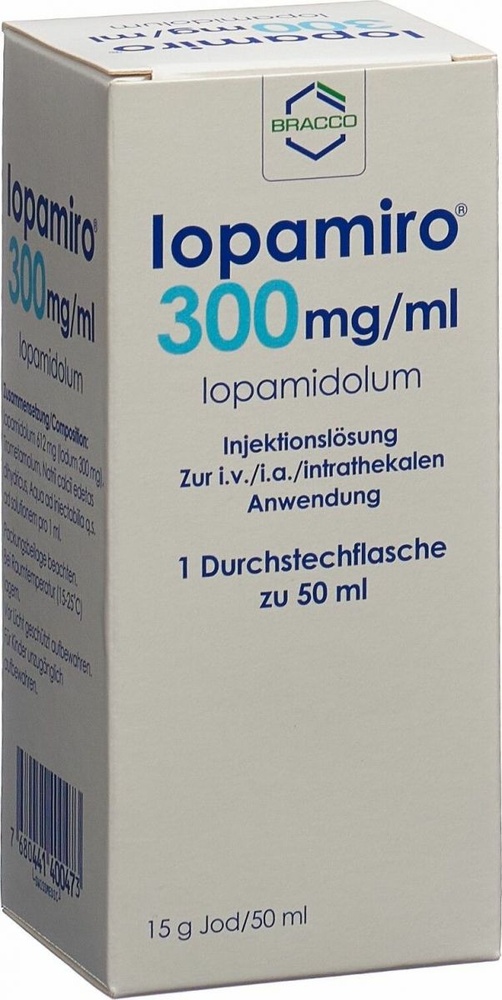



How to use IOPAMIRO 300 mg/ml INJECTABLE SOLUTION
Translated with AI
This page provides general information and does not replace a doctor’s consultation. Always consult a doctor before taking any medication. Seek urgent medical care if symptoms are severe.
Show originalContents of the leaflet
Introduction
PACKAGE LEAFLET: INFORMATION FOR THE USER
IOPAMIRO 300 mg/ml solution for injection
Iopamidol
Read all of this leaflet carefully before you start using this medicine because it contains important information for you.
- Keep this leaflet, you may need to read it again.
- If you have any further questions, ask your doctor or pharmacist.
- This medicine has been prescribed for you only. Do not pass it on to others. It may harm them, even if their signs of illness are the same as yours.
- If you get any side effects, talk to your doctor or pharmacist. This includes any possible side effects not listed in this leaflet.
Contents of the pack and other information:
- What is Iopamiro and what is it used for
- What you need to know before you use Iopamiro
- How to use Iopamiro
- Possible side effects
5 Storage of Iopamiro
- Contents of the pack and further information
1. What is Iopamiro and what is it used for
This medicinal product is for diagnostic use only.
Iopamiro belongs to a group of medicines called iodinated X-ray contrast media.
Iopamiro is authorized as a radiological contrast medium for the following indications:
- myelography (visualization of the spinal cord),
- arteriography (visualization of arteries),
- angiocardiography (visualization of the heart's blood vessels),
- phlebography (visualization of veins),
- digital subtraction angiography (visualization of blood vessels),
- computed tomography (CT) (obtaining images of sections or regions of the body),
- intravenous urography (visualization of the urinary tract) and
- arthrography (visualization of joints).

2. What you need to know before you use Iopamiro
Do not use Iopamiro
- if you are allergic to the active substance or to any of the other ingredients of this medicinal product (listed in section 6).
- if you have clinical hyperthyroidism (your thyroid gland produces too much thyroid hormone).
- if you have a history of severe immediate or delayed skin reaction to iopamidol injection.
Warnings and precautions
Consult your doctor or pharmacist before starting treatment with Iopamiro. Be especially careful if:
- You have experienced any reaction during previous injection of an iodinated contrast medium.
- You have a history of asthma.
- You have renal insufficiency, diabetes mellitus, or multiple myeloma.
- You have heart failure, coronary insufficiency, or other heart disease.
- You have any cardiovascular disease.
- You suffer from homocystinuria (a hereditary disease in which the body is unable to fully metabolize the amino acid methionine).
- You have liver insufficiency.
- You suffer from any nervous system disease, such as epilepsy, stroke, pheochromocytoma (excessive production of hormones that causes severe hypertension), myasthenia gravis (an autoimmune disease that affects muscles), or other autoimmune diseases.
- You have had thyroid dysfunction.
- You are in a state of excitement, anxiety, and intense pain, as this may increase the risk of adverse reactions or their intensity.
- You have any bone marrow disease (multiple myeloma or Waldenström's macroglobulinemia).
- You have had recent intracranial hemorrhage or epilepsy.
- You have cerebral edema or a brain tumor.
- You have significantly deteriorated health status.
- You have developed a severe skin rash, desquamation, blisters, and/or ulcers in the mouth after taking Iopamiro or other iodinated contrast media.
Be especially careful with Iopamiro:
Severe skin reactions, including Stevens-Johnson syndrome (SJS), toxic epidermal necrolysis (TEN), and acute generalized exanthematous pustulosis (AGEP), have been reported with the use of Iopamiro.
Seek medical attention immediately if you experience any symptoms related to these severe skin reactions described in section 4.
You may experience a short-term brain disorder, called encephalopathy, during or shortly after the imaging procedure. Inform your doctor immediately if you notice any symptoms related to this condition, described in section 4.
You should inform your radiologist if you are an alcoholic or drug addict.
Special care should be taken when administering to children under one year of age and to elderly patients. These groups may be susceptible to adverse reactions.
Inform your doctor if you have had thyroid function tests previously.
Thyroid disorders have been observed after iopamidol administration. Special attention should be paid to newborns, including those whose mother received iopamidol during pregnancy, and premature infants. Doctors may check the thyroid function of the child.
Consult your doctor, even if any of the above circumstances have occurred to you at any time.
Inform your doctor if you are going to have a thyroid function test or receive radioactive iodine treatment soon.
High concentrations of contrast media in serum and urine may interfere with the analysis of bilirubin, proteins, and inorganic substances (iron, copper, calcium, and phosphates). It is recommended that these determinations not be performed in the first 24 hours after the examination.
Using Iopamiro with other medicines
Inform your doctor or pharmacist that you are using, have recently used, or may need to use any other medicines.
Anticonvulsant therapy should be maintained before and after myelographic procedures in patients with a known seizure disorder.
Certain medicines may interact with Iopamiro; in these cases, it may be necessary to change the dose or discontinue treatment with one of the medicines. It is especially important that you inform your doctor if you are using any of the following medicines:
- Biguanides (metformin) (medicines used to treat some forms of diabetes mellitus)
- Neuroleptics (medicines commonly used to treat psychosis)
- Analgesics (medicines that relieve or eliminate pain)
- Anti-emetics (medicines that prevent vomiting or nausea)
- Antihistamines (medicines for the treatment of allergic rhinitis or dermatitis)
- Phenothiazine sedatives (tranquilizing medicines)
- Betablockers (drugs used to treat hypertension)
- Interleukin-2 (a medicine that regulates the immune response)
- Oral cholecystographic contrast media (for diagnostic use)
- Diuretics (medicines that increase urine production)
- Radioactive medicines (for diagnostic and therapeutic use)
Consult your doctor if you have any doubts.
Using Iopamiro with food and drink
Any alteration of the hydroelectrolytic balance should be corrected before the administration of the contrast medium.
Before the test, do not reduce the amount of water you normally drink, especially if you are in any of the following situations:
- Severe renal insufficiency
- Severe liver insufficiency
- Severe heart failure
- Multiple myeloma (bone marrow disease)
- Diabetes mellitus
- Blood disease
- Increased or decreased urine production
- Deterioration of health status
- Elderly patients
Fluid intake should also not be reduced in infants or young children.
You can maintain a normal diet until two hours before the examination. During the two hours prior to the study, you should abstain from eating.
Pregnancy and breastfeeding
If you are pregnant or breastfeeding, think you may be pregnant, or plan to become pregnant, consult your doctor or pharmacist before using this medicine.
Pregnancy
X-ray examinations in pregnant women should only be performed if the doctor considers it absolutely necessary or when the benefit to the mother outweighs the risk to the fetus.
Breastfeeding
Iodinated contrast media are excreted into breast milk in very small amounts. However, as a precautionary measure, breastfeeding should be suspended for at least 24 hours after the administration of the contrast medium.
Driving and using machines
No effects on the ability to drive and use machines have been observed.
Iopamiro contains sodium
This medicinal product contains less than 1 mmol (23 mg) of sodium per dose, so it is essentially "sodium-free".
3. How to use Iopamiro
Follow the instructions for administration of this medicine exactly as prescribed by your doctor. If you are unsure, consult your doctor or pharmacist again.
Iopamiro will be administered to you by a doctor or nurse in a hospital or diagnostic clinic.
Iopamiro must be administered into a vein or artery, into the spinal column, or into a joint.
You must be well-hydrated before receiving Iopamiro.
After administration of the contrast medium, you should remain under observation for at least 30 minutes, as most adverse reactions occur during this time. However, delayed reactions may occur.
The dose depends on the part of the body to be examined and usually ranges from 5 to 250 ml.
Your doctor may decide to vary this dose or repeat it if necessary.
The dose used in children also depends on age and body weight.
If you use more Iopamiro than you should
You should know that the hospital or clinic area where Iopamiro will be administered is equipped to treat any reaction caused by an overdose.
In case of overdose, allergic reactions, respiratory symptoms, cardiovascular disorders, convulsions, or tetanic crises (muscle stiffness) may occur.
Treatment of overdose should be aimed at ensuring support of vital functions and rapid establishment of symptomatic therapy.
If necessary, hemodialysis can be used to remove Iopamiro from your body.
In case of overdose or accidental ingestion, consult the Toxicology Information Service. Telephone 91 562 04 20, indicating the medicine and the amount ingested.
If you have any further questions about the use of this product, ask your doctor or pharmacist.

4. Possible Adverse Effects
Like all medicines, Iopamiro can cause adverse effects, although not all people suffer from them.
The adverse effects that you may experience after administration of a contrast medium are usually mild to moderate and tend to last for a short time.
However, as with other contrast media, in some cases, serious reactions occur, which can even be life-threatening, requiring rapid and effective treatment.
If you notice any of the following symptoms, inform your radiologist or X-ray personnel immediately, as these may be signs of an allergic reaction or shock. The examination should be interrupted and you may need treatment. The symptoms are:
- Swelling of the face and throat (angioedema).
- Tearful or itchy eyes (conjunctivitis), cough, itching, runny nose or nasal congestion, sneezing, hives.
- Severe drop in blood pressure, increased heart rate (tachycardia).
- Difficulty breathing, nausea, feeling of suffocation (allergic reactions).
- Agitation, blue lips, blue or pale face, cold sweats, loss of consciousness.
- Headache, dizziness.
- The drop in blood pressure may also be related to a decrease in heart rate (bradycardia), from which an increase in heart rate (tachycardia) usually develops.
These reactions can occur delayed and independent of the administered dose and method of administration.
Go to the doctor immediately if you notice any of the following symptoms:
- Reddish patches, without volume, circular or target-shaped on the trunk, often with central blisters, skin peeling, sores in the mouth, throat, nose, genitals, and eyes. These severe skin rashes can be preceded by fever and flu-like symptoms (Stevens-Johnson syndrome, toxic epidermal necrolysis).
- A generalized scaly red rash, with lumps under the skin and blisters, accompanied by fever. The symptoms usually appear at the start of treatment (acute generalized exanthematous pustulosis).
The frequency of occurrence of these adverse effects is unknown.
Additionally, the following adverse effects have been reported after injection with Iopamiro:
Intraarterial and intravenous use (administration in blood vessels):
Frequent(may affect up to 1 in 10 people)
- allergic and/or anaphylactoid reactions
- headache, taste disturbances
- tearful or itchy eyes (conjunctivitis)
- dyspnea (difficulty breathing)
- nausea, vomiting
- edema, flushing, urticaria, rash, itching, and redness of the skin
- feeling of heat
Uncommon(may affect up to 1 in 100 people)
- dizziness
- cardiac arrhythmias (heart rhythm disturbances)
- high or low blood pressure
- diarrhea, abdominal pain, dry mouth
- increased sweating
- back pain
- acute kidney failure
- chest pain, pain at the injection site, fever, feeling of cold
- abnormal laboratory test results for creatinine (this can be detected in a test performed by a doctor)
Rare(may affect up to 1 in 1,000 people)
- confusion
- paresthesia (tingling, pinching, or numbness sensation)
- decreased heart rate
- fluid accumulation in the lungs, asthma, bronchial narrowing
- muscle spasms
- swelling at the injection site
Frequency not known(cannot be estimated from available data)
- decrease in blood platelet count (detected by a test performed by a doctor)
- anaphylaxis
- coma
- transient ischemic attack (decreased blood flow to the brain)
- fainting, decreased level of consciousness or loss of consciousness, convulsions
- transient blindness, visual disturbances, photophobia (excessive sensitivity to light)
- heart attack, heart failure, cardio-respiratory arrest, increased heart rate
- circulatory collapse (failure of blood circulation)
- respiratory arrest, respiratory failure, acute respiratory distress syndrome (severe lung disease), apnea (interruption of breathing), laryngeal inflammation
- increased salivation, enlargement of the salivary glands
- facial edema (inflammation of the face)
- musculoskeletal pain, muscle weakness
- chills, pain, general discomfort
- electrocardiogram abnormalities (this can be detected in a test performed by a doctor)
- inability to move one side of the body
- heart attack caused by an allergic reaction
- brain disorder (encephalopathy) with symptoms including headache, vision difficulties, loss of vision, confusion, convulsions, loss of coordination, loss of movement in a part of the body, speech problems, and loss of consciousness
- severe skin disease (see top of section)
- skin necrosis due to product leakage outside the vessel
- muscle pain with abnormal sensations (compartment syndrome)
- pain in bones, muscles, ligaments, tendons, and/or nerves
- redness, heat, and pain at the injection site
Children
Thyroid disorders have been reported in premature newborns.
Intrathecal use (administration in the spinal column):
Very frequent(may affect more than 1 in 10 people)
- headache, disorientation
- nausea, vomiting
Frequent(may affect up to 1 in 10 people)
- meningeal irritation causing photophobia (excessive sensitivity to light) and meningitis
- flushing
- back pain, neck pain, pain in the limbs, feeling of heaviness
- pain at the injection site, tingling, and numbness at the injection site
Uncommon(may affect up to 1 in 100 people)
- rash
Frequency not known(cannot be estimated from available data)
- meningitis
- allergic reactions, which can be severe and potentially fatal (anaphylaxis)
- confusion, disorientation, agitation, nervousness
- coma, paralysis, convulsions
- fainting, decreased level of consciousness or loss of consciousness
- dizziness
- paresthesia (tingling, pinching, or numbness sensation), hypesthesia (increased sensitivity)
- transient blindness
- cardiac arrhythmias (heart rhythm disturbances)
- high blood pressure
- respiratory arrest, dyspnea
- fever, general discomfort, chills
- brain disorder (encephalopathy) with symptoms including headache, vision difficulties, loss of vision, confusion, convulsions, loss of coordination, loss of movement in a part of the body, speech problems, and loss of consciousness
The following adverse reactions have been observed after administration of Iopamiro in body cavities:
- increased amylase in blood (pancreas examination)
- allergic reactions, mainly manifesting as skin reactions
- pancreatitis, with symptoms of severe abdominal pain in the upper abdomen, radiating to the back, as well as nausea and vomiting
- the reactions reported after X-ray examinations of the joints (arthrography) and fistulas (fistulography) are mostly irritations that occur in addition to tissue inflammation.
In some of these patients, electrocardiogram abnormalities have been observed.
Reporting of adverse effects
If you experience any adverse effect, consult your doctor, even if it is a possible adverse effect not listed in this leaflet. You can also report them directly through the Spanish Pharmacovigilance System for Human Use Medicines http://www.notificaRam.es. By reporting adverse effects, you can contribute to providing more information on the safety of this medicine.
5. Storage of Iopamiro
Keep this medicine out of the sight and reach of children.
This medicine does not require any special storage temperature. Do not freeze.
Store in the original packaging to protect from light.
Do not use this medicine after the expiration date stated on the packaging after CAD. The expiration date is the last day of the month indicated.
Medicines should not be disposed of via wastewater or household waste. In case of doubt, ask your pharmacist how to dispose of the packaging and medicines that are no longer needed. This will help protect the environment.
6. Package contents and additional information
Composition of Iopamiro
The active ingredient is iopamidol. 1 ml of injectable solution contains 612 mg of iopamidol (equivalent to 300 mg of iodine).
The other ingredients are: trometamol, calcium and sodium edetate, hydrochloric acid (pH adjustment), and water for injectable preparations. See section 2 "Iopamiro contains sodium".
Appearance of the product and package contents
Iopamiro is a clear, colorless, sterile aqueous injectable solution.
Iopamiro is available in 30, 50, 100, and 500 ml colorless glass vials.
A 30 ml vial contains 18.36 g of iopamidol (equivalent to 9 g of iodine)
A 50 ml vial contains 30.6 g of iopamidol (equivalent to 15 g of iodine)
A 100 ml vial contains 61.2 g of iopamidol (equivalent to 30 g of iodine)
A 500 ml vial contains 306 g of iopamidol (equivalent to 150 g of iodine)
The 30, 50, and 100 ml vials are single-dose. The 500 ml vial is multi-dose.
Marketing authorization holder and manufacturer
Marketing authorization holder:
Bracco Imaging, S.p.A.
Via Egidio Folli, 50
20134 Milan (Italy)
Manufacturer:
Patheon Italia S.p.A.
Via Morolense, 87
03013 Ferentino (Italy)
You can request more information about this medicine by contacting the local representative of the marketing authorization holder:
Laboratorios Farmacéuticos ROVI, S.A.
Julián Camarillo, 35
28037 Madrid
Date of the last revision of this leaflet:October 2022
Detailed and updated information on this medicine is available on the website of the Spanish Agency for Medicines and Health Products (AEMPS) http://www.aemps.gob.es
-----------------------------------------------------------------------------------------------------------------------
This information is intended only for doctors or healthcare professionals:
The complete technical data sheet for Iopamiro 300 mg/ml injectable solution is provided as a separate document in the product packaging, in order to provide healthcare professionals with additional scientific and practical information on the administration and use of this drug.
Please consult the technical data sheet (the technical data sheet should be included in the box).
- Country of registration
- Availability in pharmacies
Supply issue reported
Data from the Spanish Agency of Medicines (AEMPS) indicates a supply issue affecting this medicine.<br><br>Availability may be limited in some pharmacies.<br><br>For updates or alternatives, consult your pharmacist. - Active substance
- Prescription requiredYes
- Manufacturer
- This information is for reference only and does not constitute medical advice. Always consult a doctor before taking any medication. Oladoctor is not responsible for medical decisions based on this content.
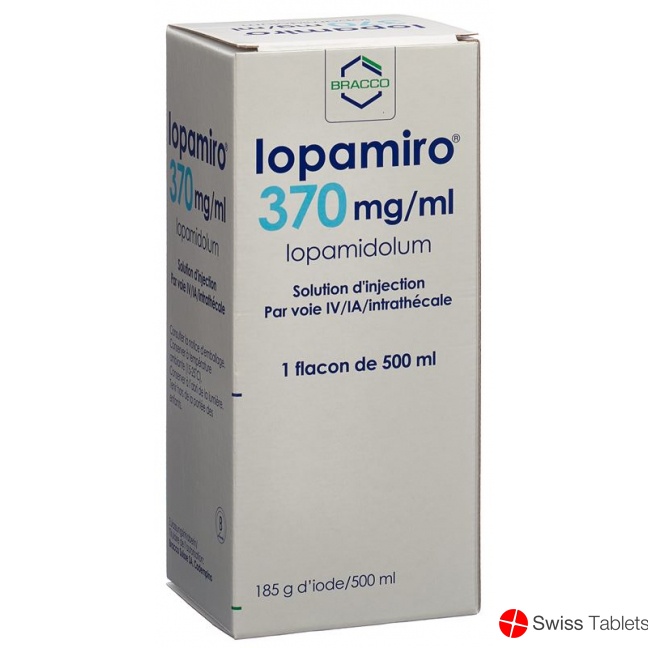
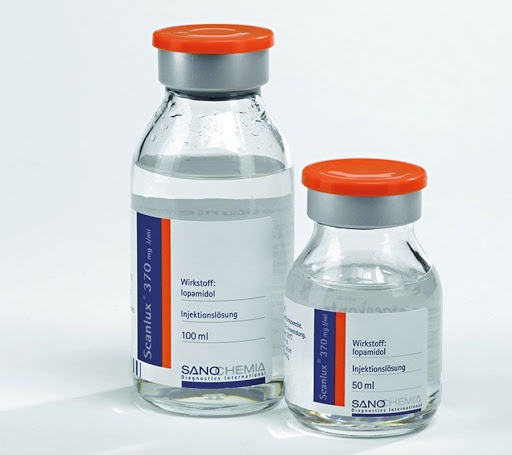
- Alternatives to IOPAMIRO 300 mg/ml INJECTABLE SOLUTIONDosage form: INJECTABLE, 75.53 g iopamidol / 100 mlActive substance: iopamidolManufacturer: Bracco Imaging S.P.A.Prescription requiredDosage form: INJECTABLE, 300 mg/mlActive substance: iopamidolManufacturer: Iberoinvesa Pharma S.L.Prescription requiredDosage form: INJECTABLE, 370 mg/mlActive substance: iopamidolManufacturer: Iberoinvesa Pharma S.L.Prescription required

Online doctors for IOPAMIRO 300 mg/ml INJECTABLE SOLUTION
Discuss questions about IOPAMIRO 300 mg/ml INJECTABLE SOLUTION, including use, safety considerations and prescription review, subject to medical assessment and local regulations.











Frequently Asked Questions
