


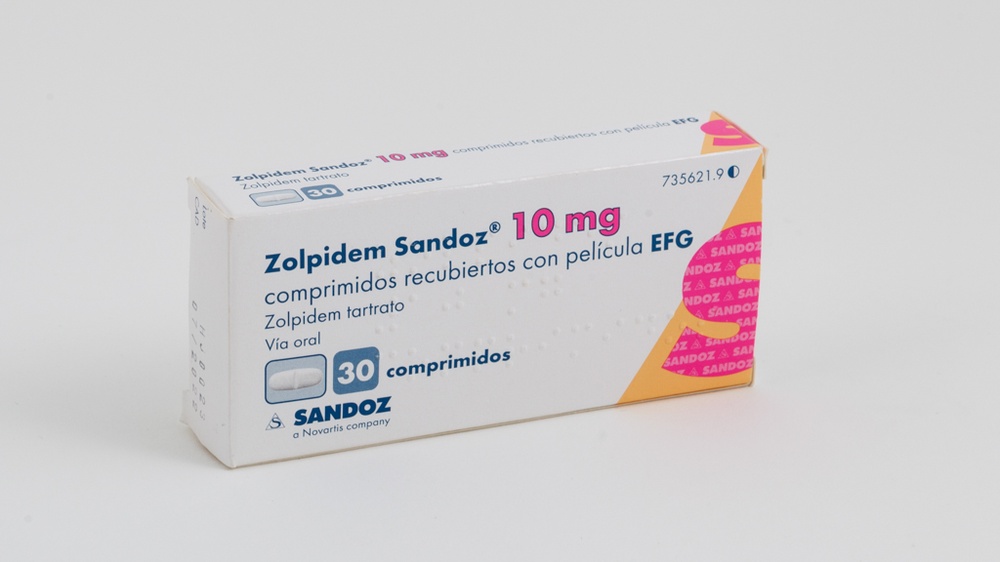
Zolpidem Sandoz 10 mg comprimidos recubiertos con película

Revisión de receta online
Un médico revisará tu caso y determinará si la prescripción es médicamente apropiada.

Habla con un médico sobre este medicamento
Comenta tus síntomas y las opciones de tratamiento en una consulta online.



Cómo usar ZOLPIDEM SANDOZ 10 mg COMPRIMIDOS RECUBIERTOS CON PELICULA EFG
Contenido del prospecto
- Introducción
- Qué es Zolpidem Sandoz y para qué se utiliza
- Qué necesitas saber antes de empezar a tomar Zolpidem Sandoz
- Cómo tomar Zolpidem Sandoz
- Posibles efectos adversos
- Conservación de Zolpidem Sandoz
- Contenido del envase e información adicional
Introducción
Prospecto: información para el paciente
Zolpidem Sandoz 10 mg comprimidos recubiertos con película EFG
tartrato de zolpidem
Lea todo el prospecto detenidamente antes de empezar a tomar este medicamento, porque contiene información importante para usted.
- Conserve este prospecto, ya que puede tener que volver a leerlo.
- Si tiene alguna duda, consulte a su médico o farmacéutico.
- Este medicamento se le ha recetado solamente a usted, y no debe dárselo a otras personas, aunque tengan los mismos síntomas que usted, ya que puede perjudicarles.
- Si experimenta efectos adversos, consulte a su médico o farmacéutico, incluso si se trata de efectos adversos que no aparecen en este prospecto. Ver sección 4.
Contenido del prospecto:
- Qué es Zolpidem Sandoz y para qué se utiliza
- Qué necesita saber antes de empezar a tomar Zolpidem Sandoz
- Cómo tomar Zolpidem Sandoz
- Posibles efectos adversos
- Conservación de Zolpidem Sandoz
- Contenido del envase e información adicional
1. Qué es Zolpidem Sandoz y para qué se utiliza
Zolpidem se usa para el tratamiento a corto plazo del insomnio en adultos.
No tome este medicamento durante largo tiempo. La duración del tratamiento debe ser lo más corto posible, porque el riesgo de dependencia aumenta con la duración del tratamiento.
Sólo se utiliza cuando los trastornos del sueño son graves, incapacitantes o causan angustia extrema al paciente.

¿No estás seguro de si este medicamento es adecuado para ti?
Comenta tus síntomas y tratamiento con un médico online.
2. Qué necesitas saber antes de empezar a tomar Zolpidem Sandoz
No tome ZolpidemSandoz
- si es alérgico a zolpidem o a alguno de los demás componentes de este medicamento (incluidos en la sección 6),
- si padece una debilidad muscular grave (miastenia grave),
- si sufre breves paradas respiratorias durante el sueño (síndrome de apnea del sueño),
- si padece una debilidad respiratoria aguda y/o grave (insuficiencia respiratoria),
- si sufre problemas graves de hígado (insuficiencia hepática),
- si ha experimentado sonambulismo u otros comportamientos que son inusuales mientras duerme después de tomar zolpidem u otros medicamentos que contienen zolpidem. Esto puede incluir conducir, comer, llamar por teléfono o mantener relaciones sexuales sin estar totalmente despierto.
Advertencias y precauciones
Consulte a su médico o farmacéutico antes de empezar a tomar Zolpidem Sandoz.
General
Antes del tratamiento con zolpidem
- se debe aclarar cuál es la causa de las alteraciones del sueño y la posibilidad de tratarlo sin medicación,
- se debe tratar cualquier enfermedad oculta.
Si sus problemas de sueño no cesan después de un tratamiento de 7 a 14 días de tratamiento con zolpidem, su médico identificará, siempre que sea posible, su problema de sueño y los factores que lo causan.
Tolerancia
El uso repetido de hipnóticos durante varias semanas puede provocar una pérdida de eficacia(tolerancia).
Dependencia
El uso de zolpidem puede conducir al desarrollo de abuso y/o dependenciafísica o psicológica. El riesgo de dependencia es mayor cuando se utiliza zolpidem durante más de 4 semanas. El riesgo de abuso y dependencia es mayor en pacientes con antecedentes de trastornos mentales y/o abuso de alcohol, sustancias ilícitas o drogas. Informe a su médico si ha tenido algún trastorno mental, o problemas de abuso o dependencia de alcohol, sustancias o drogas.
Síntomas de retirada
Si se ha desarrollado dependencia física, la interrupción brusca del tratamiento puede ir acompañada de síntomas de abstinencia como dolor de cabeza, dolor muscular, ansiedad y tensión inusual, inquietud, confusión e irritabilidad. En los casos graves se pueden presentar pérdida del sentido de la realidad, trastornos de personalidad, alteraciones auditivas (hiperacusia), entumecimiento y hormigueo en las extremidades, hipersensibilidad a la luz, al ruido y al contacto físico, alucinaciones o ataques epilépticos. Por lo tanto, se recomienda suspender el tratamiento reduciendo gradualmente la dosis. Zolpidem puede provocar síntomas de abstinencia incluso dentro del intervalo de dosis.
Cuando se finalizael tratamiento, pueden aparecer temporalmente síntomas de abstinenciay pueden reaparecer los síntomas que estaban presentes antes del tratamiento y verse incrementadas las reacciones que lo acompañan incluyen cambios de humor, ansiedad e inquietud. Dado que el riesgo de síntomas de abstinencia o interrupción es mayor después de la interrupción repentina del tratamiento, se recomienda interrumpir el tratamiento reduciendo gradualmente la dosis.
Cuando se toma zolpidem de acuerdo con las recomendaciones de dosis y duración del uso, así como con las precauciones y advertencias, la aparición de síntomas de abstinencia o interrupción al final del tratamiento es mínima.
No se recomienda zolpidem para el tratamiento básico de ciertas enfermedades mentales (psicosis).
Depresión
Al igual que otros medicamentos hipnóticos o tranquilizantes, zolpidem se debe usar con precaución en pacientes con síntomas de depresióno ansiedad acompañada de depresión. En determinadas circunstancias puede aumentar los síntomas depresivos si no existe un tratamiento adecuado de la enfermedad subyacente con los medicamentos apropiados (antidepresivos). Esto puede incrementar el riesgo de suicidio para estos pacientes. Puede aparecer una depresión previamente no reconocida debido a zolpidem. Algunos estudios muestran una mayor incidencia de suicidio o intento de suicidio en pacientes que toman ciertas pastillas para dormir o sedantes, incluido zolpidem.
Sin embargo, no se ha establecido si esto se debe a un tratamiento médico o si puede tener otras causas.
Informe a su médico inmediatamente si tiene pensamientos suicidas (pensamientos de hacerse daño o suicidarse) o comportamiento suicida.
Pérdida de memoria (amnesia)
Los medicamentos hipnóticos pueden inducir pérdidas de memoria limitadas temporalmente (amnesia anterógrada). Esto significa que (generalmente unas pocas horas) después de tomar este medicamento, se pueden tomar medidas que no podrá recordar más tarde. Esto también puede ser un comportamiento inapropiado. Este riesgo depende del nivel de dosis. Para minimizar este riesgo, se debe asegurar que podrá dormir de forma ininterrumpida durante 8 horas.
Reacciones psiquiátricas y “paradójicas”
Zolpidem puede causar, especialmente en pacientes de edad avanzada, reacciones psiquiátricas y las llamadas "reacciones paradójicas" tales como inquietud interna, aumento de los trastornos del sueño, agitación, irritabilidad, agresión, delirios (falsas creencias), rabietas, pesadillas, alucinaciones (ver, oír o sentir cosas que no están allí), comportamiento anormal y otros trastornos del comportamiento (ver sección 4). Si esto ocurre, se debe interrumpir el tratamiento con zolpidem (ver sección 4).
Somnambulismo
También se reportaron casos de sonambulismo y comportamientos asociados en pacientes que habían tomado zolpidem y no estaban completamente despiertos. Esto incluye “conducir dormido”, preparar y comer alimentos, hacer llamadas telefónicas o tener relaciones sexuales mientras los pacientes no pueden recordar estas acciones cuando se despiertan. Si observa cualquiera de los comportamientos descritos anteriormente, interrumpa el tratamiento con zolpidem inmediatamente y comuníquese con su médico, ya que este comportamiento del sueño puede ponerlo a usted y a otros en un riesgo grave de lesiones. Beber alcohol o usar otros medicamentos al mismo tiempo que le provocan sueño puede aumentar el riesgo de que se produzca este patrón de sueño.
Deterioro psicomotor
Deterioro psicomotor al día siguiente (ver también “Conducción y uso de máquinas”)
Al igual que otros medicamentos hipnóticos o tranquilizantes, zolpidem tiene un efecto depresor sobre el sistema nervioso central.
El día después de tomar zolpidem, el riesgo de deterioro psicomotor, incluido el deterioro de la capacidad para conducir, puede aumentar si:
- toma este medicamento menos de 8 horas antes de realizar actividades que requieren su estado de alerta,
- toma una dosis más alta que la dosis recomendada,
- toma zolpidem mientras ya está tomando otro depresor del sistema nervioso central u otros medicamentos que aumentan zolpidem en su sangre, o mientras bebe alcohol, o mientras toma drogas o medicamentos
Tome la dosis completa inmediatamente a la hora de acostarse.
No tome otra dosis durante la misma noche.
El uso de zolpidem se ha asociado con un mayor riesgo de caídas. Las caídas pueden ser causadas por efectos secundarios como problemas de coordinación, debilidad muscular, mareos, somnolencia y fatiga. El riesgo de caídas es mayor en pacientes de edad avanzada y si se utiliza una dosis superior a la recomendada.
Deterioro de la función respiratoria y hepática.
Los pacientes con insuficiencia respiratoria crónica o trastornos de la función hepáticase deben tratar con precaución y su médico puede recetarle una dosis más baja de zolpidem (ver también la sección 3).
Debido al riesgo de daño cerebral, los pacientes con disfunción hepática grave no deben recibir tratamiento con zolpidem.
Trastorno de conducción cardiaca
Los pacientes con cierto trastorno congénito de la conducción cardíaca ("síndrome de QT largo") se deben tratar con precaución. Su médico sopesará cuidadosamente los beneficios frente a los riesgos antes del tratamiento con zolpidem.
Pacientes de edad avanzada y debilitados
Deben recibir una dosis más baja (ver sección 3). En pacientes de edad avanzada, se requiere precaución por el riesgo de caídas, especialmente al levantarse por la noche.
Niños y adolescentes
No se recomienda el uso de zolpidem en niños y adolescentes menores de 18 años, ya que no hay suficientes datos clínicos disponibles para su uso en este grupo de edad.
Otros medicamentos y ZolpidemSandoz
Comunique a su médico o farmacéutico si está tomando, ha tomado recientemente o podría tener que tomar cualquier otro medicamento.
Los siguientes medicamentos pueden influir en el efecto de zolpidem o verse influenciados en su efecto:
Mientras toma zolpidem con los siguientes medicamentos, la somnolencia y los efectos de deterioro psicomotor al día siguiente, incluida la alteración de la capacidad para conducir, pueden aumentar al día siguiente de la toma.
- medicamentos para algunos trastornos mentales(antipsicóticos),
- medicamentos para problemas de sueño(hipnóticos),
- medicamentos para reducir o aliviar la ansiedad,
- medicamentos para la depresión,
- medicamentos para el dolor moderado a grave (analgésicos narcóticos),
- medicamentos para la epilepsia,
- medicamentos anestésicos,
- medicamentos para la rinitis alérgica estacional, erupciones cutáneas u otras alergias que pueden causarle sueño (antihistamínicos sedantes).
El uso concomitante de zolpidem y opioides (analgésicos potentes, medicamentos para la terapia de sustitución y algunos medicamentos para la tos) aumenta el riesgo de somnolencia, dificultad para respirar (depresión respiratoria), coma y puede poner en peligro la vida. Debido a esto, el uso concomitante solo se debe considerar cuando no son posibles otras opciones de tratamiento.
Sin embargo, si su médico le receta zolpidem junto con opioides, su médico debe limitar la dosis y la duración del tratamiento concomitante.
Informe a su médico sobre todos los medicamentos opioides que esté tomando y siga estrictamente las recomendaciones de dosis de su médico. Podría ser útil informar a amigos o familiares para que estén al tanto de los signos y síntomas mencionados anteriormente. Póngase en contacto con su médico cuando experimente tales síntomas.
La combinación con analgésicos de tipo opiáceo (analgésicos narcóticos) también puede conducir a un desarrollo acelerado de dependencia.
Mientras toma zolpidem con antidepresivos como bupropión, desipramina, fluoxetina, sertralina y venlafaxina, es posible que vea cosas que no son reales (alucinaciones).
No se recomienda tomar zolpidem con fluvoxamina o ciprofloxacino.
Con la administración simultánea de relajantes musculares, su efecto puede aumentar, especialmente en pacientes de edad avanzada y en dosis más altas (¡riesgo de caídas!).
Los medicamentos que aumentan la actividad de ciertas enzimas hepáticas (en particular, la isoenzima P450 CYP3A4) pueden debilitar el efecto de zolpidem (p. ej., rifampicina, carbamazepina, fenitoína, hierba de San Juan). No se recomienda el uso simultáneo de zolpidem junto con la hierba de San Juan.
Por el contrario, ciertos medicamentos antifúngicos (antifúngicos azólicos, p. ej., ketoconazol) y ciertos antibióticos (antibióticos macrólidos), que reducen el efecto de estas enzimas hepáticas, pueden aumentar el efecto de zolpidem.
Toma de ZolpidemSandozcon alimentos, bebidas y alcohol
No debe consumir alcohol durante el tratamiento, ya que puede cambiar e intensificar el efecto de zolpidem de forma imprevisible. La habilidad para llevar a cabo tareas que requieran un aumento de la concentración se puede también ver afectada. El zumo de pomelo puede aumentar el efecto de zolpidem.
Embarazo, lactancia y fertilidad
Embarazo
El uso de zolpidem durante el embarazo no está recomendado. Si está embarazada o en periodo de lactancia o cree que podría estar embarazada o tiene intención de quedarse embarazada, consulte con su médico.
Si se usa durante el embarazo, existe un riesgo de que el bebé se vea afectado.
Algunos estudios han demostrado un aumento del riesgo de labio y paladar hendido (a veces llamado “labio leporino” en recién nacidos.
La reducción del movimiento fetal y la variabilidad de la frecuencia cardíaca fetal pueden ocurrir después de tomar zolpidem durante el segundo y/o tercer trimestre del embarazo.
Si toma zolpidem en los últimos meses de embarazo o durante el parto, su bebé podría presentar debilidad muscular, disminución anormal de la temperatura corporal, y una insuficiencia respiratoria moderada (depresión respiratoria).
Si se toma este medicamento regularmente al final del embarazo, su bebé puede desarrollar síntomas de dependencia física y puede correr el riesgo de desarrollar síntomas de abstinencia como agitación o temblor. En este caso se deberá monitorizar estrechamente al recién nacido después del nacimiento.
Lactancia
Dado que zolpidem pasa a la leche materna solo en pequeñas cantidades, zolpidem no debe tomarse durante la lactancia.
Fertilidad
No hay datos disponibles sobre el efecto sobre la fertilidad.
Conducción y uso de máquinas
Zolpidem tiene un efecto importante sobre la capacidad para conducir y usar máquinas, como la “conducción en estado somnoliento” o la conducción de cansancio excesivo “conducir dormido”. Al día siguiente de tomar zolpidem (tal y como sucede con otras pastillas para dormir) debe tener en cuenta lo siguiente:
- puede que se sienta aletargado, somnoliento, mareado o confuso,
- puede que le lleve más tiempo tomar decisiones,
- puede sufrir visión borrosa o doble,
- su estado de alerta se puede ver disminuido.
Con el fin de reducir los efectos antes mencionados, se recomienda un margen mínimo de 8 horas entre la administración de zolpidem y la conducción, el uso de maquinaria o cualquier trabajo que se realice en altura.
No consuma alcohol ni ninguna otra sustancia psicoactiva mientras tome zolpidem, ya que esto puede aumentar los efectos anteriormente citados.
Zolpidem Sandoz contiene lactosa y sodio
Este medicamento contiene lactosa. Si su médico le ha indicado que padece una intolerancia a ciertos azúcares, consulte con él antes de tomar este medicamento.
Este medicamento contiene menos de 1 mmol de sodio (23 mg) por comprimido recubierto con película, es decir, esencialmente “libre de sodio”.
3. Cómo tomar Zolpidem Sandoz
Siga exactamente las instrucciones de administración de este medicamento indicadas por su médico. Consulte a su médico o farmacéutico si tiene dudas.
La dosis recomendada es:
Adultos
La dosis recomendada es de 1 comprimido de zolpidem cada 24 horas (10 mg de tartrato de zolpidem). En algunos pacientes se puede recetar una dosis más baja. Los comprimidos se deben tomar:
- como dosis única,
- justo antes de acostarse.
Asegúrese de que después de tomar este medicamento deja pasar un periodo de al menos 8 horas antes de realizar actividades que requieren su atención.
No exceda la dosis de 10 mg cada 24 horas.
Pacientes de edad avanzada y debilitados
Se recomienda una dosis de 1/2 comprimido recubierto con película (5 mg) de zolpidem en edad avanzada o debilitados que pueden ser particularmente sensibles a zolpidem. Esta dosis solo se debe aumentar a 10 mg (1 comprimido recubierto con película) si el efecto es insuficiente y el medicamento se tolera bien.
Disfunción respiratoria o deterioro de la función hepática
En pacientes con disfunción respiratoria o alteración de la función hepática, la dosis debe ser de solo 1/2 comprimido recubierto con película (5 mg) de zolpidem.
Niños y adolescentes
No se recomienda el uso de zolpidem en niños y adolescentes menores de 18 años, ya que no hay suficientes datos clínicos disponibles para su uso en este grupo de edad.
Forma de administración
Zolpidem se debe tomar junto con algún líquido (agua) inmediatamente antes de acostarse o en la cama.
El comprimido se puede dividir en dosis iguales.
¿Hasta cuándo deberá tomar ZolpidemSandoz?
La duración del tratamiento debe ser lo más breve posible. En general, debe de ser desde unos pocos días hasta 2 semanas y no debe exceder las 4 semanas, incluida la fase de suspensión gradual.
En casos individuales, puede ser necesario un tratamiento que supere este período. Sin embargo, esto no se debe hacer sin una reevaluación médica de su condición.
Si toma más ZolpidemSandozdel que debiera
En caso de sobredosis, se debe consultar inmediatamente a un médico.
Los signos de sobredosis (leve) pueden incluir somnolencia, mareos, visión borrosa, dificultad para hablar, disminución de la presión arterial, marcha y movimiento inestables, debilidad muscular, confusión mental y alucinaciones. En casos de envenenamiento severo, puede ocurrir desde sueño profundo hasta inconsciencia, agitación, disfunción respiratoria y colapso circulatorio. Se han notificado casos de sobredosis con zolpidem (solo o en combinación con otros depresores centrales, incluido el alcohol) con consecuencias graves (incluidos eventos mortales).
Si ha tomado más Zolpidem Sandoz del que debe, consulte inmediatamente a su médico o llame al Servicio de Información Toxicológica, teléfono: 91 562 04 20, indicando el medicamento y la cantidad utilizada.
Si olvidó tomar ZolpidemSandoz
No tome una dosis doble para compensar las dosis olvidadas. Continúe con la toma de zolpidem según lo prescrito por su médico.
Si interrumpe el tratamiento con ZolpidemSandoz
Si desea interrumpir el tratamiento, hable antes con su médico. No suspenda el medicamento por su cuenta sin consejo médico. Dado que el riesgo de síntomas de abstinencia es mayor tras la interrupción brusca del tratamiento, su médico le aconsejará que finalice el tratamiento reduciendo gradualmente la dosis, consulte la sección 2 Advertencias y precauciones, Retirada.
Si tiene cualquier otra duda sobre el uso de este medicamento, pregunte a su médico o farmacéutico.

¿Has empezado a tomar el medicamento y tienes preguntas?
Comenta tus síntomas y tratamiento con un médico online.
4. Posibles efectos adversos
Al igual que todos los medicamentos, este medicamento puede producir efectos adversos, aunque no todas las personas los sufran.
Deje de tomar zolpidem y consulte a un médico o vaya al hospital de inmediato si:
Tiene una reacción alérgica (angioedema). Estos signos pueden incluir: erupción cutánea con picazón, urticaria o sarpullido (urticaria), hinchazón de manos, pies, tobillos, cara, labios o garganta que puede causar dificultad para tragar o respirar.
Existe evidencia de una dependencia de la dosis de los efectos secundarios especialmente aquellos que afectan el sistema nervioso central. Para reducir estos efectos secundarios, el zolpidem se debe tomar directamente antes de acostarse o en la cama, según lo recomendado. Los efectos secundarios son más comunes en pacientes de edad avanzada.
Informe a su médico lo antes posible si tiene alguno de los siguientes efectos adversos:
Frecuentes(pueden afectar hasta 1 de cada 10 personas):
- somnolencia,
- aumento del insomnio,
- pesadillas,
- fatiga,
- dolor de cabeza,
- sintiéndose mareado,
- trastornos cognitivos como pérdida temporal de memoria (amnesia anterógrada, que puede estar asociada con un comportamiento inapropiado),
- alucinaciones,
- mayor actividad,
- depresión,
- diarrea,
- sentirse enfermo (náuseas) o estar enfermo (vómitos),
- dolor abdominal,
- infección de las vías respiratorias superiores,
- infección del tracto respiratorio inferior,
- dolor de espalda.
Poco frecuentes(pueden afectar hasta 1 de cada 100 personas):
- trastorno del apetito,
- estado de confusión,
- irritabilidad,
- inquietud,
- agresión,
- sonambulismo u otros comportamientos inusuales durante el sueño, como conducir, comer, hablar por teléfono o tener relaciones sexuales durante el sueño sin estar completamente despierto (consulte la sección "Advertencias y precauciones").
- estado de ánimo eufórico,
- trastorno sensorial como hormigueo o entumecimiento (parestesia),
- temblor,
- deficit de atención,
- desorden del habla,
- visión doble,
- visión borrosa,
- enzimas hepáticas elevadas,
- erupción,
- comezón (prurito),
- sudoración excesiva (hiperhidrosis),
- dolor en las articulaciones,
- dolor muscular,
- calambres musculares,
- dolor de cuello,
debilidad muscular.
Raros(pueden afectar hasta 1 de cada 1.000 personas)
- disfunción sexual,
- deterioro de la visión,
- daño hepático (hepatocelular, colestásico o mixto) (ver también la sección 2 “qué necesita saber antes de empezar a tomar Zolpidem Sandoz” y la sección 3),
- ronchas (urticaria),
- inseguridad al andar,
- riesgo de caídas (especialmente en pacientes de edad avanzada o si Zolpidem no se tomó según lo prescrito).
- enturbiamiento de la conciencia.
Muy raros(pueden afectar a menos de 1 de cada 10.000 personas):
- pensar cosas que no son ciertas (delirios),
- dependencia (los síntomas de abstinencia o interrupción pueden ocurrir después de la finalización del tratamiento),
- deterioro de la respiración (depresión respiratoria).
Frecuencia no conocida(la frecuencia no puede estimarse a partir de los datos disponibles):
- rabietas,
- comportamiento anormal,
- desarrollo de tolerancia,
- hinchazón persistente de la piel y las membranas mucosas (angioedema),
- abuso.
Comunicación de efectos adversos:
Si experimenta cualquier tipo de efecto adverso, consulte a su médico o farmacéutico, incluso si se trata de posibles efectos adversos que no aparecen en este prospecto. También puede comunicarlos directamente a través del Sistema Español de Farmacovigilancia de medicamentos de Uso Humano: https://www.notificaram.es. Mediante la comunicación de efectos adversos usted puede contribuir a proporcionar más información sobre la seguridad de este medicamento.
5. Conservación de Zolpidem Sandoz
Mantener este medicamento fuera del alcance y de la vista de los niños.
No utilice este medicamento después de la fecha de caducidad que aparece en el envase y el blíster después de “CAD/EXP”. La fecha de caducidad es el último día del mes que se indica.
Conservar en el embalaje original para protegerlo de la luz.
Este medicamento no requiere ninguna temperatura especial de conservación.
Los medicamentos no se deben tirar por los desagües ni a la basura. Deposite los envases y los
medicamentos que no necesita en el Punto SIGRE de la farmacia. En caso de duda pregunte a su farmacéutico cómo deshacerse de los envases y de los medicamentos que no necesita. De esta forma, ayudará a proteger el medio ambiente.
6. Contenido del envase e información adicional
Composición de ZolpidemSandoz
- El principio activo es tartrato de zolpidem. Cada comprimido recubierto contiene 10 mg de tartrato de zolpidem.
- Los demás componentes son:
Núcleo del comprimido:ácido succínico, almidón glicolato sódico de patata (tipo A), celulosa microcristalina, lactosa monohidrato, estearato de magnesio, sílice coloidal anhidra.
Recubrimiento del comprimido:lactosa monohidrato, macrogol 4000, hipromelosa, dióxido de titanio (E 171).
Aspecto del producto y contenido del envase
Comprimidos recubiertos con película de color blanco brillantes, oblongos, biconvexos y con ranura en uno de los lados.
Los comprimidos recubiertos con película se presentan en blísters de polivinilcloruro/aluminio y se envasan en un envase de cartón.
Los envases contienen 10, 14, 20, 28, 30, 30x1, 50, 98, 100 comprimidos recubiertos con película.
Puede que solamente estén comercializados algunos tamaños de envases.
Titular de la autorización de comercialización y responsable de la fabricación
Titular de la autorización de comercialización:
Sandoz Farmacéutica, S.A.
Centro Empresarial Parque Norte
Edificio Roble
C/ Serrano Galvache, 56
28033 Madrid
España
Responsable de la fabricación:
Salutas Pharma GmbH
Otto-von-Guericke-Alle 1
39179 Barleben
Alemania
ó
Rowa Pharmaceuticals Ltd
Newton, Bantry
Co. Cord
Irlanda
Este medicamento está autorizado en los estados miembros del Espacio Económico Europeo con los siguientes nombres:
Bélgica: Zolpidem Sandoz 10 mg filmomhulde tabletten
Dinamarca: Zolpidem “Hexal” filmovertrukne tabletter
Alemania: Zolpidem HEXAL 10 mg Filmtabletten
Irlanda: Zolnod 10 mg film-coated tablets
Italia: ZOLPIDEM SANDOZ 10 mg compresse rivestite con film
Holanda: ZOLPIDEMTARTRAAT SANDOZ 10 MG, FILMOMHULDE TABLETTEN
Suecia: Zolpidem Hexal 10 mg filmdragerad tablett
Fecha de la última revisión de esteprospecto:febrero 2022
La información detallada y actualizada de este medicamento está disponible en la página web de la Agencia Española de Medicamentos y Productos Sanitarios (AEMPS) http://www.aemps.gob.es.
- País de registro
- Forma farmacéuticaCOMPRIMIDO, 10 mg zolpidem
- Código ATCN05CF02
- Precio medio en farmacia2.78 EUR
- Principio activo
- Requiere recetaSí
- Fabricante
- ComposiciónLACTOSA MONOHIDRATO (55,0 mg mg), CARBOXIMETILALMIDON SODICO (5,0 mg mg), LACTOSA MONOHIDRATO (2,16 mg mg)
- Esta información es de carácter general y no sustituye la consulta con un profesional sanitario.
- Alternativas a ZOLPIDEM SANDOZ 10 mg COMPRIMIDOS RECUBIERTOS CON PELICULA EFGForma farmacéutica: COMPRIMIDO BUCODISPERSABLE/LIOTAB, 10 mgPrincipio activo: zolpidemFabricante: Meiji Pharma Spain S.A.Requiere recetaForma farmacéutica: COMPRIMIDO BUCODISPERSABLE/LIOTAB, 5 mgPrincipio activo: zolpidemFabricante: Meiji Pharma Spain S.A.Requiere recetaForma farmacéutica: COMPRIMIDO, 10 mg zolpidem hemitartratoPrincipio activo: zolpidemFabricante: Sanofi Aventis S.A.Requiere receta
Médicos online para ZOLPIDEM SANDOZ 10 mg COMPRIMIDOS RECUBIERTOS CON PELICULA EFG
Comenta la dosis, los posibles efectos secundarios, interacciones, contraindicaciones o la revisión de receta de ZOLPIDEM SANDOZ 10 mg COMPRIMIDOS RECUBIERTOS CON PELICULA EFG, sujeto a valoración médica y a la normativa local.









Preguntas frecuentes
ZOLPIDEM SANDOZ 10 mg COMPRIMIDOS RECUBIERTOS CON PELICULA EFG requiere receta en España. Puedes confirmarlo con un médico online según tu caso.
El principio activo de ZOLPIDEM SANDOZ 10 mg COMPRIMIDOS RECUBIERTOS CON PELICULA EFG es zolpidem. Esta información ayuda a identificar medicamentos con la misma composición pero con diferentes nombres comerciales.
El precio medio en farmacia de ZOLPIDEM SANDOZ 10 mg COMPRIMIDOS RECUBIERTOS CON PELICULA EFG es de aproximadamente 2.78 EUR. Puede variar según el fabricante y la forma farmacéutica.
ZOLPIDEM SANDOZ 10 mg COMPRIMIDOS RECUBIERTOS CON PELICULA EFG es fabricado por Sandoz Farmaceutica S.A.. La marca y el envase pueden variar según el distribuidor.
Los Médicos de familia, Psiquiatras, Dermatólogos, Cardiólogos, Endocrinólogos, Gastroenterólogos, Neumólogos, Nefrólogos, Reumatólogos, Hematólogos, Infectólogos, Alergólogos, Geriatras, Pediatras, Oncólogos pueden valorar la prescripción de ZOLPIDEM SANDOZ 10 mg COMPRIMIDOS RECUBIERTOS CON PELICULA EFG cuando esté clínicamente indicado. Puedes reservar una videoconsulta para comentar tu caso y las opciones de tratamiento.
La receta la emite un médico tras valorar tu estado de salud. En España, ZOLPIDEM SANDOZ 10 mg COMPRIMIDOS RECUBIERTOS CON PELICULA EFG se dispensa en las farmacias con esa receta médica. Una consulta online no garantiza su emisión: la decisión corresponde siempre al médico.
Para solicitar una valoración puedes usar Oladoctor:
Otros medicamentos con el mismo principio activo (zolpidem) incluyen DAGAN 10 MG COMPRIMIDOS BUCODISPERSABLES EFG, DAGAN 5 MG COMPRIMIDOS BUCODISPERSABLES EFG, DALPARAN 10 mg COMPRIMIDOS RECUBIERTOS CON PELICULA. Pueden tener diferentes nombres comerciales o formulaciones, pero contienen el mismo componente terapéutico. Consulta siempre con un médico antes de cambiar o iniciar un nuevo medicamento.
