


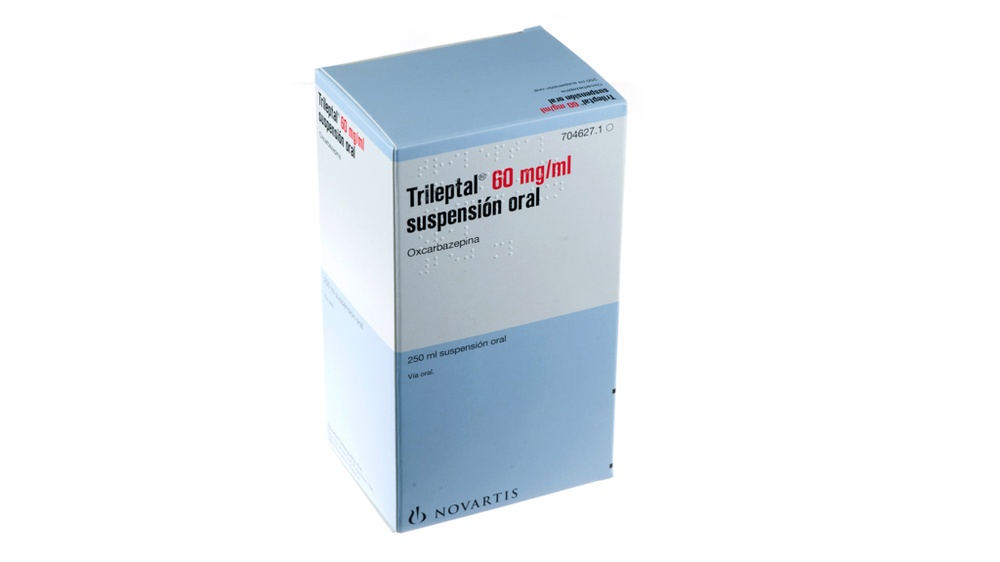
Trileptal 60 mg/ml suspensión oral

Revisión de receta online
Un médico revisará tu caso y determinará si la prescripción es médicamente apropiada.

Habla con un médico sobre este medicamento
Comenta tus síntomas y las opciones de tratamiento en una consulta online.



Cómo usar TRILEPTAL 60 mg/ml SUSPENSION ORAL
Contenido del prospecto
- Introducción
- Qué es Trileptal y para qué se utiliza
- Qué necesita saber antes de empezar a tomar Trileptal
- Cómo tomar Trileptal
- Posibles efectos adversos
- Conservación de Trileptal
- Contenido del envase e información adicional
Introducción
Prospecto: información para el usuario
Trileptal 60 mg/ml suspensión oral
oxcarbazepina
Lea todo el prospecto detenidamente antes de empezar a tomar este medicamento, porque contiene información importante para usted.
- Conserve este prospecto, ya que puede tener que volver a leerlo.
- Si tiene alguna duda, consulte a su médico o farmacéutico.
- Este medicamento se le ha recetado solamente a usted, y no debe dárselo a otras personas aunque tengan los mismos síntomas que usted, ya que puede perjudicarles.
- Si experimenta efectos adversos, consulte a su médico o farmacéutico, incluso si se trata de efectos adversos que no aparecen en este prospecto. Ver sección 4.
Contenido del prospecto
- Qué es Trileptal y para qué se utiliza
- Qué necesita saber antes de empezar a tomar Trileptal
- Cómo tomar Trileptal
- Posibles efectos adversos
- Conservación de Trileptal
- Contenido del envase e información adicional
1. Qué es Trileptal y para qué se utiliza
Qué es Trileptal
Trileptal contiene el principio activo oxcarbazepina.
Trileptal pertenece al grupo de medicamentos denominados anticonvulsivantes o antiepilépticos.
Para qué se utiliza Trileptal
Los medicamentos como Trileptal, son el tratamiento estándar para la epilepsia.
La epilepsia es un trastorno del cerebro que provoca que las personas tengan crisis recurrentes y convulsiones. Las crisis suceden debido a un fallo temporal en la actividad eléctrica del cerebro. Normalmente las células del cerebro coordinan los movimientos del cuerpo enviando señales a través de los nervios del músculo de una manera ordenadamente organizada. En la epilepsia, las células del cerebro envían demasiadas señales de manera desordenada. El resultado puede ser una actividad muscular descoordinada que se denomina crisis epiléptica.
Trileptal se utiliza para el tratamiento de las crisis epilépticas parciales con o sin generalización secundaria con crisis tónico-clónicas. Las crisis parciales abarcan un área limitada del cerebro, pero pueden extenderse a todo el cerebro y producir crisis tónico-clónicas generalizadas. Existen 2 tipos de crisis parciales: simple y compleja. En las crisis parciales simples, el paciente permanece consciente, mientras que en las complejas, el estado de consciencia está alterado.
Trileptal actúa manteniendo las células nerviosas “hiperexcitadas” del cerebro bajo control, suprimiendo o reduciendo así la frecuencia de dichas crisis.
Trileptal puede utilizarse solo o en combinación con otros medicamentos antiepilépticos.
Normalmente el médico intentará encontrarle el medicamento que mejor le funcione a usted o a su hijo/a. Sin embargo, en epilepsias graves, puede que necesite la combinación de dos o más medicamentos para controlar las crisis. Trileptal está indicado para su uso en adultos y en niños de 6 o más años de edad.
Si tiene cualquier duda sobre cómo funciona Trileptal o de por qué le han recetado este medicamento, consulte a su médico.

¿No estás seguro de si este medicamento es adecuado para ti?
Comenta tus síntomas y tratamiento con un médico online.
2. Qué necesita saber antes de empezar a tomar Trileptal
Siga atentamente todas las instrucciones dadas por su médico, incluso si pueden diferir de la información general indicada en este prospecto.
Monitorización durante el tratamiento con Trileptal
Antes y durante el tratamiento con Trileptal, su médico puede hacerle un análisis de sangre para establecer su dosis. Su médico le indicará cuándo hacer los análisis.
No tome Trileptal:
- si es alérgico a la oxcarbazepina o a alguno de los demás componentes de este medicamento (incluidos en la sección 6) o si es alérgico a la eslicarbazepina.
Si es alérgico, informe a su médico antes de tomar Trileptal. Si piensa que es alérgico, pregunte a su médico.
Advertencias y precauciones
Consulte a su médico o farmacéutico antes de empezar a tomar Trileptal:
- si alguna vez ha sufrido alguna reacción alérgica inusual(erupción o cualquier otro tipo de alergia) a carbamazepina o a cualquier otro medicamento. Si usted es alérgico a carbamazepina, las probabilidades de que resulte alérgico a oxcarbazepina (Trileptal) es de 1 entre 4 (25%).
- si padece enfermedad renal.
- si padece enfermedad grave del hígado.
- si está tomando diuréticos(medicamentos para ayudar a los riñones a eliminar la sal y el agua aumentando la cantidad de orina producida).
- si padece enfermedad de corazón, respiración entrecortada y/o inflamación de pies o piernas, debido a una retención de líquidos.
- si su nivel de sodio en sangre es bajocomo muestra su análisis sanguíneo (ver sección 4).
- si usted es una mujer que está tomando anticonceptivos orales(tales como la píldora anticonceptiva), Trileptal puede hacer que el anticonceptivo no funcione. Utilice un método anticonceptivo no hormonal diferente o extra mientras esté tomando Trileptal. Esto puede ayudarle a prevenir un embarazo no deseado. Informe inmediatamente a su médico si tiene sangrados vaginales irregulares o manchados. Si tiene cualquier duda sobre esto, consulte con su médico o profesional sanitario antes de tomar Trileptal.
El riesgo de reacciones adversas graves cutáneas en pacientes Han Chinos o Tailandeses asociado con carbamazepina o con compuestos relacionados químicamente puede predecirse mediante test de muestras sanguíneas de dichos pacientes. Su médico le aconsejará si un test sanguíneo es necesario antes de tomar oxcarbazepina.
Si aprecia cualquiera de los siguientes síntomas después de tomar Trileptal, avise a su médico inmediatamente o acuda al Servicio de Urgencias del hospital más cercano:
- si durante el tratamiento sufre una reacción alérgica. Los síntomas incluyen inflamación de labios, párpados, cara, garganta, boca o problemas respiratorios repentinos, fiebre con inflamación de los ganglios, erupción o ampollas en la piel.
- si nota síntomas que le sugieran una hepatitis, como ictericia (coloración amarillenta de la piel o del blanco de los ojos).
- si nota un aumento de la frecuencia de las crisis. Esto es especialmente importante en niños, pero también puede ocurrir en adultos.
- si nota posibles síntomas de alteración de la sangrecomo por ejemplo cansancio, respiración entrecortada al hacer ejercicio, palidez, dolor de cabeza, escalofríos, mareos, infecciones frecuentes que cursan con fiebre, dolor de garganta, úlceras bucales, sangrados o hematomas más frecuentes de lo normal, le sangra la nariz, manchas rojizas o púrpura, aparición espontánea de manchas en la piel.
- un bajo número de personas tratadas con antiepilépticos como Trileptal han tenido pensamientos de autolesionarse o suicidarse. Si en cualquier momento experimenta estos pensamientos, contacte inmediatamente con su médico.
- si nota que su ritmo cardiaco es rápido o inusualmente lento.
- Niños y adolescentes
Para el tratamiento en niños, su médico puede recomendarle la monitorización de la función tiroidea antes y durante el tratamiento.
Uso de Trileptal con otros medicamentos:
Informe a su médico o farmacéutico si está tomando, ha tomado recientemente o pudiera tener que tomar cualquier otro medicamento.
Especialmente en el caso de:
- Anticonceptivos orales tales como la "píldora" (ver sección Advertencias y precauciones).
- Otros medicamentos antiepilépticos y medicamentos inductores enzimáticos tales como carbamazepina, fenobarbital, fenitoína o lamotrigina y rifampicina.
- Medicamentos que reducen los niveles de sodio en sangre, tales como diuréticos (utilizados para ayudar a los riñones a eliminar la sal y el agua, aumentando la producción de orina), desmopresina, y medicamentos antiinflamatorios no esteroideos tales como indometacina.
- Litio e inhibidores de la monoamina oxidasa (medicamentos que se utilizan para tratar trastornos de ánimo y algunos tipos de depresión).
- Medicamentos que controlan el sistema inmunitario del cuerpo tales como ciclosporina y tacrolimus.
Toma de Trileptal con alimentos y alcohol
Trileptal puede tomarse con o sin comida. Durante el tratamiento con Trileptal evite tomar bebidas alcohólicas ya que puede aumentar los efectos sedantes de este medicamento; ante cualquier duda consulte con su médico.
Embarazo y lactancia
Embarazo
Si está embarazada, cree que podría estar embarazada o tiene intención de quedarse embarazada, consulte a su médico o farmacéutico antes de utilizar este medicamento.
Es importante controlar las crisis epilépticas durante el embarazo. Sin embargo, puede haber un riesgo para su bebé si toma medicamentos antiepilépticos durante el embarazo.
Malformaciones congénitas
Los estudios no han mostrado un aumento del riesgo de malformaciones congénitas asociado a la oxcarbazepina administrada durante el embarazo, sin embargo, no se puede descartar completamente un riesgo de malformaciones congénitas en el feto.
Trastornos del desarrollo neurológico
Algunos estudios han mostrado que la exposición a la oxcarbazepina en el útero afecta negativamente al desarrollo de la función cerebral (desarrollo neurológico) en los niños, mientras que en otros estudios no se ha observado este efecto. La posibilidad de que haya un efecto sobre el desarrollo neurológico no se puede descartar.
Su médico le informará de los beneficios y de los posibles riesgos que conlleva el tratamiento y le ayudará a decidir si debe tomar Trileptal.
No interrumpa su tratamiento con Trileptal durante el embarazo sin haberlo consultado previamente con su médico.
Lactancia
Si está tomando este medicamento, consulte a su médico antes de iniciar la lactancia. El principio activo de Trileptal pasa a la leche materna. A pesar de que los datos disponibles sugieren que la cantidad de Trileptal que pasa al niño lactante es baja, un riesgo de efectos adversos en el bebé no se puede descartar. Su médico le informará de los beneficios y riesgos potenciales de la lactancia mientras se utiliza Trileptal. Si usted está dando el pecho durante el tratamiento con Trileptal y cree que su bebé presenta algún efecto adverso como demasiado sueño o poco aumento de peso, informe a su médico inmediatamente.
Conducción y uso de máquinas
Trileptal puede producir síntomas tales como somnolencia, mareo o alteraciones en la vista, y disminuir la capacidad de reacción. Estos efectos así como la propia enfermedad pueden dificultar su capacidad para conducir vehículos o manejar máquinas. Por lo tanto no conduzca, ni maneje máquinas, ni practique otras actividades que requieran especial atención, hasta que su médico valore su respuesta a este medicamento.
Es importante que consulte con su médico si puede conducir o manejar máquinas mientras esté tomando este medicamento.
Trileptal contiene sorbitol (E420), propilenglicol (E1520), parahidroxibenzoatos, sodio y etanol
Trileptal suspensión oral contiene:
- Sorbitol (E420): Este medicamento contiene 175 mg de sorbitol en cada 1 ml de suspensión oral.
El sorbitol es una fuente de fructosa. Si su médico le ha indicado que usted (o su hijo) padecen una intolerancia a ciertos azúcares, o se les ha diagnosticado intolerancia hereditaria a la fructosa (IHF), una enfermedad genética rara, en la que el paciente no puede descomponer la fructosa, consulte usted (o su hijo) con su médico antes de tomar este medicamento.
El sorbitol puede provocar malestar grastointestinal y un ligero efecto laxante.
- Propilenglicol (E1520): este medicamento contiene 25 mg de propilenglicol en cada 1 ml de suspensión oral.
- Parahidroxibenzoatos: parahidroxibenzoato de propilo (E216) y parahidroxibenzoato de metilo (E218), que pueden provocar reacciones alérgicas (posiblemente retardadas).
- Sodio: este medicamento contiene menos de 1 mmol de sodio (23 mg) por 1 ml; esto es, esencialmente “exento de sodio”.
- Etanol: Este medicamento contiene 0,8 mg de alcohol (etanol) en cada 1 ml de suspensión oral. La cantidad en 1 ml de este medicamento es equivalente a menos de 0,02 ml de cerveza o 0,01 ml de vino. La pequeña cantidad de alcohol que contiene este medicamento no produce ningún efecto perceptible.
3. Cómo tomar Trileptal
Siga exactamente las instrucciones de administración de este medicamento indicadas por su médico o farmacéutico. En caso de duda, consulte de nuevo a su médico o farmacéutico.
La dosis debe estar indicada en mililitros (ml)
La dosis que le recete su médico debe estar indicada en mililitros (ml)y no en miligramos (mg). Esto es importante ya que la jeringa oral dosificadora que se utiliza para extraer la dosis correcta del frasco está marcada en mililitros. Si su receta está en miligramos, no tome el medicamento y consulte lo antes posible a su médico o farmacéutico.
Cuánto tomar
Uso en adultos
- La dosis habitual recomendadapara adultos (incluido pacientes de edad avanzada) es de 10 ml de suspensión oral (600 mg de oxcarbazepina) al día.
- Tome una dosis de 5 ml de suspensión oral (300 mg de oxcarbazepina) dos veces al día.
- Su médico puede aumentarle esta dosis gradualmente hasta obtener la mejor dosis para usted. Los mejores resultados son normalmente con dosis entre 10 ml y 40 ml de suspensión oral (de 600 mg de oxcarbazepina a 2.400 mg de oxcarbazepina) al día.
- La dosis es la misma si Trileptal se toma junto con otro medicamento antiepiléptico.
- Si tiene problemas de riñón (insuficiencia renal) la dosis inicial es la mitad de la dosis inicial normal.
- Si tiene enfermedad grave del hígado, su médico le ajustará la dosis.
Uso en niños y adolescentes
Trileptal puede utilizarse en niños de 6 años o mayores.
La dosis recomendada para niños la calculará el médico y depende del peso del niño.
- La dosis inicial es de 8 a 10 miligramos por kilogramo de peso al día administrada en dos dosis. Por ejemplo, un niño de 30 kg iniciará el tratamiento con una dosis de 150 mg (2,5 ml de suspensión oral) dos veces al día.
- Su médico puede aumentar gradualmente la dosis hasta obtener la mejor dosis para el niño. Los mejores resultados son normalmente con una dosis de 30 miligramos por kilogramo de peso al día. La dosis máxima para un niño es de 46 miligramos por kilogramo de peso al día.
Cómo tomar Trileptal
Para las instrucciones completas de cómo tomar Trileptal ver la sección Instrucciones de usoal final de este prospecto.
Cuándo y durante cuánto tiempo tomar Trileptal
Tome Trileptal dos veces al día cada día, aproximadamente a la misma hora del día, a menos que su médico le diga lo contrario. Esto tendrá el mejor efecto para controlar la epilepsia. También le ayudará a recordar cúando tomar la suspensión oral.
Su médico le informará cuanto tiempo durará su tratamiento o el de su hijo. La duración del tratamiento dependerá del tipo de crisis que sufran usted o su hijo. Podría ser necesario seguir el tratamiento durante varios años para controlar las crisis epilépticas. No cambie la dosis ni interrumpa el tratamiento sin hablarlo antes con su médico.
Si toma más Trileptal del que debe
En caso de sobredosis o ingestión accidental consulte inmediatamente a su médico o farmacéutico o llame al Servicio de Información Toxicológica, teléfono: 91 562 04 20, indicando el medicamento y la cantidad ingerida. Los síntomas de sobredosis con Trileptal pueden incluir:
- somnolencia, mareos, problemas de coordinación y/o movimientos involuntarios de los ojos, contracciones musculares o empeoramiento significativo de las convulsiones, dolor de cabeza, pérdida de conciencia, coma,
- sensación de mareo (náuseas), estar mareado (vómitos), aumento de movimientos incontrolados,
- adormecimiento, visión doble, disminución del tamaño o contracción de la parte negra del ojo (pupila), visión borrosa,
- cansancio,
- respiración corta, poco profunda y rápida (depresión del ritmo respiratorio),
- ritmo cardíaco irregular (prolongación intervalo QTc),
- temblor, dolor de cabeza, coma, disminución del estado de conciencia, movimientos incontrolables de boca, lengua y extremidades,
- agresión, agitación, confusión,
- presión arterial baja,
- dificultad respiratoria.
Si olvidó tomar Trileptal
Si ha olvidado una dosis, tómela tan pronto como pueda, excepto si ya casi es hora de la siguiente; en este caso espere y vuelva a la pauta de administración habitual. No tome una dosis doble para compensar las dosis olvidadas.
Si no está seguro o ha olvidado varias dosis informe a su médico.
Si interrumpe el tratamiento con Trileptal
No deje de tomar su medicamento sin antes consultar a su médico.
Para prevenir un empeoramiento repentino en las crisis, no interrumpa el tratamiento bruscamente.
Si se interrumpe su tratamiento, deberá hacerse de forma gradual como le haya indicado su médico.
Si tiene cualquier otra duda sobre el uso de este medicamento, pregunte a su médico o farmacéutico.

¿Has empezado a tomar el medicamento y tienes preguntas?
Comenta tus síntomas y tratamiento con un médico online.
4. Posibles efectos adversos
Al igual que todos los medicamentos, este medicamento puede producir efectos adversos, aunque no todas las personas los sufran.
Informe a su médico inmediatamente o acuda al servicio de urgencias del hospital más cercano si se presenta cualquiera de los siguientes efectos adversos:
Los siguientes son síntomas de efectos adversos potencialmente graves que pueden requerir tratamiento médico urgente.
Su médico decidirá si debe interrumpir inmediatamente el tratamiento con Trileptal y cómo continuar su tratamiento en el futuro.
Poco frecuentes(pueden afectar hasta 1 de cada 100 pacientes):
- Aumento de peso, cansancio, pérdida de cabello, debilidad muscular, sensación de frío (signos de baja actividad de la glándula tiroidea).
- Caídas
Raros(pueden afectar hasta 1 de cada 1.000 pacientes):
- Inflamación de labios, párpados, cara, garganta o boca, acompañada de dificultad para respirar, hablar o tragar (signos de reacciones anafilácticas y angioedema).
- Erupción cutánea y/o fiebre, las cuales pueden ser manifestaciones de rash con eosinofilia y síntomas sistémicos (DRESS, por sus siglas en inglés), pustulosis exantemática generalizada aguda (AGEP, por sus siglas en inglés).
- Cansancio, respiración entrecortada al hacer ejercicio, palidez, dolor de cabeza, escalofríos, mareos, infecciones frecuentes que cursan con fiebre, dolor de garganta, úlceras bucales, sangrados o hematomas más frecuentes de lo normal, le sangra la nariz, manchas rojizas o púrpura o aparición espontánea de manchas en la piel (signos de una disminución del número de plaquetas o de disminución del número de células sanguíneas).
- Adormecimiento, confusión, contracciones musculares o empeoramiento significativo de las convulsiones (posibles síntomas de niveles bajos de sodio en la sangre debido a una secreción inadecuada de la hormona antidiurética (HAD) (ver sección Advertencias y precauciones).
Muy raros(pueden afectar hasta 1 de cada 10.000 pacientes):
- Signos de reacciones de hipersensibilidad (alergia) como erupción cutánea, fiebre y dolor en los músculos y en las articulaciones.
- Aparición grave de ampollas en la piel y/o membranas mucosas de labios, ojos, boca, conductos nasales o genitales (signos de reacción alérgica grave incluyendo Síndrome de Lyell, Síndrome de Stevens-Johnson y eritema multiforme).
- Erupción con manchas rojas principalmente en la cara que puede ir acompañada de fatiga, fiebre, sensación de mareo (náuseas), o pérdida de apetito (signo de lupus eritomatoso sistémico).
- Síntomas similares a una gripe con ictericia (coloración amarillenta en la piel y en el blanco de los ojos) (signos de hepatitis).
- Dolor de estómago (abdominal) superior grave, mareo (vómitos), pérdida del apetito (signos de inflamación del páncreas).
Informe a su médico lo antes posible si presenta cualquiera de los siguientes efectos adversos.Pueden requerir atención médica:
Frecuentes(pueden afectar hasta 1 de cada 10 pacientes):
- temblor, problemas de coordinación, movimientos involuntarios de los ojos, ansiedad y nerviosismo, depresión, cambios de humor, erupción cutánea.
Muy raros(pueden afectar hasta 1 de cada 10.000 pacientes):
- ritmo cardíaco irregular o un ritmo cardíaco muy rápido o lento.
Otros efectos adversos que pueden presentarse:
Estos son efectos adversos leves a moderados de Trileptal. La mayoría de estos efectos son pasajeros y normalmente disminuyen con el tiempo.
Muy frecuentes(pueden afectar a más de 1 de cada 10 pacientes):
- cansancio, dolor de cabeza, mareos, somnolencia, sensación de mareo (náuseas), mareo (vómitos) y visión doble.
Frecuentes(pueden afectar hasta 1 de cada 10 pacientes):
- debilidad, trastornos de la memoria, dificultad de concentración, apatía, agitación, confusión, visión borrosa, estreñimiento, diarrea, dolor de estómago (abdominal), acné, pérdida de cabello, vértigo, aumento de peso, alteraciones del habla.
Poco frecuentes(pueden afectar hasta 1 de cada 100 pacientes):
- presión arterial alta (hipertensión), urticaria.
- también pueden aumentarle los niveles de las enzimas hepáticas mientras tome Trileptal.
Raros(pueden afectar hasta 1 de cada 1.000 pacientes):
- se han notificado casos de trastornos de los huesos incluyendo osteopenia y osteoporosis (disminución de la masa ósea) y fracturas. Informe a su médico o farmacéutico si está en tratamiento con antiepilépticos desde hace tiempo, tiene historial médico de osteoporosis o toma esteroides.
Comunicación de efectos adversos
Si experimenta cualquier tipo de efecto adverso, consulte a su médico o farmacéutico, incluso si se trata de posibles efectos adversos que no aparecen en este prospecto. También puede comunicarlos directamente a través del Sistema Español de Farmacovigilancia de Medicamentos de Uso Humano, www.notificaRAM.es. Mediante la comunicación de efectos adversos usted puede contribuir a proporcionar más información sobre la seguridad de este medicamento.
5. Conservación de Trileptal
Mantener este medicamento fuera de la vista y del alcance de los niños.
No utilice este medicamento después de la fecha de caducidad que aparece en el envase. La fecha de caducidad es el último día del mes que se indica.
Una vez abierto el envase, utilícelo en las siguientes 7 semanas.
Tras las 7 semanas, devuelva la suspensión oral no utilizada a su farmacia para una eliminación segura.
No utilice este medicamento si observa que el envase está dañado o muestra signos de manipulación.
Los medicamentos no se deben tirar por los desagües ni a la basura. Deposite los envases y los medicamentos que no necesita en el Punto SIGRE de la farmacia. En caso de duda pregunte a su farmacéutico cómo deshacerse de los envases y de los medicamentos que ya no necesita. De esta forma, ayudará a proteger el medio ambiente.
6. Contenido del envase e información adicional
Composición de Trileptal
- El principio activo es oxcarbazepina. Cada ml de suspensión oral contiene 60 mg de oxcarbazepina.
- Los demás componentes (excipientes) son: agua purificada, sorbitol (E420) 70% (no cristalizado), propilenglicol (E1520), celulosa dispersable, ácido ascórbico (E300), sabor de limón ciruela amarilla (contiene etanol), parahidroxibenzoato de metilo (E218), estearato de macrogol 400, ácido sórbico (E200), sacarina de sodio, parahidroxibenzoato de propilo (E216).
Aspecto del producto y contenido del envase
Trileptal suspensión oral se presenta como una suspensión blanquecina que tiende a color pardo rojizo. La decoloración de la suspensión oral a color ligeramente pardo rojizo es normal y no afecta a la calidad del producto.
Trileptal suspensión oral se presenta en frascos de vidrio de color ámbar que contienen 250 ml de suspensión oral. Los frascos vienen con un tapón de seguridad para niños, con una jeringa dosificadora de 10 ml y un adaptador del frasco a presión.
Titular de la autorización de comercializacióny responsable de la fabricación
Novartis Farmacéutica, S.A.
Gran Vía de les Corts Catalanes, 764
08013 Barcelona
España
Responsable de la fabricación
Novartis Pharma GmbH
Roonstrasse 25 (Nüremberg)
D-90429 – Alemania
Novartis Pharma GmbH
Sophie-Germain-Strasse 10
Nuremberg 90443
Alemania
Novartis Farmacéutica, S.A.Gran Via de les Corts Catalanes, 764,08013 BarcelonaEspaña
Este medicamento está autorizado en los estados miembros del Espacio Económico Europeo y en el Reino Unido (Irlanda del Norte) con los siguientes nombres:
Austria: Trileptal
Bélgica: Trileptal
Croacia: Trileptal
Dinamarca: Trileptal
Finlandia: Trileptal
Francia: Trileptal
Alemania: Trileptal
Grecia: Trileptal
Islandia: Trileptal
Irlanda: Trileptal
Paises Bajos: Trileptal
Portugal: Trileptal
España: Trileptal
Suecia: Trileptal
Reino Unido (Irlanda del Norte): Trileptal
Fecha de la última revisión de este prospecto:Marzo 2023
La información detallada de este medicamento está disponible en la página web de la Agencia Española de Medicamentos y Productos Sanitarios (AEMPS) http://www.aemps.gob.es/
_____________________________________________________________________________
Página 1
INSTRUCCIONES DE USO
Por favor lea detenidamente estas instrucciones para saber cómo utilizar este medicamento
Cómo utilizar el kit del medicamento
El kit del medicamento consta de tres partes

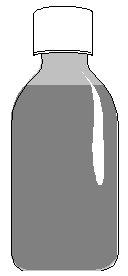
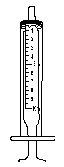
Página 2
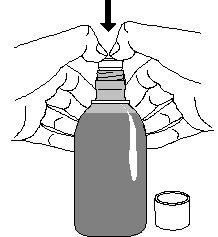
Cómo ajustar el adaptador de plástico en un nuevo frasco de medicamento
|
Nota:Conserve el tapón cerca para cerrar el frasco después de cada utilización |
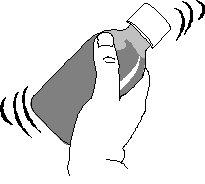
|
Nota:quizá no pueda empujar el adaptador hacia abajo hasta el fondo, pero éste se introducirá completamente en el frasco al volver a enroscar el tapón. Por favor siga todas las instrucciones para dispensar la dosis en Preparar una dosis de medicamento. |

Página 3
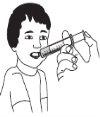
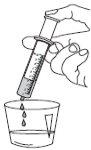
Preparar una dosis de medicamento
| Puede tomarse directamente el medicamento de la jeringa oral o mezclarse en un vaso pequeño de agua antes de tomarlo.
|
|
|
|
|

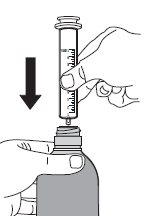

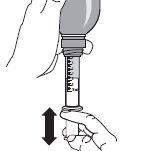
|
Nota: si la dosis recetada es superior a 10 ml, extraiga la dosis recetada en dos pasos. En primer lugar, llene la jeringa hasta la marca de 10 ml, y cargue los 10ml. Después vuelva a cargar la jeringa oral hasta completar la dosis. Pregunte a su farmacéutico si no está seguro. |
|
|
|
|
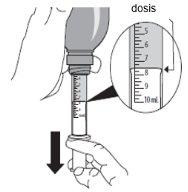
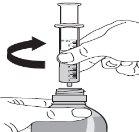
- País de registro
- Forma farmacéuticaSOLUCIÓN/SUSPENSIÓN ORAL, 60 mg/ml
- Código ATCN03AF02
- Precio medio en farmacia11.04 EUR
- Principio activo
- Requiere recetaSí
- Fabricante
- ComposiciónPARAHIDROXIBENZOATO DE PROPILO (0,30 mg mg), SORBITOL (250,00 mg mg), SACARINA SODICA (0,50 mg mg), ACIDO SORBICO (0,50 mg mg), PROPILENGLICOL (25,00 mg mg), PARAHIDROXIBENZOATO DE METILO (E-218) (1,20 mg mg)
- Esta información es de carácter general y no sustituye la consulta con un profesional sanitario.
- Alternativas a TRILEPTAL 60 mg/ml SUSPENSION ORALForma farmacéutica: COMPRIMIDO, 300 mgPrincipio activo: oxcarbazepinaFabricante: Laboratorios Cinfa S.A.Requiere recetaForma farmacéutica: COMPRIMIDO, 600 mgPrincipio activo: oxcarbazepinaFabricante: Laboratorios Cinfa S.A.Requiere recetaForma farmacéutica: COMPRIMIDO, 300 mgPrincipio activo: oxcarbazepinaFabricante: Laboratorios Normon S.A.Requiere receta
Médicos online para TRILEPTAL 60 mg/ml SUSPENSION ORAL
Comenta la dosis, los posibles efectos secundarios, interacciones, contraindicaciones o la revisión de receta de TRILEPTAL 60 mg/ml SUSPENSION ORAL, sujeto a valoración médica y a la normativa local.



Preguntas frecuentes
TRILEPTAL 60 mg/ml SUSPENSION ORAL requiere receta en España. Puedes confirmarlo con un médico online según tu caso.
El principio activo de TRILEPTAL 60 mg/ml SUSPENSION ORAL es oxcarbazepina. Esta información ayuda a identificar medicamentos con la misma composición pero con diferentes nombres comerciales.
El precio medio en farmacia de TRILEPTAL 60 mg/ml SUSPENSION ORAL es de aproximadamente 11.04 EUR. Puede variar según el fabricante y la forma farmacéutica.
TRILEPTAL 60 mg/ml SUSPENSION ORAL es fabricado por Novartis Farmaceutica S.A.. La marca y el envase pueden variar según el distribuidor.
Los Médicos de familia, Psiquiatras, Dermatólogos, Cardiólogos, Endocrinólogos, Gastroenterólogos, Neumólogos, Nefrólogos, Reumatólogos, Hematólogos, Infectólogos, Alergólogos, Geriatras, Pediatras, Oncólogos pueden valorar la prescripción de TRILEPTAL 60 mg/ml SUSPENSION ORAL cuando esté clínicamente indicado. Puedes reservar una videoconsulta para comentar tu caso y las opciones de tratamiento.
La receta la emite un médico tras valorar tu estado de salud. En España, TRILEPTAL 60 mg/ml SUSPENSION ORAL se dispensa en las farmacias con esa receta médica. Una consulta online no garantiza su emisión: la decisión corresponde siempre al médico.
Para solicitar una valoración puedes usar Oladoctor:
Otros medicamentos con el mismo principio activo (oxcarbazepina) incluyen OXCARBAZEPINA CINFA 300 MG COMPRIMIDOS RECUBIERTOS CON PELICULA EFG, OXCARBAZEPINA CINFA 600 MG COMPRIMIDOS RECUBIERTOS CON PELICULA EFG, OXCARBAZEPINA NORMON 300 mg COMPRIMIDOS RECUBIERTOS CON PELICULA EFG. Pueden tener diferentes nombres comerciales o formulaciones, pero contienen el mismo componente terapéutico. Consulta siempre con un médico antes de cambiar o iniciar un nuevo medicamento.
