






Cómo usar TERBINAFINA VIATRIS 250 MG COMPRIMIDOS EFG
Traducción generada por IA
Este contenido ha sido traducido automáticamente y se ofrece solo con fines informativos. No sustituye la consulta con un profesional sanitario.
Ver originalContenido del prospecto
Introducción
Prospecto: información para el usuario
Terbinafina Viatris 250 mg comprimidos EFG
Lea todo el prospecto detenidamente antes de empezar a tomar este medicamento,porque contiene información importante para usted.
- Conserve este prospecto, ya que puede tener que volver a leerlo.
- Si tiene alguna duda, consulte a su médico o farmacéutico.
- Este medicamento se le ha recetado solamente a usted y no debe dárselo a otras personas, aunque tengan los mismos síntomas que usted, ya que puede perjudicarles.
- Si experimenta efectos adversos, consulte a su médico o farmacéutico, incluso si se trata de efectos adversos que no aparecen en este prospecto. Ver sección 4.
Contenido del prospecto
- Qué es Terbinafina Viatris y para qué se utiliza
- Qué necesita saber antes de empezar a tomar Terbinafina Viatris
- Cómo tomar Terbinafina Viatris
- Posibles efectos adversos
- Conservación de Terbinafina Viatris
- Contenido del envase e información adicional
1. Qué es Terbinafina Viatris y para qué se utiliza
La terbinafina pertenece a un grupo de medicamentos denominados antifúngicos y actúa impidiendo el desarrollo de los hongos.
Terbinafina se utiliza para el tratamiento de las siguientes infecciones fúngicas de la piel, cuero cabelludo y uñas:
- Tinea corporis(tiña del cuerpo).
- Tinea cruris(tiña inguinal o de la ingle).
- Tinea pedis(tiña del pie o “pie de atleta”).
- Tinea capitis(tiña del cuero cabelludo).
- Onicomicosis (tiña de las uñas).

2. Qué necesita saber antes de empezar a tomar Terbinafina Viatris
No tome TerbinafinaViatris:
- Si es alérgicoa terbinafina o a cualquiera de los demás componentes de este medicamento (incluidos en la sección 6).
- Si tiene problemas de riñón o de hígado graves.
Advertencias y precauciones
Consulte a su médico o farmacéutico antes de empezar a tomar Terbinafina Viatris
- Si tiene problemas de riñón, consulte a su médico antes de tomar este medicamento.
- Si experimenta síntomas tales como náuseas persistentes e inexplicables, vómitos, dolor de estómago, pérdida de apetito, cansancio inusual, si su piel o el blanco de sus ojos se vuelve amarillo, si su orina tiene un color oscuro inusual o si sus heces tienen un color claro inusual (signos de problemas hepáticos).
- Si experimenta algún problema en la piel tales como erupción, piel rojiza, ampollas en labios, ojos o boca, descamación de la piel (signos de reacciones graves de la piel).
- Si experimenta debilidad, sangrado inusual, magulladuras o infecciones frecuentes (signos de alteraciones de la sangre).
- Si padece psoriasis o lupus eritematoso, en muy raros casos se ha producido un empeoramiento de la enfermedad. Si se produce una erupción cutánea progresiva debe interrumpir el tratamiento.
- En muy raras ocasiones, se han producido trastornos en la sangre (neutropenia, agranulocitosis, trombocitopenia, pancitopenia).
Niños y adolescentes
La experiencia con terbinafina en niños es limitada, por lo tanto, no se recomienda la utilización en este tipo de pacientes.
Uso en pacientes de edad avanzada
Terbinafina puede administrarse en pacientes mayores de 65 años de edad. En caso de que haya un problema renal preexistente, es posible que le prescriban una dosis inferior a la habitual. Terbinafina no está recomendado en pacientes que presenten o hayan presentado en el pasado problemas hepáticos.
Otros medicamentos y Terbinafina Viatris
Informe a su médico o farmacéutico si está tomando, ha tomado recientemente o pudiera tener que tomar cualquier otro medicamento, incluidos los anticonceptivos orales, las plantas medicinales y los adquiridos sin receta.
Existen otros medicamentos que pueden modificar el efecto de terbinafina, por ejemplo:
- Algunos antibióticos (por ejemplo, rifampicina).
- Cafeína.
- Algunos medicamentos utilizados para tratar los trastornos del estado de ánimo (algunos antidepresivos como los antidepresivos tricíclicos (ADTs), los inhibidores selectivos de la recaptación de serotonina (ISRSs)), los antiarrítmicos (incluidos los de clase 1A, 1B y 1C), los inhibidores de la monoaminooxidasa (IMAOs) tipo B,
- Algunos medicamentos utilizados para tratar problemas de corazón (por ejemplo, propafenona, amiodarona).
- Algunos medicamentos utilizados para tratar la presión sanguínea elevada (por ejemplo, metoprolol).
- Algunos medicamentos utilizados para tratar úlceras de estómago (por ejemplo, cimetidina).
- Algunos medicamentos utilizados para prevenir el rechazo de órganos en pacientes trasplantados (por ejemplo, ciclosporina).
- Algunos medicamentos utilizados para tratar la tos (p.ej. dextrometorfano).
- Algunos medicamentos utilizados para tratar infecciones fúngicas (infecciones producidas por hongos) (por ejemplo, fluconazol, ketoconazol).
Embarazo, lactanciay fertilidad
Embarazo
Si está embarazada o en periodo de lactancia, cree que podría estar embarazada o tiene intención de quedarse embarazada, consulte a su médico o farmacéutico antes de utilizar este medicamento.
Salvo que su médico lo considere necesario no deberá administrarse terbinafina durante el embarazo.
Lactancia
Terbinafina (una pequeña cantidad) se transfiere a la leche materna. Si está en periodo de lactancia, consulte a su médico antes de utilizar este medicamento.
Fertilidad
Diferentes estudios realizados no muestran que deba afectar a la fertilidad.

Conducción y uso de máquinas
Los pacientes que experimenten mareos como reacción adversa, deben evitar conducir vehículos o utilizar máquinas.
Terbinafina Viatris contiene sodio
Este medicamento contiene menos de 1 mmol de sodio (23 mg) por comprimido; esto es, esencialmente "exento de sodio".
3. Cómo tomar Terbinafina Viatris
Siga exactamente las instrucciones de administración de este medicamento indicadas por su médico o farmacéutico. En caso de duda, consulte de nuevo a su médico o farmacéutico.
Recuerde tomar su medicamento.
Siga estas instrucciones a menos que su médico le haya dado otras indicaciones distintas.
La dosis recomendada en adultos es de un comprimido (250 mg) una vez al día.
Terbinafina son comprimidos para administración oral.
La ranura no debe utilizarse para partir el comprimido.
Durante cuánto tiempo tomar Terbinafina Viatris
Su médico le indicará la duración del tratamiento. No suspenda el tratamiento antes, ya que podría empeorar su enfermedad.
Es posible que la resolución completa de los síntomas de la infección no se produzca hasta unas semanas (piel y cuero cabelludo) o meses (uñas) después de la desaparición del hongo causante de la infección.
Si toma más Terbinafina Viatrisdel que debe
Consulte inmediatamente a su médico, farmacéutico o llame al Servicio de Información Toxicológica, teléfono 91 562 04 20, indicando el medicamento y la cantidad utilizada.
Los síntomas principales de una intoxicación aguda pueden ser gastrointestinales, por ejemplo, náuseas, dolor abdominal o vómitos, pero pueden presentarse asimismo dolor de cabeza o sensación de inestabilidad (mareos). Si experimenta alguno de estos efectos o cualquier otro efecto inusual, consulte a su médico.
Si olvidó tomar Terbinafina Viatris
Tómese otro tan pronto se acuerde, a no ser que falten menos de 6 horas para la siguiente dosis.
No tome una dosis doble para compensar las dosis olvidadas.
4. Posibles efectos adversos
Al igual que todos los medicamentos, este medicamento puede tener efectos adversos, aunque no todas las personas los sufran.
Los efectos adversos son generalmente leves o moderados y transitorios.
Algunos efectos adversos que aparecen de forma rara o muy rara pueden ser graves:
Raramente, terbinafina puede causar problemas en el hígado y, en casos muy raros, estos problemas pueden ser graves. Los efectos adversos muy raros incluyen una disminución de ciertas células de la sangre, lupus (una enfermedad autoinmune) o reacciones cutáneas graves, incluyendo reacciones alérgicas graves, inflamación de los vasos sanguíneos, inflamación del páncreas o necrosis muscular.
Deje de tomar este medicamento e informe a su médico inmediatamente:
Raras(pueden afectar hasta 1 de cada 1.000 personas)
- Si experimenta síntomas tales como náuseas persistentes e inexplicables, problemas de estómago, pérdida de apetito o cansancio o debilidad inusual o si usted nota que su piel o el blanco de sus ojos se vuelve amarillo, que su orina es inusualmente oscura o que presenta heces pálidas (signos posibles de problemas en el hígado).
Muy raras(pueden afectar hasta 1 de cada 10.000 personas)
- Si tiene fiebre, escalofríos, dolor de garganta o úlceras en la boca causadas por infecciones y debilidad o si tiene infecciones con mayor frecuencia o si experimenta sangrado inusual o magulladuras (posibles signos de enfermedades que afectan las cantidades de ciertas células de la sangre).
- Si experimenta dificultad para respirar, mareos, hinchazón principalmente de la cara y garganta, enrojecimiento, dolor abdominal tipo cólico y pérdida de conciencia o si experimenta síntomas tales como dolor de articulaciones, agarrotamiento, erupción cutánea, fiebre o hinchazón/engrosamiento de los nódulos linfáticos (posibles signos de reacciones alérgicas graves).
- Si desarrolla cualquier problema cutáneo tal como erupción cutánea, enrojecimiento de la piel, formación de ampollas en los labios, ojos o boca, descamación de la piel, fiebre.
Frecuencia no conocida(no puede estimarse a partir de los datos disponibles)
- Si experimenta síntomas tales como erupción cutánea, fiebre, picor, cansancio o si nota la aparición de manchas de color rojo-púrpura bajo la superficie de la piel (posibles signos de inflamación de los vasos sanguíneos).
- Si experimenta dolor grave en la parte superior del estómago con radiación hacia la espalda (posibles signos de inflamación del páncreas).
- Si experimenta dolor y debilidad muscular inexplicable u orina de color oscuro (marrón-rojizo) (posibles signos de necrosis muscular).
Otros efectos adversos:
Otros efectos adversos incluyen los siguientes enumerados a continuación. Si en algún caso se convierten en graves, informe a su médico, farmacéutico o enfermero.
La mayoría de los efectos adversos son leves o moderados y generalmente desaparecen después de unos días a unas pocas semanas de tratamiento.
Muy frecuentes(pueden afectar a más de 1 de cada 10 personas)
- Náuseas.
- Dolor abdominal leve.
- Malestar gástrico después de las comidas (acidez).
- Diarrea.
- Sensación de plenitud en el estómago.
- Pérdida de apetito.
- Erupción cutánea.
- Urticaria.
- Dolor en las articulaciones o músculos.
Frecuentes(pueden afectar hasta 1 de cada 10 personas)
- Trastorno del estado de ánimo (depresión).
- Perturbación o pérdida del sentido del gusto.
- Mareo.
- Trastornos visuales.
- Dolor de cabeza.
Poco frecuentes(pueden afectar hasta 1 de cada 100 personas)
- Color pálido de la piel.
- Membrana mucosa o lecho de las uñas que no es normal.
- Cansancio o debilidad inusual.
- Dificultad para respirar durante el ejercicio (posibles signos de una enfermedad que a afecta a los niveles de glóbulos rojos).
- Ansiedad.
- Sensación de hormigueo o adormecimiento.
- Disminución de la sensibilidad de la piel.
- Aumento de la sensibilidad de la piel al sol.
- Ruidos (p. ej. silbidos) en los oídos.
- Fiebre.
- Pérdida de peso.
- Alteración del gusto o pérdida de este, que se recupera generalmente a las pocas semanas de la interrupción del tratamiento**. Esto puede conducir, en muy pocos pacientes, a una disminución del apetito y a una pérdida de peso significativa. Informe a su médico si la alteración del gusto le dura varios días.
Raros(pueden afectar a más de 1 de cada 1.000 personas)
- Ojos o piel amarillos (problemas en el hígado).
- Resultados anormales de las pruebas de función hepática.
Muy raros(pueden afectar hasta 1 de cada 10.000 personas)
- Pérdida de cabello.
- Debilidad intensa.
- Erupciones de la piel tipo psoriasis (con apariencia de color plata).
- Empeoramiento de la psoriasis.
- Reacciones cutáneas graves (síndrome de Stevens-Johnson, necrólisis epidérmica tóxica, pustulosis exantematosa).
- Disminución de los glóbulos blancos y plaquetas de la sangre.
- Lupus eritematoso sistémico y cutáneo (enfermedad autoinmune caracterizada por alteraciones generales o/y cutáneas).
- Reacciones alérgicas.
- Erupción cutánea con descamación.
- Angioedema.
- Mareos.
- Sensación de hormigueo y disminución de la sensibilidad.
Frecuencia no conocida(no pueden estimarse a partir de los datos disponibles)
- Anemia.
- Enfermedad del suero.
- Ansiedad.
- Depresión*.
- Alteraciones del olfato, incluyendo pérdida permanente del mismo.
- Disminución de la capacidad de oler.
- Perdida parcial de la capacidad auditiva.
- Problemas de audición.
- Tinnitus.
- Inflamación de los vasos sanguíneos.
- Inflamación del páncreas.
- Aumento de enzimas hepáticas.
- Hepatitis.
- Coloración amarillenta de la piel y mucosas.
- Obstrucción de las vías biliares.
- Reacción de fotosensibilidad.
- Fotodermatosis.
- Reacción alérgica fotosensibilidad.
- Erupción cutánea causada por niveles elevados de un tipo específico de células blancas de la sangre.
- Descomposición de las fibras musculares.
- Síndrome pseudogripal (por ejemplo, escalofríos, dolor de garganta, dolor muscular o de articulaciones).
- Temperatura elevada.
- Aumento de creatina fosfoquinasa en la sangre.
- Pérdida de peso***.
- Visión borrosa.
- La ansiedad y síntomas depresivos consecuentes a disgeusia.
** La alteración del gusto o pérdida de este, por lo general se recuperan en varias semanas después de la interrupción del tratamiento. Han sido notificados casos aislados de alteración del gusto prolongada.
*** Disminución del peso consecuente a hipogeusia.
Comunicación de efectos adversos
Si experimenta cualquier tipo de efecto adverso, consulte a su médico o farmacéutico, incluso si se trata de posibles efectos adversos que no aparecen en este prospecto. También puede comunicarlos directamente a través del Sistema Español de Farmacovigilancia de Medicamentos de Uso Humano: https://www.notificaram.es. Mediante la comunicación de efectos adversos usted puede contribuir a proporcionar más información sobre la seguridad de este medicamento.
5. Conservación de Terbinafina Viatris
Mantener este medicamento fuera de la vista y del alcance de los niños.
No requiere condiciones especiales de conservación.
No utilice este medicamento después de la fecha de caducidad que aparece en el envase después de CAD. La fecha de caducidad es el último día del mes que se indica.
Los medicamentos no se deben tirar por los desagües ni a la basura. Deposite los envases y los medicamentos que no necesita en el Punto SIGRE de la farmacia. En caso de duda pregunte a su farmacéutico cómo deshacerse de los envases y los medicamentos que no necesita. De esta forma ayudará a proteger el medio ambiente.
6. Contenido del envase e información adicional
Composición de TerbinafinaViatris
- El principio activo es terbinafina hidrocloruro. Cada comprimido contiene 250 mg de terbinafina (como hidrocloruro de terbinafina).
- Los demás componentes (excipientes) son: celulosa microcristalina, croscarmelosa de sodio, talco, estearato de magnesio, povidona, sílice coloidal anhidra.
Aspecto del producto y contenido del envase
Terbinafina Viatris son comprimidos biconvexos blancos o casi blancos, redondos, ranurados, con la inscripción “TF/250” en un lado y “G” en el otro. Se presenta en envases de 14 y 28 comprimidos.
Titular de la autorización de comercialización y responsable de la fabricación
Titular de la autorización de comercialización:
Viatris Pharmaceuticals, S.L.U.
C/ General Aranaz, 86
28027 - Madrid
España
Responsable de la fabricación:
Mylan Hungary Kft.
Mylan utca 1.
Komárom, 2900
Hungría
Fecha de la última revisión de este prospecto:diciembre 2024
La información detallada de este medicamento está disponible en la página web de la Agencia Española de Medicamentos y Productos Sanitarios (AEMPS) https://www.aemps.gob.es/
-

- País de registro
- Forma farmacéuticaCOMPRIMIDO, 250 mg
- Código ATCD01BA02
- Precio medio en farmacia8.09 EUR
- Disponibilidad en farmacias
Problema de suministro reportado
Los datos de la Agencia Española de Medicamentos y Productos Sanitarios (AEMPS) indican un problema de suministro que afecta a este medicamento.<br><br>La disponibilidad puede ser limitada en algunas farmacias.<br><br>Para actualizaciones o alternativas, consulte a su farmacéutico. - Principio activo
- Requiere recetaSí
- Fabricante
- Esta información es de carácter general y no sustituye la consulta con un profesional sanitario.
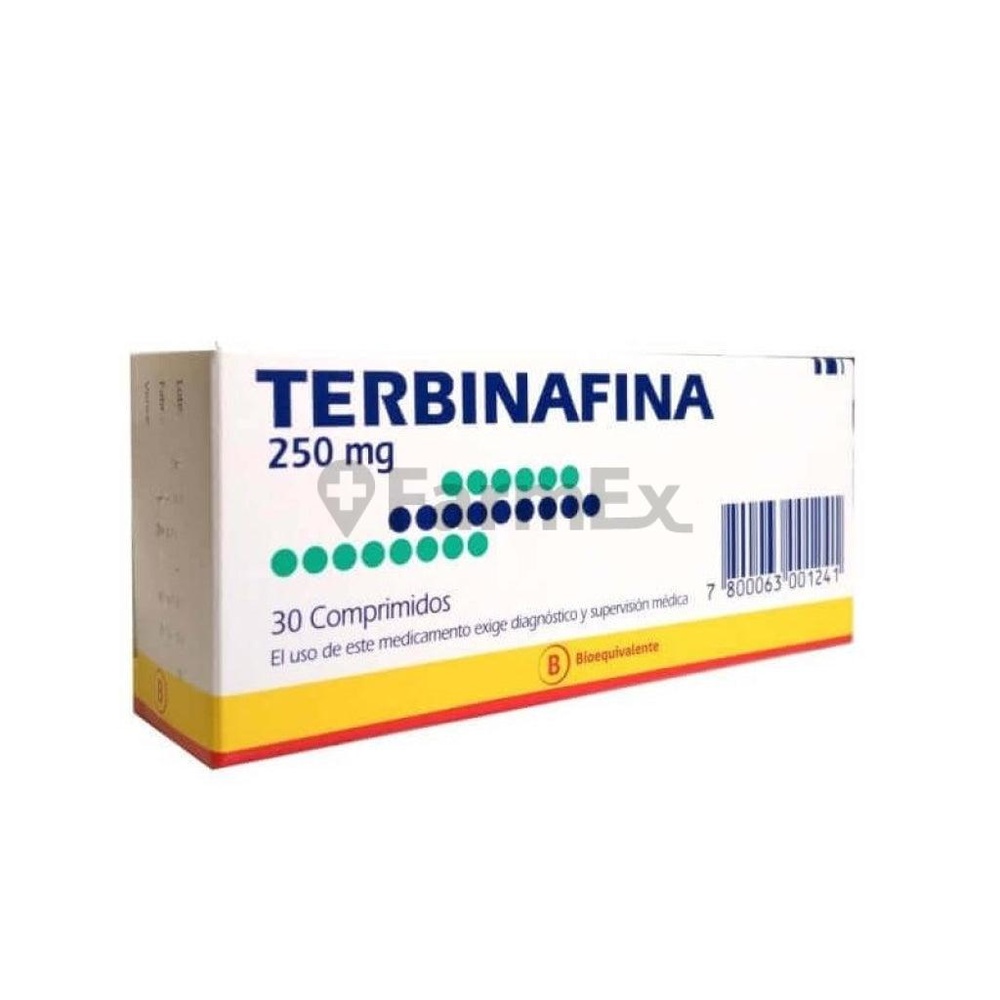
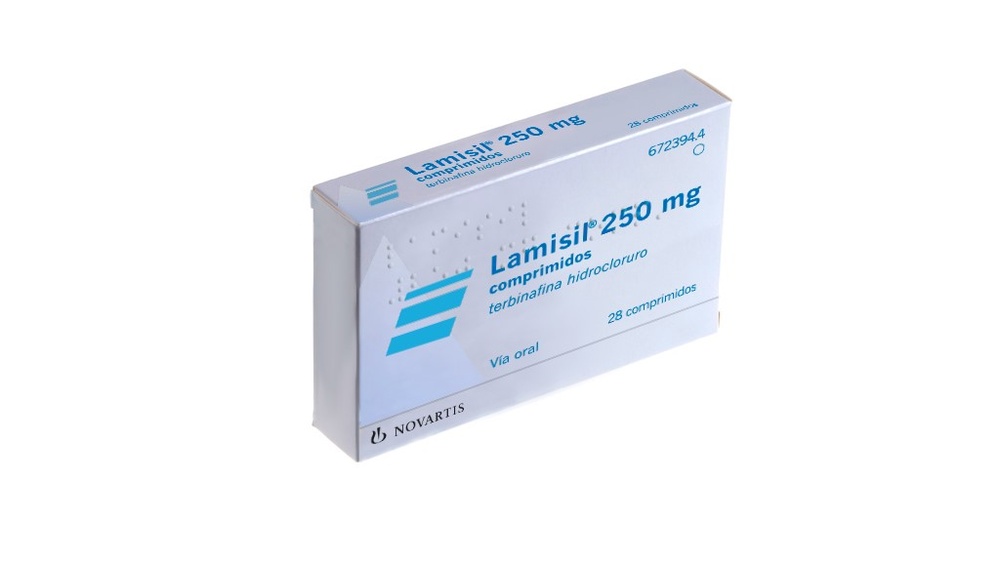
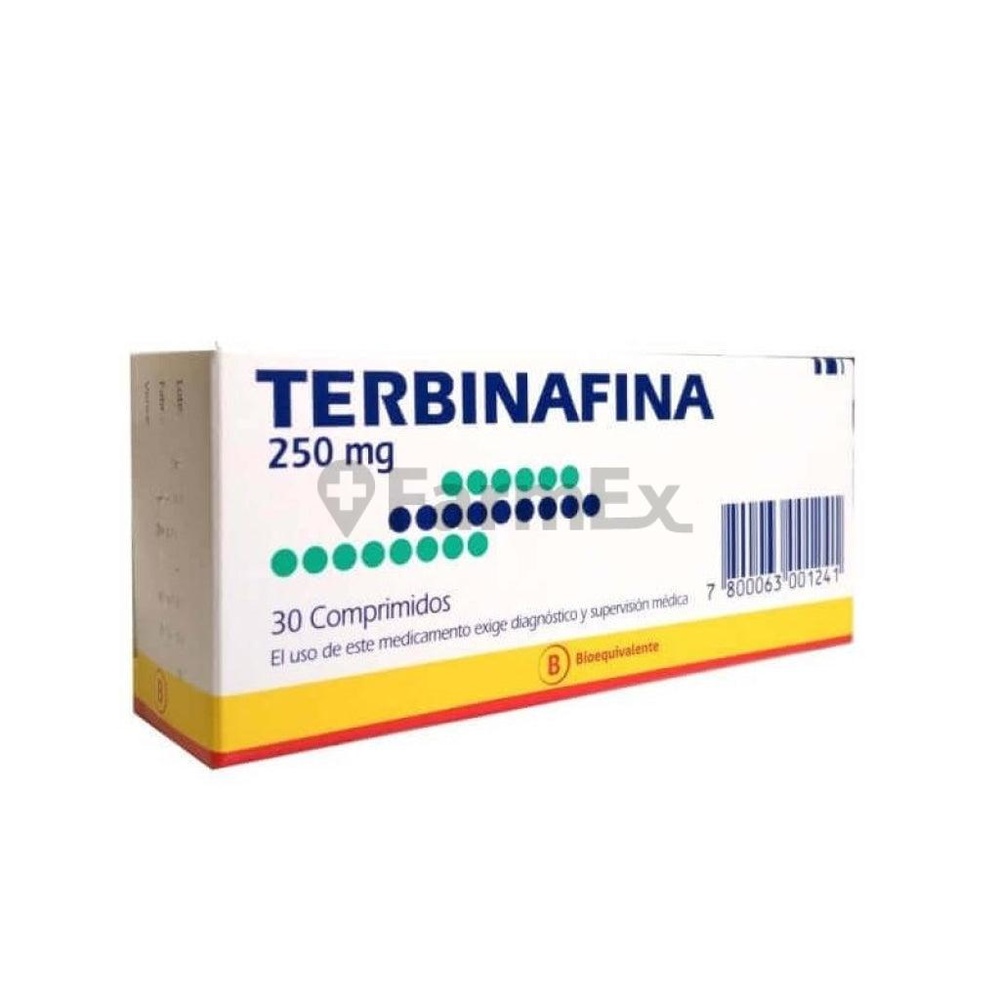
- Alternativas a TERBINAFINA VIATRIS 250 MG COMPRIMIDOS EFGForma farmacéutica: COMPRIMIDO, 250 mgPrincipio activo: terbinafinaFabricante: Novartis Farmaceutica S.A.Requiere recetaForma farmacéutica: COMPRIMIDO, 250 mgPrincipio activo: terbinafinaFabricante: Laboratorios Alter S.A.Requiere recetaForma farmacéutica: COMPRIMIDO, 250 mgPrincipio activo: terbinafinaFabricante: Aurovitas Spain, S.A.U.Requiere receta

Médicos online para TERBINAFINA VIATRIS 250 MG COMPRIMIDOS EFG
Comenta la dosis, los posibles efectos secundarios, interacciones, contraindicaciones o la revisión de receta de TERBINAFINA VIATRIS 250 MG COMPRIMIDOS EFG, sujeto a valoración médica y a la normativa local.



Obtén una receta de TERBINAFINA VIATRIS 250 MG COMPRIMIDOS EFG online
Rellena un formulario de 2 minutos
Cuéntanos tus síntomas, historial y el medicamento que necesitas.
Elige un médico o nosotros te asignamos uno
Escoge un especialista o te conectamos con el próximo médico disponible.
El médico revisa tu caso
Normalmente en 30 minutos. Puede hacerte preguntas adicionales por chat.
Recógela en cualquier farmacia
Receta electrónica enviada a tu correo, válida en toda España.
Preguntas frecuentes
TERBINAFINA VIATRIS 250 MG COMPRIMIDOS EFG requires receta en España. Puedes confirmarlo con un médico online según tu caso.
El principio activo de TERBINAFINA VIATRIS 250 MG COMPRIMIDOS EFG es terbinafina. Esta información ayuda a identificar medicamentos con la misma composición pero con diferentes nombres comerciales.
El precio medio en farmacia de TERBINAFINA VIATRIS 250 MG COMPRIMIDOS EFG es de aproximadamente 8.09 EUR. Puede variar según el fabricante y la forma farmacéutica.
TERBINAFINA VIATRIS 250 MG COMPRIMIDOS EFG es fabricado por Viatris Pharmaceuticals S.L.U.. La marca y el envase pueden variar según el distribuidor.
Los Médicos de familia, Psiquiatras, Dermatólogos, Cardiólogos, Endocrinólogos, Gastroenterólogos, Neumólogos, Nefrólogos, Reumatólogos, Hematólogos, Infectólogos, Alergólogos, Geriatras, Pediatras, Oncólogos pueden valorar la prescripción de TERBINAFINA VIATRIS 250 MG COMPRIMIDOS EFG cuando esté clínicamente indicado. Puedes reservar una videoconsulta para comentar tu caso y las opciones de tratamiento.
España cuenta con una infraestructura sanitaria bien desarrollada en ciudades principales como Madrid, Barcelona, Valencia y Sevilla. Las farmacias están ampliamente disponibles y operan bajo estrictas regulaciones, garantizando el acceso a medicamentos con receta.
Puedes comprar TERBINAFINA VIATRIS 250 MG COMPRIMIDOS EFG en Madrid, Barcelona, Sevilla o Valencia en cualquier farmacia local con una receta válida.
Para obtener una receta, puedes utilizar Oladoctor:
Otros medicamentos con el mismo principio activo (terbinafina) incluyen LAMISIL 250 mg COMPRIMIDOS, TERBINAFINA ALTER 250 mg COMPRIMIDOS EFG, TERBINAFINA AUROVITAS 250 MG COMPRIMIDOS EFG. Pueden tener diferentes nombres comerciales o formulaciones, pero contienen el mismo componente terapéutico. Consulta siempre con un médico antes de cambiar o iniciar un nuevo medicamento.
