


Pantoprazol Kern Pharma 40 mg comprimidos gastrorresistentes

Solicitud de receta online
Un médico revisará tu caso y determinará si la prescripción es médicamente apropiada.

Habla con un médico sobre este medicamento
Comenta tus síntomas y las opciones de tratamiento en una consulta online.



Cómo usar PANTOPRAZOL KERN PHARMA 40 mg COMPRIMIDOS GASTRORRESISTENTES EFG
Contenido del prospecto
- Introducción
- Qué es Pantoprazol Kern Pharma y para qué se utiliza
- Qué necesita saber antes de empezar a tomar Pantoprazol Kern Pharma
- Cómo tomar Pantoprazol Kern Pharma
- Posibles efectos adversos
- Conservación de Pantoprazol Kern Pharma
- Contenido del envase e información adicional
Introducción
Prospecto: información para el usuario
Pantoprazol Kern Pharma 40 mg comprimidos gastrorresistentes EFG
Lea todo el prospecto detenidamente antes de empezar a tomar este medicamento, porque contiene información importante para usted.
- Conserve este prospecto, ya que puede tener que volver a leerlo.
- Si tiene alguna duda, consulte a su médico o farmacéutico.
- Este medicamento se le ha recetado solamente a usted, y no debe dárselo a otras personas aunque tengan los mismos síntomas que usted, ya que puede perjudicarles.
- Si experimenta efectos adversos, consulte a su médico o farmacéutico, incluso si se trata de efectos adversos que no aparecen en este prospecto. Ver sección 4.
Contenido del prospecto:
- Qué es Pantoprazol Kern Pharma y para qué se utiliza
- Qué necesita saber antes de empezar a tomar Pantoprazol Kern Pharma
- Cómo tomar Pantoprazol Kern Pharma
- Posibles efectos adversos
- Conservación de Pantoprazol Kern Pharma
- Contenido del envase e información adicional
1. Qué es Pantoprazol Kern Pharma y para qué se utiliza
Pantoprazol es un inhibidor selectivo de la “bomba de protones”, un medicamento que reduce la cantidad de ácido producido en su estómago. Se utiliza para el tratamiento de enfermedades relacionadas con el ácido del estómago e intestino.
Pantoprazol Kern Pharma se utiliza para:
Adultos y adolescentes a partir de 12 años:
- Esofagitis por reflujo. Es una inflamación de su esófago (el tubo que conecta su garganta con su estómago) acompañada de regurgitación del ácido desde el estómago.
Adultos:
- Infección de una bacteria llamada Helicobacter pylori en pacientes con úlcera de estómago y/o duodeno en combinación con dos antibióticos (tratamiento de erradicación). El objetivo es deshacerse de la bacteria y reducir así la probabilidad de reaparición de úlceras.
- Úlcera de estómago y de duodeno, y
- Síndrome de Zollinger-Ellison y otras condiciones en las que se produce demasiado ácido en el estómago.

¿No estás seguro de si este medicamento es adecuado para ti?
Comenta tus síntomas y tratamiento con un médico online.
2. Qué necesita saber antes de empezar a tomar Pantoprazol Kern Pharma
No tome Pantoprazol Kern Pharma
- Si es alérgico al pantoprazol o a cualquiera de los demás componentes de Pantoprazol Kern Pharma (incluidos en la sección 6).
- Si es alérgico a medicamentos que contengan otros inhibidores de la bomba de protones (p.ej. omeprazol, lansoprazol, rabeprazol, esomeprazol).
Advertencias y precauciones
Consulte a su médico, farmacéutico o enfermero antes de empezar a tomar Pantoprazol Kern Pharma.
- Si usted padece problemas graves de hígado. Comunique a su médico si alguna vez ha tenido en el pasado problemas en el hígado. Su médico le realizará un seguimiento más frecuente de las enzimas hepáticas, especialmente cuando esté en tratamiento a largo plazo con pantoprazol. En caso de un aumento de las enzimas del hígado el tratamiento deberá interrumpirse.
- Si usted tiene reservas corporales de vitamina B12 disminuidas o factores de riesgo para ello y recibe tratamiento con pantoprazol durante un largo periodo de tiempo. Como todos los medicamentos que reducen la cantidad de ácido, pantoprazol podría reducir la absorción de vitamina B12. Consulte con su médico si observa alguno de los siguientes síntomas, ya que podrían indicar deficiencia de Vitamina B12:
- Cansancio extremo o falta de energía
- Hormigueo
- Dolor de la lengua o lengua enrojecida, úlceras en la boca
- Debilidad muscular
- Trastorno de la vista
- Problemas de memoria, confusión, depresión
- Consulte a su médico si usted está tomando inhibidores de la proteasa del VIH como atazanavir (para el tratamiento por infección de VIH) al mismo tiempo que pantoprazol.
- Tomar un inhibidor de la bomba de protones como pantoprazol, especialmente durante más de un año puede aumentar el riesgo de fracturas de caderas, muñeca o columna vertebral. Informe a su médico si tiene osteoporosis (densidad ósea reducida) o si le han dicho que tiene riesgo de padecer osteoporosis (por ejemplo, si está tomando corticoesteroides).
- Si alguna vez ha tenido una reacción en la piel después del tratamiento con un medicamento similar a Pantoprazol Kern Pharma para reducir la acidez de estómago.
- Si está previsto que le realicen un análisis especifico de sangre (Cromogranina A).
- Si sufre una erupción cutánea, especialmente en zonas de la piel expuestas al sol, consulte a su médico lo antes posible, ya que puede ser necesario interrumpir el tratamiento con Pantoprazol Kern Pharma. Recuerde mencionar cualquier otro síntoma que pueda notar, como dolor en las articulaciones.
- Si toma pantoprazol durante más de tres meses, es posible que sufra una disminución de los niveles de magnesio en sangre. Los síntomas de unos niveles bajos de magnesio pueden incluir fatiga, contracciones musculares involuntarias, desorientación, convulsiones, mareo o aumento del ritmo cardíaco. Si tiene alguno de estos síntomas, comuníqueselo a su médico inmediatamente. Además, niveles bajos de magnesio pueden producir una disminución de los niveles de potasio y calcio en sangre. Su médico le puede decidir realizar análisis de sangre periódicos para controlar los niveles de magnesio.
Informe inmediatamentea su médico, antes o después de tomar este medicamento, si nota cualquiera de los siguientes síntomas, los cuales pueden ser signos de otras enfermedades más graves:
- pérdida inintencionada de peso
- vómitos, particularmente si son repetidos
- dificultad para tragar o dolor cuando traga
- sangre en el vómito: puede aparecer como un pulverizado de café oscuro en su vómito
- aspecto pálido y sensación de debilidad (anemia)
- dolor en el pecho
- dolor de estómago
- sangre en sus heces, las cuales puede ser en apariencia negras u oscuras
- diarrea grave o persistente, ya que se ha asociado pantoprazol con un pequeño aumento de la diarrea infecciosa.
- se han notificado casos de reacciones cutáneas graves en relación con el tratamiento con Pantoprazol Kern Pharma, entre las que se incluyen el síndrome de Stevens-Johnson, la necrólisis epidérmica tóxica, sensibilidad a medicamentos con eosinofilia y síntomas sistémicos (DRESS) y eritema multiforme. Deje de tomar Pantoprazol Kern Pharma y llame a su médico de inmediato si refiere alguno de los síntomas relacionados con las reacciones cutáneas graves descritas en la sección 4.
Su médico decidirá si necesita alguna prueba adicional para descartar una enfermedad maligna debido a que pantoprazol puede aliviar los síntomas del cáncer y pudiera retrasar su diagnóstico. Si a pesar del tratamiento sus síntomas persisten, se realizarán exploraciones complementarias.
Si usted toma pantoprazol durante un periodo de tiempo prolongado (más de un año), su médico posiblemente le realizará un seguimiento de forma regular. Deberá comunicar a su médico cualquier síntoma y/o acontecimiento nuevo o inesperado cada vez que acuda a su consulta.
Niños y adolescentes
El uso de Pantoprazol Kern Pharma no está recomendado en niños ya que no ha sido probado en niños menores de 12 años.
Uso de Pantoprazol Kern Pharma con otros medicamentos
Informe a su médico o farmacéutico si está tomando, ha tomado recientemente o podría tener que tomar cualquier otro medicamento, incluidos medicamentos adquiridos sin receta.
Pantoprazol Kern Pharma puede influir en la eficacia de otros medicamentos, por este motivo, informe a su médico si está tomando:
- Medicamentos tales como ketoconazol, itraconazol y posaconazol (utilizados para el tratamiento de infecciones por hongos) o erlotinib (utilizado para determinados tipos de cáncer), ya que Pantoprazol Kern Pharma puede hacer que éstos y otros medicamentos no actúen correctamente.
- Warfarina y fenprocumón, los cuales afectan a la mayor o menor coagulación de la sangre. Usted puede necesitar controles adicionales.
- Medicamentos utilizados para el tratamiento de la infección por VIH, como atazanavir.
- Metotrexato (utilizado para tratar la artritis reumatoide, psoriasis y cáncer). Si está tomando metotrexato su médico puede interrumpir temporalmente el tratamiento con Pantoprazol Kern Pharma, debido a que el pantoprazol puede incrementar los niveles de metotrexato en sangre.
- Fluvoxamina (utilizada para tratar la depresión y otras enfermedades psiquiátricas). Si usted está tomando fluvoxamina puede que su médico le reduzca la dosis.
- Rifampicina (utilizada para el tratamiento de infecciones).
- Hierba de San Juan (Hypericum perforatum) (utilizado para tratar la depresión leve).
Hable con su médico antes de tomar Pantoprazol Kern Pharma si debe realizarse un análisis de orina específico (para THC, tetrahidrocanabinol).
Embarazo, lactancia y fertilidad
No se dispone de datos suficientes sobre el uso de pantoprazol en mujeres embarazadas. Se ha notificado que en humanos pantoprazol se excreta en la leche materna.
Si usted está embarazada o en periodo de lactancia, cree que podría estar embarazada o tiene intención de quedarse embarazada, consulte a su médico o farmacéutico antes de utilizar este medicamento.
Solo debería utilizar este medicamento si su médico considera que el beneficio para usted es mayor que el potencial riesgo para el feto o bebé.
Conducción y uso de máquinas
Pantoprazol Kern Pharma no tiene ninguna influencia o ésta es insignificante sobre la habilidad de conducir o utilizar máquinas.
No deberá conducir o utilizar máquinas en caso de padecer efectos adversos tales como mareos o visión borrosa.
Pantoprazol Kern Pharma contiene lactosa y sodio
Este medicamento contiene lactosa. Si su médico le ha indicado que padece una intolerancia a ciertos azúcares, consulte con él antes de tomar este medicamento.
Este medicamento contiene menos de 23 mg de sodio (1 mmol) por comprimido; esto es, esencialmente “exento de sodio”.
3. Cómo tomar Pantoprazol Kern Pharma
Siga exactamente las instrucciones de administración de este medicamento indicadas por su médico. En caso de duda, consulte de nuevo a su médico o farmacéutico.
Forma de administración:
Tome los comprimidos enteros, sin masticar ni romperlos, con ayuda de un poco de agua, 1 hora antes de una comida.
La dosis recomendada es:
Adultos y adolescentes a partir de 12 años:
Para el tratamiento de esofagitis por reflujo
La dosis habitual es de un comprimido al día. Su médico podrá indicarle un aumento a 2 comprimidos al día. El tiempo de tratamiento de esofagitis por reflujo suele ser entre 4 y 8 semanas. Su médico le indicará durante cuánto tiempo tomar este medicamento.
Adultos:
Para el tratamiento de una infección con una bacteria llamada Helicobacter pylori en pacientes con úlcera de estómago y/o duodeno en combinación con dos antibióticos (tratamiento de erradicación)
Un comprimido dos veces al día más los dos comprimidos de antibiótico, ya sea amoxicilina, claritromicina y metronidazol (o tinidazol), cada uno debe tomarse dos veces al día con su comprimido de pantoprazol. Tome el primer comprimido de pantoprazol 1 hora antes del desayuno y el segundo 1 hora antes de la cena. Siga las instrucciones de su médico y asegúrese de leer los prospectos de los antibióticos.
La duración del tratamiento normalmente es de una a dos semanas.
Para el tratamiento de las úlceras de estómago y de duodeno
La dosis habitual es de un comprimido al día. La dosis puede ser duplicada por su médico.
Su médico le indicará durante cuánto tiempo debe tomar este medicamento. La duración del tratamiento de las úlceras de estómago habitualmente es de entre 4 y 8 semanas. La duración del tratamiento de las úlceras de duodeno es normalmente de entre 2 y 4 semanas.
Para el tratamiento a largo plazo del Síndrome de Zollinger-Ellison y otras condiciones en las cuales se produce un aumento de la secreción ácida del estómago
La dosis inicial recomendada es de dos comprimidos al día.
Tome los dos comprimidos 1 hora antes de una comida. Posteriormente, su médico podrá ajustarle la dosis, dependiendo de la cantidad de secreción ácida que produzca. Si se le prescribe más de dos comprimidos al día, deberá tomar los comprimidos repartidos en dos veces al día.
Si se le prescribe más de cuatro comprimidos al día, se le dirá exactamente cuándo deberá finalizar el tratamiento.
Pacientes con problemas de riñón:
Si padece problemas de riñón, no deberá tomar pantoprazol para la eliminación de Helicobacter pylori.
Pacientes con problemas de hígado:
Si sufre problemas graves en el hígado, no deberá tomar más de un comprimido de 20 mg de pantoprazol al día (para este caso están disponibles comprimidos de 20 mg de pantoprazol).
Si sufre problemas moderados o graves de hígado, no deberá tomar pantoprazol para la eliminación de Helicobacter pylori.
Uso en niños y adolescentes
No se recomienda la utilización de estos comprimidos en niños menores de 12 años.
Si toma más Pantoprazol Kern Pharma del que debe
En caso de sobredosis o ingesta accidental, consulte inmediatamente a su médico o farmacéutico, o llame al Servicio de Información Toxicológica, teléfono 91 562 04 20 indicando el medicamento y la cantidad ingerida. No hay síntomas conocidos de sobredosis.
Si olvidó tomar Pantoprazol Kern Pharma
No tome una dosis doble para compensar las dosis olvidadas. Tome su siguiente dosis de la forma habitual.
Si interrumpe el tratamiento con Pantoprazol Kern Pharma
No deje de tomar estos comprimidos sin consultar antes con su médico o farmacéutico.
Si tiene cualquier otra duda sobre el uso de este producto, pregunte a su médico o farmacéutico.

¿Has empezado a tomar el medicamento y tienes preguntas?
Comenta tus síntomas y tratamiento con un médico online.
4. Posibles efectos adversos
Al igual que todos los medicamentos, Pantoprazol Kern Pharma puede producir efectos adversos, aunque no todas las personas los sufran.
Si presenta cualquiera de los siguientes efectos adversos, deje de tomar estos comprimidos e informe a su médico inmediatamente, o contacte con el servicio de urgencias del hospital más cercano:
- Reacciones alérgicas graves (frecuencia rara: pueden afectar hasta 1 de cada 1.000 personas): hinchazón de lengua y/o garganta, dificultad para tragar, sarpullido (urticaria), dificultad para respirar, hinchazón de la cara de origen alérgico (edema de Quincke/angioedema), mareos intensos con latidos del corazón muy rápidos y sudoración abundante.
- Alteraciones graves de la piel (frecuencia no conocida: su frecuencia no puede ser estimada con los datos disponibles): puede notar uno o más de los siguientes: ampollas en la piel y un rápido deterioro de las condiciones generales, erosión (incluyendo ligero sangrado) de ojos, nariz, boca/labios o genitales o sensibilidad /erupción cutánea, particularmente en áreas de piel expuestas a la luz / al sol. También puede tener dolor en las articulaciones o síntomas similares a los de la gripe, fiebre, glándulas inflamadas (por ejemplo, en la axila) y los análisis de sangre pueden mostrar cambios en ciertos glóbulos blancos o enzimas hepáticas. (Síndrome de Stevens Johnson, Síndrome de Lyell, Eritema multiforme, Lupus eritematoso cutáneo subagudo, Reacción farmacológica con eosinofilia y síntomas sistémicos (DRESS), Fotosensibilidad). Manchas circulares o en forma de diana de color ligeramente rojizo en el tronco, a menudo con ampollas en el centro, descamación, úlceras en boca, garganta, nariz, genitales y ojos. Estos exantemas graves pueden ir precedidos de fiebre y síntomas similares a los de la gripe (síndrome de Stevens-Johnson, necrólisis epidérmica tóxica). Exantema generalizado, temperatura corporal elevada y adenopatías (DRESS o hipersensibilidad a medicamentos).
- Otras afecciones graves (frecuencia no conocida: su frecuencia no puede ser estimada con los datos disponibles): coloración amarillenta de la piel y del blanco de los ojos (daño grave de las células del hígado, ictericia), o fiebre, sarpullido, aumento del tamaño de los riñones con dolor ocasional al orinar y dolor en la parte baja de la espalda (inflamación grave de los riñones), posiblemente pueda ocasionar un fallo renal.
Otros efectos adversos son:
- Frecuentes(puede afectar hasta 1 de cada 10 pacientes)
Pólipos benignos en el estómago.
- Poco frecuentes(puede afectar hasta 1 de cada 100 pacientes)
Dolor de cabeza; vértigos; diarrea; sensación de mareo, vómitos; hinchazón y flatulencias (gases); estreñimiento; boca seca; dolor y molestias en el abdomen; sarpullido en la piel, exantema, erupción; hormigueo; sensación de debilidad, de cansancio o de malestar general; alteraciones del sueño; fractura de cadera, muñeca y columna vertebral.
- Raras(puede afectar hasta 1 de cada 1.000 pacientes)
Alteración o ausencia completa del sentido del gusto; alteraciones de la visión tales como visión borrosa; urticaria; dolor de las articulaciones; dolor muscular; cambios de peso; aumento de la temperatura corporal; hinchazón en las extremidades (edema periférico); reacciones alérgicas; depresión; aumento del tamaño de las mamas en hombres.
- Muy raras(puede afectar hasta 1 de cada 10.000 pacientes)
Desorientación.
- Frecuencia no conocida(no puede estimarse a partir de los datos disponibles)
Alucinación, confusión (especialmente en pacientes con historial de estos síntomas), sensación de hormigueo, pinchazos, adormecimiento, sensación de ardor o entumecimiento, erupción cutánea, posiblemente con dolor en las articulaciones; inflamación del intestino grueso que causa diarrea acuosa persistente.
Efectos adversos identificados a través de análisis de sangre:
- Poco frecuentes(puede afectar hasta 1 de cada 100 pacientes)
Aumento de las enzimas del hígado.
- Raras(puede afectar hasta 1 de cada 1.000 pacientes)
Aumento de la bilirrubina; aumento de los niveles de grasa en la sangre; caída brusca de los glóbulos blancos granulares de la circulación, asociado con fiebre alta.
- Muy raras(puede afectar hasta 1 de cada 10.000 pacientes)
Reducción del número de plaquetas, que podría producir sangrado o más hematomas de lo habitual; reducción del número de glóbulos blancos, que podría conducir a infecciones más frecuentes; reducción anormal del balance entre el número de glóbulos rojos y blancos, así como de las plaquetas.
- Frecuencia no conocida(no puede estimarse a partir de los datos disponibles)
Disminución de los niveles de sodio, magnesio, calcio o potasio en sangre (ver sección 2).
Comunicación de efectos adversos
Si experimenta cualquier tipo de efecto adverso, consulte con su médico o farmacéutico, incluso si se trata de posibles efectos adversos que no aparecen en este prospecto. También puede comunicarlos directamente a través del Sistema Español de Farmacovigilancia de Medicamentos de Uso Humano: www.notificaRAM.es.
Mediante la comunicación de efectos adversos puede contribuir a proporcionar más información sobre la seguridad de este medicamento.
5. Conservación de Pantoprazol Kern Pharma
Mantener este medicamento fuera de la vista y del alcance de los niños.
No utilice este medicamento después de la fecha de caducidad que aparece en el envase después de “CAD”. La fecha de caducidad es el último día del mes que se indica.
Frasco: Conservar por debajo de 30ºC. Conservar en el envase original. Mantener el frasco perfectamente cerrado.
Blíster: Conservar por debajo de 30ºC. Conservar en el envase original.
Los medicamentos no se deben tirar por los desagües ni a la basura. Deposite los envases y los medicamentos que no necesita en el Punto SIGRE de la farmacia. En caso de duda pregunte a su farmacéutico cómo deshacerse de los envases y de los medicamentos que no necesita. De esta forma ayudará a proteger el medio ambiente.
6. Contenido del envase e información adicional
Composición de Pantoprazol Kern Pharma
El principio activo es pantoprazol. Cada comprimido gastrorresistente contiene 40 mg de pantoprazol (en forma de sodio sesquihidrato).
Los demás componentes son:
Núcleo: Celulosa microcristalina (E460i), lactosa monohidrato, croscarmelosa sódica, sílice coloidal anhidra, estearato de magnesio (vegetal). Ver sección 2 Pantoprazol Kern Pharma contiene lactosa y sodio.
Recubrimiento: copolímero ácido metacrílico-etil acrilato (1:1) dispersión 30%, citrato de trietilo (E1505), talco (E553b), mezcla de color (opadry II 85F32029 amarillo conteniendo alcohol polivinílico parcialmente hidrolizado, dióxido de titanio (E171), macrogol/PEG 3350, talco y óxido de hierro amarillo (E172).
Aspecto del producto y contenido del envase
Comprimidos gastrorresistentes de color amarillo ocre y forma ovalada.
Envases:
Frascos (envase de polietileno de alta densidad con cápsula de cierre con rosca de polietileno de baja densidad o polipropileno) y blísteres (blíster Alu/Alu).
Envases con 14 y 28 comprimidos gastrorresistentes.
Titular de la autorización de comercialización
Kern Pharma, S.L.
Venus, 72 - Pol. Ind. Colón II
08228 Terrassa - Barcelona
España
Responsable de la fabricación
Towa Pharmaceutical Europe, S.L.
C/ de Sant Martí, 75-97
08107 Martorelles – Barcelona
España
Fecha de la última revisión de este prospecto:septiembre 2024
La información detallada de este medicamento está disponible en la página web de la Agencia Española de Medicamentos y Productos Sanitarios (AEMPS) http://www.aemps.gob.es/
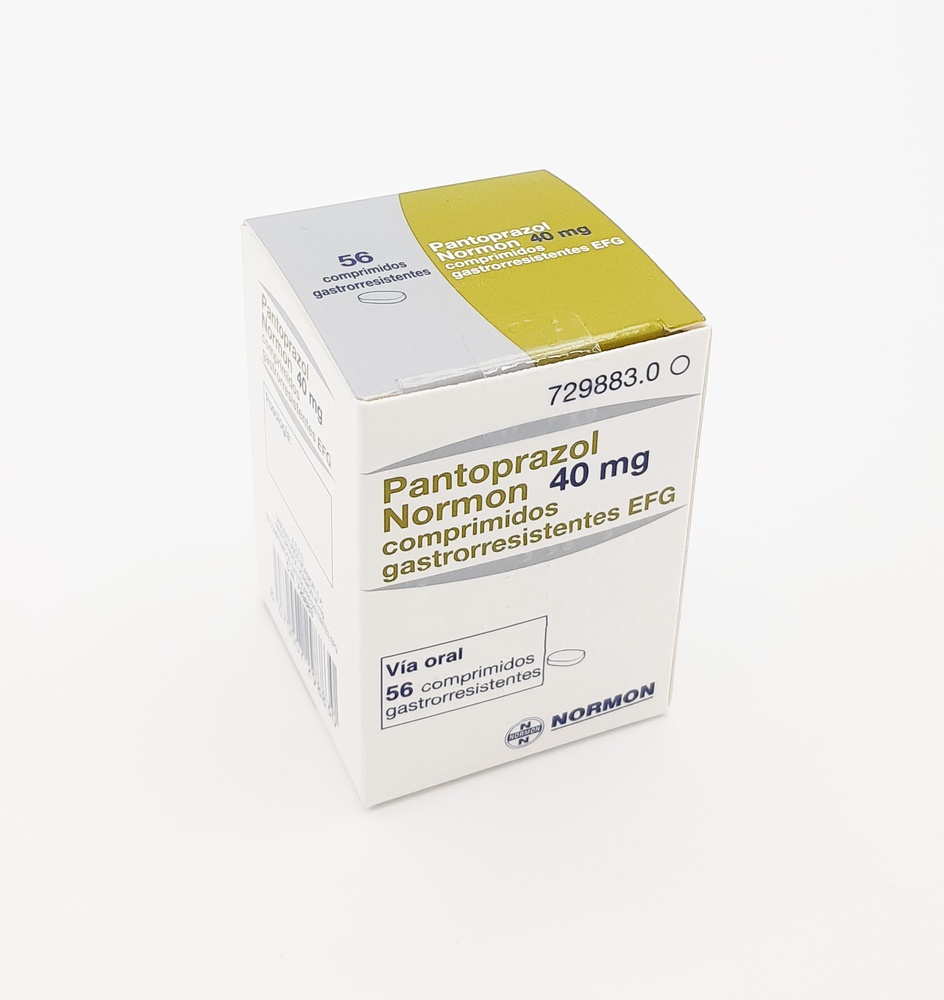
- País de registro
- Forma farmacéuticaCOMPRIMIDO, 40 mg pantoprazol
- Código ATCA02BC02
- Precio medio en farmacia8.74 EUR
- Principio activo
- Requiere recetaSí
- Fabricante
- ComposiciónLACTOSA MONOHIDRATO, MICRONIZADA (38,12 mg mg), CROSCARMELOSA SODICA (6,07 mg mg)
- Esta información es de carácter general y no sustituye la consulta con un profesional sanitario.
- Alternativas a PANTOPRAZOL KERN PHARMA 40 mg COMPRIMIDOS GASTRORRESISTENTES EFGForma farmacéutica: COMPRIMIDO, 40 MGPrincipio activo: PantoprazolFabricante: Especialidades Farmaceuticas Centrum S.A.Requiere recetaForma farmacéutica: COMPRIMIDO, 20 mg pantoprazolPrincipio activo: PantoprazolFabricante: Takeda GmbhRequiere recetaForma farmacéutica: COMPRIMIDO, 40 mg pantoprazolPrincipio activo: PantoprazolFabricante: Takeda GmbhRequiere receta
Médicos online para PANTOPRAZOL KERN PHARMA 40 mg COMPRIMIDOS GASTRORRESISTENTES EFG
Comenta la dosis, los posibles efectos secundarios, interacciones, contraindicaciones o si una receta es apropiada para PANTOPRAZOL KERN PHARMA 40 mg COMPRIMIDOS GASTRORRESISTENTES EFG, sujeto a valoración médica y a la normativa local.









Preguntas frecuentes
PANTOPRAZOL KERN PHARMA 40 mg COMPRIMIDOS GASTRORRESISTENTES EFG requiere receta en España. Puedes confirmarlo con un médico online según tu caso.
El principio activo de PANTOPRAZOL KERN PHARMA 40 mg COMPRIMIDOS GASTRORRESISTENTES EFG es Pantoprazol. Esta información ayuda a identificar medicamentos con la misma composición pero con diferentes nombres comerciales.
El precio medio en farmacia de PANTOPRAZOL KERN PHARMA 40 mg COMPRIMIDOS GASTRORRESISTENTES EFG es de aproximadamente 8.74 EUR. Puede variar según el fabricante y la forma farmacéutica.
PANTOPRAZOL KERN PHARMA 40 mg COMPRIMIDOS GASTRORRESISTENTES EFG es fabricado por Kern Pharma S.L.. La marca y el envase pueden variar según el distribuidor.
Los Médicos de familia, Psiquiatras, Dermatólogos, Cardiólogos, Endocrinólogos, Gastroenterólogos, Neumólogos, Nefrólogos, Reumatólogos, Hematólogos, Infectólogos, Alergólogos, Geriatras, Pediatras, Oncólogos pueden valorar la prescripción de PANTOPRAZOL KERN PHARMA 40 mg COMPRIMIDOS GASTRORRESISTENTES EFG cuando esté clínicamente indicado. Puedes reservar una videoconsulta para comentar tu caso y las opciones de tratamiento.
La receta la emite un médico tras valorar tu estado de salud. En España, PANTOPRAZOL KERN PHARMA 40 mg COMPRIMIDOS GASTRORRESISTENTES EFG se dispensa en las farmacias con esa receta médica. Una consulta online no garantiza su emisión: la decisión corresponde siempre al médico.
Para solicitar una valoración puedes usar Oladoctor:
Otros medicamentos con el mismo principio activo (Pantoprazol) incluyen ALAPANZOL 40 mg COMPRIMIDOS GASTRORRESISTENTES EFG, ANAGASTRA 20 mg COMPRIMIDOS GASTRORRESISTENTES, ANAGASTRA 40 mg COMPRIMIDOS GASTRORRESISTENTES. Pueden tener diferentes nombres comerciales o formulaciones, pero contienen el mismo componente terapéutico. Consulta siempre con un médico antes de cambiar o iniciar un nuevo medicamento.
