


Oxicodona/Naloxona Viatris 40 mg/20 mg comprimidos de liberación prolongada

Revisión de receta online
Un médico revisará tu caso y determinará si la prescripción es médicamente apropiada.

Habla con un médico sobre este medicamento
Comenta tus síntomas y las opciones de tratamiento en una consulta online.



Cómo usar OXICODONA/NALOXONA VIATRIS 40 MG/20 MG COMPRIMIDOS DE LIBERACION PROLONGADA EFG
Contenido del prospecto
- Introducción
- Qué es Oxicodona/Naloxona Viatris y para qué se utiliza
- Qué necesita saber antes de empezar a tomar Oxicodona/Naloxona Viatris
- Cómo tomar Oxicodona/Naloxona Viatris
- Posibles efectos adversos
- Conservación de Oxicodona/Naloxona Viatris
- Contenido del envase e información adicional
Introducción
Prospecto: información para el usuario
Oxicodona/Naloxona Viatris 40 mg/20 mg comprimidos de liberación prolongada EFG
hidrocloruro de oxicodona/hidrocloruro de naloxona
Lea todo el prospecto detenidamente antes de empezar a tomar este medicamento, porque contiene información importante para usted.
- Conserve este prospecto, ya que puede tener que volver a leerlo.
- Si tiene alguna duda, consulte a su médico o farmacéutico.
- Este medicamento se le ha recetado solamente a usted y no debe dárselo a otras personas, aunque tengan los mismos síntomas que usted ya que puede perjudicarles.
- Si experimenta efectos adversos, consulte a su médico o farmacéutico, incluso si se trata de efectos adversos que no aparecen en este prospecto. Ver sección 4.
Contenido del prospecto
- Qué es Oxicodona/Naloxona Viatris y para qué se utiliza
- Qué necesita saber antes de empezar a tomar Oxicodona/Naloxona Viatris
- Cómo tomar Oxicodona/Naloxona Viatris
- Posibles efectos adversos
- Conservación de Oxicodona/Naloxona Viatris
- Contenido del envase e información adicional
1. Qué es Oxicodona/Naloxona Viatris y para qué se utiliza
Se le ha recetado Oxicodona/Naloxona Viatris para el tratamiento del dolor intenso, que solo se puede tratar adecuadamente con analgésicos opioides.
Cómo alivia Oxicodona/Naloxona Viatris el dolor
Oxicodona/Naloxona Viatris contiene como principios activos hidrocloruro de oxicodona e hidrocloruro de naloxona. Hidrocloruro de oxicodona es el responsable del efecto analgésico de Oxicodona/Naloxona Viatris, se trata de un analgésico potente que pertenece al grupo de medicamentos llamados opioides.
El segundo principio activo de Oxicodona/Naloxona Viatris, hidrocloruro de naloxona, tiene la función de contrarrestar el estreñimiento. La disfunción intestinal (por ejemplo, estreñimiento) es un efecto secundario típico del tratamiento con analgésicos opioides.
Oxicodona/Naloxona Viatris es un comprimido de liberación prolongada, lo que significa que sus principios activos se liberan durante un período prolongado. Su acción dura 12 horas.

¿No estás seguro de si este medicamento es adecuado para ti?
Comenta tus síntomas y tratamiento con un médico online.
2. Qué necesita saber antes de empezar a tomar Oxicodona/Naloxona Viatris
No tome Oxicodona/Naloxona Viatris
- si es alérgico al hidrocloruro de oxicodona, al hidrocloruro de naloxona o a cualquiera de los demás componentes de este medicamento (incluidos en la sección 6),
- si con su respiración no logra aportar oxígeno suficiente a la sangre ni eliminar el dióxido de carbono producido en el organismo (depresión respiratoria),
- si padece una enfermedad pulmonar grave asociada a estrechamiento de las vías respiratorias (enfermedad pulmonar obstructiva crónica o EPOC),
- si padece un trastorno que se denomina cor pulmonale. Este trastorno consiste en que el lado derecho del corazón aumenta de tamaño por el aumento de la presión en el interior de los vasos sanguíneos del pulmón, etc. (por ejemplo, a consecuencia del EPOC, ver anteriormente),
- si padece asma bronquial grave,
- si padece íleo paralítico (un tipo de obstrucción intestinal) no causado por opioides,
- si padece problemas hepáticos de moderados a graves.
Advertencias y precauciones
Consulte a su médico o farmacéutico antes de empezar a tomar Oxicodona/Naloxona Viatris:
- si es un paciente de edad avanzada o debilitado (débil),
- si tiene íleo paralítico (un tipo de obstrucción intestinal) causado por opioides,
- si tiene problemas renales,
- si tiene problemas hepáticos leves,
- si tiene problemas pulmonares grave (es decir, reducción de la capacidad para respirar),
- si tiene un trastorno caracterizado por interrupciones respiratorias frecuentes que le hacen sentirse somnoliento durante el día (apnea del sueño),
- si tiene mixedema (un trastorno tiroideo que se caracteriza por sequedad, frialdad e hinchazón de la piel, que afecta a la cara y las extremidades),
- si su glándula tiroidea no produce suficientes hormonas (tiroides poco activo o hipotiroidismo),
- si su glándula suprarrenal funciona deficientemente, por ejemplo, en la enfermedad de Addison,
- si tiene alguna enfermedad mental acompañada por una pérdida (parcial) de la noción de realidad (psicosis), debido a alcoholismo o intoxicación por otras sustancias (psicosis inducida por sustancias),
- si tiene problemas por cálculos biliares,
- si presenta un aumento anómalo del tamaño de la próstata (hipertrofia de próstata),
- si tiene alcoholismo o delirium tremens,
- si presenta inflamación del páncreas (pancreatitis),
- si tiene la tensión arterial baja (hipotensión),
- si tiene la tensión arterial alta (hipertensión),
- si tiene alguna enfermedad cardiovascular previa,
- si presenta un traumatismo craneoencefálico (por el riesgo de aumento de la presión en el cerebro),
- si padece epilepsia o es propenso a las convulsiones,
- si también recibe tratamiento con inhibidores de la MAO (que se utilizan para tratar la depresión o la enfermedad de Parkinson), por ejemplo, medicamentos que contengan tranilcipromina, fenelzina, isocarboxazida, moclobemida y linezolid,
- si se siente somnoliento o si se queda dormido a veces.
Contacte con su médico si tiene dolor intenso en el abdomen superior que posiblemente se extienda a la espalda, náuseas, vómitos o fiebre, puesto que estos pueden ser síntomas asociados con la inflamación del páncreas (pancreatitis) o del sistema del tracto biliar.
Tolerancia, dependencia y adicción
Este medicamento contiene oxicodona, que es un medicamento opioide. El uso repetido de analgésicos opioides puede hacer que el fármaco sea menos eficaz (usted se acostumbra a él, lo que se conoce como tolerancia).
El uso repetido de Oxicodona/Naloxona Viatris puede causar dependencia, abuso y adicción, lo que puede provocar una sobredosis que ponga en riesgo su vida. El riesgo de estos efectos secundarios puede aumentar con una dosis más alta y una duración de uso más prolongada.
La dependencia o la adicción pueden hacerle sentir que ya no tiene el control de la cantidad de medicamento que necesita tomar o con qué frecuencia debe tomarlo. Es posible que sienta que necesita seguir tomando el medicamento, incluso cuando no ayuda a aliviar su dolor.
El riesgo de convertirse en dependiente o adicto varía de persona a persona. Puede tener un mayor riesgo de convertirse en dependiente o adicto a Oxicodona/Naloxona Viatris:
- si usted o algún miembro de su familia tiene antecedentes de abuso o dependencia del alcohol, de medicamentos de venta con receta o de sustancias ilícitas (“adicción”),
- si fuma,
- si alguna vez ha tenido problemas con su estado de ánimo (depresión, ansiedad o un trastorno de la personalidad) o ha recibido tratamiento de un psiquiatra para otras enfermedades mentales.
Si nota alguno de los siguientes signos mientras toma Oxicodona/Naloxona Viatris, podría ser un signo de que se ha convertido en dependiente o adicto.
- Necesita tomar el medicamento durante más tiempo del recomendado por su médico.
- Necesita tomar más dosis de la recomendada.
- Está usando el medicamento por razones distintas a las prescritas, por ejemplo, “para mantenerse en calma” o “ayudarle a dormir”.
- Ha realizado intentos repetidos y sin éxito de dejar o controlar el uso del medicamento.
- No se encuentra bien cuando deja de tomar el medicamento y se siente mejor una vez que toma de nuevo el medicamento (“síntomas de abstinencia”).
Si nota alguno de estos signos, hable con su médico para analizar el mejor tratamiento para usted, incluido cuándo es apropiado dejar de tomarlo y cómo hacerlo de forma segura (ver sección 3, Si interrumpe el tratamiento con Oxicodona/Naloxona Viatris).
Consulte con su médico si ha tenido alguna de esas enfermedades en el pasado. Informe también a su médico si presenta cualquiera de ellas durante el tratamiento con este medicamento.
El resultado más grave de la sobredosis de opioides es la depresión respiratoria(respiración lenta y superficial). Esto también puede causar que los niveles de oxígeno en la sangre disminuyan, lo que puede ocasionar desmayos, etc.
No existe experiencia clínica con este medicamento en pacientes con cáncer asociado a metástasis peritoneales o en pacientes en etapas avanzadas de cánceres digestivo y pélvico con obstrucción intestinal inicial.
Por lo tanto, no se recomienda el uso de este medicamento en estos pacientes.
Niños y adolescentes
No se debe administrar este medicamento a niños y adolescentes menores de 18 años ya que aún no se han demostrado sus beneficios y seguridad.
Cómo tomar Oxicodona/Naloxona Viatris correctamente
Diarrea
Si experimenta una diarrea intensa al inicio del tratamiento, puede deberse al efecto de naloxona. Puede ser un signo de que la función intestinal se está normalizando. Esta diarrea puede presentarse en los primeros 3 a 5 días de tratamiento. Si persiste pasado ese período de 3 a 5 días, o si le preocupa, póngase en contacto con su médico.
Cambio a Oxicodona/Naloxona Viatris
Si ha estado recibiendo dosis elevadas de otro opioide, puede experimentar síntomas de abstinencia poco después de empezar el tratamiento con este medicamento, por ejemplo, inquietud, accesos de sudor y dolor muscular. Si experimenta alguno de estos síntomas, puede que necesite un control especial por parte de su médico. Este medicamento no es adecuado para el tratamiento de la abstinencia.
Cirugía
Si necesita someterse a una intervención quirúrgica, dígales a los médicos que recibe tratamiento con oxicodona/naloxona.
Tratamiento a largo plazo
Puede que, si utiliza este medicamento. mucho tiempo, experimente tolerancia. Esto significa que necesitará una dosis superior para lograr el alivio deseado del dolor. El uso prolongado de este medicamento también puede producir dependencia física. Pueden aparecer síntomas de abstinencia si el tratamiento se suspende de manera repentina (inquietud, accesos de sudor, dolor muscular). Si deja de necesitar el tratamiento, deberá reducir la dosis diaria de manera progresiva, consultando con su médico.
Dependencia psicológica
El principio activo hidrocloruro de oxicodona sin combinar tiene las mismas características de abuso que otros opioides potentes (analgésicos potentes). Puede crear dependencia psicológica. Deben evitarse los medicamentos que contengan hidrocloruro de oxicodona en pacientes que presenten o hayan presentado antecedentes de abuso de alcohol, drogas o medicamentos.
Uso indebido
Tampoco debe disolver nunca los comprimidos de liberación prolongada de Oxicodona/Naloxona Viatris para inyectárselos (por ejemplo, en un vaso sanguíneo). El motivo es que contienen talco, que puede producir destrucción de tejidos locales (necrosis) y alteraciones del tejido pulmonar (granuloma pulmonar). Este abuso también puede tener otras consecuencias graves e incluso causar la muerte.
Uso incorrecto de Oxicodona/Naloxona Viatris
Por favor, tenga en cuenta que, aunque los comprimidos se pueden dividir, estos no deben romperse, masticarse ni triturarse.
Tomar comprimidos masticados o triturados puede afectar las propiedades de liberación lenta del comprimido y conducir a la absorción de una dosis potencialmente mortal de hidrocloruro de oxicodona (ver "Si toma más Oxicodona/Naloxona Viatris del que debe").
Abuso
Nunca debe abusar de Oxicodona/Naloxona Viatris, sobre todo si padece alguna toxicomanía. Si es adicto a sustancias como la heroína, la morfina o la metadona, es probable que presente síntomas de abstinencia graves si hace mal uso de este medicamento, porque contiene la sustancia activa naloxona. Pueden empeorar los síntomas de abstinencia preexistentes.
Dopaje
Los atletas deben ser conscientes de que este medicamento puede causar una reacción positiva en las pruebas "antidopaje". El uso de oxicodona/naloxona como agente dopante puede poner en peligro la salud.
Otros medicamentos y Oxicodona/Naloxona Viatris
Informe a su médico si está tomando, ha tomado recientemente o pudiera tener que tomar cualquier otro medicamento.
El riesgo de experimentar efectos adversos aumenta si toma este medicamento al mismo tiempo que los medicamentos que afectan la función cerebral. En este caso se pueden potenciar los efectos adversos de este medicamento y poner en riesgo su vida. Por ejemplo, puede experimentar cansancio/somnolencia, o puede empeorar la depresión respiratoria (respiración lenta y superficial) o coma. Debido a esto, el uso concomitante solo debe considerarse cuando otras opciones de tratamiento no son posibles.
Ejemplos de medicamentos que afectan al funcionamiento del cerebro:
- otros analgésicos potentes (opioides),
- medicamentos para tratar la epilepsia, el dolor y la ansiedad, como gabapentina y pregabalina,
- somníferos y tranquilizantes (sedantes como benzodiazepinas, hipnóticos, ansiolíticos),
- antidepresivos,
- medicamentos utilizados para tratar alergias, mareos o náuseas (antihistamínicos o antieméticos),
- otros medicamentos para tratar trastornos psiquiátricos o mentales (antipsicóticos que incluyen fenotiazinas o neurolépticos),
- relajantes musculares,
- medicamentos para tratar la enfermedad de Parkinson.
Sin embargo, si su médico le receta oxicodona/naloxona junto con medicamentos sedantes, su médico debe limitar la dosis y la duración del tratamiento concomitante.
El riesgo de presentar efectos adversos aumenta si se utilizan antidepresivos (como citalopram, duloxetina, escitalopram, fluoxetina, fluvoxamina, paroxetina, sertralina, venlafaxina). Estos medicamentos pueden interaccionar con la oxicodona y es posible que se presenten síntomas como contracciones rítmicas e involuntarias de los músculos, incluidos los músculos que controlan los movimientos oculares, agitación, sudor excesivo, temblor, exageración de los reflejos, aumento de la tensión muscular y temperatura corporal superior a 38 °C. Contacte con su médico si presenta dichos síntomas.
Informe a su médico sobre todos los medicamentos sedantes que esté tomando y siga de cerca las recomendaciones de su médico. Podría ser útil informar a amigos o familiares que estén al tanto de los signos y síntomas indicados anteriormente. Póngase en contacto con su médico cuando experimente dichos síntomas.
Informe a su médico si está tomando alguno de los siguientes medicamentos:
- medicamentos que reducen la capacidad de coagulación de la sangre (derivados cumarínicos), puede que la velocidad de la coagulación aumente o disminuya,
- antibióticos macrólidos (como claritromicina),
- agentes antifúngicos tipo -azoles (por ejemplo, ketoconazol),
- ritonavir u otros inhibidores de la proteasa (usados para tratar el VIH),
- cimetidina (un medicamento para tratar úlceras de estómago, indigestión o acidez),
- rifampicina (usada para tratar la tuberculosis),
- carbamazepina (usada para tratar ataques o convulsiones y ciertas enfermedades dolorosas),
- fenitoína (usada para tratar ataques o convulsiones).
- una planta medicinal llamada Hierba de San Juan (también conocida como Hypericum perforatum),
- quinidina (un medicamento para tratar arritmias).
No se esperan interacciones entre oxicodona/naloxona y paracetamol, ácido acetilsalicílico o naltrexona.
Toma de Oxicodona/Naloxona Viatris con alimentos, bebidas y alcohol
Beber alcohol mientras esté tomando este medicamento puede hacerle sentir más somnoliento o aumentar el riesgo de efectos adversos graves tales como respiración superficial con el riesgo de dejar de respirar, y la pérdida de conocimiento. Se recomienda no beber alcohol mientras esté tomando este medicamento.
Debe evitar beber zumo de pomelo mientras esté tomando este medicamento.
Embarazo y lactancia
Si está embarazada o en período de lactancia, cree que podría estar embarazada o tiene intención de quedarse embarazada, consulte a su médico o farmacéutico antes de utilizar este medicamento.
Embarazo
Durante el embarazo se evitará utilizar este medicamento en la medida de lo posible. Si se utiliza durante períodos prolongados del embarazo, hidrocloruro de oxicodona puede producir síntomas de abstinencia en el recién nacido. Si se administra hidrocloruro de oxicodona durante el parto, el recién nacido puede presentar depresión respiratoria (respiración lenta y superficial).
Lactancia
Se suspenderá la lactancia durante el tratamiento con este medicamento. Hidrocloruro de oxicodona pasa a la leche materna. No se sabe si hidrocloruro de naloxona también pasa a la leche materna. Por ello no se puede descartar el riesgo para el lactante, sobre todo si la madre recibe varias dosis de este medicamento.
Conducción y uso de máquinas
Este medicamento puede afectar su capacidad para conducir u operar máquinas. En particular, esto es más probable al inicio del tratamiento con este medicamento, después de un aumento de la dosis o después de cambiar a un medicamento diferente. Sin embargo, estos efectos adversos desaparecen una vez que tiene una dosis estable de oxicodona/naloxona.
Los medicamentos que contienen oxicodona/naloxona como Oxicodona/Naloxona Viatris han sido asociados con somnolencia y episodios de dormirse repentinamente. Si tiene este efecto adverso, no debe conducir ni manejar maquinaria. Informe a su médico si padece estos efectos adversos.
Consulte con su médico si puede conducir u manejar máquinas.
Oxicodona/Naloxona Viatris contiene sodio
Este medicamento contiene menos de 1 mmol de sodio (23 mg) por comprimido esto es, esencialmente “exento de sodio”.
3. Cómo tomar Oxicodona/Naloxona Viatris
Siga exactamente las instrucciones de administración de este medicamento indicadas por su médico. En caso de duda, consulte de nuevo a su médico o farmacéutico.
Antes de iniciar el tratamiento y de forma periódica durante el tratamiento, su médico hablará con usted sobre lo que puede esperar del uso de Oxicodona/Naloxona Viatris, cuándo y durante cuánto tiempo debe tomarlo, cuándo ponerse en contacto con su médico y cuándo debe dejar de tomarlo (ver también “Si interrumpe el tratamiento con Oxicodona/Naloxona Viatris”).
Salvo que su médico le indique otra cosa, la dosis habitual es:
Para tratar el dolor
Adultos
La dosis inicial habitual es de 10 mg de hidrocloruro de oxicodona /5 mg de hidrocloruro de naloxona en comprimidos de liberación prolongada cada 12 horas.
Su médico decidirá la dosis de oxicodona/naloxona que debe tomar al día y cómo dividirla en las dosis matutina y nocturna. También decidirá si es necesario ajustar la dosis durante el tratamiento. Su dosis se adaptará a su grado de dolor y a su sensibilidad individual. Deberá recibir la mínima dosis necesaria para aliviar el dolor. Si ya ha recibido tratamiento con opioides, la dosis inicial de este medicamento puede ser mayor.
La dosis máxima diaria es de 160 mg de hidrocloruro de oxicodona y 80 mg de hidrocloruro de naloxona. Si necesita una dosis más alta, su médico puede darle hidrocloruro de oxicodona adicional sin hidrocloruro de naloxona. Sin embargo, la dosis máxima diaria de hidrocloruro de oxicodona no debe superar los 400 mg.
El efecto beneficioso del hidrocloruro de naloxona sobre la actividad intestinal puede verse afectado si se aumenta la dosis de hidrocloruro de oxicodona sin aumentar la dosis de hidrocloruro de naloxona.
Si sustituye este medicamento por otro analgésico opioide, es probable que su función intestinal empeore.
Si experimenta dolor entre dos tomas de este medicamento, puede que necesite tomar un analgésico de acción rápida adicional. Este medicamento no sirve como tratamiento en este caso. Hable de ello con su médico.
Si tiene la impresión de que el efecto de este medicamento es demasiado fuerte o demasiado débil, consulte a su médico o farmacéutico.
Pacientes de edad avanzada
En general, no es necesario ajustar la dosis en pacientes de edad avanzada con una función normal del riñón y/o hígado.
Problemas del hígado o riñón
Si tiene trastornos de hígado o riñón de cualquier grado o trastornos del hígado leves, su médico le prescribirá este medicamento con especial precaución. Si tiene trastornos del hígado moderados o graves, no deberá tomar Oxicodona/Naloxona Viatris (ver también la sección 2 “No tome Oxicodona/Naloxona Viatris” y “Advertencias y precauciones”).
Niños y adolescentes menores de 18 años
No se ha estudiado oxicodona/naloxona en niños y adolescentes menores de 18 años. No se ha demostrado su seguridad y eficacia en niños y adolescentes. Por este motivo, no se recomienda la utilización de este medicamento en niños y adolescentes menores de 18 años.
Forma de administración
Vía oral.
Tome este medicamento cada 12 horas, siguiendo un horario fijo (por ejemplo, a las 8 de la mañana y a las 8 de la tarde).
Este medicamento se debe tomar con suficiente líquido (medio vaso de agua). El comprimido se puede dividir en dosis iguales. Sin embargo, este no se debe romper, masticar ni triturar. El comprimido puede tomarse con o sin alimentos.
Duración de uso
En general no debe tomar este medicamento más tiempo del necesario. Si recibe este medicamento durante mucho tiempo, su médico deberá comprobar con regularidad que lo sigue necesitando.
Si toma más Oxicodona/Naloxona Viatris del que debe
Si ha tomado más oxicodona/naloxona del que le han recetado, debe informar a su médico inmediatamente.
Consulte inmediatamente a su médico o farmacéutico o llame al Servicio de Información Toxicológica, teléfono 91 562 04 20 indicando el medicamento y la cantidad utilizada. Se recomienda llevar el envase y el prospecto del medicamento al profesional sanitario.
Una sobredosis puede ocasionar:
- contracción de las pupilas
- respiración lenta y superficial (depresión respiratoria)
- situación parecida a la narcosis (somnolencia que puede llegar a la pérdida de la consciencia)
- tono muscular bajo (hipotonía)
- reducción de la frecuencia cardíaca
- descenso de la presión arterial
- un trastorno cerebral (conocido como leucoencefalopatía tóxica)
En casos graves, pueden producirse pérdida del conocimiento (coma), acumulación de líquido en los pulmones y colapso circulatorio, que puede ser mortal.
Debe evitar las situaciones que requieran un nivel de alerta elevado, por ejemplo, conducir.
Si olvidó tomar Oxicodona/Naloxona Viatris
Si olvidó tomar este medicamento o si toma una dosis menor que la recetada, puede que deje de notar el efecto analgésico.
Si se olvida de tomar una dosis, siga las instrucciones siguientes:
- Si faltan 8 horas o más para la siguiente dosis normal: tome inmediatamente el comprimido de liberación prolongada olvidado, y continúe con la pauta normal.
- Si faltan menos de 8 horas para la siguiente dosis normal: tome el comprimido de liberación prolongada olvidado. Espere otras 8 horas antes de tomar el siguiente comprimido de liberación prolongada. Intente recuperar el horario original (por ejemplo, las 8 de la mañana y las 8 de la tarde). No tome más de una dosis dentro de un período de 8 horas.
No tome una dosis doble para compensar las dosis olvidadas.
Si interrumpe el tratamiento con Oxicodona/Naloxona Viatris
No interrumpa el tratamiento con este medicamento sin consultarlo con su médico.
Si no necesita seguir con el tratamiento, deberá reducir la dosis diaria de forma gradual, tras hablarlo con su médico. De esta forma evitará los síntomas de abstinencia, como inquietud, accesos de sudoración y dolor muscular.
Si tiene cualquier otra duda sobre el uso de este medicamento, pregunte a su médico o farmacéutico.

¿Has empezado a tomar el medicamento y tienes preguntas?
Comenta tus síntomas y tratamiento con un médico online.
4. Posibles efectos adversos
Al igual que todos los medicamentos, este medicamento puede producir efectos adversos, aunque no todas las personas los sufran.
Efectos adversos importantes que debe buscar y qué hay que hacer si los presenta:
Si ya presenta alguno de los siguientes efectos adversos importantes, consulte inmediatamente con el médico más cercano.
La respiración lenta y superficial (depresión respiratoria) es el efecto adverso más grave de la sobredosis de opioides. Se produce sobre todo en pacientes de edad avanzada y debilitados. Los opioides también pueden producir una intensa disminución de la presión arterial en pacientes susceptibles.
Los efectos adversos se subdividen a continuación en dos secciones: tratamiento del dolor y tratamiento con hidrocloruro de oxicodona como sustancia activa solo.
Los siguientes efectos adversos han sido observados en pacientes que reciben tratamiento para el dolor
Frecuentes (pueden afectar hasta 1 de cada 10 personas)
- reducción o pérdida del apetito
- dificultad para dormir, cansancio o debilidad
- sensación de mareo o de que “todo da vueltas”, dolor de cabeza, somnolencia
- vértigo
- rubor
- dolor abdominal, estreñimiento, diarrea, boca seca, indigestión, vómitos, náuseas, flatulencia
- picor de piel, reacciones cutáneas, sudor
- malestar general
Poco frecuentes (pueden afectar hasta 1 de cada 100 personas)
- reacciones de hipersensibilidad/alérgicas
- inquietud, pensamientos anómalos, ansiedad, confusión, depresión, nerviosismo
- descenso del deseo sexual
- crisis epilépticas (especialmente en personas con trastornos epilépticos o predisposición a las convulsiones), dificultad para concentrarse, alteración del habla, desmayo, temblor
- anomalías del sentido del gusto
- sentirse somnoliento o fatigado y perezoso (letargo)
- trastorno de la visión
- sensación de opresión en el tórax especialmente si ya padece enfermedad cardíaca coronaria, palpitaciones
- descenso de la presión arterial, aumento de la presión arterial
- dificultad para respirar, rinorrea, tos
- distensión abdominal
- aumento de las enzimas hepáticas, cólico biliar
- calambres musculares, contracciones musculares, dolor muscular
- aumento de la necesidad imperiosa de orinar
- síntomas de abstinencia tales como agitación, dolor torácico, escalofríos, malestar general, dolor, inflamación de las manos, tobillos o pies
- sed
- pérdida de peso
- lesiones por accidentes
Raros (pueden afectar hasta 1 de cada 1.000 personas)
- aumento de la frecuencia cardíaca
- bostezos
- alteraciones dentales
- aumento de peso
- dependencia al medicamento
Frecuencia no conocida (la frecuencia no puede estimarse a partir de los datos disponibles)
- euforia, alucinaciones, pesadillas, agresión
- hormigueo, somnolencia intensa
- respiración poco profunda
- eructos
- dificultades para orinar
- disfunción eréctil
Se sabe que el principio activo hidrocloruro de oxicodona, si no se combina con hidrocloruro de naloxona, tiene los siguientes efectos adversos, diferentes a los citados:
La oxicodona puede causar problemas respiratorios (depresión respiratoria), reducción del tamaño de la pupila en el ojo, calambres en los músculos bronquiales y calambres en los músculos lisos, así como depresión del reflejo de la tos.
Frecuentes (pueden afectar hasta 1 de cada 10 personas)
- alteración del estado de ánimo y cambios de personalidad (por ejemplo, depresión, sensación de extrema felicidad), disminución de la actividad, aumento de la actividad
- hipo
- dificultad para orinar
Poco frecuentes (pueden afectar hasta 1 de cada 100 personas)
- deshidratación
- agitación, trastornos de la percepción (p.ej. alucinaciones, desrealización)
- dificultad para concentrarse, migrañas, aumento de la tensión muscular, contracciones musculares involuntarias, reducción de la sensibilidad al dolor o del tacto, anomalías de la coordinación
- dificultades auditivas
- ensanchamiento de los vasos sanguíneos
- alteraciones de la voz (disfonía)
- dificultad para tragar, íleo, úlceras bucales, encías irritadas
- piel seca
- inflamación debido a la retención de líquidos, tolerancia al medicamento
- descenso en los niveles de las hormonas sexuales que pueden afectar a la producción de esperma en hombre o el ciclo menstrual en las mujeres
Raros (pueden afectar hasta 1 de cada 1.000 personas)
- herpes simple
- aumento del apetito
- heces negras (con aspecto de alquitrán), hemorragia gingival
- erupción con picor (urticaria)
Frecuencia no conocida (la frecuencia no puede estimarse a partir de los datos disponibles)
- reacciones alérgicas agudas generalizadas (reacciones anafilácticas)
- sensibilidad aumentada al dolor
- caries dental
- problemas con el flujo de bilis
- un problema que afecta a una válvula del intestino, que puede causar dolor intenso en el abdomen superior (disfunción del esfínter de Oddi)
- ausencia de periodos menstruales
- el uso prolongado de oxicodona durante el embarazo puede causar síntomas de abstinencia que ponen en peligro la vida en los recién nacidos. Los síntomas que debe buscar en el bebé incluyen irritabilidad, hiperactividad y patrón de sueño anormal, llanto agudo, temblores, enfermedad, diarrea y falta de peso
Comunicación de efectos adversos
Si experimenta cualquier tipo de efecto adverso, consulte a su médico o farmacéutico, incluso si se trata de posibles efectos adversos que no aparecen en este prospecto. También puede comunicarlos directamente a través del Sistema Español de Farmacovigilancia de Medicamentos de Uso Humano: https://www.notificaram.es. Mediante la comunicación de efectos adversos usted puede contribuir a proporcionar más información sobre la seguridad de este medicamento.
5. Conservación de Oxicodona/Naloxona Viatris
Mantener este medicamento fuera de la vista y del alcance de los niños. Conserve este medicamento en un lugar seguro y cerrado, donde otras personas no puedan acceder a él. Puede causar daños graves y ser mortal para las personas cuando no se les ha recetado.
No utilice este medicamento después de la fecha de caducidad que aparece en la caja, en el frasco o en el blíster, después de CAD o EXP. La fecha de caducidad es el último día del mes que se indica.
Blíster:
No conservar a temperatura superior a 25°C.
Frascos:
No conservar a temperatura superior a 30°C.
Periodo de validez después de la primera apertura: 3 meses.
Los medicamentos no se deben tirar por los desagües ni a la basura. Deposite los envases y los medicamentos que no necesita en el Punto SIGRE de la farmacia. En caso de duda pregunte a su farmacéutico cómo deshacerse de los envases y de los medicamentos que no necesita. De esta forma ayudará a proteger el medio ambiente.
6. Contenido del envase e información adicional
Composición de Oxicodona/Naloxona Viatris
Los principios activos son hidrocloruro de oxicodona e hidrocloruro de naloxona.
Cada comprimido de liberación prolongada contiene 40 mg de hidrocloruro de oxicodona (equivalentes a 36 mg de oxicodona) y 20 mg de hidrocloruro de naloxona (21,8 mg como hidrocloruro de naloxona dihidrato, equivalentes a 18 mg de naloxona).
Los demás componentes son:
Núcleo del comprimido
Acetato de polivinilo, povidona K30, lauril sulfato de sodio, sílice coloidal anhidra, celulosa microcristalina, estearato de magnesio
Recubrimiento del comprimido
Alcohol polivinílico, dióxido de titanio (E-171), óxido de hierro rojo (E-172), macrogol 3350, talco.
Aspecto del producto y contenido del envase
Comprimido de liberación prolongada rosa, oblongo, biconvexo con ranuras en ambos lados, con una longitud de 14,2 mm, un ancho de 6,7 mm y una altura de 3,6 – 4,6 mm.
El comprimido se puede dividir en dosis iguales.
Oxicodona/Naloxona Viatris está disponible en:
Blísteres a prueba de niños: 10, 14, 20, 28, 30, 50, 56, 60, 98 y 100 comprimidos de liberación prolongada.
Frascos con cierre de seguridad a prueba de niños: 50, 100, 250 comprimidos de liberación prolongada.
Puede que solamente estén comercializados algunos tamaños de envase.
Titular de la autorización de comercialización yresponsable de la fabricación:
Titular de la autorización de comercialización
Viatris Limited
Damastown Industrial Park
Mulhuddart, Dublín 15
Dublín
Irlanda
Responsable de la fabricación
Develco Pharma GmbH
Grienmatt 27
D-79650 Schopfheim
Alemania
O
Mylan Hungary Kft.
Mylan utca 1
Komárom 2900
Hungría
Pueden solicitar más información respecto a este medicamento dirigiéndose al representante local del titular de la autorización de comercialización:
Viatris Pharmaceuticals, S.L.
C/ General Aranaz, 86
28027 - Madrid
España
Este medicamento está autorizado en los estados miembros del Espacio Económico Europeo con los siguientes nombres:
Alemania Oxycodon-HCl/Naloxon-HCl Mylan 40 mg/20 mg Retardtabletten
Eslovaquia
España Oxicodona/Naloxona Viatris 40 mg/20 mg comprimidos de liberación prolongada EFG
Italia Elatrex
Reino Unido (Irlanda del Norte) Oxyargin 40 mg/20 mg prolonged-release tablets
República Checa Oxykodon/Naloxon Viatris 40 mg/20 mg tablety s prodlouženým uvolnováním
Fecha de la última revisión de este prospecto:octubre 2024
La información detallada y actualizada de este medicamento está disponible en la página Web de la Agencia Española de Medicamentos y Productos Sanitarios (AEMPS) https://www.aemps.gob.es/
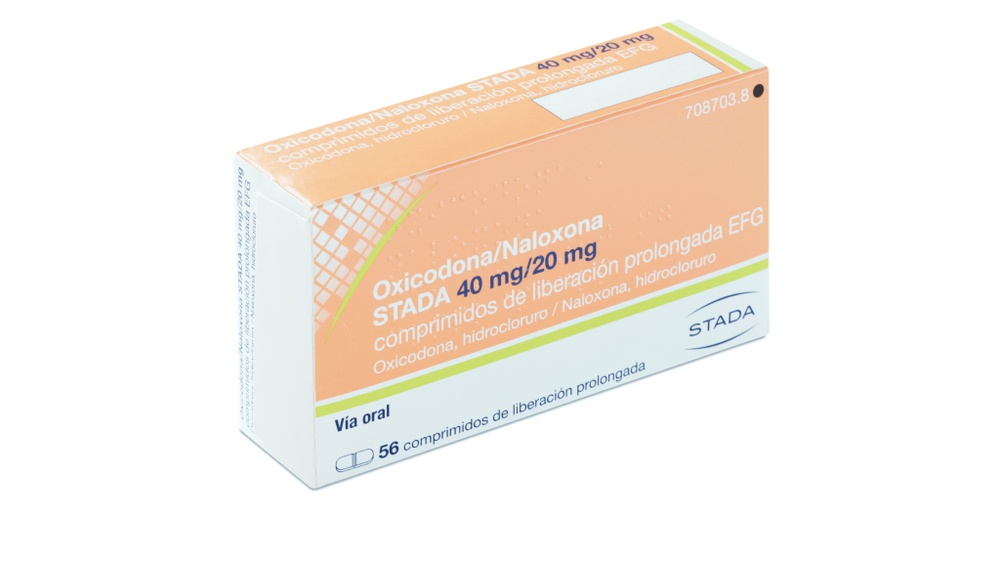
- País de registro
- Forma farmacéuticaCOMPRIMIDO LIBERACION MODIFICADA, 40 mg / 20 mg
- Código ATCN02AA55
- Precio medio en farmacia101.53 EUR
- Principio activo
- Requiere recetaSí
- Fabricante
- ComposiciónLAURILSULFATO DE SODIO (0,80 mg mg)
- Esta información es de carácter general y no sustituye la consulta con un profesional sanitario.
- Alternativas a OXICODONA/NALOXONA VIATRIS 40 MG/20 MG COMPRIMIDOS DE LIBERACION PROLONGADA EFGForma farmacéutica: COMPRIMIDO LIBERACION MODIFICADA, 10 mg/5 mgPrincipio activo: oxycodone and naloxoneFabricante: Neuraxpharm Spain S.L.Requiere recetaForma farmacéutica: COMPRIMIDO LIBERACION MODIFICADA, 20 mg/10 mgPrincipio activo: oxycodone and naloxoneFabricante: Neuraxpharm Spain S.L.Requiere recetaForma farmacéutica: COMPRIMIDO LIBERACION MODIFICADA, 30 mg/15 mgPrincipio activo: oxycodone and naloxoneFabricante: Neuraxpharm Spain S.L.Requiere receta
Médicos online para OXICODONA/NALOXONA VIATRIS 40 MG/20 MG COMPRIMIDOS DE LIBERACION PROLONGADA EFG
Comenta la dosis, los posibles efectos secundarios, interacciones, contraindicaciones o la revisión de receta de OXICODONA/NALOXONA VIATRIS 40 MG/20 MG COMPRIMIDOS DE LIBERACION PROLONGADA EFG, sujeto a valoración médica y a la normativa local.









Preguntas frecuentes
OXICODONA/NALOXONA VIATRIS 40 MG/20 MG COMPRIMIDOS DE LIBERACION PROLONGADA EFG requiere receta en España. Puedes confirmarlo con un médico online según tu caso.
El principio activo de OXICODONA/NALOXONA VIATRIS 40 MG/20 MG COMPRIMIDOS DE LIBERACION PROLONGADA EFG es oxycodone and naloxone. Esta información ayuda a identificar medicamentos con la misma composición pero con diferentes nombres comerciales.
El precio medio en farmacia de OXICODONA/NALOXONA VIATRIS 40 MG/20 MG COMPRIMIDOS DE LIBERACION PROLONGADA EFG es de aproximadamente 101.53 EUR. Puede variar según el fabricante y la forma farmacéutica.
OXICODONA/NALOXONA VIATRIS 40 MG/20 MG COMPRIMIDOS DE LIBERACION PROLONGADA EFG es fabricado por Viatris Limited. La marca y el envase pueden variar según el distribuidor.
Los Médicos de familia, Psiquiatras, Dermatólogos, Cardiólogos, Endocrinólogos, Gastroenterólogos, Neumólogos, Nefrólogos, Reumatólogos, Hematólogos, Infectólogos, Alergólogos, Geriatras, Pediatras, Oncólogos pueden valorar la prescripción de OXICODONA/NALOXONA VIATRIS 40 MG/20 MG COMPRIMIDOS DE LIBERACION PROLONGADA EFG cuando esté clínicamente indicado. Puedes reservar una videoconsulta para comentar tu caso y las opciones de tratamiento.
La receta la emite un médico tras valorar tu estado de salud. En España, OXICODONA/NALOXONA VIATRIS 40 MG/20 MG COMPRIMIDOS DE LIBERACION PROLONGADA EFG se dispensa en las farmacias con esa receta médica. Una consulta online no garantiza su emisión: la decisión corresponde siempre al médico.
Para solicitar una valoración puedes usar Oladoctor:
Otros medicamentos con el mismo principio activo (oxycodone and naloxone) incluyen DUOXONA 10 MG/5 MG COMPRIMIDOS DE LIBERACION PROLONGADA EFG, DUOXONA 20 MG/10 MG COMPRIMIDOS DE LIBERACION PROLONGADA EFG, DUOXONA 30 MG/15 MG COMPRIMIDOS DE LIBERACION PROLONGADA EFG. Pueden tener diferentes nombres comerciales o formulaciones, pero contienen el mismo componente terapéutico. Consulta siempre con un médico antes de cambiar o iniciar un nuevo medicamento.
