



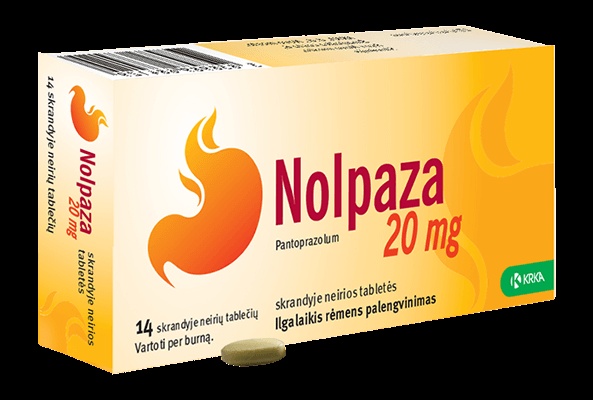
NOLPAZA 20 mg Comprimidos Gastrorresistentes

Revisión de receta online
Un médico revisará tu caso y determinará si la prescripción es médicamente apropiada.

Habla con un médico sobre este medicamento
Comenta tus síntomas y las opciones de tratamiento en una consulta online.



Cómo usar NOLPAZA 20 mg COMPRIMIDOS GASTRORRESISTENTES EFG
Contenido del prospecto
- Introducción
- Qué es Nolpaza y para qué se utiliza
- Qué necesita saber antes de empezar a tomar Nolpaza
- Cómo tomar Nolpaza
- Posibles efectos adversos
- Conservación de Nolpaza
- Contenido del envase e información adicional
Introducción
Prospecto: información para el paciente
Nolpaza 20 mg comprimidos gastrorresistentes EFG
pantoprazol
Lea todo el prospecto detenidamente antes de empezar a tomar este medicamento, porque contiene información importante para usted.
- Conserve este prospecto, ya que puede tener que volver a leerlo.
- Si tiene alguna duda, consulte a su médico o farmacéutico.
- Este medicamento se le ha recetado solamente a usted, y no debe dárselo a otras personas aunque tengan los mismos síntomas que usted, ya que puede perjudicarles.
- Si experimenta efectos adversos, consulte a su médico o farmacéutico, incluso si se trata de efectos adversos que no aparecen en este prospecto. Ver sección 4.
Contenido del prospecto
- Qué es Nolpaza y para qué se utiliza
- Qué necesita saber antes de empezar a tomar Nolpaza
- Cómo tomar Nolpaza
- Posibles efectos adversos
- Conservación de Nolpaza
- Contenido del envase e información adicional
1. Qué es Nolpaza y para qué se utiliza
Nolpaza es un inhibidor selectivo de la bomba de protones. Los inhibidores de la bomba de protones como pantoprazol reducen la cantidad de ácido en su estómago. Se utiliza para el tratamiento de enfermedades relacionadas con el ácido del estómago e intestino.
Nolpaza se utiliza para:
Adultos y adolescentes de 12 años de edad o mayores
- el tratamiento de los síntomas (ardor de estómago, regurgitación ácida, dolor al tragar) asociados a la enfermedad por reflujo gastroesofágico, causada por el reflujo del ácido desde el estómago.
- el tratamiento a largo plazo y prevención de las recaídas de la esofagitis por reflujo (inflamación del esófago acompañada de regurgitación ácida del estómago).
Adultos
- la prevención de úlceras gastroduodenales inducidas por medicamentos antiinflamatorios no esteroideos (AINEs, por ejemplo, ibuprofeno) en pacientes de riesgo que necesitan tratamiento continuado con este tipo de antiinflamatorios.

¿No estás seguro de si este medicamento es adecuado para ti?
Comenta tus síntomas y tratamiento con un médico online.
2. Qué necesita saber antes de empezar a tomar Nolpaza
No tome Nolpaza
- si es alérgico al pantoprazol, sorbitol o alguno de los demás componentes de este medicamento (incluidos en la sección 6).
- si es usted alérgico a medicamentos que contengan otros inhibidores de la bomba de protones.
Advertencias y precauciones
Consulte a su médico, farmacéutico o enfermero antes de empezar a tomar este medicamento:
- Si padece una enfermedad del hígado grave. Comunique a su médico si alguna vez ha tenido problemas en el hígado. Su médico le realizará un seguimiento más frecuente de las enzimas hepáticas, especialmente cuando toma pantoprazol para el tratamiento a largo plazo. En caso de que aumenten los niveles, debe suspenderse el tratamiento.
- Si necesita tomar medicamentos de los llamados AINEs continuamente y toma pantoprazol, ya que existe mayor riesgo de desarrollar complicaciones en el estómago e intestino. Cualquier incremento del riesgo se valorará conforme a los factores personales de riesgo tales como la edad (65 años o mayores), antecedentes de úlcera de estómago o duodeno o hemorragia de estómago o intestino.
- Si usted tiene reservas corporales de vitamina B12 disminuidas o factores de riesgo para ello y recibe durante un largo periodo de tiempo tratamiento con pantoprazol. Como todos los medicamentos que reducen la cantidad de ácido, pantoprazol podría reducir la absorción de vitamina B12. Consulte con su médico si observa alguno de los siguientes síntomas, ya que podrían indicar deficiencia de Vitamina B12:
- Cansancio extremo o falta de energía
- Hormigueo
- Dolor en la lengua o lengua enrojecida, úlceras en la boca
- Debilidad muscular
- Trastorno de la vista
- Problema de memoria, confusión, depresión
- Consulte a su médico si usted está tomando inhibidores de la proteasa del VIH como atazanavir (para el tratamiento por infección de VIH) al mismo tiempo que pantoprazol.
- Tomar un inhibidor de la bomba de protones como pantoprazol, especialmente durante más de un año puede aumentar el riesgo de fracturas de caderas, muñeca o columna vertebral.
Informe a su médico si tiene osteoporosis (densidad ósea reducida) o si le han dicho que tiene riesgo de padecer osteoporosis (por ejemplo, si está tomando corticoesteroides).
- Si usted está tomando pantoprazol durante más de tres meses, es posible que los niveles de magnesio en sangre puedan descender. Los niveles bajos de magnesio pueden causar fatiga, contracciones musculares involuntarias, desorientación, convulsiones, mareos, aumento del ritmo cardiaco. Si usted tiene alguno de estos síntomas, acuda al médico inmediatamente. Niveles bajos de magnesio también pueden producir una disminución de los niveles de potasio y calcio en sangre. Su médico puede decidir realizarle análisis de sangre periódicos para controlar los niveles de magnesio.
- Si ha tenido reacciones alérgicas después del tratamiento con un medicamento similar a pantoprazol que reduzca la acidez de estómago.
- Si tiene una erupción en la piel, especialmente en las zonas expuestas al sol, informe a su médico tan pronto como sea posible, ya que puede que tenga que suspender su tratamiento con este medicamento. Recuerde que debe mencionar también otros efectos negativos como dolor en las articulaciones.
- Se han notificado casos de reacciones cutáneas graves en relación con el tratamiento con pantoprazol, entre las que se incluyen el síndrome de Stevens-Johnson, la necrólisis epidérmica tóxica, sensibilidad a medicamentos con eosinofilia y síntomas sistémicos (DRESS) y eritema multiforme. Deje de tomar pantoprazol y llame a su médico de inmediato si refiere alguno de los síntomas relacionados con las reacciones cutáneas graves descritas en la sección 4.
- Está previsto que le realicen un análisis especifico de sangre (Cromogranina A).
Comunique inmediatamente a su médicosi nota cualquiera de los siguientes síntomas:
- pérdida inintencionada de peso
- vómitos , particularmente si son repetidos
- sangre en el vómito: puede aparecer como un pulverizado de café oscuro en su vómito
- si nota sangre en sus heces, las cuales pueden ser en apariencia negras o melena
- dificultad para tragar, o dolor cuando traga
- aspecto pálido y sensación de debilidad (anemia)
- dolor de pecho
- dolor de estomago
- diarrea grave y/o persistente, ya que se ha asociado a pantoprazol con un pequeño aumento de diarreas infecciosas.
Su médico decidirá si necesita alguna prueba adicional para descartar una enfermedad maligna debido a que pantoprazol puede aliviar los síntomas del cáncer y pudiera retrasar su diagnóstico. Si a pesar del tratamiento sus síntomas persisten, se realizarán exploraciones complementarias.
Si usted toma pantoprazol durante un periodo de tiempo prolongado (más de un año), su médico posiblemente le realizará un seguimiento de forma regular. Deberá comunicar a su médico cualquier síntoma y/o acontecimiento nuevo o inesperado cada vez que acuda a su consulta.
Niños y adolescentes
No se recomienda la utilización de estos comprimidos en niños menores de 12 años.
Otros medicamentosy Nolpaza
Informe a su médico o farmacéutico si está tomando, ha tomado recientemente o pudiera tener que tomar cualquier otro medicamento.
Este medicamento puede interferir la eficacia de otros medicamentos, por este motivo, comunique a su médico si está tomando:
- Algún medicamento como ketoconazol, itraconazol o posaconazol (medicamentos utilizados en las infecciones por hongos) o erlotinib (se usa para tratar algunos tipos de cáncer) ya que pantoprazol puede hacer que otros medicamentos no actúen correctamente.
- Warfarina o fenprocumón, los cuales afectan a la mayor o menor coagulación de la sangre. Usted puede necesitar controles adicionales.
- Medicamentos utilizados para el tratamiento de la infección por VIH, como atazanavir.
- Metotrexato (utilizado para tratar la artritis reumatoide, psoriasis y cáncer), si está tomando metotrexato su médico puede interrumpir temporalmente el tratamiento con pantoprazol debido a que el pantoprazol puede incrementar los niveles de metotrexato en sangre.
- Fluvoxamina (utilizada para tratar la depresión y otras enfermedades psiquiátricas) si usted está tomando fluvoxamina puede que su médico le reduzca la dosis.
- Rifampicina (utilizada para el tratamiento de infecciones).
- Hierba de San Juan (Hypericum perforatum) (utilizado para tratar la depresión leve).
Hable con su médico antes de tomar pantoprazol si debe realizarse un análisis de orina específico (para THC, Tetrahidrocanabinol).
Uso de Nolpaza con alimentos y bebidas
Tome los comprimidos 1 hora antes de una comida sin masticarlos ni partirlos y tráguelos enteros con un poco de agua.
Embarazo y lactancia
Si está embarazada o en periodo de lactancia, cree que podría estar embarazada o tiene intención de quedarse embarazada, consulte a su médico o farmacéutico antes de utilizar este medicamento.
No hay datos suficientes relativos al uso de pantoprazol en mujeres embarazadas. Se ha informado sobre la excreción en leche maternal en humanos. Solo debería utilizar este medicamento si su médico considera que el beneficio para usted es mayor que el potencial riesgo para el feto o bebé.
Conducción y uso de máquinas
Este medicamento no tiene ninguna influencia o ésta es insignificante sobre la habilidad de conducir o utilizar máquinas.
No deberá conducir o utilizar máquinas en caso de padecer efectos adversos tales como mareos o visión borrosa.
Nolpaza contiene sorbitol y sodio
Este medicamento contiene 18 mg de sorbitol en cada comprimido.
Este medicamento contiene menos de 1 mmol de sodio (23 mg) por comprimido; esto es, esencialmente “exento de sodio”.
3. Cómo tomar Nolpaza
Siga exactamente las instrucciones de administración de este medicamento indicadas por su médico o farmacéutico. En caso de duda, consulte de nuevo a su médico o farmacéutico.
Forma de administración
Tome los comprimidos enteros, sin masticar ni triturar, con ayuda de un poco de agua, 1 hora antes de una comida.
A no ser que su médico le haya indicado otra pauta, la dosis recomendada es:
Adultos y adolescentes a partir de 12 años:
Para el tratamiento de los síntomas (ardor de estómago, regurgitación ácida, dolor al tragar) asociados a la enfermedad por reflujo gastroesofágico
La dosis recomendada es de un comprimido al día. Esta dosis, por lo general, proporciona alivio en el plazo de 2-4 semanas, o como máximo después de otras 4 semanas. Su médico le indicará cuánto tiempo debe continuar tomando este medicamento. Una vez finalizado dicho periodo, y si se volvieran a repetir los síntomas, en caso necesario, podrían controlarse tomando un comprimido al día.
Para el tratamiento a largo plazo y prevención de las recaídas de la esofagitis por reflujo
La dosis recomendada es de un comprimido al día. Si la enfermedad volviera a aparecer, su médico puede doblar la dosis, en cuyo caso puede tomar en su lugar 1 comprimido de pantoprazol 40 mg al día. Tras su curación, usted puede reducir la dosis volviendo de nuevo a un comprimido (20 mg) al día.
Adultos:
Para la prevención de úlceras gastroduodenales en pacientes que necesitan tratamiento
continuado con AINEs
La dosis recomendada es de un comprimido al día.
Grupos especiales de pacientes:
Si sufre problemas graves en el hígado, no debe tomar más de un comprimido (20 mg) al día.
Uso en niños y adolescentes
Niños menores de 12 años.
No se recomienda la utilización de estos comprimidos en niños menores de 12 años.
Si toma más Nolpaza del que debe
Informe a su médico o farmacéutico. No hay síntomas conocidos de sobredosis.
En caso de sobredosis o ingestión accidental, consulte inmediatamente a su médico o farmacéutico o llame al Servicio de Información Toxicológica, teléfono 91 562 04 20, indicando el medicamento y la cantidad ingerida.
Si olvidó tomar Nolpaza
No tome una dosis doble para compensar una dosis olvidada. Tome su siguiente dosis de la forma habitual.
Si interrumpe el tratamiento con Nolpaza
No deje de tomar estos comprimidos sin antes consultar con su médico o farmacéutico.
Si tiene cualquier otra duda sobre el uso de este medicamento, pregunte a su médico o farmacéutico.

¿Has empezado a tomar el medicamento y tienes preguntas?
Comenta tus síntomas y tratamiento con un médico online.
4. Posibles efectos adversos
Al igual que todos los medicamentos, este medicamento puede producir efectos adversos, aunque no todas las personas los sufran.
Deje de tomar pantoprazol y busque atención médica de inmediato si presenta alguno de los siguientes síntomas:
- manchas circulares o en forma de diana de color ligeramente rojizo en el tronco, a menudo con ampollas en el centro, descamación, úlceras en boca, garganta, nariz, genitales y ojos. Estos exantemas graves pueden ir precedidos de fiebre y síntomas similares a los de la gripe (síndrome de Stevens-Johnson, necrólisis epidérmica tóxica).
- exantema generalizado, temperatura corporal elevada y adenopatías (síndrome DRESS o síndrome de hipersensibilidad a medicamentos).
Si usted nota cualquiera de los siguientes efectos adversos, deje de tomar los comprimidos y comuníqueselo a su médico inmediatamente o póngase en contacto con el servicio de urgencias del hospital más cercano:
- Reacciones alérgicas graves (frecuencia rara; pueden afectar hasta 1 de cada 1.000 pacientes):hinchazón de la lengua y/o garganta, dificultad para tragar, urticaria, dificultad para respirar, hinchazón de la cara de origen alérgico (edema de Quincke/angioedema), mareos intensos con latidos muy rápidos del corazón y sudoración abundante.
- Trastornos graves de la piel (frecuencia no conocida; su frecuencia no puede ser estimada con los datos disponibles):puede notar uno o más de los siguientes- ampollas en la piel y un rápido deterioro de las condiciones generales, erosión (incluyendo ligero sangrado) de ojos, nariz, boca/labios o genitales o sensibilidad/erupción cutánea, particularmente en áreas de piel expuestas a la luz/al sol. También puede tener dolor en las articulaciones o síntomas similares a los de la gripe, fiebre, glándulas inflamadas (por ejemplo, en la axila) y los análisis de sangre pueden mostrar cambios en ciertos glóbulos blancos o enzimas hepáticas.
- Otros trastornos graves (frecuencia no conocida; su frecuencia no puede ser estimada con los datos disponibles):coloración amarillenta de la piel o del blanco de los ojos (daño grave de las células del hígado, ictericia) o fiebre, enrojecimiento de la piel y agrandamiento de los riñones a veces con dolor al orinar y dolor en la parte inferior de la espalda (inflamación grave de los riñones) posiblemente pueda ocasionar un fallo renal.
Otros efectos adversos son:
- Frecuentes(pueden afectar hasta 1 de cada 10 pacientes)
Pólipos benignos en el estómago.
- Poco frecuentes(pueden afectar hasta 1 de cada 100 pacientes)
Dolor de cabeza; mareos; diarrea; náuseas; vómitos, meteorismo y flatulencia (gases); estreñimiento; sequedad de boca; dolor abdominal y malestar; eritema; exantema, erupción; picor; fractura de cadera, muñeca y columna vertebral, sensación de debilidad, agotamiento o malestar general; alteraciones del sueño.
- Raros(pueden afectar hasta 1 de cada 1.000 pacientes)
Alteraciones en la visión tales como visión borrosa, urticaria; dolor en las articulaciones, dolores musculares, cambios de peso; temperatura corporal elevada; fiebre alta; hinchazón de las extremidades (edema periférico); reacciones alérgicas; depresión; aumento del tamaño de los senos en los hombres; alteración o ausencia completa del sentido del gusto.
- Muy raros(pueden afectar hasta 1 de cada 10.000 pacientes)
Desorientación.
- Frecuencia no conocida(no puede estimarse la frecuencia a partir de los datos disponibles)
Alucinación, confusión (especialmente en pacientes con historial de estos síntomas), sensación de hormigueo, pinchazos, adormecimiento, sensación de ardor o entumecimiento, inflamación del intestino grueso que causa diarrea acuosa persistente, erupción cutánea, posiblemente con dolor en las articulaciones
Efectos adversos identificados mediante análisis de sangre:
- Poco frecuentes(pueden afectar hasta 1 de cada 100 pacientes)
Aumento de los valores de las enzimas del hígado.
- Raros(pueden afectar hasta 1 de cada 1.000 pacientes)
Aumento de la bilirrubina; aumento de los niveles de grasa en la sangre; caída brusca de los glóbulos blancos granulares de la circulación, asociado con fiebre alta.
- Muy raros(pueden afectar hasta 1 de cada 10.000 pacientes)
Reducción del número de plaquetas en sangre, que puede producir un mayor sangrado o más hematomas de lo habitual; reducción del número de glóbulos blancos que podría conducir a infecciones más frecuentes; reducción anormal del balance entre el número de glóbulos rojos y blancos, así como de las plaquetas.
- Frecuencia no conocida(no puede estimarse a partir de los datos disponibles)
Disminución del nivel de sodio, magnesio, calcio o potasio en sangre (ver sección 2).
Comunicación de efectos adversos
Si experimenta cualquier tipo de efecto adverso, consulte a su médico o farmacéutico, incluso si se trata de posibles efectos adversos que no aparecen en este prospecto. También puede comunicarlos directamente a través del Sistema Español de Farmacovigilancia de Medicamentos de Uso Humano: www.notificaram.es. Mediante la comunicación de efectos adversos usted puede contribuir a proporcionar más información sobre la seguridad de este medicamento.
5. Conservación de Nolpaza
Mantener este medicamento fuera de la vista y del alcance de los niños.
No utilice este medicamento después de la fecha de caducidad que aparece en el envase después de CAD.La fecha de caducidad es el último día del mes que se indica.
Blíster: Conservar en el embalaje original para protegerlo de la humedad.
Frasco: Mantener perfectamente cerrado para protegerlo de la humedad.
Después de abrir el frasco por primera vez, el producto debe usarse en 3 meses.
Los medicamentos no se deben tirar por los desagües ni a la basura. Deposite los envases y los medicamentos que no necesita en el Punto SIGRE de la farmacia. Pregunte a su farmacéutico cómo deshacerse de los envases y de los medicamentos que ya no necesita. De esta forma, ayudará a proteger el medio ambiente.
6. Contenido del envase e información adicional
Composición de Nolpaza
- El principio activo es pantoprazol. Cada comprimido gastrorresistente contiene 20 mg de pantoprazol (en forma de pantoprazol sódico sesquihidrato).
- Los demás componentes son:
Núcleo del comprimido: manitol, crospovidona (tipo A, tipo B), carbonato de sodio, sorbitol (E420) y estearato de calcio.
Recubrimiento del comprimido: hipromelosa, povidona, dióxido de titanio (E171), óxido de hierro amarillo (E172), propilenglicol, copolímero etilacrilato-ácido metacrílico, lauril sulfato de sodio, polisorbato 80, macrogol 6000 y talco.
Aspecto de Nolpaza y contenido del envase
Comprimidos de color marrón amarillento claro, ovalados y ligeramente biconvexos.
Tamaños de envase
Envase de blíster de 7, 14, 15, 28, 30, 56, 60, 84, 100, 100 x 1, 112 o 140 comprimidos gastrorresistentes por caja.
Frascos de HDPE plástico de 250 comprimidos gastrorresistentes.
Puede que solamente estén comercializados algunos tamaños de envases.
Titular de la autorización de comercialización
KRKA, d.d., Novo mesto, Šmarješka cesta 6, 8501 Novo mesto, Eslovenia
Responsable de la fabricación
KRKA, d.d., Novo mesto, Šmarješka cesta 6, 8501 Novo mesto, Eslovenia
TAD Pharma GmbH, Heinz-Lohmann-Str. 5, 27472 Cuxhaven, Alemania
Pueden solicitar más información respecto a este medicamento dirigiéndose al representante local del titular de la autorización de comercialización:
KRKA Farmacéutica, S.L., C/ Anabel Segura 10, Pta. Baja, Oficina 1, 28108 Alcobendas, Madrid, España
Este medicamento ha sido autorizado en los estados miembros del Espacio Económico Europeo con los siguientes nombres:
Nombre del Estado Miembro | Nombre del medicamento |
Bulgaria, Italia, Irlanda, Rumanía, España | Nolpaza |
República Checa, Hungría, Polonia, Eslovaquia, Eslovenia | Pantoprazol Krka |
Fecha de la última revisión de este prospecto:octubre 2024
La información detallada de este medicamento está disponible en la página web de la Agencia Española de Medicamentos y Productos Sanitarios (AEMPS) http://www.aemps.gob.es/
- País de registro
- Forma farmacéuticaCOMPRIMIDO, 20 mg
- Código ATCA02BC02
- Precio medio en farmacia8.74 EUR
- Principio activo
- Requiere recetaSí
- Fabricante
- ComposiciónMANITOL (E-421) (5.95 mg mg), CARBONATO DE SODIO ANHIDRO (5.00 mg mg), SORBITOL (18.00 mg mg), PROPILENGLICOL (2.00 mg mg)
- Esta información es de carácter general y no sustituye la consulta con un profesional sanitario.
- Alternativas a NOLPAZA 20 mg COMPRIMIDOS GASTRORRESISTENTES EFGForma farmacéutica: COMPRIMIDO, 40 MGPrincipio activo: PantoprazolFabricante: Especialidades Farmaceuticas Centrum S.A.Requiere recetaForma farmacéutica: COMPRIMIDO, 20 mg pantoprazolPrincipio activo: PantoprazolFabricante: Takeda GmbhRequiere recetaForma farmacéutica: COMPRIMIDO, 40 mg pantoprazolPrincipio activo: PantoprazolFabricante: Takeda GmbhRequiere receta
Médicos online para NOLPAZA 20 mg COMPRIMIDOS GASTRORRESISTENTES EFG
Comenta la dosis, los posibles efectos secundarios, interacciones, contraindicaciones o la revisión de receta de NOLPAZA 20 mg COMPRIMIDOS GASTRORRESISTENTES EFG, sujeto a valoración médica y a la normativa local.









Obtén una receta de NOLPAZA 20 mg COMPRIMIDOS GASTRORRESISTENTES EFG online
Rellena un formulario de 2 minutos
Cuéntanos tus síntomas, historial y el medicamento que necesitas.
Elige un médico o nosotros te asignamos uno
Escoge un especialista o te conectamos con el próximo médico disponible.
El médico revisa tu caso
Normalmente en 30 minutos. Puede hacerte preguntas adicionales por chat.
Recógela en cualquier farmacia
Receta electrónica enviada a tu correo, válida en toda España.
Preguntas frecuentes
NOLPAZA 20 mg COMPRIMIDOS GASTRORRESISTENTES EFG requiere receta en España. Puedes confirmarlo con un médico online según tu caso.
El principio activo de NOLPAZA 20 mg COMPRIMIDOS GASTRORRESISTENTES EFG es Pantoprazol. Esta información ayuda a identificar medicamentos con la misma composición pero con diferentes nombres comerciales.
El precio medio en farmacia de NOLPAZA 20 mg COMPRIMIDOS GASTRORRESISTENTES EFG es de aproximadamente 8.74 EUR. Puede variar según el fabricante y la forma farmacéutica.
NOLPAZA 20 mg COMPRIMIDOS GASTRORRESISTENTES EFG es fabricado por Krka D.D. Novo Mesto. La marca y el envase pueden variar según el distribuidor.
Los Médicos de familia, Psiquiatras, Dermatólogos, Cardiólogos, Endocrinólogos, Gastroenterólogos, Neumólogos, Nefrólogos, Reumatólogos, Hematólogos, Infectólogos, Alergólogos, Geriatras, Pediatras, Oncólogos pueden valorar la prescripción de NOLPAZA 20 mg COMPRIMIDOS GASTRORRESISTENTES EFG cuando esté clínicamente indicado. Puedes reservar una videoconsulta para comentar tu caso y las opciones de tratamiento.
España cuenta con una infraestructura sanitaria bien desarrollada en ciudades principales como Madrid, Barcelona, Valencia y Sevilla. Las farmacias están ampliamente disponibles y operan bajo estrictas regulaciones, garantizando el acceso a medicamentos con receta.
Puedes comprar NOLPAZA 20 mg COMPRIMIDOS GASTRORRESISTENTES EFG en Madrid, Barcelona, Sevilla o Valencia en cualquier farmacia local con una receta válida.
Para obtener una receta, puedes utilizar Oladoctor:
Otros medicamentos con el mismo principio activo (Pantoprazol) incluyen ALAPANZOL 40 mg COMPRIMIDOS GASTRORRESISTENTES EFG, ANAGASTRA 20 mg COMPRIMIDOS GASTRORRESISTENTES, ANAGASTRA 40 mg COMPRIMIDOS GASTRORRESISTENTES. Pueden tener diferentes nombres comerciales o formulaciones, pero contienen el mismo componente terapéutico. Consulta siempre con un médico antes de cambiar o iniciar un nuevo medicamento.
