


MEPIVACAINE NORMON 10 mg/mL INJECTABLE SOLUTION



How to use MEPIVACAINE NORMON 10 mg/mL INJECTABLE SOLUTION
Translated with AI
This page provides general information and does not replace a doctor’s consultation. Always consult a doctor before taking any medication. Seek urgent medical care if symptoms are severe.
Show originalContents of the leaflet
Introduction
Leaflet:information for the patient
Mepivacaine Normon 10 mg/ml injectable solution EFG
Mepivacaine hydrochloride
Read the entire leaflet carefully before starting to use this medicine, as it contains important information for you.
- Keep this leaflet, as you may need to read it again.
- If you have any questions, consult your doctor, nurse, or pharmacist.
- If you experience side effects, consult your doctor, nurse, or pharmacist, even if they are not listed in this leaflet. See section 4.
Contents of the leaflet
- What Mepivacaine Normon 10 mg/ml is and what it is used for
- What you need to know before you are given Mepivacaine Normon 10 mg/ml
- How to use Mepivacaine Normon 10 mg/ml
- Possible side effects
- Storage of Mepivacaine Normon 10 mg/ml
- Package contents and additional information
1. What Mepivacaine Normon 10 mg/ml is and what it is used for
Mepivacaine Normon 10 mg/ml injectable solution is a medicine that belongs to the group of local and regional anesthetics of the amide type.
It is indicated for:
- Local anesthesia in infiltration.
- Blockade of peripheral nerves, nerve plexuses, and paravertebral.
- Epidural and caudal anesthesia.
Depending on the amount used, it will completely stop the pain or cause partial loss of sensitivity.
It is used before surgery or various medical examinations to prevent or alleviate pain in the area of your body where the procedure will be performed.

2. What you need to know before you are given Mepivacaine Normon 10 mg/ml
Do notgiveMepivacaine Normon
- if you are allergic to mepivacaine or any of the other components of this medicine (listed in section 6);
- if you are allergic to other local anesthetics of the same group (e.g., bupivacaine or lidocaine);
- if you have severe blood coagulation disorders;
- if you have degenerative nervous system disease;
- if you have serious heart conduction problems or other heart problems;
- if you have uncontrolled epilepsy;
- if you have increased intracranial pressure.
Warnings and precautions
Consult your doctor or nurse before you are given Mepivacaine Normon:
- if you have serious heart rhythm problems or heart disease;
- if you have degenerative nervous system disease;
- if you are elderly;
- if you are in poor general health;
- if you have liver disease;
- if you have impaired kidney function;
- if you have vascular disease, arteriosclerosis (hardening of the arteries);
- if you may be at risk of malignant hyperthermia (a complication that includes sudden high fever, muscle stiffness, and kidney failure);
- if you have epilepsy;
- if you have inflammation and/or infection at the injection site;
- if you have a blood disease called porphyria.
The dose you will receive will be carefully controlled to avoid mepivacaine causing toxic reactions in your heart or nerves and brain.
You will be closely monitored while you are given mepivacaine to detect any complications that may affect heart function, blood circulation, or nervous and brain functions as soon as possible, and to give you any necessary treatment in case such complications occur.
Other medicines and Mepivacaine Normon 10 mg/ml
Tell your doctor or nurse if you are using, have recently used, or may need to use any other medicine.
The administration of mepivacaine with the following medicines may require modifying the dose of one of them or interrupting treatment:
- strong painkillers;
- other local anesthetics;
- certain medicines used to treat heart rhythm disorders;
- general anesthetics such as ether;
- medicines that cause vasoconstriction (reduction of blood vessel diameter);
- heparin, anticoagulant medicines (which prevent blood clotting), non-steroidal anti-inflammatory drugs, and plasma substitutes (products used in case of blood loss). Your blood coagulation function will be carefully monitored if you are receiving any of these medicines;
- cytochrome PYP 1A2 inhibitors (such as ciprofloxacin, enoxacin, or fluvoxamine);
- medicines used to treat stomach and intestinal ulcers (such as cimetidine);
- propranolol.
Mepivacaine is generally not combined with other local anesthetics.
Use in children and elderly
Children and the elderly require lower doses than young or middle-aged adults.
It should not be used in children under 1 year of age.
Pregnancy, breastfeeding, and fertility
If you are pregnant or breastfeeding, think you may be pregnant, or plan to become pregnant, consult your doctor before you are given this medicine.
During pregnancy, mepivacaine will only be given after careful consideration of the indications and if your doctor considers it absolutely necessary. Your doctor will take any possible precautions to avoid harming you or your child.
Mepivacaine is not a preferred drug for epidural anesthesia in obstetrics.
It will be given to you during breastfeeding only if your doctor considers it necessary. If such administration is necessary, breastfeeding should be interrupted until 24 hours after the end of treatment.
Driving and using machines
Mepivacaine may temporarily alter your ability to move, pay attention, and coordinate. Your doctor will tell you if you can drive or use machines.
Mepivacaine Normon 10 mg/ml contains sodium
This medicine contains 28 mg of sodium (main component of table/cooking salt) per ampoule. This is equivalent to 1.4% of the maximum recommended daily sodium intake for an adult.
Use in athletes
Athletes are informed that this medicine contains a component that may produce a positive doping test result.
3. How to use Mepivacaine Normon 10 mg/ml
Mepivacaine Normon is intended for intradermal, subcutaneous, intramuscular, periarticular, epidural, or perineural administration.
It will be administered by healthcare personnel only, and your doctor will determine the most suitable dose for you. The smallest dose required to produce the desired anesthesia should always be used. The dosage should be adjusted individually according to the patient's age, weight, and specific case characteristics.
In patients with liver, kidney, heart disease, poor general health, and the elderly, special caution and careful dose adjustment are necessary.
Your doctor will ask you to talk to them while they administer the medicine to ensure you are conscious.
Your blood pressure may be measured from time to time.
If you are given more Mepivacaine Normon 10 mg/ml than you should
Overdose can cause signs and symptoms of intoxication. The severity of the signs and symptoms depends on the dose administered. The following may be observed:
- Central nervous system symptoms
Mild intoxication:
Numbness and tingling in the mouth area, metallic taste, hearing and vision disturbances, yawning, anxiety, restlessness, chills, muscle spasms, nausea, vomiting, disorientation.
Moderate intoxication:
Speech disorders, drowsiness, nausea, vomiting, dizziness, confusion, tremors, choreiform movements, convulsions, mydriasis, tachypnea.
Severe intoxication:
Vomiting (risk of asphyxia), sphincter paralysis, loss of muscle tone and reactivity, stupor, irregular breathing, respiratory paralysis, coma, death.
- Cardiovascular system symptoms
Mild intoxication:
Palpitations, hypertension, tachycardia, tachypnea.
Moderate intoxication:
Tachycardia, cardiac arrhythmias, hypoxia, pallor.
Severe intoxication:
Severe hypoxia and cyanosis, primary cardiac failure, hypotension, cardiac arrhythmias (bradycardia, atrial fibrillation, asystole).
In such cases, you will receive the necessary treatment first to normalize and stabilize your heart, circulation, and respiration functions, and then to control convulsions and other severe nervous symptoms. This includes administering oxygen and additional medication, mainly to normalize heart function and circulation.
In case of overdose or accidental ingestion, consult your doctor, nurse, or pharmacist immediately or call the Toxicology Information Service, phone: 91 562 04 20, indicating the product and the amount received.

4. Possible side effects
Like all medicines, this medicine can cause side effects, although not everyone gets them.
Frequent (may affect up to 1 in 10 people):
- Burning sensation, pins and needles, and numbness in the skin (paresthesia) and dizziness.
- Slow and abnormal heart rate (bradycardia).
- Hypotension.
- Hypertension.
- Nausea.
- Vomiting.
Uncommon (may affect up to 1 in 100 people):
- Dizziness (mild dizziness).
- Tremors.
- Central nervous system depression.
- Loss of consciousness.
- Convulsions (including epileptic seizures).
- Speech disorders such as difficulty articulating sounds and words (dysarthria) and excessive talkativeness (logorrhea).
- Visual disturbances.
- Ringing in the ears (tinnitus).
Rare (may affect up to 1 in 1,000 people):
- Anaphylactic/anaphylactoid reactions.
- Allergic reactions.
- Pain due to nerve damage (neuropathy).
- Peripheral neural damage.
- Arachnoiditis.
- Diplopia (paralysis of the eye muscles).
- Cardiac arrest.
- Chest pain.
- Heart rhythm coordination problems (atrioventricular block).
- Cardiac arrhythmia.
- Breathing difficulties.
Frequency not known (frequency cannot be estimated from available data):
- Euphoria.
- Anxiety/nervousness.
- Inability of the heart to contract effectively (myocardial depression).
Side effects due to misuse
Extensive spinal anesthesia (total) can occur through unintentional intrathecal injection during planned epidural anesthesia, as a result of using too large a volume or incorrect patient positioning (when non-isobaric solutions are used).
The first signs are restlessness and drowsiness, which can lead to loss of consciousness and respiratory arrest.
Reporting side effects
If you experience any side effects, consult your doctor or pharmacist, even if they are not listed in this leaflet. You can also report them directly through the Spanish Medicines Monitoring System for Human Use: http://www.notificaram.es. By reporting side effects, you can help provide more information on the safety of this medicine.
5. Storage of Mepivacaine Normon 10 mg/ml
Keep this medicine out of the sight and reach of children.
This medicine does not require special storage conditions.
Do not use this medicine after the expiration date stated on the carton after CAD. The expiration date is the last day of the month indicated.
Medicines should not be disposed of via wastewater or household waste. Ask your pharmacist how to dispose of the packaging and any unused medicines. This will help protect the environment.
6. Container Content and Additional Information
Composition ofMepivacaine Normon10 mg/ml injectable solution EFG
- The active ingredient is mepivacaine hydrochloride. Each 10 ml ampoule contains 100 mg of mepivacaine hydrochloride.
- The other components are: sodium chloride and water for injectable preparations.
Appearance of the Product and Container Content
This medication is a clear, colorless or practically colorless solution.
The commercial presentation is a box with 1 ampoule or with 100 ampoules of 10 ml of injectable solution.
Marketing Authorization Holder and Manufacturer
LABORATORIOS NORMON, S.A.
Ronda de Valdecarrizo, 6 – 28760 Tres Cantos – Madrid (SPAIN)
Date of the Last Revision of this Prospectus: April 2023.
Detailed information about this medication is available on the website of the Spanish Agency for Medicines and Health Products (AEMPS) http://www.aemps.gob.es.
--------------------------------------------------------------------------------------------------------------------
This information is intended solely for healthcare professionals.
Mepivacaine Normon 10 mg/ml should only be used by doctors with experience in regional anesthesia and resuscitation techniques or under their supervision. Resuscitation equipment should be available when local anesthetics are administered. The lowest possible dose that produces the desired effect should be administered. The dose should be adjusted individually according to the specific characteristics of each case.
Posology
The smallest required dose should always be used to produce the desired anesthesia. The dosage should be adjusted individually according to the patient's age and weight, as well as the specific characteristics of each case.
Maximum Dose for Adults:
Infiltration Anesthesia
The dose should not exceed 200 mg. Only in limited cases, in tissues with low vascularization, doses of up to 400 mg can be used after considering the benefit/risk of these high doses.
Caudal and Epidural Anesthesia, Peripheral Nerve Blocks
The dose should not exceed 300 mg.
The maximum daily dose is 1g.
Mepivacaine Normon 10 mg/ml injectable solution can be administered continuously.
For different types of uses, the following doses are recommended:
Infiltration Anesthesia | up to 40 ml |
Peripheral Nerve Blocks: | |
| 2 - 4 ml |
| 2 - 5 ml |
| 7 - 10 ml |
| 10 - 20 ml |
| 25 - 40 ml |
Paravertebral Block* | 5 - 10 ml |
Intercostal Block, per segment* | 2 - 4 ml |
Epidural Anesthesia | 10 - 30 ml |
Caudal Anesthesia | 15-30 ml |
*When multiple segments are anesthetized, the total dose should not exceed the recommended maximum dose.
For more details on the doses to be applied for anesthetizing specific nerves or for specific anesthetic techniques, consult standard textbooks.
Elderly Patients
Lower doses may be necessary for elderly patients or those in poor general condition.
Pediatric Population
Maximum doses for children from 1 year of age:
- Maximum dose: 5 mg/Kg of body weight.
- Injections in tissues with marked systemic absorption: up to 3 mg/Kg of body weight.
- Caudal anesthesia: 5 mg/Kg of body weight.
Hepatic Impairment
In patients with hepatic impairment, a dose reduction is not necessary for surgical anesthesia.
When using prolonged blocks, for example, through repeated administration, the repeated doses of mepivacaine should be reduced by 50% in patients with liver disease of grade C (Child-Pugh classification) and the total dose in 24 hours should not exceed 750 mg of mepivacaine.
Renal Impairment
A dose reduction is not necessary for surgical anesthesia up to 24 hours in patients with renal dysfunction.
Administration
- Intradermal, subcutaneous, intramuscular, periarticular route for infiltration anesthesia.
- Perineural or epidural route for nerve conduction block.
Before injection, it must be ensured that the needle is not situated intravascularly. The injection should be performed slowly and fractionally.
Basic rules to follow:
- Choose the smallest possible dosage.
- Use a needle of the appropriate size.
- Inject slowly with several aspirations in two planes (rotate the needle 180º). Great care should be taken to avoid accidental intravascular injection. Careful aspiration is essential.
- Monitor blood pressure.
- Take into account premedication. Premedication should include the prophylactic administration of atropine and, depending on the convenient amounts of local anesthetic to be injected, a short-acting barbiturate.
- If necessary, suspend the administration of anticoagulants before the administration of the local anesthetic.
- Observe the general and specific contraindications for the various methods of local or regional anesthesia.
For epidural anesthesia, a test dose should be administered, which consists of 3 - 4 ml of a local anesthetic with added adrenaline (1: 200,000) before the complete dose, since an intravascular injection of adrenaline is quickly recognized due to the increase in heart rate. The heart rate should be measured repeatedly until 5 minutes after the administration of the test dose.
Verbal contact with the patient should be maintained and the heart rate should be measured repeatedly until 5 minutes after the administration of the test dose. Aspiration should be repeated before administering the main dose. The main dose should be injected slowly and, especially when increasing the dose, constant contact with the patient should be maintained. Administration should be interrupted immediately at the first symptoms of toxicity.
Before administering a local anesthetic, it should be ensured that the necessary equipment for resuscitation, e.g. oxygen source, material to keep the airway clear and emergency medication for the treatment of toxic reactions, is available immediately.
- Country of registration
- Dosage formINJECTABLE, 10 mg/ml
- ATC codeN01BB03
- Active substance
- Prescription requiredYes
- Manufacturer
- This information is for reference only and does not constitute medical advice. Always consult a doctor before taking any medication. Oladoctor is not responsible for medical decisions based on this content.
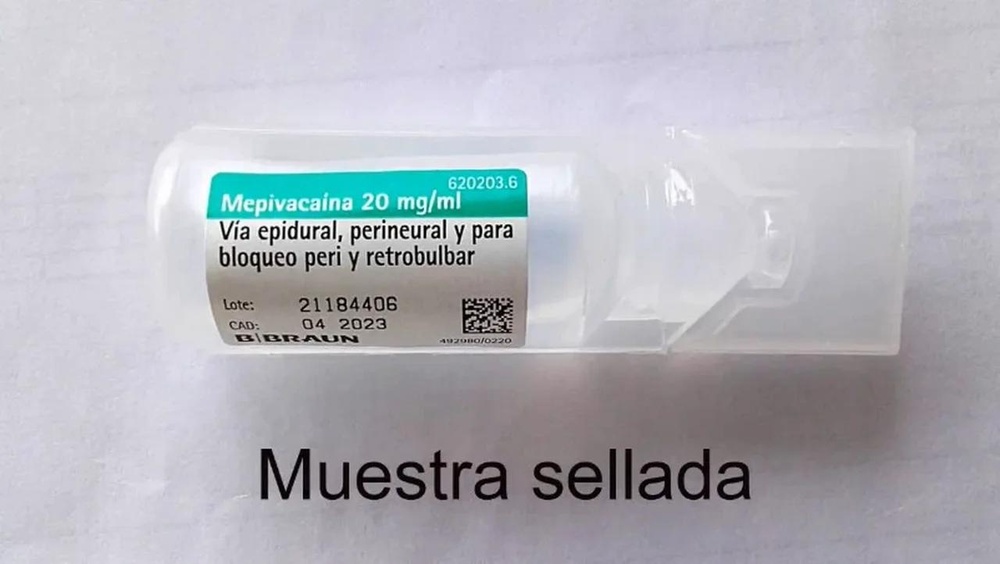
- Alternatives to MEPIVACAINE NORMON 10 mg/mL INJECTABLE SOLUTIONDosage form: INJECTABLE, 54 mgActive substance: mepivacaineManufacturer: Laboratorios Clarben S.A.Prescription requiredDosage form: INJECTABLE, 10 mg/mlActive substance: mepivacaineManufacturer: B Braun Medical S.A.Prescription requiredDosage form: INJECTABLE, 20 mg/mlActive substance: mepivacaineManufacturer: B Braun Medical S.A.Prescription required

Online doctors for MEPIVACAINE NORMON 10 mg/mL INJECTABLE SOLUTION
Discuss questions about MEPIVACAINE NORMON 10 mg/mL INJECTABLE SOLUTION, including use, safety considerations and prescription review, subject to medical assessment and local regulations.








Frequently Asked Questions
